
If memory serves me well, I shouldn’t be older than 14, I spent the weekend at my grandma’s home, and when I came back, my best friend told me that he and the gang went on a journey to the city’s abandoned racetrack, which had been, at this point, closed for several years. My friends had to cross a few neighborhoods and once there, they threw their bikes over the fence, jumped in, and then they rode a few laps on the track before leaving, afraid that someone had seen them and called the police. I was devastated. We had been planning this adventure for a while, and when they finally decided to go, I wasn’t there.
Little did I know that racetrack would be an integral part of my professional life in the future.
Before we move here, let me tell you where my hometown is. For the most part of my life, I lived in the town of Curitiba, in Parana state, located in Southern Brazil, a region predominantly populated by descendants of European immigrants. All those wonderful people who crossed the Atlantic pursuing a better life in South America naturally brought their traditions and their passion and among them was the love for speed.
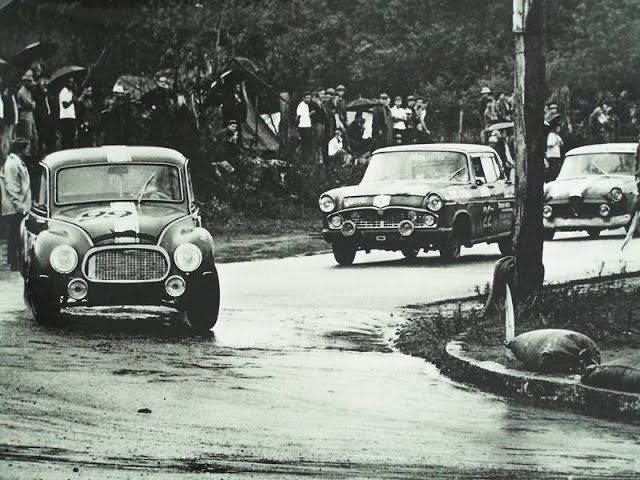
Organized racing before and after the Great War, in Brazil, happened mostly on city streets or highways, from one town to the next and back. As the interest in auto racing kept growing, the authorities and the private sector saw a good business opportunity.
The birth of the track
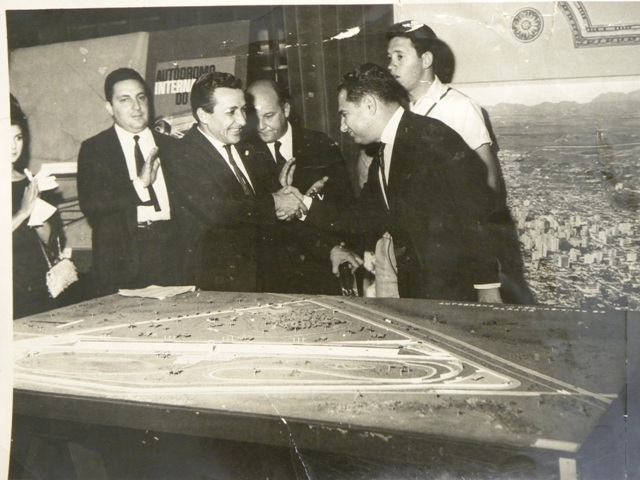
The father of Curitiba’s racetrack was Flavio Chagas Lima; a businessman passionate about motorsports. In the 1950s he came up with the idea of a racetrack surrounded by a multi-sport complex that even included an artificial lake for aquatic activities. This mega arena would be built in one of his properties, located in the city of Pinhais, on the outskirts of Curitiba.
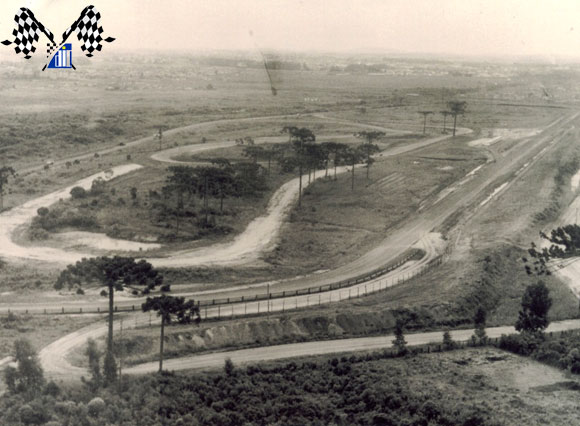
Finding investors for such a grandeur enterprise proved to be an impossible task, and Lima had to scale down his dreams, sticking with the racetrack only.
The construction began in 1965 and in 1967 it was done, or should I say almost done, since they ran out of money before paving the track.
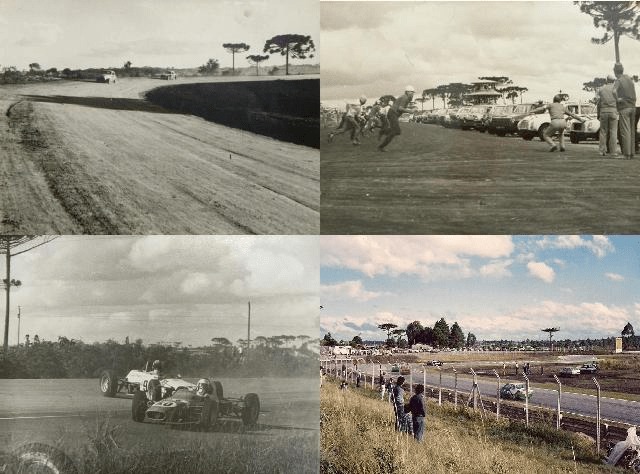
Oh well, who needs asphalt, right? Races were held at the new facility almost every weekend while the investors were scrambling for more money.
In 1968 a rich businessman driving a slightly modified 1958 Ford Galaxie won a race there, receiving the checkered flag ahead of some of the most powerful purpose-built cars in town. He was so happy with his victory that he decided to pay for the stone foundation of the track, making it ready to receive the asphalt.
The track was finally paved by 1969, and it started to receive competitors from all over the country. Unfortunately, the so-called first phase of the track was short-lived, Mr. Lima was a short-tempered guy, with a “It is my way or no way” attitude, and he didn’t take long before getting in trouble with the Brazilian Motorsports Association (Federacao Brasileira de Automobilismo). Lima was not happy having the FBA telling him how to conduct business and in a rampant outrage, he closed the track, 3 years after its inauguration.
The second chance
The circuit remained dormant for nearly 17 years until a consortium of a few investors and the government of Paraná signed an agreement for a 12-year concession. An initial sum of 2.5 million dollars was spent on renovations and in 1988, the racetrack reopened its gates to the public.

The facility was officially named after Raul Boesel (pictured above), a race driver who was born and raised in Curitiba. Boesel was a former F-One driver when he won the 1987 World Sportscar Championship.
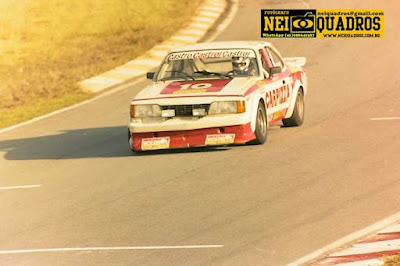
During the 1990s, the Circuito Raul Boesel flourished with activities, even hosting events at the national level. The picture above shows the Carpizza – Chevy Opala during the 1993 edition of the 12 Hours of Curitiba.
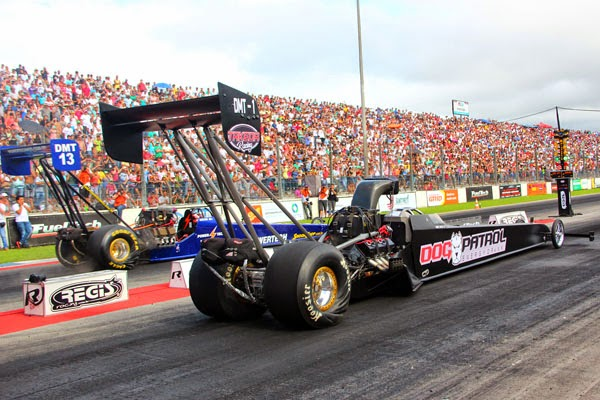
Another businessman who got seriously involved with the racetrack was João Alexandre de Abreu, my ex-boss from the time when I worked for Powertech (check out the post: Best Job of My Life). In the early 1990s, he brought a team from the National Hot Rod Association to provide all the technical information for the construction of a concrete drag strip on the racetrack, right in front of the stands. It was also equipped with a state-of-the-art timing system and for many years it was the best drag strip in South America. Drag racing always brought the largest number of fans to the track, between 30,000 and 40,000 during the Festivals, in December. In the picture above, the Powertech top fuel #13 is going for its final match, during the Brazilian Drag Racing Festival, 2014.
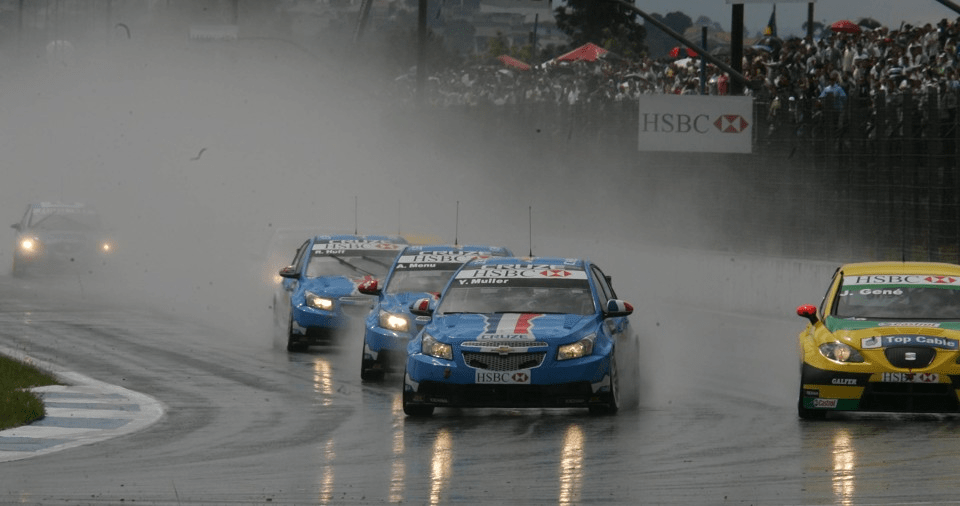
The new administration never stopped improving the Circuit. In the early 2000s, it was homologated to host international events, like the World Touring Car Championship. (picture above). The track was renamed: Autodromo Internacional de Curitiba.

The South American Formula 3 Championship was a very popular attraction at the AIC.
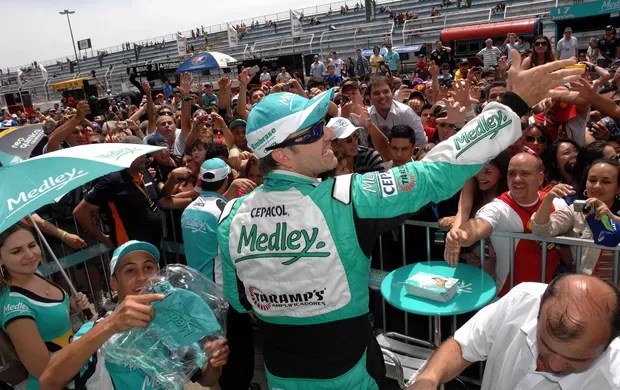
The AIC was also the stage for some memorable races, like the one when the former F-One driver (and national treasure), Rubens Barrichello, won the 2014 Brazilian Stock Car title.
All good things come to an end.
The AIC became the second busiest racetrack in the country, only behind the iconic Interlagos, in São Paulo. The people responsible for the administration were truly passionate and they kept improving the facility, elevating it to the top 5 racetracks in South America.
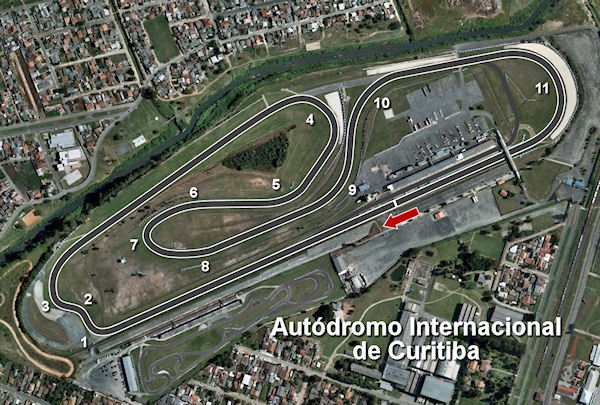
But as early as 2010, the AIC started to face its biggest threat, urban development. Back in 1967, the city of Pinhais, where the track is located, was nothing more than a collection of small farms, but after more than 40 years the landscape of the region changed drastically. The farms were given away to residential neighborhoods and noise levels during the races became a nightmare for the local population.
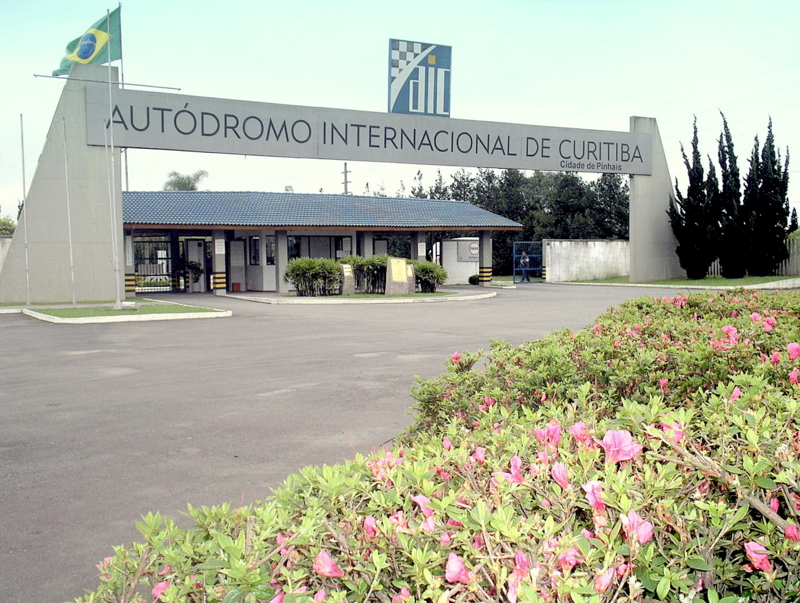
The City of Pinhais and the AIC administration fought a fierce battle over the public disturbance. The authorities even threatened to take the case to court and shut down the facility for good, but in the end, money settled the dispute. Developers made an offer for the land that the owners just couldn’t refuse.
In December 2021, the AIC was officially closed and the demolition started a month later.
If speed is our religion, a racetrack is our temple. When a friend sent me the video above, I just couldn’t believe what was happening. My heart was crushed. There is even a story that a race fan placed himself in front of the machines that day, trying to stop the workers.
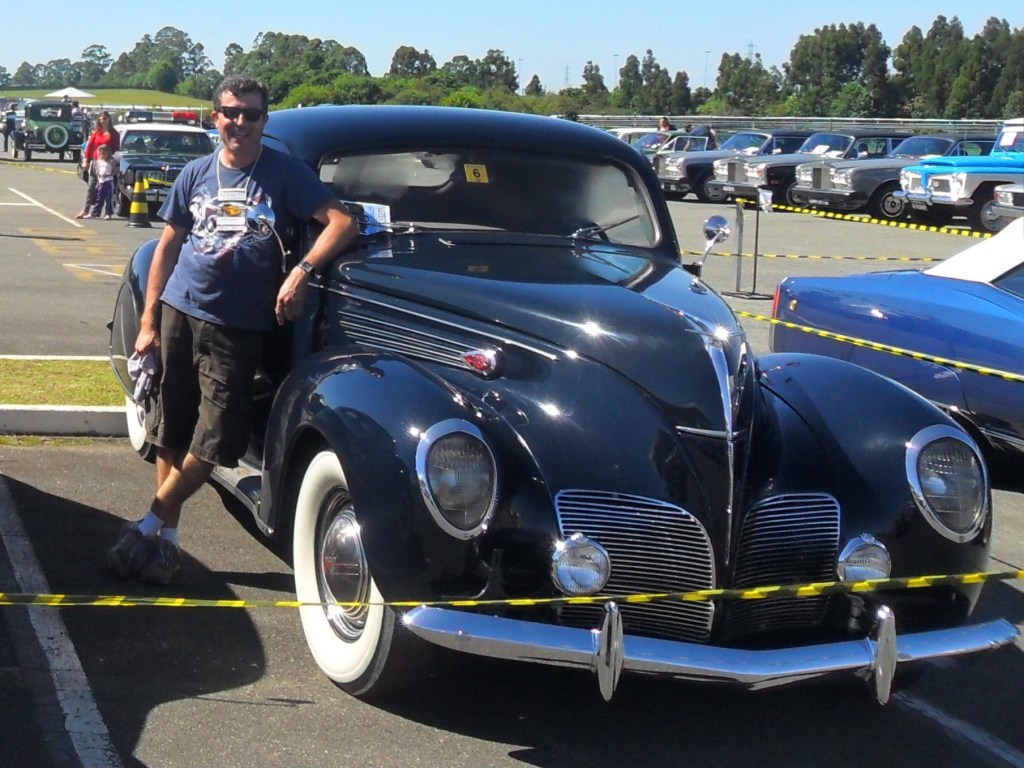
Yes, the AIC was my temple, but I didn’t go there just to worship, I had the privilege to be part of a team that worked in backstage. For me, it is still hard to grasp with idea that next time I go visit my hometown, the track won’t be there. I just hope the new homeowners living on that piece of land will be as happy as we were, during those magical years.
 The Classic Machines
Well that was a sad ending to a great story!
It’s the same the world over, we have lost several drag strips here in the UK due to noise complaints (one was shut due to just one person complaining and the track was there long before he moved nearby).
Even my beloved Santa Pod has had rumours abound that nearby land was going to be developed, then what?
Though not my cup of tea the roundy roundy circuits seem relatively safe though the nearest is 40 miles away. I’ve not been there since they closed the drag strip section.
LikeLiked by 1 person
In Brazil, we are losing circuits but on the other hand, drag strips are popping out all over the country, especially the 1/8 mile, since they are cheaper to build.
LikeLiked by 1 person
Great article. Very emotional. I know exactly how you feel. The drag strip I raced at in my youth, Raceway Park in New Jersey is closed. My next “hometown” drag strip, Atlanta Dragway, is also closed. Both tracks hosted NHRA National events for many years. I feel like the future of motorsports as we know it will be short.
LikeLiked by 1 person
I also adopted the Atlanta Dragway as my second “temple”, when I lived in Kennesaw GA. It was heartbreaking when I heard the strip was gone. You are right, things are changing too fast.
LikeLike