
Between the years 1972 and 2004, Brazilian drivers won 14 world championship titles: 8 in Formula One, 5 in Formula Indy/CART, and one in Sports Car Prototype. Those years became our golden age in motorsport. We are deeply proud of our drivers and we will shamelessly brag about them for decades to come.
When I wrote the 3 parts The Brazilian Champions, my idea was to honor some of those drivers but I knew I was not being thorough. I focused only on the Formula One champions and left out the talented drivers who became successful outside that universe.
Unfortunately, what made me visit this subject again was the tragic and premature death of Gil de Ferran. The two times CART champion passed away on Dec. 29, 2023, victim of a heart attack. He was 56 years old.
Those who had the privilege to be around him considered the Brazilian one of the greatest, a fierce and talented driver, and a true gentleman. Here it is, a brief account of his stunning career in motorsports.
Gil de Ferran was born in Paris-France on November 11th, 1967. His family moved to Sao Paulo-Brazil when he was 4 years old.
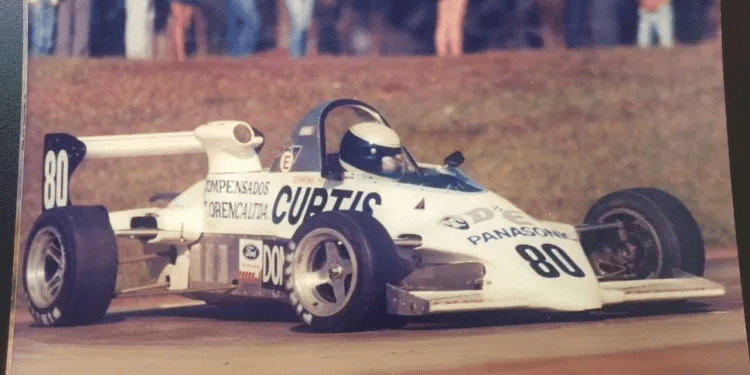
Just like so many race drivers before and after him, his racing career started in kart. After that Gil joined the Brazilian Formula Ford in 1984 and secured the national title in 1987. (picture above)
The title opened the doors of the British Formula 3, as an official driver at Edenbridge Racing, for the 1991 season. He finished his debut year in third, behind his fellow Brazilian driver Rubens Barrichello and David Coulthard.
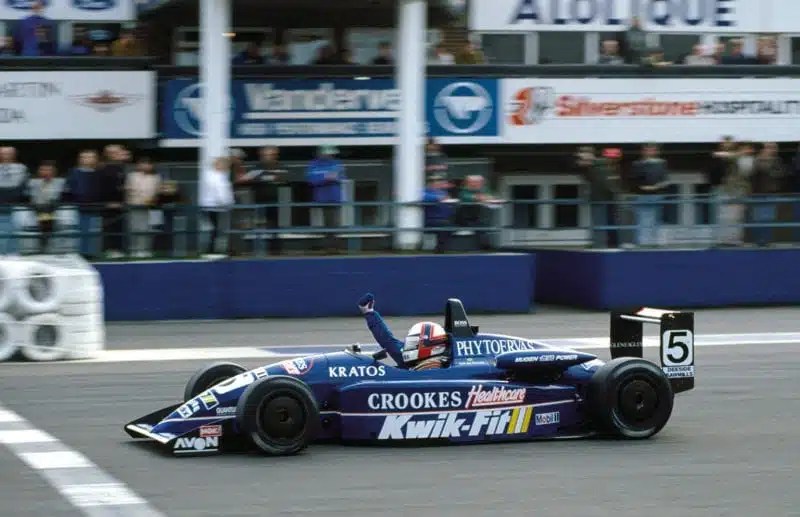
Next year Gil de Ferran moved to Paul Stewart Racing and after 7 victories, he won the 1992 championship.
The path to CART
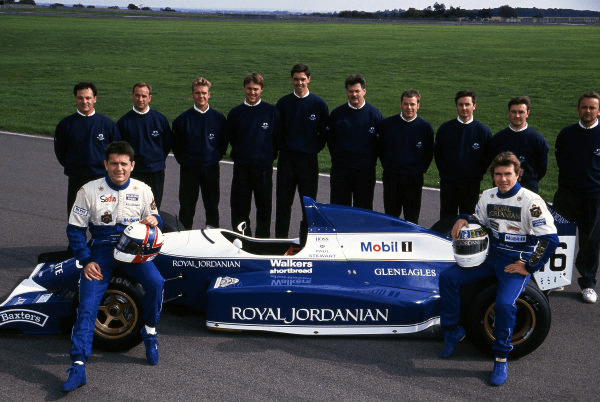
The 1992 F3 title would have given him a chance to go to the traditional Formula 2 but instead, de Ferran decided to join the recently created International F-3000. This new class was designed as a more affordable class for drivers with modest sponsorships.
Gil de Ferran’s brilliance didn’t go unnoticed, in 1993 he was invited by Footwork Arrows F-One Team for a day of testing, along with Dutch racer Jos Verstappen. Unfortunately, his dream to make a good impression that day went down the drain when he bumped his head while walking near the motorhome. This is how de Ferran recalled the incident: – “I was walking between two of the trucks, looking down thinking, -this is not going so well-. And I hit my head on a swing-up locker door on the side of the truck. Split my head open, blood everywhere, game over“. –

Gil was still competing at F-3000 when he was invited by CART Hall/VDS Racing for some tests. The team’s sponsor, the American oil company Pennzoil, was reluctant to offer him a position as the official driver, they thought the Brazilian wasn’t popular enough to represent the brand. As soon as the CEOs watched de Ferran’s performance during the tests, they changed their minds.
With no serious offer from Formula One, de Ferran took up the opportunity to drive the yellow “Pennzoil” Reynard-Mercedes-Benz in the 1995 season. Gil scored his first win in the last race of the year, at Laguna Seca Raceway. He finished the season in 14th but his solid performance granted him the Rookie of the Year award.
Gil de Ferran left Hall/VDS Racing when the team was dismantled at the end of the 1996 season. There were rumors at the time Gil would be the new driver for the Stewart Grand Prix F-One team, but it never materialized.
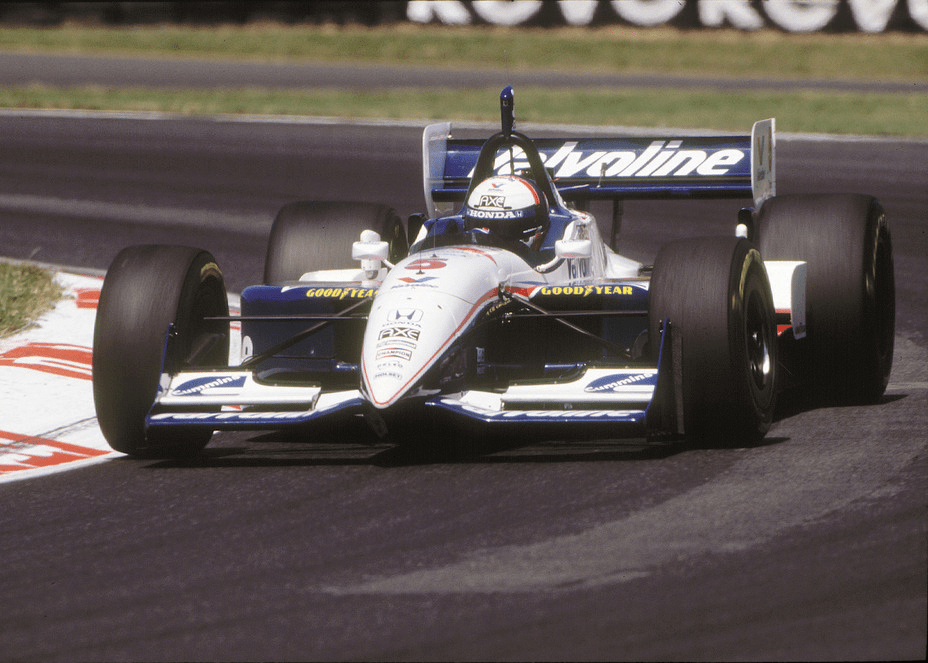
In 1997 de Ferran joined Walker Racing and at the wheel of its Valvoline Reynard/Honda, he finished the season as a runner-up to Alex Zanardi, with 12 top ten finishes but not a single victory. (picture above)
Gil started 1998 as a stronger contender for the title but instead, the season was pretty mediocre for the Brazilian. The Reynard/Honda proved to be an unreliable machine that year and the Goodyear tires used by the team had inferior performance compared to Firestone tires used by other teams. He finished the season in 12th.
Things didn’t improve much in 1999 when Gil finished the season in 7th. At the end of the year, both Valvoline and Goodyear left CART and the prospects of staying at Walker Racing were not very promising.
Towards the end of the season, Gil de Ferran signed a contract with Marlboro-Team Penske, replacing Al Unser Jr. His future teammate, Greg Moore, was tragically killed in a crash at the season finale race at California Speedway, and de Ferran’s fellow countryman, Hélio Castroneves was hired as a replacement for Moore.

These two Brazilian drivers had very few similarities in life. Castroneves is an extroverted guy and an impetuous driver while de Ferran has a much more reserved persona and a methodical approach on the track.
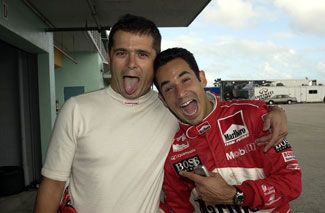
But as a teammate relationship goes, de Ferran and Castroneves were a match made in Haven. They bonded immediately and created a brotherhood for the time they shared the pits and also later on in life.
Two titles, back-to-back.
=2000 Season=

Everything was all set for a great season in 2000. The Reynard-Honda, proudly wearing the red and white Marlboro livery, was a fast and reliable car, and the Penske Team was a well-oiled machine, with every member committed to winning the championship.

The 2000 CART season was one of the most wide-open in its history, the first seven races saw seven different winners. The year wasn’t a stellar one for de Ferran, but his performance was consistent. He won in Nazareth and Portland, but he managed to be on the podium in 5 other races, adding enough points to secure the championship. His teammate, Castroneves, scored 3 victories but finished the season in 7th.
The world record.

The 2000 CART season allowed de Ferran to write his name in the history of motorsport in two different ways. He not only won the title that year but also set a world record while qualifying at California Speedway in Fontana. He set both the track record and closed course record for the fastest lap at 241.428 mph (388.541 km/h). The record still stands as the fastest qualifying lap speed ever recorded at an official race event.
=2001 Season=
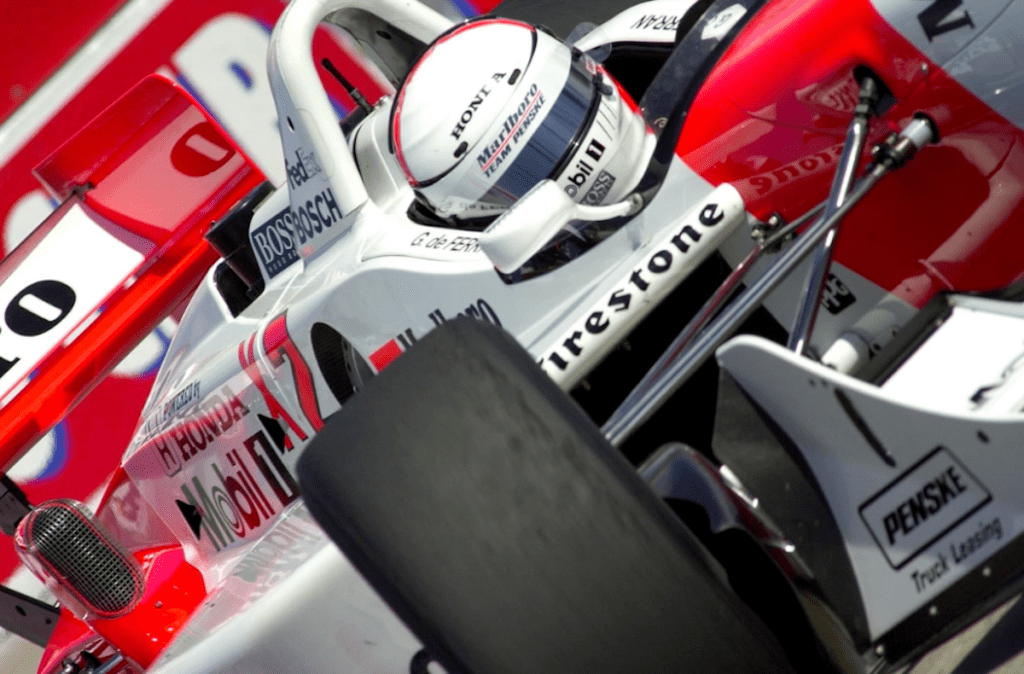
The 2001 CART season was a very problematic one, to say the least. A lot of bad news was dropped like a bombardment throughout the year: The races in Texas and Rio de Janeiro were canceled; the European tour was a fiasco since it coincided with the September 11 attacks; Honda, Toyota, and Mercedes-Benz decided not to renew their contracts as engine suppliers; Michigan and Nazareth Speedways would be dropped from the calendar for the next year; the series lost a huge television contract, and Team Penske announced its defection to the rival Indy Racing League at the end of the season.
Gil de Ferran and Team Penske used the same recipe to score one more championship in 2001. The Brazilian won the Rockingham 500 in England and the race in Huston, but he was on the podium six more times. Castroneves won three races again that season but stood on the podium only one other time. That was good enough for a fourth-place finish in the championship, But in addition to Helio’s three CART wins, he won the 2001 Indianapolis 500 – which did not count toward the CART championship. Gil de Ferran finished second in the 500.
Conquering Indianapolis

If there was one thing missing in Gil de Ferran’s career was a victory at the iconic Indianapolis 500, and this glory came in 2003. On March 23, the Brazilian suffered serious injuries as a consequence of a crash with Mario Andretti at the second race of the 2003 season, in Phoenix, Arizona. He was still recovering from a broken back when the Indy 500 weekend came, on May 25. Despite the injury, he passed his teammate with 31 laps left to win the race, making it the second time Team Penske dynamic duo, de Ferran/Castroneves, scored a 1-2 finish in Indianapolis.
At the end of the 2003 season de Ferran decided that it was time to retire. There is no better time for a race driver to step down than when he/she is at the top.
de Ferran Motorsports

It is not an easy task to keep a successful race driver away from the tracks. It didn’t take long before de Ferran found himself once again at the wheel of a race car. In 2008 he announced his return to motorsport driving a factory-backed LMP2 class Acura ARX-01 prototype, under his own team de Ferran Motorsports.
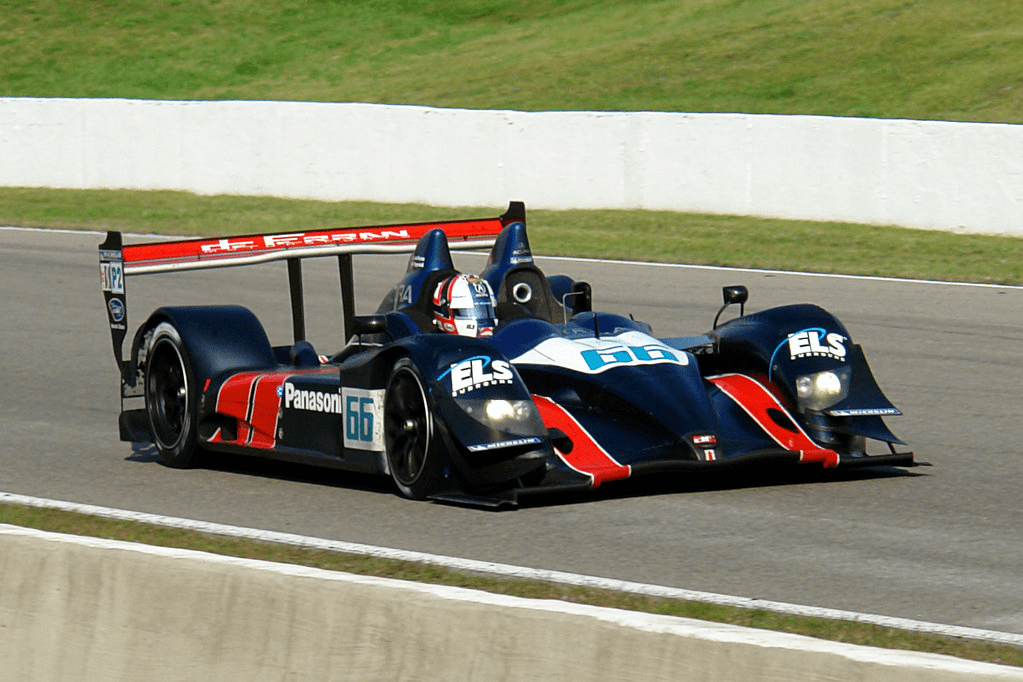
The team raced at the American Le Mans Series in 2008, de Ferran and his teammate, Simon Pagenaud, took four front-row grid positions, led six races, and scored three podium finishes in just eight starts. Not bad for a rookie team.
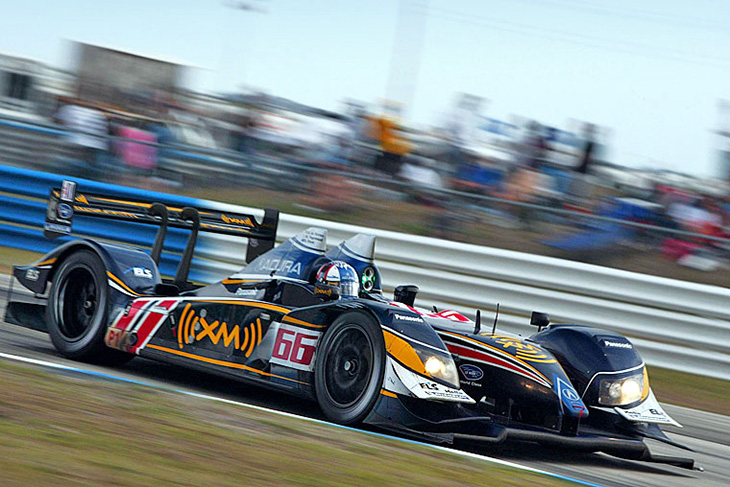
In 2009, de Ferran Motorsports was chosen by Honda to develop the Acura ARX-02A (picture above) for the LMP1 division of the American Le Mans Series. The team scored five outright wins, and seven poles, and finished runners-up in the ALMS LMP1 class.
At the end of the 2009 season, Gil started to put things in motion for his return to the IndyCar Series, but at this time as a team owner. The team left the La Mans Series to concentrate efforts on this new enterprise. Before the start of the 2010 IZOD IndyCar season, de Ferran Motorsports merged with Luczo Dragon Racing, a team started by Jay Penske, the son of de Ferran’s former boss Roger Penske, and Steve Luczo, a successful technology leader and racing enthusiast. The new team was named de Ferran Dragon Racing.
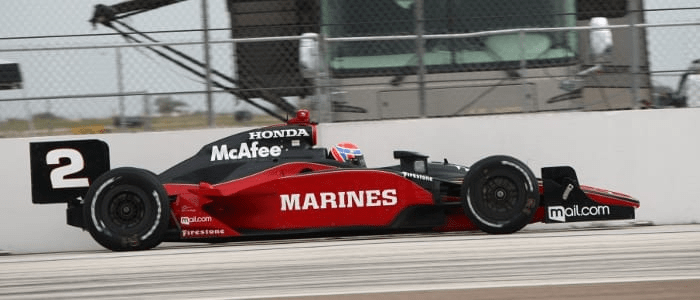
The team scored four Top Ten finishes in its debut campaign in 2010 and finished seventeenth in the season finale at Homestead-Miami Speedway. Unfortunately, de Ferran Dragon Racing was forced to shut down its operation at the end of the 2011 season, after failing to find a new sponsorship.
Formula-One
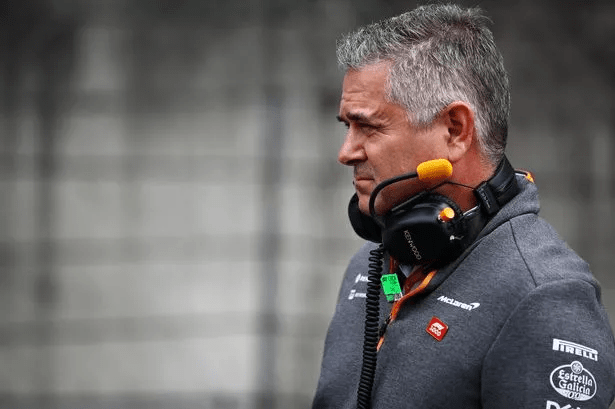
Gil de Ferran also had a management career in Formula One. In 2005 he was hired by BAR-Honda F1 team as their sports director. He resigned from the position in July 2007, declaring that his situation in the team was becoming “increasingly uncomfortable”.
In July 2018, de Ferran was made sporting director for McLaren following Eric Boullier’s resignation. He left the team in early 2021.
In May 2023, McLaren brought him back in a consultant advisory role as part of their restructuring process.
A Champion who left us too soon.

On December 29 – 2023, de Ferran was attending a private event at The Concours Club, in Opa-loka, Florida. He was racing with his son Luke at his side when he felt unwell, pulled over, and suffered a fatal heart attack.
Gil de Ferran was always considered a through-and-through gentleman. A fierce racer when inside the car and a good friend around the pits. He loved not only the raw speed but, as a dedicated mechanical engineer, he also loved the machines. As a manager, he was always willing to teach and to learn.
I would like to finish this article with an emotional statement written by Gil’s daughter, Anna de Ferran.
“While my father left us too young, he died the way we believe he would have wanted — driving a racecar with my brother at his side,”
“He left us without pain with his last act being to place his foot on the brake so my brother was able to come home safely with us that evening,” she continued. “That story in itself is a testament to the level of thought, care, selflessness, and love he put into everything he did.”
 The Classic Machines
Great story, sad ending.
LikeLike
Very sad indeed. Indy/CART never was my cup of tea but I followed the Brazilian guys there as much as possible. For me is hard to accept that I will not see de Ferran growing old, mentoring his kid on the tracks, and enjoying life, after so much he had achieved.
LikeLiked by 1 person
Thanks for sharing this sadness 😔. Anita
LikeLike
Thank for stopping by. Very sad loss, he was so young. It is hard to believe that a 56 years old former athlete could have a heart attack.
LikeLiked by 1 person