
Recently, I shared my intention to write a series of articles about the machines that fought under the Canadian flag against fascism. In this second installment, I will focus on a museum located in Brandon, Manitoba: the Commonwealth Air Training Plan Museum.
This museum was born with a noble mission to preserve the memory of the British Commonwealth Air Training Plan (BCATP) and honour the airmen, airwomen, and personnel of all the Commonwealth Air Forces for their bravery and commitment during the dark years of WWII.
British Commonwealth Air Training Plan.
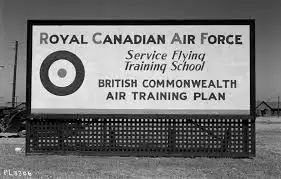
Since WWI, the United Kingdom has sought volunteers from all over the empire to fill the positions of pilots and ground crew members for the Royal Air Force. In a clever arrangement, these personnel should receive training in their home country, far away from the battlefields of Europe.
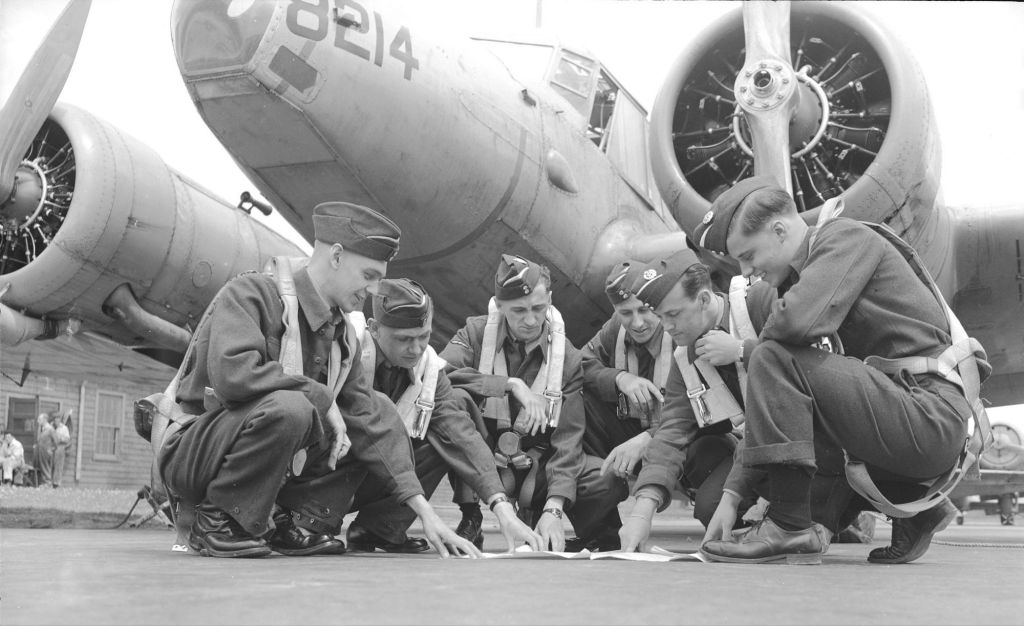
On December 17, 1939, the RAF announced the creation of the British Commonwealth Air Training Program in Brandon, Manitoba. The facility was very successful during its existence; the Canadian Prairies offered wide open, flat fields, a perfect combination for training new pilots.
Between 1939 and 1945, the program recruited thousands of conscripts and volunteers from across the United Kingdom and the Commonwealth countries. A total of 50,000 pilots and 80,000 crew members and ground staff graduated, making it one of Canada’s most significant contributions to the war effort.

After the war ended, the program was shut down, and the installations were decommissioned. Gradually, the airplanes and equipment that had once served as training tools were either sold or scrapped.
In the early 1980s, a dedicated group of individuals in Brandon, Manitoba, recognized that there was still time to save most of the program’s material and organize it in a museum preserving the memory of the British Commonwealth Air Training Plan and honoring the men and women who generously contributed to the World War II effort.
The Museum officially opened on July 3, 1982, in Hangar No. 1 at the Brandon Airport, located one mile (1.6 km) north of the city. The airfield was the site of No. 12 Service Flying Training School (SFTS) operated by the BCATP during World War II.
The museum has an impressive collection of aircraft (some of them airworthy), motor transport vehicles, artifacts, and archival items.
Restoration

The museum performs all the restoration projects in the facility with the invaluable help of volunteers. Down below are a couple of examples of airplanes that were restored at the museum:
The Faithful Annie

When the Avro Anson Mk IV came to the BCATP museum, it was literally in pieces.
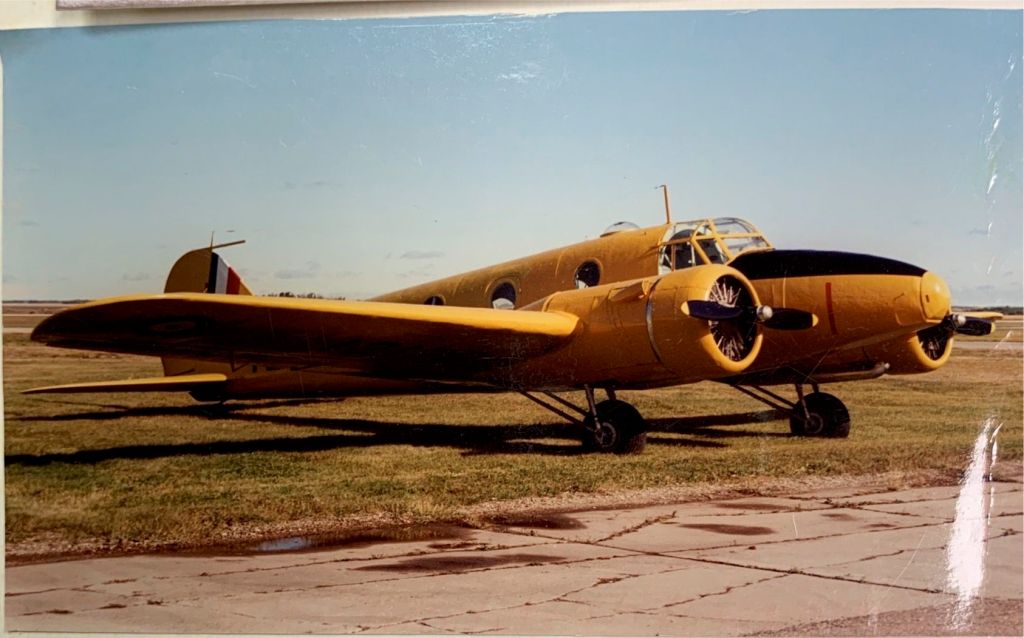
And here, the plane after the restoration. During the war, the Avro Anson was effectively called “Faithful Annie” by the airmen who flew it.
The Cornell

The picture above shows the Fairchild Cornell PT-26 arriving at the museum.

Here, an enthusiastic bunch of volunteers are dropping the Ranger 6-cylinder engine into Cornell’s airframe.
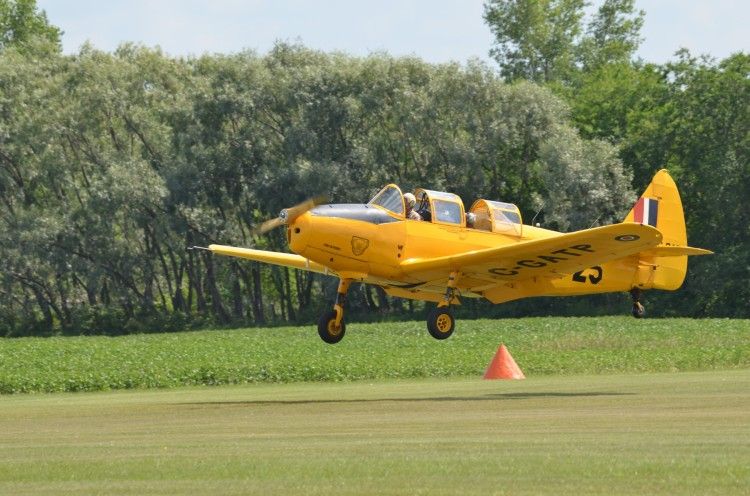
After a thorough restoration, the airplane became one of the airworthy machines in the museum’s collection. The Cornell PT-26 was a key aircraft in the Canadian training fleet. It was the first plane that WWII pilots flew before progressing to more advanced trainers or single-seat fighters and bombers. Primarily constructed from wood, veneer, and fabric, the PT-26 was mainly used by Canadian forces for training in colder climates. Pilots appreciated having the option of an enclosed cockpit while being able to slide it back for an open-air experience.
The Visit

We visited the museum in May 2019. From Winnipeg to Brandon, it is an easy 214 km trip.

Upon arrival, we were greeted by a Canadair CT-133 Silver Star, the museum’s gate guardian. This airplane is the Canadian license-built version of the Lockheed T-33 jet trainer/fighter. The CT-133 was so common in the RCAF that I believe there must be at least one on display in every Canadian city.

On that day, the museum was a bit dark inside, and the sun shone through the windows, making it challenging to get good shots. Most of the pictures you see here are not mine.
Motor transport
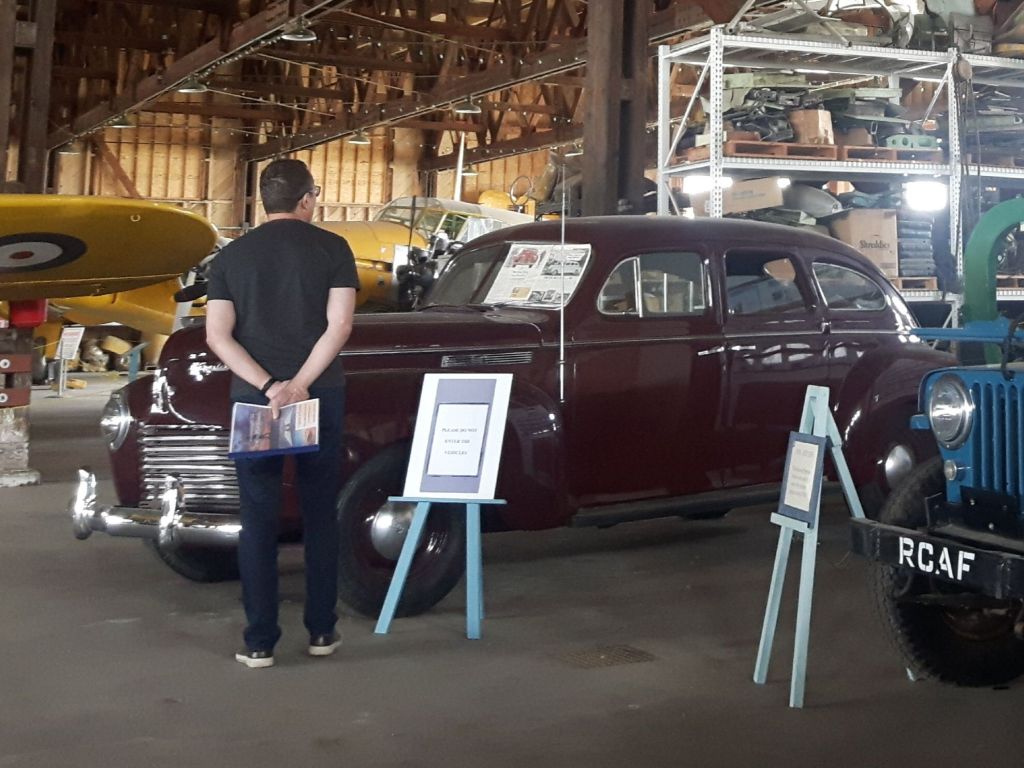
That is me admiring a perfectly restored staff car that served at the base during the war. I didn’t make any notes, and I don’t remember the car’s brand, but it looks like a 1940 Dodge sedan. If you know it, please help me out with the information.
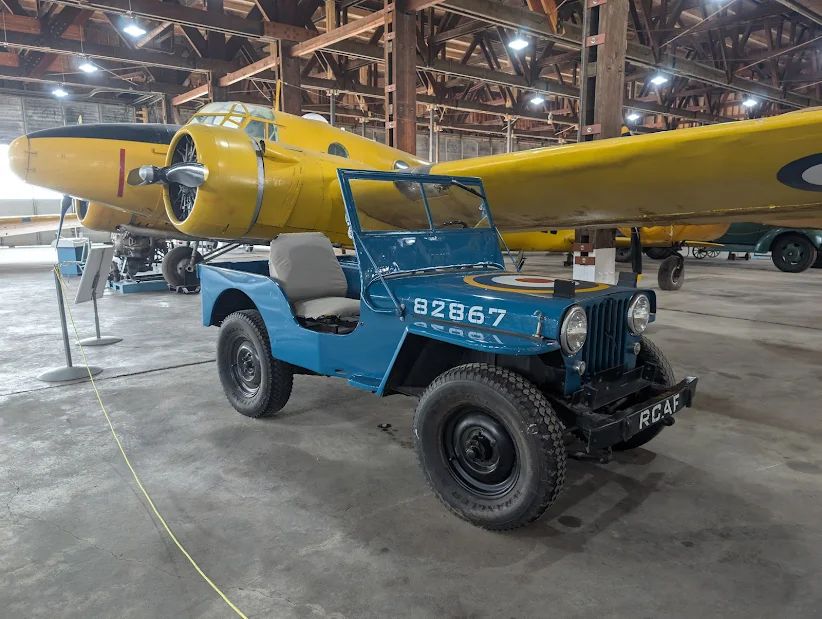
A 1940s-era Willys Jeep

1942 International Harvester K8 Fire truck

Above, a 1941 Ford fuel tender truck.
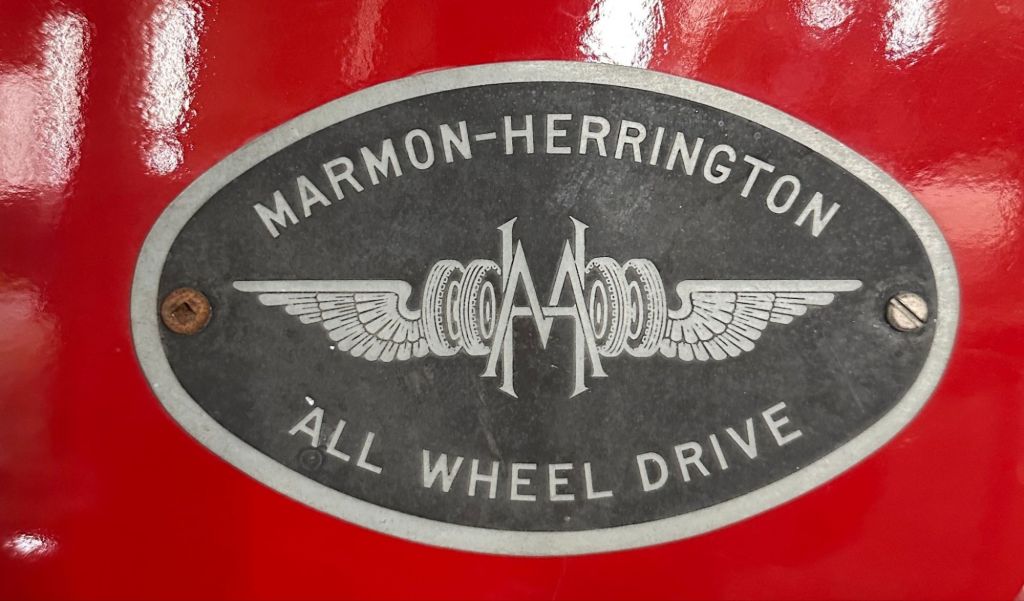
Marmon-Herrington supplied axles and transfer cases to the American auto industry.
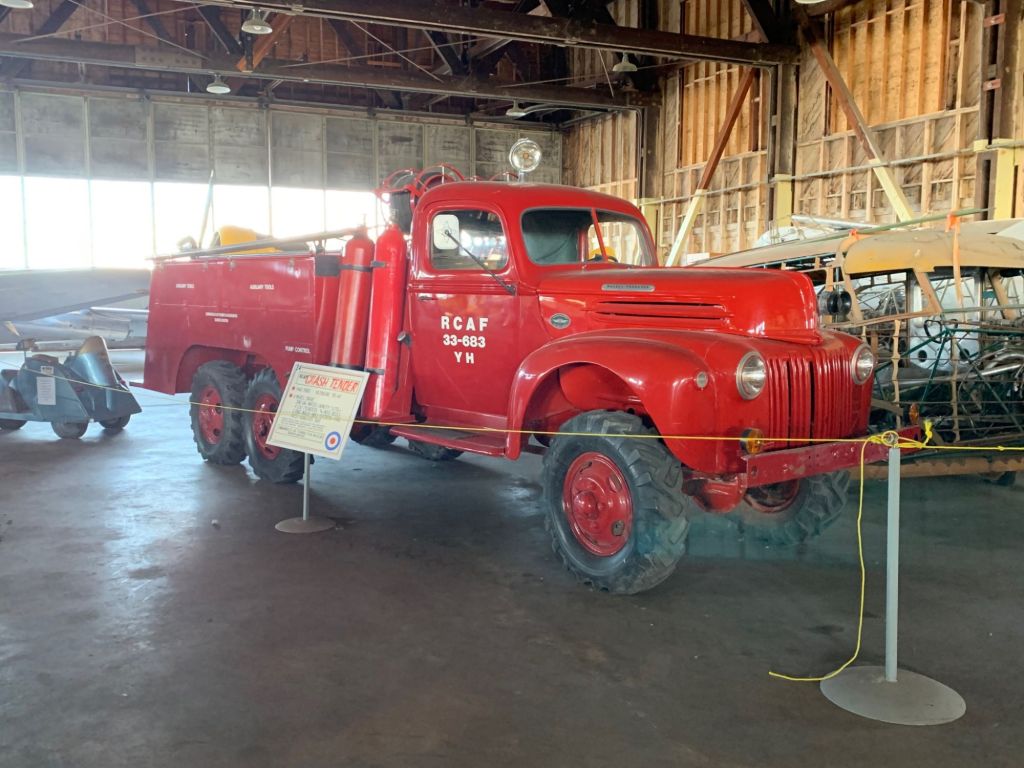
For the war effort, the company teamed up with Ford to build military trucks with some serious off-road capabilities, like this 1942 Crash Tender 6×6 Ford truck.

1942 Ford Truck
Airplanes
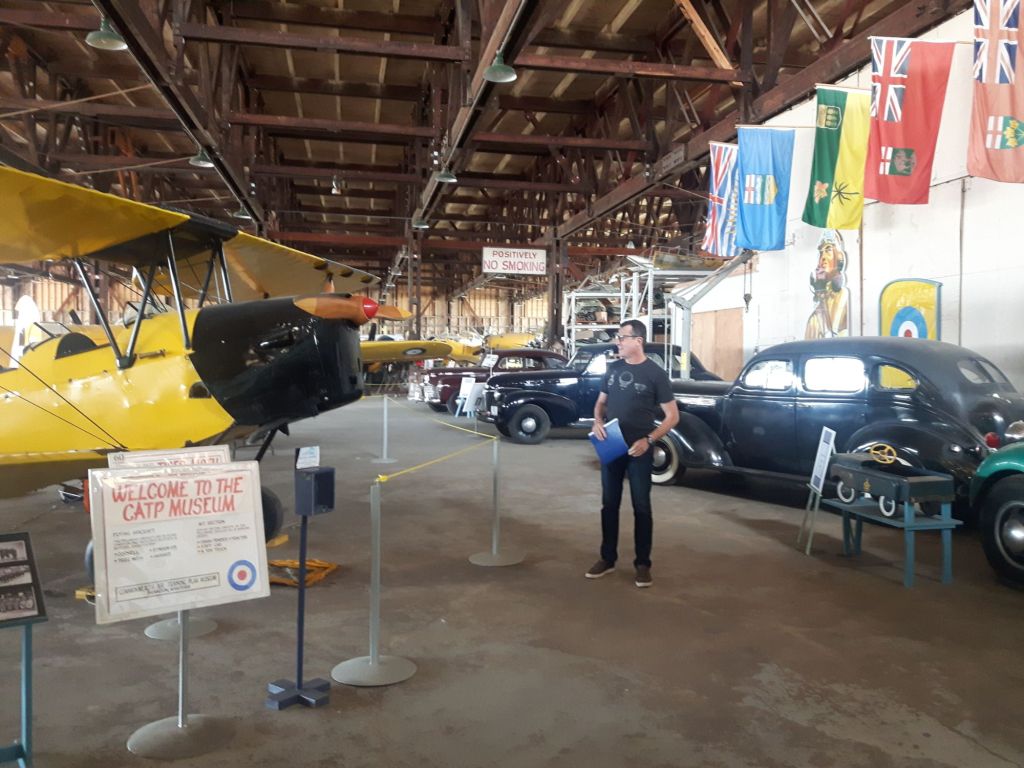
The museum’s airplane collection is divided into static displays and airworthy machines.

Bristol/Fairchild Bolingbroke
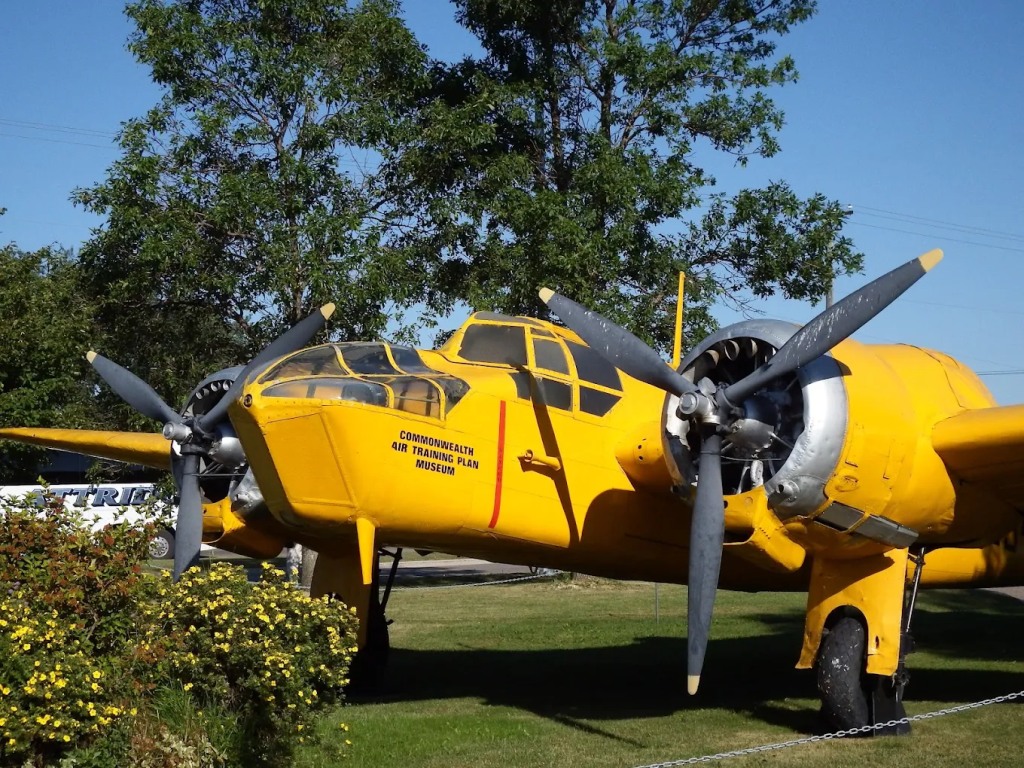
Another take of the Bolingbroke.


Above, a beautiful shot of the Stinson 105 Voyager.
Between July and September 1940, the Royal Canadian Air Force (RCAF) acquired 26 Voyagers for approximately $10,000 each in American dollars. At that time, American neutrality laws prevented U.S. manufacturers from selling to countries involved in the war, so the Voyagers were purchased as commercial aircraft. Each plane was assigned a Canadian civilian registration number and flown to Canada. Once they arrived on Canadian soil, the aircraft were transferred to the RCAF and given military serial numbers.
Note of the Editor: – Our reader James H. Gray made an important correction about this airplane: “The 75 hp Stinson 105 produced in 1939 and the 80 hp Model 10 (an updated 105) released in 1940 were not called “Voyagers”. That is a common misconception. Only the Franklin-powered 90 hp Model 10A introduced in 1941and some of the postwar 108 series airplanes were designated Voyager by Stinson. In vintage photos of these planes bearing factory livery, the 10A Voyager can be easily differentiated by its 2-tone paint and distinctive circular badge on the cowling. The plane pictured is clearly a 105.

The museum has two Tiger Moths in its collection. One is a Canadian version (pictured above), and the other is a UK version. Both are airworthy. The difference between them is that the Canadian one is equipped with a canopy covering the cockpit; yes, it gets cold in Canada. The Tiger Moth was one of the most popular trainers in WWII. The Canadian version was built by de Havilland Canada, in Downsview, Ontario. An estimate of 7,800 units were built around the world.

Another notable piece of WWII aviation history is a 1940 North American Aviation Harvard Mark II. The Harvard is the “British” version of the T6 Texan, purposely built for the Commonwealth air forces. For the cadets, this plane was the last step on the ladder towards becoming a combat fighter pilot.
The Texan/Harvard was extensively used by many air forces around the world as a combat and gunnery/bombing trainer from the 1940s until the 1970s. Thanks for its impressive maneuverability. The plane is a favorite among acrobatic groups, and therefore, it is a common sight at any air show.

The airworthy machines of the BCATP Museum have an active life. Visitors can purchase 20-minute flights on most airplanes. They are also frequently seen at major air shows throughout the country.
The Memorial Wall
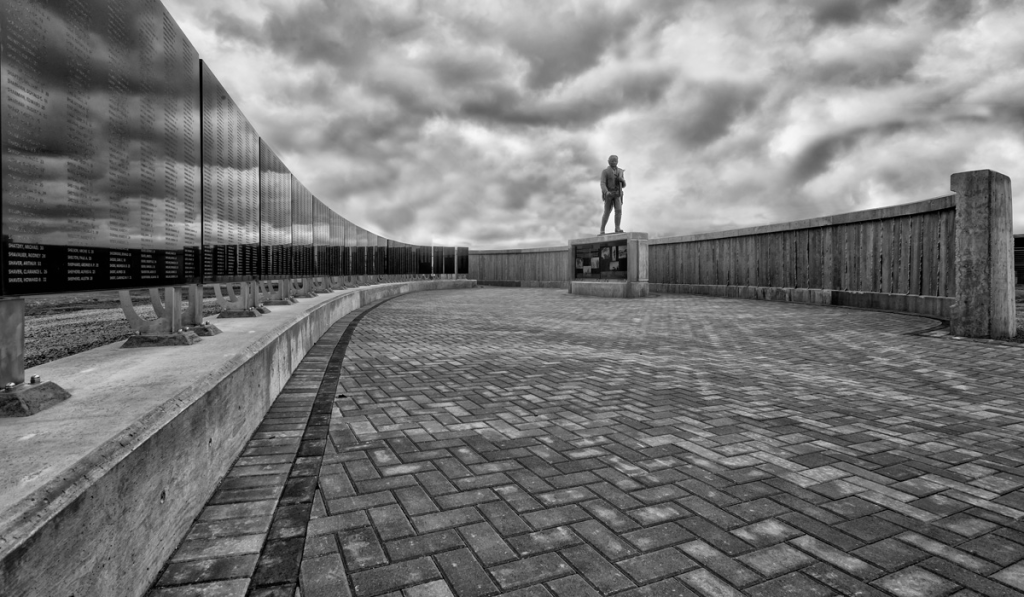
This museum is not just a collection of vintage machines but a place to reflect on and honor the ultimate sacrifice made by thousands of young men and women who fought against tyranny.
On September 10, 2014, the 75th anniversary of Canada’s entry into WWII, a memorial wall was unveiled to the public. The wall holds the names of 18,039 airmen and airwomen from all over the Commonwealth countries who died in the Second World War.

This 300-foot airfoil-shaped granite wall is watched over by a bronze airman. The names and ages of these young men and women have been etched on this wall as a permanent tribute to the ultimate sacrifice they made for our freedom.
As an enthusiast of old war machinery, my visit to the CATP Museum was a blast, but walking by the Memorial Wall made me think that we usually take our freedom for granted. Most of my generation (and the generations that followed) don’t know how painful it is to fight against fascism.
As I write these lines, all I can think is the world is going through a dark path. We might have to fight against tyranny once again, and this fight might come sooner than we think.
 The Classic Machines
Aircraft- Many lovely and historic aircraft saved. If I ever make it back to Canada, this site and museum will be number 1 on my destination list. So many pilots and air crew from Commowealth countries gave their lives to save the free world from Axis domination. This is a small part of the history of this great country. Thank you. 🇨🇦
LikeLiked by 1 person
Thanks for your thoughtful comment. I hope you will come back to Canada one day, either to visit or to stay.
I was also happy to see so many historic airplanes saved from being scraped.
LikeLike
The restoration of these WWII airplanes is quite impressive, particularly “The Faithful Annie.” The work done by volunteers, who must have loved the old WWII airplanes, is pristine. I am curious as to why the planes were painted a bright color that could easily reveal their whereabouts to the enemy. Thanks for the tour, Rubens. 🙂
LikeLike
Hello, Nancy. Indeed the work done by the volunteers is nothing short than amazing.
The CATP was a training facility so, those airplanes never saw combat.
The idea behind the bright yellow livery is quite clever: Since crashes were (unfortunately) fairly common during the training, the bright color of the planes facilitated the rescue parties to find the downed planes in the woods.
LikeLike
Nothing makes me happier than to see history restored and saved for future generations.
LikeLiked by 1 person
I feel the same. The new generations must have the opportunity to see how the Allies fought against tyranny and how painful it was to defeat it.
LikeLiked by 1 person
Correction: The 75 hp Stinson 105 produced in 1939 and the 80 hp Model 10 (an updated 105) released in 1940 were not called “Voyagers”. That is a common misconception. Only the Franklin-powered 90 hp Model 10A introduced in 1941and some of the postwar 108 series airplanes were designated Voyager by Stinson. In vintage photos of these planes bearing factory livery, the 10A Voyager can be easily differentiated by its 2-tone paint and distinctive circular badge on the cowling. The plane pictured is clearly a 105.
LikeLiked by 2 people
Hello, James, and thank you for this important correction. I included your words in the text as a “note of the editor.”
LikeLike