When Ford launched the Mustang in 1965 (or 1964 1/2, if you prefer), the company anticipated selling around 100,000 cars in its first year. However, after 12 months, Ford had sold over 400,000 units. The Mustang was exactly what young customers were looking for at the time: a compact car that offered personality, decent performance, and affordability.
Suddenly, Ford had created the Pony Car, a new niche in the auto market, leaving the competition desperately scrambling to come up with something similar.

In 1967, Chevrolet released the car that would become Mustang’s greatest rival, the Camaro. In the same year, sister company Pontiac re-badged the Camaro, creating their own Pony Car, the Firebird.
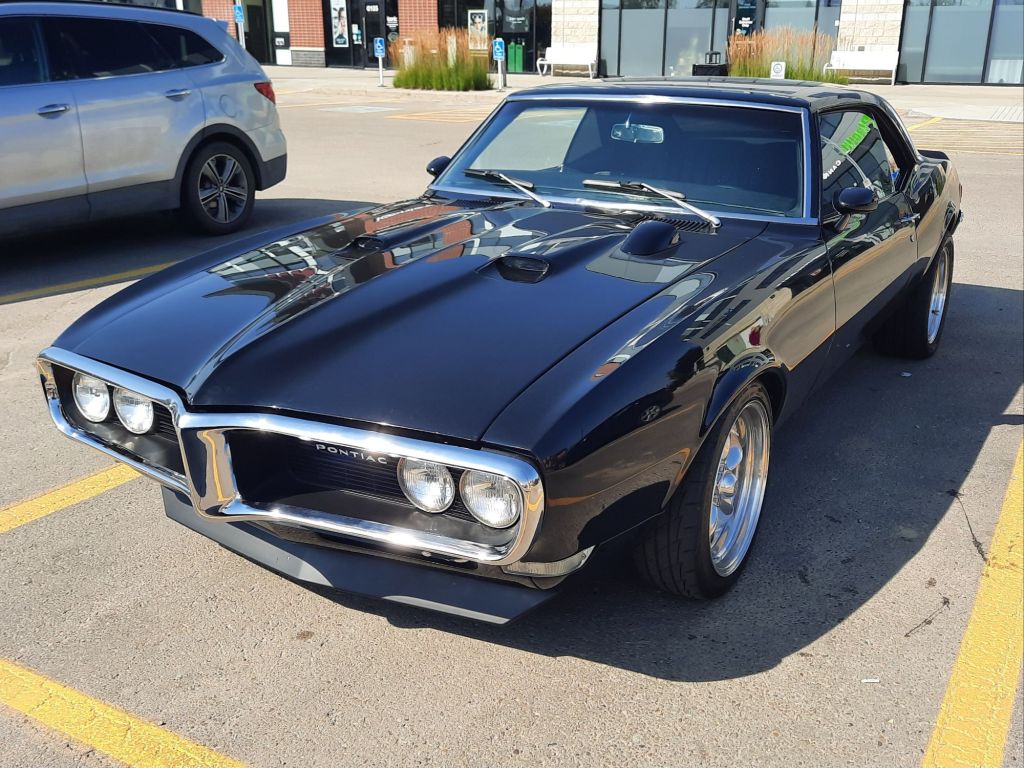
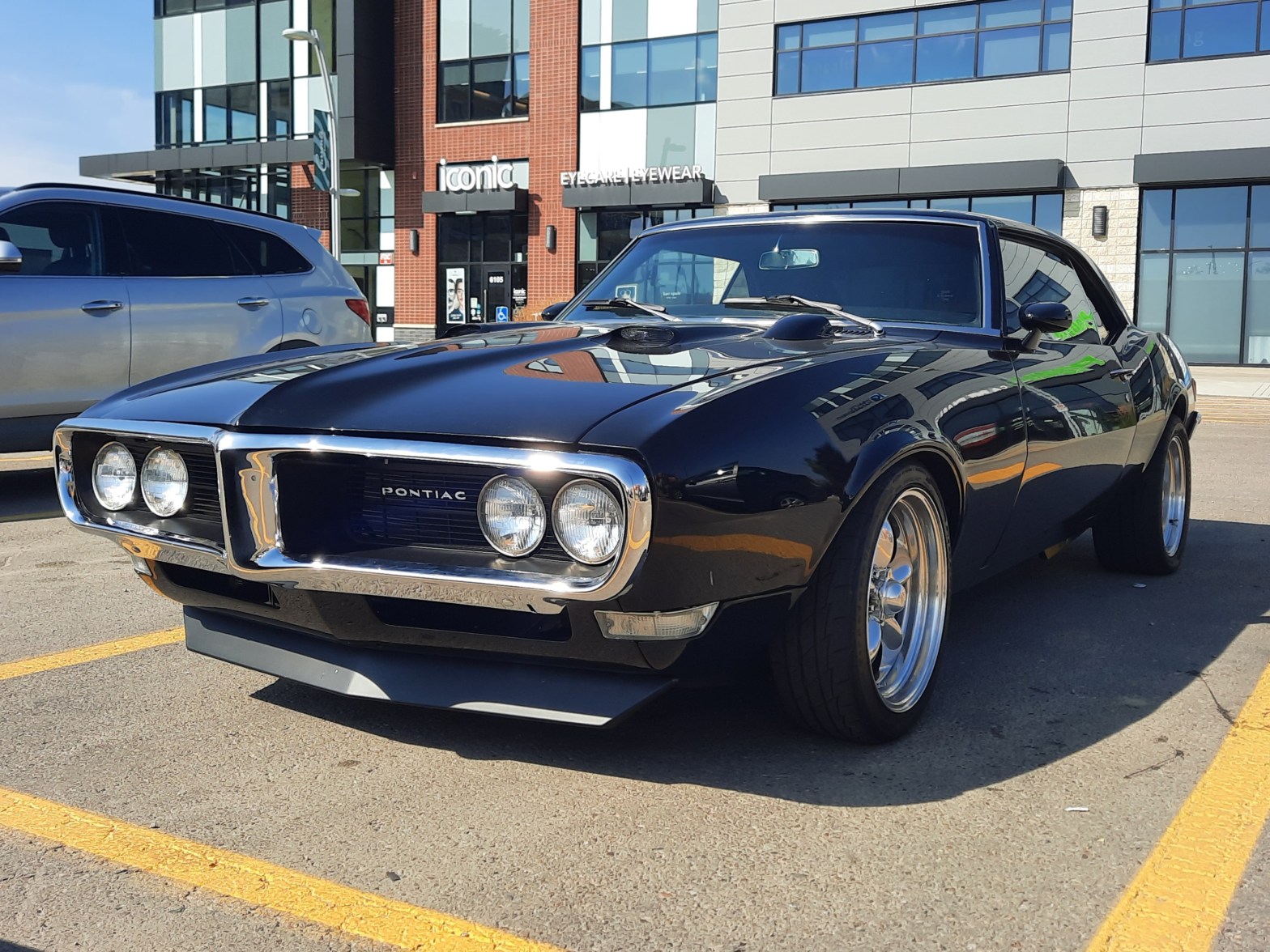
Today’s catch is a gorgeous 1968 Firebird that I found parked in front of a medical clinic that I visited, in August 2025.
The “pro-touring” style of the car immediately caught my attention. Upon approaching this bird, I noticed how low to the ground it sits, without looking exaggerated. I am not a fan of big rims in classic cars, but in this “Poncho” the wheels look just right.
Also, the body work is worth mentioning; have you heard the saying, “Black will show everything?” Well, the only thing this Pontiac shows is dust. Not a ding on the panels, and the paint job is flawless.

I waited for a little while for the owner to show up, I wanted to see the machinery under hood, but I was in a hurry.
Although the Firebird is nothing more than a Camaro in disguise, the Pontiac engine line-up at the time was quite peculiar.
The 1968 model featured two options for in-line 6 engines, producing 175 and 215 HP each. Both had a displacement of 250 CID and were equipped with overhead camshafts, which was an uncommon technology for American automakers at the time.
If the customer wanted something spicier, the 68 Firebird could be ordered with two different options of the 350 CID V8, one producing 265 HP and the other 320 HP.
At the top of the line, you have the 400 CID with 330 HP and the 400 Ram Air with 340 HP.
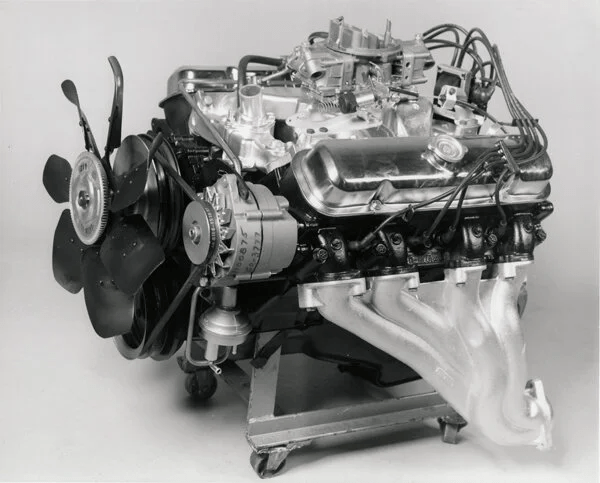
The most unique characteristic of the Pontiac V8s is the fact they don’t fall under the customary “small-block” and “big-block” engine families common to other GM divisions, Ford, and Chrysler. Effectively, production Pontiac V8 blocks were externally the same size, but with variations in the internal components like the main journals, bore, and stroke to achieve different displacements. In other words, Pontiac never had big or small blocks, they had big and small displacement V8s. In 1981 Pontiac stopped the production of their own engines, adopting the “corporate” Chevy engines in all their cars.
Pontiac kept the Firebird in production for 35 years. When Chevy pulled the Camaro’s plug in 2002, it was obvious that the Firebird had to die was well. At that point the fate of the brand was already sealed; GM finished the Pontiac’s operations in 2010.
I hope you have enjoyed this catch of the day. I will see you next time.
 The Classic Machines
I was curious about the names of pony cars so I looked them up. The word “Camaro” is French slang for “friend.” A mustang is a feral horse, and a firebird is a glowing bird. My next door neighbor has a sixth generation Camaro. It must have cost him a fortune because he doesn’t appear to have money to maintain his house. It’s fallen into major disrepair-unlike his pristine Camaro. 🙂
LikeLike
Such cool info about the names. It is interesting that Chevy named the car with a French world, and it makes sense, since the founder of the company, Mr. Chevrolet, was a Frenchman.
LikeLiked by 1 person
Good catch, bro. And thanks for the details about the early years of pony cars.
LikeLiked by 2 people
I am happy you have enjoyed the article. There is so much history behind those cars.
LikeLiked by 1 person