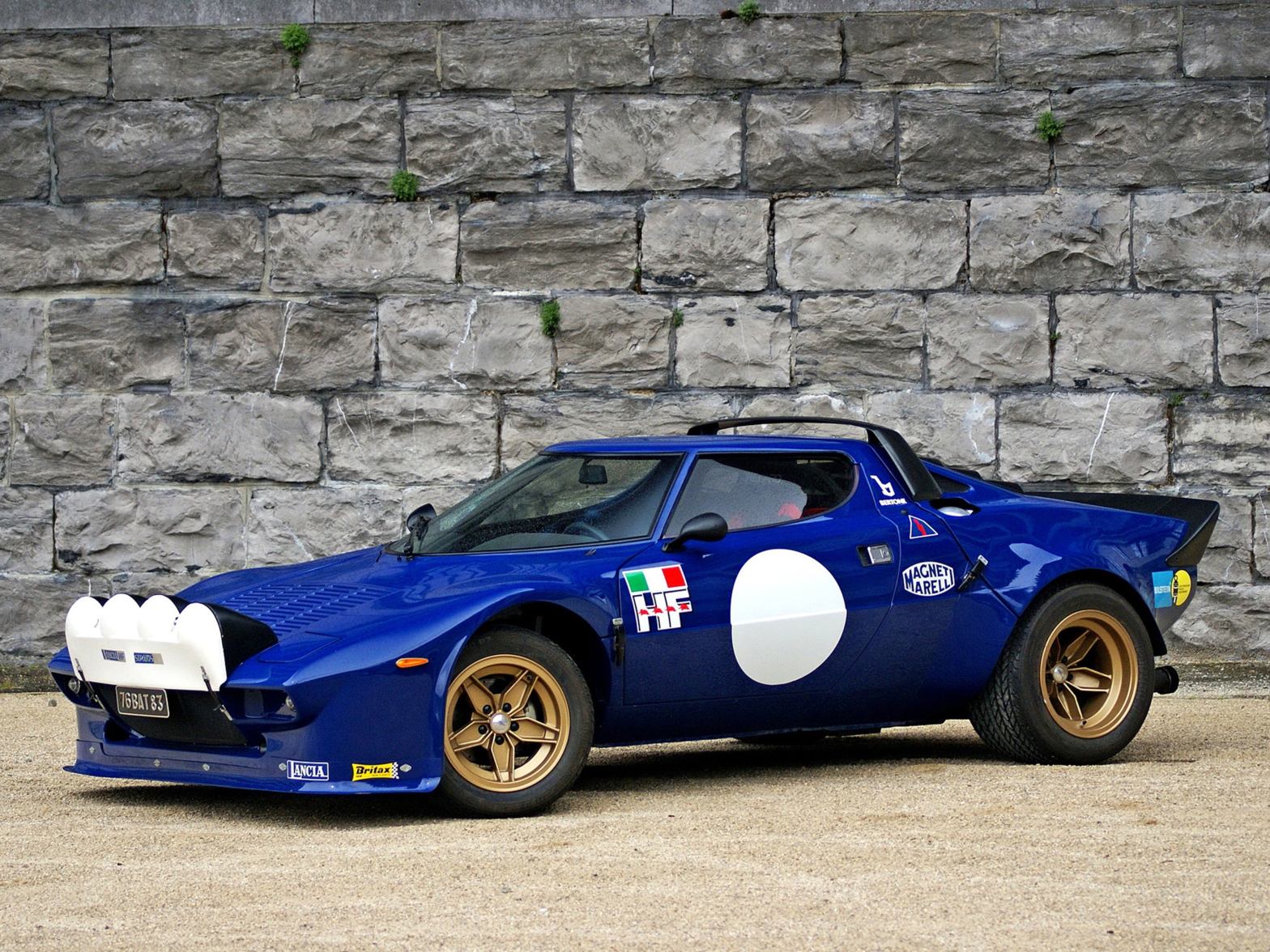
It is no easy task trying to understand the importance of rally in the European motorsport universe. For us, North and South Americans, we are more used to enjoy speed over a smooth pavement, with guard rails and tire cushions on the corners.
While we do appreciate rally racing, we don’t have the same level of passion for it as our fellow European gearheads do. It’s easy to see why; even at the highest level of the sport —the World Rally Championship —the action feels raw, and the atmosphere still carries elements of the sport’s grassroots origins. After all, racing on unpaved, narrow roads from one city to another, competing against the clock, is how motorsport was born.
It took some time for rallying to become a professional sport and to be recognized by automakers as an important venue to showcase their products. It was only in the early 1950s that it became big enough to catch the attention of the auto industry, and one small Italian brand became the pioneer as the first works team in rally.
Lancia

Lancia & C. Fabbrica Automobili was founded on 27 November 1906 in Turin by FIAT racing drivers, Vincenzo Lancia and his friend Claudio Fogolin. The brand became renowned in the automotive world for introducing numerous technological innovations, such as the first 5-speed manual transmission fitted to a production car in 1948 and the first full-production V6 engine, which debuted in the 1950 Lancia Aurelia.
Lancia as sports, luxury-oriented brand that attempted to establish itself in various classes of motorsport, including Formula One; however, it was in rally that the brand shone the brightest.

Inspired by the exceptional performance of the V6 Aurelia, Lancia became the first automaker to establish a works rally team in 1952. The Scuderia Lancia, later known as the Squadra Corse HF Lancia, led by Gianni Lancia, the son of the founder, Vincenzo.
In 1969, the company, under some serious financial troubles, was acquired by FIAT, and it didn’t just save Lancia from bankruptcy but also allowed a more substantial amount of money to flow into the company’s competition department.

In 1972, Lancia won the World Rally Manufacturer Championship with Fulvia. (Pictured above). At this point, the championship was becoming increasingly relaxed, opening up opportunities for automakers to come up with some wild machines.
Lancia Stratos

By the late 1960s, it was well known within the Italian auto industry that Lancia wanted to create a specialized rally car. Following FIAT’s acquisition of the company and an influx of cash, the dream of building this rally machine became much more achievable. It was in this scenario that a future partner joined the project, even before being invited.
Bertone

Italians take great pride in their passionate pursuit of beauty across various design fields, including fashion, architecture, furniture, and, of course, automobiles. It’s no wonder that some of the most prestigious coachbuilders in the world, such as Ghia, Pininfarina, Bertone, and Zagato, are all Italian.
In 1966, Lamborghini had the honor of having its iconic Miura designed by Carrozzeria Bertone. However, the limited production of the car was not generating enough revenue to keep either company financially stable. It was time for Bertone to collaborate with another automaker and pursue a new project.
Bertone’s best opportunity was to find a way to sign a contract with Lancia to design and build their new, high-performance flagship before its rival, Pininfarina, could do so.
One might think that all Nuccio Bertone needed to do was ask his team for ideas, arrange a meeting with the Lancia executives, present the drawings, and hope for the best. However, keep in mind that this was Italy in the late 1960s, where business was conducted in far more unconventional ways.
Signore Bertone came up with a crazy plan. He purchased a used Fulvia and handed it over to Marcello Gandini, a talented designer who had managed the team that created the Lamborghini Miura. Bertone instructed Gandini to transform the car into something that would catch Lancia’s attention.

When Gandini and his team were done, very little of the original Fulvia remained. They created a whole new car, a futuristic, compact, mid-engine design that could accommodate two passengers. They slapped some Lancia badges on it and presented the car at the 1970 Turin Motor Show. Initially referred to as Project Zero, the car was later renamed Stratos after someone noticed an eye-catching label on a model airplane kit in the studio and suggested, “How about we call it Stratos?”
Yes, Nuccio Bertone had created a totally new Lancia and presented it at the most prestigious car show in the country, all without any prior arrangement between the two companies. Welcome to Italy.

The car was the star of the show; its futuristic, sci-fi design was decades ahead of its time. The profile of the Stratos Zero is so low that the car has no doors. To access the interior of the vehicle, the windshield tilts upwards.

The Stratos Zero certainly captured the public’s attention, but it somehow failed in its primary mission. No one from Lancia, except motorsport boss Cesare Fiorio, came across and had a proper look at the space machine. The show closed by mid-November, the concept car went back to Bertone, the year ended, but there was no call or reaction from Lancia.
It was only after two months that Nuccio Bertone received a call from Lancia’s boss, Pier Ugo Gobbato: “What is this car that you guys are displaying around with our badges on it? Bring it here and let’s talk.” The meeting between the two houses, Bertone and Lancia, finally took place on February 17, 1971. Since the prototype was a fully operational car, Bertone himself drove it to Lancia’s headquarters. The top Lancia CEOs were impressed with the Zero, but they knew the car was infeasible for production. Cesare Fiorio, the ex-racer who was heading Lancia’s motorsport division, HF Squadra Corse, asked Bertone how to transform that spaceship into a rally car.
Bertone, who had never produced a rally car, asked: “What would be the requirements for this car?” The answer to this question is simple and complicated at the same time.
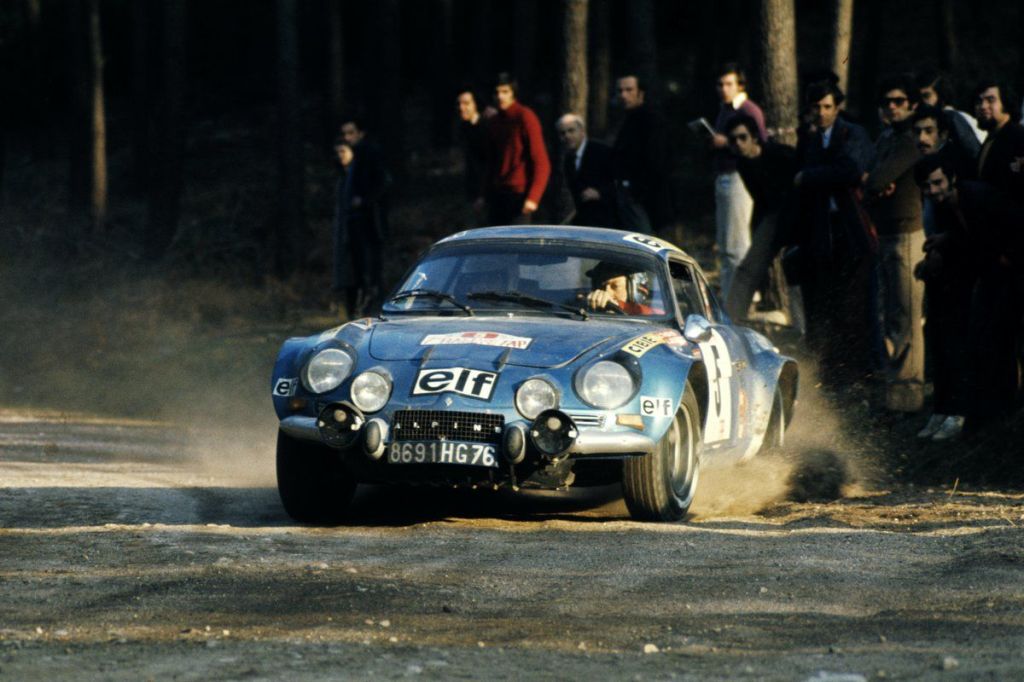
While the Fulvia Coupé Rallye HF continued to win numerous rallies, it was evident that it was being outperformed by the Alpine Renault A110 and the Porsche 911. Cesare Fiorio recognized that the era of front-wheel-drive rally cars, such as the Mini and the Fulvia, was coming to an end.
The idea of converting production cars into rally machines may seem like a quick and easy solution. Still, it has significant limitations, even for purebred sports cars like the Porsche and Alpine.
He understood that it was time to develop a vehicle specifically designed for rallying.

In 1970, Ford officially opened the doors to the purpose-built rally car, with the GT70 (pictured above). In this new car, the Americans adopted the successful mid-engine platform. If a better weight distribution works wonders on paved roads (as seen in the Ford GT40), it will certainly do the same on gravel. Although the GT70 had limited success in the few rally races it participated in, and the entire program was terminated three years later, it marked the beginning of a new era in the World Rally Championship.
Right there, Signore Bertone had all the important elements to start working in this new Lancia. First, it must be a small car, able to zip through narrow roads and tight corners. They settle with 2.16 meters wheelbase, somewhere in between the Alpine (2.1m) and the Porsche (2.21m).
Second, it must be a mid-engine platform, a clear advantage over the rear-engine French and German cars.
Third, the car must be iconic; it must be beautiful. It must be a Bertone.

The project was assigned to the geniale Gandini, who worked feverishly to complete the prototype as soon as possible. However, things in the Italian auto industry don’t always work as they should. Lancia was pretty vague about the engine to be used in this car. The first option was the Lancia 1.6 liter V4, increased to 2.0 liter, but the leading contenders were the L4, 2.0 liter, 16 valve engine, developed by Abarth, (FIAT’s performance division) and the Ferrari 2.4 liter V6, the same engine that powers the soon-to-be-discontinued Ferrari Dino.
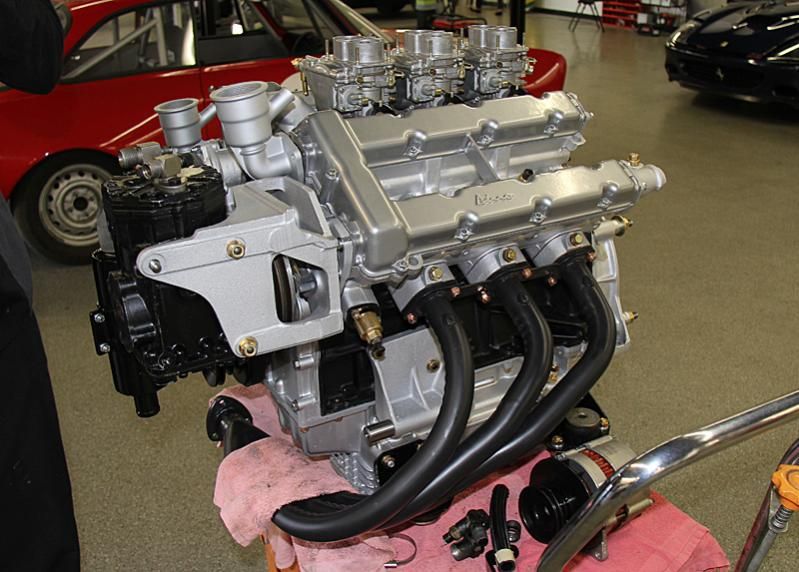
In practical terms, the Abarth 4-cylinder should be the chosen one; it is smaller, lighter, and easier to work on during races. However, the marketing advantage of having a car powered by a Ferrari engine can’t be ignored. Either way, Gandini built an engine cradle big enough to accommodate both options.
Eventually, they chose the Dino V6 mill. The Commendatore Enzo wasn’t so happy to see one of his engines powering a “non-Ferrari” car, but since Lancia was now part of the family, he didn’t have much choice. In its street version, the 2.4 V6 Ferrari can produce around 190 HP, but in a full racing configuration, it can crank out 250 ponies.

Gandini created a masterpiece, a true GT car. Its all aluminum body is muscular, aggressive, and gorgeous.
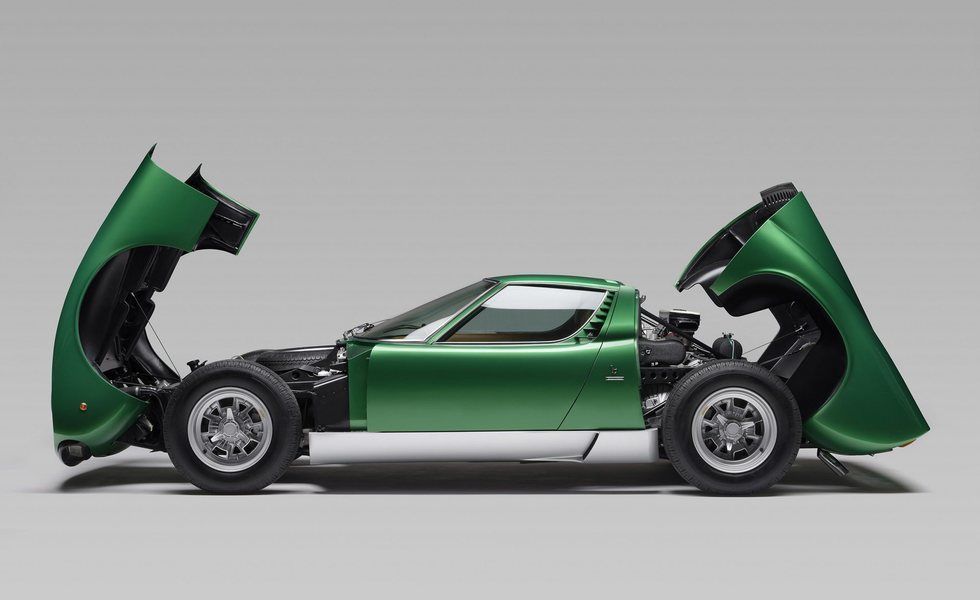

It is impossible not to notice the Bertone DNA in both cars.
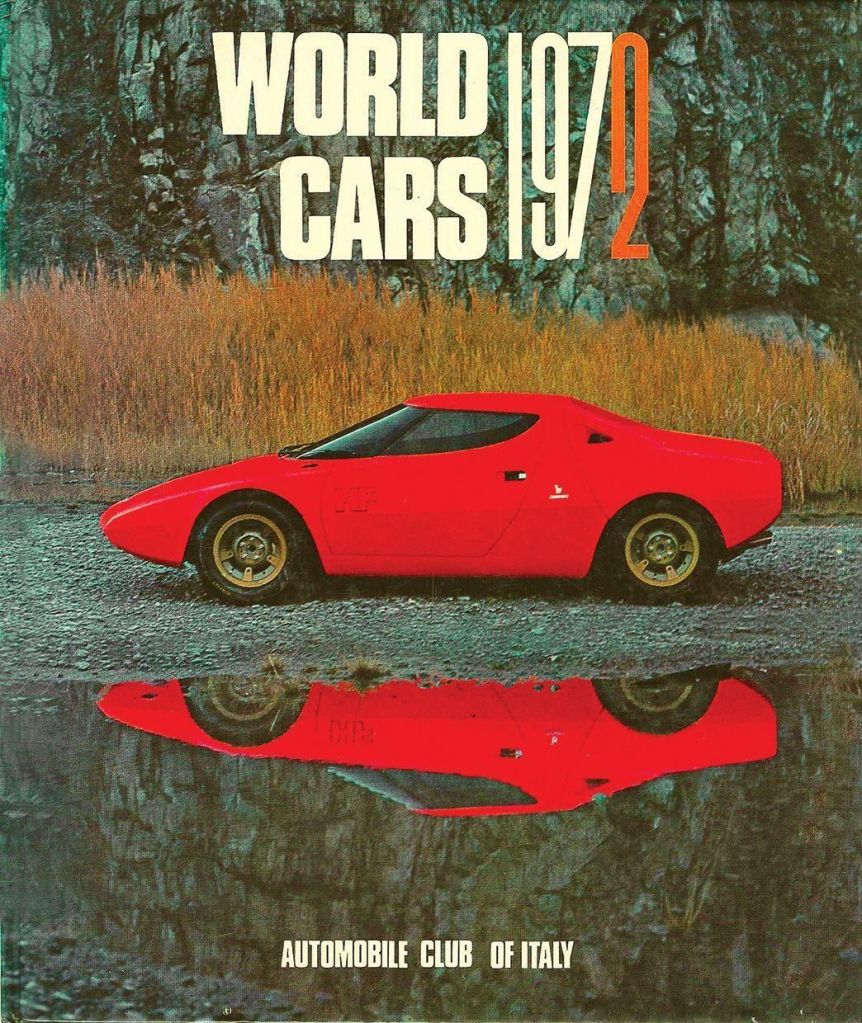
The first prototype was painted white, and the following was bright red. The Lancia Stratos HF (High Fidelity) was officially presented to the public during the 1972 Turin World Cars.
The HF – High Fidelity was originally the name of an exclusive club for loyal Lancia customers that was later adopted by the brand’s racing team, Squadra Corse. The “HF” designation has since become a symbol for Lancia’s high-performance vehicles.
The Stratos was again the star of the show, receiving approval not only from the visitors but, more importantly, from the auto media. This approval was needed since Lancia had to build and sell 500 units of the street version, Straddale, to homologate the car for WRC.
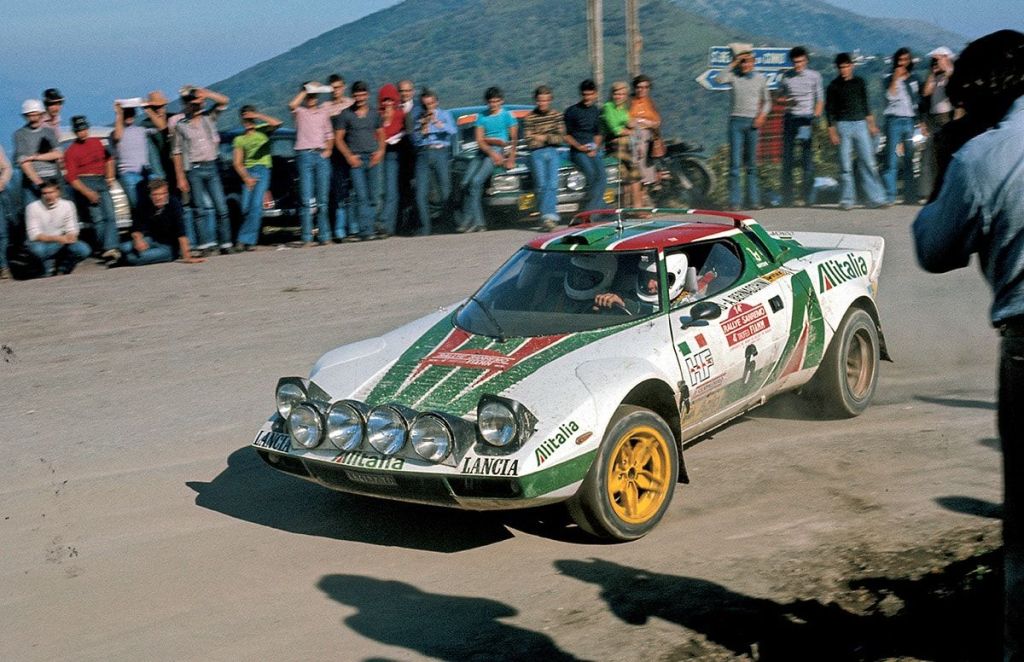
The prototype still needed some wrenching before being considered competitive in the world arena. Its first race was the Tour de Corse in November 1972, where it dropped out. The Stratos’ first victory was in the Firestone rally in Spain in April 1973. On May 15, a Stratos finished second at the Targa Florio, and on September 23, won the Tour de France Auto, its first significant victory. After that, the Stratos was ready to take on the World Rally Championship.
1974

In 1974, the Stratos dominated the season, with 10 victories, two third-place finishes, and two seconds, securing the car’s first World Championship. FIAT finished in second and Ford in third.

1975

In 1975, Lancia maintained its winning streak by securing a second consecutive manufacturers’ championship, although the competition was tougher than in 1974. The Stratos won four rallies, which included Sandro Munari’s third victory at the Monte Carlo rally. However, mechanical issues challenged the team’s resilience throughout the season. Fiat narrowly surpassed Alpine-Renault for second place, finishing with a score of 61 to 60.

Strato’s success in rally didn’t attract customers to buy the road-legal Stradale, and production ended in 1975 after 492 units. Customers complained about the car being uncomfortable and noisy, with a primary concern being the poor finish of the interior. Although development for competition continued, including the introduction of more powerful 4-valve engine variants.
1976

Lancia sealed a third consecutive title with the car that seemed to be unbeatable. Sandro Munari extended his Monte Carlo mastery with a third win in a row, supported by consistent performances from Björn Waldegård across the season.
Group 4 homologation rules were relaxed to require 400 units within 24 months – though Lancia’s existing production already met the threshold.

The season also marked a shift in FIAT’s policy towards the WRC. They decided that Lancia had had its fair share of fun, winning 3 championships, and now it was time to divert funds to the new FIAT 131 Abarth.
That was the end of the official Lancia Stratos HF rally campaign.

Privateer teams kept the Stratos legacy alive for a few more years. The car also saw some serious road course action, from the roads of Targa Florio to the American racing league, where teams converted the Stradale into a race car. The picture above shows the Stratos that belonged to the Oklahoma-based entrepreneur and oil heir Anatoly ‘Toly’ Arutunoff. This Stradale was converted into a Group IV road-racing car and went on to establish a nine-year racing career.

‘The Duck’, as it quickly became known, received a smaller engine and competed in the below-two-liter GTU category right across the United States, encompassing all the great American endurance racing classics, from the Daytona 24 Hours and the 12 Hours of Sebring to the Watkins Glen Six Hours and the Road America 500 Miles.
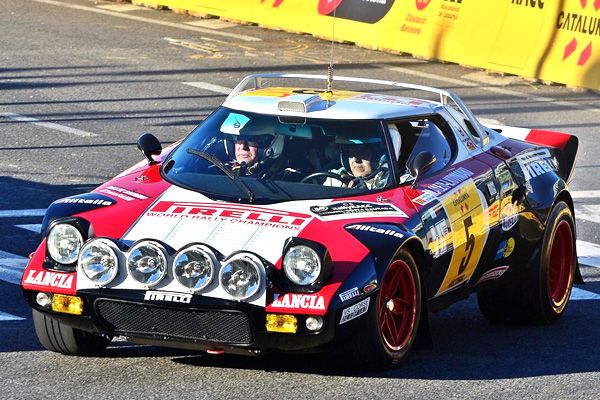
Despite more powerful and modern competition, the Stratos remained a force to be reckoned with until 1981, when it won the Tour de Corse for the last time.
Conclusion
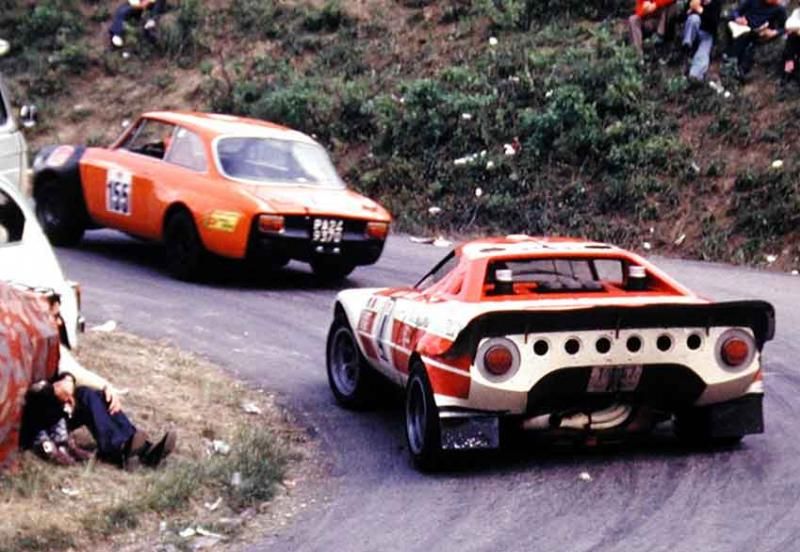
Is the Lancia Stratos the most iconic rally car of all time? It’s hard to say since it depends on each gearhead’s perspective. The purpose of this post isn’t to create a contest but to celebrate the car.
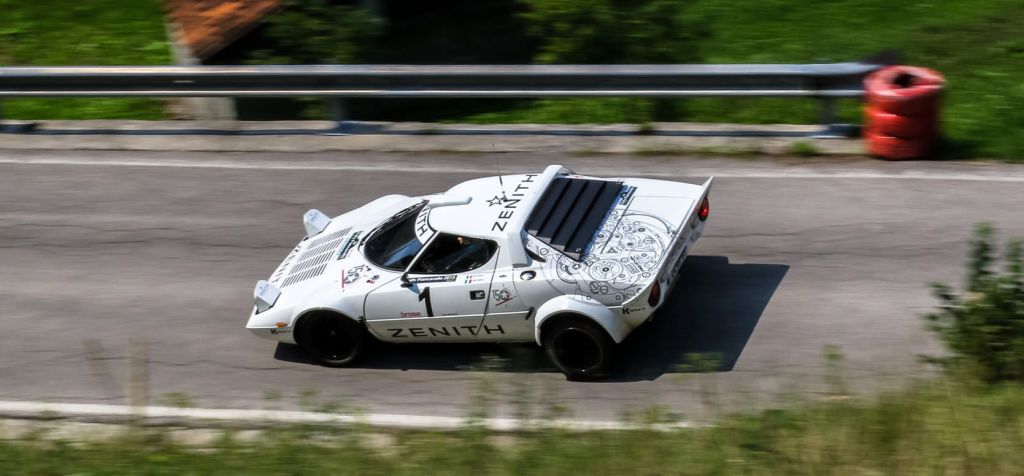
Many factors have contributed to the car’s legendary status, including the peculiar details of its creation, its exceptional performance, and the striking design by Gandini.
The Stratos, as the first successful purpose-built rally car, paved the way for the incredible machines of Group B in the 1980s. Lancia kept its racing team at full throttle during those magical years and beyond. Ultimately, the Squadra Corse collected 10 world titles, a record that remains unbroken to this day.
Lancia today

For many of us, Lancia is just an obscure European brand that we aren’t even sure still exists; well, it does, or at least barely.
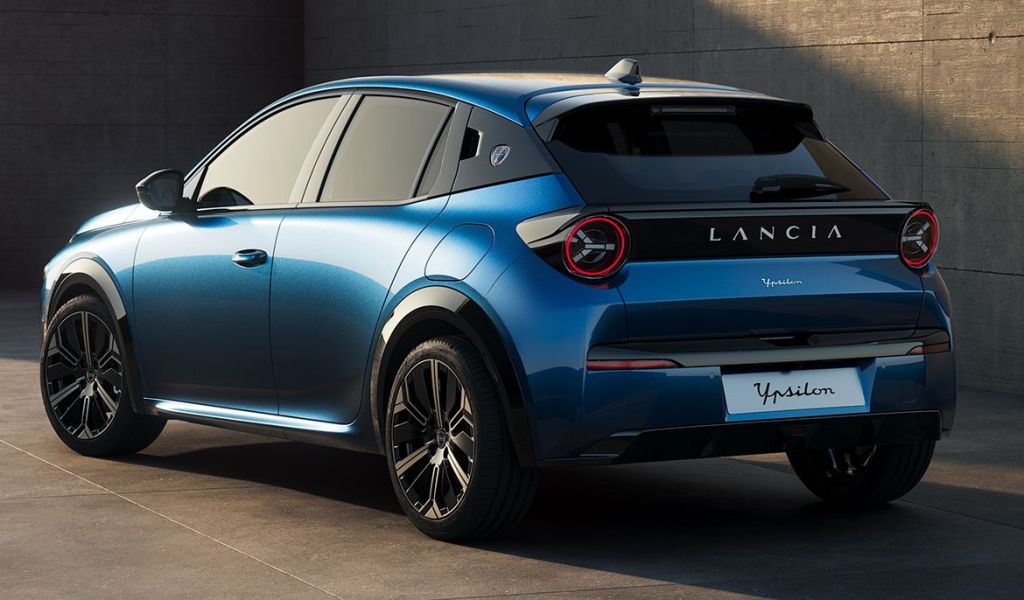
The only car in its lineup is the Nuova Ypsilon, offered as a full EV or hybrid. The car shares its platform with the FIAT 500.
Lancia is still deeply involved with rally. The company has introduced two new, race-focused Ypsilon models: the Rally 4 HF and the upcoming Rally 2 HF Integrale. The Rally4 HF is a front-wheel-drive, 1.2-liter turbo car designed as an affordable option for entry-level rallying.
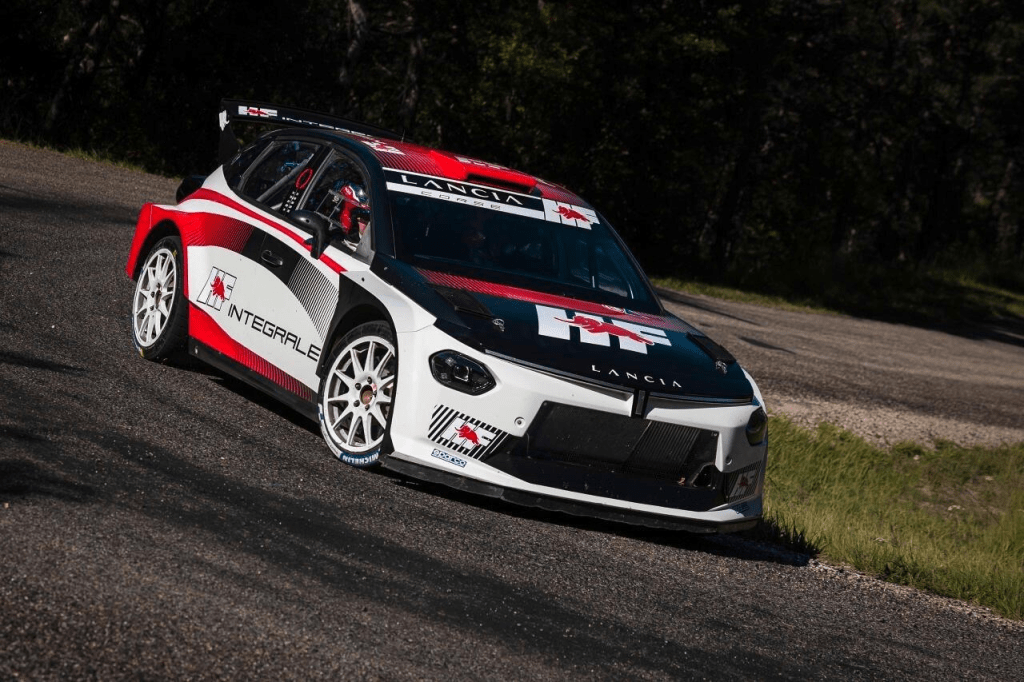
The more advanced Rally2 is built for top-tier series like WRC2 and shares many components with the Citroën C3 Rally2, featuring a 1.6-liter turbo engine and all-wheel drive. (pictured above)
 The Classic Machines
Great article. Showing my age, but the Stratos on the RAC Rally back in the day was a sight to behold 😀
LikeLiked by 2 people
I believe you and I are the same age, or we are pretty close. I never had the privilege to see a Stratos up close in action, only on TV. I know they are still around, competing in the Historic Rally Class. Maybe one day, I will see it.
LikeLiked by 1 person
Fingers crossed!
LikeLiked by 1 person
Your reviews are so thorough! The Italians certainly appeared to be WAY ahead of their times with car designs. Thanks, Rubens. 🙂
LikeLiked by 2 people
Thank you, Nancy, for stopping by and enjoying the article. It is hard to make a short text when I am are writing about something that I love, and the more I dig in, the more interesting facts I find.
Yes, the Italians have always taken pride in the beauty of their cars, and this hasn’t changed.
LikeLiked by 1 person
Your welcome, Ruben. 😁
LikeLike
Fantastic write-up Rubens.
LikeLiked by 2 people
Thank you so much, Chris. Your worlds mean a lot to me.
LikeLiked by 1 person
Very interesting and enjoyable. I’m always so impressed by the research you do for your articles. Well done!
LikeLiked by 2 people
Thank you so much, Glenn. It is so satisfying when through and through car guys like you enjoy my articles.
LikeLike
Excellent article! Your points are well-articulated and persuasive.
LikeLike