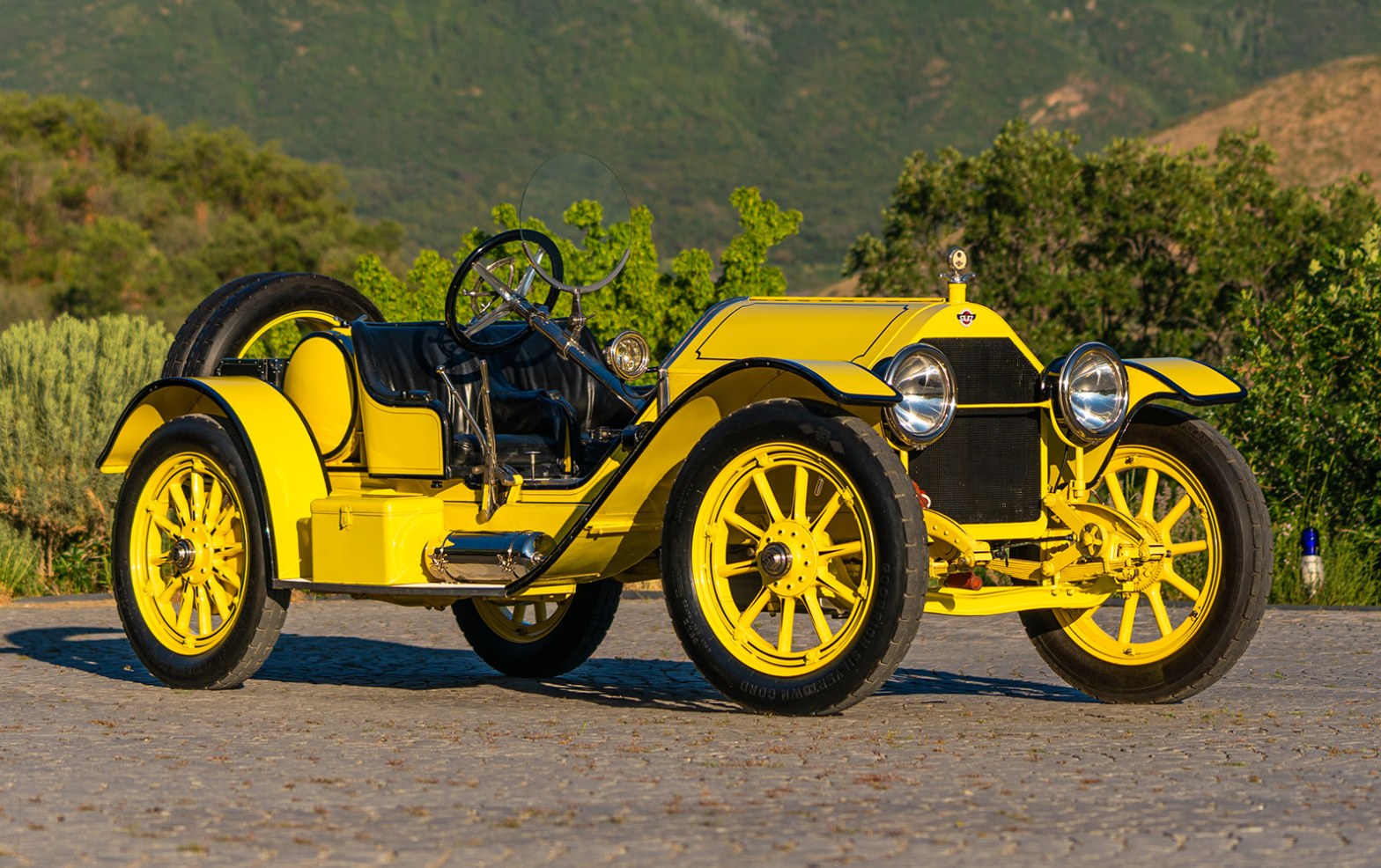
When we came to Canada in 2015, my wife attended Red River College in Winnipeg, which was an integral part of our immigration program. From time to time, the college library would donate unwanted and outdated books. One day, while going through a pile of those old books, Estela found this gem.
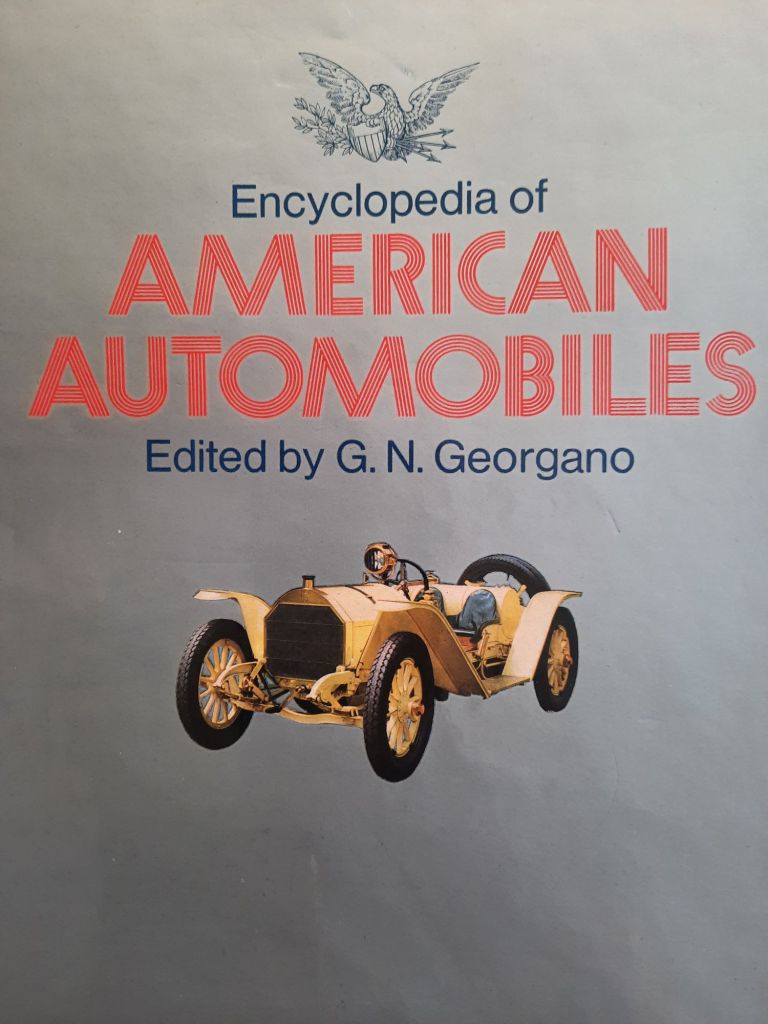
This is a 1971 edition of the Encyclopedia of American Automobiles, created and edited by G.N. Georgano. The book is an excerpt from a larger work, The Complete Encyclopedia of Motorcars, published in 1968. I believe that when the number of American and Canadian automakers became too many, Mr. Georgano was compelled to organize a separate book.

Estela, knowing the gearhead she has at home, happily grabbed the book and kindly gave it with me.
What a wonderful gift indeed.
Even after being part of the college library for 45 years, the book still holds up remarkably well. It’s in excellent overall condition, showing just a few signs of its long journey! Estela knew I would be delighted with this gift.
This book, judging by its cover, could be mistaken for a coffee table book, but it is actually a true encyclopedia. The author, after conducting extensive research, presented us with a comprehensive list of 1,640 American and Canadian makes of automobiles, spanning from the very first American car, built and sold by John W. Lambert in Ohio in 1891 to the release of the book in 1971.
The rise and fall of the American auto industry.
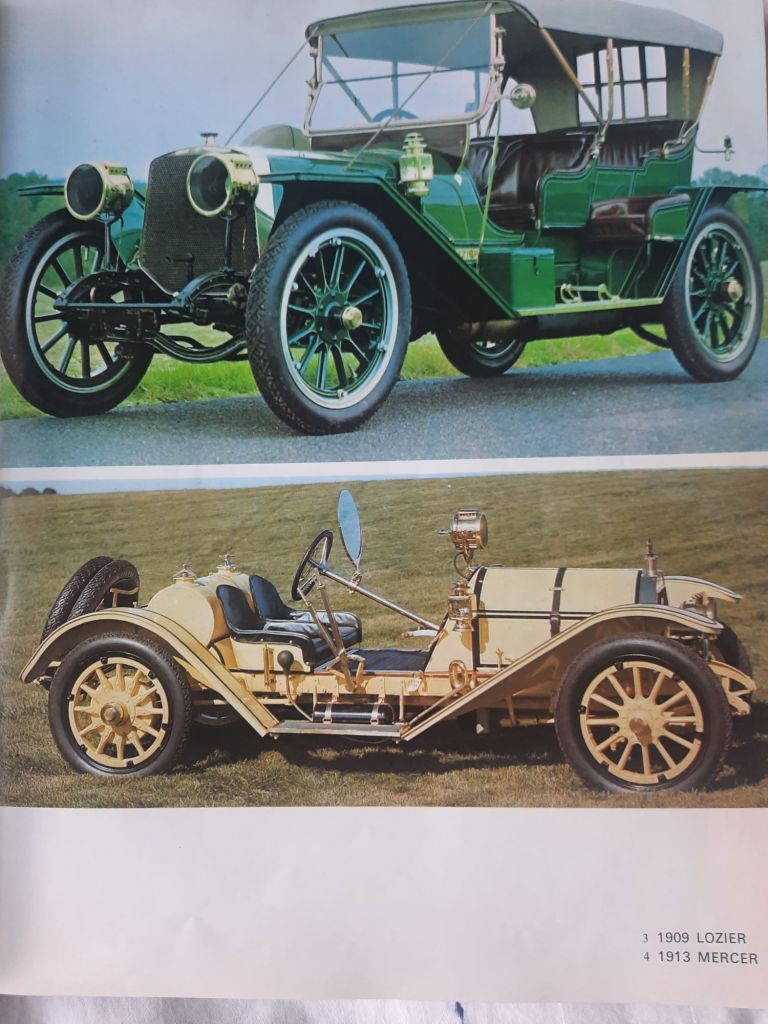
Flipping through the pages, the first thing I noticed was the massive number of American automobile brands that existed during the first two decades of the 20th century.
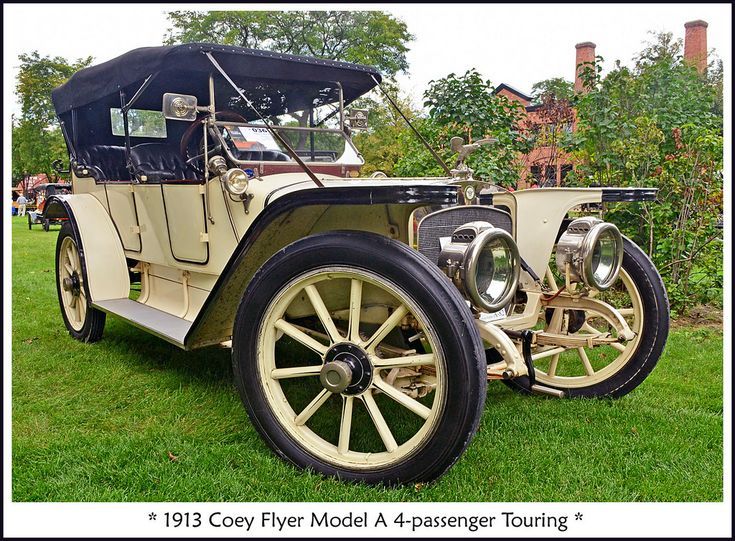
Most of those unknow brands from this period are not shabby horseless wagon with an engine strapped underneath the floor. The cars look fancy and extremally well built. Like jewels on wheels.
Perhaps, those small brands were relying on the American prosperity of those years, which seemed it would last forever.
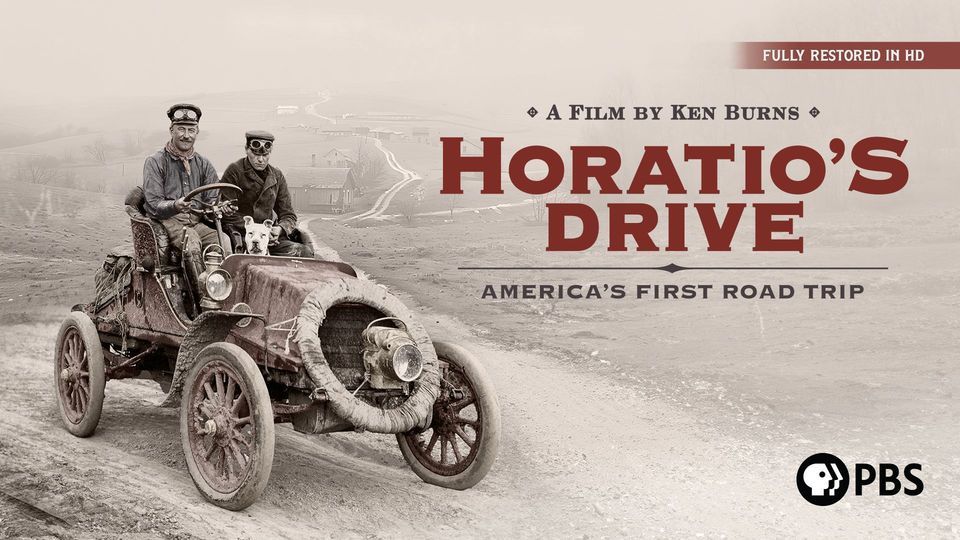
Another interesting brand I found in the book is Winton, the car chosen by Dr. Horatio Nelson Jackson for his 1903 US coast-to-coast trip. This epic journey is considered America’s first transcontinental road trip. Perhaps I shouldn’t call it a road trip since there were only 150 miles of paved roads in the entire country, all of which were within city limits. The adventure was featured in the fantastic 2003 documentary “Horatio’s Drive” by Ken Burns/PBS. It is a must-see.
The great depression of 1929 wiped out those low-production, luxury brands, leaving only the well-established automakers in the market.
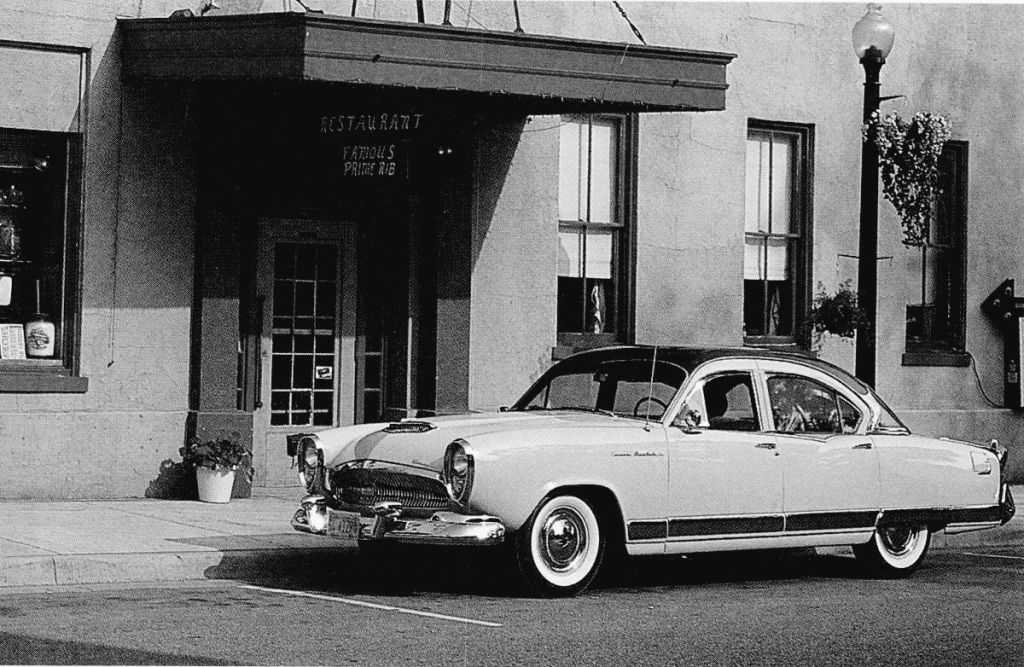
The following decades cemented the power of the Big Three, Ford, Chrysler, and General Motors, forcing smaller brands such as Hudson, Packard, Kaiser, and Willys to slowly fade into obscurity. Above, the beautiful 1954 Kaiser Manhattan.
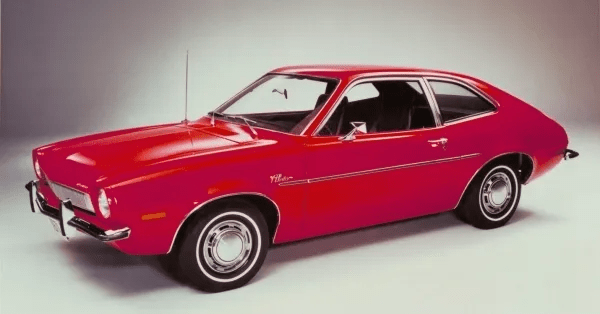
The book concludes in 1971, just before the oil embargo crisis started. This was another major setback for the mighty American auto industry, paving the way for Asian cars to enter the market. A wound on the domestic automakers that never healed.
The Era of Books
Old-timers like me will recall a time before the Internet, personal computers, and smartphones. If you wanted to learn about a subject—whether driven by curiosity or a school project—you would need to visit your local library and explore books and newspapers.

The encyclopedia, in general, made our lives easier. It collected only the necessary information to understand the subject, always accompanied by pictures, with the intent of making the study interesting. And that is precisely what this book does.
The access to information we have today is fantastic. Anytime and anywhere, we can find almost any information we need about nearly any subject, right in our pockets. A book like this is a thing of the past, and flipping through its pages is a nostalgic trip back in time. I am so happy it now belongs to our modest library.
 The Classic Machines
Great stuff, thanks!!
LikeLiked by 1 person
Thanks, Simon. I am happy you enjoyed the post. Merry Christmas.
LikeLike
That was quite a find by your wife. The book’s pictures are great-and so colorful! Thanks for sharing your treasure. 🙂
LikeLiked by 1 person
Thank you, Nancy.
Yes, there are quite a few coloured pictures on the first pages of the book, in an attempt to give it some life, because most of the pictures illustrating the brands of the 1910s and 1920s are in black and white.
LikeLiked by 1 person