The love affair between celebrities and motorsports is a well-known fact. For some stars, it looks like their daytime job sole purpose is to provide means for their motorized hobbies.
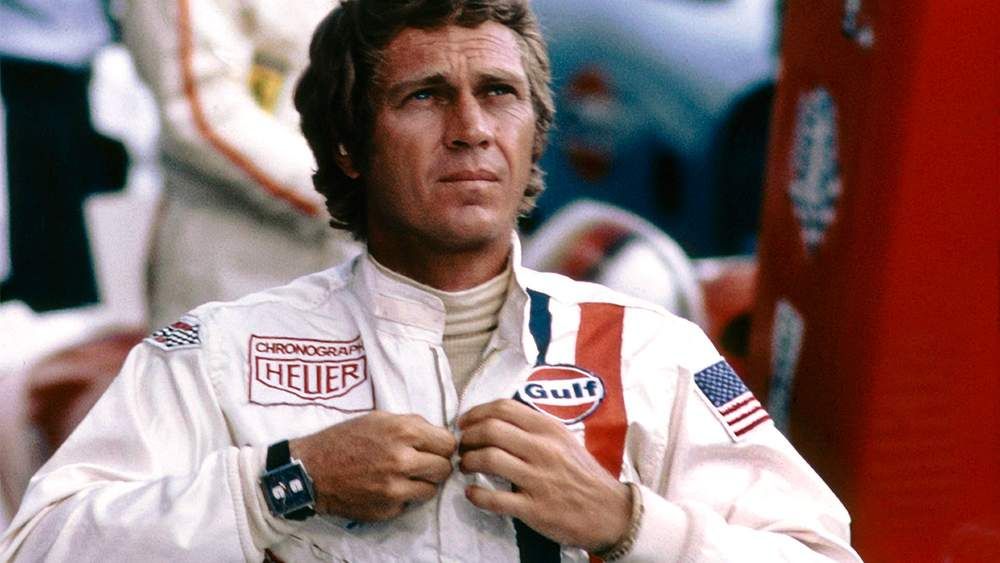
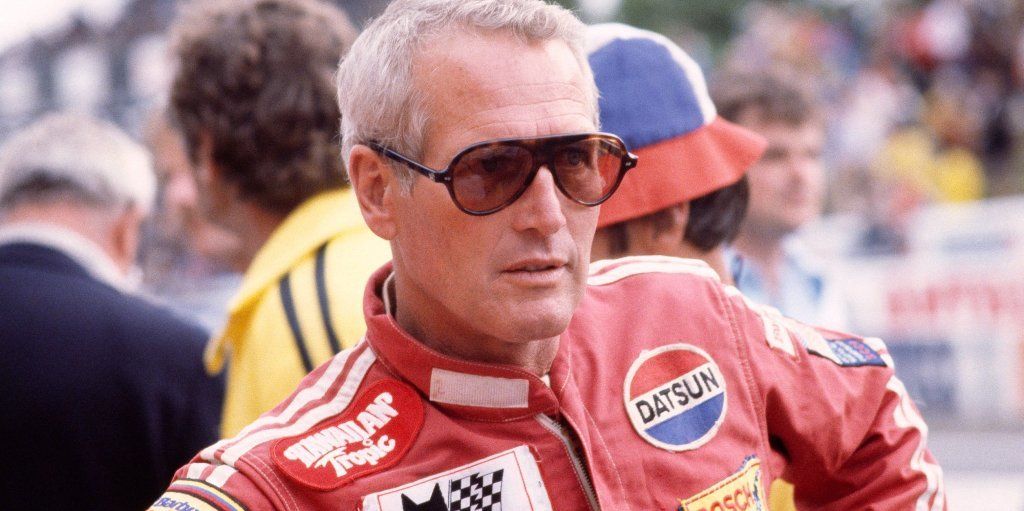
The best examples are Steve McQueen and Paul Newman, who achieved greatness in both acting and racing.
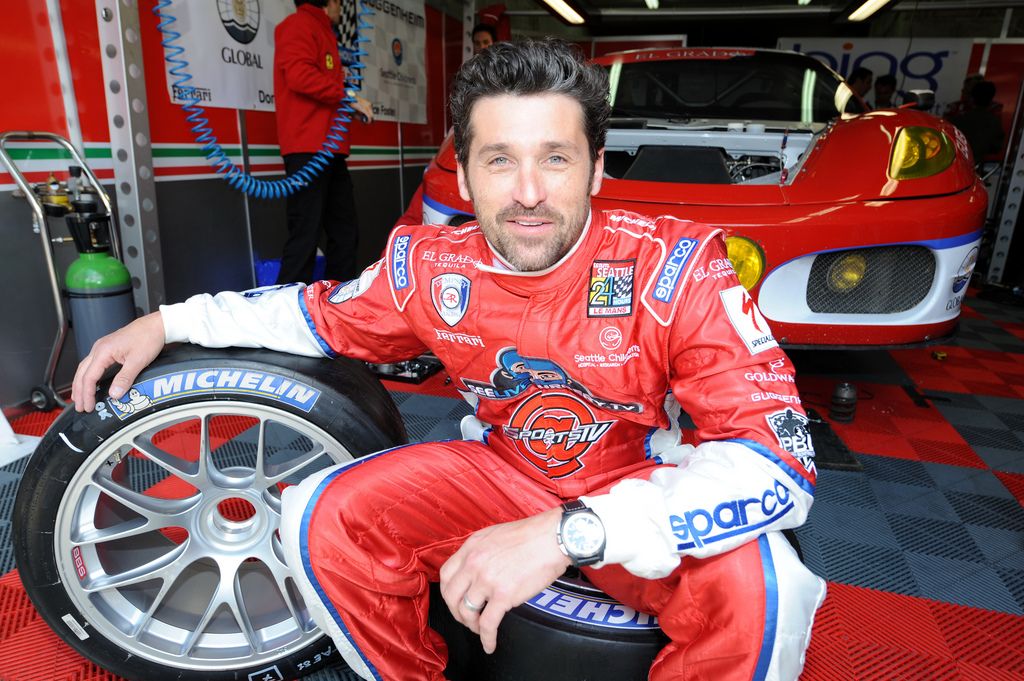
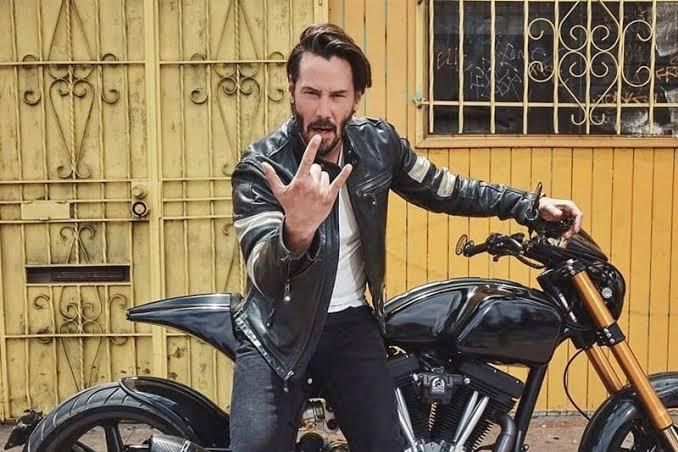
Other contemporary examples include Patrick Dempsey, who started as an amateur driver and later became a team manager, and Keanu Reeves, a passionate bike enthusiast who loves riding classic Nortons and is a co-founder of Arch Motorcycles.
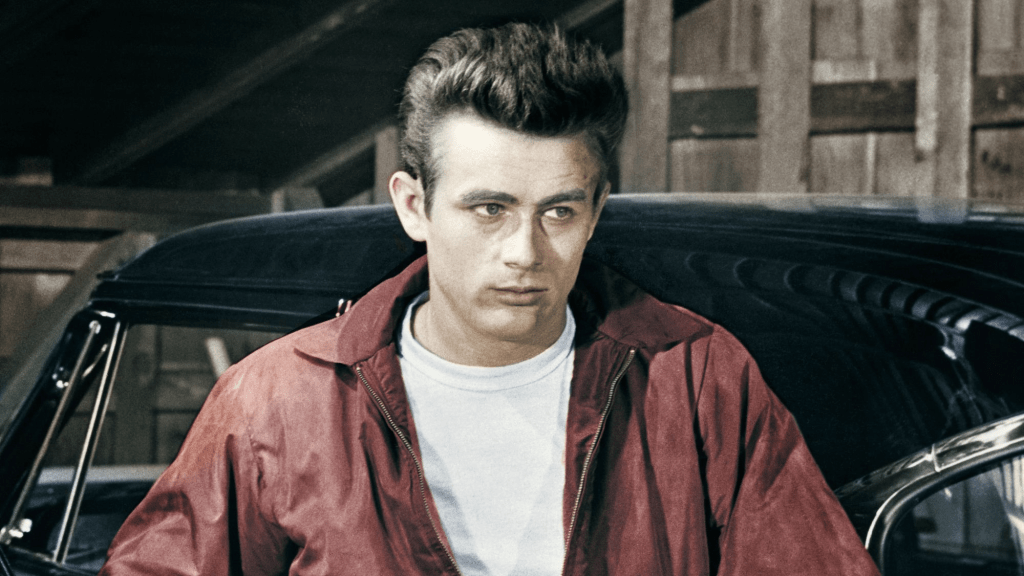
But before them, there was another Hollywood icon who literally lived and died for the need of speed, James Dean.
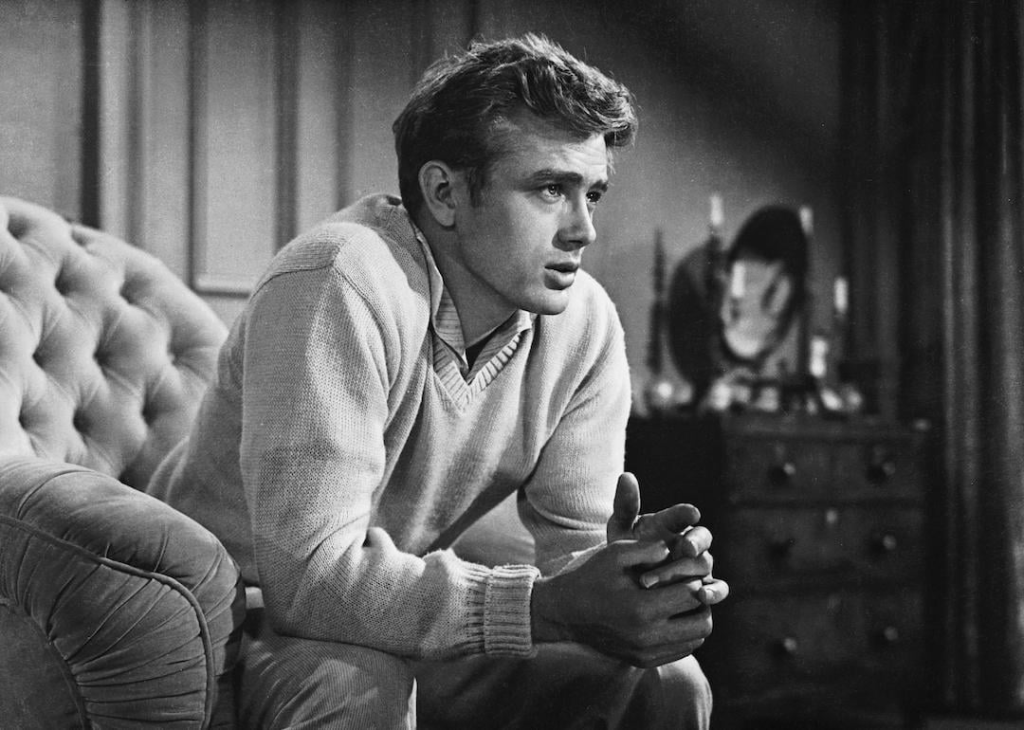
James Dean exemplifies how an actor’s image can overshadow his legacy. Dean’s acting career lasted only five years, but his talent combined with his good looks gained him some iconic roles. He starred in three major films: Rebel Without a Cause (1955), East of Eden (1955), and Giant (1956). In all of them, he portrayed a young, intense character who, with or without a cause, confronts the repressive American society of the 1950s. Dean quickly became the symbol of a generation of young people dissatisfied with the world they lived in. His characters, even unintentionally, helped pave the way for the liberation movements of the 1960s.
Passionate gearhead
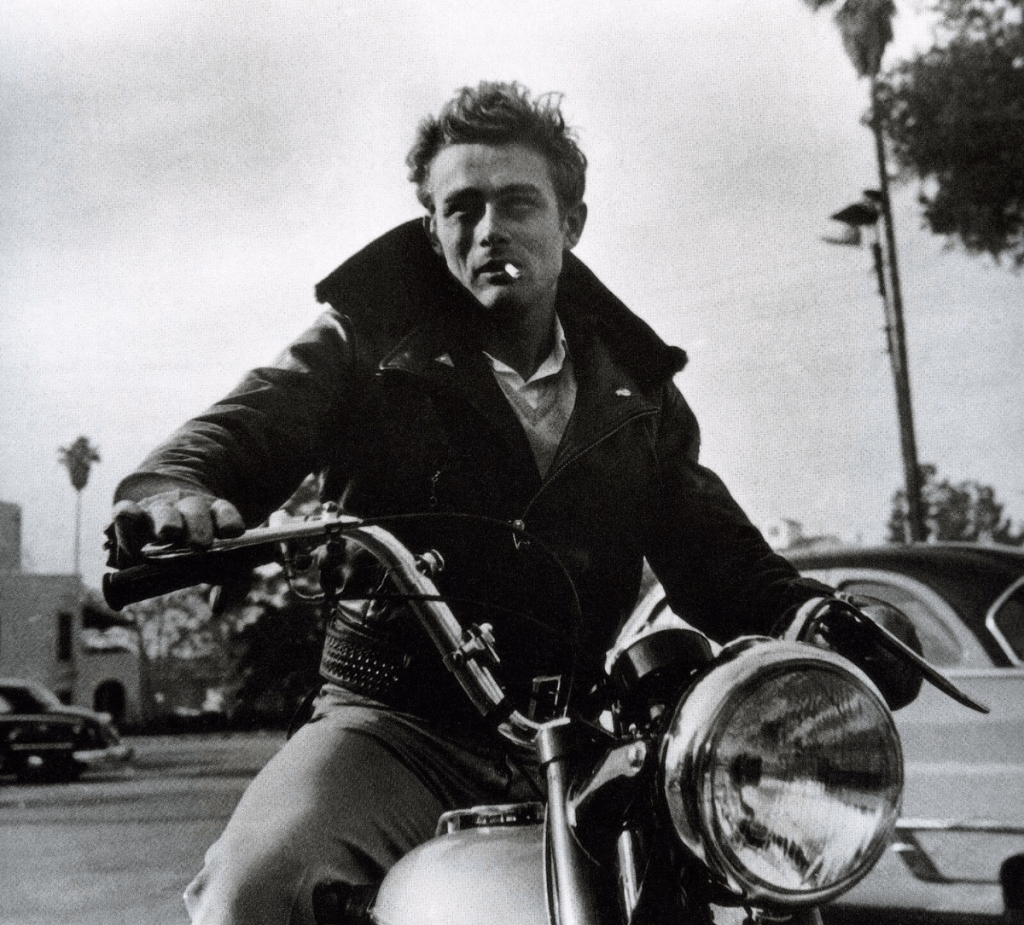
Dean’s passion for speed started at a very young age. When he was 15, he got a 1947 CZ125 as a gift from his uncle. After that, he owned quite a few bikes, including a Royal Enfield, an Indian Warrior, and a couple of Triumphs. During this time, he earned the nickname “One Speed Dean.”
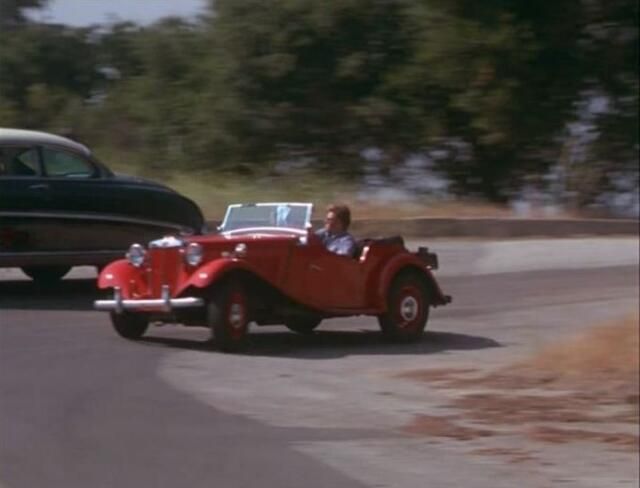
Dean’s first contact with a sports car happened when he sold the 1939 Chevy his father had given him and bought a used 1953 red MG-TD (pictured above). Some MG specialists claim the car is not a “TD.” Since I am unsure which car model is correct, I will leave it as is.
Racing as a hobby
Even if MG was a well-accepted brand among race drivers in the sports car arena, Dean decided it wasn’t the right choice to start his racing adventure.
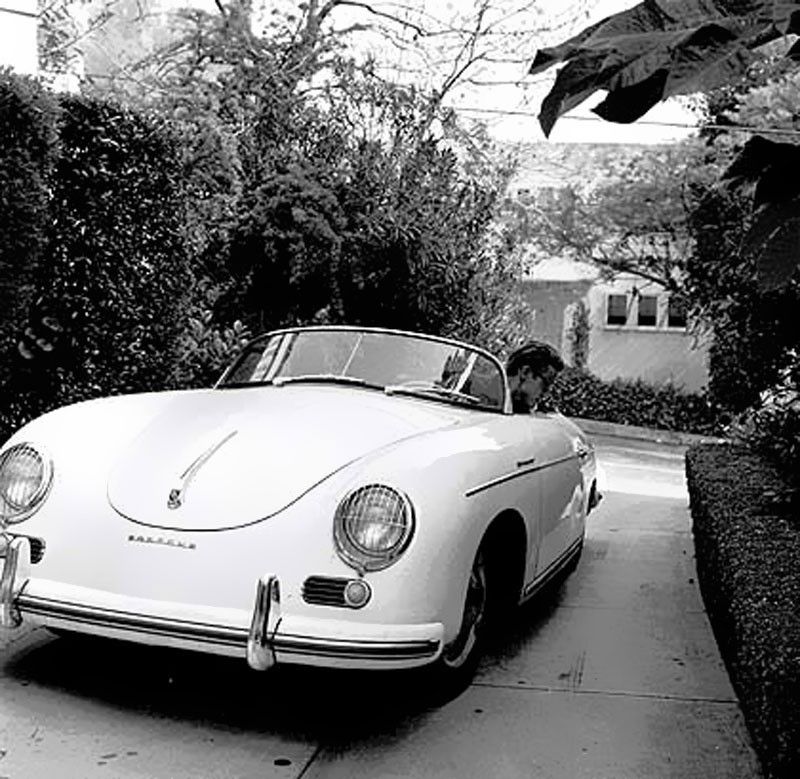
After Hollywood began offering him more important roles, money was no longer a problem. In March 1955, Dean traded his MG for a brand-new Porsche 356 Super Speedster (chassis 80126) from Competition Motors, a dealership specializing in sports/race cars, in Hollywood.
Within 10 days of buying the car, he had already put 1,000 miles in his Speedster, much of it on Mulholland Drive, where challenging curves along the coastal range crest attracted both amateur and experienced racers.
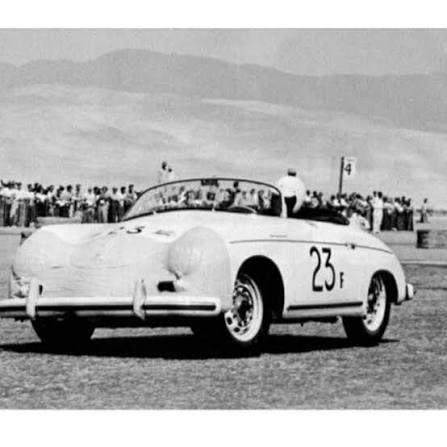
Dean chose the correct car to start his racing career. The “super” Speedster was designed for club racing, powered by a 70-horsepower, 1500cc air-cooled, flat-four pushrod “Super” engine. Even if nowadays we might have lawnmowers with more than 70 ponies, the Speedster was pretty fast for the 1950s standards.
Dean didn’t waste much time starting his new hobby. On the weekend of March 26-27, 1955, he was already competing in the Palm Springs Road Races.
He won the production class race, qualifying him for the finals.
In the final race, among the veteran drivers he faced, there was a name destined to become a legend: Ken Miles, driving an MG Special. Dean finished the race in third place. However, Miles was later disqualified on a technicality, and Dean was bumped up to second. Not bad at all, considering this was his debut weekend at the tracks.
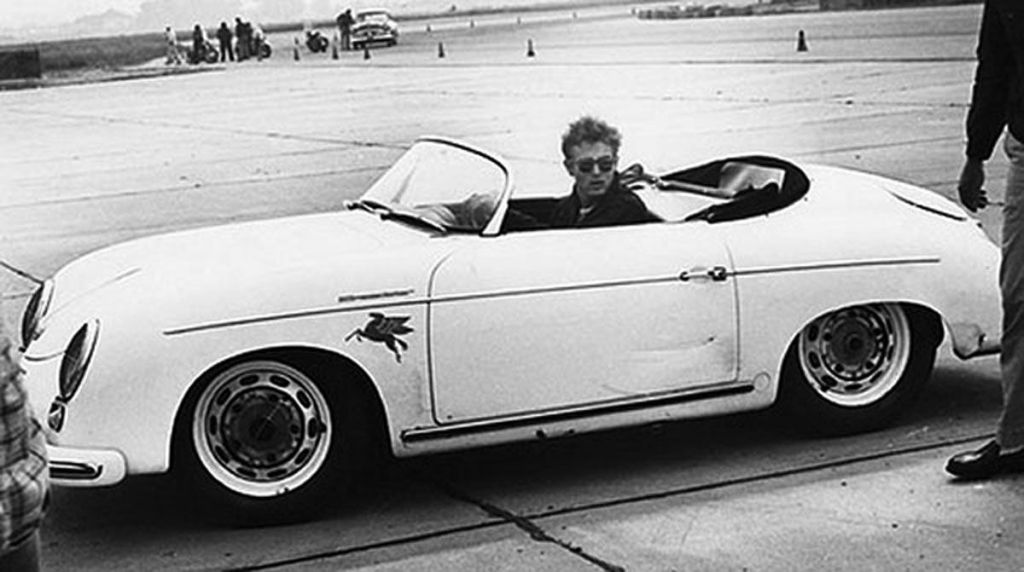
Dean used his Porsche as a daily driver as well, and it wasn’t uncommon to see him behind the wheel, driving up and down the streets of Hollywood.
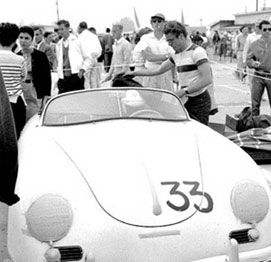
On May 1-2, 1955, he participated in the Minter Field Bakersfield, California, racing weekend. Dean entered the 1300-2000cc production and 750-1500cc modified race. He placed third behind Marion Playan in an MG Special and John Kunstle in a Panhard Devin. Although he finished third in the main event, he was first in his class.
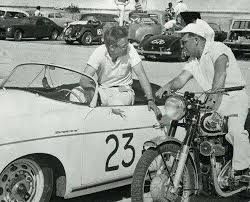
His final race with the Speedster was at Santa Barbara on the Memorial Day weekend. He missed the Saturday Production car event because he was filming that day. He actually took part in a mixed race for modified and production cars on Sunday.
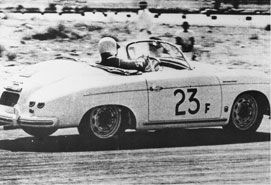
The 10-lap under-1500-cc mixed race was for less experienced drivers. Dean started in the eighteenth position but worked his way up to 4th by the fifth lap. Pushing hard to make up time, Dean over-revved his engine and blew a piston, preventing him from finishing the race.
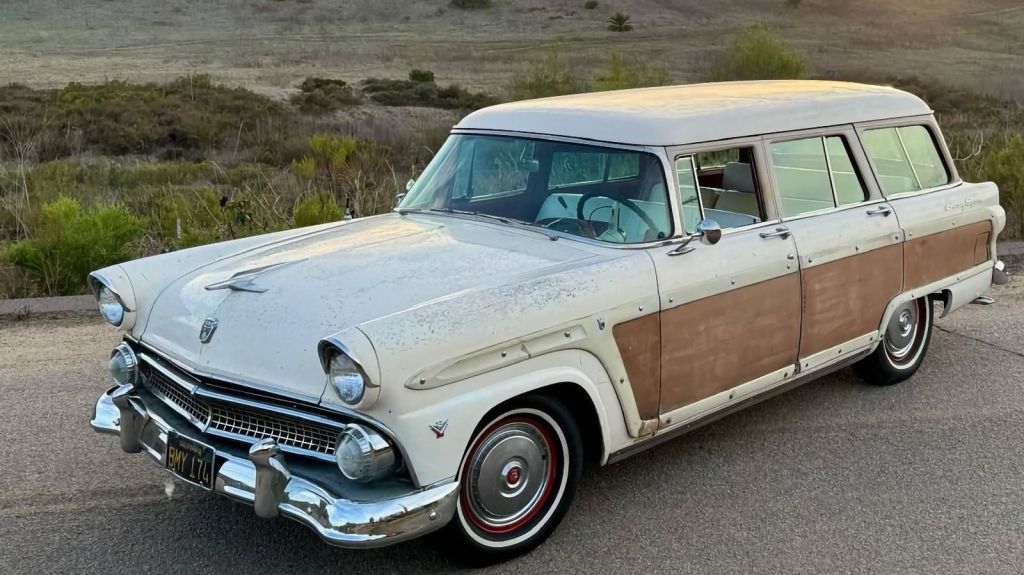
As Dean became more involved in his hobby, in July, he purchased a brand-new 1955 Ford Country Squire station wagon to carry tools and spare parts and to tow his Porsche to the races.
The Little Bastard
The shooting of Dean’s last movie, Giant, began in June 1955. Understandably so, Warner Brothers Studios barred him from racing during the production of the movie.
After completing his scenes and the movie entered post-production, he was free to return to racing.
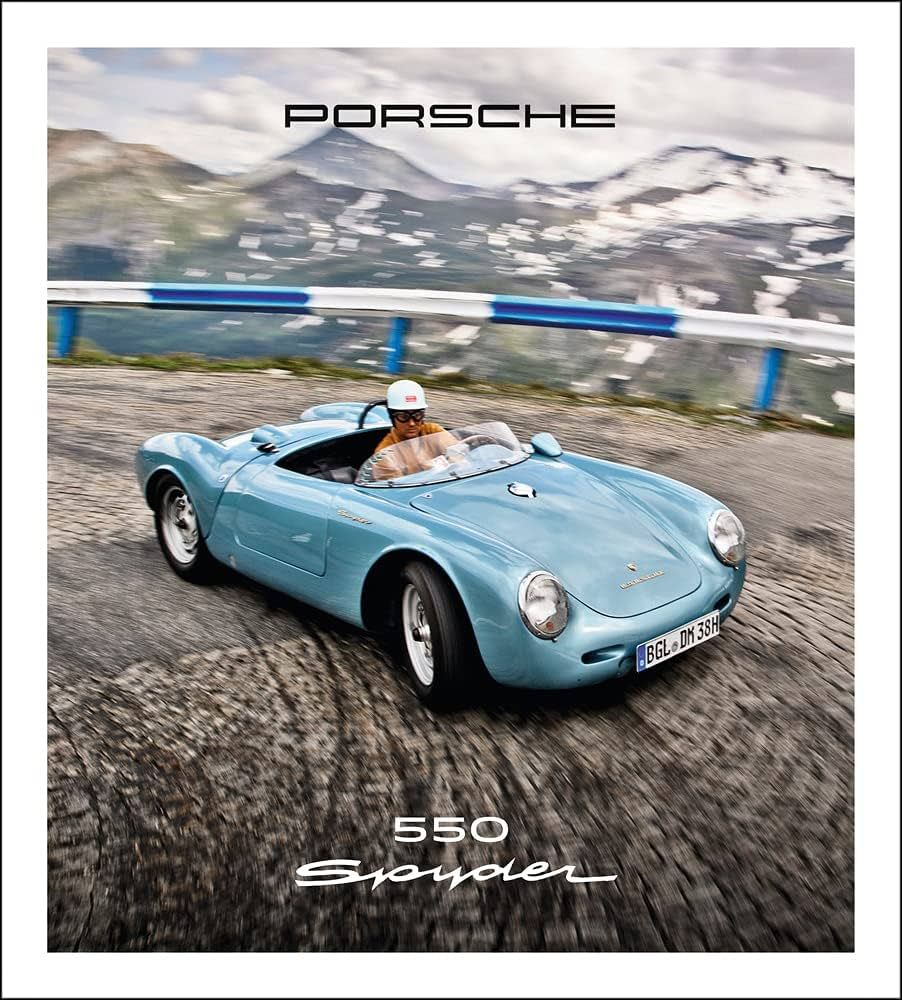
By this point, Dean was eager to advance in his hobby. One day, he saw another Porsche parked outside Competition Motors. It was the company’s newest racing machine, the 550 Spyder.
The Spyder was not just a sports car; it was a true, purebred racecar with a lightweight aluminum body mounted on a tubular spaceframe. It was powered by a 1.5 liter, dual overhead camshaft, air-cooled, flat-four engine capable of producing 110 hp at 7,800 rpm.
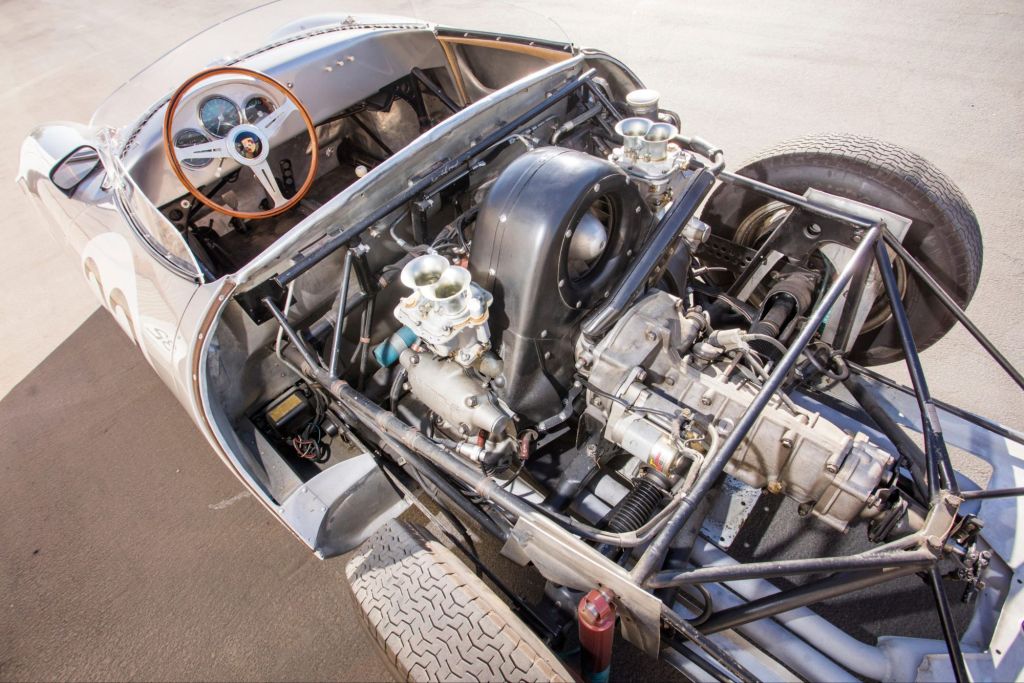
In the 550, Porsche relocated the engine to the “mid-ship” position, considerably improving weight distribution and handling.
Dean was blown away by the car, and he quickly traded his trusty 356 Super Speedster in for the new racer. He was going to put it into action at the Salinas Road Race on 1st October 1955, just ten days after he bought it.
The tragic end
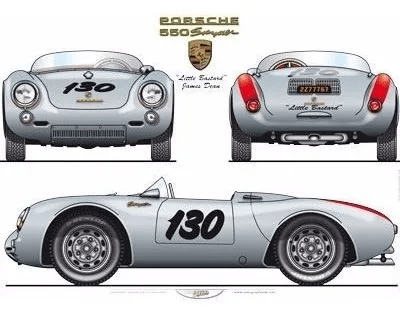
Dean took the Spyder to the customizer and pinstriper Dean Jeffries, who painted the “130” numerals and the iconic “Little Bastard” script across the rear cowling. The red leather bucket seats and red tail stripes were original. The tail stripes were a Porsche touch to all the Spyders ordered for racing.
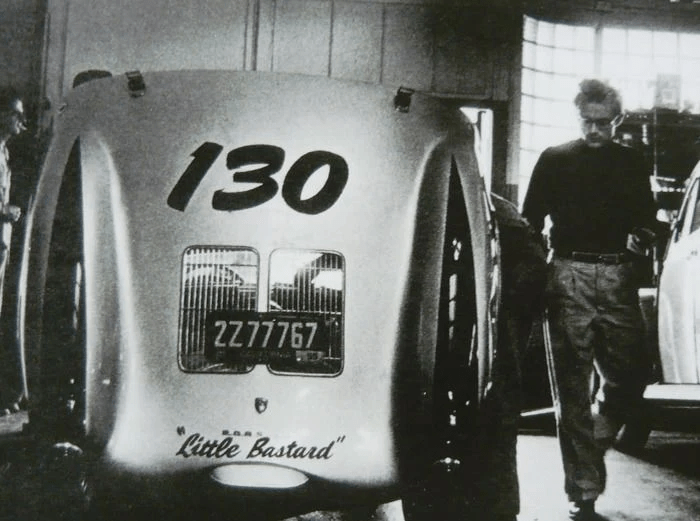
There are a few theories about the origin of the car’s name, but the most believable one is that Bill Hickman, a friend and stunt driver, called Dean “Little Bastard,” while Dean called Hickman “Big Bastard.” Dean believed the nickname would be perfect for “christening” his new race car.
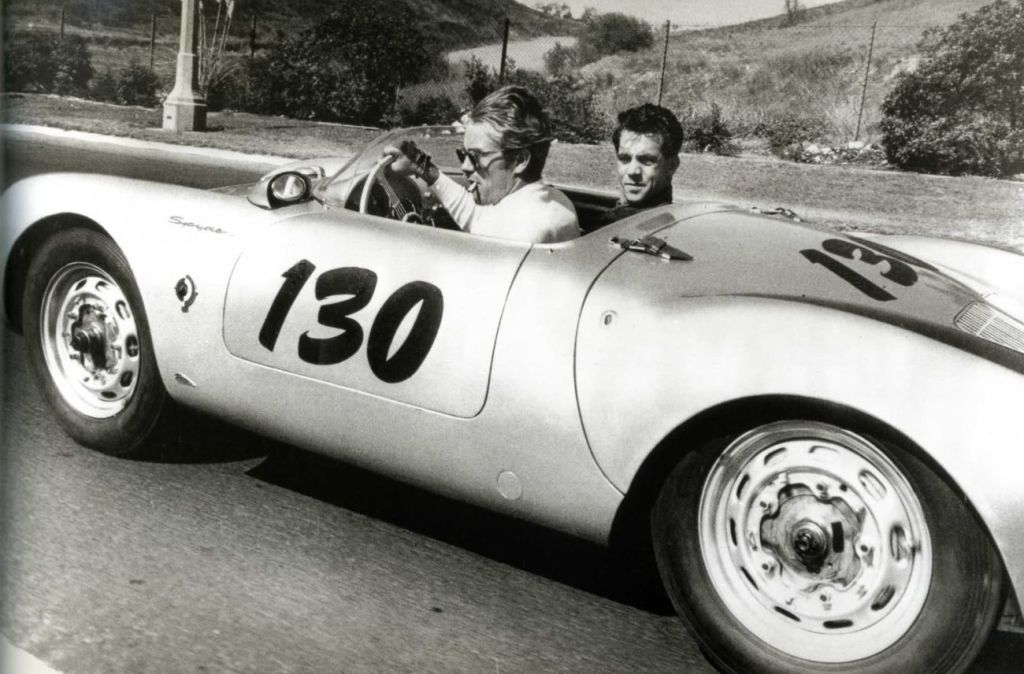
The 550 was so new that the engine hadn’t even been properly broken in, and his mechanic, Rolf Wütherich, a certified Porsche technician, suggested Dean drive the car to Salinas instead of towing it.
They set out on Friday, September 30th, in the early afternoon. Dean was at the wheel with Wütherich riding shotgun. Bill Hickman was driving the Ford station wagon.
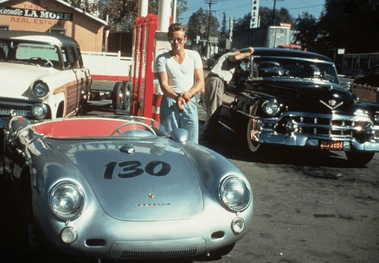
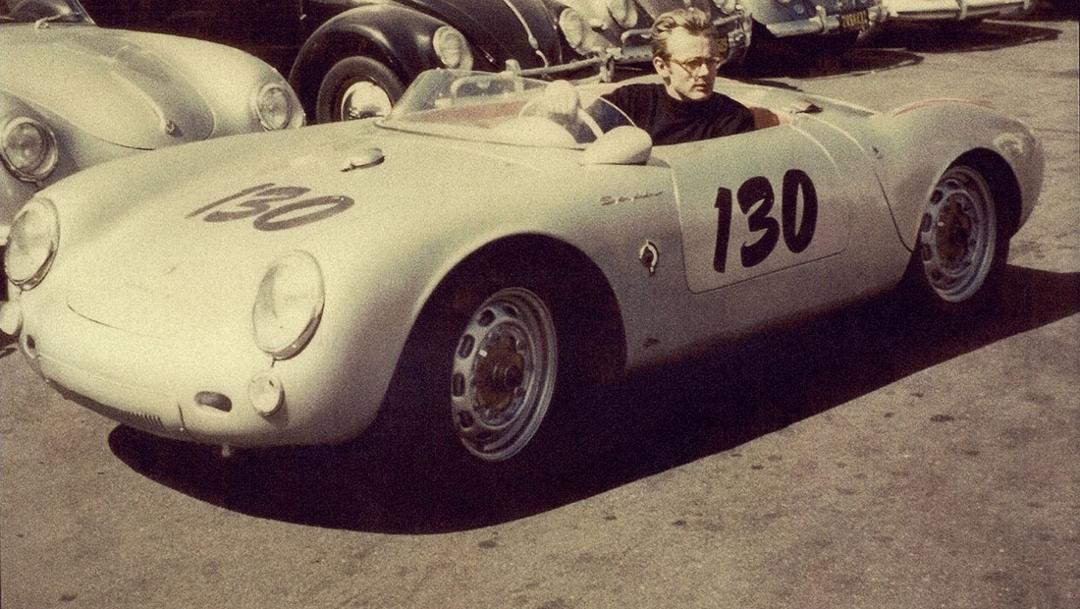
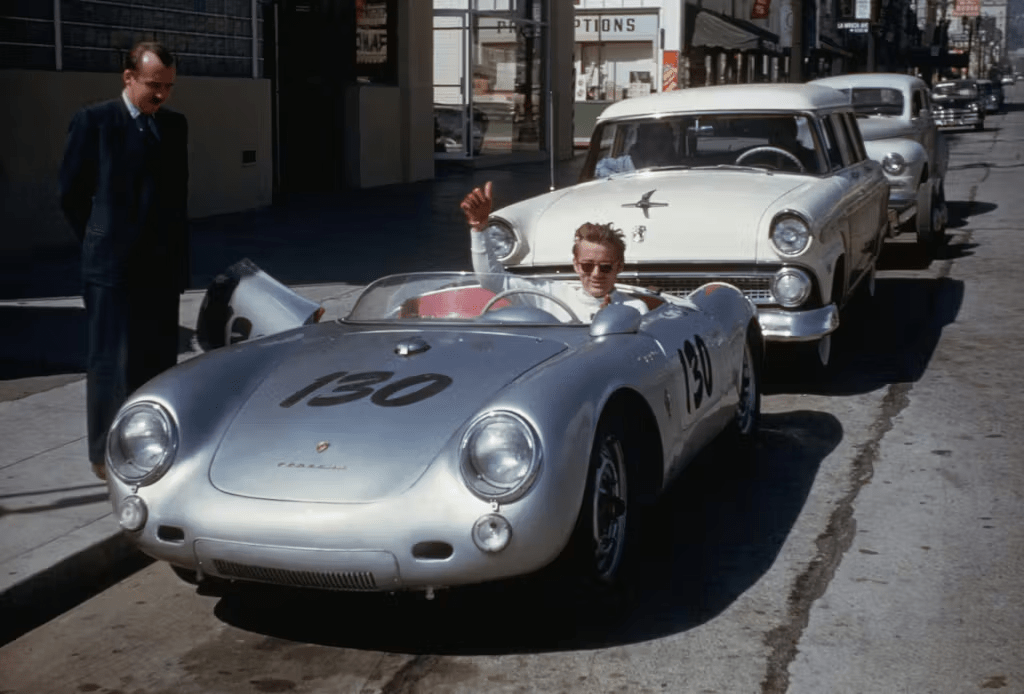
The group had coffee and donuts at the Hollywood Ranch Market on Vine Street across from Competition Motors before leaving around 1:15 p.m. They stopped for gas at a Mobil station on Ventura Boulevard at Beverly Glen Boulevard in Sherman Oaks at around 2:00 p.m, supposedly the location of the iconic picture above.
Trying to “smooth” the engine as much as possible, Dean floored it as soon as he hit the highway. It didn’t take long for both Dean and Bill Hickman to be pulled over by the California Highway Patrol near Bakersfield and fined for speeding.
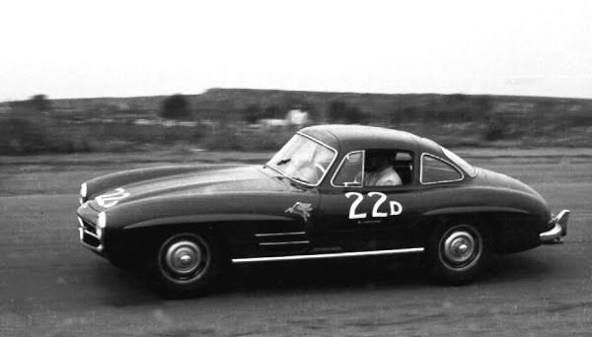
At Blackwells Corner, the team paused briefly for refreshments and encountered fellow racers Lance Reventlow and Bruce Kessler, who were also heading to Salinas in Reventlow’s Mercedes-Benz 300 SL coupe (pictured above). As Reventlow and Kessler were departing, they and Dean’s group arranged to meet for dinner in Paso Robles.
Approximately 5:45 p.m., a two-tone black and white 1950 Ford Tudor was headed east on US 466, just west of the junction near Shandon. Its driver, 23-year-old Navy veteran Donald Turnupseed, turned left onto SR 41 headed north toward Fresno. As Turnupseed’s Ford crossed the center line, Dean—clearly recognizing the imminent crash—tried to steer the Spyder, but it was too late; the two cars collided almost head-on.
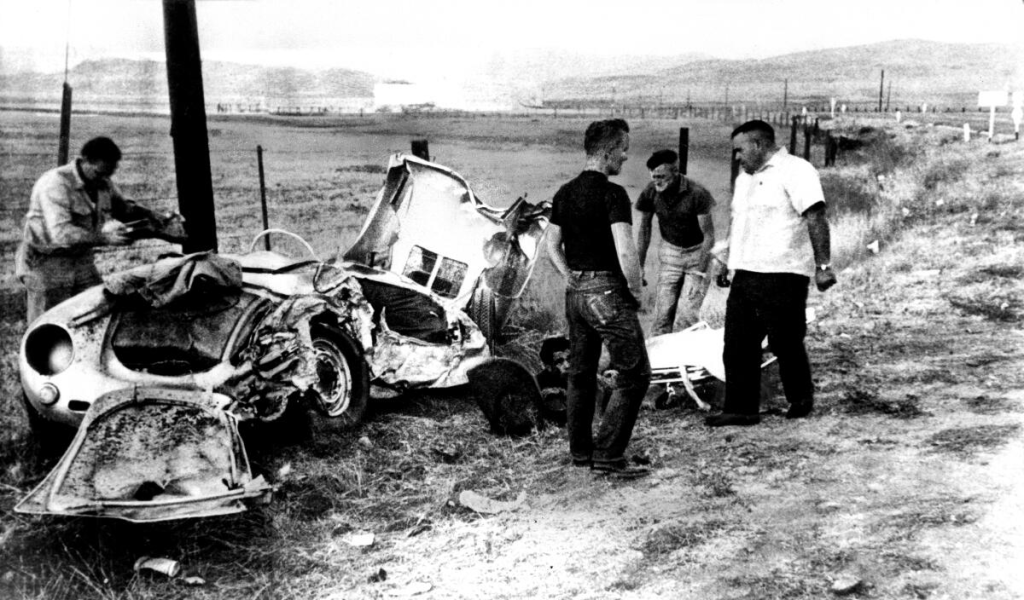
Dean was driving at an estimated 137 km/h (85 mph). The severity of the impact sent the much heavier Ford broad-sliding 39 feet (12 m) down US 466 in the opposing lane. Wütherich was catapulted from the mangled Porsche and landed on the pavement. He was seriously injured but survived the accident. Donald Turnupseed also escaped with minor injuries. Tragically, James Dean remained trapped inside the car; he sustained a broken neck and numerous internal and external fatal injuries. An ambulance rushed him and Wütherich to Paso Robles War Memorial Hospital, but Dean was pronounced dead upon arrival at 6:20 pm.
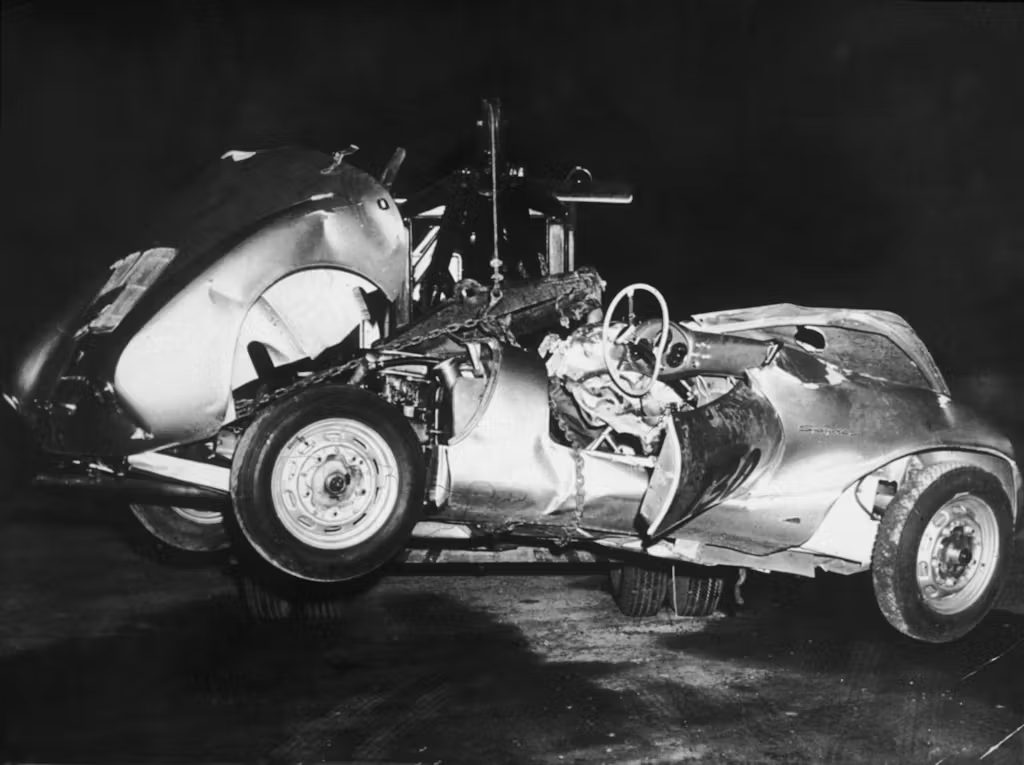
The tragic death of James Dean caused a commotion not only in the USA but also around the world. He was way too young, only 24 years old. Dean was at the early stages of what would have been a huge Hollywood career. He was taken from this world even before the release of his most famous movie, Rebel Without a Cause.
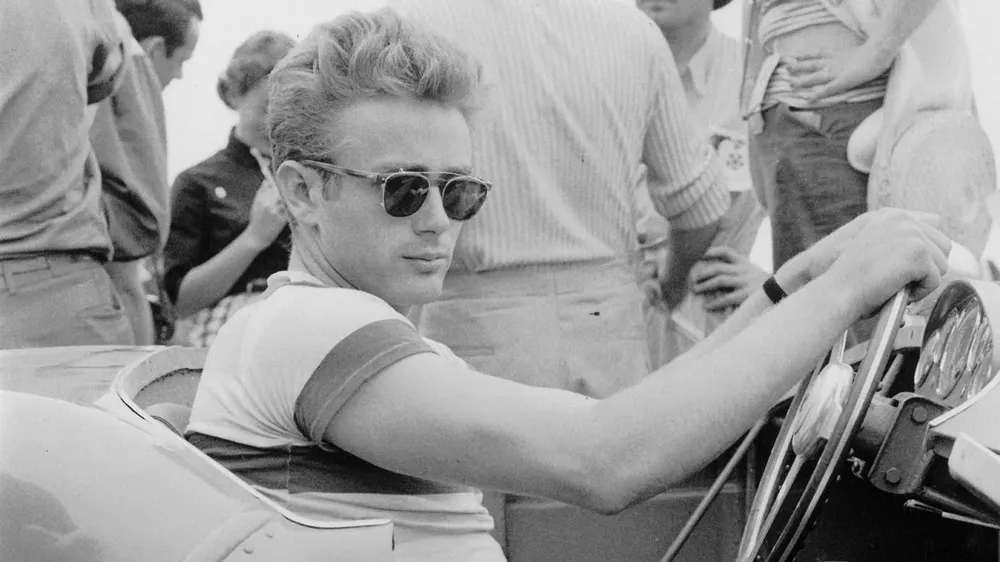
James Dean became an even more iconic figure after his death. His image evolved into a symbol of the rebellious 1950s. All three of his major films have been preserved in the United States National Film Registry by the Library of Congress for their “cultural, historical, or aesthetic significance.”
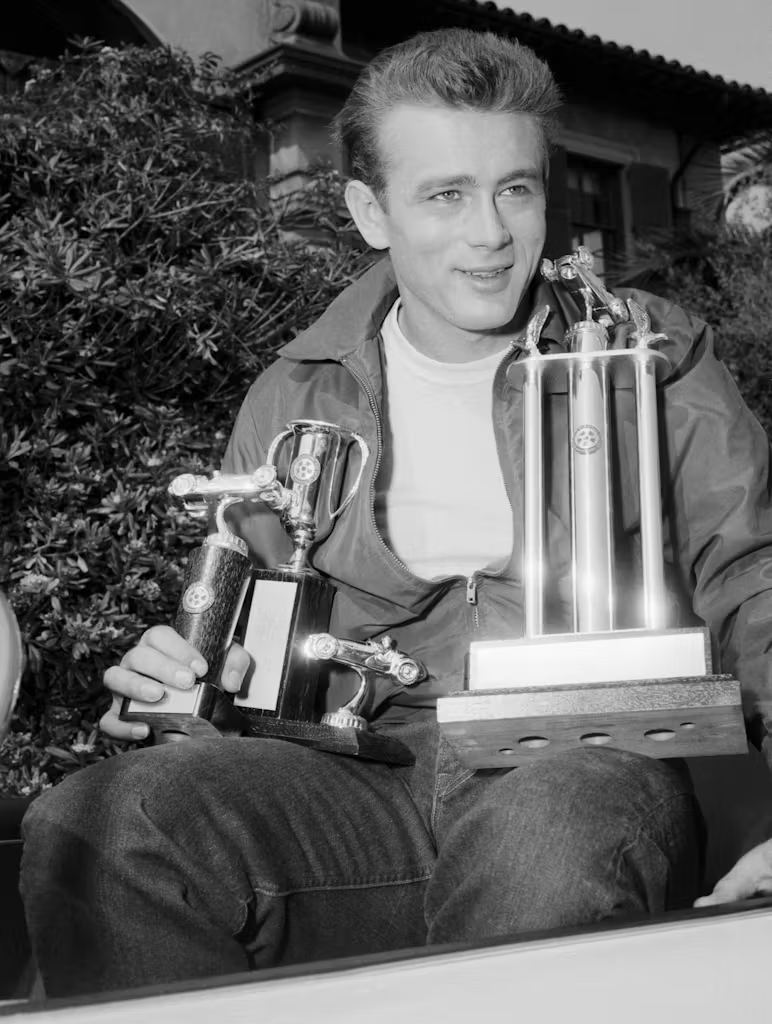
But he was more than a great actor. He also had a natural talent for racing. He greatly enjoyed the hobby and felt proud of his success. At a certain point in his life, he admitted that, “racing is the only time I feel whole.”
The dark irony.
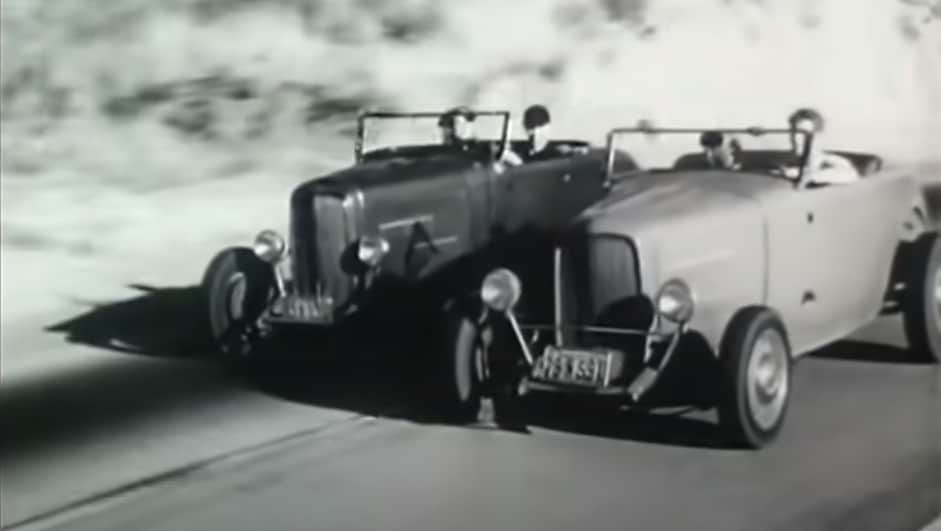
The 1950s marked the rise of the American hot rod scene. Suddenly, a whole generation of young people had access to the cheap thrills of speed. As a result, the country saw an increase in fatal accidents due to reckless driving. The authorities tried several methods to warn those kids about the dangers of speed, including a series of educational short films.
While working on the movie Giant, Dean filmed a short public-service announcement with actor Gig Young for the National Safety Council. It featured Dean talking about how excessive speed on the highway may be more dangerous than racing on the track. At the end of the segment, instead of reading the scripted phrase “The life you save may be your own,” Dean ad-libbed the line as “The life you might save might be mine.”
The curse of the Little Bastard.
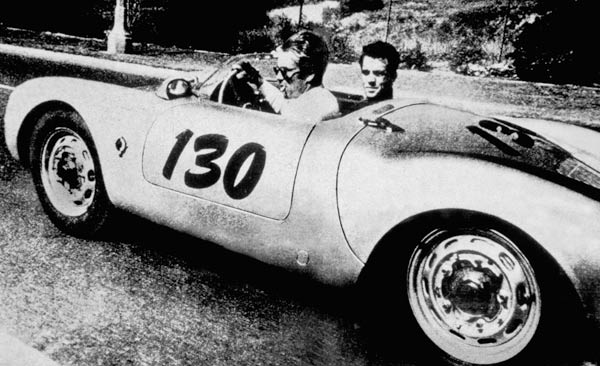
The mythology surrounding the life and death of James Dean only grew stronger in the years that followed. A series of mysterious events related to the destroyed Porsche 550 led to the belief that the car was cursed.
The Little Bastard had caused upset almost from the moment Dean bought it. A week before the fatal crash, Dean met British actor Alec Guinness in Los Angeles. Guinness had an ominous feeling on seeing the Porsche and would later write in his diary: “The sports car looked sinister to me . . . exhausted, hungry, feeling a little ill-tempered in spite of Dean’s kindness, I heard myself saying in a voice I could hardly recognize as my own: -Please never get in it. . . if you get in that car, you will be found dead in it by this time next week.-“
After the accident, the Spyder was declared a total loss by the insurance company. Still, since it was an exotic European car, it was quickly sold and would continue to cause carnage wherever it–or even parts of it–went.
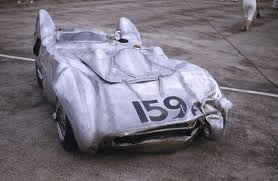
Dr. William Eschrich purchased the Porsche from a salvage yard in Burbank and dismantled it for parts. Eschrich installed the Porsche’s engine into his Lotus IX race car (pictured above), then lent the transmission and suspension components to fellow doctor and racer Troy McHenry. Eschrich crashed the Lotus at the 1956 Pomona sports-car races, but fortunately, it was a minor crash, and he survived.
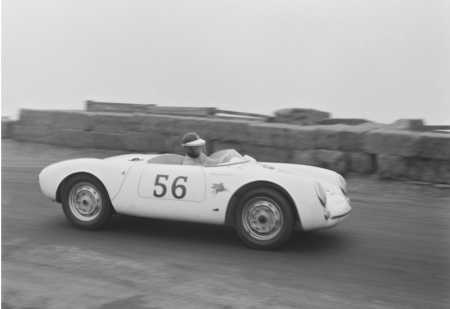
Sadly, McHenry (pictured above) wasn’t as fortunate. During the same race, he lost control of his 550, crashing it into a tree, and he was killed instantly. So, the “curse of Little Bastard” grew stronger.
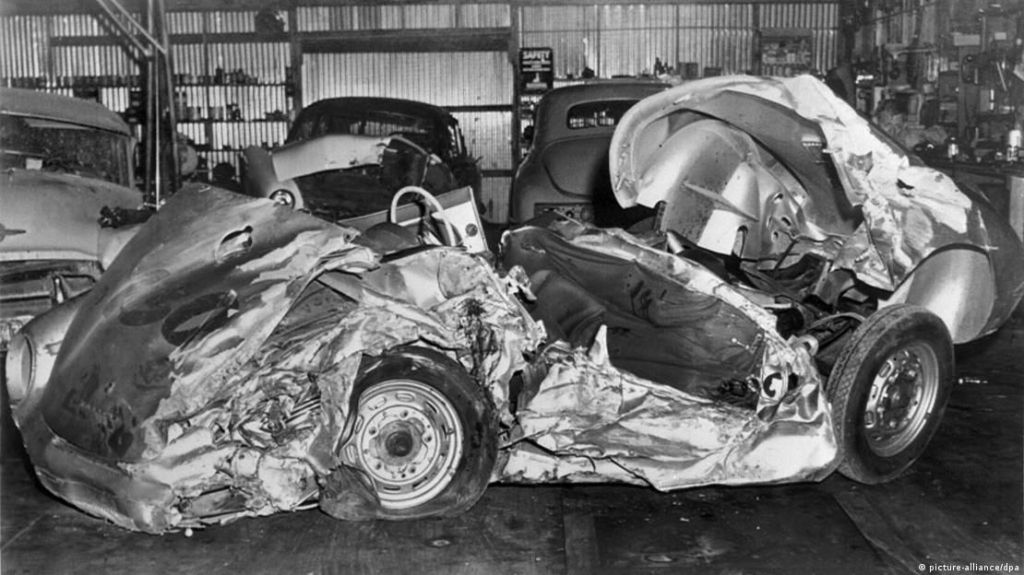
The 550 empty shell was then bought by the self-proclaimed “King of Kustoms,” George Barris. He promised to rebuild the car to its former glory, but it was beyond repair. Barris loaned the Porsche to the Los Angeles chapter of the National Safety Council, and from 1957 to 1959, it went on a tour of car shows, movie theaters, and bowling alleys across the country. In March of 1959, while in storage in Fresno, the car mysteriously caught fire. It suffered remarkably little damage—two melted tires. Fortunately, the fire didn’t spread to other vehicles in storage. Meanwhile, Barris had sold a pair of tires from the 550, and both reportedly blew at the same time; the driver lost control and ended up in a ditch.
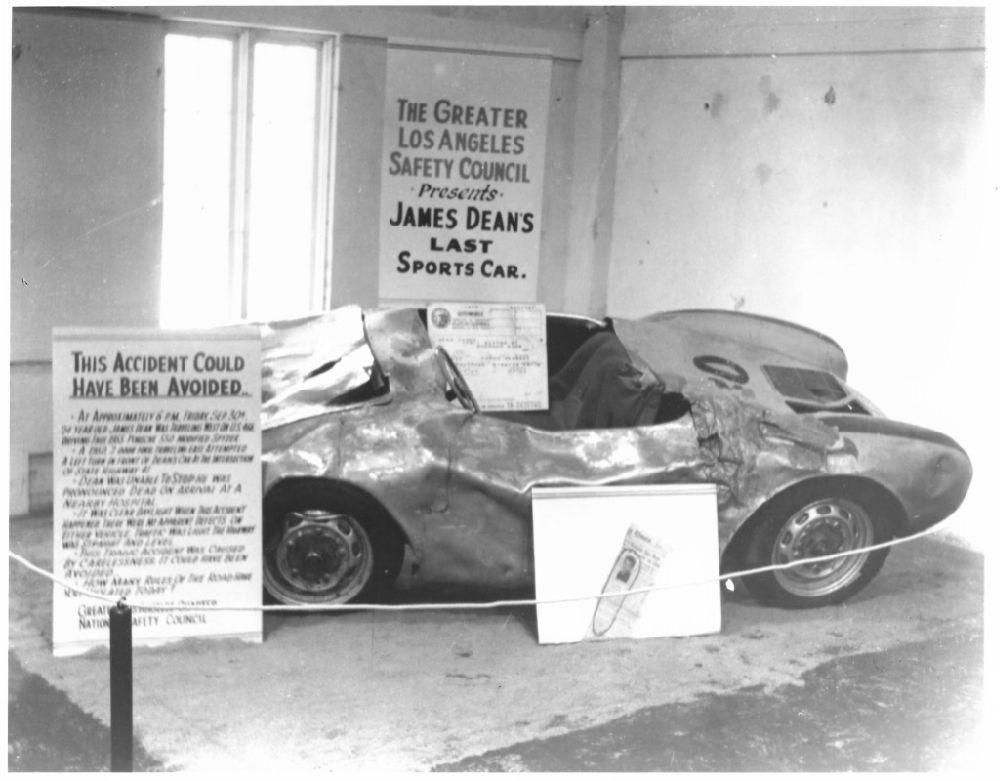
There are other unconfirmed stories about Little Bastard’s sinister life. The car is said to have fallen from its display while on view in Sacramento, injuring a bystander. The Spyder also allegedly fell on and killed George Barkus, the driver who took it to a road-safety expo. Finally, the Porsche is rumored to have vanished from a sealed boxcar in 1960 while traveling from Miami to Los Angeles. Some believe that Barris, always the showman, created most of the stories to maintain the car’s mystique.
In 2005, the Volo Auto Museum in Illinois offered one million dollars for information on the Little Bastard’s whereabouts, but so far, nothing has been discovered. With Barris himself now gone and no sign of the car for over 60 years, the conclusion of this haunting story may never be revealed.
 The Classic Machines