Colours of Racing. Part Two – The Germans

As you can see in the previous post, some of the national racing colors actually changed hands before becoming traditional, but Germany is the only one to have two choices.

The Silver Arrow or the Simple White?

1910 “Blitzen” Benz GP car.

The color given to German racing teams was white, pure and simple. The traditional powerhouse brands, Mercedes-Benz and Auto-Union (which later became Audi) followed the trend, and later on, Porsche and BMW did the same.

But around the early 1930s, the Germans pushed for a second choice of color, Silver. This option came not as a paint per se but actually as a lack of it. Around this time, some of the official Mercedes-Benz and Auto Union cars started to show up at the tracks completely stripped of paint, proudly showing the bare, polished aluminum body. There are a few theories for the real reason the German teams adopted this “no paint required” procedure.

1939 Auto Union Type D – Silver Arrow

The most accepted theory goes like this, in the early 1930s, German engineering was able to come up with very powerful engines allied with streamlined, aerodynamic bodies and that made the Mercedes Benz and Auto-Union terrifyingly fast. The International Grand Prix Racing Organization had to put some limits on the speed of those cars and they came up with a clever way to do so; instead of putting limitations on the size of the engines, they decided to put a severe weight limit of 750 kg on all race cars.

The 595 hp, W125 Mercedes-Benz

With new rules in place, all the players had to build new cars format. At the debut race for the new W-125 Mercedes, in Nurburgring, the car weighed exactly 751Kg, the team had no idea what to remove from it since, as we know, a race car only has what is absolutely essential for its performance. The chief engineer decided to remove the only unnecessary equipment, the white paint, and the primer. The decision brought the W 125 to the allowed 750 Kg and also gave it a menacing, high-tech look. It didn’t take long for Auto-Union to adopt the same idea.

For some people, this story is absolutely true and among them, we have Mr. Alfred Neubauer, Mercedes’ racing program principal during those years, he even wrote about it in his 1958 memoirs. Mercedes Benz itself assures it is the true version of how the German racing cars became Silver.

But for some historians, this is nothing more than a colorful make up a story that became true after being told over and over again throughout the years. There are evidences of German cars in either bare metal body or even painted in silver even before 1934.

For those people, the idea of the cars racing in bare metal bodies was nothing more than the Germans showing off their superiority in the aluminum manufacturing.

Hitler always saw the races as a perfect way to show the world all the technological advances in the German industry in peacetime and the Nazi party became a sponsorship for the teams. Mussolini did the same with Alfa Romeo and Maserati.


1955 Mercedes Benz w196

In one way or another, the Silver became a tradition for the German race cars.

1939 Porsche Type 64.

Porsche also wasn’t ashamed to present his first-ever car in shinning bare aluminum.
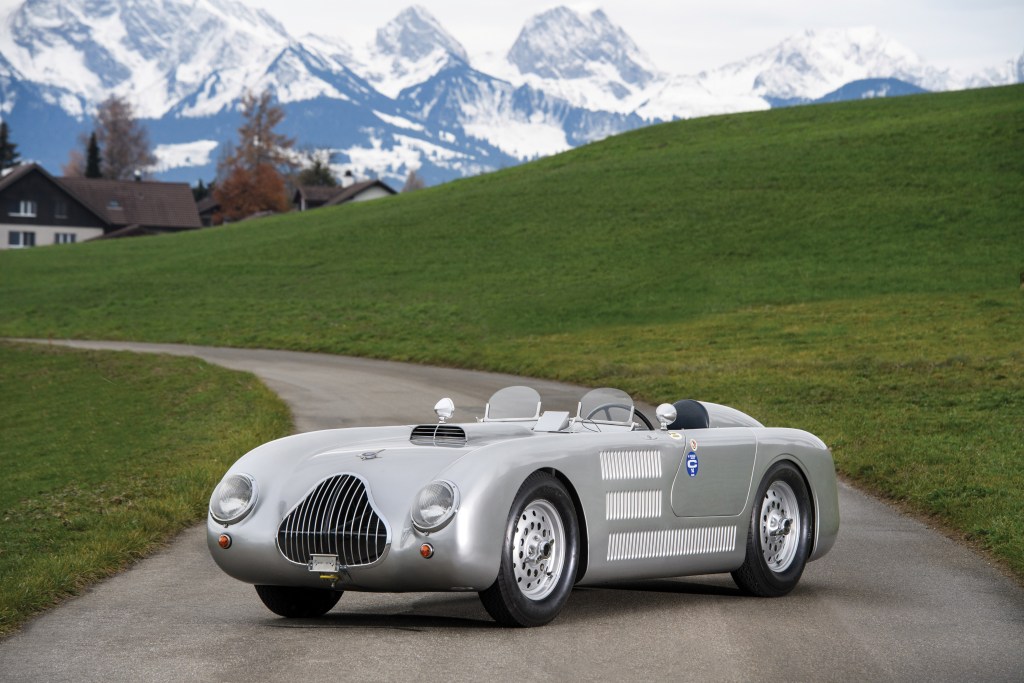
1949 BMW Rannsport.

And even BMW, which came a big latter to the racing playground, adopted the color.

1979 BMW M1

But as years passed, BMW tried to distance itself from the other German brands on the race track and the white color became the standard for their official cars.

A powerful statement.

For the old school aficionados, like myself, the first picture that comes to mind when we think about the McLaren F1 team is a car in the red and white Marlboro livery. Under those colors legends like Fittipaldi, Hunt, Lauda e Senna became World Champions.

The 1984 World Champion Niki Lauda at the wheel of the Porsche powered McLaren.

In 1995 Mercedes Benz started to supply engines to McLaren and since day one, this partnership was meant to be more than just commercial agreement, the British team became a “semi-official” team for Mercedes, paving the way for their full Formula 1 team in a near future.
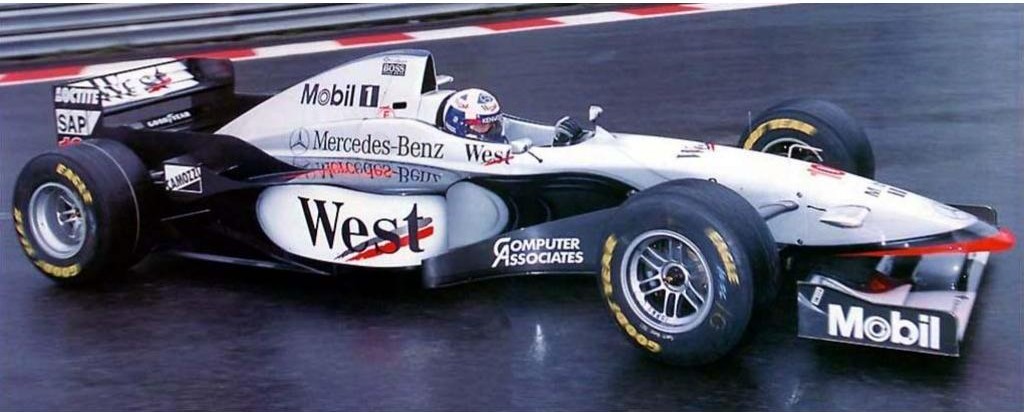
1997 McLaren Mercedes F1

In 1997 McLaren replaced its main sponsor, Marlboro, for another tobacco brand, West, and for the first time in 23 years, their cars would be racing in different colors.

The Silver was the color of West tobacco but we all know who the Brits were really pleasing.
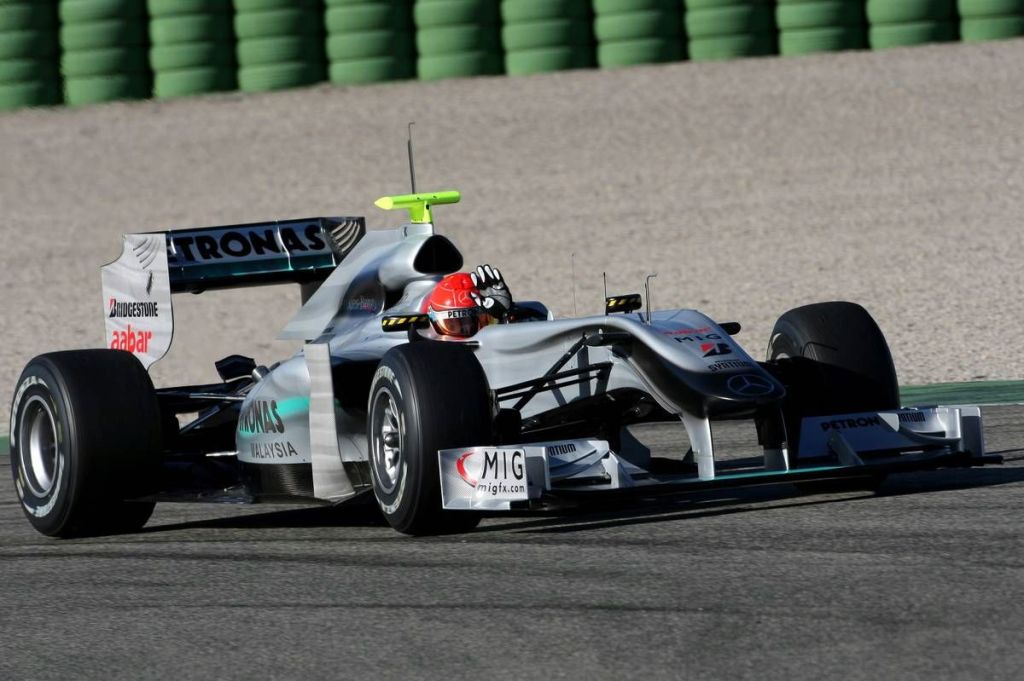
2010 W01 Mercedes

In 2010 was the year Mercedes Benz officially came back to Formula 1 as a team and this new generation of the “Silver Arrows” started what is now almost a decade of dominance in the sport.

Colours of Racing. Part One

The modern universe of motorsports holds most of its original core: The talent of the drivers mixed with the technology of the cars and the ancient human need to dare themselves and compete against each other. But there is one key ingredient that came along a little later: The sponsorship.

The money from the sponsorships brought the sport to far corners of the globe, made the financial life of teams a lot easier, and some driver millionaires.

Every square inch of the area must generate revenue.

But, as many other things in life, motorsport was a lot simpler, in the beginning, most of the money came from the manufactures and even from the drivers, as many of them were from wealthy families.

As a result, the cars were “clean” and the only graphics were the numerals and that created a problem, race cars were (as they also are nowadays) very similar in shape. Even if they were built by different automakers, without the sponsor’s liveries over the cars, it would be very hard for the people on the stands to identify them.

In the beginning, the rivalry between the automakers on the race tracks was immensely increased by national pride, so it was common sense to differentiate the teams by their nationality.

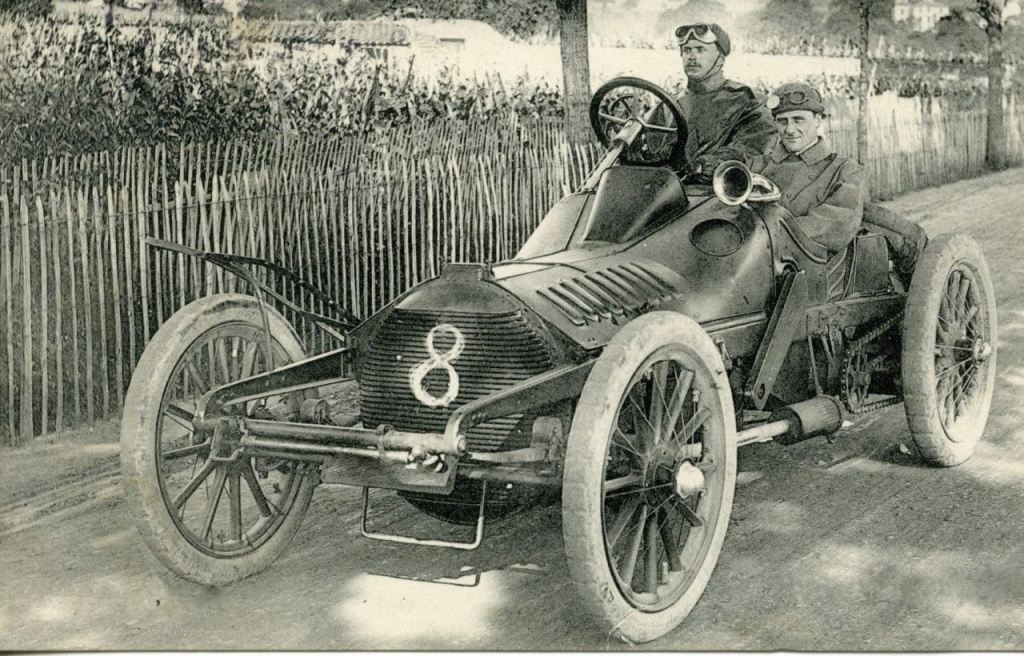
Wolseley 90HP at the 1905 edition of the Gordon Bennett Cup.

The auto clubs around the world came up to a color scheme to help to identify the nationality of the cars and it was applied for the first time during the “Gordon Bennet Cup”, a racing event held between 1900 and 1905 and was created by Gordon Bennett Jr, the millionaire owner of the newspaper “The New York Herald”.

This is how the collours were assigned for:

Germany: white, France: blue, USA: red, Belgium: yellow. It took two years for the Brits to join the competition and they didn’t have many choices for the color other than green.

The Rosso Corsa.

1967 Alfa Romeo Stradale

Perhaps the most traditional color in motorsports is the “Rosso Corsa” or the “Racing Red” that has become a trademark for the Italian high-performance cars, in and out of the race track, but how did they end up having the color that was intended for the Americans?

By early 1900, the automobile was considered more as a hobby than a necessity, and based on this principle, the aficionados were in constant pursuit of new challenges. The Parisian newspaper “Le Matin” on its January 31st, 1907 edition, published the following challenge: “What needs to be proved today is that as long as a man has a car, he can do anything and go anywhere. Is there anyone who will undertake to travel this summer from Peking to Paris by automobile?

Around 40 contestants accepted the task but only 5 teams were actually able to ship their cars to Peking There were 3 French teams, one Dutch and one Italian.

The race started in front of the French embassy in Peking on June 10th, 1907. After covering 9,317 miles, the Italian car, driven by the Prince Scipione Borghese and Ettore Guizzardi, was the first one to arrive in Paris, on August 10th, 1907.

The Italian Prince was so confident he would be the winner, he even decided to take a detour from Moscow to St. Petersburg a dinner that was offered in honor of the team, and later headed back to Moscow and rejoined the race.

The red 1907 Itala.

The car that gave the victory to the Italian team was a 1907 Itala, equipped with 4 cylinders, 7,433 cc (453.6 cu in) able to produce 45 HP and yes, the car was painted in red.

Prince Borghese and Ettore Guizzardi became national heroes and the red Itala was the symbol of the superior Italian engineering. After that victory, every Italian team competing around the world wanted to have their cars associated with the Borghese team.

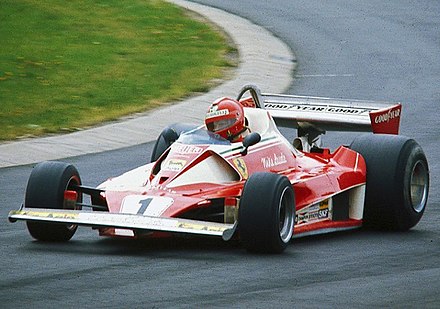
Niki Lauda’s 1976 Ferrari 312 T2

The Rosso Corsa became the most traditional color in motorsports, actually not only on the track but on the streets as well. For us, gearheads, it hard to picture a classic Ferrari or Alfa Romeo in any other color.

No more red but white and blue.

After the Italians took over the red, another option was presented to the Americans, the white and blue. When we think about this combination only one name comes to mind: Shelby.

Shelby Cobra

The racer/builder Carrol Shelby is, perhaps, the most iconic persona in the American motorsport scenario. He will be forever remembered for making the Ford GT 40 good enough to beat Ferrari 4 times in a roll in Le Mans but even before that, his cars had already defeated the Maranello boys in 1965, in the GT class.

The victory in blue and white.

Shelby himself said the biggest achievement in his career was the 1965 GT class Championship and that pretty much made the blue with the white stripes a trademark for his team.

No, it doesn’t get any more bad ass than this.

And the colours, on the other way around, also became legendary.

But before Carrol Shelby, there was another racer/builder who proudly painted his cars in white and blue, his name was Briggs Cunningham.

Born into a very wealthy family, Cunningham started his passion for speed while racing boats and during this period, he also started to show some talent in the engineering field when he created the “Cunningham Downhaul” an aerodynamic innovation to increase the speed of his boat. By 1940s he was already modifying street cars for racing and 10 years later he brought two Cadillacs to compete in Le Mans.

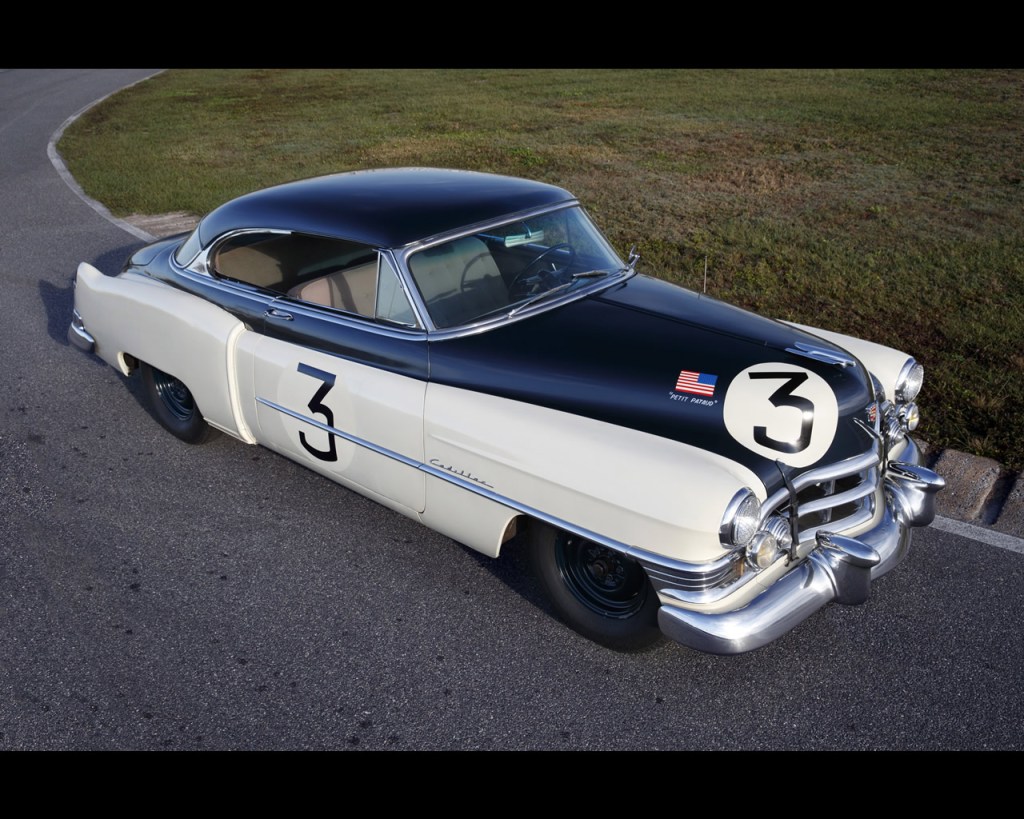
One of them was a slightly modified 1950 Caddy Serie 61 coupe. But was the other Caddy that became a legend, not so much for its performance but for its looks.

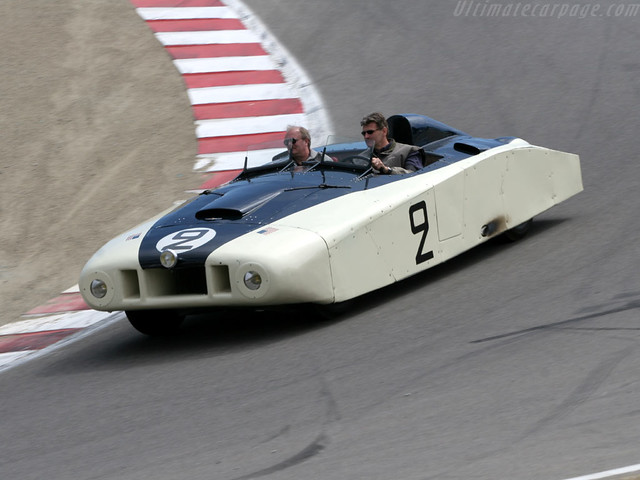
le Monstre

Briggs Cunningham even had the help of the Grumman Aircraft Corp.to develop the new body for the Cadillac. The car certainly isn’t pretty but since the panels are aluminum it is a lot lighter than the original Serie 61 and obviously way more aerodynamic; all that paired with the new powerful small-block Cadillac V8, the first American V8 with overhead valves. But the Frenchs were unforgiving with the design and they nicknamed it “Le Monstre”.

On the second lap of the race, Mr. Briggs lost control of the car end got stuck on a sandbank, it took him 30 min to go back to the race.

At the end of the race, the coupe #3 finished in 10th and the le Monstre in 11th.

The Cunningham C-4 R

But his most popular creation is the C-4 Roadster, especially the “R” (racing) version. Between 1951 and 1954, Cunningham pursued the victory of an American car in Le Mans and the C-4 was the best bet, the elegant roadster was equipped with the hottest V8 of its time, the legendary Chrysler Hemi.

At the team’s peak performance, a C-4 won the 12 Hours of Sebring in 1953, and in the same year a C-5 won on class in Le Mans.

Ford GT replica by Powertech – Brazil

In one way or another, the white and blue tradition lives on. There are many small companies that produce replicas of the Shelby cars and this combination of colors is still very popular.

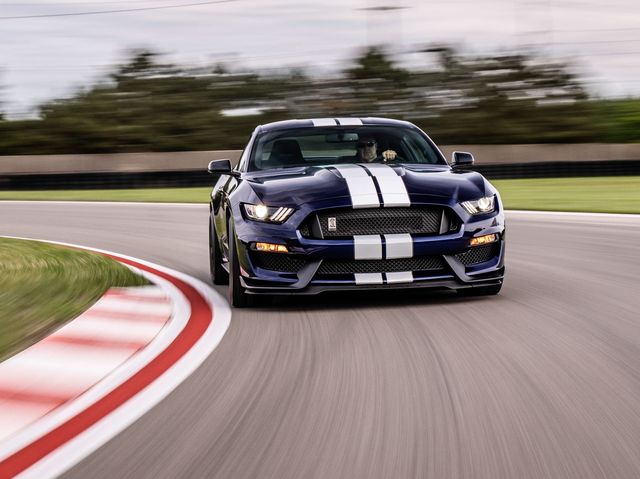
2019 GT 350

The renewed Shelby-Ford partnership in the early 2000s has brought us the modern interpretation of the Shelby GT Mustang and the old colors scheme is again a winner combination.

In the next post, I will talk about the colors of Germany, France, and Britain.

About “The Classic Machines”

Machines are created with one primary mission: to make our lives easier, but it is inevitable some of them will fulfill other gaps in life. Some machines will provide status, arouse passion and make life not only practical but thrilling.

All this love for the machines can be seen on thousands of blogs and videos that pop-up every day on the internet, I can’t promise this blog will be a lot different or better than the others, I can only promise I will try to express all my admiration not only for cars but for motorcycles, airplane, and some other machines that make life more interesting.

I am the third generation of my family that is involved with cars, as a hobby and professionally as well. All this experience gave some knowledge and lots of memories I would like to share with you.

Rubens Florentino Junior.