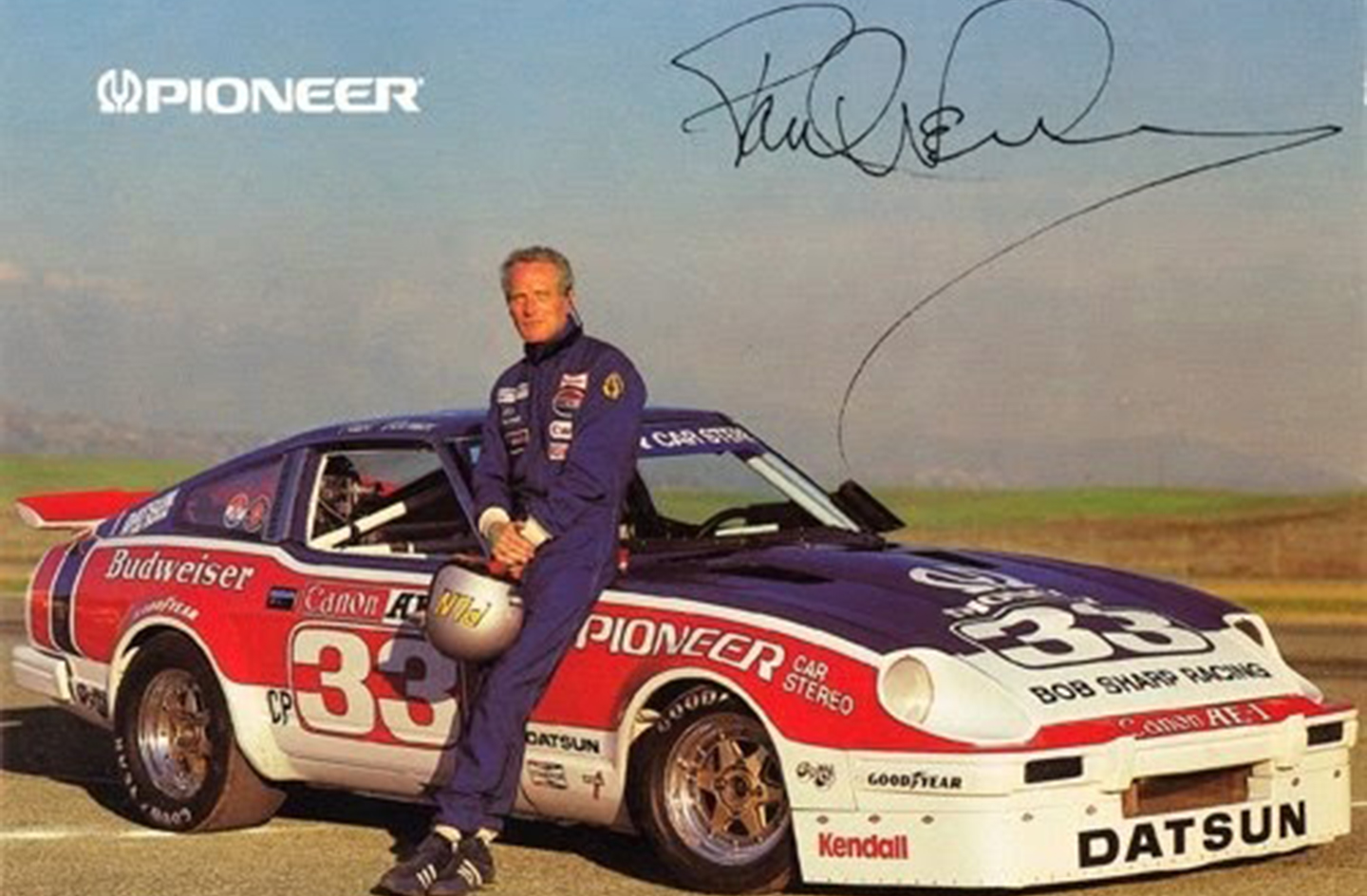
Even if you are not a movie aficionado, chances are that you have already heard the name Paul Newman.
Paul Leonard Newman was born in Cleveland Heights, Ohio, on January 26, 1925. According to his family, he showed talent for the stage as early as 10 years old.
The actor
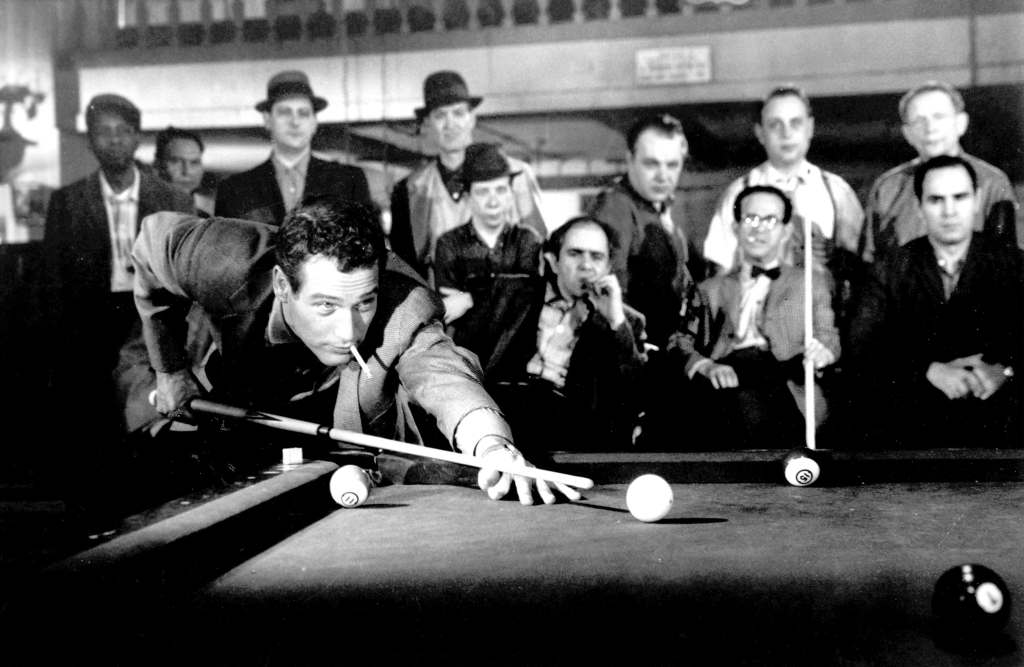
During WWII, Newman served in the US Navy, as a radio operator, for 3 years, in the Pacific. He started to pursue an acting career right after the war but the stardom only came in the 1960s when he starred in movies like The Hustler-(1961), (pictured above), and Cool Hand Luke-(1967).

The movie Butch Cassidy and The Sundance Kid-(1969), in which he starred with Robert Redford, propelled him to the status of a superstar. Newman had already been nominated 10 times for an Oscar when he finally got one for best actor in The Color of Money (1986).
The philanthropist
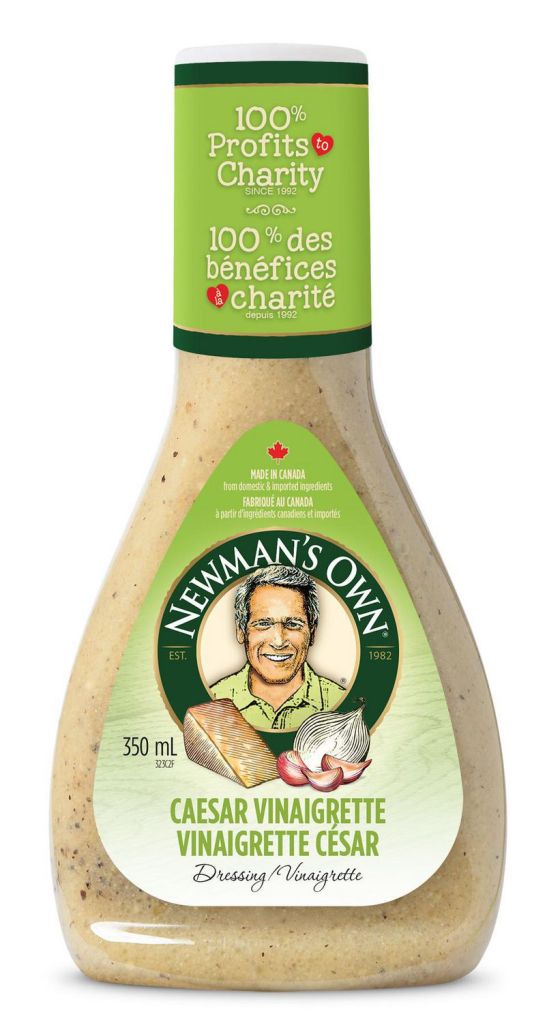
Paul Newman was one of those rare Hollywood superstars that used his fame and fortune to do good. In 1982 he created a brand of salad dressing named Newman’s Own, which became a huge success all over North America. Over the years, the company expanded its product range with items such as pasta sauces, cookies, lemonade, and popcorn, resulting in a larger market share.
Since day one, Newman made a declaration that all profits generated would be donated to charitable causes. The mission continues today through Newman’s Own Foundation. In total, more than $600 million has been donated to good causes since 1982.
The race driver

“I’m not a very graceful person. I was a sloppy skier, a sloppy tennis player, a sloppy football player, and a sloppy dancer with anyone other than Joanne. The only thing I found grace in was racing a car.” – Paul Newman
In 1969, Newman was offered the leading role in the film Winning, directed by James Goldstone. The movie follows the story of a fictional race car driver named Frank Capua, as he strives to win the Indy 500.
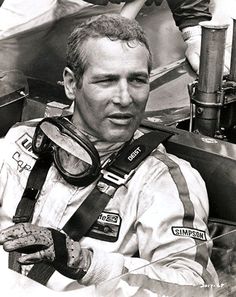
Goldstone convinced Newman to attend the Watkins Glenn Racing School and learn how to properly drive a race car. Having the leading actor perform some stunts himself would greatly simplify things on the production set. Additionally, taking classes has also helped him to perform a more convincing “race driver” attitude in front of the cameras.
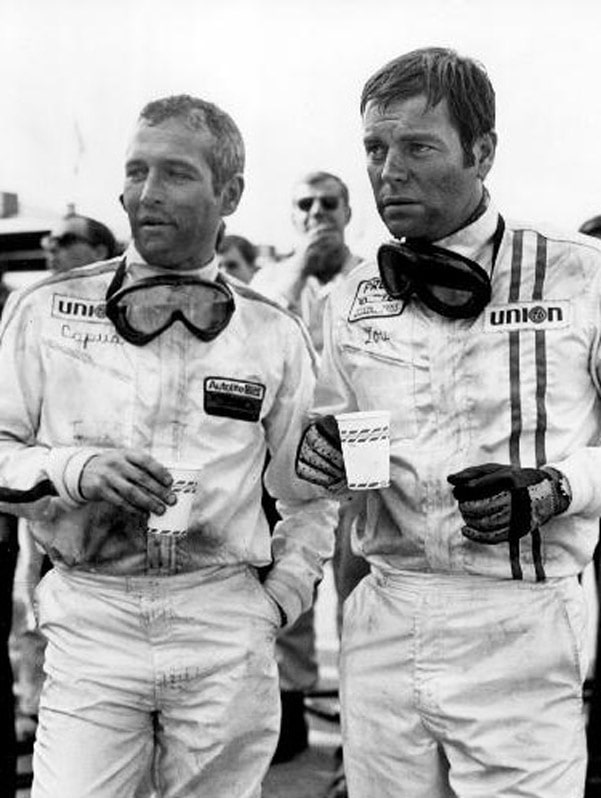
Paul developed a passion for racing during the time he spent at Watkins Glenn. The movie was filmed in an authentic Indy 500 setting, and interacting with individuals such as Bobby Unser, Tony Hulman, and Dan Gurney strengthened his newfound interest in speed.
The SCCA experience
Newman’s debut as a professional race driver happened rather late in life, when he was 47 years old, at Thompson International Speedway, in 1972. In an attempt to avoid unwanted attention, he signed the entry form as P.L. Newman, a practice that he kept throughout his racing career.
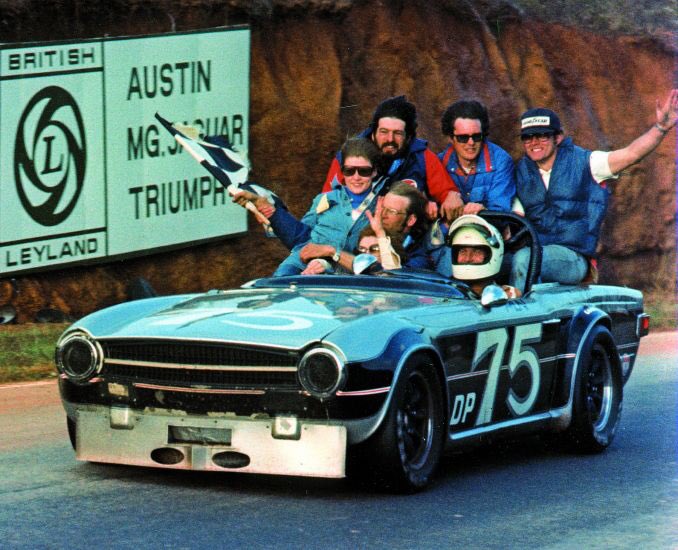
It didn’t take long to show that he possessed the qualities necessary to become a champion. Newman won the 1976 Sports Car Club of America (SCCA) D-Production National Championship, at the wheel of a 1971 Triumph TR6. (picture above).

In 1979 Paul was invited to be part of the Bob Sharp Racing Team, establishing a long and successful partnership with Datsun/Nissan. In the same year, Driving a 280ZX, he dominated the season, winning races at Summit Point, Watkins Glen, Brainerd (Minn.), Lime Rock, and Road Atlanta, culminating in an SCCA National C-Production Championship.
Le Mans

The 24 Hours of Le Mans in the 1970s was a much less glamorous event than what it is nowadays. The global oil crisis forced some drastic rule changes, causing an exodus of the official factory teams and big sponsors.
The 1979 edition of the iconic race was no different. The grid was filled up with privateers and Porsche was the only works team, competing with the 936 prototype. The Germans were the favorite to win the race; the only challenge would come from the Ford-Cosworth-powered Mirage prototype.

But the biggest fuss that year was the presence of the Hollywood superstar Paul Newman. He joined the Dick Barbour Racing Team, sharing the driving duties with German Formula-One driver Rolf Stommelen and Dick Barbour himself. They qualified their IMSA class Porsche 935 in 16th position.
The race was a festival of breakdowns, all the Porsche 936s and the Mirages had to retire, most of them with mechanical problems, leaving the race to be decided among the lower classes.

The Kramer K3 Porsche #41, driven by Klaus Ludwig and Brothers Whittington won the race.
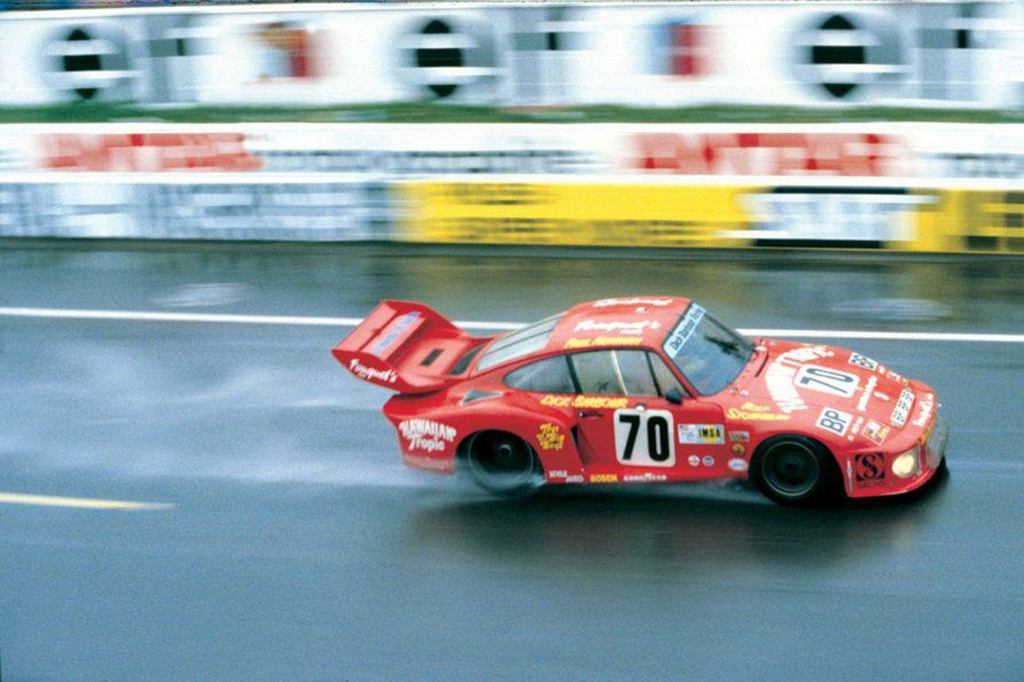
Followed by Dick Barbour Porsche #70, driven by Newman, Stommelen, and Barbour. Both cars experienced significant mechanical issues towards the end of the race, which nearly prevented them from crossing the finish line and receiving the checkered flag.
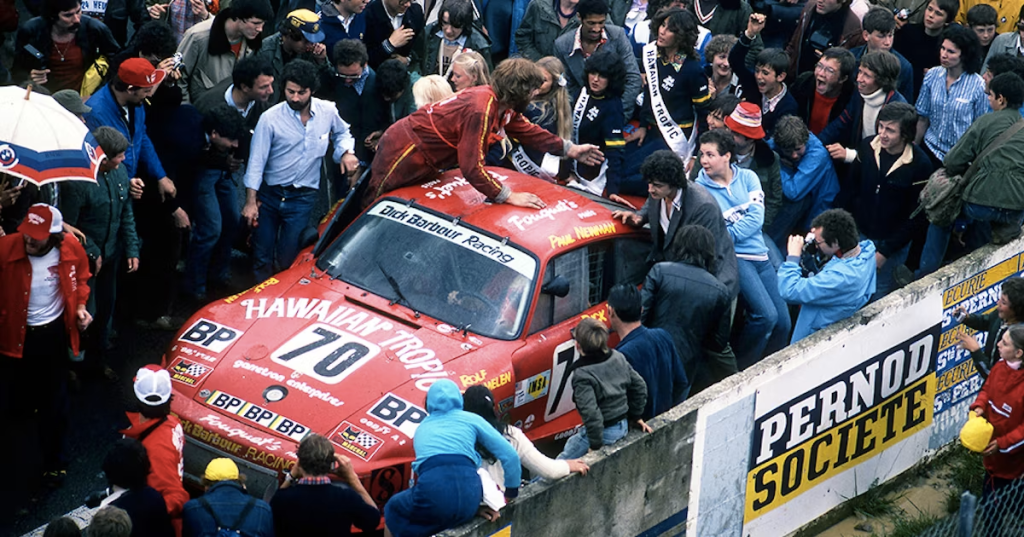
Finishing the 1979 24 Hours of Le Mans in second place was a major boost in Newman’s racing career.

The man ended the 1980s by winning two additional SCCA championships in 1985 and 1986, while driving a Nissan 300ZX.
The Indy/CART years

Paul Newman started his enterprise in the F-Indy community in a unlikely way. In 1982 he received a call from Carl Haas, inviting him to be partner in a F-Indy team, which Newman refused up front. Besides being fierce competitors within the CanAm series, Haas was an occasional supplier of race car to Newman, who claimed they typically arrived late and overweight.
Carl Haas was a persuasive guy, he told Newman the team was pretty much good to go. The man was the official distributor of Lola race cars for North America and as such he had secured the brand’s come back to F-Indy and also a contract with Ford as the engine supplier. Newman was still not convinced but when Haas told him that Mario Andretti would be the team’s driver, he finally changed his mind. For anyone with little knowledge in motorsports, Andretti needs no introduction, an extremely talented and versatile driver, also know for being a real team player, always committed to make things work properly.
The Newman-Haas Racing was officially born in October 1982, with high hopes for the next year season. But things were happening too fast, Lola assumed the team’s debut would be 1984, giving them a whole year to develop the car. With a such short notice, the Brits delivered a less than impressive car for the 1983 season.

Thanks to Andretti’s experience and the determination of the technicians, the Lola-Ford T700 was entirely revised and greatly improved, becoming a real contender. The result for all that hard work came with Mario finishing the season in third. Not bad for a rookie team with a car that was rushed into development.
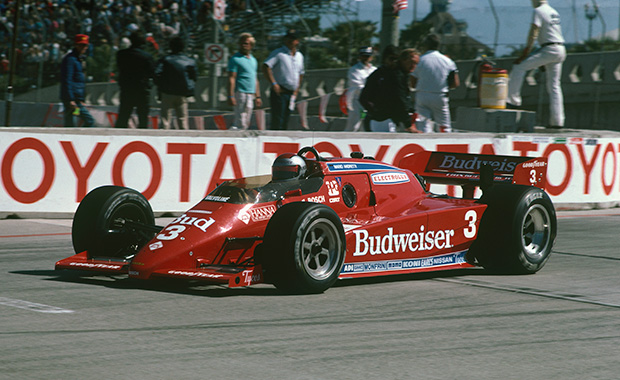
In 1984 Andretti dominated the season with six wins, nine poles and scored a total of 10 top-ten finishes to win Newman/Haas’s first CART season championship. (picture above)
Another superstar that was part of the Newman-Haas history was Nigel Mansell. The British driver became the 1992 Formula One World Champion, driving for Williams. Thanks to a disagreement with the team’s management, he not only quit Williams but the F-One circus all together. He packed his things and crossed the Atlantic to become the number one driver at Newman-Haas team.

Mansell took the F-Indy by storm. In his debut season, 1993, he won five races, scoring the championship and also the title Rookie of the Year. His aggressive driving style conquered hearts and minds of the American fans.
Thanks to a coincidence in the calendar, Mansell was the only race driver in history to hold both world titles at the same time, F-One and F-Indy, even of it was for only 3 weeks.

Newman/Haas became one of the most successful teams in Indy/CART history, clinching 107 race victories, 109 pole-positions, and 8 driver’s championships, between 1983 and 2011.
The final years
Certainly the job as team’s owner/manager kept Paul busy but he always found time to step into a race car and hit the track.

In 1995, Paramount Pictures sponsored Paul Newman in the 24 Hours of Daytona, driving a GTS-1 class Mustang prepared by Roush. Literally showing to the world that age is just a number, his car carried the # 70 in honor of his age. Newman managed to win his class and finish 5thoverall, becoming the oldest driver ever to be part of a winning team in a major sanctioned race.
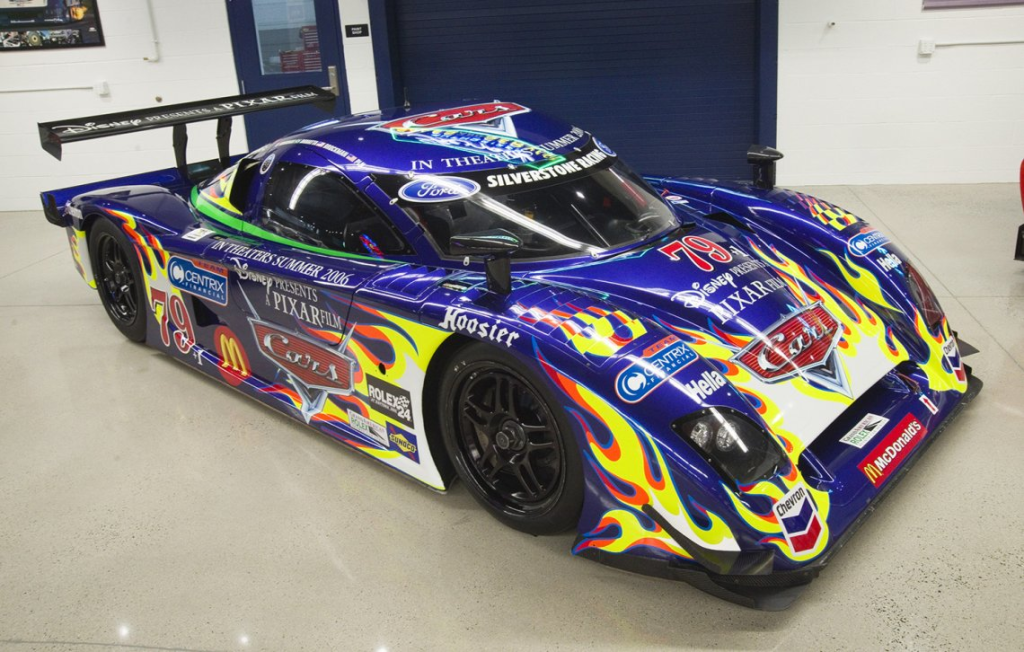
Newman went back to the Daytona once more in 2006, driving a Crawford-Ford prototype. Following his personal tradition since 1995, the car received the #79, reflecting his age at the time. The Crawford belonged to Newman-Haas but it received sponsorship by the Disney Pixar animated film “Cars”.
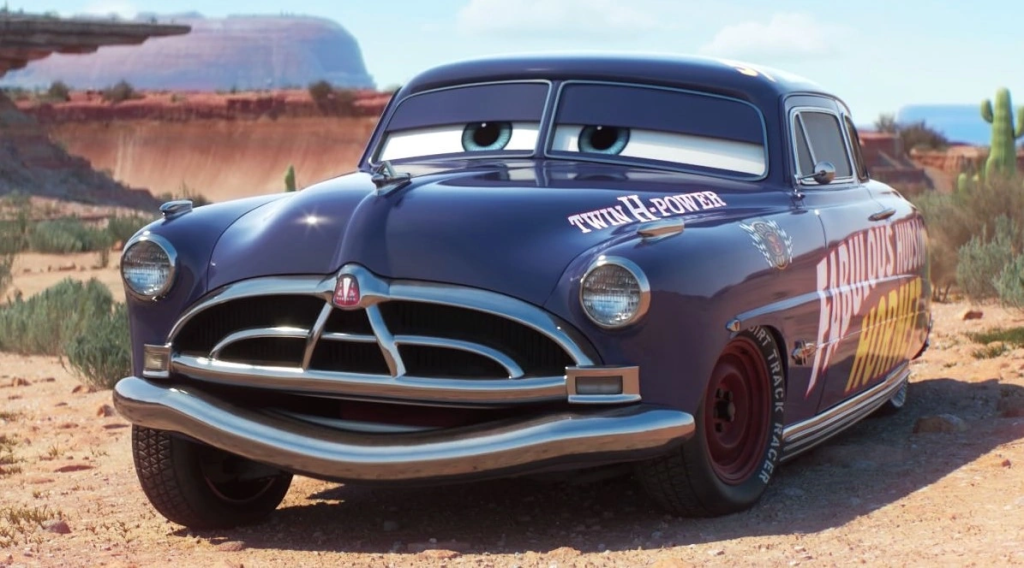
Paul provided his voice for the character Doc Hudson, a retired anthropomorphic race car in the first movie of the franchise (2006). This was his final role in a major feature film, as well as his only animated film role.
In June 2008, Newman made public that he was diagnosed with lung cancer and was receiving treatment at Memorial Sloan Kettering Cancer Center, in New York. He was a heavy cigarette smoker until he quit in 1986. Paul Newman died at his home in Westport, Connecticut on the morning of September 23, 2008. He was 83 years old.

Newman’s racing career was greater than what I wrote here, but if I wanted to tell every detail of it, I should have written a book instead.
The guy lived his life to the fullest but he always considered himself a common man. The title of his memoir reflects exactly that: The Extraordinary Life of an Ordinary Man. I haven’t read the book yet, but it is on my list.
I would like to finish this article on a lighter note, telling a couple of interesting stories involving Newman.
The Hot Rod Volvo
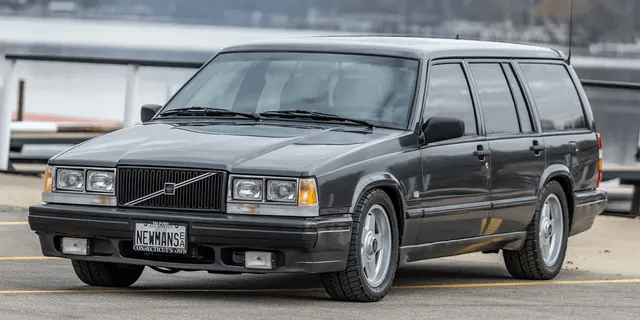
Paul Newman developed a curious interest in souped up Volvo station wagons. He owned more than a couple of those and at some point, he even convinced his pal, the famous TV host and notorious car guy, David Letterman to order one. Here it is the story, told by the man himself, David Letterman.
“One day Paul called me at home with an interesting offer“.
“Dave? I’ve got a deal from a guy in Maine,”
“It’s a custom Volvo 960 station wagon, OK? But it’s different. He’s going to take a small-block Ford V-8 racing engine, strip out the transmission and suspension, then supercharge it. My guy’s gonna make it for me. Would you like one?”
David Letterman was stunned, but in a split of second the car guy took over the sensible guy.
“Well yeah, Paul,” “Wouldn’t we all?”
“Supercharge the Volvo. Swedish safety be damned! Go nuts!”
“So, Paul eventually brings the car over, drops it off and this is the kind of car that people would stare at streetlights,” Letterman told his TV audience after Newman’s death in 2008. “It was like an atomic furnace under the hood. I used to love driving it. It would go 170 miles per hour (270 km/h) and underneath the exhaust system would glow bright orange.”
Then one day Letterman was in the Volvo on a New York Interstate with his girlfriend when she asked: “What’s that smell?”
Letterman turned to her and said, “Raw power and speed, baby.”
Wrong. The Volvo was on fire.
“We had to pull over, the car was shooting flames everywhere. It couldn’t handle the power,”
“I call Paul and say ‘ . . . Everything is on fire.’ But, wow, what a car!”
The most expensive Rolex in the world

In 1972, Joanne Woodward was seeking a present for her husband, and in a New York ‘Tiffany’ store she purchased a Rolex Daytona Chronograph, model 6239, for about $300.

She had the case back engraved with the words ‘Drive Carefully, Me’. A thoughtful gift indeed.

Newman really loved his Rolex, and he wore it daily, as hundreds of pictures taken through the 1970s and 80s can prove. But one day, in a burst of generosity, he gave his beloved watch away.
The year was 1984 and Nell, one of Newman’s daughters, was dating James Cox, a high school classmate. During the summer of that year, Paul hired Cox to rebuild a treehouse in the family’s property. One day Cox arrived a little late to work and Newman asked him – “What time is it?”, which the guy answered – “I don’t have a watch, I don’t know what time it is.” Paul unstrapped his Rolex and handed it to Cox. “If you remember to wind this, it tells pretty good time.”
No doubt it was a very generous act, not only because it was a Rolex, but because it was a gift from his wife, a gift that he loved very much. Perhaps Paul had the feeling that Cox would, eventually, became his son-in-law.

James and Nell broke up a few years latter but they remained good friends ever after. As for the Rolex, he kept it like a treasure, until 2017 when he decided to sell it.
It took less than 12 min for the iconic time piece to fetch the mind blowing sum of $17.8 million, setting a new record for the highest price ever achieved for a wristwatch at auction. As one would expect, a good portion of the money went to charity, through the Nell Newman Foundation.
What goes around, comes around.


Great article. Once again I’m impressed with the research you did for it. $17.8 million?!?!? Wow.
LikeLike
Hello Glenn, how is it going?
Thanks, it took a while to dig out that information.
I know!!! It is insane that someone paid that much money for a memorabilia, a fancy one, nevertheless but still. I am just happy that a good chunk of the money went to charity.
LikeLiked by 1 person