
Life in Ontario, CA has become extremely difficult, since the cost of living has gone through the roof. However, every now and then we can take advantage of so many attractions the province has to offer. After all, this was one of the main reasons we chose it to call home.
For a history buff like my wife and I, Ontario is a paradise of museums, and this summer we discovered one more, the Ontario Regiment Museum.

The museum is housed on the South Field of the Historic Oshawa Executive Airport. The airport opened in June 1941 under the British Commonwealth Air Training Plan as No. 20 Elementary Flying Training School RCAF Station, Oshawa. Only three of the original buildings are still standing. Potential military pilots from Commonwealth and Occupied countries were trained there during WWII.
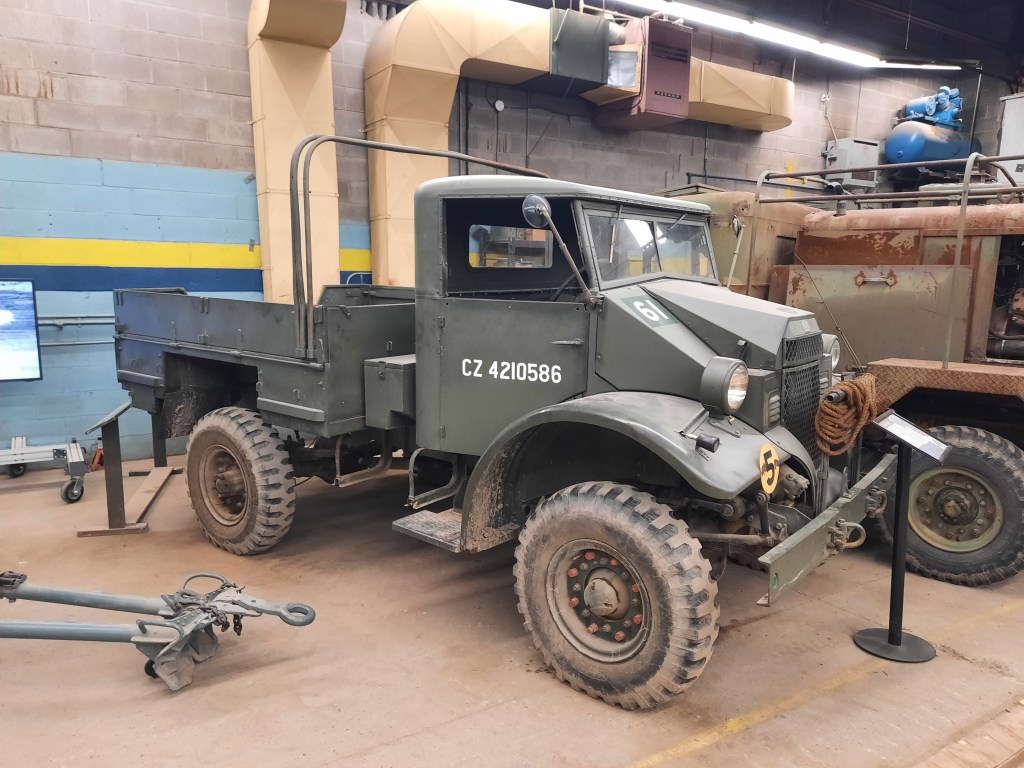
The Museum was established to preserve the story of the Ontario Regiment RCAC from its beginnings in 1866 as the 34th Ontario Battalion of Infantry, through WW1 as the 34th and 116th Battalions, 11th Armoured Regiment in WW2 and the Ontario Regiment (RCAC) today.
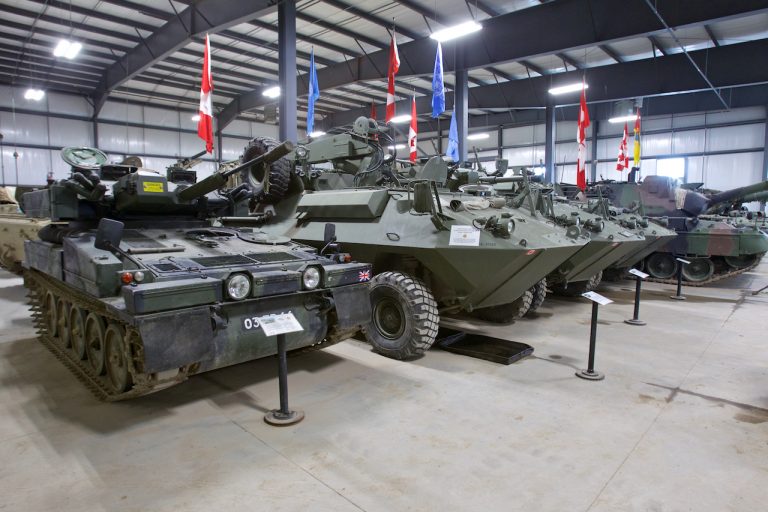
The Ontario Regiment Museum holds a collection of more than 100 operational vintage military vehicles, including jeeps, trucks, tanks, and motorcycles, making it the largest collection in North America.

Throughout the warmer months of the year, the volunteers put on a series of themed events called Tank Saturday. It is a wonderful opportunity to see those monsters in action.
Before the show, the public can buy rides on certain armored transports and even a German-built, Cold War-era Leopard tank. (video above).
The Blitzkrieg
The event we chose to attend was about the German Blitzkrieg. The team of volunteers brought to the track a few German and Allied vehicles for a parade.
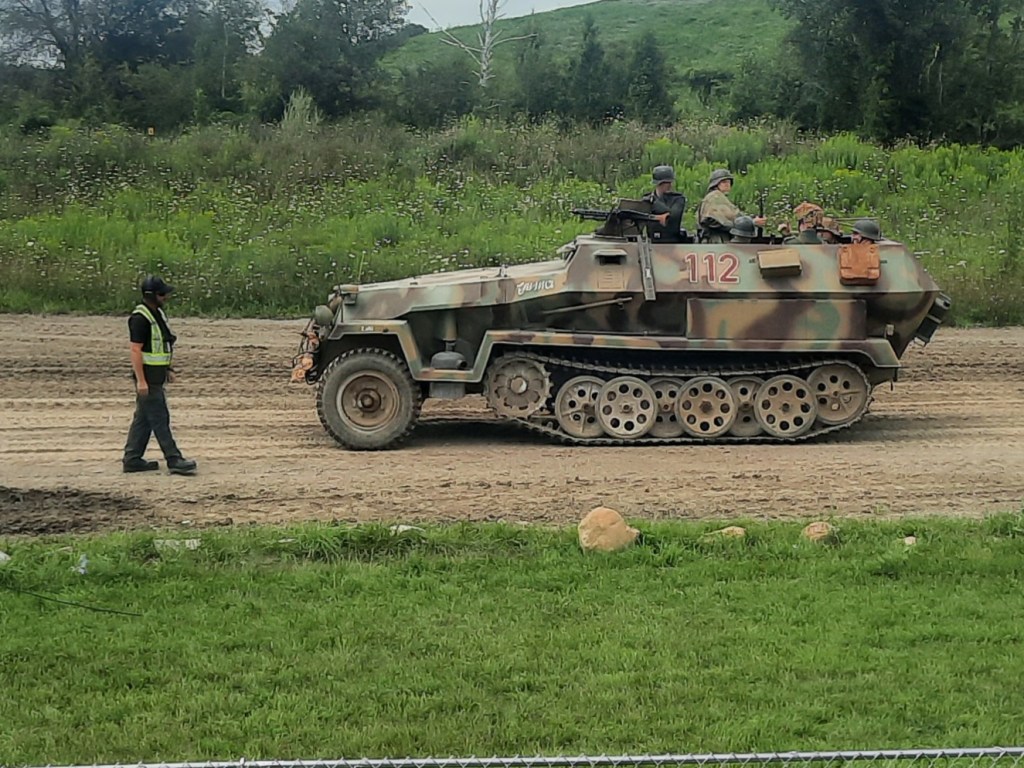
The Museum executive director, Mr. Jeremy Neal Blowers, was there, in the field, narrating the whole event and giving us very interesting details about each vehicle. A history lesson in real-time. (picture above)
Here are some of the most interesting vehicles we saw in action that Saturday:
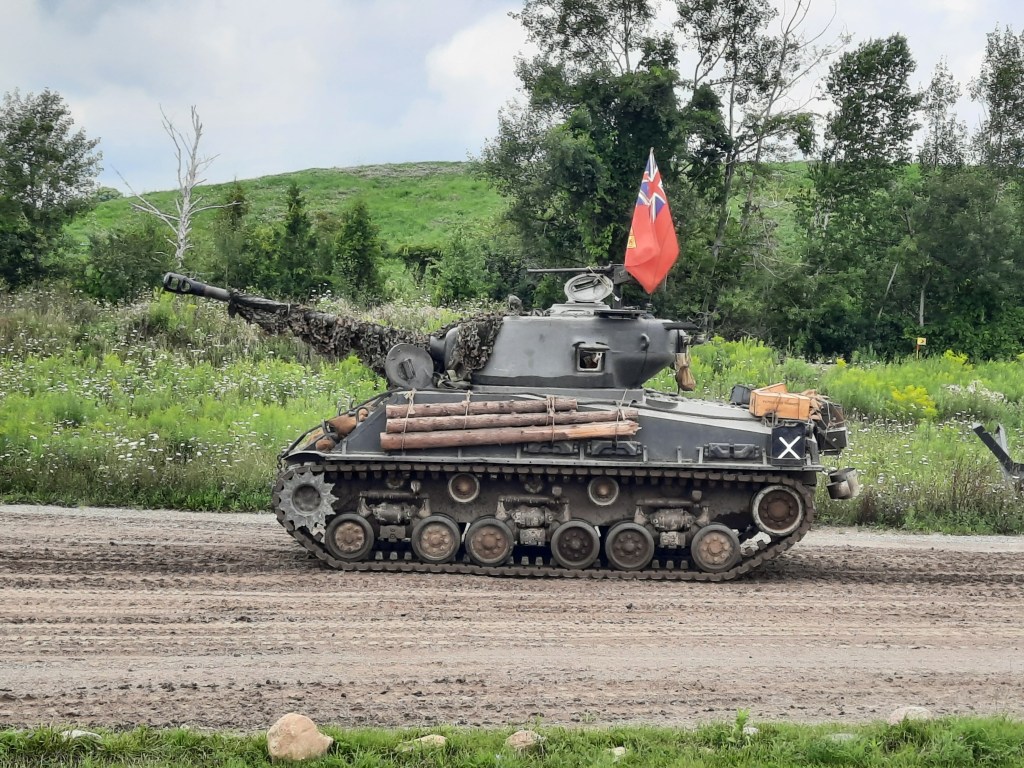
M4 Sherman
This tank was the backbone of the American armored divisions, both in Europe and in the Pacific. At the beginning of the war, the Sherman was severely inferior to the German Panzer, lacking thicker armor and firepower. After heavy losses on the battlefield, the model went through many improvements, and by 1944 it was already a worthy opponent against the Germans. It is armed with a 76mm gun and powered by a 400 hp, air-cooled, 9-cylinder Continental aircraft engine.
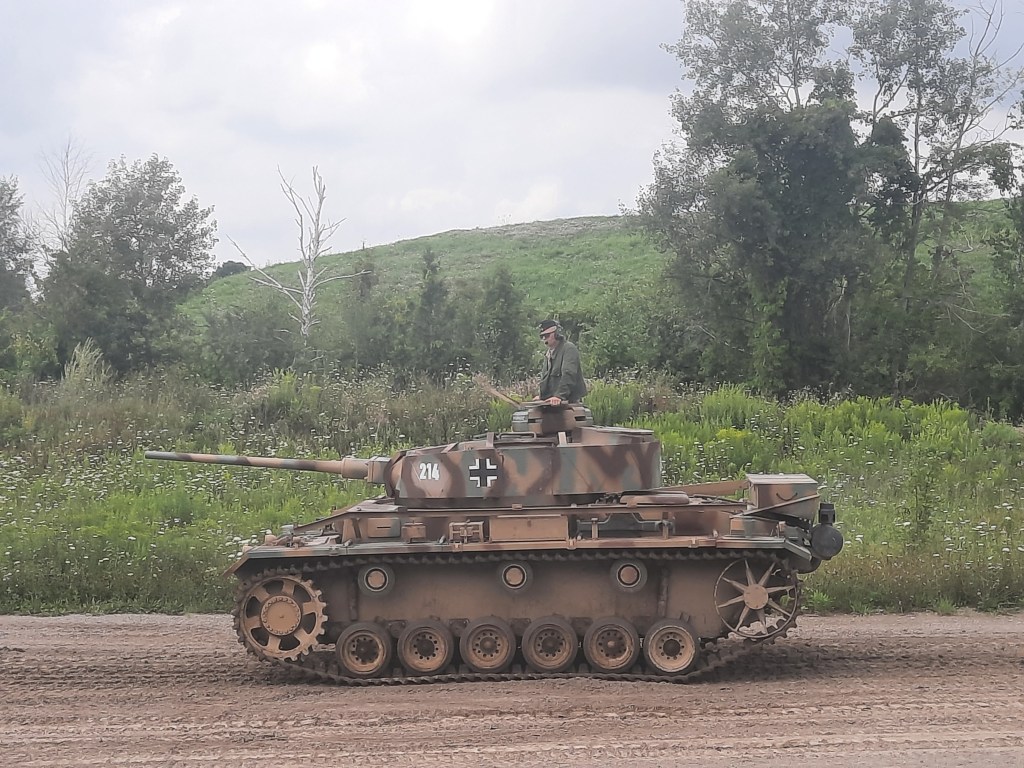
Daimler-Benz Panzer III
“A German Panzer is worth 10 American Sherman. The only problem is they always show up with more than 11”. – (A popular joke among German tank crews)
Although the Panzer owned by the museum is a reproduction, built with original Panzer parts, it gives you a pretty good idea of how good the original one was. Low profile, fast, agile, and powerful. It is armed with a 37mm gun and powered by a 300hp Maybach V12 engine.

Canadian Military Pattern CMP-15
One of the most popular multi-purpose Allied trucks of WWII, the CMP-15 was mass-produced in Canada, at the Oshawa, ON plant, under British specifications, especially for the Commonwealth countries. It could be powered by either Ford or Chevrolet engines and it was regarded as extremely versatile and nearly indestructible. Those qualities made the CMP 15 highly desirable even to other Allied countries outside the Commonwealth.
One interesting feature of the CPM-15 is the windshield, mounted at a negative angle. The idea was to prevent snow accumulation on the glass.
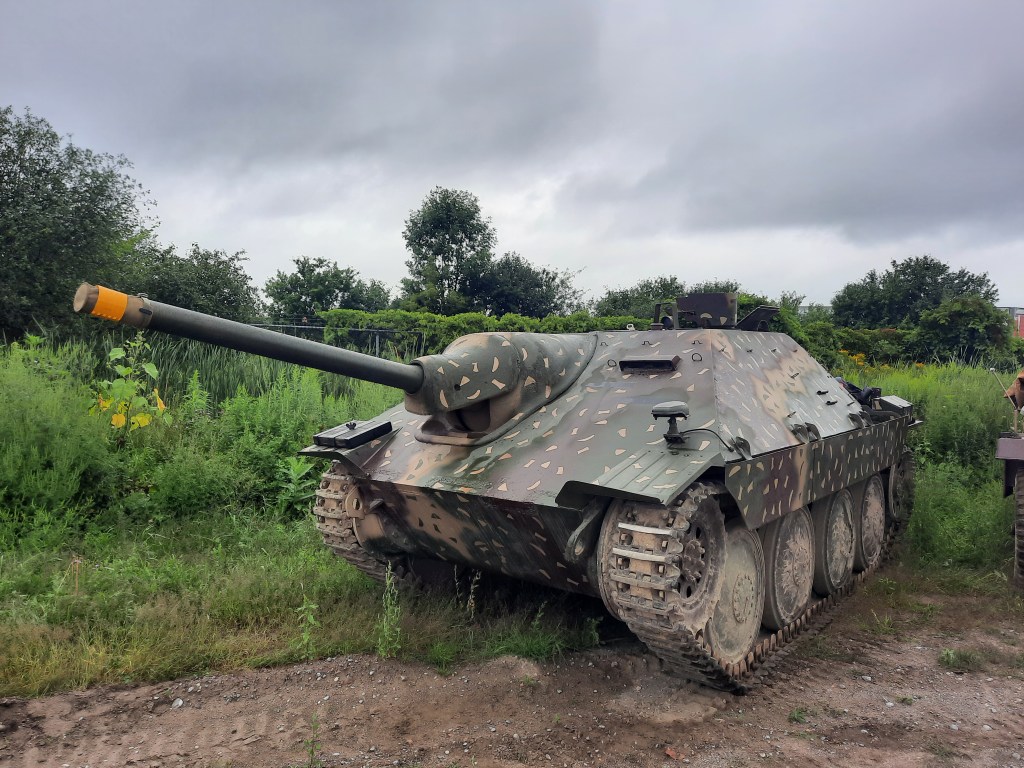
BMM Jagdpanzer 38 (t)
By 1944 the tide of WWII had changed, the Allies were making considerable advances and Nazis were stretching thin to keep up the fight in so many different theatres. As Germany was running out of both equipment and manpower, their industry started to build more defensive weapons. This is the case of the Jagdpanzer, or tank hunter. This machine has a powerful 75mm gun and it is equipped with heavy armor, capable of withstanding some severe punishment. Besides those qualities, this vehicle wasn’t meant to face Allied tanks on an open battlefield, instead, it would hide, motionless, just waiting to ambush the enemy. Since the Jagdpanzer had no gun turret, it was a lot cheaper to build; a good sign that Germany was running out of steam at the time.
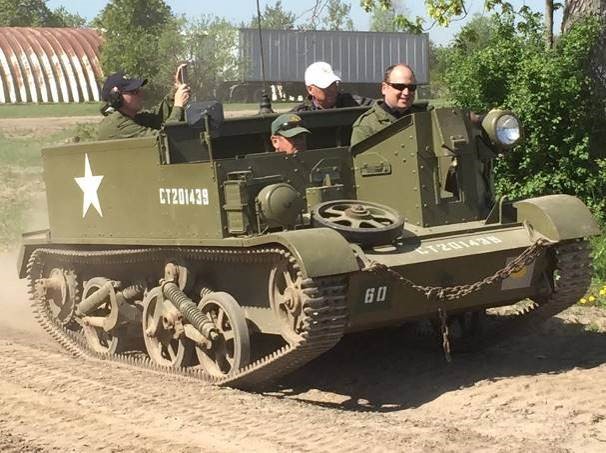
Ford Universal Carrier
For most of us, the “nonexperts”, every military vehicle equipped with tracks is a tank, which is not true. The Ford Universal Carrier is a good example, this little machine was created to be a multi-task, all-terrain support vehicle, capable of pulling a trailer full of equipment through mud and snow. Since the Allies had to rush the production of military equipment at the beginning of the war, they used whatever was available at the time. The engine, transmission, and rear end of this carrier came from “off-the-shelf” Ford commercial truck parts.
And yes, you guessed it right, the engine is a Ford Flathead V-8. It seems that before starting the Hot Rod movement in the late 1940s, the mighty flatty had another important mission: defeat fascism.
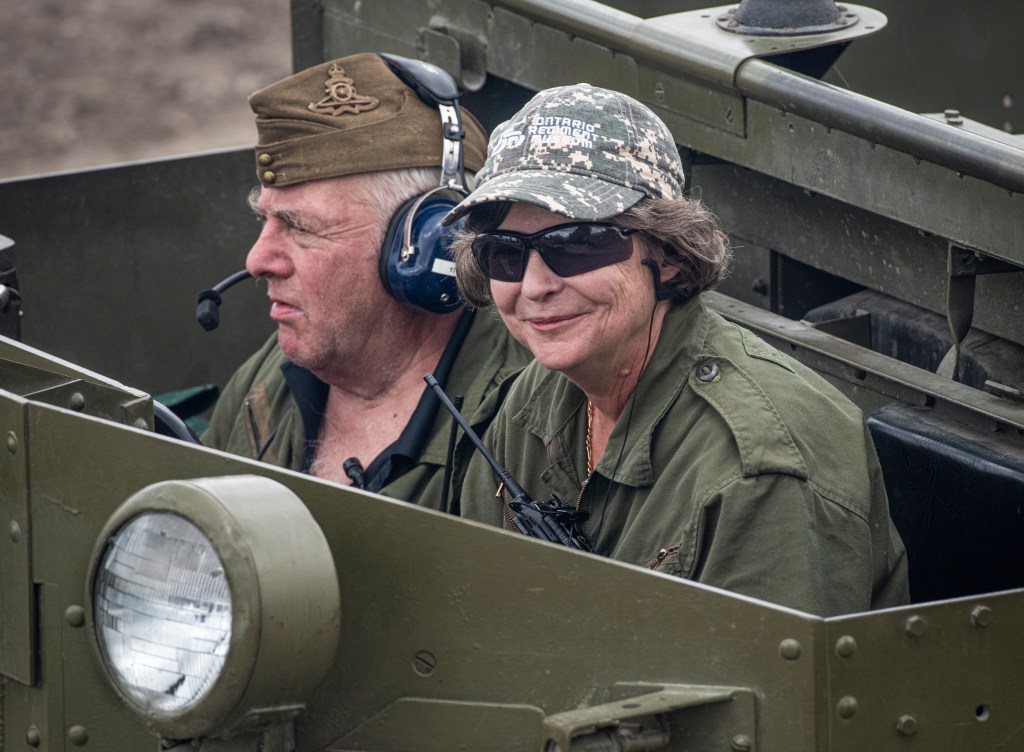
The guy you see in this picture (on the left) is retired CAF Sgt Steve Jordan, he was the driver of the Ford Carrier that day. A lot of details about the vehicle I wrote here came from a delightful chat we had before the event. Sgt Jordan is such a nice guy, I hope we’ll meet again in the future, for another interesting conversation.
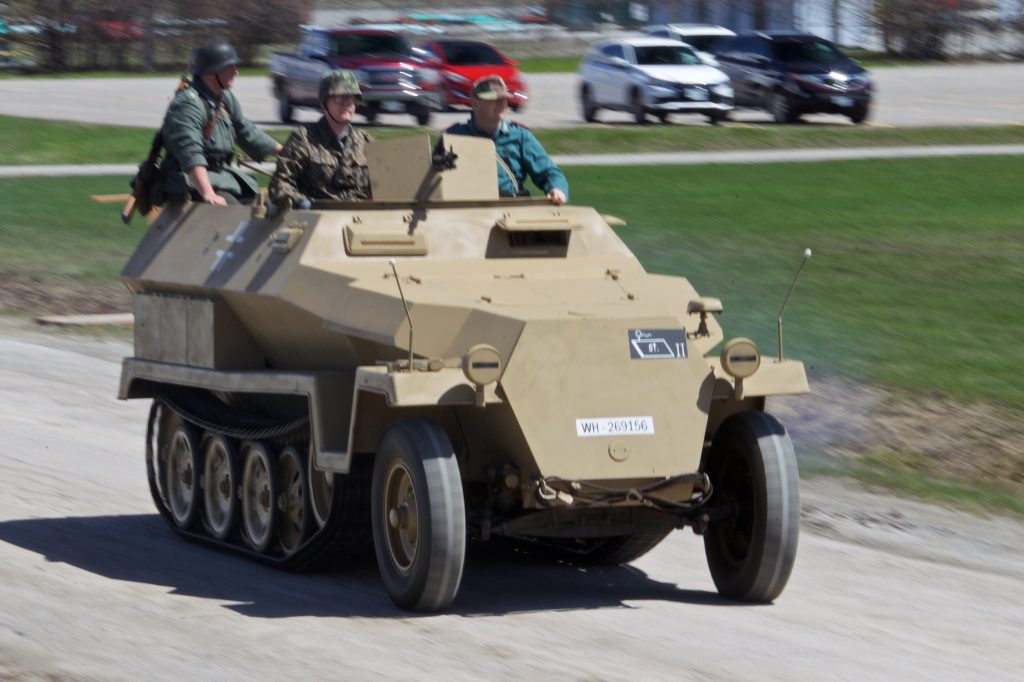
Sd. Kfz 261 – Hanomag
Since I was a kid, I have been fascinated by the so-called half-track vehicles. What’s up with that? A truck that looks like a tank? Wow!
The picture above shows the German half-track Hanomag and we can use it as a good example of how Germany was preparing itself for war way before the Allies. While the American half-tracks look like commercial trucks adapted for combat, the Hanomag is a true war machine, with a low-profile design and armored cabin and engine bay.
The Parade
The video above is a short footage of the parade. I never thought I would see WWII-era tanks in action right in front of me but, there they are.
The battle
The next part of the show was a mock battle between the “Germans” and the “Allies”.
Starting with a few actors recreating the arrival of a group of German soldiers on the battlefield.
The climax of the event is the “tank battle”. The confrontation starts when all the vehicles withdraw from the field, leaving it for the infamous German Panzer III to face its challenger, in this case, the American light tank M3 Stuart. The public goes crazy, watching the two tanks, running up and down the track, chasing each other and firing blanks. In the end, it was up to the crowd to choose the winner, and we decided that the Panzer was the vanquisher. The Stuart crew fought valiantly but they were no match for the “Germans”.
A noble mission
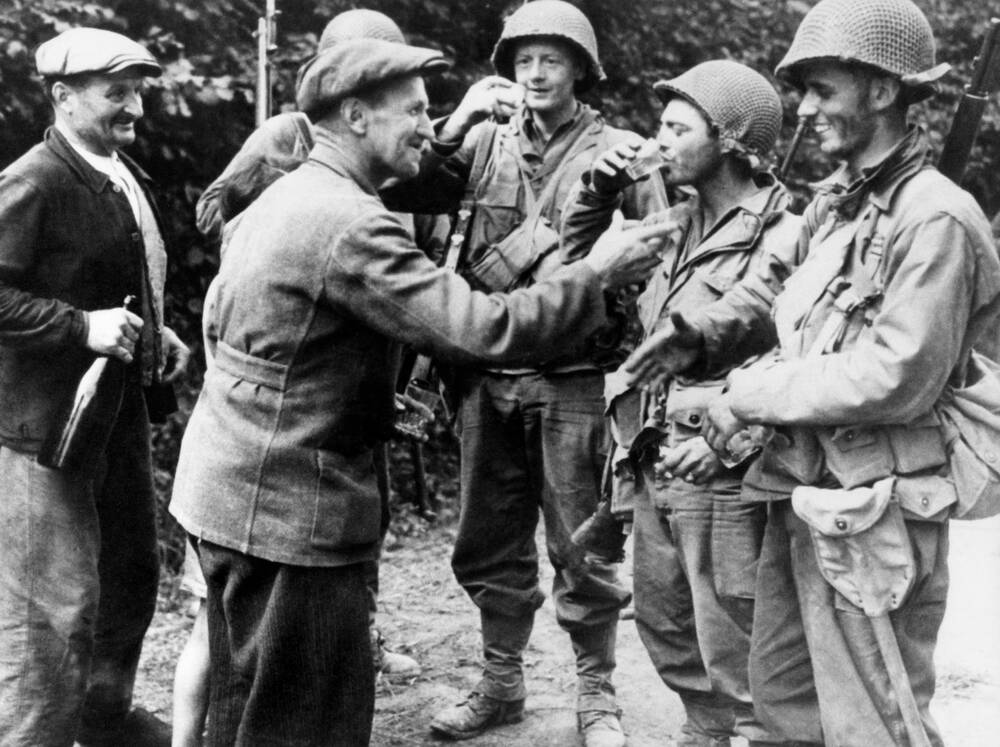
The Ontario Regiment Museum carries on the noble mission to preserve history, showing us the ingenuity of our industry and the courage of our veterans during horrendous times.
As Mr. Blowers said, these events are not intended to glorify war, instead, they are meant to show to the newer generations that thousands of soldiers paid the ultimate price to guarantee the freedom we so carelessly enjoy now.


Don’t you just love it when you see all that history being preserved?!!
LikeLike
Indeed! I am so happy that some museums around the world are putting their collection into action, instead of keeping them as static displays.
LikeLiked by 1 person
Yes, even better. I took a ride on a B-17 and I’ll never forget it!!
LikeLike
Wow, that must have been an amazing experience. Here in Ontario, we can fly on an Avro Lancaster, but the price for the 1-hour flight is $3900, 00 Canadian Dollars. For me, the price is totally unaffordable, but apparently, there are a lot of rich Canadians willing to pay for it, all the flights for 2023 and 2024 are sold out. This is very good news since the museum needs the money to keep its collection fly-worthy.
LikeLiked by 1 person
Whoa! That would have been over my head too; it comes to $2872.52 U.S. dollars.
LikeLike
Flatheads we’re everywhere! Interesting article.
LikeLiked by 1 person