When Dodge released the Charger, in the fall of 1965, the car was not a major hit. Despite the sleek design, and attractive selection of engines (the 426 HEMI being at the top of the list), the customers didn’t embrace the fastback design. Cadillac had tried it already in the 1950s with the Sedanette and even AMC released the Rambler Marlin in 1965, another fastback personal luxury model that failed to win the hearts of the customers. It was Ford that made this body style a winner with the much smaller and unpretentious Mustang, but that is another story.
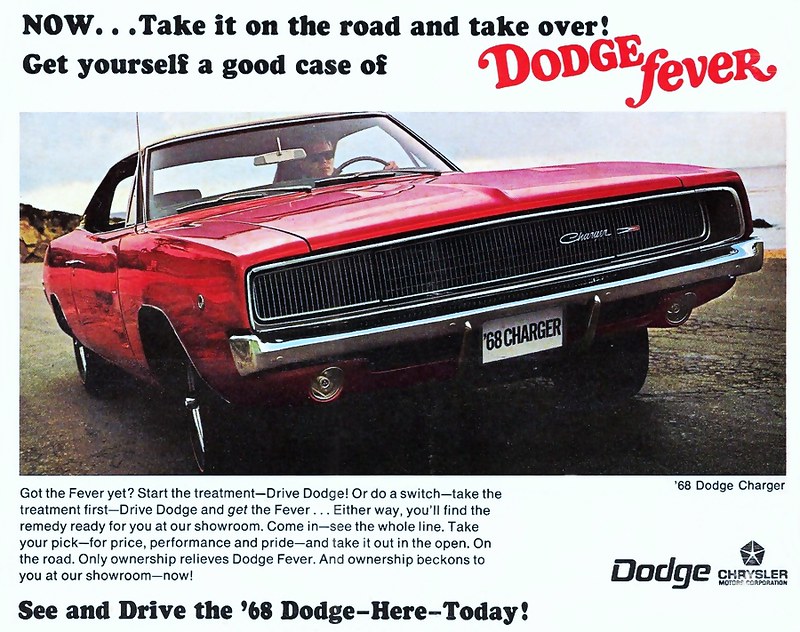
After two years in production, Dodge decided to radically change the Charger, giving the car a second chance, and that was one of the smartest decisions Dodge has ever made.

The new model adopted the coupe/hardtop body style but the long “C” pillars are a reminder that the original Charger DNA was still there, and the hidden headlights also are a beautiful heritage from the first generation. This new muscular design became known on the streets as the “Coke bottle”.
The new Charger was an instant hit, its bold new style captured the spirit of the muscle car movement like no other. The car looks mean and gracious at the same time. The guys at Motor Trend Media Corp. were so in love with the Charger that one of the writers went into full-poetic mode describing the car:
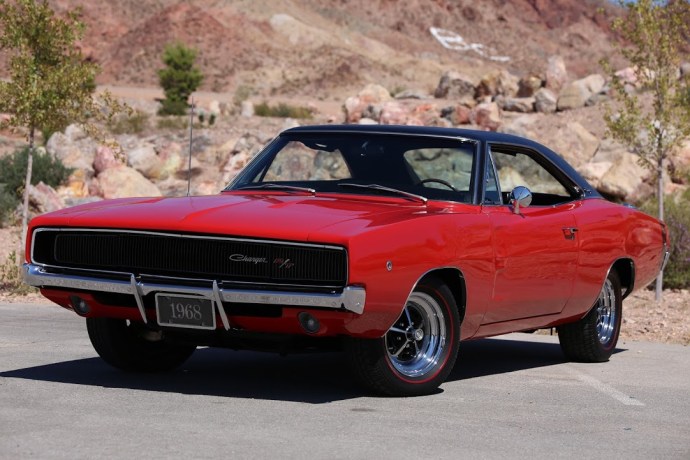
“You look outside and see erie sweeps of metal and hypnotic, fascinating shadows that soothe the pounding sun and make the car an almost organic, protective embrace. “

The second-gen Charger, built between 1968 and 1970, became one of the most recognizable American cars ever. Of course, the big (and small) screen played its part in making the Charger so popular. It became the car of choice for many bad guys and outlaws in movies like Bullit, Crazy Mary-Dirty Larry, Fast and Furious, and the beloved TV show responsible for the senseless destruction of hundreds of Chargers, The Dukes of Hazard.
The second generation Charger was a huge sales success, Dodge was expecting to sell 35.000 units during its debut year but, but when 1968 was over, almost 100.000 Chargers had left the showrooms across North America.
All this popularity created an interesting phenomenon, two Chrysler factories, located as far as South America and Oceania, decided to, somehow, make a few extra bucks out of this new Dodge fever.
The Brazilian Charger.

By the end of the 1960s, the Brazilian auto industry was going through a small revolution, it was gradually shifting from building flimsy, second-rate cars from European and American companies to more up-to-date, good-quality models. Chrysler got a ticket to the Brazilian market when they bought the French automaker Simca, in the mid-1960s. In 1969, Dodge released its first car in Brazil, the 4 doors Dart. It was powered by the 318 V8 small block, paired with a three-on-the-tree transmission.
The Dart was a nice surprise for us, it was a contemporary product since the same body style had been released in the US only two years before, and the 318 engine provided a decent performance for the car. For the next year, Dodge unveiled the 2 doors model.
The Dart was an affordable entry-level car in the US market but in Brazil, it was a very expensive machine. The 2 door coupe became an attractive personal luxury model, sitting between the middle-class Chevy Opala and the up-scale Ford Galaxie. Buyers soon elected the coupe as their favorite Dart, and the model easily outsold the four-door. The sales numbers made the guys at the Dodge marketing department think: “Why not a true “Sporty” Dart? The solution was pretty obvious: the Dart “GT”, just like in North America. But the design department wanted to go one step further.
“What if we can make the Dart look like a Charger?” – Well, why not?
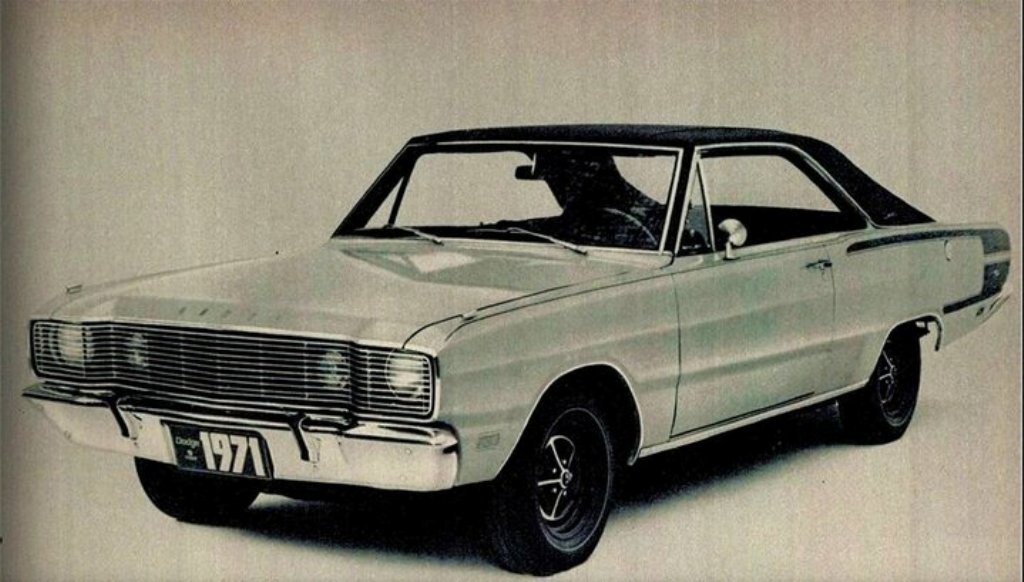
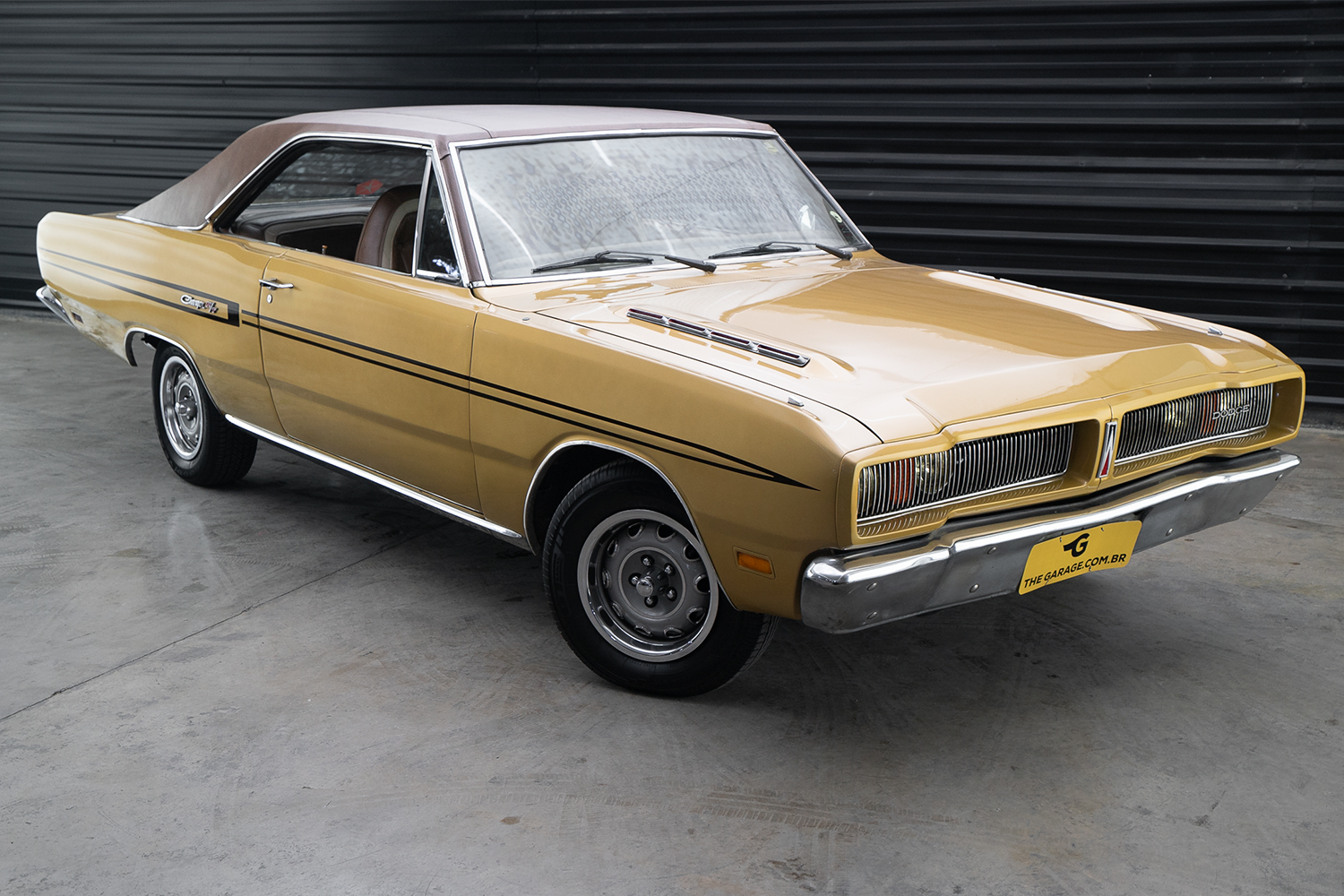
And they really did it. In 1971 the company presented our very first muscle car (or the closest thing we ever had to a muscle car), the Charger R/T.

The design cues from the real Charger start with the front facia, receiving a plastic-slotted grille covering the headlights. That was a no-brainer.
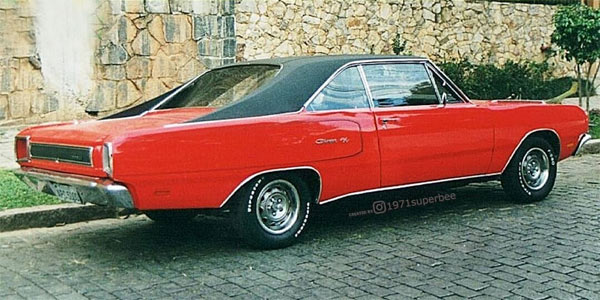
But how to get those long, elegant “C” pillars without spending a lot of money on tooling? Thankfully our friends at Mexican Chrysler had the answer, they created a metal applique that could be attached to the body, stretching the pillars, giving that desired look. The overlapping of the sheet metal was then conveniently covered by the vinyl top. Voila!

The Charger was equipped with 14-inch steel Magnum rims, wrapped with whatever sports tire we had at the time, Firestone Wide Oval or Goodyear Polyglass. To complete the visual, the customer had the option of a few bright colors, like yellow, lime green, bright red, and orange, adorned with black stripes. The interior was as luxurious as you could get at the time, with bucket leather seats, and plush carpet. On the dash, there is a tiny tachometer occupying the space where the clock used to be.

Under the hood, the 318 received a higher compression ratio, requiring high-octane fuel for optimal performance. The tiny 2-barrel carb was revised with larger jets and a dual exhaust system was adopted. Chrysler assured that those little modifications gave 20 extra ponies to the small block, cranking out around 220 hp (SAE), making it the most powerful engine in Brazil, a title that the Charger kept for many years.

The absolute majority of the Chargers sold in Brazil were equipped with the traditional four-on-the-floor, but customers could special order cars with 3-speed automatic transmissions. Power steering and servo-assisted front disc brakes were standard equipment.
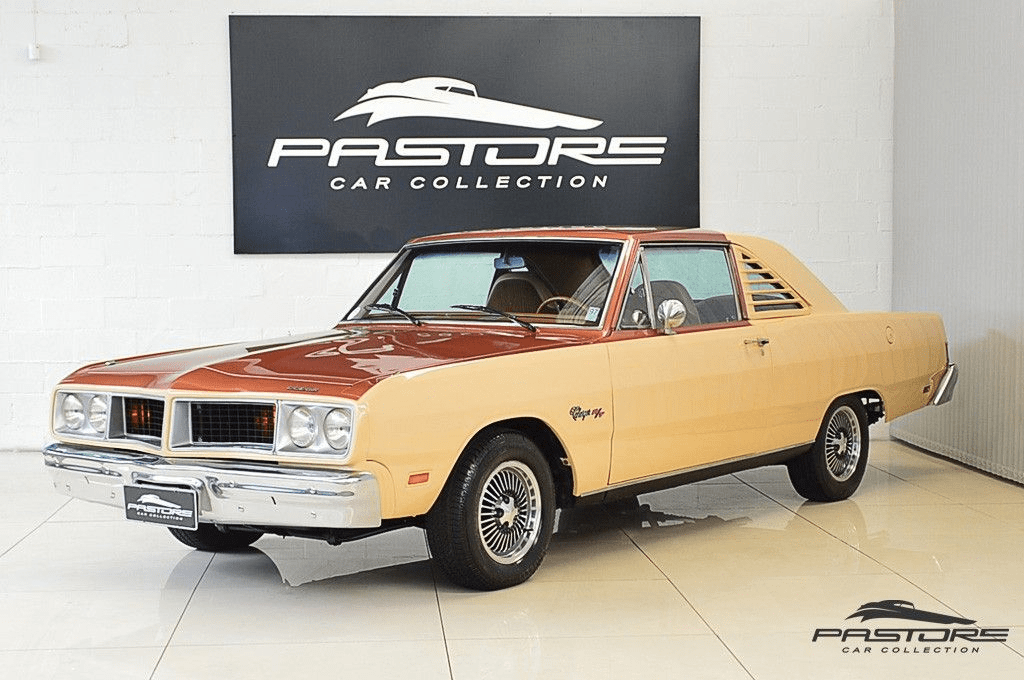
In 1979 the Brazilian “A” body received its first noticeable design update and the Charger lost its already dubious personality.
In 1980, the Brazilian Chrysler was acquired by Volkswagen. The Germans wanted a share of the lucrative commercial vehicles market in the country and the Dodge truck assembly line was their best option at the time.
VW kept the Dodge cars in production for one more year, making them, with the Australian Valiant, the last A-body produced in the world.
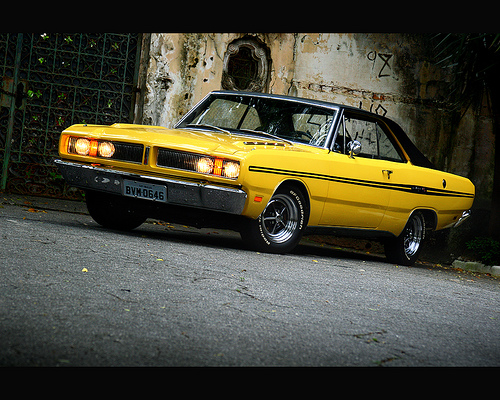
To the eyes of a North American car guy, the Brazilian Charger is nothing more than a silly knockoff, but we took the car very seriously. It was one of the most desirable cars produced during the most romantic period of our auto industry. The passion we have for the Charger is reflected in its price in the classic car market; a decently restored Brazilian Dodge Charger can fetch prices up to the level of 1960s Mustangs and Camaros.
The Australian Charger.
Just around the same time when the Brazilians were creating their own Charger, the Australian Chrysler was going through the same path and although it was also an A-body, the car was based on a model that was exclusively built in Australia.
We can trace the roots of this car all the way back to 1962, when the American Plymouth was locally built and rebadged Chrysler Valiant.
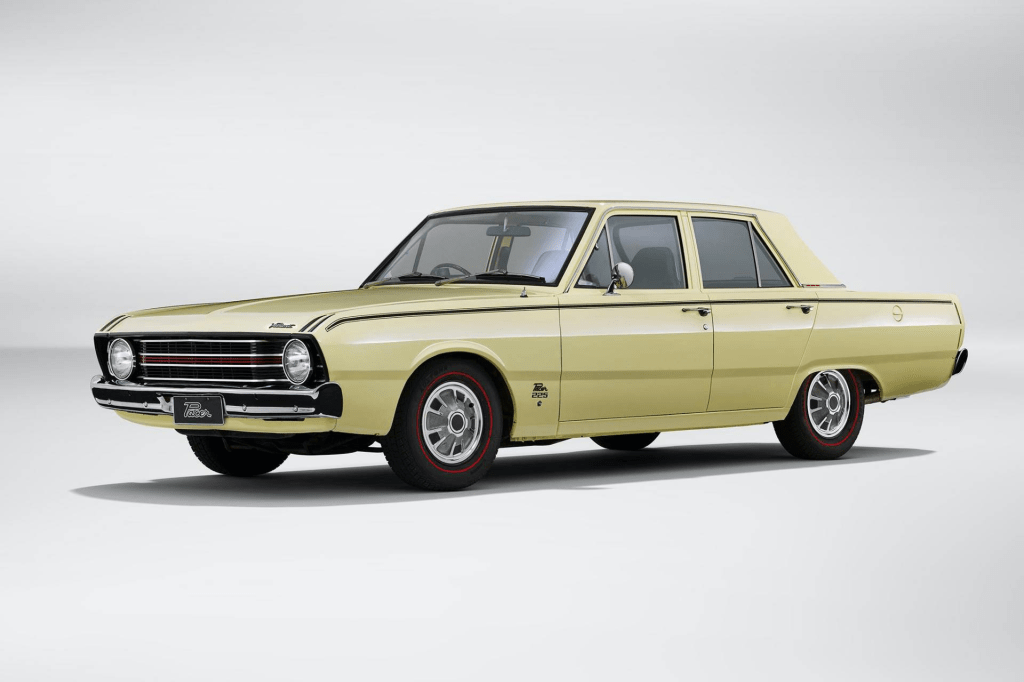
In 1967 the Chrysler Valiant adopted the American Dart body style, the only difference was the front facia, which was exclusive to the Australian market. Two years later, the company unveiled the Valiant Pacer, the first attempt to offer customers a sports version of the car. It seems that Chrysler was aiming at the “enthusiast on a budget” kind of buyers since the Pacer was a rather spartan car. While the competition, the Monaro GTS and Falcon GT, were powered by small block V8 engines, what you would find under the Pacer’s hood was a six-burner.

The only engine option was a high-compression version of the trustworthy 225cu.in (3.69-litre) ‘slant six‘. With a two-barrel carburetor, it pumped out 130hp at 4500rpm. The transmission was a 3-speed manual… well, at least they put the shifter on the floor. Fake alloy hub caps, bright colors, and a dash-mounted tachometer complete the visual. In the first year, only the 4-door body was available and in 1970, the 2-door coupe came along.
It didn’t take long for Chrysler to realize that the Pacer was too tame to face the competition and in 1971 the company unveiled the Valiant Charger.

This new car was still conceived on the omnipresent Chrysler A-body platform, but the short wheelbase, (105″ x 111″ of the regular Valiant) fastback body style was only built in Australia.
The Valiant Charger had a vast array of versions, most of them powered by the new in-line six engine called HEMI-6. Yes, you heard it right, HEMI-6. This engine replaced the iconic slant-six in Australia, it was born as a truck engine project that, for some reason, was dumped by the Americans. Its cylinder head wasn’t a crossflow in proper hemi fashion, and the combustion chambers were only partially hemispherical. Still, it added to the mystique. The more basic version of the Charger received the 215 cu in (3.5 L), good for 140 bhp, The next step was the Charger XL, powered by the 245 cu in (4.0 L), pumping out 160 bhp. Both versions were equipped with a 3-speed manual transmission as the only option.

The Charger got a lot more interesting with the R/T version. To live up to the iconic moniker the car was powered by the largest HEMI-6 available, the 265 cu in (4.3 L), cranking up a respectable 280 bhp, but it could be special ordered with the race-specs- 305 bhp Six-Pac engine, characterized by a higher compression ratio (10:1), finely tuned exhaust headers, more aggressive camshaft, and the adoption of 3 Weber 48 DCOE carbs.


The Charger R/T came equipped with a sturdy Borg/Warner 4-speed manual transmission as the only option.
Deciding to cover all fronts, Chrysler created the ultimate version of the Charger, called 770. This top-of-the-line model offered two options of small block V8, first, the 318 cid, 2 barrel carb, rated at 230 bhp, and the 340 cid, 4 barrel carb, imported from the USA, rated at 275 bhp. Both engines could be paired with either a 4-speed manual or a 3-speed automatic transmission.

Australian Chrysler finally had all the firepower necessary to go after the Ford Falcon GT and Holden Monaro GTS, not only on the streets but also on the race tracks. The new Charger took the prestigious Australian Touring Car series by surprise, since their weapon of choice was the spicy Hemi-6 option, also code-named E38.

To be fair, the six-cylinder engine was not their first choice for the tracks. The Australians imported a good quantity of the 340 cid V8 small blocks from the USA, to homologate the engine for the touring series but the hot rod version of the HEMI-6 proved to be a better option. During the trails, the six-burner Charger was found to be 2–3 seconds faster around the Mallala race track than the 340. The heavier V8 at the front caused severe understeer and required earlier braking than the Hemi six.
With more than 300 units of the imported 340 small blocks in the warehouse, Chrysler decided to get rid of them making it an option for the the top-of-the-line 770 version.
The Valiant Charger or simply Chrysler Charger was a huge success, at some point the car represented more than 80% of the Valiant sales in Autralia.

In 1975 the Six-Pac engine option was dropped but the Hemi-6 continued to power the Charger, but now it was fed by a 4 barrel carb. Around this time the stockpile of the small block 340 was exhausted and the engine was replaced by a 360 cid which was a bored-out version of the locally built 318 cid.

In 1976 the Charger received its last design update, with a beautiful 4 headlights set up, but thanks to the global oil crisis, Chrysler shut down its production in 1978.
The fate of the Australian Chrysler wasn’t much different from the fate of its South American counterpart. In 1980 Mitsubishi took over the company and in 1981 the last Valiant left the assembly line.
Conclusion.
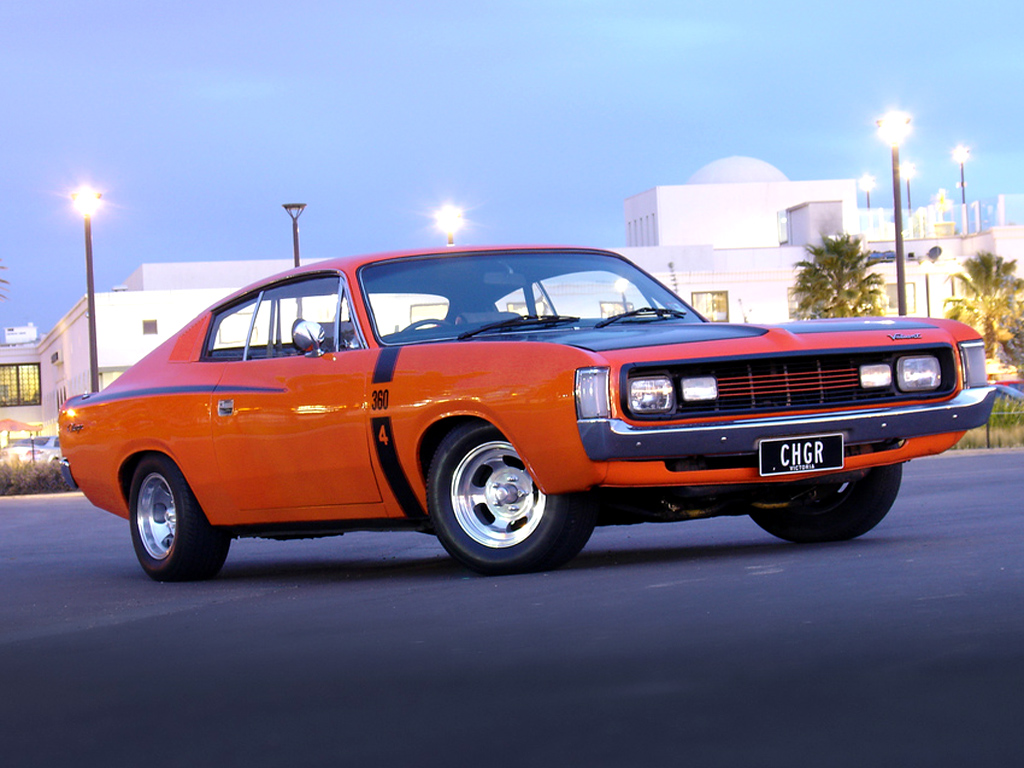
It was only at the end of my research that I realized the title of this post might be misleading. To call both cars, the Brazilian and the Australian Chargers phony would be an injustice. While the Brazilian one is, in fact, a cheap knockoff, the Australian one is a totally different story. The Aussies created a brand-new car that carries zero design cues from its American cousin. Chrysler even considered different names for the car.
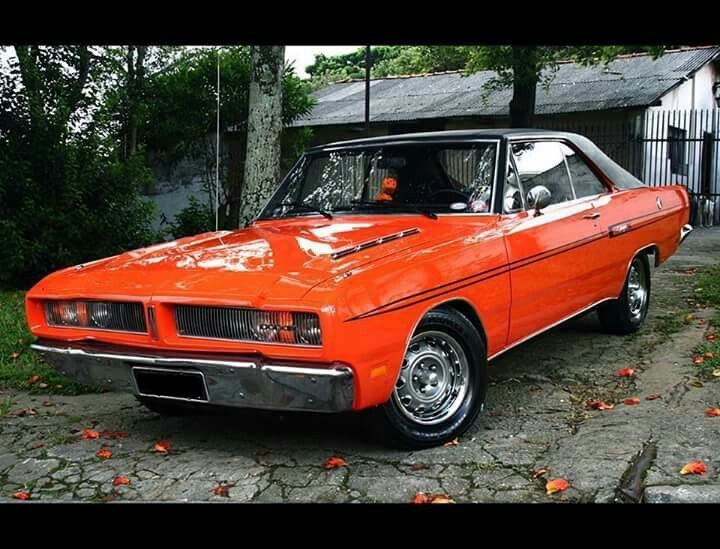
On the other hand, I have to give some credit to the Brazilians; they did what they could with a much tighter budget than the Australians and the car they created is not that bad.
All things considered, both cars became icons in their own countries. If the local market didn’t allow us to have the real B-body Charger, at least the alternatives we created have something special, they are the result of the hard work and ingenuity of the local guys.
The kind of pride that only a car that was “built, not bought” can give.
 The Classic Machines
Love reading about the cars you guys had. It was a special time. I’m totally in love with the Aussie cars, especially the Fords and Holdens.
LikeLiked by 1 person
The Australian muscle car universe is fascinating.
LikeLike
When I first read your post I was thinking of the cars in the 80s here in the US that carried the name. They were way more phony than the ones you shared
LikeLiked by 1 person
Yeah, I remember “that” Charger from the 1980s, I even considered mentioning it on the post but the car was not relevant.
First I thought the car was based on a Mitsubishi platform but actually, it was based on the Omni which was conceived in Europe… or something like that.
Ford restrained itself from making a front wheel drive Mustang, but Dodge didn’t have the same respect for the Charger.
LikeLiked by 1 person
Very interesting. Love that 6 cylinder
LikeLiked by 1 person