
During the 1990s, rock’n roll enjoyed what might have been its last breath of life as a mainstream musical genre. The Grunge Movement, which started in the mid-1980s, and exploded in the next decade, was a healthy departure from the (mostly) silly, glossy-looking bands from the 80s to a more hard-core, back-to-basics approach. Rock was once again focused on fighting for social rights and equality.
Of course, not all bands that reached stardom in the 90s fall into the Grunge subculture, since it was an American movement. The Brits kept themselves into what we can qualify as alternative/Indie Rock’n roll. If I have to make a list of the most influential British bands in the 1990s my top 5 would be Radiohead, Blur, Oasis, Bush, and the one I will focus on here, The Verve.
The band was born in Wigan, Greater Manchester, in 1990 by lead vocalist Richard Ashcroft, guitarist Nick McCabe, bass guitarist Simon Jones, and drummer Peter Salisbury. At the time, the band was named Verve, and their work was something like a neo-psychedelic.

When their first album, Storm in Heaven, was released in 1993, the guys were already well known in the British Indie rock’n roll scene. The record was a critical success, but was only a moderate commercial success, reaching No. 27 in the UK album chart that summer. In 1994 the band changed the name to The Verve.

The breakthrough
The band’s first and only solid commercial success came in 1997 with their third studio album, Urban Hymns. Critics around the world enthusiastically praised the record, which became one of the best-selling in UK chart history, with over ten million copies sold.
Urban Hymns has a few singles that reached high in the charts like The Drugs Don’t Work and Lucky Man, but if there is one song that will forever be remembered as the band’s most important one is Bitter Sweet Symphony. Besides being an awesome work of art, this single was involved in a complicated lawsuit that brought so much trouble and sadness that it could be used to sum up the band’s history.

The melody of Bitter Sweet Symphony was based on a sample of the song “The Last Time” by another British Rock band that you might have heard about, The Rolling Stones. Richard Ashcroft got inspiration when he listened to the orchestral version of the song, played by Andrew Oldman Orchestra. Andrew is a former producer and manager of The Rolling Stones, and his orchestra used to play a lot of the band’s material.
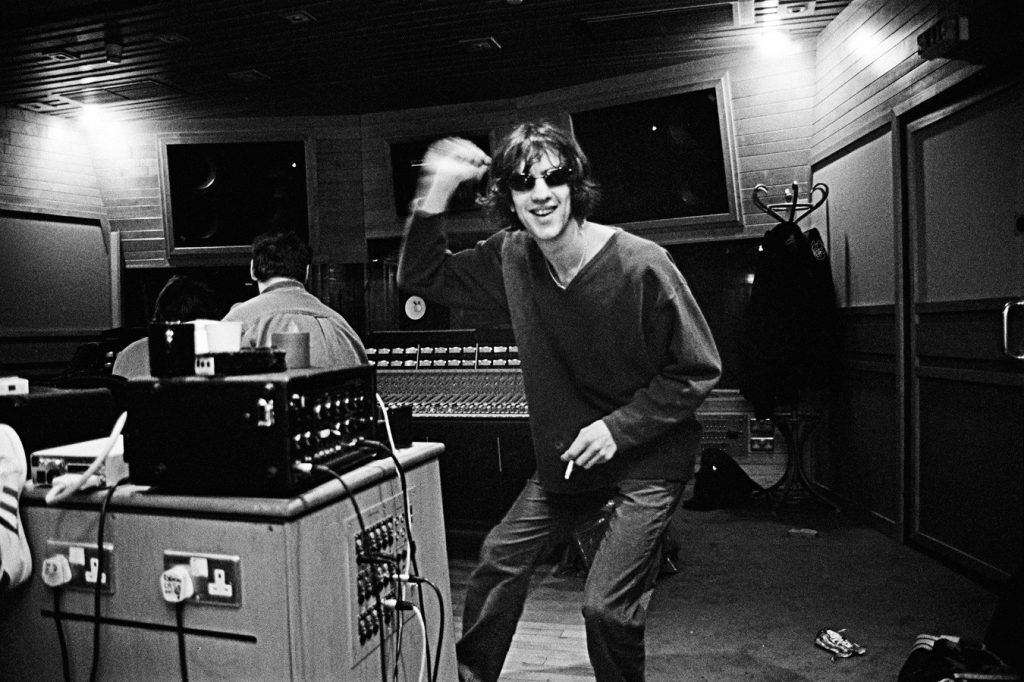
Ashcroft’s idea was to take the original song and “turn it into something outrageous”. The Verve signed an agreement with Decca Records to use a 5 notes segment of “The Last Time” in exchange for 50% of the royalties. The band then altered the piece, adding strings, guitar, percussion, and several layers of vocals from Ashcroft. The band’s leader also said he imagined “something that opened up into a prairie-music kind of sound”, similar to the work of the Italian composer Ennio Morricone. “The song started morphing into this wall of sound, a concise piece of incredible pop music“. “To take something but really twist it and fuck it up into something else. Take it and use your imagination.”
Whatever Ashcroft’s intentions were, he achieved. The song was released on 16 June 1997 and quickly became a huge hit. It is The Verve’s most ingenious creation, and the fans responded to that. The sales of the album skyrocketed and Bitter Sweet Symphony became one of the most iconic songs of the 1990s.
The innovative video also helped to push the song’s popularity to the sky. Rumor has it that in the original script, Richard Ashcroft should peacefully walk through the streets, but instead, he went rogue and bumped over the extras. The director loved it so much that he decided to change the script entirely.
The lawsuit

Allan Klein made a name for himself in the 1960s British pop scene as a ruthless and greedy music manager, who would do whatever it took to make his clients, and himself, filthy rich.
At some point, Klein managed The Rolling Stones and The Beatles, simultaneously so, one must assume he knew what he was doing. In fact, he was a very sketchy manager who, in many cases, took possession of his client’s copyrights without their knowledge.

Ashcroft and his bandmates thought they were safe when they negotiated rights with Decca Records. What they didn’t know at the time was Mr. Klein should also be part of the deal, since he owned the copyrights to The Rolling Stones pre-1970 songs. This included—yes—” The Last Time.”
When Klein realized that The Verge-bunch of nobodies was becoming a huge name in British pop-rock, he decided it was time to cash in some money. Initially, he assumed that the agreement signed with Decca could be upheld in court, so he led to a lawsuit in the name of ABKCO Records, which was Klein’s holding company, claiming that Ashcroft used more than five notes from the original song, establishing a breach of contract.

The Verve was faced with two options, one was to remove Bitter Sweet Symphony entirely from the market and the other was to give up their rights over the song. That suit was settled out of court and the boys relinquished all royalties to Klein and the songwriting credits were given to Jagger-Richards.
Ashcroft received $1,000 for completely resigning rights.
That was a bitter pill to swallow. Bass player, Simon Jones, said: “We were told it was going to be a 50/50 split, and then they saw how well the record was doing. They rang up and said we want 100 percent or take it out of the shops, you don’t have much choice.”
When asked about the lawsuit, Ashcroft was satirical, “This is the best song Jagger and Richards have written in 20 years.” “It was the biggest hit attributed to The Rolling Stones since their track “Brown Sugar.”
The song was nominated for Best British Single at the 1998 Brit Awards and in 1999 it was nominated for the Grammy Award for Best Rock Song. Bitter Sweet Symphony was also included in the soundtrack of the 1999 movie Cruel Intentions.
Sadly, it was when the song reached its peak in popularity that The Verve broke up. Life in the band was never easy, drug abuse and internal conflicts were constant problems faced by the members. Klein’s lawsuit was the last straw.
The band got back together again in 2007 but it lasted only 2 years.
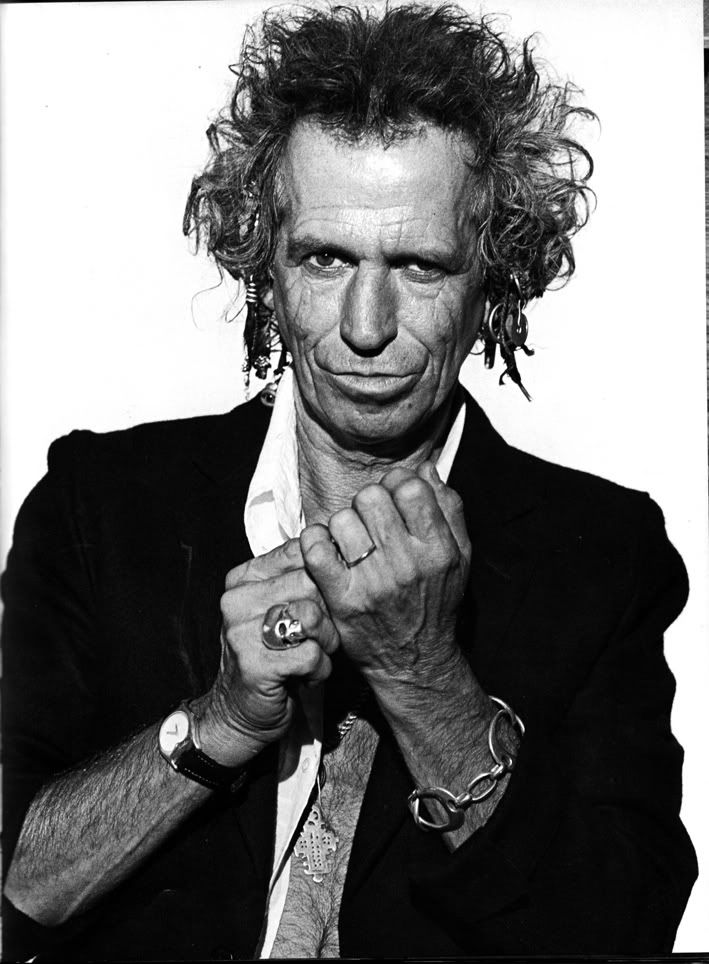
In 1999 a reporter asked Keith Richards about the whole situation, “I’m out of whack here, this is serious lawyer shit. If the Verve can write a better song, they can keep the money.”
The light at the end of the tunnel.
In 2019, Ashcroft’s new manager, John Kennedy, decided to “reopen the case”. In the same year, he gave a poignant statement about it:
“Songwriters often talk about their songs as if they are their children and to have one of your children taken away from you has been brutal for Richard,” Kennedy said. “He has endured it, not always patiently or in silence, but it has been terrible for him.”
He and Ashcroft’s other manager, Steve Kutner, started to negotiate with Allen Klein’s son, Jody, who became the controller of ABKCO after his father passed away in 2009. At the younger Klein’s suggestion, they met with Joyce Smyth, the Rolling Stones manager, who agreed to personally speak to Jagger and Richards.
The song returns to the creator.
Kennedy thought “the most likely outcome was that nothing would happen”. But in April, he and Kutner received a call from Smyth relaying Jagger and Richards’ agreement to return the rights and their share of the royalties to Ashcroft and to have their names removed from the song’s writing credits.
“Steve and I nearly cried because we knew what this would mean: absolute affirmation that ‘Bitter Sweet Symphony’ was wholly Richard’s creative work,” said Kennedy. “Without [Smyth] this simply would not have happened.”
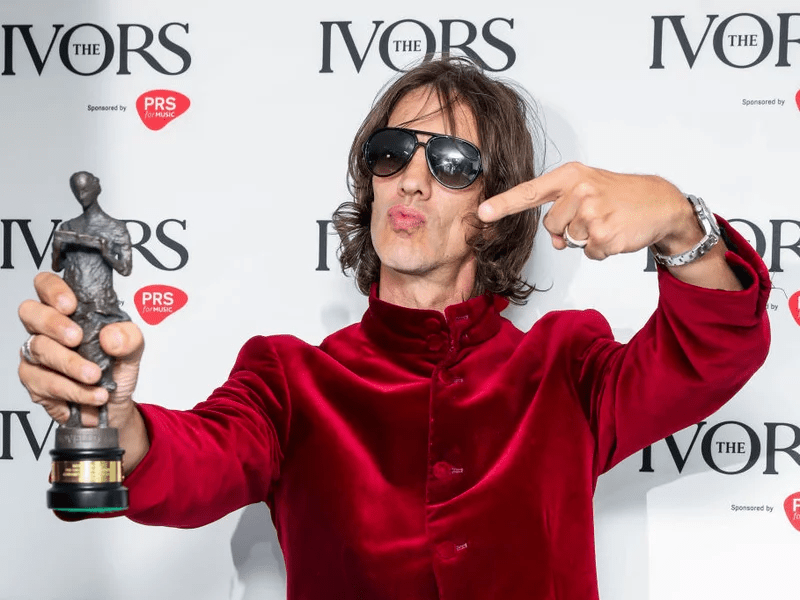
In May 2019, Ashcroft was awarded for outstanding contributions to British music, at the Ivor Novello Awards (picture above). That was the perfect moment to make the good news public.
“This remarkable and life-affirming turn of events was made possible by a kind and magnanimous gesture from Mick and Keith, who have also agreed that they are happy for the writing credit to exclude their names and all their royalties derived from the song they will now pass to me,” he said in a statement.
Bitter Sweet Symphony also became some sort of anthem for the English national soccer team. Now that Ashcroft owns the song, he can enjoy international games once again. “They play it before England plays,” he observed. “So I can sit back and watch England … and finally just enjoy the moment.”
Billboard estimates the song’s total publishing revenue over the years at almost $5 million. It sounds to me like a very modest estimate.
Ironically, “Last Time“, can’t even be considered an original The Rolling Stones song. It has an identical chorus, in melody and lyrics, to “This May Be the Last Time“, a traditional gospel song recorded in 1954 by the Staple Singers. In 2003, Richards acknowledged this, saying, “We came up with ‘The Last Time’, which was basically re-adapting a traditional gospel song that had been sung by the Staple Singers, but luckily the song itself goes back into the mists of time.”


Sufficed to say, Keith Richards is scary looking-but considerate to the Verve. 🙂
LikeLiked by 1 person
After a lifetime of smoking “only God knows what”, Keith became a bit scary indeed, with lots of wrinkles.
As my wife says, the Beatles were cute and elegant while the Stones were ugly and awkward. Words from a hardcore Beatlemaniac.
LikeLiked by 1 person
Awesome text, bro
LikeLiked by 2 people
Thank you so much, brother. It means a lot coming from you, who taught me a good deal about rock’n roll.
LikeLike