
Old movies are the closest thing we have to a time machine. They can bring us back to a time when life was simpler, and people were more authentic. Every movie lover has a list of their favorite classics and, consequently, their favorite actors and actresses. During the glory days of Hollywood, Bogart was the intense one, Grant was the funny guy, Dean was the rebel, but there was an actor who could play the everyday guy like no other, James Stewart.
Jimmy, as he was known by friends and fans worldwide, made his trademark on the silver screen as the quintessential All-American dude, pouring his easy-going persona into most of the characters he played. He built one of the most successful and enduring careers in film history and became a symbol of Hollywood golden age.
James Maitland Stewart was born in Indiana, Pennsylvania, on May 20, 1908. Growing up as a typical small-town boy, he cultivated values he would carry throughout his life. He went to Princeton and got a degree in architecture, but thanks to the depression, he had difficulty finding a job in the field. With limited options on the horizon, Stewart accepted an invitation from a friend to help prepare shows for Broadway.
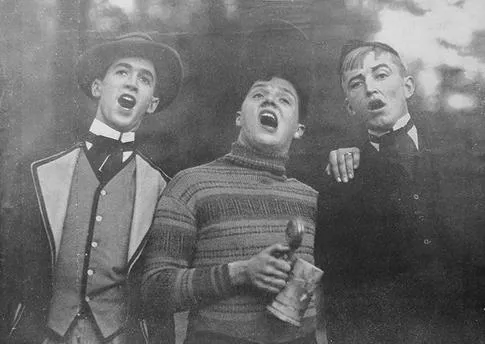
Jimmy fell in love with show business, and soon, he started on Broadway with small parts, and later on to leading roles until Hollywood found him.
His first movie appearance was in a supporting role in The Murder Man (1935), but his breakthrough only happened in 1938, when he starred in Frank Capra’s comedy You Can’t Take It With You. From that moment, Stewart’s career skyrocketed.
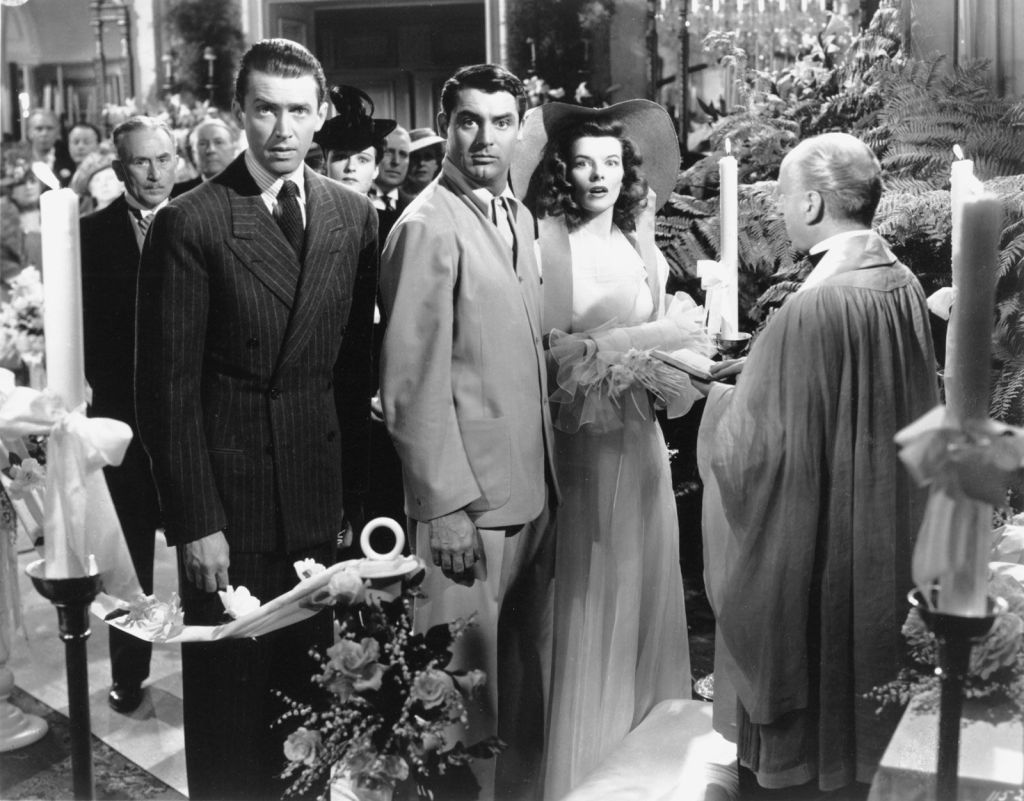
He received his first Academy nomination in 1939 for his role in Mr. Smith Goes to Washington, and the following year, he won the Oscar for Best Actor for his performance in George Cukor’s romantic comedy, The Philadelphia Story.
Reporting for duty
By the time Jimmy’s career was flying high in Hollywood, the war was raging across the Atlantic. Hitler seemed unstoppable in his quest to conquer the entire Europe, and even if Roosevelt promised that the USA would not intervene in war, many people knew that it would be just a matter of time for the Americans to join the fight.
Stewart came from a family with deep military roots: both of his grandfathers had fought in the Civil War, and his father had served during both the Spanish–American War and World War I. He saw the threat of fascism in Europe as the perfect opportunity to keep this family tradition alive and in 1940, to the dismay of his bosses at Metro Goodwin Mayer, he asked to put his career on hold, while answering a much higher call.

Jimmy enlisted in the US Army in November 1940 but was rejected for not meeting the minimum weight. Besides being a talented actor, Stewart was a licensed commercial pilot with quite a few flying hours under his belt, and he thought his resume would help him to be accepted into the military. He enlisted as a private in the Air Corps on March 22, 1941.
Jimmy’s application for aviation cadet training was rejected, this time due to his age. At almost 33 years old, he was way beyond the age limit. However, the USAAF found a way around this hurdle by applying him for an Air Corps commission as a college graduate and a licensed commercial pilot. On January 1, 1942, Stewart was commissioned as a second lieutenant, less than a month after the Japanese attack on Pearl Harbor.
MGM kept Jimmy under contract, his bosses were confident that the army would not put him in harm’s way, and at the end of the war, he would return to Hollywood safe and sound. The USAAF quickly took advantage of his celebrity status, they scheduled him to appear on a radio program called “We Hold These Truths,” which celebrated the United States Bill of Rights. Jimmy also appeared in a short movie produced by the USAAF in 1942 called “Winning Your Wings“, which was nominated for the Oscar for Best Documentary in the same year. According to some estimates, the movie helped to recruit 150,000 new soldiers.

Stewart was not happy with his role in the war so far, he wanted to fight and requested to be deployed to the front lines instead of given desk jobs. He was then sent to the Kirtland Army Airfield in New Mexico to receive training as a bomber pilot. After completing the course, he was assigned to the 29th Bombardment Group to fly the B-24 Liberator on antisubmarine patrols in the Caribbean Sea. The idea was to allow him to get used to this new, state-of-the-art heavy bomber before sending him to Europe. Stewart was then sent to England as a member of the 703rd Bomb Squadron, 445th Bomb Group, initially based at RAF Tibenham and later to RAF Old Buckenham.
The bombing campaign.
– “No enemy aircraft will ever cross Germany’s borders” – Reichsmarschall Hermann Göring, Commander of the Luftwaffe.
If Jimmy Stewart wanted to see action, the US Army sent him to the right place. British bombing against German cities started as early as 1940, proving that the promise made by the buffoon Göring was just empty words, but it was only when the US joined the effort in 1942 that the campaign became effective.

The American bombers, specifically the Boeing B-17 Flying Fortress and the Consolidated B-24 Liberator, were equipped with heavier defensive armaments than the British Avro Lancaster. For this reason, the USAAF was responsible for carrying out the “precision” daytime bombing, deep into enemy territories. While, in theory, extensive formations of bombers flying close to each other would provide an effective defensive fire against the enemy fighters, the reality was far different. The German pilots quickly learned to exploit the vulnerable points of the American bombers, such as attacking them head-on or from below.
The German fighters were not the only challenge faced by the crew members during their missions, as most of the strategic targets were heavily defended by anti-aircraft batteries. This resulted in heavy losses at the beginning of the campaign. The odds of surviving combat were so low that if a crew member managed to pull through for three weeks, he was already considered a veteran. At some point, the USAAF contemplated halting the missions to stop the unnecessary loss of their personnel. However, the arrival of the long-range fighters, the P51 Mustang and the P47 Thunderbolt, brought some hope as they offered a decent level of protection against the enemy fighters.
Jimmy goes to war

It is evident that Jimmy’s celebrity status played a significant role in the Army’s decision to accept him. The Air Force saw the actor as the perfect war bonds salesman. However, Jimmy had different plans and aspirations in mind. He desired to serve his country and fight on the front lines, just like any other drafted individual.
Stewart loved airplanes. As a young boy, he saved money from his paper route to ride in a biplane after spending weeks convincing his mother it was safe. After graduating from Princeton, he took flying lessons and got private and commercial licenses. As a B-24 pilot, he was doing what he loved the most and also doing his part in defeating the Nazi regime.

Stewart’s experience as a commercial pilot usually granted him the responsibility of squadron leader. His baptism of fire happened on December 13, 1943, when the 445th flew its first combat mission, a strike on the U-boat pens at Kiel. Stewart led the group’s high squadron, taking them over the target at 27,000 feet.
His next mission was to Bremen on December 16, when he, once again, flew as lead pilot for the 445th Group.

On the night of Christmas Eve, Stewart led his group on a mission against German rocket-launching sites in the Pas de Calais, France. With over 2,000 bombers and fighters participating, it was the largest Eighth Air Force mission of the war up to that point.
A true leader
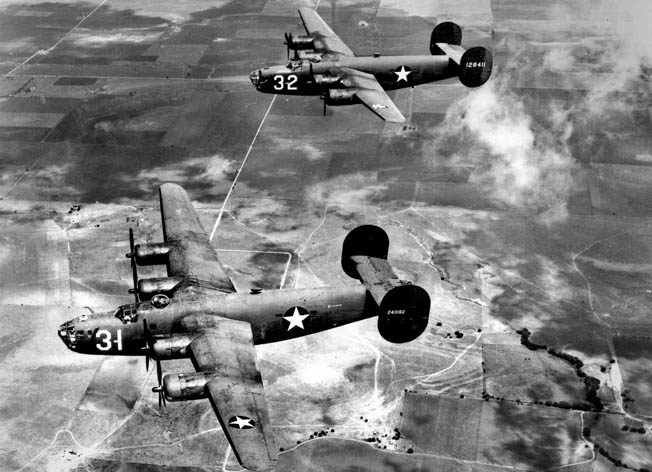
On January 7, 1944, Stewart took the 445th Group on a mission to Ludwigshafen. As they departed the target area, he realized that the group he was following, the 389th, was 30 degrees off course. He called the leader aircraft and informed the captain of his error, but the officer insisted they were on course. Stewart knew that the course was wrong and was taking both groups away from the protection of the main formation. At this moment, Jimmy faced the hardest decision of his career as a bomber pilot; he could have corrected his course and brought his bombers to the protection of the main formation, leaving the stubborn Captain and his group alone to face their fate. Instead, he radioed the other group leader, saying that for better or for worse, he was sticking with him.
Stewart knew that two groups flying together had a better chance of surviving the fighters than one group alone. As he had feared, the German radar operators noticed that the two groups had separated from the bomber stream and vectored several squadrons of fighters to attack them. They were approximately 30 miles south of Paris when around 60 Luftwaffe fighters came in for the attack. Following the standard procedure, the first wave of BF-109 came head-on, and the first B-24 shot down was the one whose navigator had made the mistake. An intense battle followed, and by the time when the Germans left the scene with low fuel and ammo, 17 Liberators were brought down. Amazingly, none of them belonged to Jimmy’s group.

Colonel Milton W. Arnold, the 389th commander, sent a letter to the 445th commander, Colonel Robert H. Terrill, commending Stewart for his actions. Shortly after the mission, Stewart was promoted to major.
The Machine

When Jimmy Stewart arrived in England, the USAAF had just started to phase out its old workhorse, the Boeing B-17 Flying Fortress. The new Liberator could fly higher, faster, and carry a heavier payload.
B-24 Consolidated B-24 Liberator
-Engine: 4 x Pratt & Whitney R-1830 Twin Wasp, radial 14 cylinder (2 rows of 7 cylinder), air-cooled, turbo and supercharged, rated at 1200 hp each.
Max speed: 297 mph (478 km/h, 258 kn) at 25,000 ft (7,600 m)
Range: 1,540 mi (2,480 km) at 237 mph cruise speed (381 km/h) @ 25,000 ft (7,600 m) and maximum internal bomb load.
Payload: Long-range mission (800 mi [1,300 km]): 5,000 pounds (2,300 kg).
Armament: 10 × .50 caliber M2 Browning machine guns in 4 turrets and two waist positions.
Crew: 11 airmen – pilot, co-pilot, navigator, bombardier, radio operator, nose turret, top turret, two waist gunners, ball turret, and tail gunner.

The Liberator was an overall better aircraft than the beloved B-17; after all, numbers don’t lie, but many pilots and crew members didn’t like to see the old Fortress go, including Jimmy: “In combat, the airplane was no match for the B-17 as a formation bomber above 25,000 feet, but from 12,000 to 18,000, it did a fine job.” Said the major.
A highly decorated officer
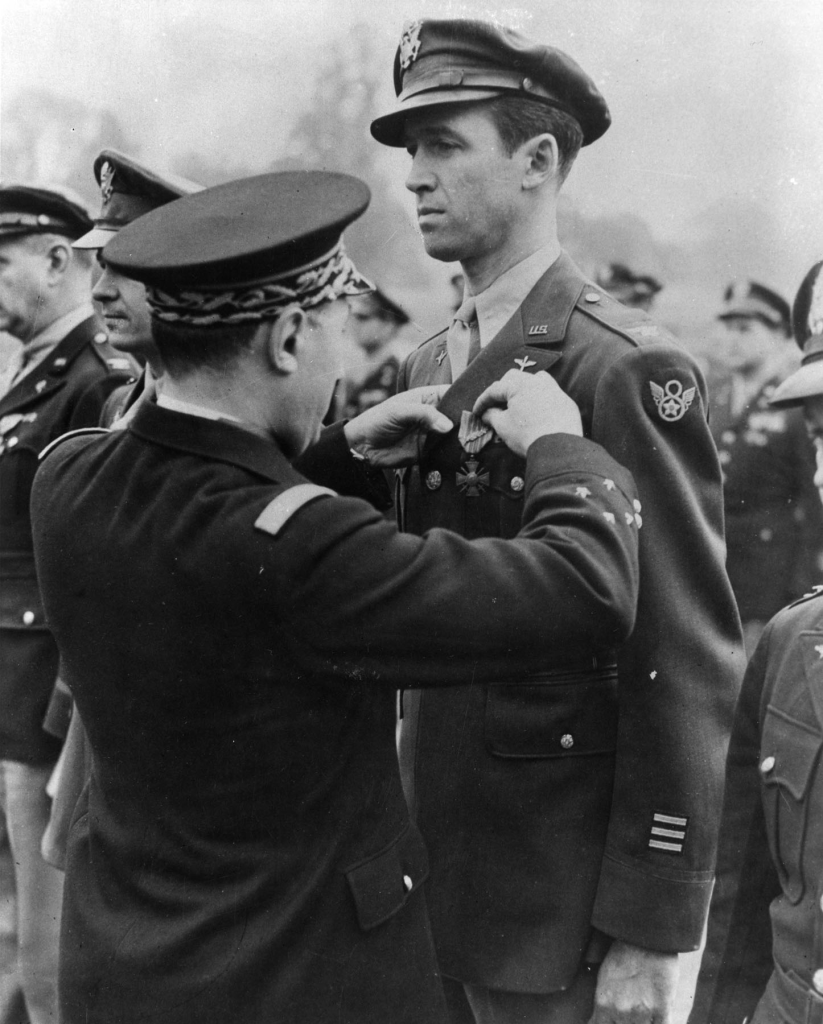
Stewart was the first high-profile Hollywood star to join the military in WWII. Perhaps the only actor who could match his popularity that followed the same path was Clark Gables, who lacked the skills of a pilot and became a B-17 gunner. From 1943 to 1944, Jimmy flew 20 combat missions, (and probably just as many as a replacement pilot) as commanding officer of the 703rd Bomber Squadron, 445th Bombardment Group.

In 1945, the USAAF promoted him to operations officer and later to Chief of Staff, keeping their most notorious major on the ground as much as possible. Perhaps they realized it would be a shame to lose the guy when the Germans were so close to being defeated. He was awarded the Distinguished Flying Cross for actions as deputy commander of the 2nd Bombardment Wing, the French Croix de Guerre with palm, and the Air Medal with three oak leaf clusters.
Stewart was a man of unshakable principles. He was regarded as a skilled and trustworthy commander by the guys who served under him and he will always be remembered for keeping his coolness under fire. When Jimmy returned home in the fall of 1945, he had already been promoted to colonel. The man never used his WWII service to promote himself; he always tried to keep his distance from the reporters while he served in England.
The post-war years
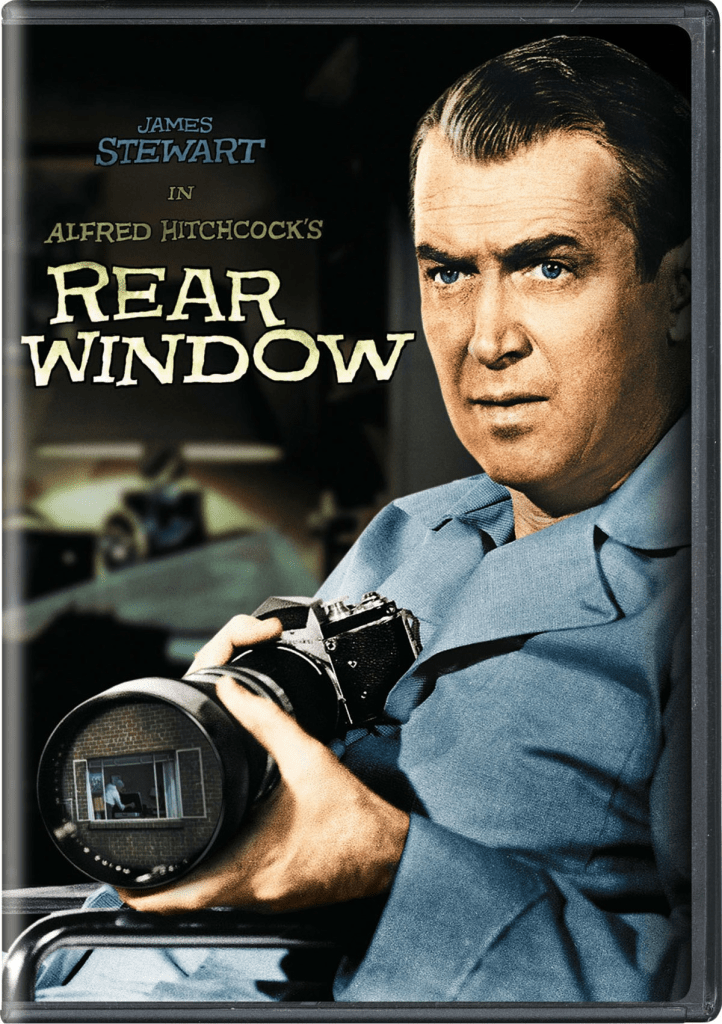
Stewart picked up his career in Hollywood where he had left. In 1950 he received his fourth Academy Award nomination as well as his first Golden Globe nomination for his role in the movie Harvey. Jimmy became one of Hitchcock’s favorite actors and played the main role in the 1954 Rear Window, and the 1958 Vertigo.
But the guy loved the Air Force so much that he never left. He went to the USAF reserve and completed his transition training to the Convair B-36 Peacemaker and the iconic Boeing B-52. In 1955 Jimmy played a reserve Air Force officer who was called back for active duty, in the movie Strategic Air Command.
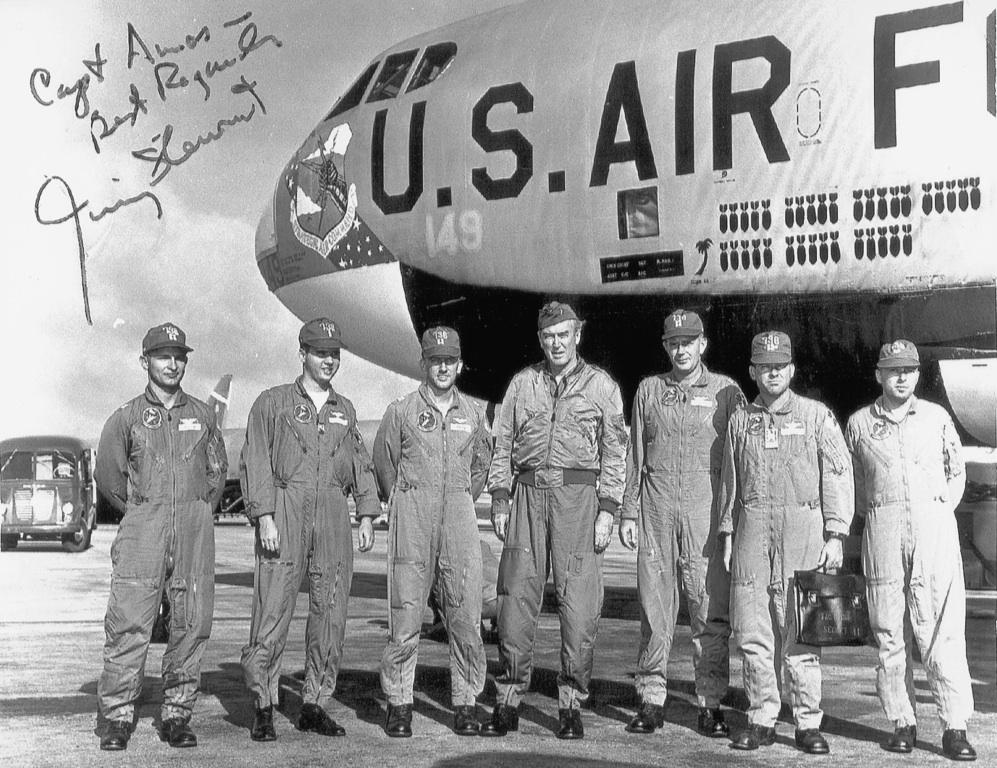
Stewart was first nominated for promotion to brigadier general in February 1957; however, his promotion was initially opposed by Senator Margaret Chase Smith. At the time of the nomination, the Washington Daily News gave him a little push: “He trains actively with the Reserve every year. He’s had 18 hours as first pilot of a B-52.” On July 23, 1959, Stewart finally got promoted to brigadier general, becoming the highest-ranking actor in American military history. During the Vietnam War, he flew as a non-duty observer in a B-52 on an Arc Light bombing mission in February 1966.

He served in the Air Force for 27 years and officially retired on May 31, 1968, when he turned 60, the mandatory retirement age. He was honoured with the United States Air Force Distinguished Service Medal upon his retirement. Although Stewart rarely talked about his wartime service, he did appear in an episode of the British television documentary series The World at War (1974), where he commented on the disastrous 1943 mission against Schweinfurt, Germany.
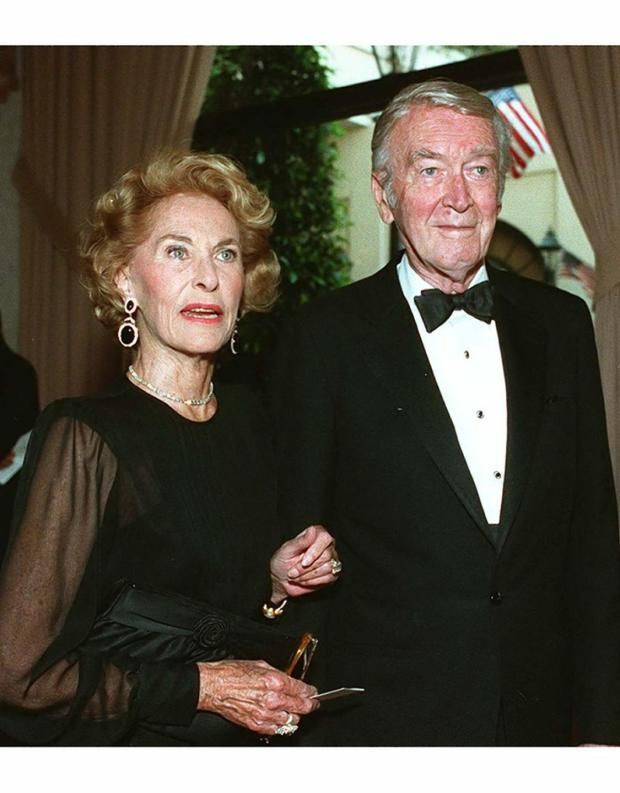
Stewart had a brilliant and prolific career in Hollywood, but in the 1970s, he developed a hearing impairment, which affected his ability to hear his cues and led to him repeatedly flubbing his lines; his vanity would not allow him to admit this or wear a hearing aid. His last movie was the 1980 The Green Horizon, directed by Susumu Hani.
Jimmy married Gloria Hatrick McLean in 1949 when he was already in his 40s. The couple stayed together for 44 years until Gloria succumbed to lung cancer in 1994, and after her death, Stewart became depressed and secluded. In December 1996, he was due to have the battery in his pacemaker changed but opted not to have that done, allowing things to follow a more natural path.
The guy who embodied the righteousness and courage of the Greatest Generation, not only behind the cameras but in real life as well, died of a heart attack caused by an embolism at the age of 89, surrounded by his children at his home in Beverly Hills, on July 2, 1997. Family members, friends, fans, Hollywood celebrities, and military personnel, all together, a crowd of more than 3,000 people attended his funeral. He was buried at Forest Lawn Memorial Park in Glendale, California.
Hollywood icon, war hero, entrepreneur, philanthropist… during his time among us, Jimmy lived many different lives, but perhaps the worlds of President Bill Clinton at the time of Jimmy’s death encapsulate his persona: – “America had lost a national treasure, a great actor, a gentleman and a patriot”. –
 The Classic Machines
Another great post. I’ve seen a few films starring James Stewart and enjoyed them all, he’s a real Hollywood icon. I didn’t know much about his time in the war so found that really interesting. Thanks for sharing!
LikeLiked by 1 person
Thank you so much. My wife and I are big fans of the guy.
I knew Stewart was a pilot in WWII but I didn’t know about the details. I had a good time researching and writing about him.
LikeLiked by 1 person
I am a great admirer of James Stewart and I watch his movies, again and again, from time to time but I didn’t know about his military career.
Thanks for sharing this inspiring story.
LikeLiked by 1 person
This message from Michelle D., a 14 year old Jimmy Stewart fan.
“I loved the article. Good to see that there’s still people talking about Jimmy! Even now, I see posts on social media from a surprisingly active fan pages dedicated to Jimmy Stewart. It’s not every day that there’s an actor with such a legacy, how many celebrities were this eager to fight in the war? What a legend.“
Bet you didn’t know Jimmy Stewart was still popular with todays youths.
LikeLiked by 1 person
First of all, I am thrilled you enjoyed the article; it means a lot to me, especially coming from a declared Jimmy’s fan.
And second – Yes, you are right, I didn’t know that Stewart is still popular among the younger generations. He is a truly remarkable person.
LikeLiked by 1 person
Michelle says…
.
“Theres a Twitter account called @MrJimmyStewart and its a fan page thats very popular. Check it out”
LikeLiked by 1 person
Two things u forgot to mention.
1. At the Oscars, where he won an Honorary Oscar Award, he did a terrific speech and wrapping it up saying, “You’ve given me a wonderful life”.
2. Despite that he was in that ‘Harvey’ flick about an imaginary friend, he got into only one animated movie before his death. “An American Tail: Fievel Goes West”. His character is a Wyatt Earp canine guy.
LikeLiked by 1 person
Thank you for all the info; it’s very interesting.
LikeLiked by 1 person