
Reliable, stylish, affordable, and groundbreaking; no wonder this little Honda became one of the most popular bikes of the 1980s.
The perception of motorcycles varies across different cultures around the world. In developed countries, it is a vehicle used mainly as a hobby, but in poorer nations, a bike is the most affordable means of transportation one can buy.

With the popularization of motocross (among other forms of off-road competition) during the 1960s, motorcycle companies created the so-called dual-sport bikes (also called dual-purpose), a type of street-legal motorcycle that is designed for both on and off-road use.
It was a clever idea, allowing the customers to own a bike that could perform the mundane duties of a street bike during the week and also be used on light off-road adventures on weekends.

In 1968, Yamaha released the gorgeous DT-1, powered by a 250cc, 2-stroke, air-cooled engine. It was, basically, a dirt bike dressed to be street-legal. The DT was a competent machine on the trails but a bit rough on the streets, but it didn’t prevent the customers from falling in love with it. This new Yamaha made the dual-purpose bikes famous and the DT moniker an icon.
It took Honda 4 years to come up with an answer to the DT. In 1972, the company unveiled the XL 250, a dual-purpose bike developed from scratch that promised to revolutionize the segment, but this first generation fell a little short of expectations.
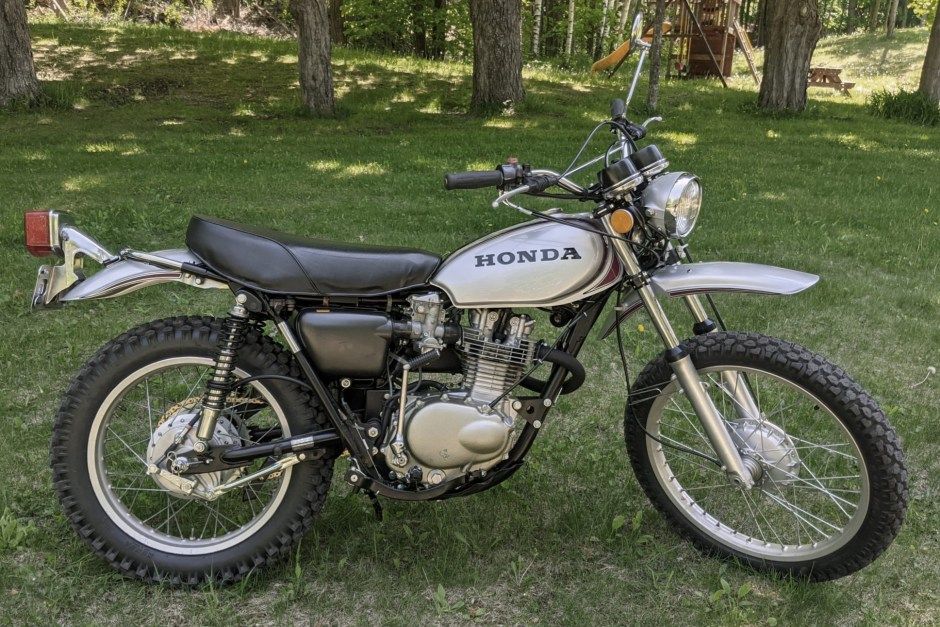
The XL was a pretty basic machine; the only cutting-edge component was the engine; the bike was powered by the first mass-produced 4-valve per-cylinder, 4-stroke motorcycle engine, which set the standards high for the entire industry.
Overall, the new XL was a bit heavy and awkward on the off-road, but it was a capable bike nevertheless. The new engine was not a brisk, rev-happy one, as Honda wished it to be, but at least it proved bulletproof and capable of taking the raider anywhere.

In 1979, Honda installed two counterbalancers to improve the XL’s engine and provide a smoother ride. The new engine can be easily recognized by the dual exhaust head pipes.
Another innovation was adopting the engine as a stressed member, making it a part of the frame. This new version was called XL 250S, and in the same year, the XL 500S was released.
The definitive XL

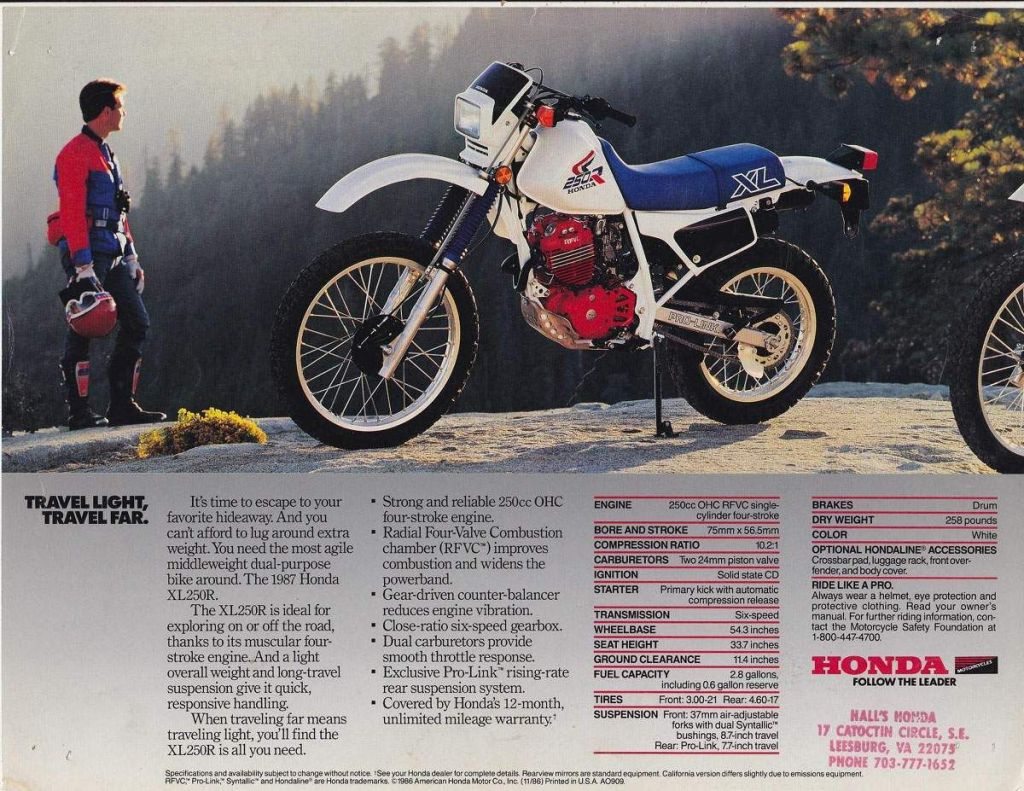
In the early 1980s, the dual-purpose motorcycle segment became popular, and the competition was fierce. Honda was determined to make the XL stand out. In 1982, the company introduced the XL 250R, a bike equipped with the innovative mono-shock pro-link rear suspension inherited from the motocross/enduro XR 250. To complete the package, the 23-inch front wheel was replaced by a 21-inch and 12-volt electric system was adopted.
Honda was confident that the new XL was good enough to conquer the world, and in fact, the bike became a global success.
Here are some XL’s specs:
Engine: 249cc mono cylinder, four-stroke, air-cooled, 4-valve driven by a single camshaft. 22 HP (SAE).
6-speed gearbox
Drum brake front and rear
Weight: 131 Kilos (289 pounds)
Wheels: 21″ front – 17″ rear
Fuel capacity: 8.7 liters (2.3 gallons)
The success of the XL 250 encouraged Honda to expand the family. Some markets worldwide saw smaller versions, like 80cc and 125cc and bigger as well, like 350cc, 500cc, and 600cc.
Honda kept the recipe unchanged throughout 1987, the last production year for the American and European markets.
The XL in South America.

In 1982, the Brazilian division of Honda began manufacturing the XL 250R. Despite being just 13 years old at the time, I vividly remember the excitement surrounding this new bike. At that time, the import of motorcycles was still banned, and customers would eagerly awaited the release of new models from local companies.
A year before Yamaha released the DT 180 and throughout the 1980s, both bikes became the dream machines of cool kids who were either adventurous or wanted to be seen as adventurous.
Life is full of rivalries: liberals vs. conservatives, Coke vs. Pepsi, blondes vs. brunettes, Mustang vs. Camaro, but none of these subjects could incite a more passionate debate among the Brazilian teens in the 1980s than XL vs. DT. I always leaned toward the DT, mostly because of my weird sympathy for two-stroke engines, but we all knew the XL was a superior bike overall.

In 1987, Honda unveiled the XLX 350R, and with a bigger displacement engine came the front disc brake, which Honda stubbornly denied for so many years.
Honda shut down the XL production in Brazil in 1992, which was a sensible decision since around this time, the ban on imported vehicles was lifted, and customers had access to more advanced imported bikes.
As a high school kid with no steady job, I never had the means to buy a Yamaha DT or a Honda XL; they were both just a distant dream. I spent the 1980s riding whatever I could put my hands on, mostly mopeds and 125cc bikes, and inevitably looking with envious eyes every time a guy passed by riding an XL.
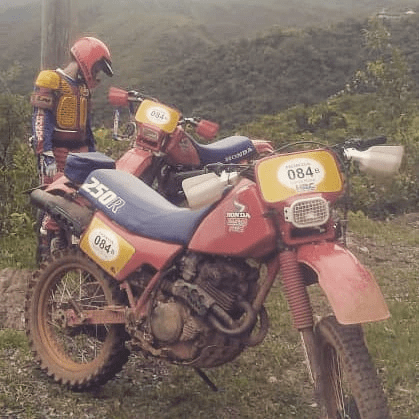
For my generation, this bike became a staple of that magic era; when I look back to the 80s, I see so many things that I miss dearly, like Wayfarer sunglasses, Tears for Fears, Atari video games, and the Honda XL 250.
Feeling generous? Visit my “Buy Me a Coffee” page
 The Classic Machines
Had one for all of 12 hours! Bought a late 70’s model one evening, rode it 25 miles home, went down my local bike shop to assess what needed doing to it and swapped it for the mechanics DT 175!
LikeLiked by 1 person
That is a pretty cool story.
LikeLike
In Brazil, the DT was 180cc for most of its production years, but for the last generation, Yamaha kicked it to 200cc.
LikeLiked by 1 person
I know very little about motorcycles, but I do know my brother owns a 1996 Harley Davidson Dyna Wide with a 58 pan head engine. He used to have a 1962 160cc Honda, but not now. He also used to have a 1986 Kawasaki 454cc. 🙂
LikeLiked by 1 person
Your brother had an impressive collection of bikes.
Dad was a motorcycle enthusiast and a huge fan of Honda; he owned quite a few of them, but proving that people do change, his last bike was a Yamaha Virago 2500cc. He was 60 years old when he was in a close call with a big truck and my brother and sister forced him to sell his Virago.
I also owned a few Hondas, my last one was a 2008 Twister 250cc, I loved that bike so much that I named her “Felicia”. I had to sell her to come to Canada. Here in Canada doesn’t make much sense to own a bike since usually our summer last 3 weeks anyway.
LikeLiked by 1 person
My brother dropped his bikes a few times over the years, but he can’t get cycling out of his blood! I’m sorry you had to give it up, but it may have saved your life. Too many drivers are high or texting.
LikeLiked by 1 person
Nice story thanks!
LikeLiked by 2 people
Thanks for stopping by, Simon. I am happy you enjoyed the article.
LikeLike