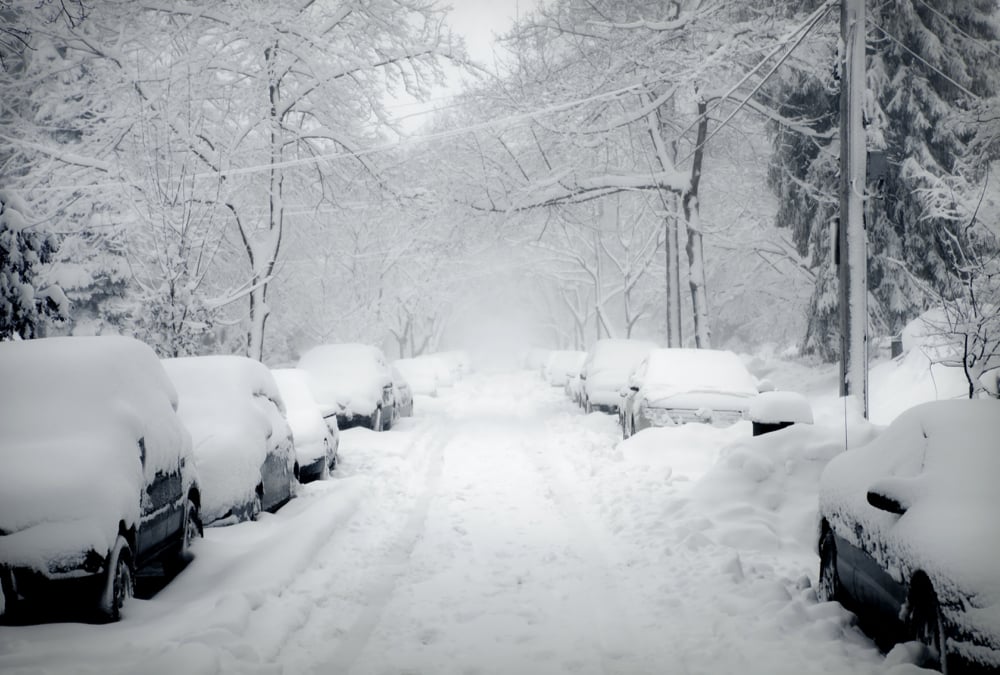
Louis Armand de Lom d’Arce, French aristocrat, writer, and explorer who served in the French military in Canada, once said: “To survive the Canadian winter, one needs a body of brass, eyes of glass, and blood of brandy.“
Well, Monsieur Louis Armand was absolutely right: winter in Canada is brutal, but when my wife and I moved here from Brazil in 2015, what scared me the most was not the prospect of dying of hypothermia; it was how we would manage driving a car in such cold environment. How does a vehicle start at -25 Celsius? Or how can we drive on icy roads?
Operating a car in the Canadian winter isn’t as difficult as it might seem. A block heater (or oil pan heater) and a reliable battery are usually sufficient to start the car on a cold morning. Additionally, modern vehicles are equipped with advanced electronics that play a key role in ensuring the engine operates smoothly in cold weather.
As for driving the car, if it is equipped with a good set of winter tires, it will be mostly OK.
In 2015, we decided to come to Winnipeg, a lovely little town in the Prairies, the so-called “The Winter Capital of Canada.” It is also known as “Windypeg” or “Winterpeg. ” Well, you got the idea; it is darn cold over there.

The winter of 2017 was particularly harsh. One December morning, which I believe was during the coldest week of that winter, I approached my trusty 2003 Nissan Altima to unplug the block heater. That’s when I noticed the right front tire was low—not flat, just low. At first, I panicked; I didn’t want to change the tire in -28°C (-18.4 F) weather.
However, I realized ( or hoped for) that it could have enough air to drive to the nearest gas station. My plan was to fill it up there and then head to work. If I was lucky enough to make it, I could then bring the car into the shop where I work and deal with the problem in a much more manageable temperature.
Before reaching the gas station, I realized it couldn’t go any further without damaging the tire. I left Portage Ave, which is pretty busy, and I pulled over at a parking lot in the back of a commercial building.

The parking lot was nearly empty, so I had a peaceful spot to do the job. By the time I was lifting the car, a lady came to me walking from the building:
Lady: “Hello, you got a flat tire. Are you going to call someone to change it for you?”
Me: “No, I think I can manage it all right.
Lady: “OK, then. But if you feel unwell, you can come inside; we have hot coffee and tea. You can come and warm yourself up if you wish.”
I found it very nice and considerate.
ME: “Thank you so much.“
Lady: “Because you know…” (laughing nervously) “We don’t want you to die here.”
Then she pointed to a sign above the entrance door: Canadian Red Cross.

Me: “Oh, I see.” “That would be ironic.“
Lady: “No, no… That would be embarrassing.”
She rushed back into the building when she realized I was committed to changing the dam tire. I finished the job as quickly as possible, and surprisingly, it went smoothly. I thought of accepting a cup of coffee, but I was running so late for work that I decided not to.
On my way to work, I could not stop laughing, thinking about the newspaper headlines that, thank God, didn’t happen.
“Man Dies of Hypothermia on the Canadian Red Cross Parking Lot.“
That would have been awfully embarrassing.
 The Classic Machines
Wow. I’ve lived in northeast NJ (a little snow) and GA (almost none) so I’m not sure I could handle Windypeg. Great story.
LikeLiked by 1 person
Oh yeah, how I miss Georgia’s winter. Thanks for stopping by, Glenn, and happy new year.
LikeLike
OK…that’s not the direction I thought the story would go. I thought you were going to give us all a lesson from the Great White North about tire pressures dropping in extreme cold, and that you got ready to change the tire for nothing, before someone came and told you the Winnipeg secret.
.
Every morning for a week, I start up my GMC truck and I get a message on the dashboard that the rear-left tire is low. Its accurate. But when I start driving, the pressure goes up, and the low-pressure alarm mutes.
LikeLiked by 2 people
This is still a mystery to me, perhaps because I only drive older cars with no tire pressure sensors. Ignorance is bliss in some cases, LOL.
LikeLiked by 1 person
When the next generation of OBD3 cars come out, the ones that rat you out to the police for speeding, everyone will want an ‘older car’ without all the nannies.
LikeLiked by 1 person
Oddly enough, my ‘13 Ford Fusion has a tire pressure sensor fault that eventually results in a low pressure reading. It too is accurate. I’ve had the tires all replaced, rims checked, but it persists. Now I simply carry a tire pressure gauge and a portable rechargeable air pump full time in all my cars just in case.
LikeLiked by 1 person
Those TPMS thingies are great when they work, notorious for failing. So, I feel your pain. In the back of my truck is an air pump (works off 110 plug or 12V) and a pressure gauge and all that good stuff.
LikeLiked by 1 person
Awesome one, big brother
LikeLiked by 1 person
Hey, brother. I’m glad you enjoyed the story! This is the kind of crazy stuff that happens during the Canadian winter.
LikeLike
Great story and very please that it had a happy ending…..
LikeLiked by 1 person
Thanks, Simon. I was surprised with how painless the job was. If the day is freezing, but there are no blowing winds, the feeling is not too bad.
LikeLike