
In the early 1930s, Rolex opened the doors of motorsports, paving the way for other Swiss watchmakers to form partnerships with drivers and racing teams.

During the 1960s and 1970s, which is often considered the golden age of auto racing, no watch brand was more prominent on racetracks around the globe than Heuer.
The romantic era of stopwatches.
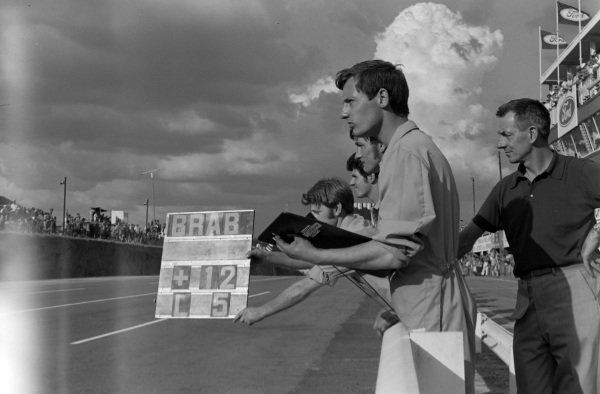
Jack Heuer was a passionate motorsports enthusiast who was the company chairman during those years. Driven by his desire to see his watches thriving in this arena, Heuer began his journey by producing dashboard timers and stopwatches, such as the Master Time and Monte Carlo.

Navigators and pit crews appreciate their reliability, compactness, precision, and readability.

Heuer dominance in timekeeping systems in most sports events (not only auto/bike racing) was cemented with the release of the stopwatch chronograph series Autavia (AUTos + AVIAation) in the mid-1950s.
The romantic era of chronographs

The immense popularity of the Autavia stopwatches encouraged Heuer to release the Autavia wristwatch chronograph in 1962. It became one of the brand’s most popular race-inspired watches.

The partnership between Jack Heuer and the Swiss Formula 1 driver Jo Siffert (pictured above) was very productive. Siffer was a dedicated Heuer ambassador, and he personally convinced many of his fellow drivers to acquire the Heuer flagship chronograph, the Autavia ref 1163. During those years, 9 out of 10 F-One drivers wore an Autavia, and the company’s shield was already adorning a few Formula One cars and racing suits.
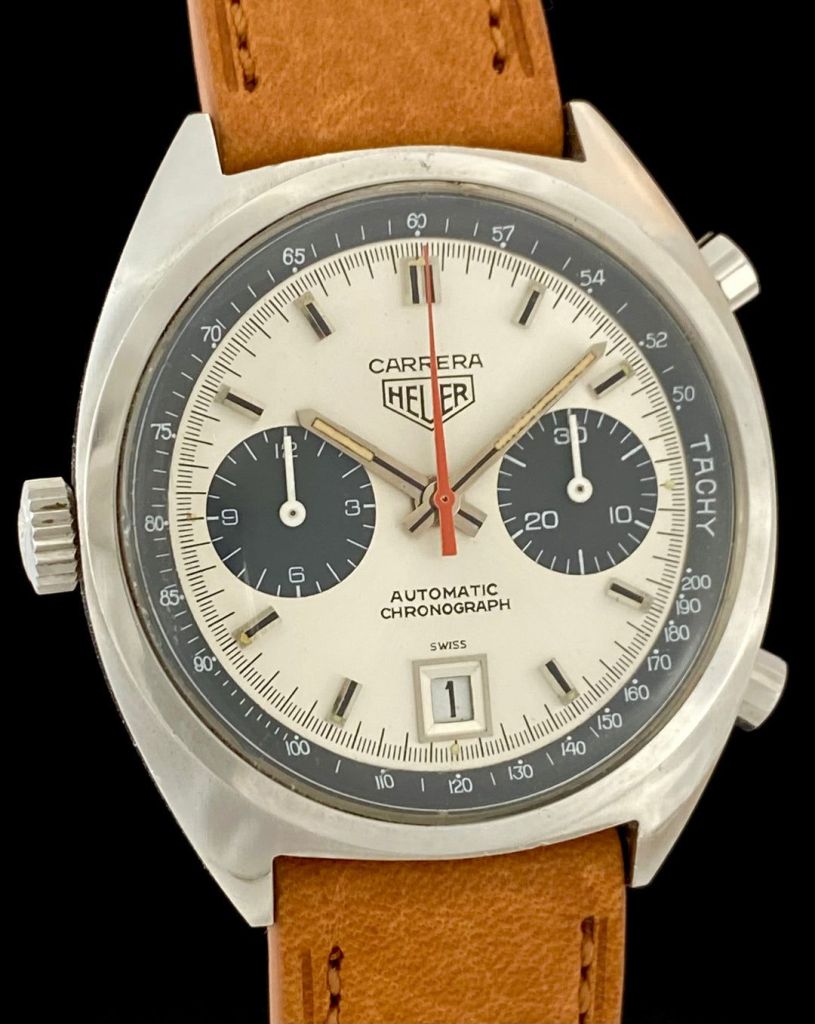
In 1969, Heuer developed Caliber 11, believed to be the first automatic chronograph mechanism in the world. The movement powered iconic Heuer racing watches, like the Carrera and Monaco.
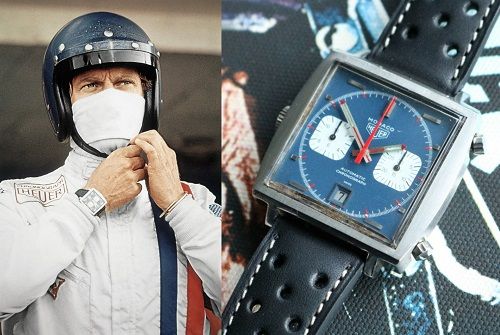
Steven McQueen also helped to solidify Heuer’s presence in the minds of the race fans when he wore a Heuer Monaco chronograph in the legendary movie Le Mans. (Picture above)
Determining the first watch company to introduce the automatic chronograph mechanism can be challenging. Brands like Seiko, Breitling, Rolex, and Longines released their own movements around the same time. It is believed that Heuer’s popularity on the race track helped to assume the company was the first, but it is not certain.
The birth of modern timekeeping.
1971 Italian Grand Prix – Monza
At this point, Jackie Stewart is the leading driver in the championship, driving the Tyrrell Ford 003, but the fast-paced Monza circuit is the perfect environment for the V-12 cars to stretch their muscles.

At the end of the qualifying day, the Italian officials quickly appointed the Ferrari driver, Jacky Ickx, as the fastest and the pole position for the next day’s race. The fans that packed the stands went wild when the results were announced.
However, a French lady was ready to rain on the Tifosi’s parade. Michele Dubosc, the official timekeeper for the Matra racing team, questioned the figures provided by the Italians.

Dubosc is recognized as the first professional timekeeper in Formula One, and she earned the nickname “The Queen of Time” for her determination and precision. She was also an amateur race driver and rally navigator.
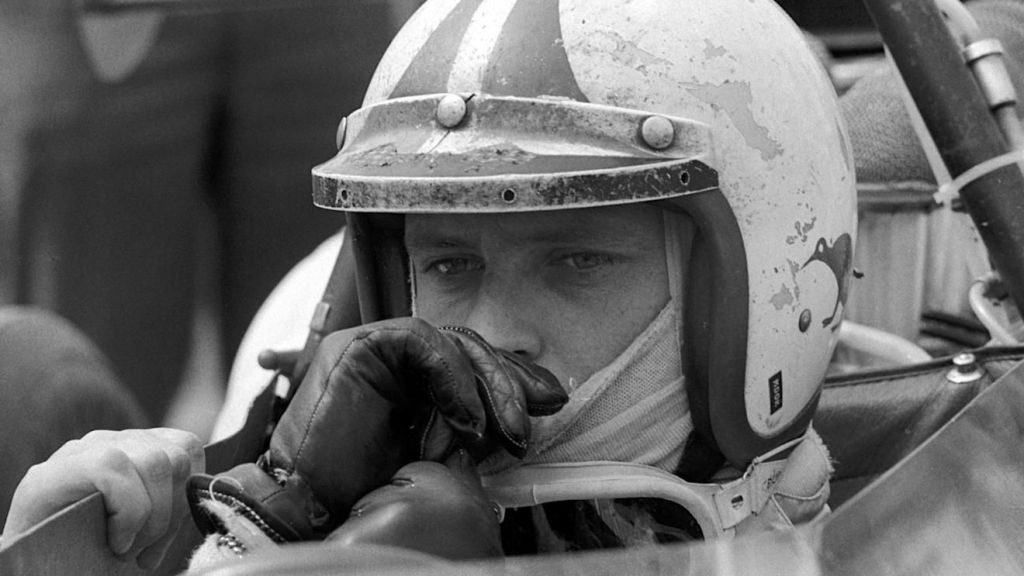
Using Dubosc’s records of the qualifying day, the Matra team protested the suspicious Italian numbers. Her notoriety for accuracy was such that the event organizers had to yield, and Matra’s Chris Amon (driving another V-12 car) rightfully took his place at the front of the grid.
This is arguably the most famous account in Formula One, where race officials were caught cheating with timing, but definitely, it was neither the first nor last time it happened. Motorsports needed an automated timekeeping system, a machine that could operate independently without much interference from human beings.
The Centigraph
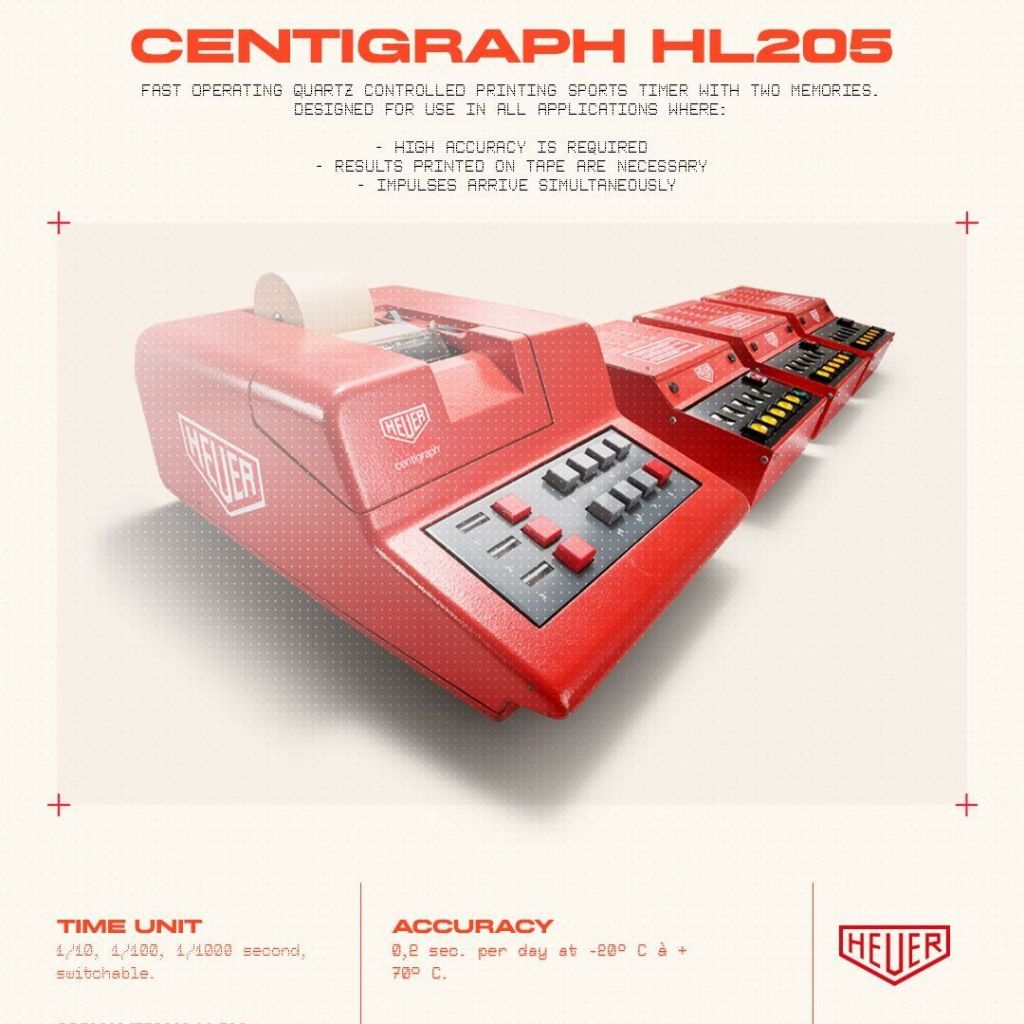
In 1971, Jack Heuer signed a deal with Enzo Ferrari, becoming one of the main sponsors of the Scuderia. This deal would drive the Swiss watchmaker far beyond just supplying watches for the drivers and stickers for the cars.
Heuer was assigned to develop a timekeeping system for the brand’s famous Fiorano test track. Additionally, the brand developed the Le Mans Centigraph. This revolutionary quartz-controlled timing instrument could record times up to 1/10, 1/100, and 1/1000 of a second. That was the beginning of the modern racing telemetry.

Enzo Ferrari’s decision to provide the Scuderia with its own timing equipment was inspired not by Formula 1 but by the 24 Hours of Le Mans, where Il Commendatore had reservations about the reliability of the French timekeepers. Jack Heuer was willing to assist but asked for exposure on Ferrari’s Formula 1 cars in return, as the notoriously frugal Mr. Ferrari indicated that he could not afford to pay cash for the timing equipment.

However, the romantic image of a crew member with a mechanical stopwatch in one hand and a lap chart in the other was very much alive until the 1980s. Still, Heuer had driven the motorsports universe into the digital era.
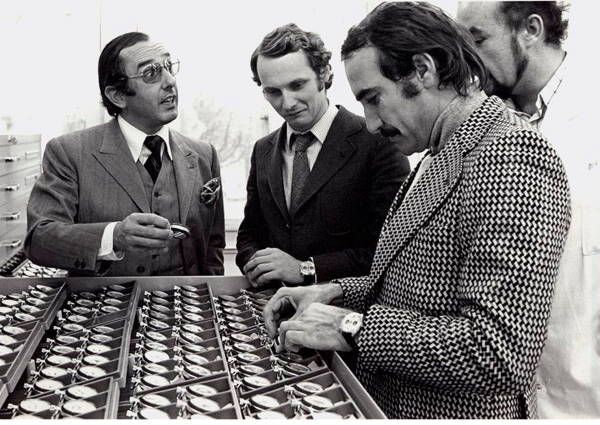
The partnership between Heuer and Ferrari lasted until 1979. During this time, the Swiss brand became synonymous with motorsports.
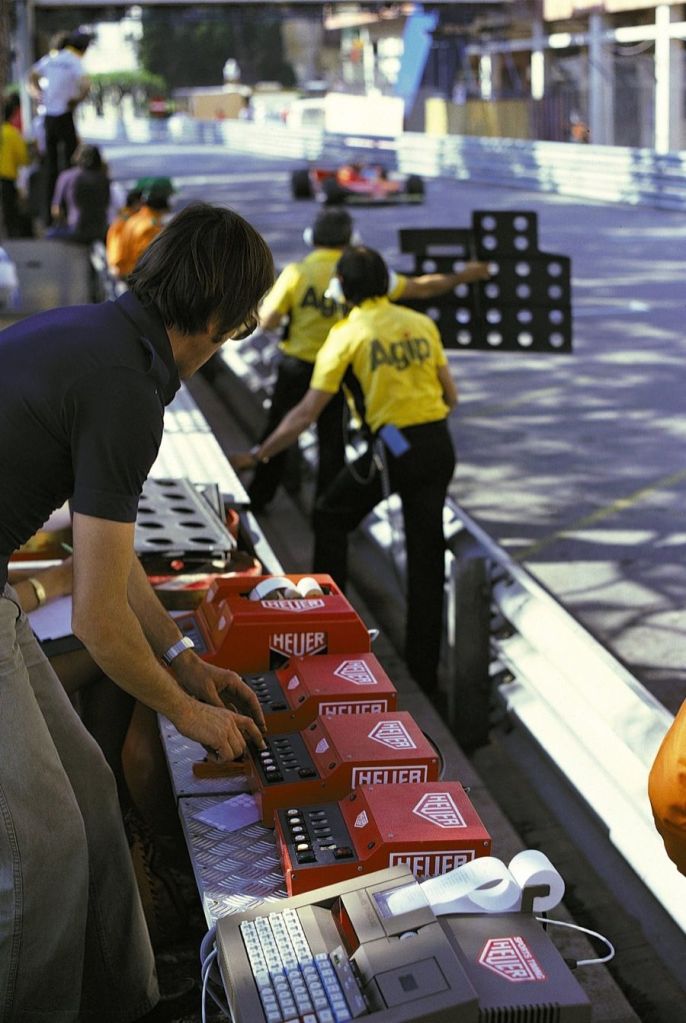
Heuer became the official timekeeper for Formula 1 in 1974 when it introduced the Automatic Car Identification Timing System (ACIT). The principles of this system are still in use today: each car is equipped with a tiny transponder that sends a signal to a receiver at the finish line, enabling each car to be identified and timed to 1/100th of a second.
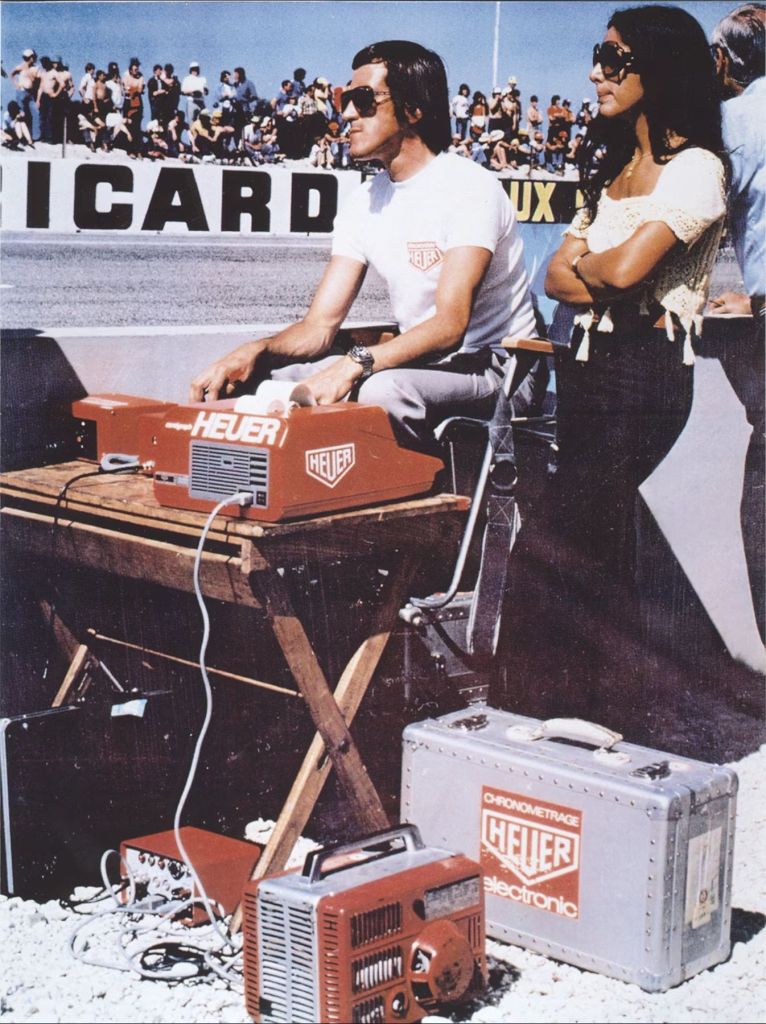
Ironically, the same digital revolution that modernized timekeeping in motorsport also brought the traditional watch industry to the brink of extinction. Companies like Casio flooded the market with dirt-cheap digital/quartz watches, taking a massive chunk of the business away from the Swiss watchmakers. Heuer’s time system was utilized throughout the 1970s. Unfortunately, financial difficulties forced the company to sell it to Longines, which, along with Olivetti, served as the official timer for most of the 1980s.
The TAG Heuer.
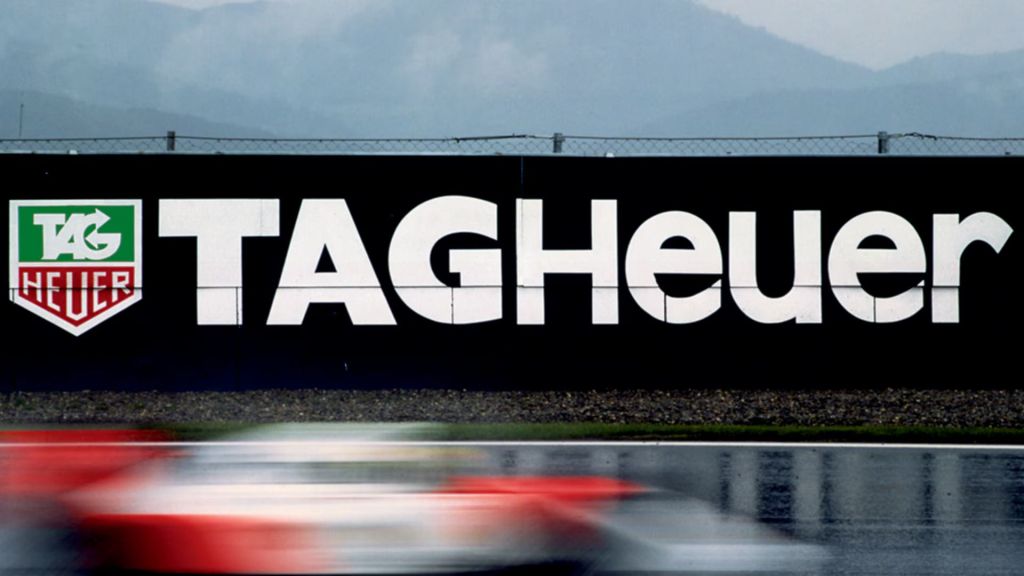
In 1985, Heuer was acquired by TAG – Techniques d’Avant Garde – a Luxembourg-based holding company with interests in technology, aviation, and finance. The new owner had some ambitious plans for the troubled Swiss brand. They wanted to expand the company’s product line and also increase its technological reach.

TAG also signed a very successful deal with the McLaren F1 team. From this partnership was born the McLaren MP4/2 TAG Porsche, the car that dominated the 1984 F One season, winning 12 out of 16 races and giving Nicky Lauda his third world title.

TAG Heuer was a strong presence during those magical years of Senna/McLaren dominance, making this partnership as iconic as the former one with Ferrari.
In 1999, TAG Group sold its watch division to the luxury goods giant LVMH for approximately £452 million. The foundation laid by Heuer in motorsports is so significant that the company has embraced it as the primary inspiration for its products. In the 1990s, TAG Heuer began reissuing some of its most iconic racing watches, including Carrera, Monaco, Autavia, Monza, and Silverstone.

In 2015, the company released a special edition of the Carrera, celebrating McLaren’s 50th anniversary with the Calibre 1887 movement (picture above). In the same year, the partnership between the two companies came to an end.

In 2016, TAG Heuer signed a deal to become a Red Bull sponsor. During the time the two brands have been working together, Max Verstappen won 4 world titles.
The “official” timekeepers.
The consistent rotation of watch companies as the official Formula One timekeeper seems to be a “gentleman agreement” among them.

In more recent years, Longines held the responsibility from 1982 to 1991. TAG Heuer resumed operations from 1992 until 2003.
Much less glamorous electronic companies like Siemens and LG assumed the duties from 2004 to 2012. After that, Rolex took over from 2013 until 2024.

LVMH, the company that owns TAG Heuer, paid $150 million to once again make the Swiss watchmaker the official timekeeper for Formula One. It seems to be a reasonable price to pay now that the sport is becoming increasingly popular among fans worldwide. It is a step that will reinforce the company’s position as the most traditional watchmaker in motorsport history.
Note of the editor:
To celebrate the 60th anniversary of the (TAG) Heuer Carrera, the company invited its actual ambassador, the Canadian-born actor Ryan Gosling, to star in the short film The Chase for Carrera. The production also features Vanessa Bayer and David Leitch. If you like Gosling, comedy, and Porsche, you should definitely watch it.
 The Classic Machines
Another interesting post! I don’t know much about TAG Heuer watches so this was really informative. I knew about the relationship between Rolex and motor racing (and Omega and the moon landing) but this was all new to me. Tag Heuer have produced some beautiful watches.
LikeLiked by 2 people
Thanks, Stuart.
As a young fan following F One in the late 1970s and 1980s, I always noticed the Heuer shield on cars and race suits, but I had no clue how deep this association goes.
LikeLike
This was an interesting historical account of the transformation of watches to suit the racing world and to help eliminate cheating. Great illustrative pictures, too! 🙂
LikeLiked by 1 person
Thanks, Nancy. These are two subjects that I like very much. Motor racing and watches.
Unfortunately, I don’t have the money to fully enjoy either one of them.
LikeLiked by 1 person
Great post Rubens! I’ve recently become interested in mechanical and automatic watches so I really enjoyed your history on TAG Heuer.
LikeLiked by 1 person
Automatic watches, especially chronographs, are such amazing machines. Thanks for stopping by, Mark.
LikeLiked by 2 people