This is a story that most of the gearheads know by heart. Back in the 1960s, FOMOCO hired Carrol Shelby, and together, they developed the GT40, the car that dominated the 24 Hours of Le Mans for 4 years in a roll.
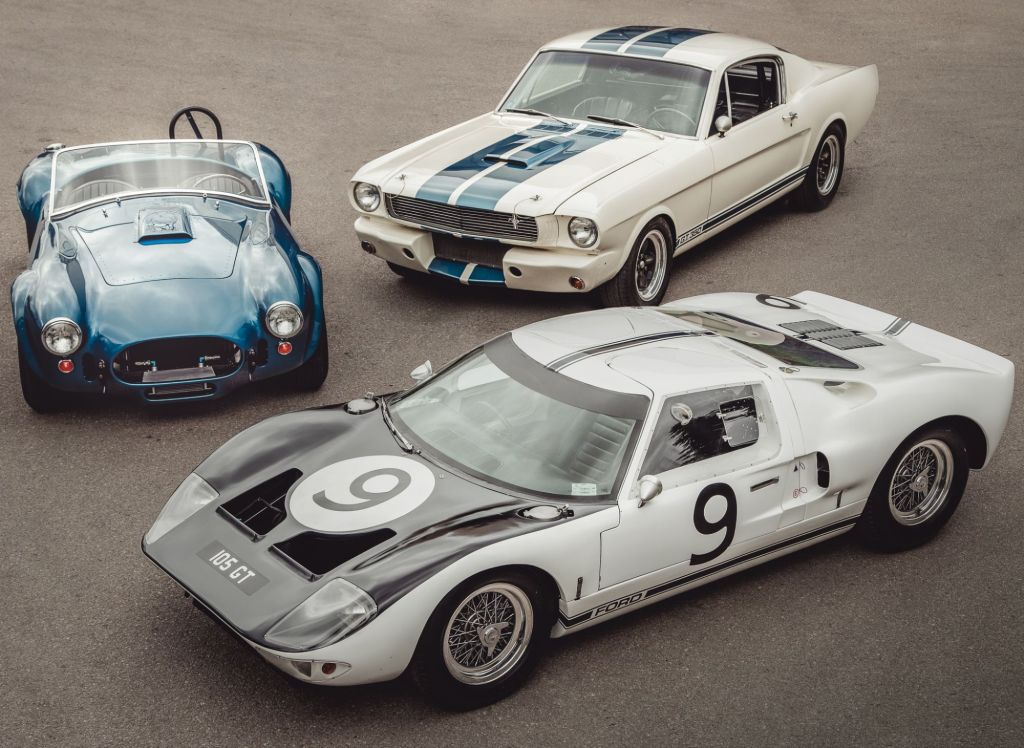
A few other iconic sports cars were born from this partnership, like the GT350, the Shelby Daytona, and, of course, the Shelby Cobra. However, Shelby’s life after he left Ford was anything but boring.
Shelby retired from auto racing in 1970 and ended his association with Ford in 1973. His retirement was very exciting but far away from the auto industry.

From exploring the African continent (picture above) to organizing chili cooking contests, he tried a bit of everything.

In 1972, Shelby even launched his Original Texas Brand Chili Mix.
But a passionate gearhead like him wouldn’t stay away from the business for much longer. When Chrysler invited him to coordinate a high-performance program in 1981, he immediately accepted.
The Chrysler years

The guy who invited Shelby to work for Chrysler was Lee Iacocca, the father of the Ford Mustang and the CEO, who worked closely with Shelby during the glory days of the Ford GT40 dominance.

The 1980s was a very different era. The world, particularly the USA, was still grappling with the aftermath of two oil crises—one in 1973 and another in 1979. As a result, the traditional American recipe for large sedans powered by big V8 engines was no longer appealing to customers.
The American automakers initially struggled to provide fuel-efficient cars. It was a time of four-cylinder Mustangs, poorly built Vegas, odd Gremlins, and fire-prone Pintos. In this dire scenario, Chrysler was, among the big three, the closest to bankruptcy.
Lee Iacocca was the first non-family member to become president of Ford Motor Company, but his impressive career ended unexpectedly in 1978 when he was fired by Henry Ford II. This dismissal was often attributed to a clash of egos and personalities.
Shortly after, he quickly transitioned to become the chairman of Chrysler. He was widely credited with saving the company from bankruptcy by successfully persuading Congress in 1980 to approve federal loan guarantees of up to $1.5 billion, which was paid in full before the deadline.
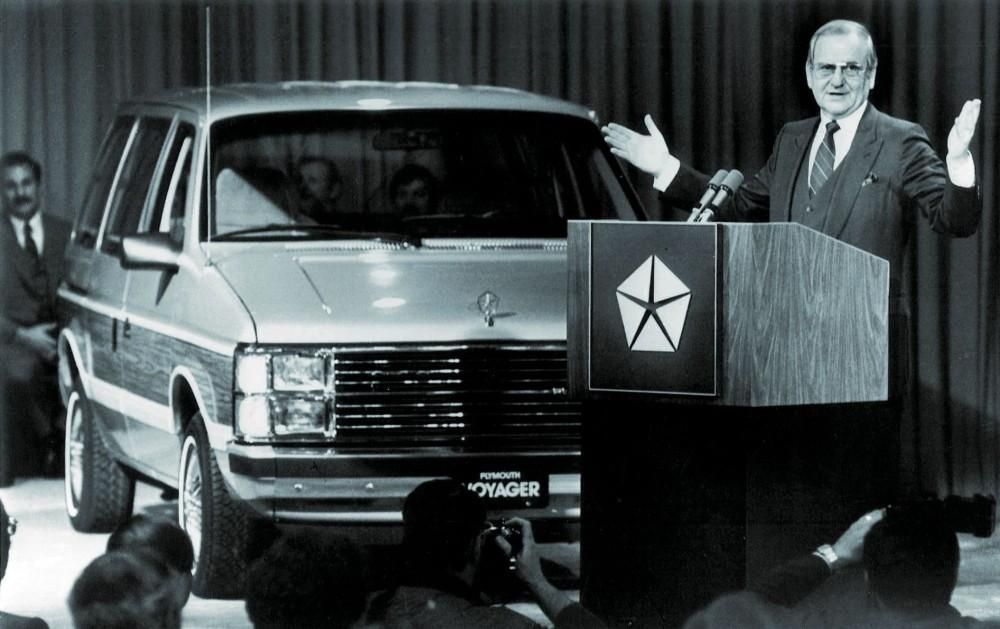
Iacocca initiated a significant transformation at Chrysler, improving the company’s efficiency and introducing several new products that became huge commercial success. One of the most iconic vehicles from his era is the Chrysler/Dodge minivan, which set a trend that continued until the recent popularity of SUVs.
But before being a talented sales guy, Iacocca was a car guy, and he didn’t want Chrysler to become an automaker known only by minivans and boring economy cars. With the company out of the woods, he could afford the luxury of bringing back some of the old MOPAR glory as a performance brand.
In 1982, Carrol Shelby joined the MOPAR family with the daunting mission of re-establishing Dodge as the performance division of Chrysler Corporation, with whatever cars were available. But he would be working in a different scenario: no more screaming V8s and extravagant budgets to build race cars like he had when working for Ford in the 1960s.
The Charger is back.

Dodge had already started the job when the company brought back the iconic Charger nameplate as a spiced-up version of the Omni in the Summer of 1981 as a 1982 model.

The car was equipped with the biggest displacement engine in the Omni line-up, a 2.2 liter, 4-cylinder, producing a meager 94 HP. No, I will not compare it to the power output of a real Charger. I will resist the temptation.
The new Charger followed the FWD K-Car platform, which could be ordered with an automatic transmission or a 5-speed manual. It was only offered in the Coupe version, with cool graphics matching bright color options.

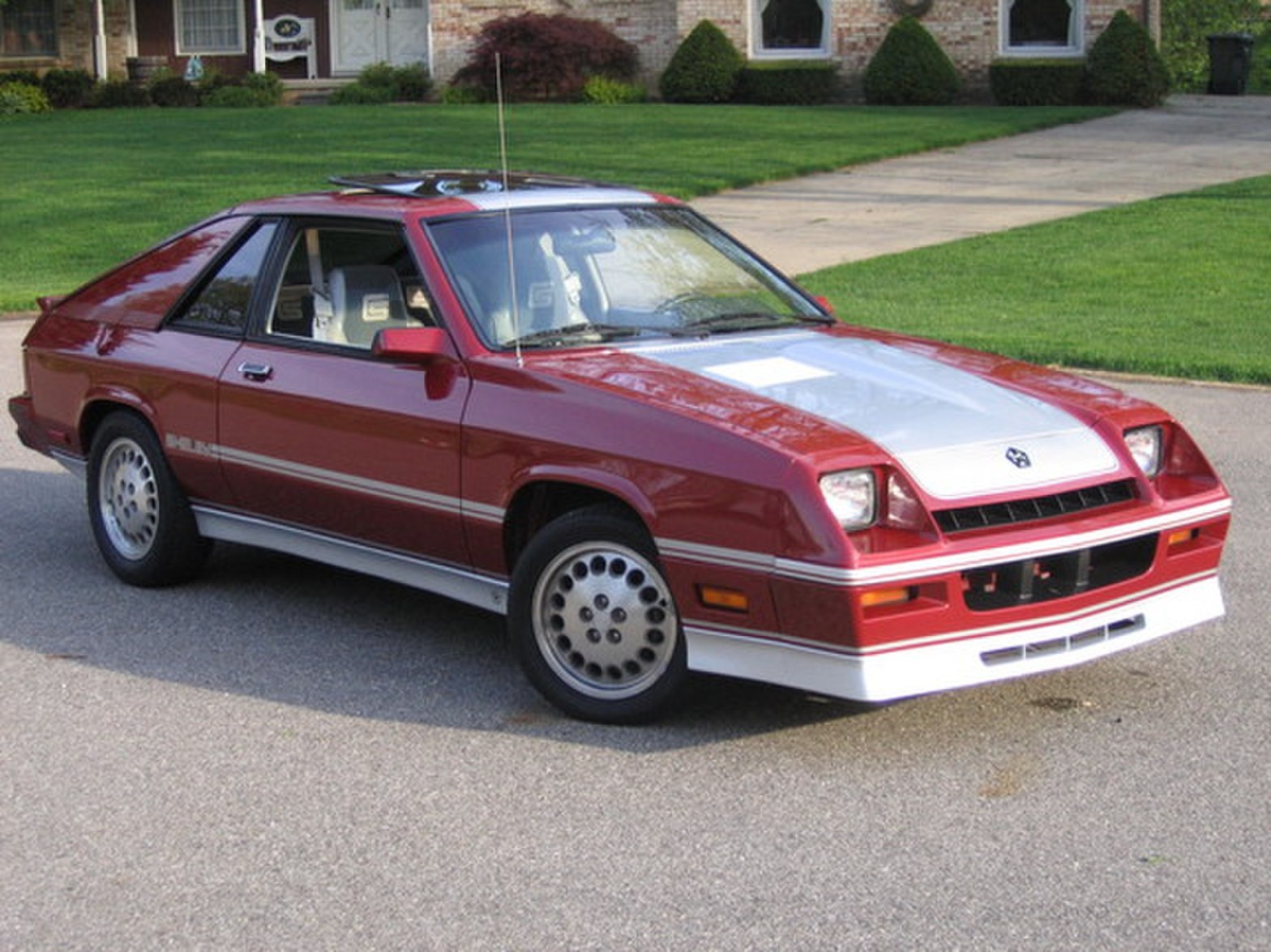
Shelby’s first assignment was to spice up the Charger a bit, bringing it to the VW Sirocco/Golf GTI field. In the newly created Chrysler Shelby California Development Center in Santa Fe Springs, California, the team bumped compression of the rather conservative single overhead cam and 8 valves engine to 9.6:1, added a slightly hotter camshaft, opened up the exhaust for better breathing, and retarded cam timing by four degrees to aid top-end performance. Power jumped to 107 horsepower and 127 pound-feet of torque, and with the aid of a close-ratio five-speed transmission, the Dodge Shelby Charger could run from 0-60 MPH (96.4 Km/h) in 9.0 seconds and a top speed of 117 MPH (188 Km/h). The quarter-mile went by in 16.8 seconds at 82 MPH (132 Km/h).
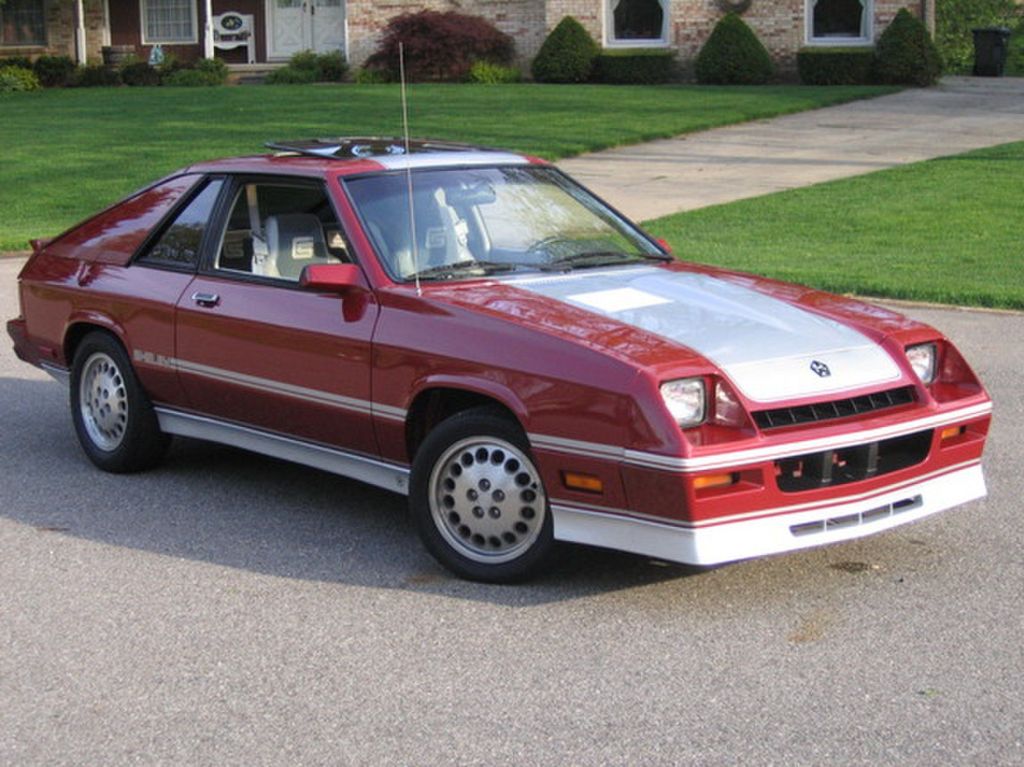
Since power (power?) is nothing without control, the car received a quick-ratio (14:1) power steering system, 50-series Goodyear Eagle GT radials on lightweight aluminum wheels, vented front disc brakes and larger diameter rear drum brakes. New stiffer struts/shocks and shorter springs were adopted, lowering the car suspension and eliminating much of the body roll of the regular Charger.
Closing the package, the Dodge Shelby Charger wore a bad ass body kit, and it came painted in exclusive shades of blue, red, and silver.

The Shelby Charger hit the showrooms in mid-1983, and Dodge sold 8,251 units in its first year. Not bad for a car with a high sticker price ($8,567 for the Shelby versus $6,513 for the base Charger).
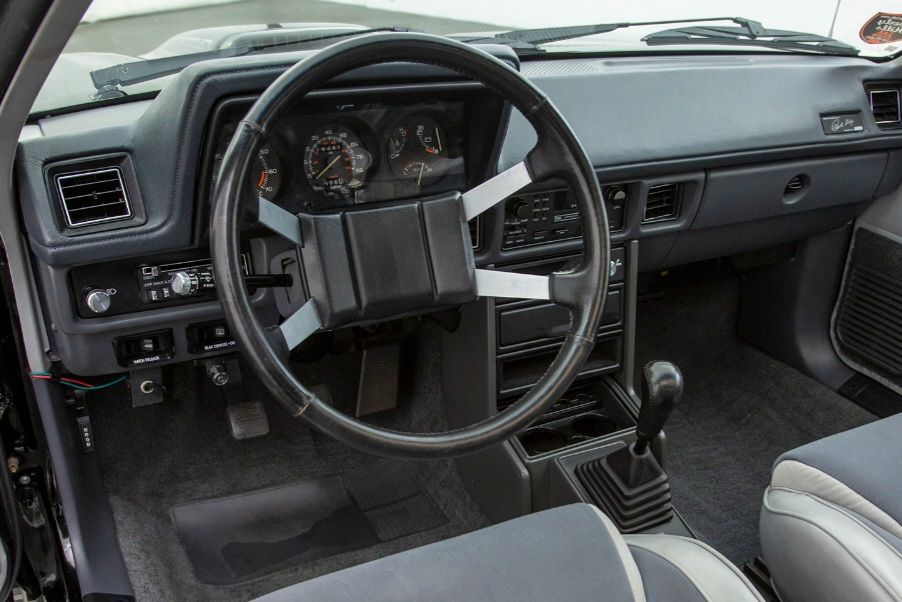
Shelby insisted that his Charger should only come with a 5-speed manual transmission, but Dodge believed this choice was limiting sales. The following year, buyers were given the option of a three-speed TorqueFlite automatic transmission. However, only 1,955 buyers chose this option, compared to 5,597 who opted for the 5-speed manual. This clearly demonstrated that the car had stabilish itself in a niche among true auto enthusiasts. As a result, the automatic transmission option was dropped after the 1984 model year.
Goes Like Hell.

The Shelby program wasn’t limited to the Charger; he also spiced up the Dodge Omni, which was (with the Plymouth Horizon) the MOPAR answer to the increasing demand for gas-sipping cars in the USA.

Released for the American market in 1978, the Omni/Horizon was a pioneer in many ways. It was the first (and only) world car designed by Chrysler and was the first front-wheel drive, transverse engine platform produced in the USA. The Omni project was born as a collaborative development between Chrysler Europe (Simca and Rootes), Volkswagen, and American Chrysler.
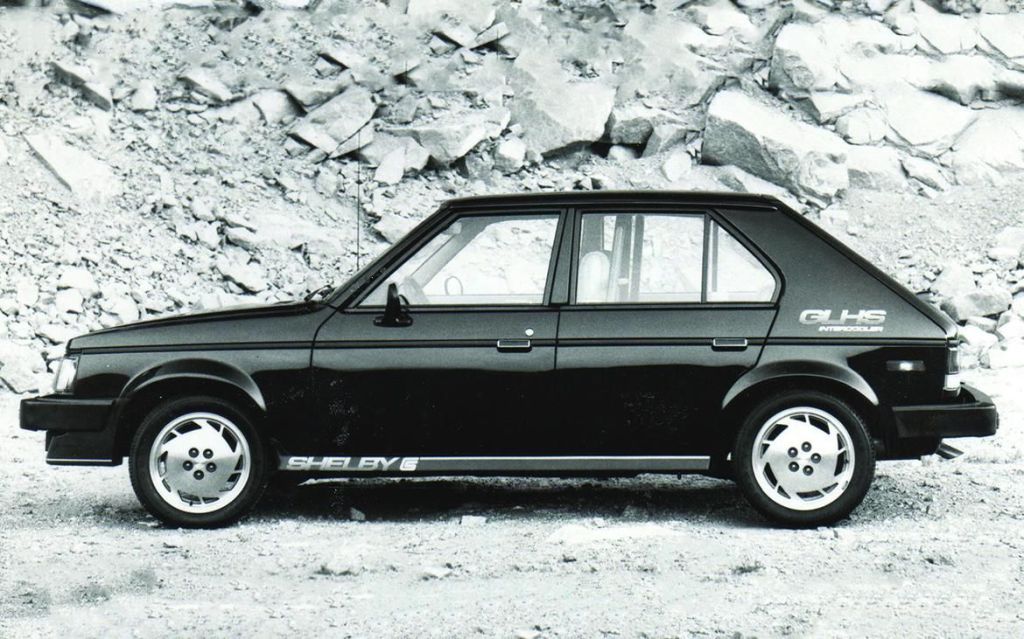
Shelby wanted to transform the little Omni into a pocket rocket. He gave the car the same improvements found in the Shelby Charger, including its 110 HP 2.2 L “high-output” engine, stiffer suspension, larger brakes, wider tires, and alloy wheels.
This little monster hit the streets in 1984, and it was an instant success among the gearheads. It was slightly faster than the Charger and had a European design that caught the Golf GTI owners off guard. The Shelby Omni was supposed to be christened Coyote, but Shelby decided the name should be Omni GLH – standing for Goes Like Hell.
The turbo era.
If there is one thing that car nuts will always remember from the 1980s, it is the beginning of the turbo era. Turbos were everywhere, from the Formula One and Group B rally machines to fire-spitting small sports cars on the streets.

The Shelby team decided to squeeze a few more ponies from the good old 2.2 liter engine with the addition of Chrysler/Bosch multi-point fuel injection and a Garrett AiResearch T3 turbocharger, pushing a maximum of 8 PSI of boost.

Power jumped to 146 horsepower and 168 pound-feet of torque, which lowered the car’s 0-60 MPH (95.5 Km/h) time to 7.8 seconds while raising the top speed to 124 MPH. (202 Km/h). Externally, the changes were marked by a “power bulge” in the hood, necessary to provide clearance for the turbocharger. At the same time, another new livery, Black with silver striping, was added to the lineup.
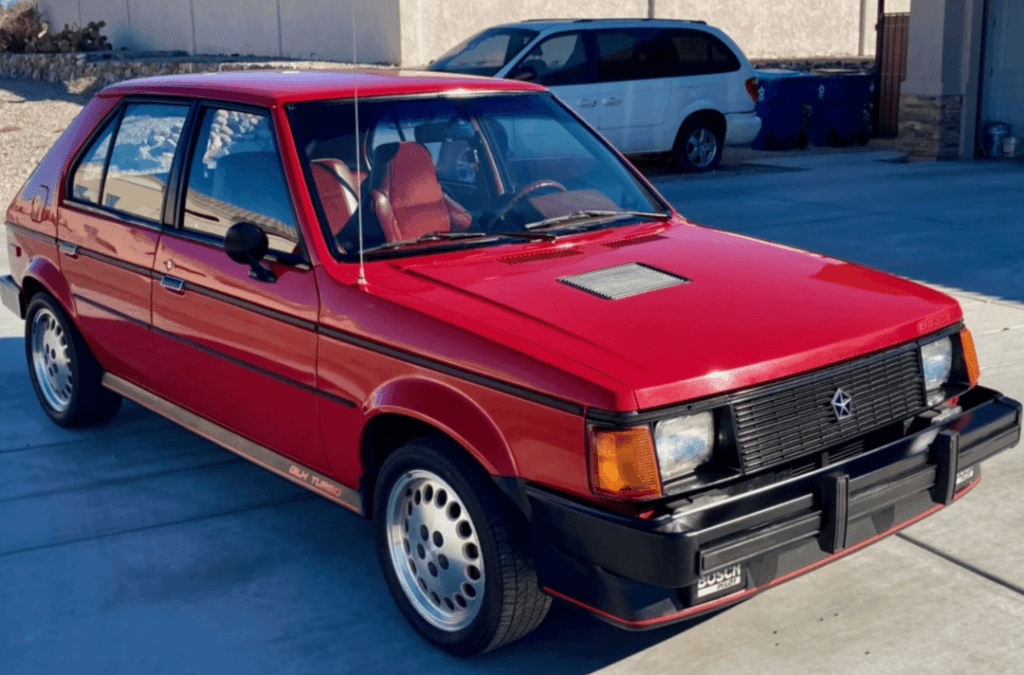
Once again, the Shelby Omni received the same 2.2 Turbo engine, becoming a serious contender in the hot-hatch segment.
A successful partnership
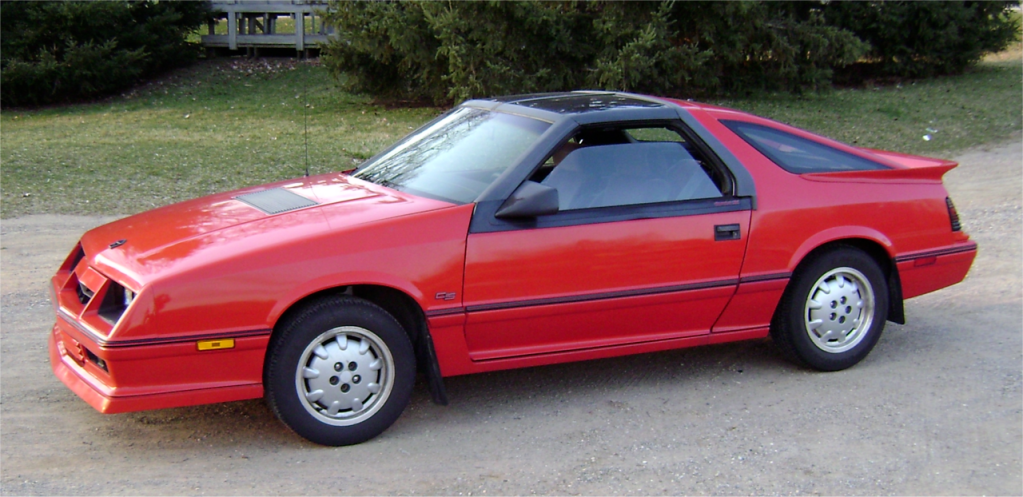
The Shelby/Dodge program proved to be a very successful enterprise. It was extended to a couple of other Dodge models like the Daytona and Shadow.
Despite achieving decent sales numbers, Dodge announced that the Shelby Omni and Shelby Charger would be discontinued in 1987. Although it was somewhat expected, Shelby felt disappointed as he was quite proud of the performance advancements he had made, particularly with the Omni GLH.
More power, please.

But when a door closes, a window opens; Shelby cut a deal with Chrysler to buy 500 Omni GLH, with the idea of improving the car’s performance even further. He brought the cars to Shelby Automobile Co. in Whittier, California, where the team installed a newly developed ECU and intake manifold, an air-to-air intercooler, and increased the boost from 7.6 to 12 PSI courtesy of a Garrett AiResearch T03 turbocharger. The power output jumped to 180 HP.
The power, which doesn’t seem much nowadays, was very respectful back then, especially for a car with a low curb weight of 2,200 lbs (~1,000 kgs). Keep in mind that this is 110 horses more than the original 1.7 liter Omni released in 1978. Shelby called this car Omni GLHS – Goes Like Hell and S‘ more.
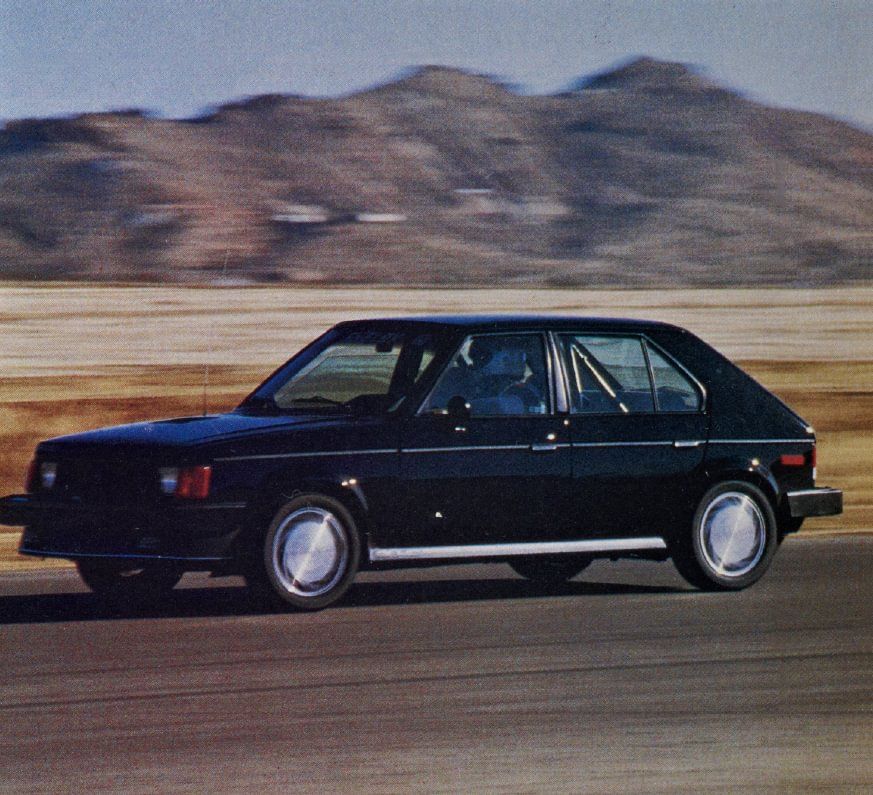
Dealing with turbo engines can be quite addictive. It’s almost like magic: the more pressure you force into the engine, the more power you obtain, as long the engine can hold its bolts together. Fortunately, the Chrysler 2.2-liter engine has proven to handle the pressure exceptionally well. While there isn’t much information about its internal components, I suspect that the pistons and connecting rods were replaced with forged versions to enhance their durability.

The GLHS caused a commotion among the gearheads. It was the living proof that with some expertise, an econobox can be transformed into a sports car.

The iconic Hot Rod magazine published in the April 1986 edition, a track test comparing the modern Omni GLHS with the Shelby legend, the GT350. The cover gives away the results of the test, the little Dodge beat the “hell” out of the V8-powered beast in every situation imaginable.

The GLHS was an absolute pocket rocket; the car was so good that Shelby kept one for himself as his daily driver.
In 1987, Shelby unveiled the Charger GLHS, with similar modifications.
Rent-a-Rocket

In 1966, Hertz Rental Car and Shelby teamed up to create the “Rent-a- Racer” program, making it possible for the average customers to rent a Shelby GT350 (picture above).

In 1988, Thrifty Car Rental attempted to recreate the legend by ordering a few hundred Shelby Shadow CSX-T models, with the “T” representing Thrifty. These cars had the same 146 HP, 2.2 Turbo engine found in other Shelby/Dodge cars.

Like the original 1966 program, the Thrifty Shadow had its own paint livery, in this case, white and blue. The program was called “Rent-a-Rocket.”
A program in expansion.

Many Dodge cars of the 1980s shared similar platforms, making it easier to transform them into “Shelby version”. The Dodge Shelby Lancer (pictured above) is another example. The car was modified at the Shelby facility in 1987 and carried on by Dodge for the 1988 and 1989 production years, but with fewer performance parts.
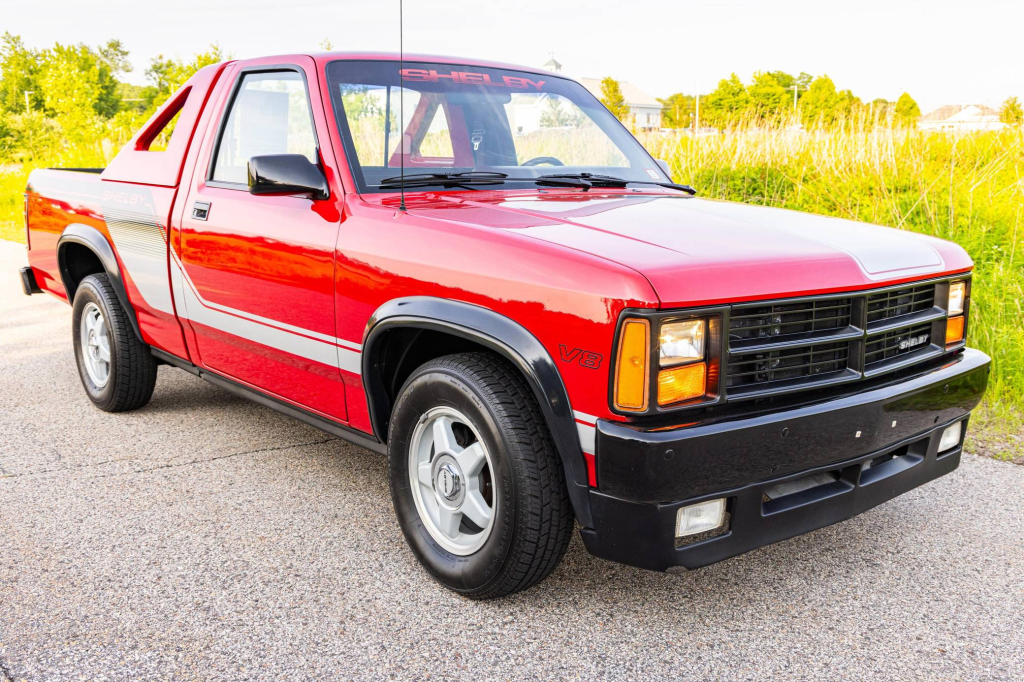
In 1989, Shelby had the opportunity to revive his old “modus operandi” which was shoving a V8 engine in pretty much anything that crossed his path.
The Shelby Dakota, in its one year only production (1989), started with a short-wheelbase, short-bed, standard-cab, Sport package pickup. The original 125 HP – 3.9 L V6 was replaced by the EFI 318 cid small block V8, able to produce 175 HP and 270 ft-lbf of torque. The only transmission option was a 4-speed automatic, and the truck featured a 3.90:1 limited slip differential.
Motor Trend tested the Shelby Dakota when the truck was released, and the they clocked a 0-60 mph (97 km/h) time of 8.5 seconds and a quarter mile time of 15.6 seconds.
Total production was 1,500; 860 in red and 540 in white.
The end of the partnership

1991 was the year that Shelby and Dodge decided to part ways, ending an exciting partnership.

In the same year, Dodge assumed the sponsorship of the famous IROC (International Race Of Champions), and the company made available the Shelby Daytona for the participants. In its final run (1990/1991), the Shelby Daytona offered 2 new engine options, the 2.5 Chrysler turbo 4 and the Mitsubishi 3.0 liter naturally aspirated V6. The only difference for the IROC version was the decals.
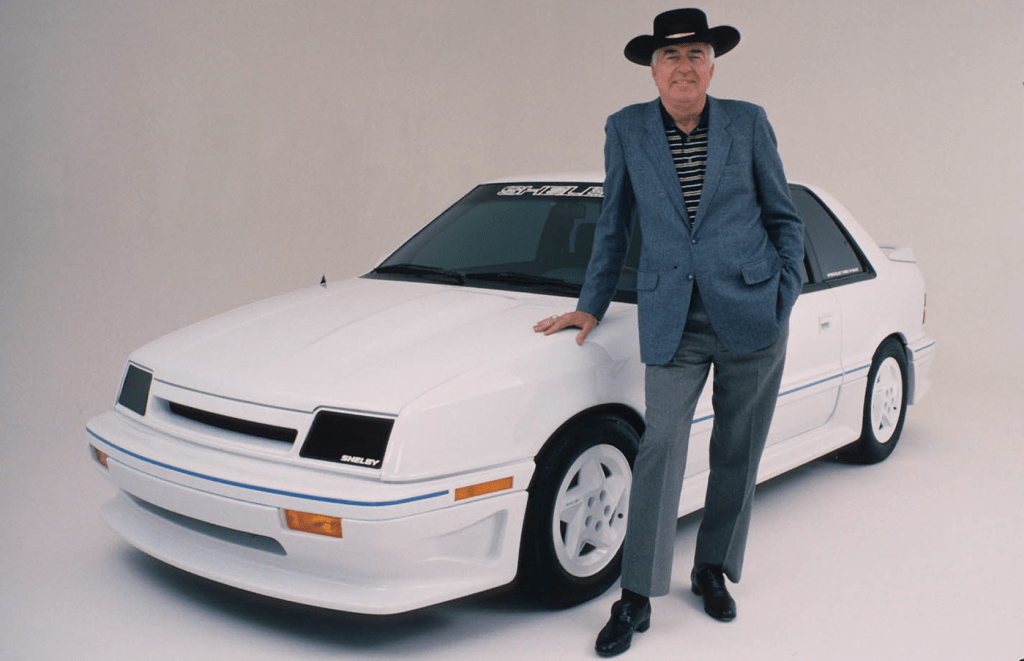
For many of us, the 1980s was a decade of unremarkable cars. All the econoboxes produced during those years were a product of necessity, not passion. What Shelby created with Dodge might look silly compared to what he created in the 1960s, but then again, the 1980s was a rough time, and the automakers tried to give what their customers needed, not what they wanted.
All Shelby-Dodge creations effectively provided customers with more personalized economy cars, focusing not only on appearance but primarily on performance.
Note of Editor – Dodge Viper
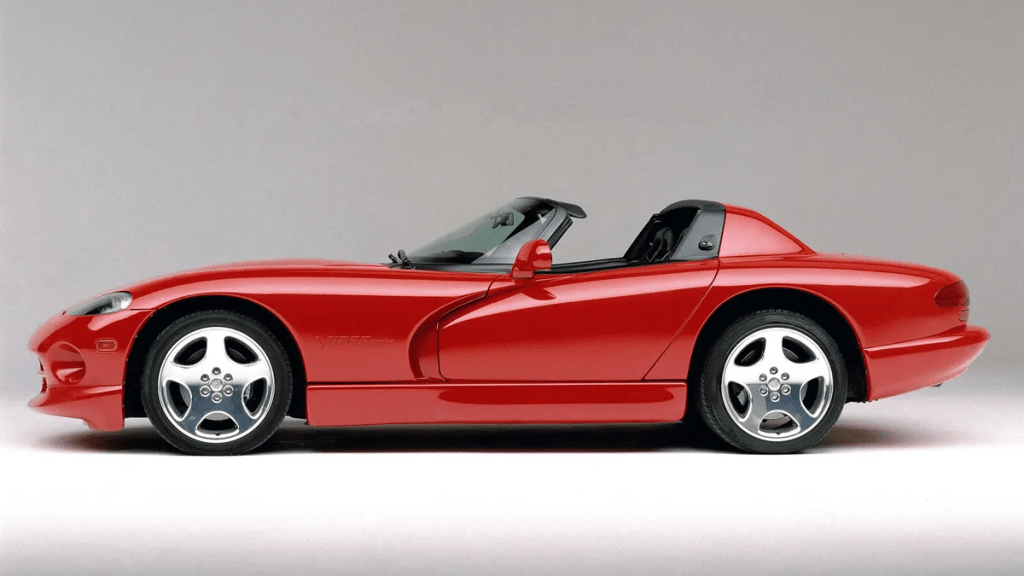
It was during the “Shelby years” that the Chrysler President, Bob Lutz, came up with the idea of a “true” Dodge sports car, something like a modern Shelby Cobra. Encouraged by the success of the Dodge/Shelby cars, the development of the Viper began in 1987.
Carroll Shelby had limited involvement in the Viper program, mostly promoting and marketing the car. Although many view it as his final contribution to Dodge.
 The Classic Machines
Rubens, the funny thing about the timeline of your article is that guys like me (born in ’74) first heard of Shelby through Chrysler vehicles.
.
The Dodge Omni GLH was around, and the Plymouth Laser / Dodge Shelby were regulars in my neighborhood. I never even knew about Ford and the GT40 until I was like 16 or something.
.
I guess it’s all perspective because to this day, I think of Shelby and automatically associate him with Chrysler.
.
As always, a well researched and interesting article, sir.
LikeLiked by 1 person
You are right, Chris. I wrote the article based on my perspective, a guy who didn’t have contact with the Dodge- Shelby cars, ignoring how popular they were in the 1980s. Maybe I need to change a few paragraphs.
LikeLiked by 1 person
I don’t need you change anything sir. I just think its funny that from my suburban perspective in the 80s, we didn’t even know about Le Mans and Ford and Shelby.
LikeLiked by 1 person
Excellent article about a weird time in American auto history. As a classic muscle car fan I looked down on these cars but your summary is spot on. In retrospect what they accomplished was impressive and probably started Dodge down the road leading to 900 hp Challengers. Great work Rubens.
LikeLiked by 2 people
Thank you so much.
It is incredible how the world and situations can change really fast. In the 1980s we thought the Muscle Car was dead, but around mid 1990s, it was back in full swing. (With a lot less options, though).
LikeLiked by 1 person
During the Shelby Omni era I drove a pale green 4 cylinder Mustang fastback with a 4-speed manual transmission. If I’d researched it at the time, maybe I would’ve opted for the OMNI RLHS. I knew enough not to even look at a Pinto or Vega. You’re right, it was all about the gas mileage back then. Great article, Rubens! 🙂
LikeLiked by 2 people
Thanks, Nancy. If we think about it, the 4-cylinder Mustang became a thing. I owned one, a 1988 convertible LX, automatic. Beautiful car but as slow as a rheumatic turtle.
LikeLiked by 1 person
I now drive a 1999 automatic Toyota Camry. You’d never guess with all its spunk that it’s a 4-cylinder.
LikeLiked by 1 person
You learn something every day. I’m scratching my head and can’t recall a Shelby Chrysler. Perhaps they never got imported here? Or in such small numbers they made no impact? Doubt the ‘hot hatch’ kiddies over here would have given them a second glance with the choices we had back then.
For me Shelby is and always will be Ford.
LikeLiked by 1 person
During my research, I found out that a few Shelby-Dodge were exported to Europe, but in small numbers. Shelby’s work at Dodge was a mystery to me; I have learned a lot reading about it for the article.
LikeLike
Great post and I’m not even a Mopar guy. Bill Stephens, who is now the co-host of the Mecum Auctions broadcasts after the death of John Kraman, is a big fan of the Shelby Chargers.
LikeLiked by 1 person
Thank you.
Just like the Mustang II, the 1980s Charger was a proper car for the moment. Even if some die-hard fans think the car didn’t deserve the nameplate.
LikeLike
Great article
LikeLiked by 2 people
Thank you so much.
LikeLike
Well researched and written article. I still have the, so far, only new car I have purchased, a 1986 Shelby Charger. I am a V8 kinda guy, but do really like the Shelby Charger. Hindsight being 20-20, I wish I had bought the 1987 with the Turbo II engine. That being said, I have upgraded my engine to where it surpasses the output of the Turbo II.
A couple things to note about the turbo cars; There were head gasket issues with the early production vehicles. Chrysler DID come out with an upgraded one fairly quickly to their credit. Torque steer on these was/is a handful. It caught more than a few drivers unaware, because turbo lag was still a thing in those days. It was also pretty easy to miss a gear due to crappy shift linkage.
All of that was able to be overcome, as I proved in 1990-1994 when I built a 1985 Charger, non Shelby, into a drag race car. using a Turbo II engine from a wreck as the basis. Bored and stroked to almost 2.6, different turbo and about another $3,000 of modifications(in 1990-94 money). Still front wheel drive I was able to finally get it to run a best of 10.47 seconds at 121 mph.
LikeLiked by 2 people
Wow, thanks for sharing all this cool information.
I wish I had the opportunity to see your 10s Charger in action. I worked as a parts guy for a speed shop in Brazil, and I sold a lot of equipment to front wheel drive drag cars, mostly VW.
You should write articles about your experiences with cars. I would definitely be a subscriber.
LikeLike