

In 1966, the most popular rock and roll band in history, The Beatles, chose to step away from the pressures of live concerts to focus on creating music and recording albums. At that time, music artists could afford this luxury and still make tons of money by doing so.

Back then, we had the delightful experience of visiting a record store to buy our music. Browsing through the records, selecting the right one, opening the package at home, and placing it on the turntable was almost a mystical experience.
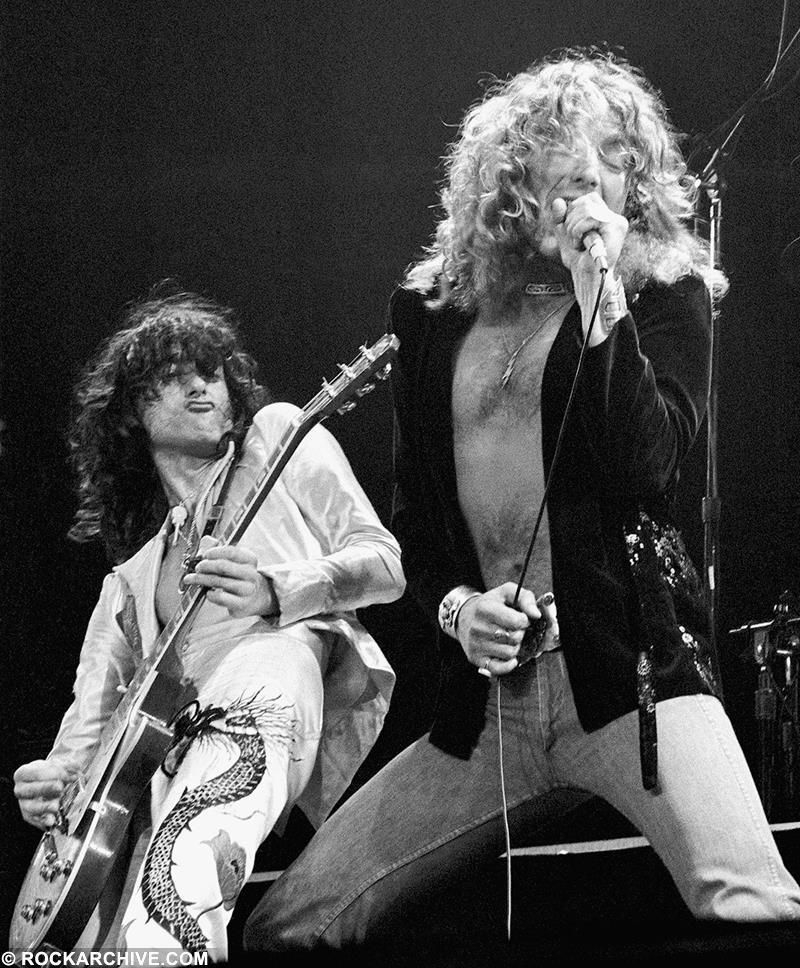
Although records were not cheap. The final price should reflect many details, such as the cost of the production, advertising, distribution, and, of course, a significant share of the pie, enough to make your favorite rock band filthy rich.
Thankfully, there was a more affordable option for the less fortunate music lovers of the 1970s and 1980s: the cassette tape.

Recording cassette tapes at home was cheaper than buying LPs, but it could also be laborious. First, you need to find someone who owns the LP you are looking for and then convince the person to lend you his precious possession. Good luck with that.
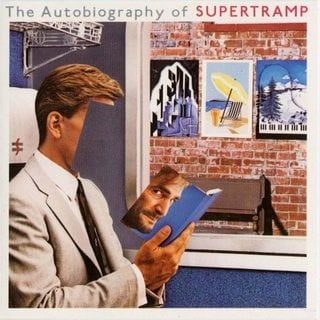
The other option was to form a cooperative of friends with similar musical tastes and then buy the record, which would be shared by the members to record their tapes.
No matter what the situation was, cassette tapes were as much a part of our lives back in those days as LPs. Making a tape with your personal selection of songs was as enjoyable as listening to the songs.

Obviously, we all had our favorite tape brands. In Brazil, the most popular was the German BASF, but we loved the Japanese stuff as well, like TDK, Sony, and Maxell.
The blown-away guy

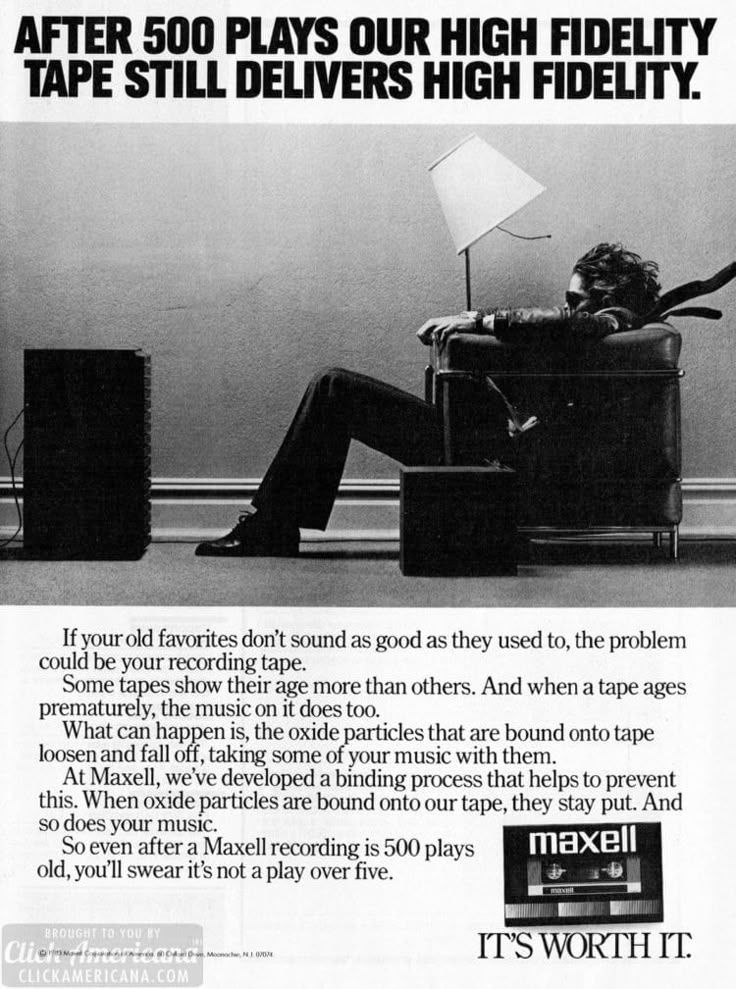
To win customers’ hearts and minds, cassette brands spend a lot of money on visually appealing TV commercials. Although most of the ads were cool, one easily tops them all: the “Maxell blow-away guy.”
The ad campaign, which was run worldwide, instantly made Maxell synonymous with high quality and made the brand look cool to customers.

Maxell, short for “Maximum Capacity Dry Cell,” was founded in Japan in 1960 as a Nitto Electric Industrial Co., Ltd division. The company initially focused on manufacturing dry-cell batteries, which is reflected in its brand name. Maxell gained a reputation in this area but became globally recognized after introducing its first magnetic audio tape, designed for high-fidelity playback, in 1962.
“A picture is worth a thousand words,”
In the history of advertisements, there are a few campaigns that actually achieved the intent of this statement. Certainly, the Maxell’ “Blown away guy” is one of them.
The advertisement debuted in 1979, and remains one of the most memorable symbols of the cassette era. It’s hard to imagine anyone reading this who isn’t familiar with the poster, and most self-respecting music enthusiasts from that time likely had it hanging in their music rooms. The campaign was initially designed for print but later expanded into television commercials, further increasing its international fame.
The iconic photo was taken by photographer Steve Steigman, who had a background in fine art photography. It’s no surprise that the identity of the “blown away” guy is somewhat controversial; the most accepted theory is that the model used for the campaign was a makeup artist named Jac Colello, who had previously worked for David Bowie.

An intriguing version of the story suggests that the man being blown away was Peter Murphy, the former lead singer of the British rock band Bauhaus. However, I doubt this claim is true.
Interestingly, the effect of the man being blown away was created in the print ads without any actual wind. Instead, Steigman and his team strategically arranged the man’s scarf and other props, along with using a generous amount of hair product, to create the illusion that he was being swept away by the sound.

This is the end
Beautiful friend
This is the end
My only friend, the end
(The End- Song by The Doors – 1967)
The cassette dominated the market from the 1970s until the 1990s as the most popular form of musical media. It was portable and durable, able to withstand the punishment of being carelessly stored in backpacks and glove compartments. The cassette also helped create a whole universe of electronic equipment.
The advent of digital formats, led by the CD, drove the music industry to gradually phase out the use of cassettes and our beloved vinyl. CDs offered superior sound quality and durability. The rise of MP3 players, downloading/ripping, and streaming services in the early 2000s—even in lieu of their inferior sound quality—further sealed the fate of the cassette’s status as a mainstream format.
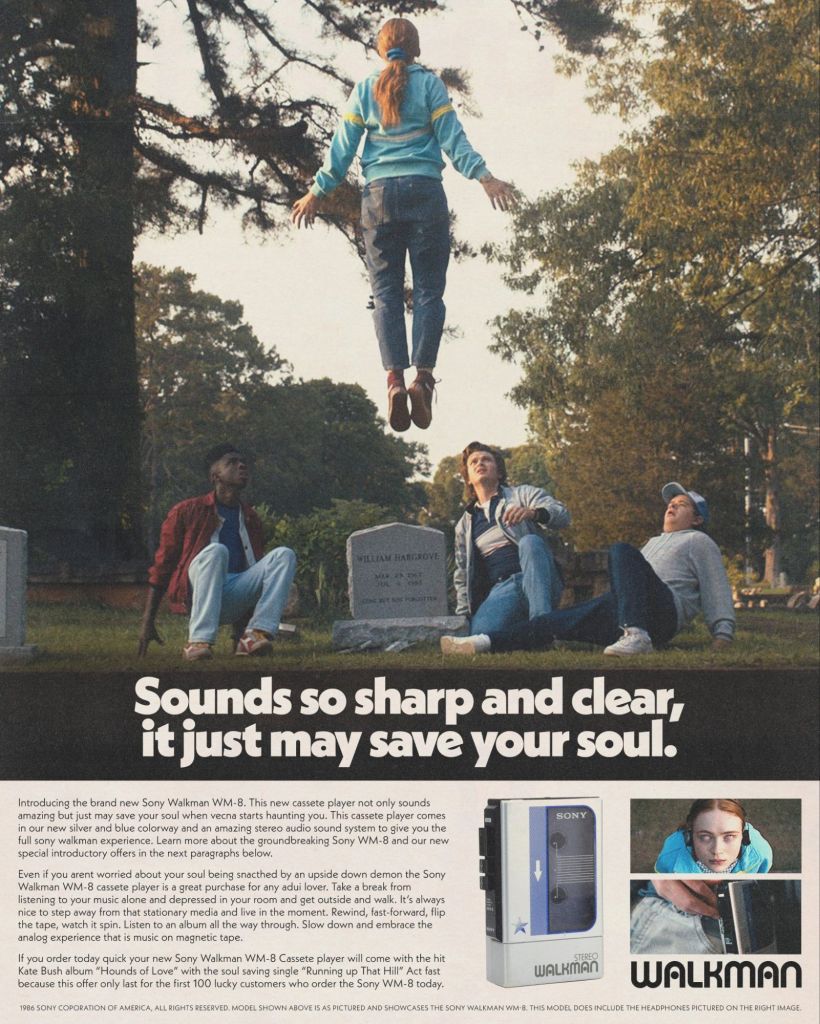
It was only when movies and TV shows of the 2010s/2020s embraced the 1980s as the coolest era in recent history that the cassette saw a tiny resurgence.
A good example is “Stranger Things,” a highly popular Netflix series that follows a group of teenagers battling supernatural monsters in the 1980s. In its fourth season, the iconic Sony Walkman, the ultimate portable cassette player, along with Kate Bush’s song “Running Up That Hill,” plays a crucial role in their fight.

The cassette is still alive and kicking (the 1980s references are endless), thanks to dedicated groups of collectors, DJs, and underground music scenes that continue to use them. And also thanks to old timers that insist on being connected to the stuff of their youth.
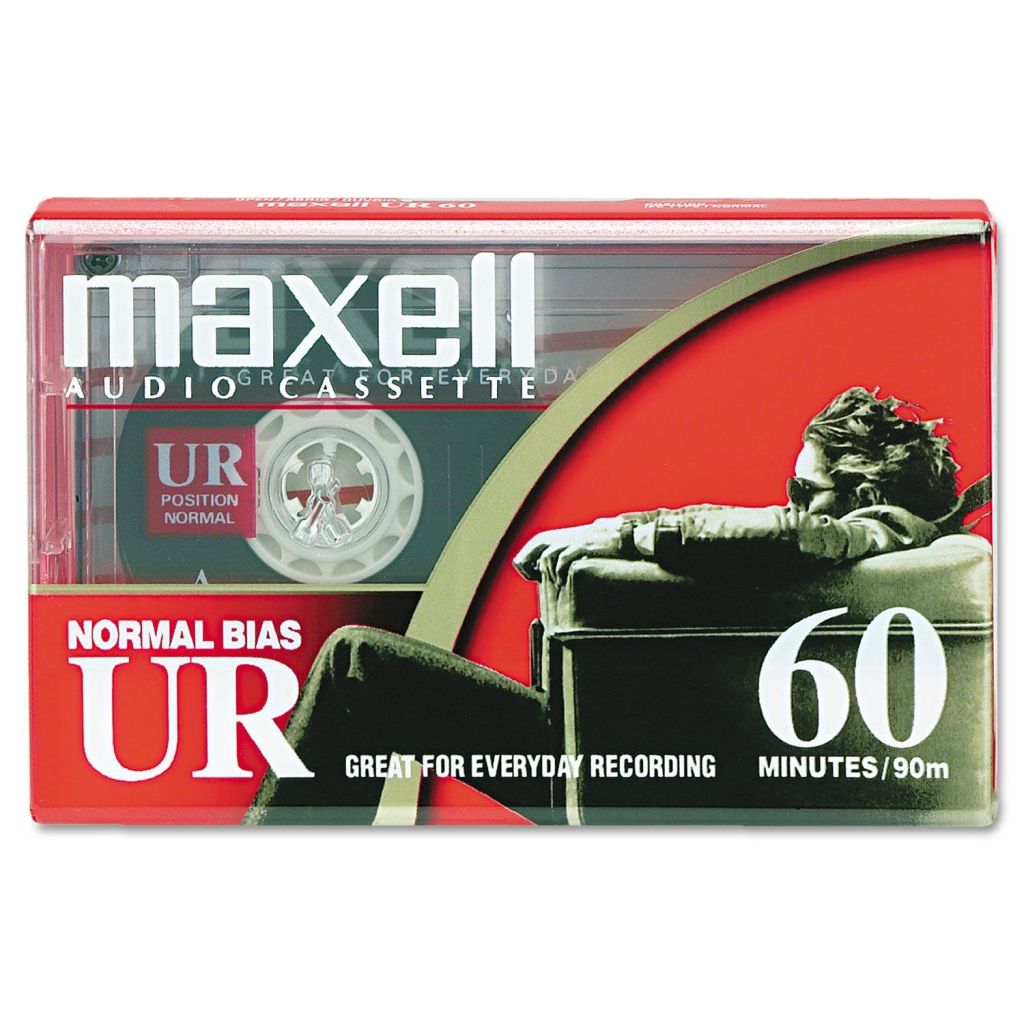
And yes, you still can buy a brand new Maxell tape and a Sony Walkman.
 The Classic Machines
Loved this post. Thanks for the wonderful trip back in time.
LikeLiked by 2 people
I am thrilled that you enjoyed the post. It was a trip back in time for me, too.
LikeLike
Great post! I still have a collection of about fifty cassette albums stashed away somewhere…
LikeLiked by 1 person
My collection of tapes is pretty much gone. I don’t think my family kept it for me. After all, I have been living abroad for 10 years now.
LikeLiked by 1 person
And when the player ‘ate’ the tape, ah! what fun!
90 minutes of your favourite tunes, perfect for the times spent in a car.
LikeLiked by 1 person
Oh my goodness, I totally forgot about the player’s bad habit of eating tapes. It was so frustrating!!!!
LikeLike
I still have 3 unopened. brand new Maxell cassettes in my desk drawer! Too bad I removed the casette deck from my old Subaru. It would have been retro cool to play tapes in 2025.
LikeLiked by 1 person
I have a friend in Brazil, and he has a small vintage auto parts store, focused on auto radios and cassette players. He said it is already a trend to install period-correct aftermarket sound equipment when restoring a 1970s/1980s car. Isn’t it cool?
LikeLiked by 1 person
I’m not so sure, Rubens. If it’s a car from the 50’s to 70’s then I would say OK. Keep it stock. Those radios were so cool, so unique. Plus, someone interested in real sound quality could just play music through a remote mounted modern stereo in the glovebox.
.
But by the time we got the 80’s, all those radios were standardized size, DIN or double-DIN. And the radios were nothing special. Kind of crappy, if you ask me.
.
So I think that people should definitely put modern speakers and stereos in their vintage cars… but then put the original back in when it’s time to sell. At least include it with the car.
LikeLiked by 1 person
I kept my cassette collection for years, even after I got my new 03 Dakota with 6-CD stereo. I figured when I got my old car I’d use them. I got my 76 Grand Prix and it only had AM/FM, no cassette. I got an FM transmitter and simply streamed off my iPhone. So, I dumped my tape collection… only to acquire an 88 Mustang with cassette deck and premium sound system!
LikeLiked by 1 person
Oh boy, now your collection is lost, just like mine.
LikeLike
I’m old enough to remember when we didn’t have a wired connection from the turntable to the cassette deck. So if you wanted to record an album, you had to have a quiet room with no interruptions. In our 2 bedroom, 1 bath home that was almost impossible. I’d get to the next to last song on an album side and SOMEONE would come upstairs and make noise.
LikeLiked by 1 person
I kinda remember it, too. When the integrated systems came to the market, my dad said: “We need one of those. You can record a tape while talking to your friends… in the same room!!!”
LikeLike
This was such a blast from the past for me. I actually saw Led Zeppelin in concert in 1971 in Milwaukee, WI.
LikeLiked by 1 person
Woooow!!!! You saw Led Zeppelin live!!!!! That is a memorable experience.
I am happy you enjoyed the article.
LikeLike
It was fun reading about the transition from albums, to cassettes, to CDs-and now albums again. I had to chuckle when I was walking through a department store and saw three teenage girls gushing over their big display of albums. I still have all my Beatles’ albums. Great post, Rubens! 🙂
LikeLiked by 1 person
Thanks for stopping by Nancy. It is funny to see how the trends come and go… and come back again.
My wife is a hardcore Beatles fan and she has pretty much all the band’s albums, but they are in the CD version.
LikeLiked by 1 person
Your wife has good taste. 🤣
LikeLike
joyful! Update: Recovery Phase Begins in [Region Affected by Economic Crisis] 2025 elegant
LikeLiked by 1 person