
The history of racism in the United States is full of unimaginable pain and suffering. The journey that minorities had to endure to achieve fundamental human rights was long and fraught with deception.
Now that 77,302,580 Americans have voted for a certified white supremacist, all those hard-fought rights are at risk. I do not intend to write a political post or vent my frustration. Still, this situation reminded me of a fascinating account in Rock ‘n’ Roll history that is deeply related to the American civil rights movement of the 1960s.
Neil Young
“That keep me searching
For a heart of gold
And I’m getting old
Keep me searching
For a heart of gold”
Neil Young’s Heart of Gold. – 1972.
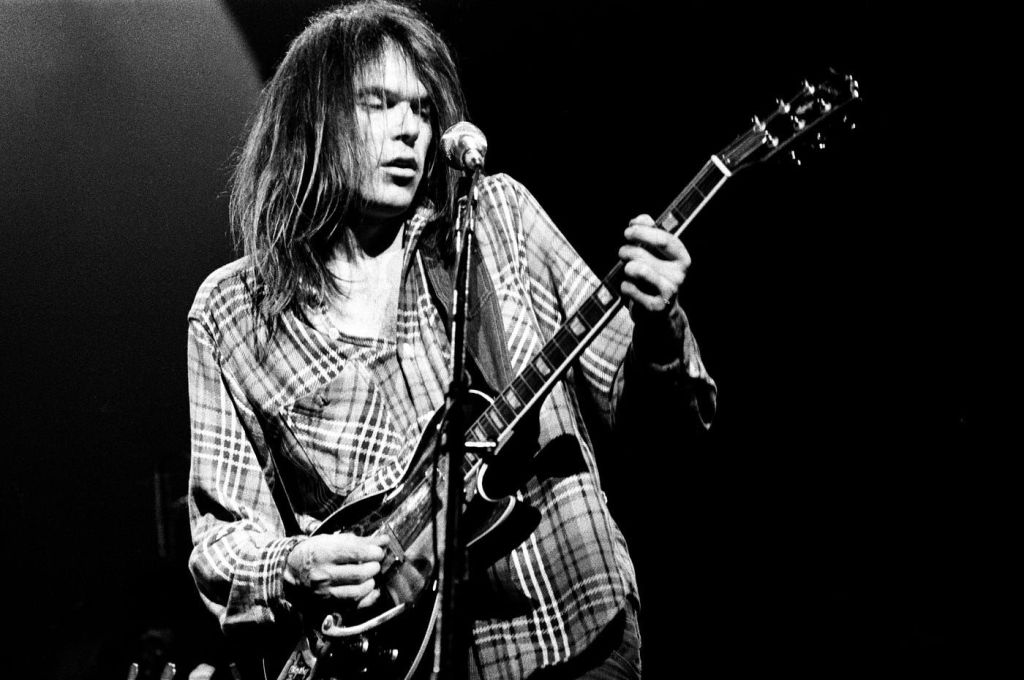
If there is a good cause to be fought in this world, chances are Neil Young is involved in it at some level.
Neil Percival Young was born in Toronto, Canada, on November 12, 1945. He started his musical career in Winnipeg, and in the early 1960s, he moved to Los Angeles, where he joined Buffalo Springfield (1966-1968).
Neil Young quickly established himself as a prominent figure in the folk-rock scene of the 1960s and 1970s. He performed with various bands, including Crazy Horse and Crosby, Stills, Nash & Young, but primarily toured North America as a solo artist.
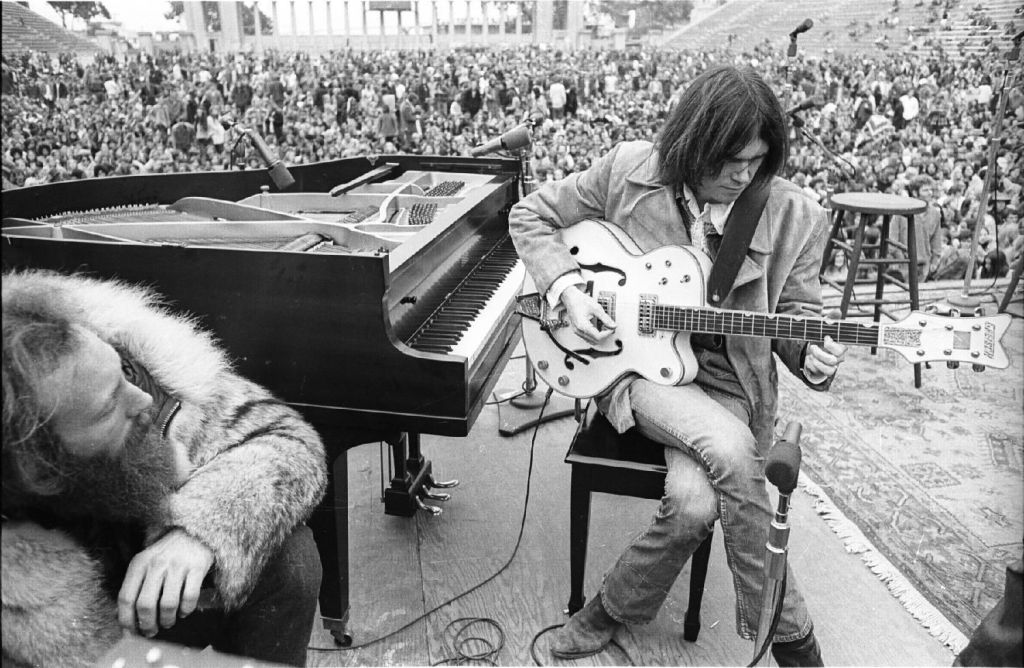
Neil became popular not only because of his music but also for his activism. Throughout his career, he got deeply involved in social, political, and environmental causes. As no surprise, many of his songs are filled with social themes.
Southern Man

Neil Young’s work with Crosby, Still and Nash helped to catapult his popularity in the USA. During this time he became American citizen and bought a ranch in California. In September 1970, Young released the album After the Gold Rush, which was his first commercial success.
Among the songs of the album, there is Southern Man, a tune that would soon become one of the most controversial songs in Young’s career.
The lyrics of Southern Man describe, in a poetic way, the racism towards black people in the southern United States and how the prosperity of the region was built on the suffering of the slaves. The song also mention the practice of cross burning, in a clear reference to the Ku Klux Klan.
Southern Man – Lyrics
Southern man, better keep your head
Don’t forget what your good book said
Southern change’s gonna come at last
Now your crosses are burning fast
Southern man
I saw cotton and I saw black
Tall white mansions and little shacks
Southern man, when will you pay them back?
I heard screamin’ and bullwhips crackin’
How long? How long?
Southern man, better keep your head
Don’t forget what your good book said
Southern change’s gonna come at last
Now your crosses are burning fast
Southern man
Lily Belle, your hair is golden brown
I’ve seen your black man comin’ round
Swear by God, I’m gonna cut him down
I heard screamin’ and bullwhips crackin’
How long? How long?
Southern Man was not the only time Young poked the wounds of racial discrimination in the Southern United States; in February 1972, he released the song Alabama as part of the album Harvest. In this song, he tells us about the same issues found in Southern Man. Both songs became anthems of the civil rights movement during the 1970s, and Young often played them in his concerts.
But not everybody was happy about it.
Southern Rock
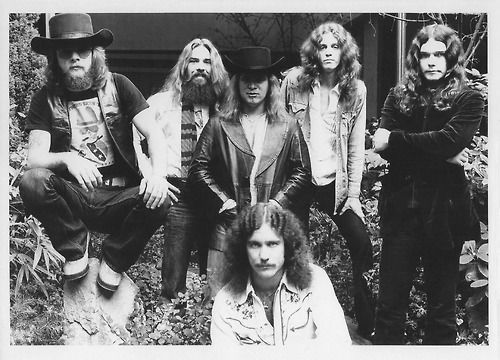
During the magical years of the 1960s and 1970s, rock’n roll exploded into a myriad of subgenres. Bands started to experiment with new sounds and adapt elements from different cultures into their music.
One of the most interesting new genres of that time was Southern Rock, which peaked in the mid-1970s. This genre represented a refreshing departure from the psychedelic influences of the 1960s, returning to the foundational elements of original rock ‘n’ roll. Southern Rock drew heavily from the musical traditions of the Southern United States, including blues, country, and gospel. It blended these influences with a strong, rhythmic pulse, often characterized by a prominent bassline and dynamic drumming.

However, Southern Rock’s most peculiar characteristic is its passionate regional pride. The musicians often wrote lyrics telling stories of deep South America. Tales about their love for the land and its traditions, praising the rebel spirit of its people.
It was only natural that Neil Young’s songs about racism would not be well received by some of those musicians and audiences.
Lynyrd Skynyrd
Key bands associated with this genre include The Allman Brothers Band, Charlie Daniel’s Band, and perhaps the most popular of them all, Lynyrd Skynyrd.
In one way or another, the members of Lynyrd Skynyrd were on the road, pursuing fame and glory since 1964. The band was comprised initially by Ronnie Van Zant (vocals), Gary Rossington (guitar), Allen Collins (guitar), Larry Junstrom (bass), and Bob Burns (drums).
The origin of the name
I might be drifting away from the theme of this post, but if you like rock history as much as I do, you will enjoy it.
After four years of playing in small venues, under many different names, they settled for the name that would make them legendary.
Lynyrd Skynyrd is a playful tribute to Leonard Skinner, a physical education teacher at Robert E. Lee High School in Jacksonville, Florida, who was known for enforcing the school’s strict rules regarding long hair for male students. The band members, who were also students at the school and had long hair, frequently clashed with Skinner over this policy.
The band members, notably Bob Burns, came up with the name “Leonard Skinnerd” as a way to poke fun at the teacher and his strict rules. The spelling was later modified to “Lynyrd Skynyrd” to avoid potential legal issues.
Over time, the band and Skinner became acquainted, and Skinner even appeared to embrace his connection to the band’s fame. The band also used a photo of a sign from Skinner’s real estate business on the inside of their “Nuthin’ Fancy” album cover, further solidifying their unique bond.

The band released their first studio album, “Pronounced ‘Lĕh-‘nérd ‘Skin-‘nérd,” in 1973. The album featured most of the songs they used to play in concerts. It was well received by fans and critics, which led to their second album, “Second Helping,” released on April 15, 1974. According to critics, this album shows consistency, keeping all the strengths of their first album, but Second Helping will be forever known for one song in particular.
Sweet Home Alabama

The late Ronnie Van Zant, the frontman of Lynyrd Skynyrd, was a big fan of Neil Young. He was not shy in expressing his admiration for the Canadian and often wore a Neil Young T-shirt during concerts. However, this affection was somewhat shaken after Young publicly shared his negative views about the Southern United States.
After the success of their first album, the band felt comfortable writing a song that would answer Young’s views. They felt this answer was necessary for themselves and mainly for their fans in the South.
“Sweet Home Alabama” was born with a broad mission. The song should be more than just an answer; it should be an ode of love to Alabama, even if none of the three writers were from the state. Van Zant and Gary Rossington were born in Jacksonville, Florida, and Ed King was from Glendale, California.
The Lyrics
“They got loose to you
Here it comes
Oh, whoa-whoa
Big wheels keep on turnin’
Carry me home to see my kin
Singin’ songs about the Southland
I miss Alabamy once again, and I think it’s a sin, I said
Well, I heard Mr. Young sing about her
Well, I heard old Neil put her down
Well, I hope Neil Young will remember
A Southern man don’t need him around, anyhow
Sweet home Alabama
Where the skies are so blue
Sweet home Alabama
Lord, I’m comin’ home to you
One thing I wanna tell you
In Birmingham, they love the governor (boo, boo, boo!)
Now we all did what we could do
Now Watergate does not bother me, uh-uh
Does your conscience bother you? Tell the truth
Sweet home Alabama
Where the skies are so blue
Sweet home Alabama (oh, my baby)
Lord, I’m comin’ home to you (here I come, Alabama)
Speak your mind
Ah-ah-ah (can you feel that?), Alabama
Ah-ah-ah, Alabama
Ah-ah-ah, Alabama
Ah-ah-ah, Alabama
Now Muscle Shoals has got the Swampers
And they’ve been known to pick a song or two (yes, they do)
Lord, they get me off so much
They pick me up when I’m feelin’ blue, now how ’bout you?
Sweet home Alabama (oh)
Where the skies are so blue
Sweet home Alabama
Lord, I’m comin’ home to you
Sweet home Alabama (home, sweet home, baby)
Where the skies are so blue (and the governor’s, too)
Sweet home Alabama (Lord, yeah)
Lord, I’m comin’ home to you (whoo, whoa, yeah, oh)
Alright, brother, now
Wait one minute
Oh-oh, sweet Alabama
Thank you“

The feud
The song was an instant success, it reached number eight on the Billboard Hot 100 chart in 1974, becoming the band’s highest-charting single. Since his name was clearly stated in the song, Neil Young had to defend his creations. He said he never meant to specifically target the state of Alabama, and the name was used metaphorically, meaning the the Civil Rights Movement as a whole.
Although Young’s words in both songs, Alabama and Southern Man, are far from being fictional, they can be easily interpreted as a gross generalization, and a cheap stereotyping of the Southern “red neck”.
In a interview to the Rolling Stones magazine, Van Zan said: – “We thought Neil was shooting all the ducks in order to kill one or two. We are Southern rebels, but more than that, we know the difference between right and wrong.”
In conclusion, “Sweet Home Alabama”, had a profound impact in the way Young perceived the people from the Southern USA. He publicly accept the blame for not creating with a wiser way to spread his message. He and the members of Lynyrd Skynyrd reconciled soon after the release of the song and they remained good friends to the end. Young once said: “They play like they mean it. I am proud to have my name in a song like theirs.”

In Young’s 2012 autobiography Waging Heavy Peace – A Hippie Dream, he was preety hard on himself: “My own song ‘Alabama’ richly deserved the shot Lynyrd Skynyrd gave me with their great record. I don’t like my words when I listen to it. They are accusatory and condescending, not fully thought out, and too easy to misconstrue.”
The Canadian even included Sweet Home Alabama in some of his concerts, and Van Zan kept wearing Neil Young T-shirts.
The accident

It is impossible to write about Lynyrd Skynyrd and not talk about the tragic airplane accident that abruptly ended the original band.
Following a concert in Greenville, South Carolina, on October 20, 1977, Lynyrd Skynyrd boarded a chartered flight bound for Baton Rouge, Louisiana, where they were scheduled to play on the following night. After running out of fuel, the pilots attempted an emergency landing before crashing in a heavily forested area five miles northeast of Gillsburg , Mississippi. Killed on impact were Ronnie Van Zant and Steve Gaines, along with backup singer Cassie Gaines (Steve’s older sister), assistant road manager Dean Kilpatrick, pilot Walter McCreary and co-pilot John Gray. Other band members (Collins, Rossington, Wilkeson, Powell, Pyle, and Hawkins), tour manager Ron Eckerman, and several road crew members suffered serious injuries.
The accident came just three days after the release of the group’s fifth studio album Street Survivors. It became the band’s second platinum album and reached No. 5 on the Billboard 200. The single “What’s Your Name” reached No. 13 on the single charts in 1978. The original cover sleeve for Street Survivors had featured a photograph of the band amid flames, with Steve Gaines nearly obscured by fire. Out of respect for the deceased (and at the request of Teresa Gaines, Steve’s widow), MCA Records withdrew the original cover and replaced it with the album’s back photo, a similar image of the band against a simple black background.

The surviving member disbanded after the tragedy, but the name Lynyrd Skynyrd never died. Throughout the following decades, the band got together several times, with different members every time.
After so many years on the road, Lynyrd Skynyrd decided it was time to retire. The band embarked on their “Last of the Street Survivors Farewell Tour,” which began in 2018 and continued through 2022. (picture above).
And, what about Neil Young?

At 79 years old, the good old Neil remains unstoppable. He can still be found on the streets, fighting bad guys wherever they are.

As I write these lines, in late June 2025, Neil Young and his band Chrome Heart are traveling Europe, in his world tour Love Earth. Then they will cross the pond to finish the adventure in September, playing in the US and Canada.
 The Classic Machines
Very interesting! I didn’t know about Young’s reaction to Sweet Home Alabama. I’m glad they reconciled instead of feuding.
LikeLiked by 1 person
Oh, yeah! This is one of those “feel-good” tales of rock’n roll. I love this story, and I was willing to write about it for some time.
LikeLike
Great article, I’m also a big fan of all genres of music history. In terms of Neil Young , the bio “Shakey” is a good read
LikeLiked by 1 person
Thank you so much. I will include “Shakey” on my wish list of books.
LikeLiked by 1 person