On June 3, 1969, fans of Star Trek watched the final episode of the classic TV series, marking the end of an iconic show after just three seasons. It took ten years to reunite the original cast for another bold adventure, this time on the big screen.

In 1979, Star Trek—The Motion Picture was released. In this movie, the crew of the USS Enterprise faces a new menace: a cloud of energy that threatens planet Earth.

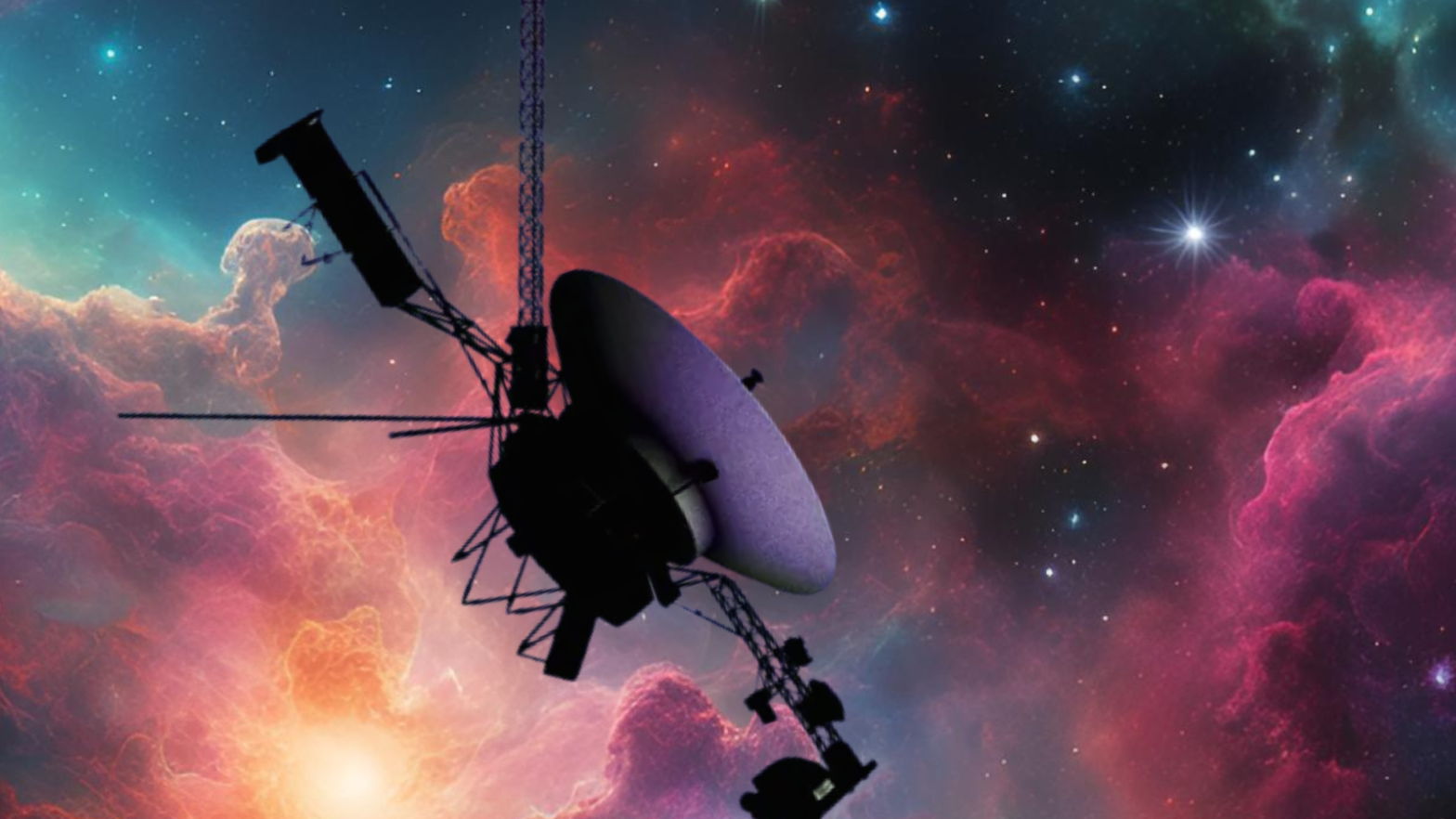
At the center of this cloud, known as “V-ger,” lies an ancient NASA probe called Voyager VI. This probe was launched hundreds of years ago as part of the Voyager program, intended to collect data throughout space. At some point, an alien entity discovered the probe and chose to assist it in fulfilling its mission: gathering all available information in the universe and returning it to its creator.
The plot of this movie is one of the most creative and thought-provoking in the history of science fiction. The concept of blending reality with fiction is genuinely fascinating. After watching the film, I became obsessed with the Voyager program and the history of the two probes, Voyager 1 and Voyager 2, which were launched in 1977, and are still travelling through space and sending data back to their creators.
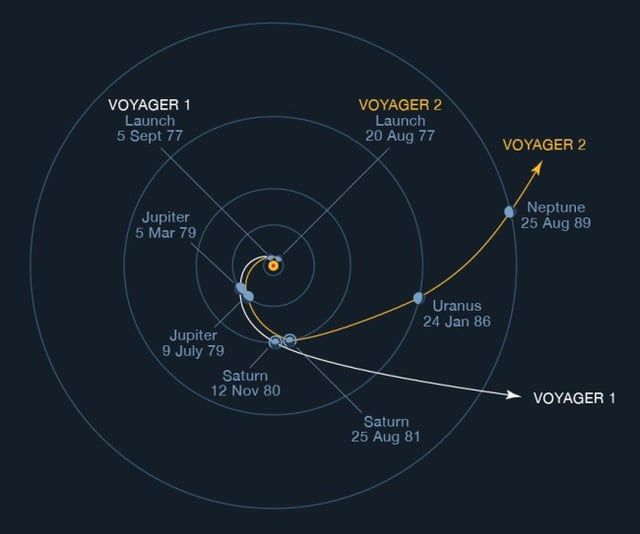
Two lonely spacecraft, each no bigger than a full-size SUV, became the only human-made machines to reach interstellar space and keep moving into the infinite vastness of deep space. As of May 25, 2025, Voyager 1 was 24.2 billion km from our planet, travelling at 61,198 km/h. The farthest human-made machine from Earth.

The Voyager probes became our real sci-fi tale, fulfilling our desire to “Explore strange new worlds. To seek out new life and new civilizations. To boldly go where no one has gone before!“
Or, perhaps one day they will fulfill our desire not to find new life, but to be found by it.

In my quest for knowledge about the Voyager probes, I found a fantastic article that provides more than crucial information. It gives a new perspective on the subject. It gives the little machines a necessary soul, crossing the boundaries of artifacts, making them entities.
If you like sci-fi and space exploration, please check it out.


It’s surprising Star Trek was only on for three seasons. Another thing surprising is that neither voyager was destroyed by a meteor, or comet, or space debris. It’s also surprising that they are so small! “Voyager: The one who never turned back” was a worthwhile read. Thank you! 🙂
LikeLiked by 1 person
You are very welcome.
I have similar thoughts, I always wandered how the Voyager probes survived such a long journey without crashing into something.
As a teenager, I was a big fan of the classic Star Trek TV series, and I didn’t know it lasted only 3 seasons.
LikeLike
The human race may so desperately need a unifying existential fate-determining common cause, that an Earth-impacting asteroid threat or, better yet, a vicious extraterrestrial attack is what we have to collectively brutally endure together in order to survive the longer term from ourselves.
Perhaps humanity would unite for the first time ever to defend against, attack and defeat the humanicidal multi-tentacled ETs, the latter needing to be an even greater nemesis than our own formidably divisive politics and perceptions of differences, both real and perceived — especially those involving race, religion and nationality.
During this much-needed human alliance, we’d be forced to work closely side-by-side together and experience thus witness just how humanly similar we are in the ways that really count. [For me, the movies Independence Day and, especially, Enemy Mine come to mind.]
Then again, I’ve been told that one or more human parties might actually attempt to forge an alliance with the ETs to better their own chances for survival, thus indicating that our deficient human condition may be even worse than I had originally thought.
Yet, maybe some five or more decades later when all traces of the nightmarish ET invasion are gone, we’ll inevitably revert to those same politics to which we humans seem so collectively hopelessly prone — including the politics of scale. And again we slide downwards.
LikeLiked by 2 people
This is a very interesting and profound line of thought, and I must confess I agree with you. You should write an article about it.
LikeLike