
If you haven’t been living under a rock for the past 40 years, chances are you listened to at least one song performed by the Australian rock’n roll band Men at Work at some point in your life. But if you are an old timer like me, who was young in the 1980s, you probably listened to their songs a hundred times or more.
Men at Work
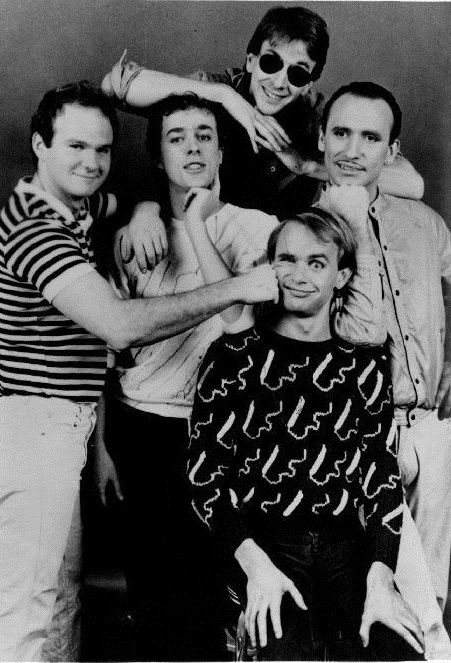
It is fair to say that Men at Work helped to put Australia in the spotlight during the 1980s. Their songs, loaded with humor and wit, opened up the gates of curiosity about their homeland. For me, Australia was a mystical tropical paradise, home to cool, talented people. Obviously, the pictures I saw in the surf magazines at the time helped to create this aura.
The story of one of the most beloved rock’n roll bands of the 1980s began in 1978, when the frontman, Colin Hay, formed an acoustic duo with Ron Strykert and began to play in pubs and small venues in Melbourne.
The Men at Work was officially born in 1979 when drummer Jerry Speiser and Greg Ham (flute, saxophone, and keyboards) joined the band.
Conquering the world.
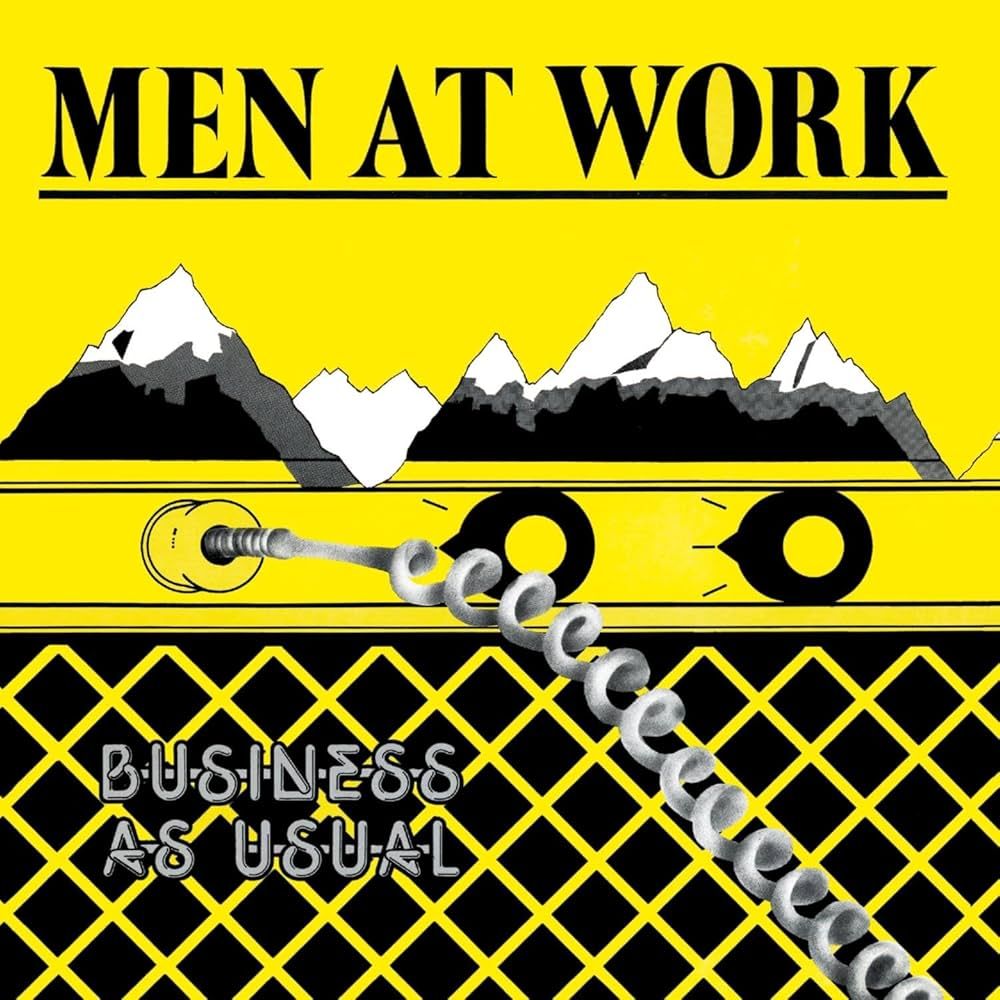
On November 09, 1981, the band released their first studio album, Business as Usual, featuring singles that would become part of any 1980s cassette tape compilation: Who Can It Be Now, Be Good Johnny, and the one we are focusing on today, Down Under.
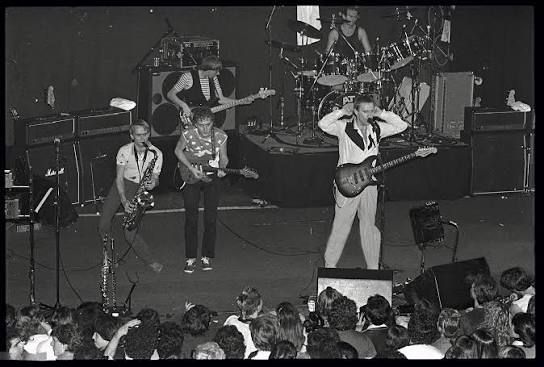
The album was a massive hit from day one. Men at Work became the first Australian artists to reach the No. 1 album and no. 1 single (Down Under) on the United States Bilboard charts, and stayed among the top 200 for 15 weeks. They also achieved similar success in Australia, New Zealand, and the UK.

Business as Usual received several awards and sold over 13.000.000 copies worldwide, and propelled the band to receive the Grammy for Best New Artist in 1983. Suddenly, Men at Work and the country they came from were on everybody’s mind.
Down Under

The song, which became the band’s most popular single, was originally released in 1979 as the B -side to their first single, “Keypunch Operator.” The record was released locally and Colin Hay and Ron Strykert covered the expenses with their own money.
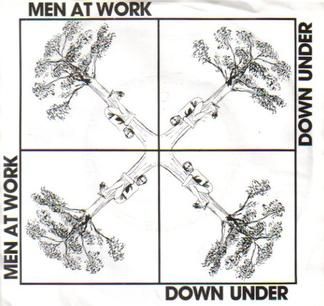
Down Under was part of Hay/Strykert’s repertoire since the time they played together at pubs in Melbourne. This early version has a slightly slower tempo and different arrangements, more aligned with the folk/reggae roots of the composers.
The version we all know was released in 1981, when the band signed a contract with Columbia, as the second single from their debut studio album, Business as Usual.
The band skillfully restructured the song, adding more instruments and increasing the tempo. As a result, Down Under offered a new take on the pop/rock energy of the era, remaining quintessentially 1980s but with a signature that was uniquely Men at Work.
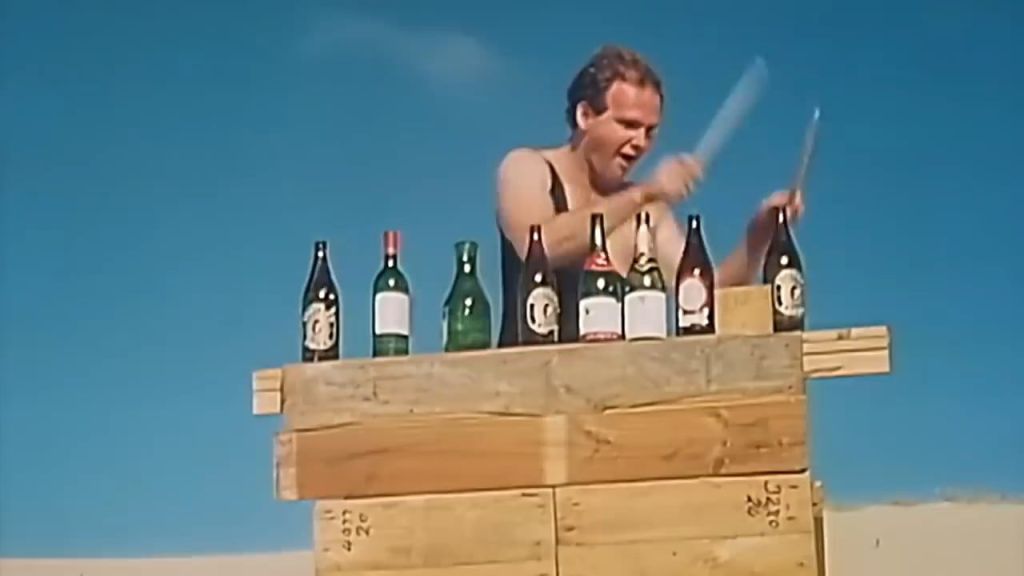
The band was also receptive to various experimental ideas. Colin Hay noted that drummer Jerry Speiser often played with bottles of beer tuned to different water levels. The members insisted he should use his creation to play the song’s opening tunes. Speiser just added a few touches of percussion from his drum kit to the bottle’s sound and voila!
Lyrics
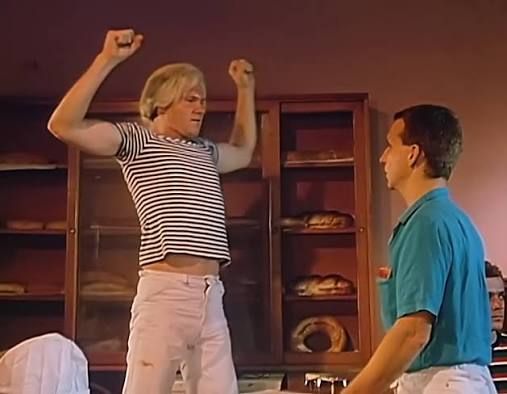
The lyrics depict an Australian man traveling the globe and meeting people who are interested in his home country. The story is based in part on Hay’s own travels abroad, including a prominent reference to a Vegemite sandwich, inspired by an encounter with a tall baker from Brussels who emigrated from Australia.
Often regarded as simply funny, the song is full of meaning. The words “where women glow” symbolize the beauty of Australia, with its unspoiled beaches drenched in sunlight. But the words “…and men plunder” mean the greedy developers who are profiting from the destruction of the country’s wilderness.
The phrase “where beer does flow, and men chunder” refers to the Australian unconditional love for beer since “chunder” is slang for vomiting.

Hay once described the intention behind the lyrics:
The chorus is really about the selling of Australia in many ways, the overdevelopment of the country. It was a song about the loss of spirit in that country. It’s really about the plundering of the country by greedy people. It is ultimately about celebrating the country, but not in a nationalistic way and not in a flag-waving sense. It’s really more than that.
Copyright lawsuit
The words in the lyrics: “Can’t you hear the thunder? You better run, you better take cover.” serve as a reference to troubling times that are about to come, and you better be prepared. It seems like the composers actually predicted the future quite literally.
The Down Under intro, performed by Speiser on beer bottles, wasn’t the only clever addition to the song. During recording, Greg Ham experimented with a short flute solo played throughout the track. Producer Peter McIan recalls this as a “musical joke” that seamlessly fits into the song like magic.
The only problem was that the joyful notes on the solo weren’t Ham’s creation; it was part of someone else’s song.

The whole flute part in the recording was found to be inspired by the Australian classic “Kookaburra Sits in the Old Gum Tree,” written by Marion Sinclair in 1932. She wrote it to participate in a song contest promoted by the Girl Guides Association, Australia’s equivalent of the Girl Scouts. After winning the contest, printed copies of “Kookaburra” were distributed to many scout groups throughout Australia, New Zeeland, UK, and United States, making the song a campfire favorite during that time.
After Ms. Sinclair died in 1988, the rights to the song were transferred to the South Australian Public Trustee. In 1990, the copyright to “Kookaburra” was sold to Larrikin Music, a company focused in folk and traditional Australian music, and the proceeds were donated to charity.

The entire plagiarism incident probably would’ve gone unnoticed if it weren’t for a specific episode of a music quiz TV show called Spicks and Specks, aired in 2007. The host played the Down Under flute solo and asked: “Name the Australian nursery rhyme this riff has been based on, as well as the name of the man playing it?”
Among the six celebrities contestants, only one had the correct answer: “Kookaburra Sits in The Old Gum Tree”.
The answer was a surprise, not only for the contestants but also for everyone who was watching the show. It didn’t take long for the Larrikin headquarters started to receive dozens of emails and phone calls about the possible copyright infringement.
The Kookaburra is a pretty simple song, with only 4 bars; the flute portion of Down Under borrows 2 of them. In other words, Men at Work copied half of the song. Larrikin Music found significant grounds for plagiarism, and in June 2008, 28 years after the recording’s release, the company sued the band and EMI Australia.
On February 4, 2010, Federal Judge Peter Jacobson ruled in favor of Larrikin Music, stating that a substantial portion of the “Kookaburra” song had been copied in both of Down Under recordings, in 1979 and 1981, and that their rights to the song had therefore been violated. Larrikin Music felt confident the case was in the basket and asked for between 40 and 60 percent of the total proceeds from Down Under.
After several months of case analysis, on July 6, 2010, Judge Jacobson ruled that Larrikin was entitled to 5% of the mechanical copyright royalties for the period from 2002 onward.
In October 2011, the band sent an appeal to the High Court of Australia, but the judges refused to proceed.
The aftermath

Ultimately, the federal judge concluded that Hay, Strykert, and Ham did not act with malicious intent when using the Kookaburra notes but that the infringement nevertheless exists. They aimed to add an extra touch of Australian identity to Down Under by including part of this beloved kids’ song.
Larrikin Music ended up receiving around AUS 100.000,00, which is a fraction of what they wanted, but EMI Australia spent 4.5 million in legal expenses. Hay, Strykert, and Ham also spent considerable sums during the 3 years the case dragged on in court.

Warren Fahey, the founder of Larrikin Music (pictured above), tried to convince the new administration to drop the case, but since he had sold the company ten years before, there wasn’t much he could do. He insisted that “Kookaburra” was a gift to the country since Ms. Sinclair had never sought profit from the song and that there was no harm in a portion of it being incorporated into another song about Australia.
It was proved in court that the composers knew that portion of Down Under was borrowed from Kookaburra. It was brought to the court attention that at some gigs from around 2002 onwards, Colin Hay would sing the lyrics of Kookaburra over the flute solo.

But the biggest proof is in the video of “Down Under,” which shows Ham playing the flute while sitting in a tree. The connection between the two songs was never meant to be hidden; on the contrary, it was meant to be noticed. Perhaps the band assumed that such an old song was in the public domain and never worried about copyright infringement.
Sadly, Greg Ham was the person most profoundly impacted by the entire situation. He had to sell his house to cover legal expenses. His dire financial situation also forced him to begin teaching music lessons to make ends meet.

Even though Colin Hay and Ron Strykert are the composers of Down Under, it was Greg Ham’s name that appeared the most in the legal proceedings. In the public’s eyes, he was the one who dragged the band into this huge mess.
Ham took the veredic particulary hard, saying: “It has destroyed so much of my song. It will be the way the song is remembered and I hate that.
I’m terribly disappointed that that’s the way I’m going to be remembered – for copying something.”
In the following years, Ham started to drink heavily, and some friends and family said he developed drug addiction.

His health deteriorated rapidly, and on 19 April 2012, he was found dead in his home, in Melbourne suburb of Carlton North.
While initial reports mentioned “unexplained” circumstances and some sources suggested a heart attack or issues related to addiction, his death was confirmed and deemed not suspicious by police.
Friends and family described Ham as a terrific musician and a kind, lovely person. He was 58 years old when he died.
Ham’s death was the last and saddest chapter of this unfortunate series of events.
“Kookaburra” and “Down Under” were composed for very different reasons, yet they both have an intriguing similarity: they oppose greed. Ironically, both songs became entangled in a legal dispute involving millions of dollars.
Men at Work broke up in 1986, but Colin Hay and Greg Ham reunited again between 1996 and 2002 for some live concerts around the world.

After Ham’s death, Hay could have chosen to bury Down Under, but he decided not to. In his busy solo career and as a member of the Ring Starr & His All Starr Band, he never stopped playing the song. Down Under became bigger than him and the band. It became the unofficial Australian anthem.
But above all, each live performance is a tribute to his late friend.
Notes of the editor.
Here are some interesting details that didn’t make the final cut:
- Colin Hay was born in Scotland. He immigrated to Australia with his family when he was 14.
- The Aussies refer to the VW Transporter as “Kombi”, the same way as we, Brazilians, do. It is short for Kombinationskraftwagen (combination vehicle).
 The Classic Machines
Loved this post because 1) I love beer, 2) love music and these artists, 3) love Australia and want to go there someday.
Especially the open of the song made with beer bottles.
LikeLiked by 1 person
Thank you so much. I’m really glad you enjoy the post. Men at Work is one of my “Top Five” favorite bands of the 1980s. Before moving to Canada, I tried Australia, but their immigration laws are much stricter.
LikeLike
Thanks, Rubens, for introducing me to the band Men at Work. It’s tragic an innocent misunderstanding would impact the band-and especially Ham-so hard. 🙂
LikeLike
Thanks for stopping by, Nancy. What happened with Greg Ham was heartbreaking. According to family and friends, he was a terrific musician, a kind soul, and an easy-going person. This is an episode in the band’s history that not many fans know about.
LikeLiked by 1 person