Researching for a post can be extremely rewarding; it is an amazing process of discovery, especially when the writer dives into a subject they love. Usually, when we dig into one specific detail of the subject, other interesting details will emerge. Details we can’t leave behind. In the end, a text meant to be a 5-minute read becomes a 15-minute read post.

In my previous article, JAWA Moto, I thought that after two weeks of research, I had covered all the interesting aspects of the Czech brand’s history. However, I missed one important detail.
Two of my regular readers mentioned that JAWA had an impressive performance in the motorcycle speedway championship in Europe and worldwide, and I failed to mention this important chapter in my article. After a quick search, I decided that instead of fixing the post, I should write a separate one.
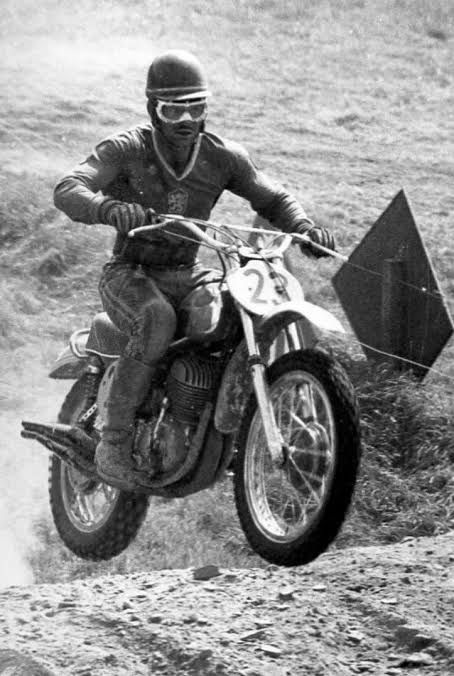
As ironic as it may sound, JAWA’s peak success in competition came when the company operated under strict communist rule. The Commies shamelessly adopted one of the most popular capitalist mottos: “Win on Sunday, sell on Monday.”
In the 1960s, JAWA had already built a reputation in moto GP, enduro, and motocross. The one category missing was Speedway.
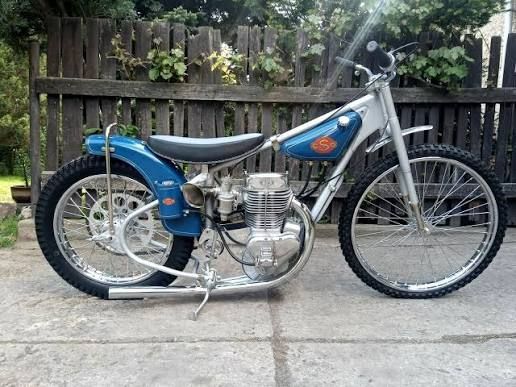
Around this time, another Czech motorcycle brand, ESO, was gaining notable success by producing high-performance engines and bikes designed specifically for speedway, ice racing, and motocross.
Once again, JAWA took a shortcut: instead of building a speedway machine from scratch, they acquired ESO in 1964.
Although JAWA had been competing in the European speedway arena since the late 1930s, it only found its way to supremacy after acquiring ESO.
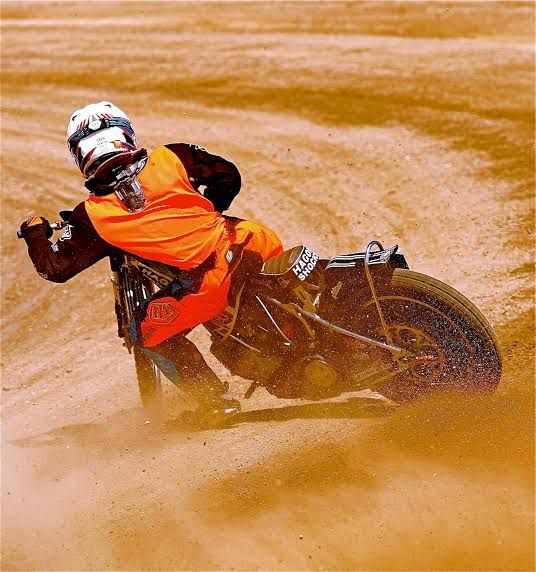
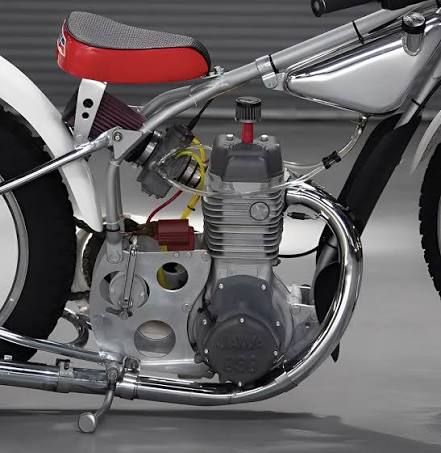
By the late 1960s, JAWA’s reliable overhead-cam, four-stroke 500cc engines had largely replaced traditional British JAP engines. They became the weapon of choice for most race teams on the world speedway circuit.
Understanding Speedway
For reasons that escape my humble understanding, speedway is a completely unknown motorsport in the country where I grew up, Brazil. So, for guys like me who don’t know much about this exciting sport, here are a few interesting details.
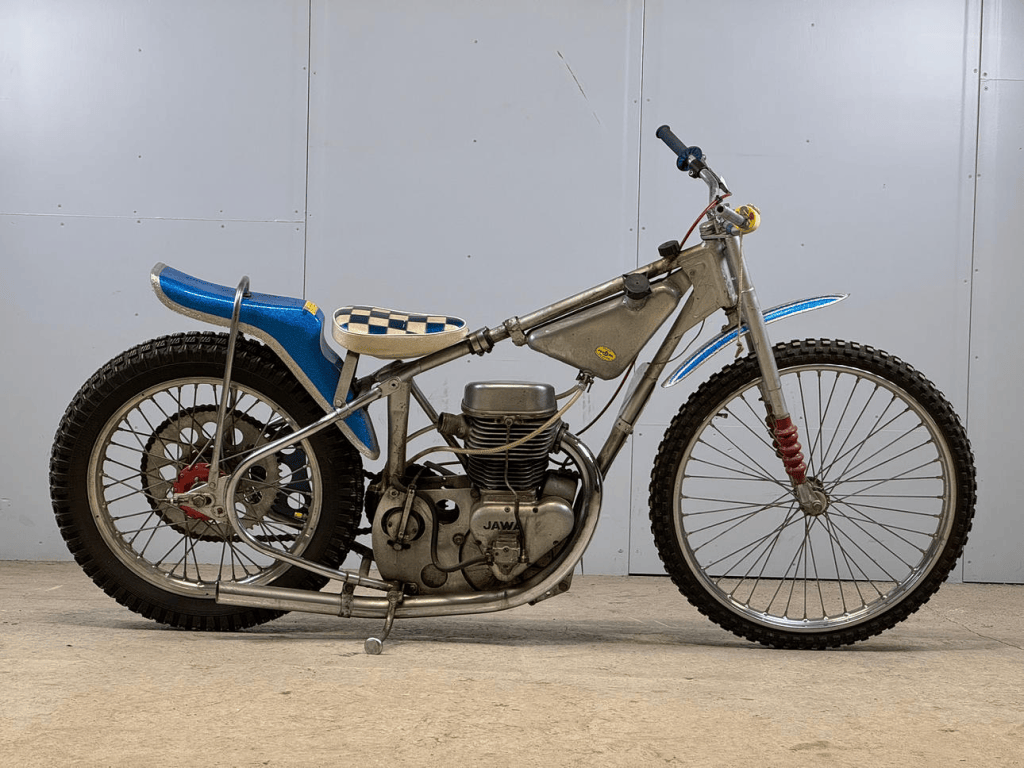
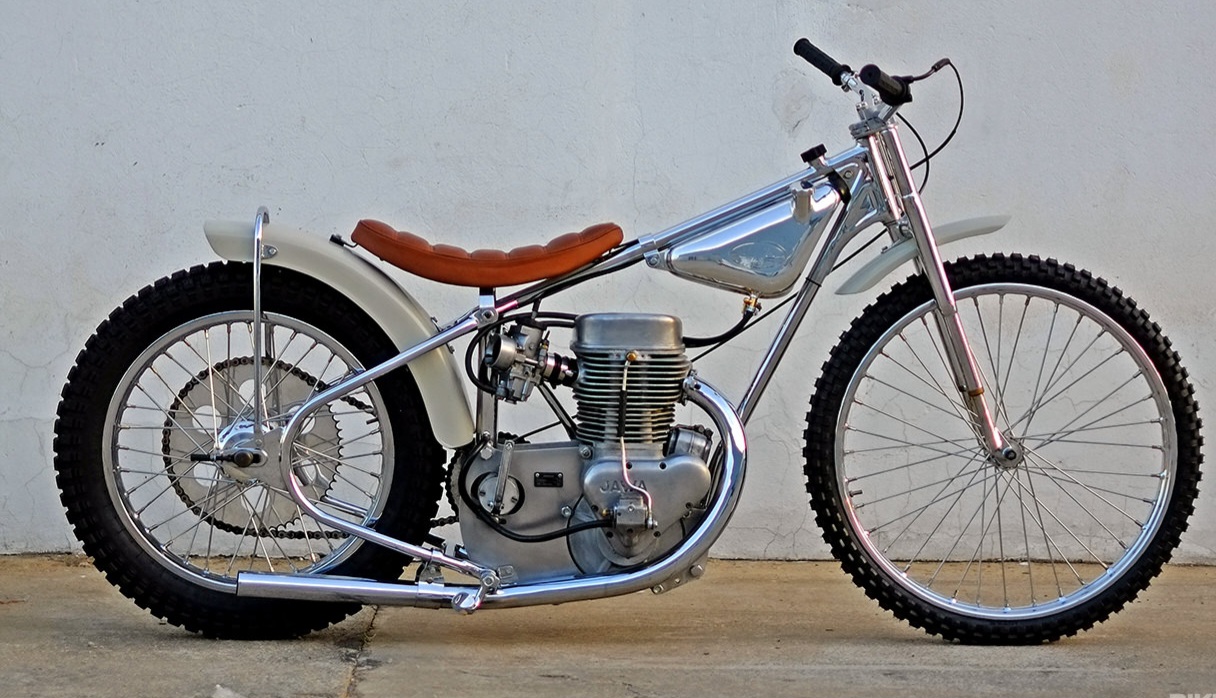
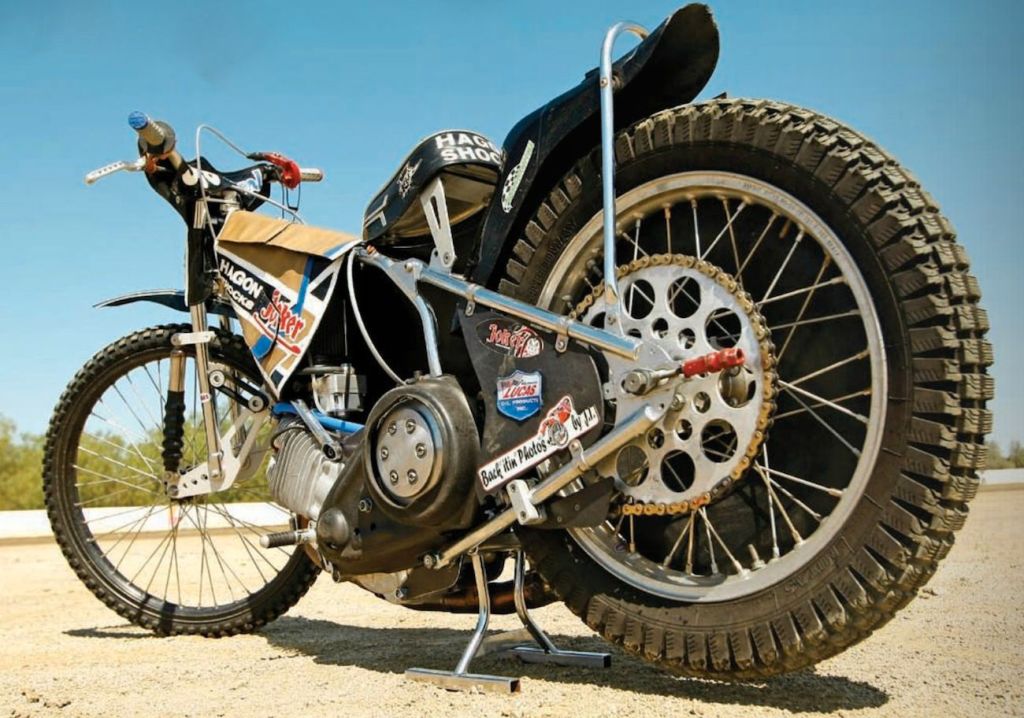
First, the bikes have no brakes (what?), and since the oval/circular tracks are quite short, they don’t need a transmission, and the clutch is only used once to get the bike moving.
The frame is hardtail style, and the fork has no shocks. That is OK since the tracks are pool-table smooth.
The cherry on top (or in between the frame) is the 500cc, high-compression, single-cam, air-cooled Czechoslovakian engine that produces 75 angry, methanol-drinking ponies. This engine powers a bike that weighs only about 77 kilograms (170 lbs). Yes, the machine is extremely simple, efficient, and… scary.
And yes, it accelerates like a missile.
A full race event is called a “meeting,” and it is split into short races called “heats.”
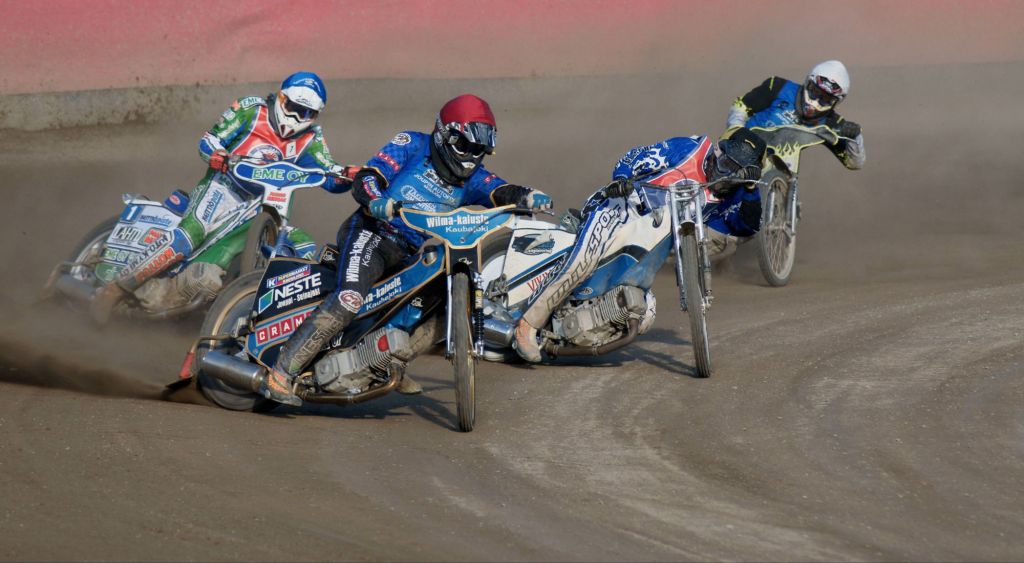
Usually, four riders stand side by side at a starting gate. When the gate drops, they race four laps counterclockwise. Since the tracks are short—typically 260 to 425 meters—each heat lasts around a minute.
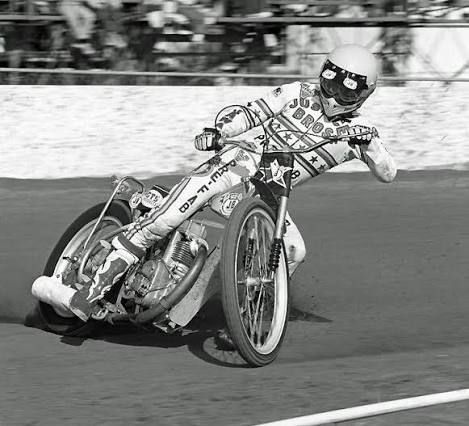
The “Power Slide”: Since there are no brakes, riders must intentionally break traction when entering tight corners. They twist the throttle wide open to spin out the rear wheel, creating a high-speed, sideways drift called a power slide or skid. They balance the bike by dragging their steel-shod left boot along the dirt track.
JAWA dominance
The Fédération Internationale de Motocyclisme (FIM) organizes speedway worldwide. It officially crowns individual riders rather than manufacturers, but it’s fair to say JAWA engines have won well over 100 World Championship titles across all forms of track racing (Individual Speedway, Team Speedway, Long Track, and Ice Speedway).
The Golden JAWA.
JAWA engines dominated the sport from the late 1960s through the 1990s, powering legends to the world title at least 20 to 25 times.
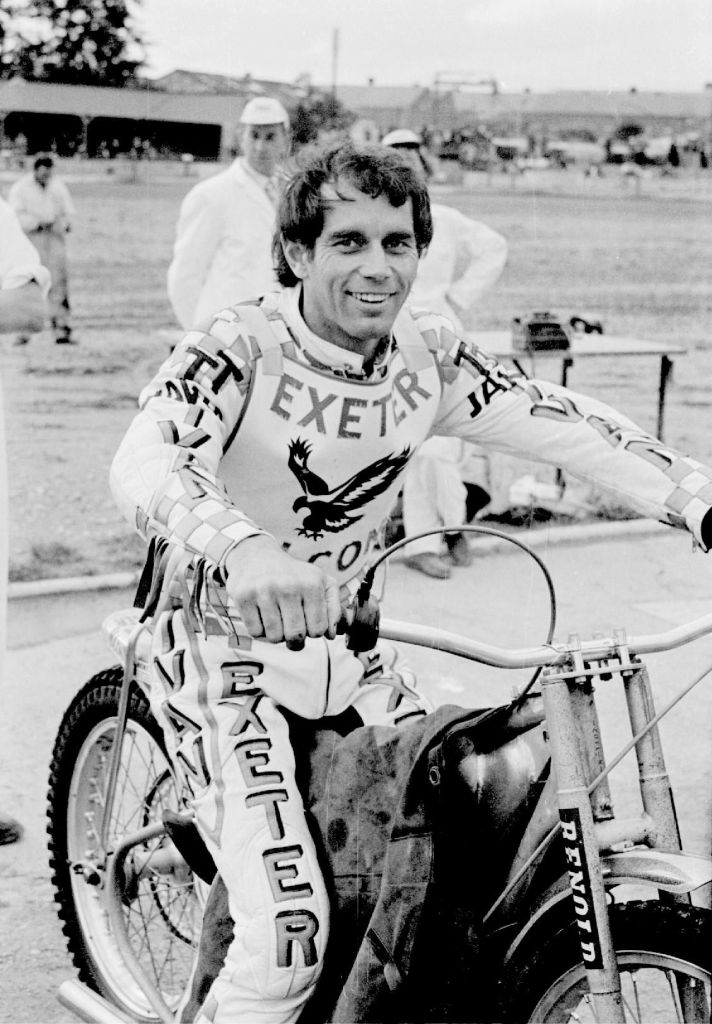
Among those legendary riders, there is Ivan Mauger, a New Zealander widely considered the greatest speedway rider of all time.
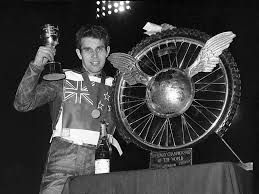
By the late 1960s, Mauger was at the zenith of his career. In September 1969, he won his second consecutive Individual World Championship at Wembley Stadium in London. Shortly after, he traveled to the Pardubice Golden Helmet race in Czechoslovakia.
There, Mauger met two prominent American speedway promoters, George Wenn and Dennis Viollet (a former Manchester United soccer player turned sports promoter).
At the time, no rider in the modern era of speedway had ever won three individual world titles in a row. Confident that a hat-trick was impossible due to the fierce competition and unpredictability of the sport, Wenn and Viollet made Mauger a weird offer:
“Ivan, if you win the World Championship again next year in Wrocław, we will have your winning bike completely gold-plated.”
Mauger, unsure whether those two guys were serious, simply smiled and accepted the challenge.
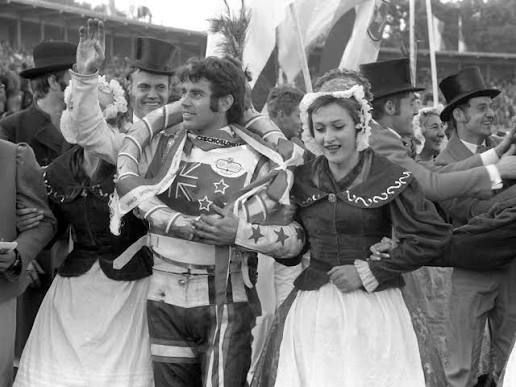
On September 6, 1970, the FIM World Final was held before a massive crowd of 100,000 screaming fans at the Olympic Stadium in Wrocław, Poland.
Riding his factory-backed JAWA Type 890, Mauger crushed the competitors. He scored a perfect 15-point maximum, winning all five of his heats against the best riders on the planet—including legends like Soren Sjosten and Pawel Waloszek.
With that victory, Mauger became the first rider in history to win three consecutive world championships (1968, 1969, and 1970).
True to their word, Wenn and Viollet didn’t back down from their bet. After the victory in Poland, Mauger’s JAWA was shipped to the United States.
There, the bike was completely disassembled, and every visible piece of metal was meticulously cleaned and polished before being sent to a specialized facility in California, where it was dipped and coated in 24-karat gold.
From the iconic single-cylinder engine and the frame tubes to the wheel spokes, handlebars, and exhaust pipe—everything was covered in gold. The bike was reassembled into a breathtaking, shimmering piece of mechanical art.
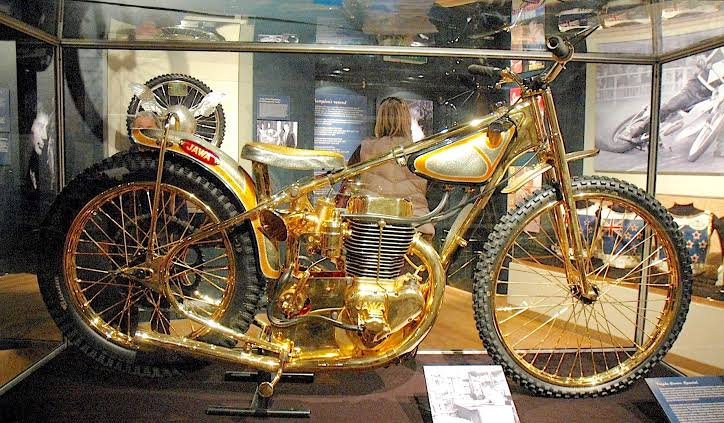
The task took 18 months to complete, and the project cost an estimated US$500,000 (around 4 million bucks in today’s money), making it one of the most valuable and famous motorcycles in the world.
Obviously, the promoters didn’t spend this kind of money just to give it back to Mauger as an expensive gift. The “Triple Crown Special,” as the bike became known, was used extensively in promotional campaigns worldwide.
The bike toured the United States, Australia, New Zealand, the UK, and Europe, drawing thousands of fans who wanted a glimpse of the most expensive and famous speedway bike ever created.
Eventually, the Golden Jawa found its way to New Zealand, and for many years, it was on display at the Canterbury Museum in Christchurch. Later, it found a permanent home at the Nieuw-Seeland National Motorcycle Museum and remains one of the most treasured artifacts in New Zealand’s sports history.
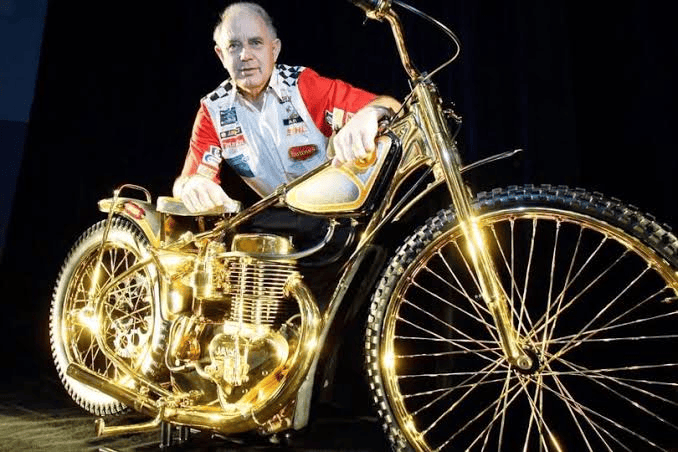
Mauger went on to win a record-breaking six Individual World Titles in total, but it was his Triple Crown in 1970 and the shimmering Golden JAWA that forever solidified his status as a global icon of the sport.
Still in the heat.
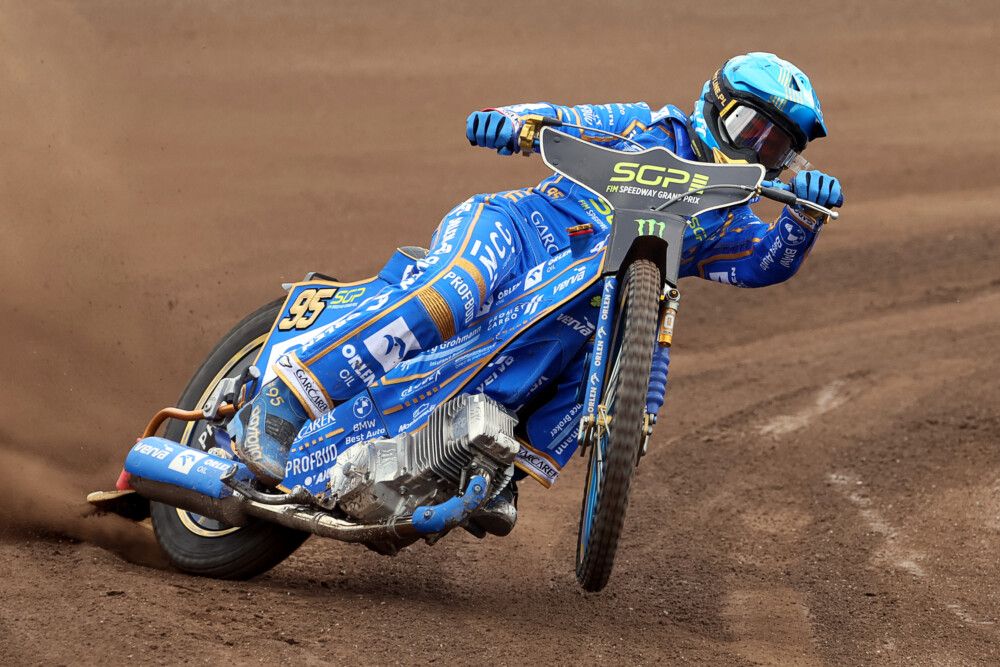
While JAWA no longer completely monopolizes the grid as it did in the 1970s and 80s, the brand remains one of the only two major dominant manufacturers left in the global speedway engine market.
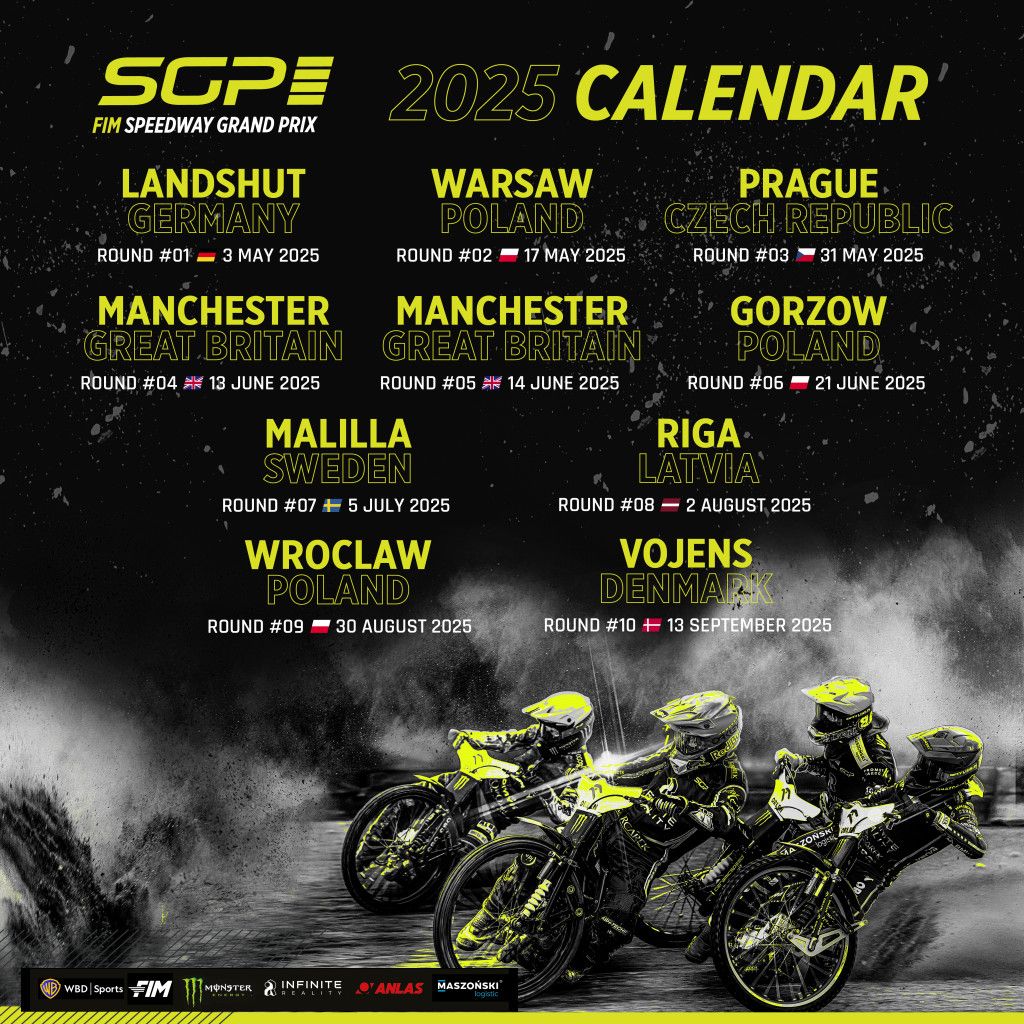
In modern professional speedway, like the elite Speedway Grand Prix, the grids are mainly divided between two engine brands: GM (Giuseppe Marzotto) from Italy, which powers most top-tier Grand Prix riders, and JAWA, which has a strong following of passionate riders who will never switch brands. JAWA continues to produce top-level, race-ready engines, rolling chassis, and complete setups.


I went to a Wembley world final in 1975. It was so dusty after the first heat the famous old stadium filled with the stuff, you couldn’t see a thing! They did eventually water the shale before 80,000 fans rioted!
Also these bike ran on methanol, just love that smell.
Great post Rubens.
LikeLiked by 1 person
Wow, 80.000 fans; that is wild.
I am so happy you enjoyed the post, Brian. Thanks for being a regular here.
LikeLiked by 1 person
Me too, I also went to Sweden to watch the World Final In the 80s as Reading riders had qualified
LikeLiked by 1 person
Me too, also went to the World Final in Sweden back in the 80s as Reading Racers riders had qualified
LikeLiked by 2 people
The Golden JAWA-WOW! Great article, Rubens, and well written. This is suitable for a motorcycle magazine and there’s several out there that you could query. 😁👍
LikeLiked by 1 person
Thank you so much for the compliment; it means a lot.
Writing for a magazine has been a dream of mine for many years, but now, thanks to the internet, I can write for my own magazine.😀🏍🏎
LikeLiked by 1 person
Nice article, club speedway was massive here back in the day, sadly due to tracks closing it’s a bit of a minority sport now. https://en.wikipedia.org/wiki/Reading_Racers
LikeLiked by 1 person
Thank you so much.
I never realized Speedway was so popular worldwide, especially in Europe.
It is sad to see so many race tracks disappearing. It is important to preserve the history of each one.
LikeLike
I share your sentiments! I’m glad you do. 😁🚗
LikeLiked by 1 person