Classic Story – 1973 Cadillac Eldorado – Not a Primadonna

In 2014, I decided to quit my job at Powertech, and I went to work for another restoration shop called Phoenix Studio. If it was a wise decision, I still don’t know, but it was a different experience.

A salesperson in a restoration shop must perform various duties; there is no such thing as “this is not my job,” and at Phoenix Studio was no different. One day, I picked up a phone call from a lady looking for a classic car:

Lady: – “Hello, I am looking for a vintage Cadillac, it must be a convertible.”

Me: – “OK, any year model in particular?

Lady: – “OH, it doesn’t matter, really. The car will be a birthday gift for my husband.

Was that an odd request? Well, yes and no. Yes, because she didn’t care about the model, as long as it would fit in the budget she gave me, which wasn’t a lot, and no because if she was serious about buying a classic Cadillac,  she called the right place.

Phoenix Studio was one of the premier restoration shops in the country. Thanks to the boss’s passion for Cadillac, the place quickly gained a reputation as a one-stop shop for all things related to the brand.

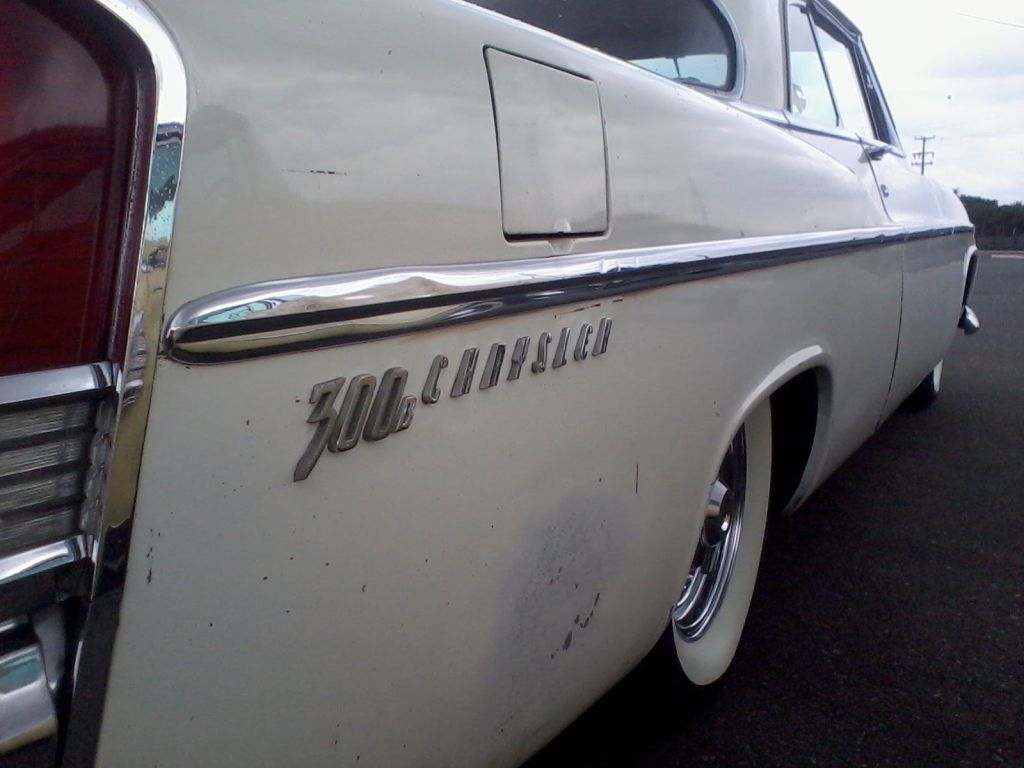
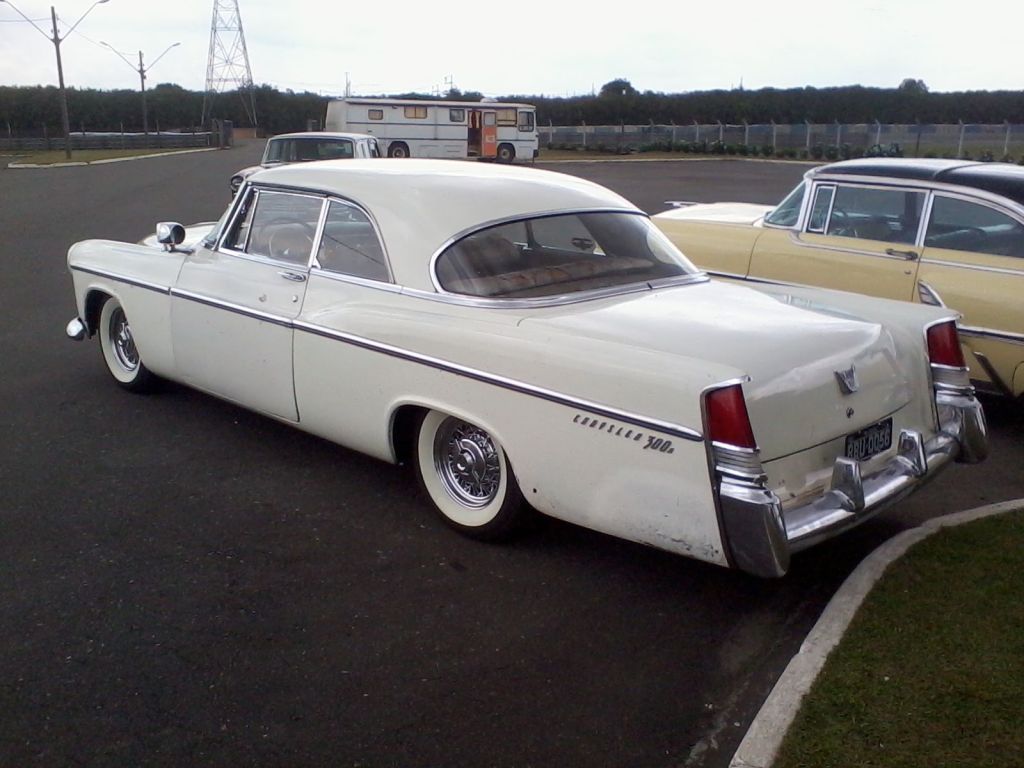
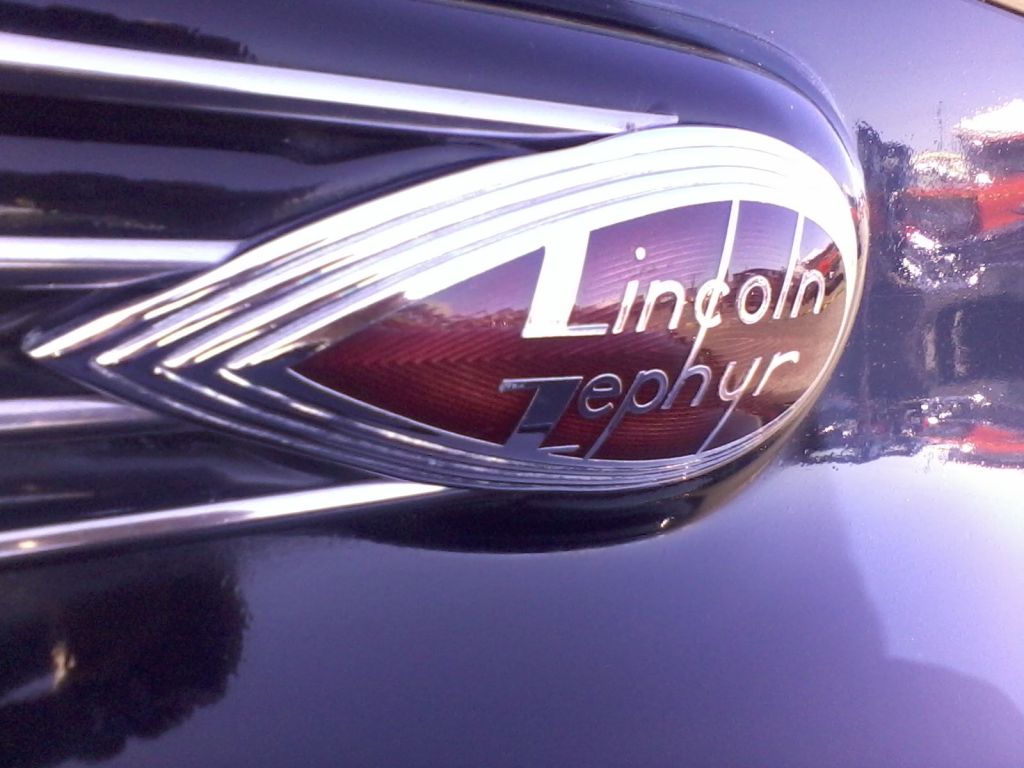
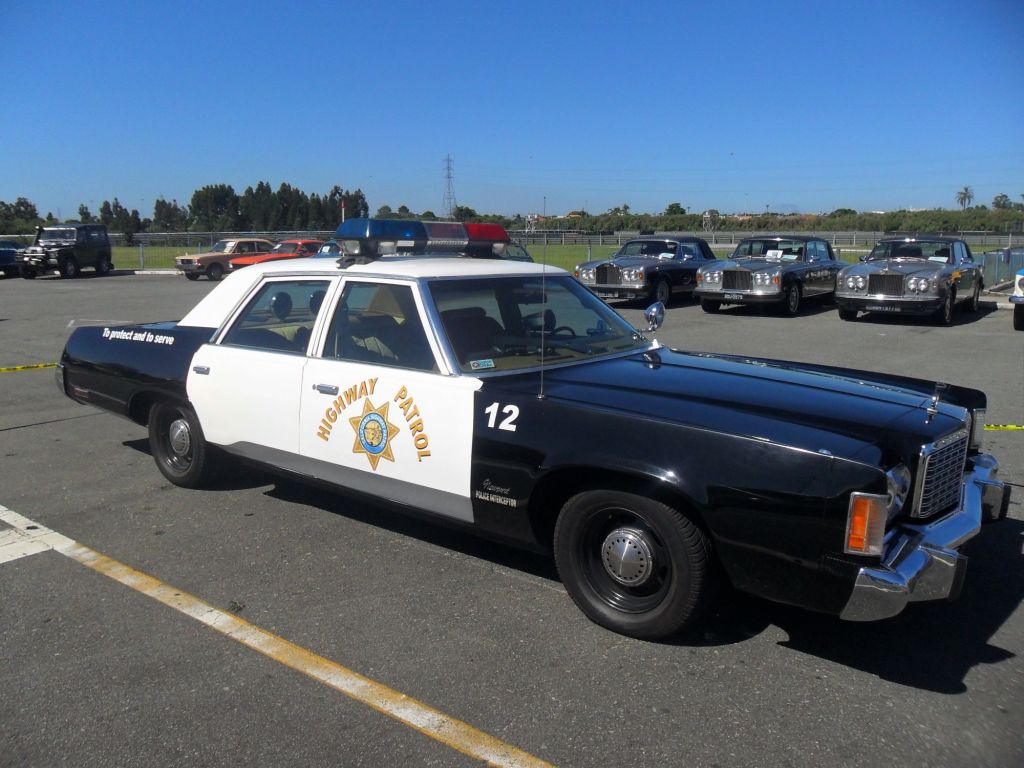
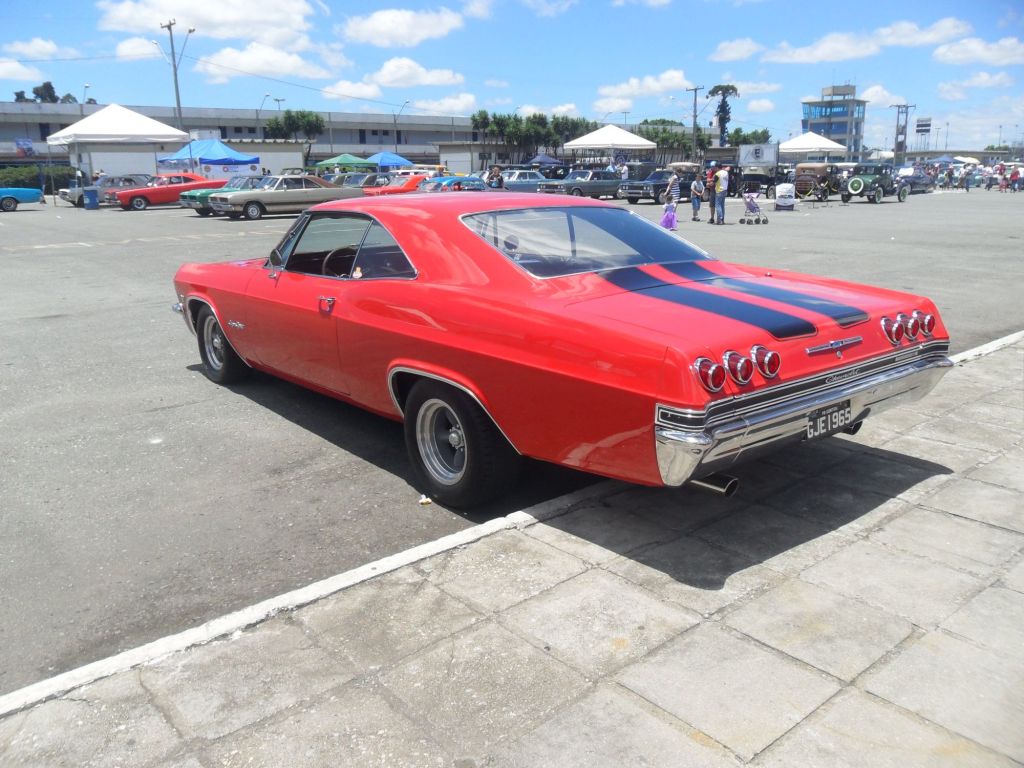
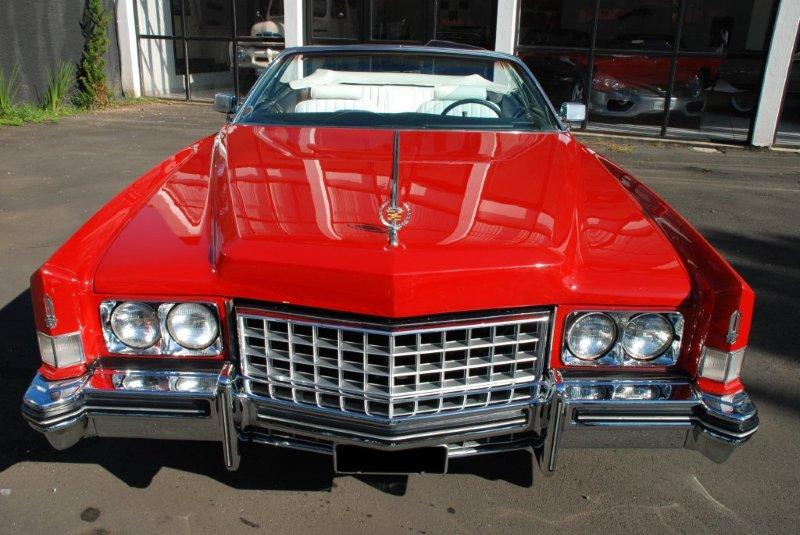
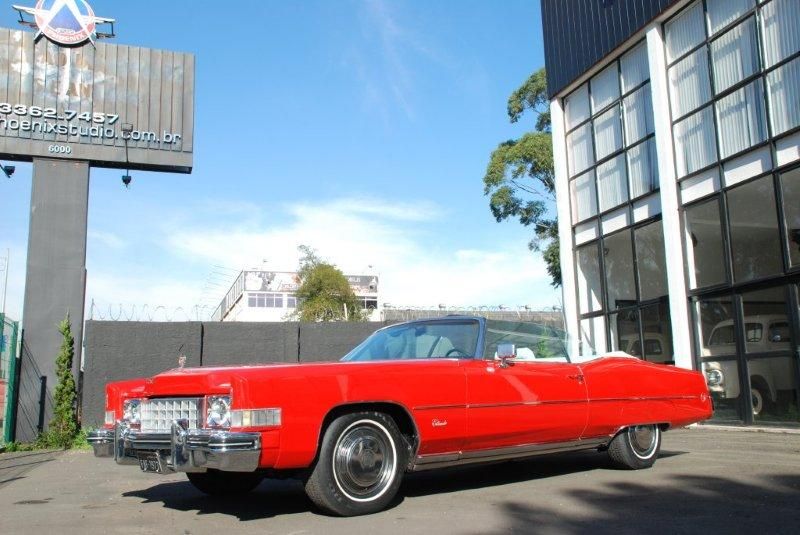
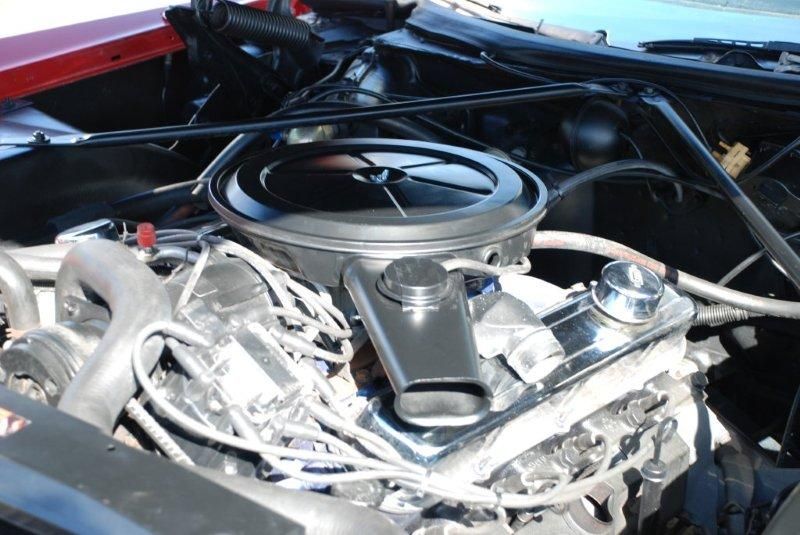
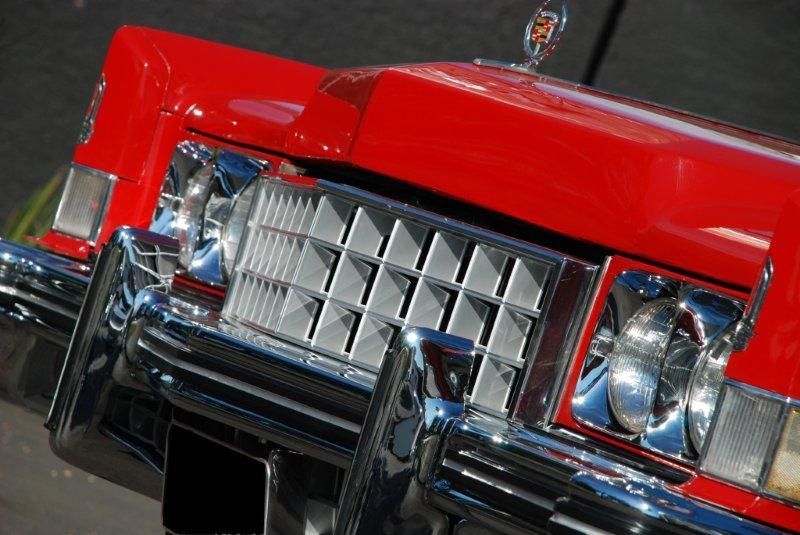
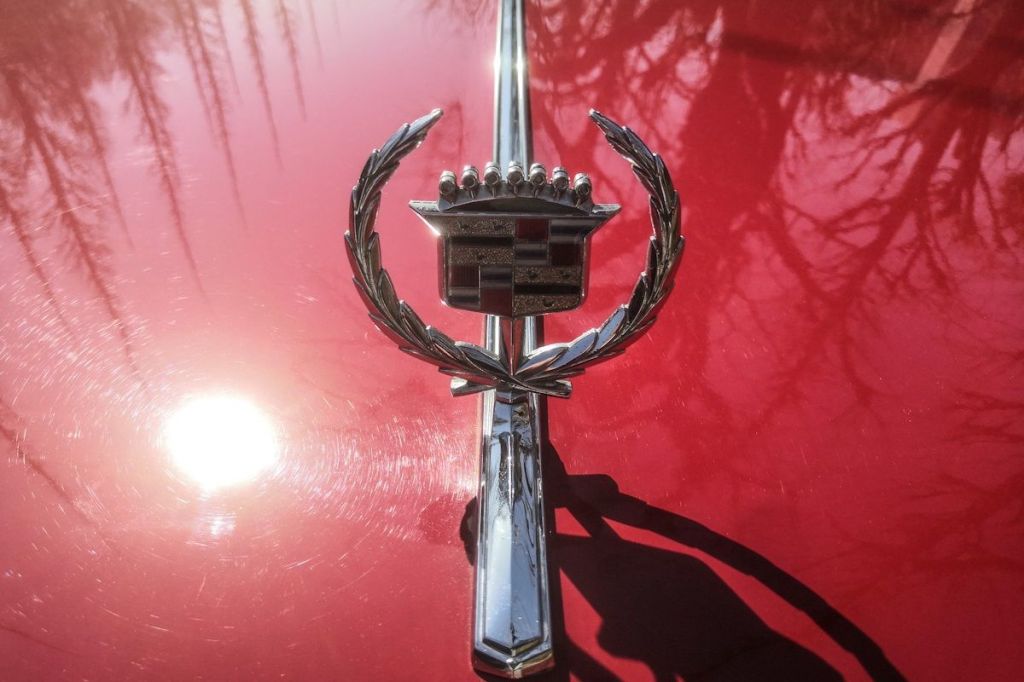
At that moment, there were a couple of Caddys for sale at the shop, but none were convertibles. I told the lady I would talk to my contacts and call her again. I went straight to the boss; after all, he knew every Cadillac for sale in the country. He wrote a phone number on a sticky note and said: “Call this guy; he owns a 1973 Eldorado, and he is trying to sell it. The car is not a Primadonna, but it might be exactly what your customer is looking for.” (Picture above).

I called the owner, and we set the price, including our commission. Then I emailed the customer some pictures and the price asked.

I called her a couple of hours later, and she seemed happy with what she saw in the email. The deal was going in the right direction; the customer was motivated by enthusiasm, and we found a classic car that fit her budget. I told her over the phone:

Me: “When would you like to come and see the car?”

Lady: “I live in São Paulo, I can’t come to Curitiba; you have to bring the car here. I will pay for the expenses.”

OK, now things have got a bit complicated. São Paulo is 400 km from my hometown, Curitiba. Logistics wouldn’t be a problem since Studio Phoenix had a truck to transport the Caddy. Fortunately, our accounting department calculated all the expenses like fuel, truck rental, and payment for the services of the driver and myself for 48 hours. Obviously, the boss charged a little extra, increasing the profits.

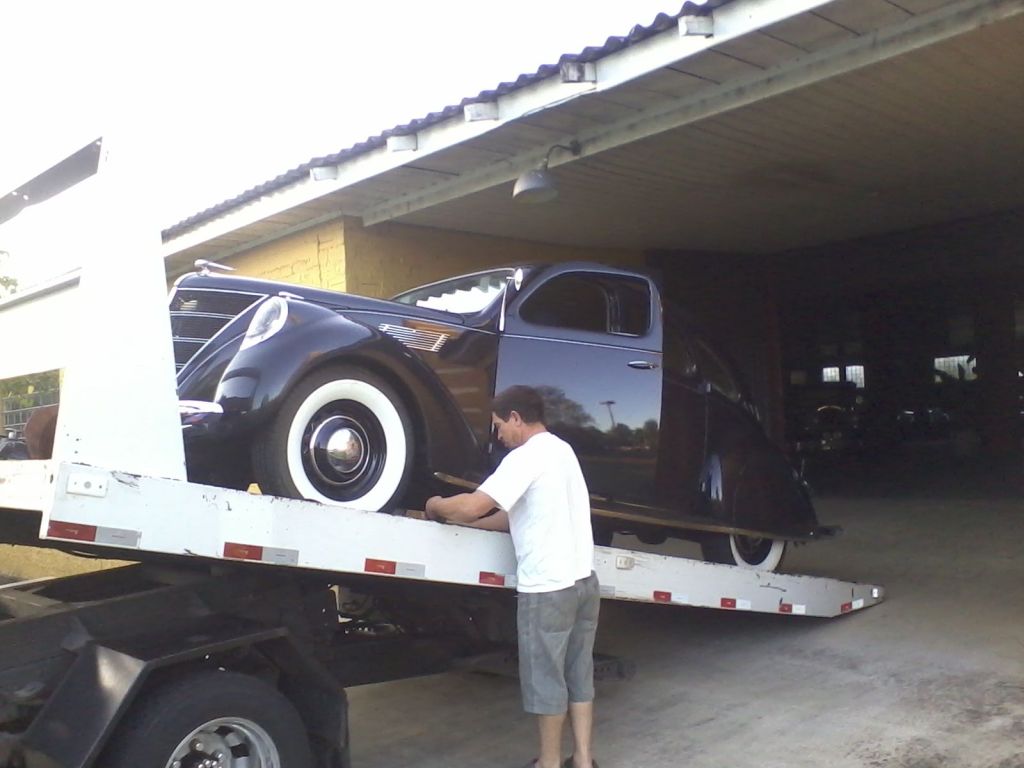
The following day, we loaded the truck with the red Cadillac and also a 1972 Buick Riviera that we would leave at a classic car dealer in São Paulo.

The boss was correct. The Eldorado wasn’t actually a prima donna. The paint job was not too bad, but it was far from showroom quality, and brake fluid was leaking from the cylinder and dripping onto the exhaust manifold. The problem was more than the occasional smoke coming from the engine bay, it was a fire hazard.

Mr. Coelho, our driver, is at work. Here, you can see the 72 Buick Riviera.

When we reached the outskirts of São Paulo, it was almost 5 pm because our driver took his time. He didn’t want to drive the big truck through the city during rush hour, which was understandable. So, I called a local truck driver who is well-known in the classic car/hot rod community to help us. Initially, he didn’t want to come because my boss owed him money. After I assured him that I would personally ensure that our accounting department paid him in full, he agreed to go and pick up the Caddy.

One of many tunnels in São Paulo.

It took us 1 hour and a half to cross the city, which wasn’t that bad, considering it was by the end of the afternoon. I just enjoyed the ride since I wasn’t driving. It was an excellent tour through the mighty São Paulo City.

Passing in front of the legendary Pacaembu stadium.

When we got to the place, I could confirm it was a very high-end apartment building. She opened the gate, and I drove the Caddy into the underground parkade, with the top down; after all, this is the right way to present a convertible to a client.

When I stopped the car before her, she couldn’t hide her amazement: -“Wow! This is the kind of car we only see in the movies!”

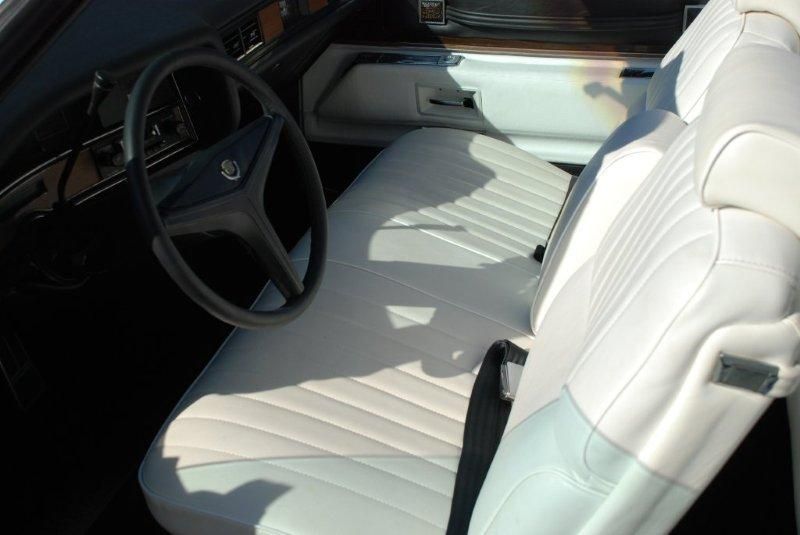
Yes, with almost 6 meters in length, this Caddy is massive, and the bright red colour with white leather interior makes it an imposing car.

Then she asked me to wait for her mechanic to come and inspect the Caddy. “If he says it is a good car, I will close the deal”.

So far, so good.

Fifteen minutes later, not only did one mechanic show up, but a team of 3 technicians arrived. They approached me, shook my hand, and introduced themselves: “Hi, we work for Batistinha; we are here to inspect the Caddy.”

And I thought to myself: “Now I am screwed. This deal will never happen.”

Let me explain: You will hardly find another place where the egos are more inflated than in the classic car universe, and egos get bruised easily. In this environment, it is easier to make enemies than to make friends. As you probably have figured out by now, Batistinha and my boss, they don’t like each other.

They jumped in the car and went for a test drive. The underground parkade was so big they didn’t need to take the car outside. After the driving, they inspect every inch of the Caddy, and while 2 of them were talking to the customer, the third came came to talk to me:

Tech: “We are sorry, dude. But we told the lady not to buy your car; I hope you understand. “

Me: “Don’t worry, I totally understand. You are just doing your job, as I am doing mine. No hard feelings.”

In the end, we all shook hands, exchanged pleasantries and excuses and we left.

Thankfully, the nasty rivalry between the shops doesn’t affect the lower level employees.

I called the boss, telling him the deal was off. He didn’t seem disappointed: “It is all right, don’t worry, Rubens, I told you, the car is not a primadonna. Just don’t bring the Caddy back home; leave it at Siciliano. He might have better luck selling it.”

He was talking about João Siciliano, one of the most traditional classic car dealers in the country. João is a nice guy who didn’t mind opening his shop at 9 o’clock for us to leave the Caddy. Before pulling it into the shop, I drove the Caddy around the block, top-down, feeling like a mafia guy. That was the last time I saw the “Primadonna.”

We returned to the location where our truck was parked, loaded the Riviera onto the town truck, and the driver would drop it off at Siciliano’s shop the next day.

I was tired and starving; it had been ten hours since my last meal. Thank God our driver chose an excellent gas station to park at, with a good restaurant and a clean hotel to spend the night. I asked for rice, beans, steak, and fries. Good Lord, that was a meal to remember.

We talked a lot about the 1973 Eldorado, but here are some details that will make you acquainted with the machine.

It is a big car, with almost 6 meters in length and also pretty heavy with 2.3 ton (5092 lbs). It is powered by a massive 8.2 liter V8 (500 CID) that had been choked by the analog anti smog devices to a meager 235 HP.

Interesting fact, the Eldorado is a front wheel drive car, a detail that I didn’t know back then. I guess we never stop learning.

The deal didn’t happen, and I didn’t get my commission, but it was an interesting experience. It became another good story from the time when I was involved with classic cars.

Feeling generous? Visit my “Buy Me a Coffee” page

The Panoz/Nissan Delta Wing

In the world of motorsport, evolution is constant. If you were to compare a Formula One car from the 1970s to a modern one from the 2020s, the differences due to half a century of technological advances are simply astonishing. However, both vehicles still share some core similarities, such as having four open wheels, a mid-ship engine, and the assistance of aerodynamic components.

But the creative minds of engineers and designers never rest, and occasionally, someone tries to break free from the core concept that defines what a race car should be.

If you ask any gearhead: “What is the craziest race car that ever competed in motorsport?” I bet 9 out of 10 answers will be:  “The 6-wheeled Tyrrel, from the 1970s.”

In fact, the Tyrrel P-34 was the most popular unorthodox race car that ever hit the race tracks. It competed for only two seasons, 1976 and 1977, but that was enough to make it unforgettable.

It looks like a jet fighter

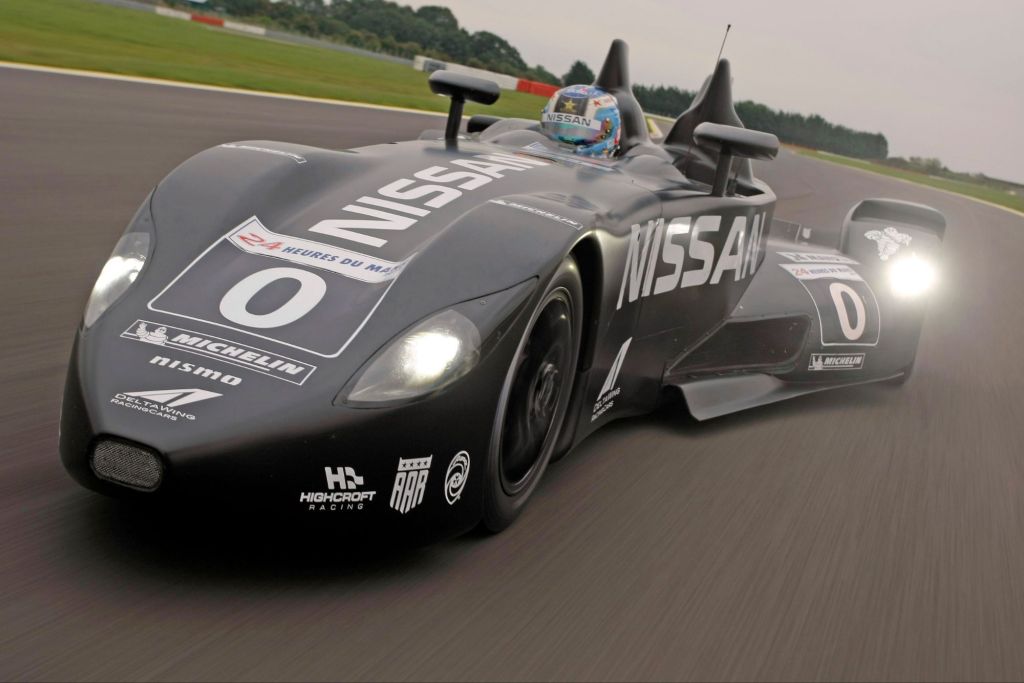
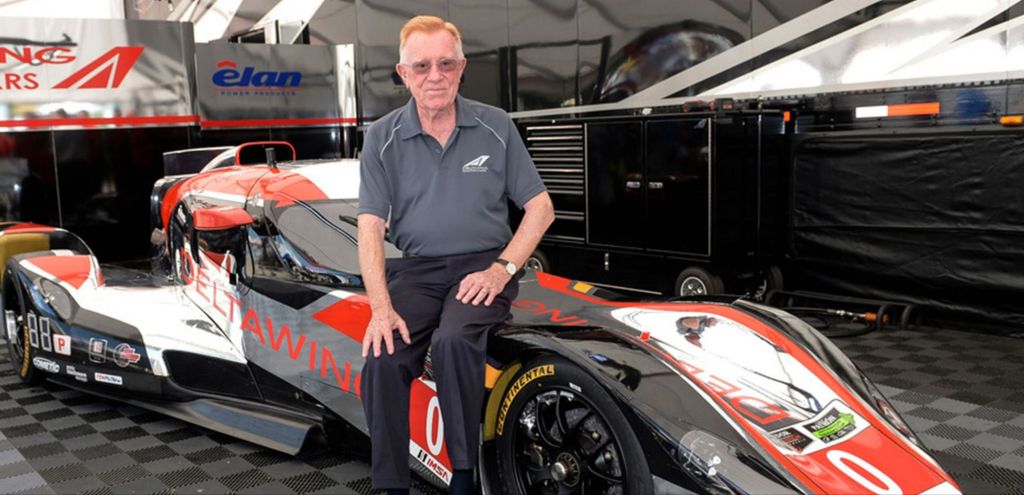
In a more recent era, another ambitious and innovative race car deserves to be remembered, mainly because it never reached the popularity of the Tyrrell P34: the incredible Panoz/Nissan DeltaWing.

The creator of this project is the British race car designer and engineer Ben Bowlby. He is the leading character of this story, a lateral thinker and the leader of his team. Bowlby based his concept on the idea that a much narrower front facia can immensely improve its aerodynamics and make the car a lot lighter.

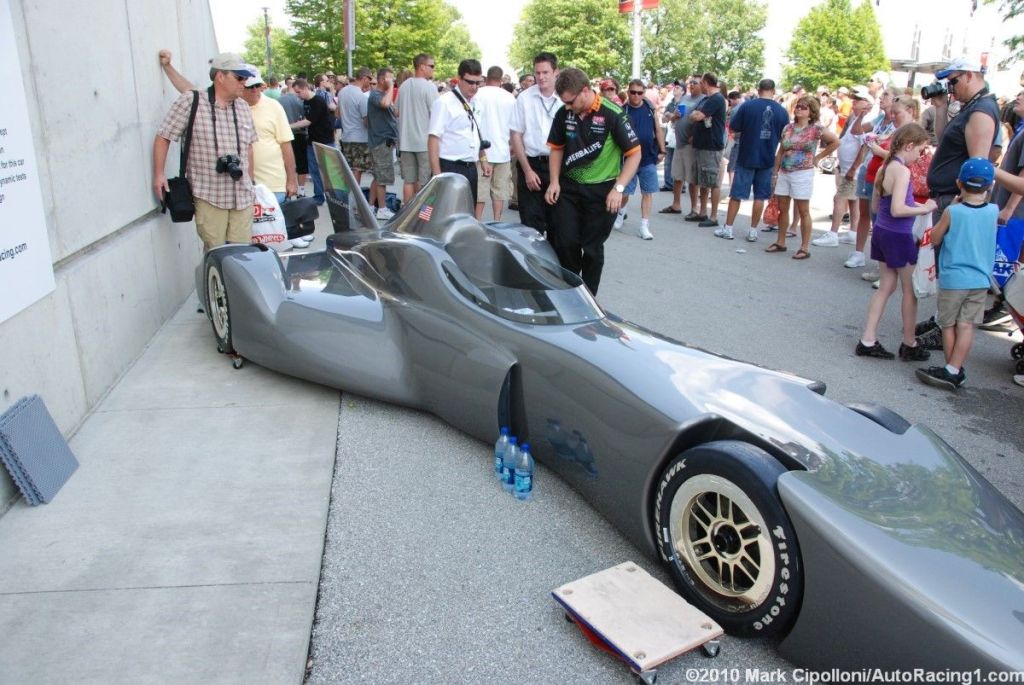
The first real opportunity for Bowlby to see his project become a reality came in 2009 when Chip Ganassi saw it as an attractive new car for the F-Indy. At this time, Formula One and WEC were trying new and revolutionary designs for their vehicles, and F-Indy was slowly opening its doors for something similar. To make the project become a reality, a consortium was assembled: Chip Ganassi Racing, Dan Gurney and his All American Racers team, Duncan Dayton of Highcroft Racing, and Panoz, which was the company that actually built the prototype. The car was presented at the 2010 Chicago Auto Show, and needless to say, the Delta Wing was a success among the visitors. (Picture above)

According to the initial tests, the Delta Wing proved slightly faster on straight and corner speeds than a 2009 Dallara IndyCar on both ovals and road/street courses with half as much weight, engine power and fuel consumption. The original prototype measured an unusually narrow 2.0 feet (61 cm) front track and a more traditional 1.7 meters (5 ft 7 in) rear track. The downforce comes from air passages on the car’s underbody, eliminating the need for front and rear wings. 

Panoz used a chopped Aston-Martin LPM1 chassis to build the car, and it was powered by a 300 hp, four-cylinder, turbocharged Chevy engine assembled by Ray Mallock Engineering.

The Delta Wing was scheduled to debut for the 2012 season, giving the team time for the necessary tests and improvements. Unfortunately, the car proved too radical for F-Indy, and Chip Ganassi decided to use a more conservative project from Dallara.

Next stop: Europe

Bowlby didn’t give up when F-Indy closed its doors on the Delta Wing. Instead, he presented his project to the World Endurance Championship (WEC) in Europe and quickly received an invitation to compete in the Garage 56, an experimental class of the 24 Hours of Le Mans, for the 2012 edition.

The WEC is a place where automakers pour a considerable amount of money to have a spot on the grid; if Bowlby wants to make a splash, he would need a few heavy-weight partners. The first one to jump into the wagon was Michelin; the French tire company fell in love with the Delta Wing and promised to produce the exclusive tires for the car, according to the specifications from Bowlby and Panoz.

Nissan comes on board

The next step in this endeavour was to find an engine supplier with deep pockets, willing not only to provide the drivetrain but also help in developing the entire car and contribute to the costs of participating in Le Mans.

Rumor has it that Michelin insisted on having a French automaker as a partner, and Renault initially answered the call. The only problem was that they were already deeply involved in F-One, and the company’s CEOs decided to pass the project to their Japanese partner, Nissan.

With little tradition in motorsport and not very keen on revolutionary projects, Nissan reluctantly accepted the challenge. The company provided a 1.6-liter, four-cylinder, turbocharged engine found in the Nismo version of the Nissan Juke, capable of producing 350 hp.

Ben Bowlby and his team are at work at the Nissan facility.

Even if the car was being initially developed in the USA, the North America Nissan was not involved in the project. At the Delta Wing’s first test, at Buttonwillow in the California desert in March of 2012, Nissan of Europe brought a few engines, a couple of drivers, and a handful of engineers. They were so concerned about the Delta Wing crashing on the first turn that they de-badged the engines, put all their employees in plain clothes, taped over logos, and denied all involvement.

At the end of the day, the car performed quite well and Nissan felt confident to apply its logo all over it.

Since the Delta Wing would be competing under the experimental Garage 56 (racing for technological advancement, not for points and glory), there was no minimum weight rule to follow, and the team took full advantage of this. Each 4-inch-wide and 23-inch-tall front wheel and tires can be lifted with a finger, literally. The front brake rotors are the same size as those found on mopeds (keep in mind that most of the breaking goes to the rear axle). The team even gave up on the 6-speed transmission for a 5-speed just because it was lighter.

In full race trim, the car checked at just under 1,100 pounds; by comparison, the weight of the 2011 Le Mans-winning Audi R18 TDi was nearly 2,000 pounds.

Ready for Le Mans

The Delta Wing was received with mixed feelings at the La Sarthe circuit. Some people saw the car as exciting and thought-provoking, but others saw it as a laughable, toy-like car.

Among the naysayers, the biggest puzzle was: “How can those tinny front wheels steer the car at high speed?” But guess what? They can. It is the same principle used in drag racing: those tinny front wheels on a top fuel dragster are functional, and they are enough to keep a 10,000-hp beast on the track. It is physics, baby.

On their side, the team believed that a lighter car, powered by a small displacement engine, would give them the advantage of fewer pit stops during the race.

Nissan hired three excellent drivers but they had little experience on long duration races : Marino Franchitti (Scotland), Michael Krumm (Germany), and Satoshi Motoyama (Japan). The team was afraid that the drivers would not qualify during the night trials but to everyones relief, they did. On the day before the start of the race, Bowlby was optimistic:

“We might surprise some people. We know the car can be very fast, we know it is very efficient and we know it races extremely well in traffic amongst other cars.“-

Darren Cox, the general manager of Nissan Europe, was also excited:

“The Delta Wing is the most innovative and ground-breaking motorsport concept of its generation. The team aims to complete the famous endurance race using half the fuel and half the tire material of a conventional LMP race car.”-

Nissan wasn’t shy anymore trying to associate itself with the project. They brought hundreds of “extra” journalists to Le Mans, and immediately the Delta Wing became the star of the show.

For a revolutionary car that was developed in such a short period, the Delta Wing was performing surprisingly well in the race. Even with constant gearbox hiccups, the drivers were clocking solid lap times, just 1 sec below the LMP2  prototypes.

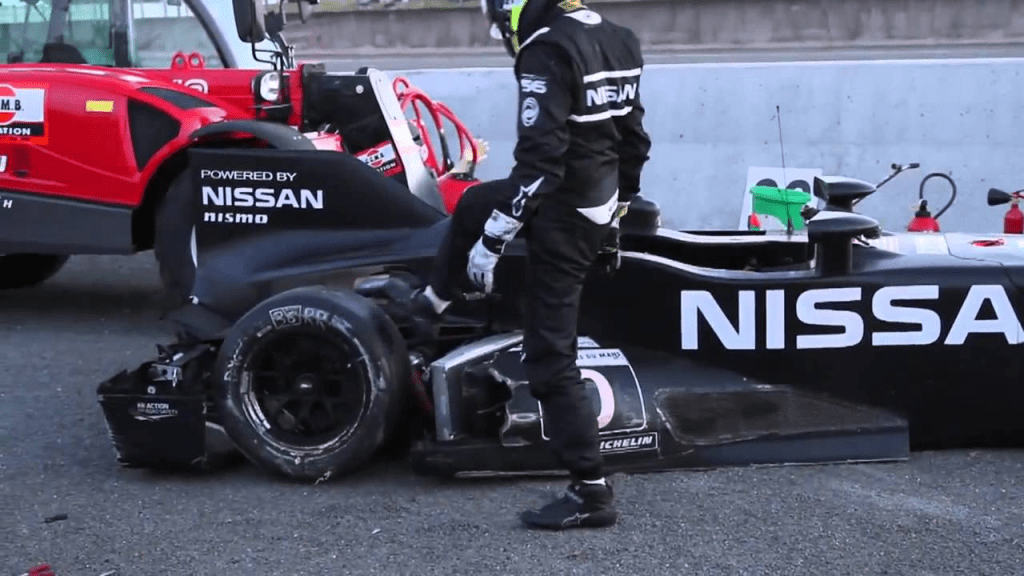
The Delta Wing made past the first 6 hours of the race, and the team was thrilled, but all that happiness wouldn’t last much longer. Nakajima, driving the #7 Toyota LMP1, pushed the Delta Wing off the track while trying to avoid slower traffic ahead, and Satoshi Motoyama crashed the Nissan prototype against the barrier. 

According to the rules, a driver can try to make his car mobile again and drive it to the pits, but he must do it on his own. Motoyama attempted to repair the Delta Wing using the tools handed to him through the fence, but after more than 90 minutes, the tenacious Japanese driver gave up in tears.

The team left Le Mans with the bitter taste of defeat in their mouths, but in fact, their performance was superb. The Delta Wing was consistently clocking good lap times, and if the crash hadn’t happened (assuming the car would hold itself together throughout the race), it should have finished among the top LMP2 cars while burning half the fuel. Not too shabby for a project that Bowlby himself qualified as “incomplete.”

The next challenge for the Delta Wing was the 10 hours of Road Atlanta of 2012. The other teams shifted the way they saw the car; from a laughing stock at the beginning of the year, it became an “unfair.competitor. The team had to follow unique rules, imposed to make the other teams happy.

For instance, the Deltawing had to start from the pit and could not start at the front of the field under full course yellow. Despite the obstacles, the team finished in fifth place overall. Driver Lucas Ordonez lamented that the restrictions and regulations prevented him from fighting for P1.

The shattered dream.

The alliance between Bowlby, Panoz, and Nissan began to crack just when the Delta Wing was at its top.

Bowlby believed that he had accomplished his mission. He demonstrated that his idea worked as he had predicted and hoped that the Delta Wing would motivate other engineers to think creatively. He was now ready for a new challenge.

Don Panoz saw the moment in a totally different way; he was the one who invested heavily to make the Delta Wing a reality, and now he wanted to make some money supplying the car to other teams. Bowlby was the father of the project, but Panoz owned the intellectual property of it. At this point; Don didn’t need Bowlby’s approval to turn the Delta Wing into a commercial success.

Nissan was in an uncomfortable position; they supplied the engine that powered the car at Le Mans and Atlanta (and a lot of stickers, too), but that wasn’t enough to claim any right to the project. Nissan knew that Panoz wanted to cut ties with them, giving their customers the freedom to choose whatever powertrain they wanted. As one could easily predict, this divorce was just about to turn sour.

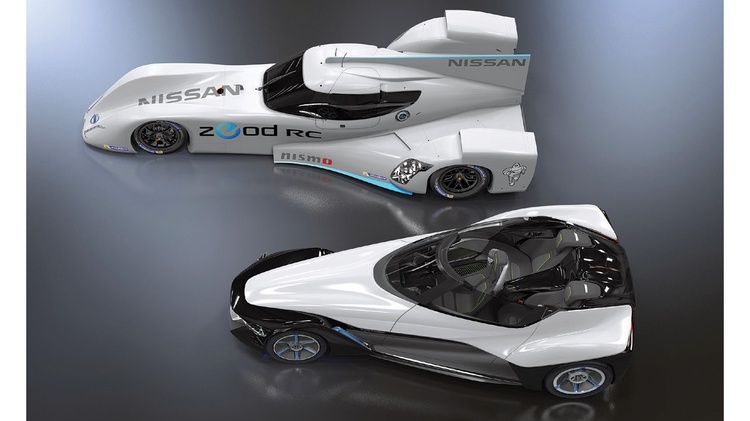
Nissan managed to hire Bowlby as Director of Motorsport Innovation, and together, they created a closed cockpit version of the Delta Wing, called Nissan ZEOD RC (zero emission on demand – race car), powered by a hybrid powertrain.

The ZEOD had a much better performance and fuel efficiency than the original Delta Wing. Nissan entered the car in the 2014 24 Hours of Le Mans, and during practice, the car consistently reached 300 km/h plus going down the Mulsanne Straight. During the race, the ZEOD even completed a lap using only electric power.

Unfortunately, the car didn’t live up to expectations; the gearbox failed on lap 5, forcing its retirement.

The ZEOD project seemed promising, and Nissan wanted to expand it to the streets. A couple months after the release of the racing model, the company unveiled a small Delta Wing urban car with similar hybrid technology called Blade Glider.

Don Panoz couldn’t believe that Nissan had spent so much money and effort on a project with a design that belonged to someone else. Just a day after Nissan unveiled the Blade Glider, Panoz filed a lawsuit naming Ben Bowlby, Darren Cox, Nissan Motor Co. Ltd., Nissan Motorsports International Co. Ltd., Nissan International S.A, and Nissan North America Inc. as defendants.

The court battle dragged on until 2016 when both parties reached an agreement, and that was the end of the Nissan badged Delta Wing.

Final thoughts

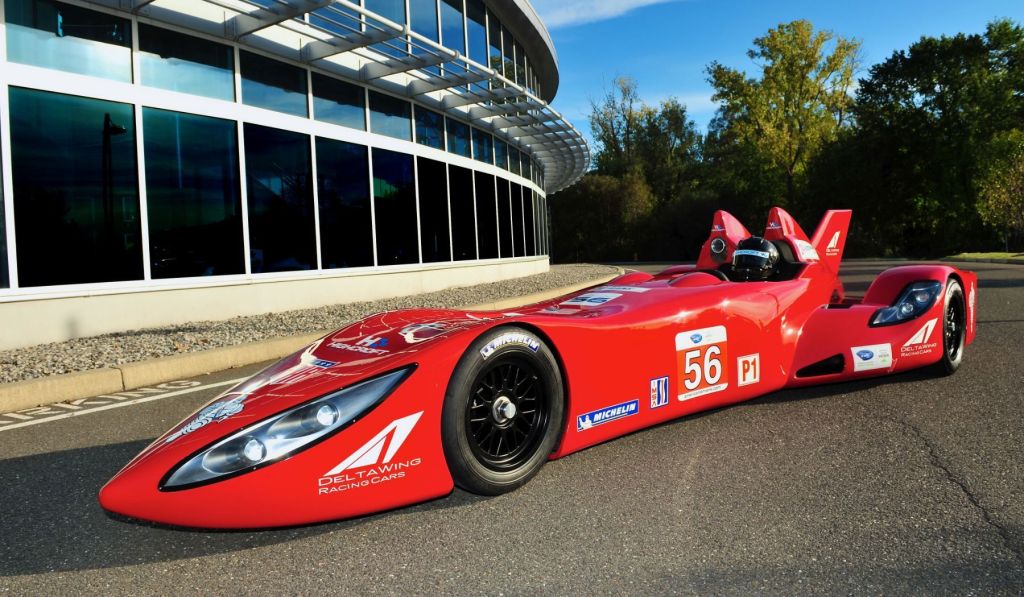
2016 was also the last year the DeltaWing hit the race track (picture above). Panoz kept the dream alive for as long as he could, racing the car in the Petit Le Mans North American league and IMSA, but the lack of interest from other teams forced them to abandon the concept.

Don Panoz

Don Panoz was passionate about the Delta Wing, but he had to come to terms with its demise. He invested a considerable amount of money to transform it into a successful race car, but money was never a problem for him. However, the world of motorsport can be quite traditional, and not all unconventional ideas are entirely accepted.

According to some sources, Nissan had the chance to acquire the rights to the Delta Wing from Panoz for $60 million, but instead, they chose to have it for free. The company missed out on the opportunity to have a truly groundbreaking urban car, but it’s unclear whether customers would have embraced it.

Ben Bowlby

After leaving Nissan in 2017, Ben Bowlby returned to the UK and became involved in numerous other racing projects. There are rumors that he can not visit Georgia, USA, the home state of Panoz, due to pending criminal charges.

In the pits, nobody felt sad to see the Delta Wing gone. It always raced under the #0 as an experimental car, and as such, it didn’t have to obey strict rules like the other prototypes. It was unfair to the other teams, even though the Delta Wing never won a race.

Are there any survival cars? You bet. The chassis #003 can be seen hanging on a wall at the Panoz headquarters in Georgia, and a complete car (chassis #001) was up for sale in 2018 for $375,000. (Picture above).

Sergio’s Pictures – Part II: São Bento do Sul, 2024

Once again, my dear cousin, Sergio D. Florentino, visited São Bento do Sul in Brazil for the 19th edition of the traditional classic car meeting on July 6 and 7, 2024.

This is our TCM correspondent in Brazil, Sergio D. Florentino.

Sergio sent me hundreds of pictures of the meeting, and I decided to make a video with the best shots.

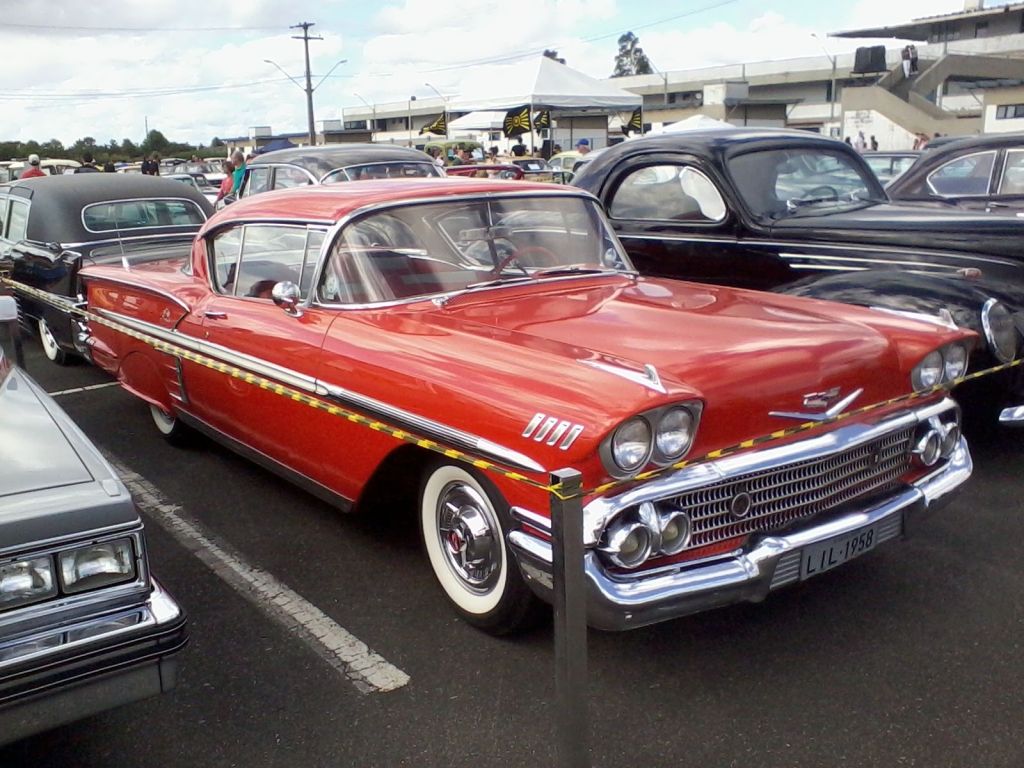
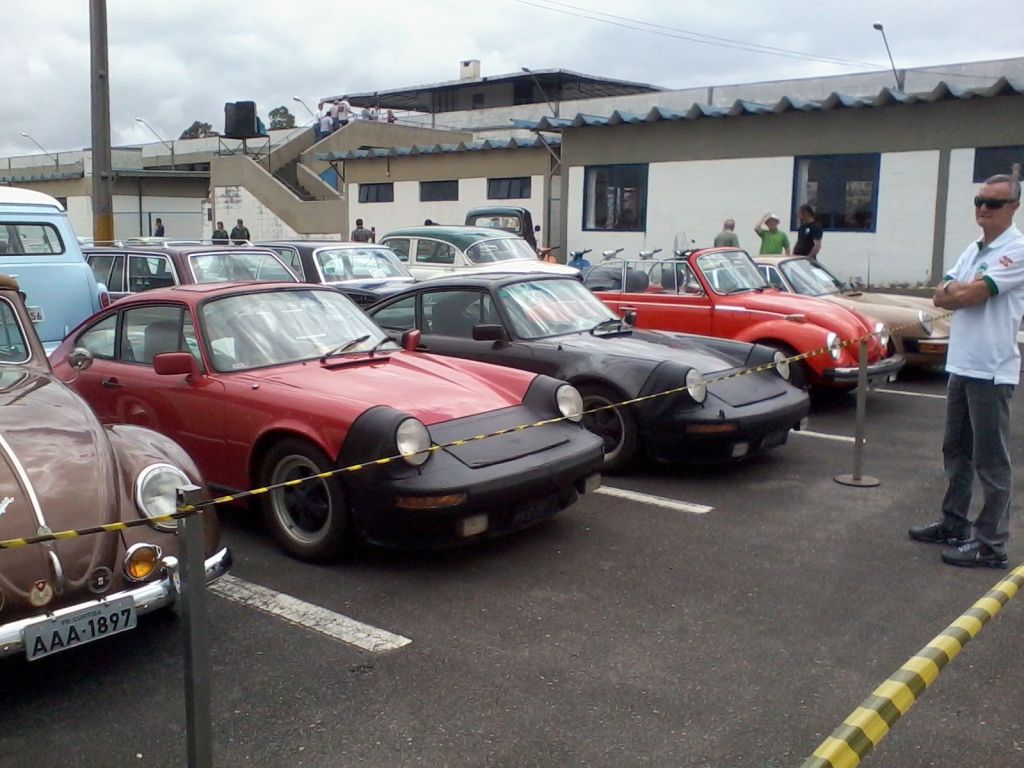
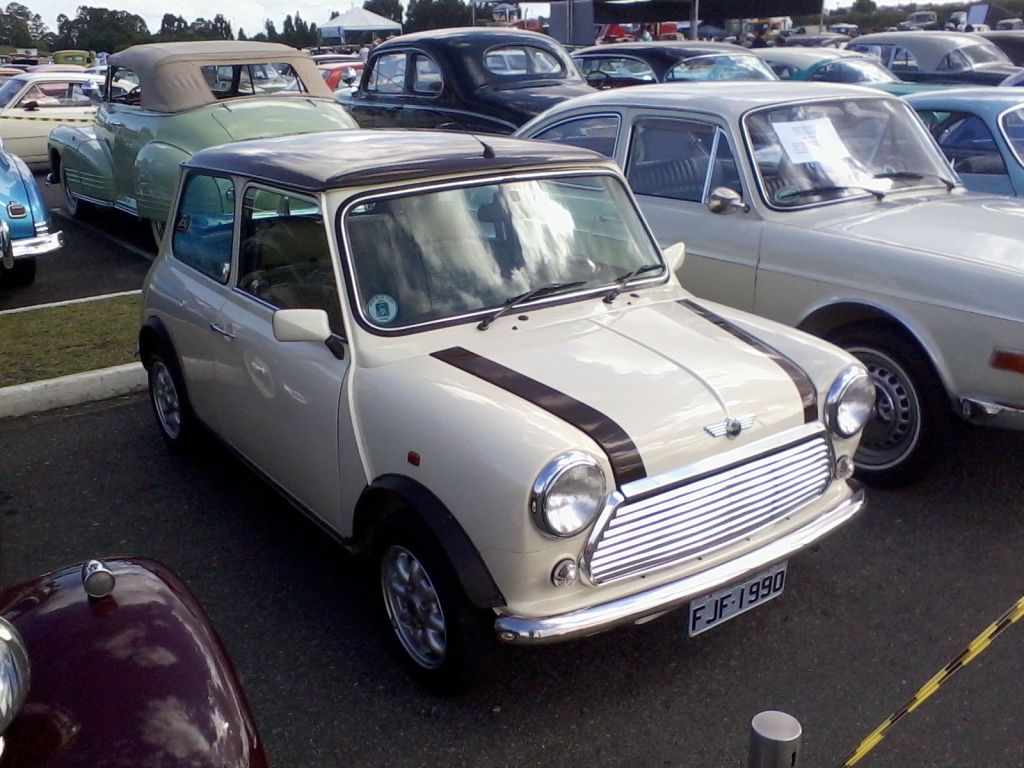
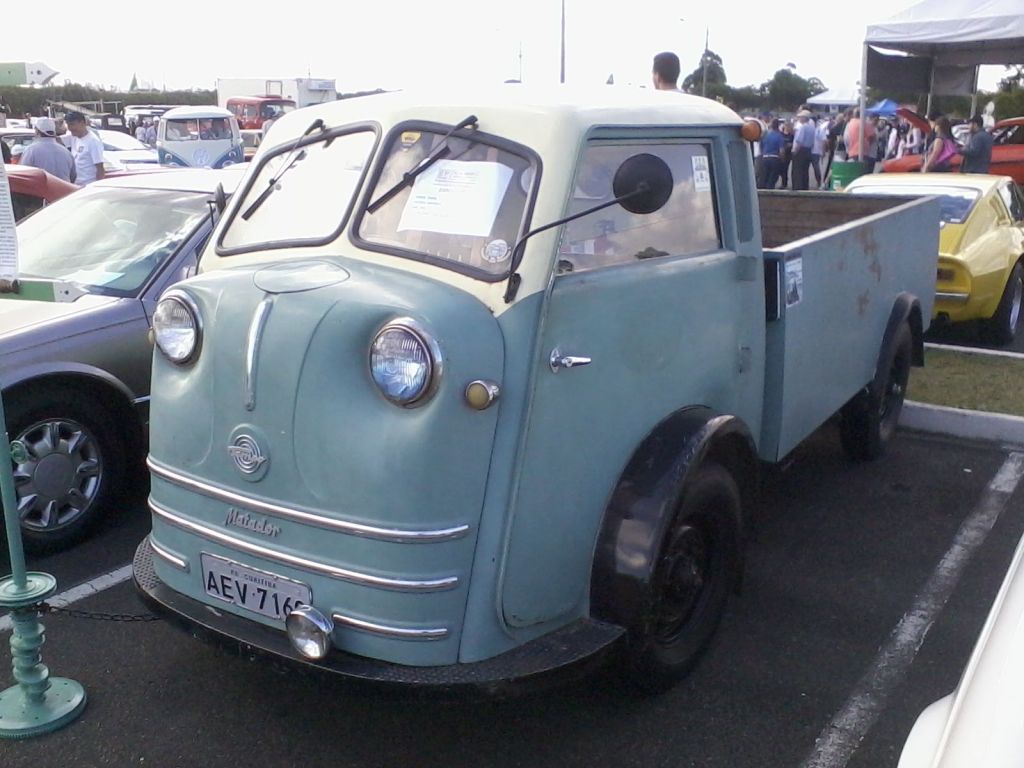
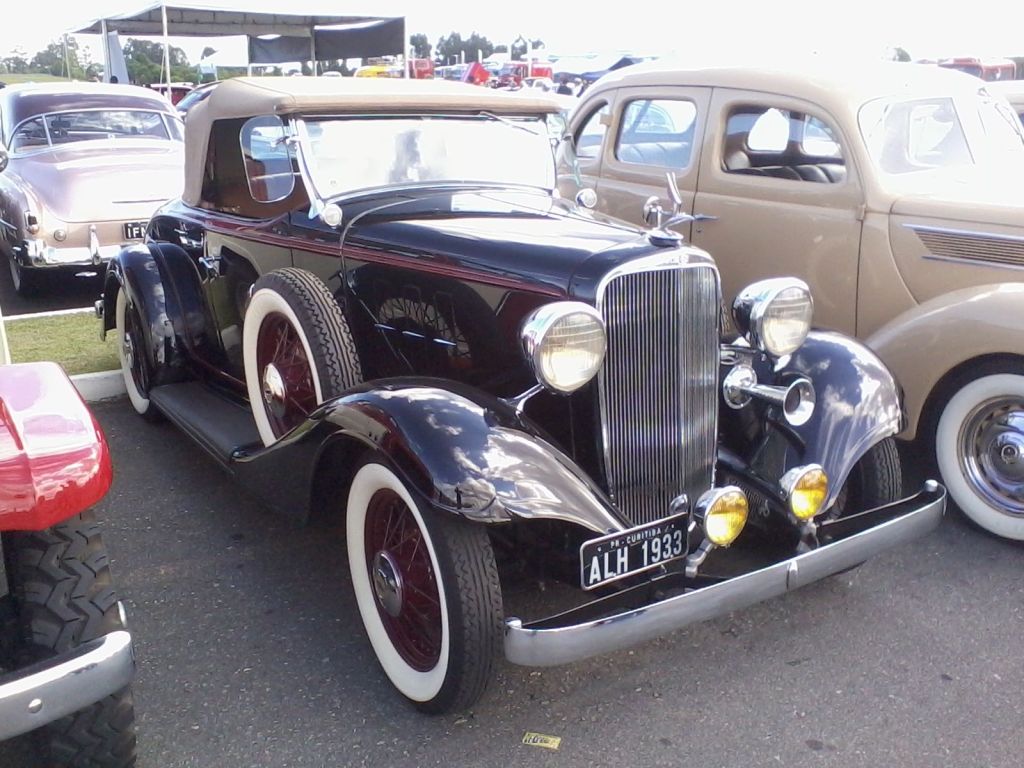
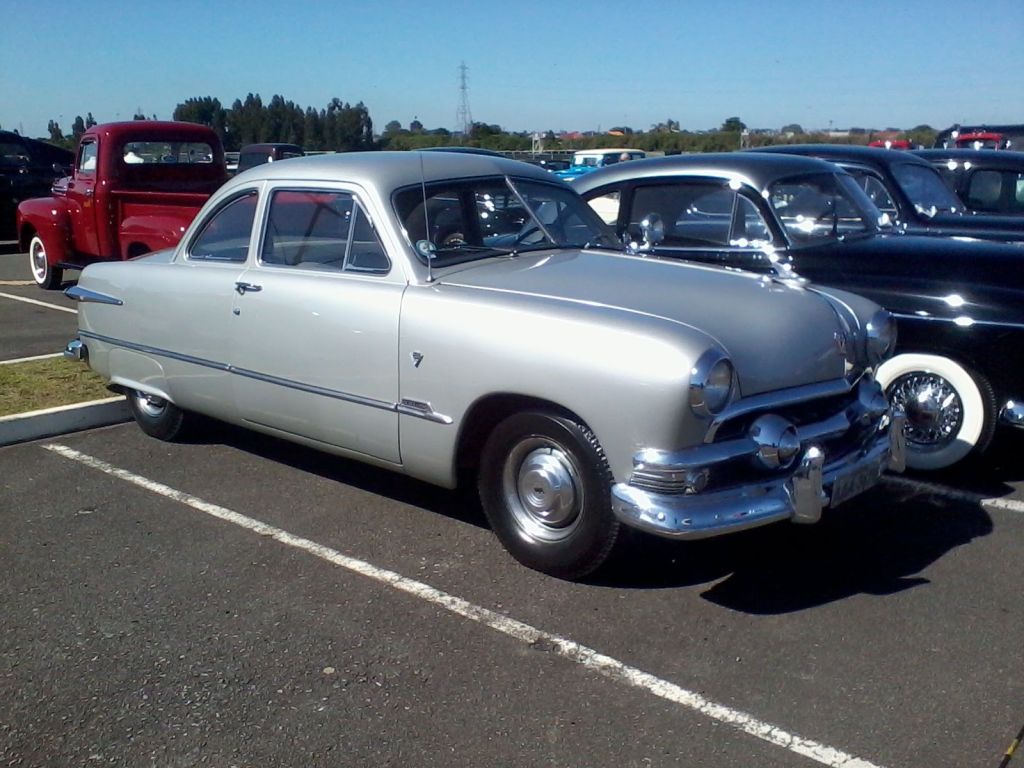
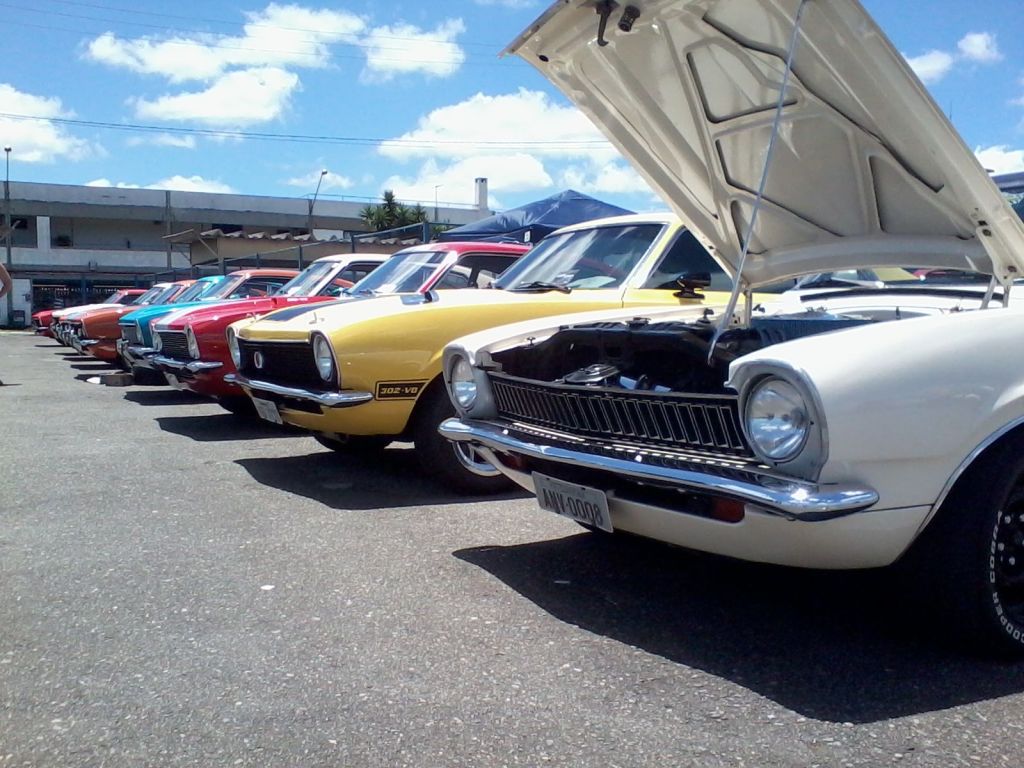
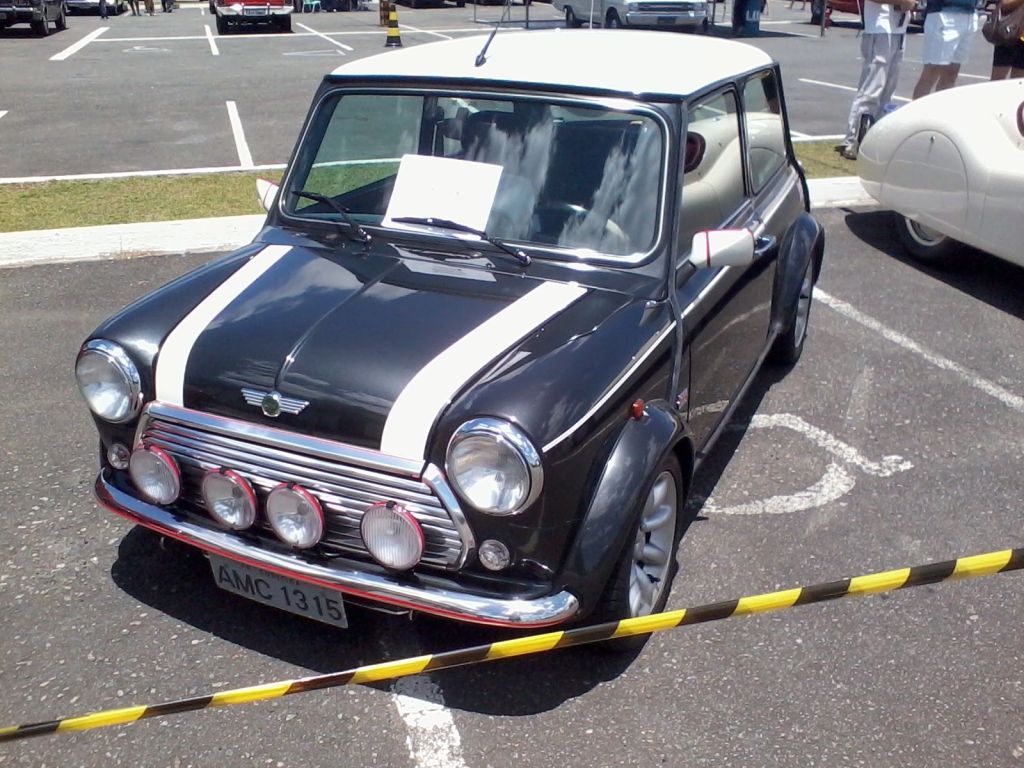
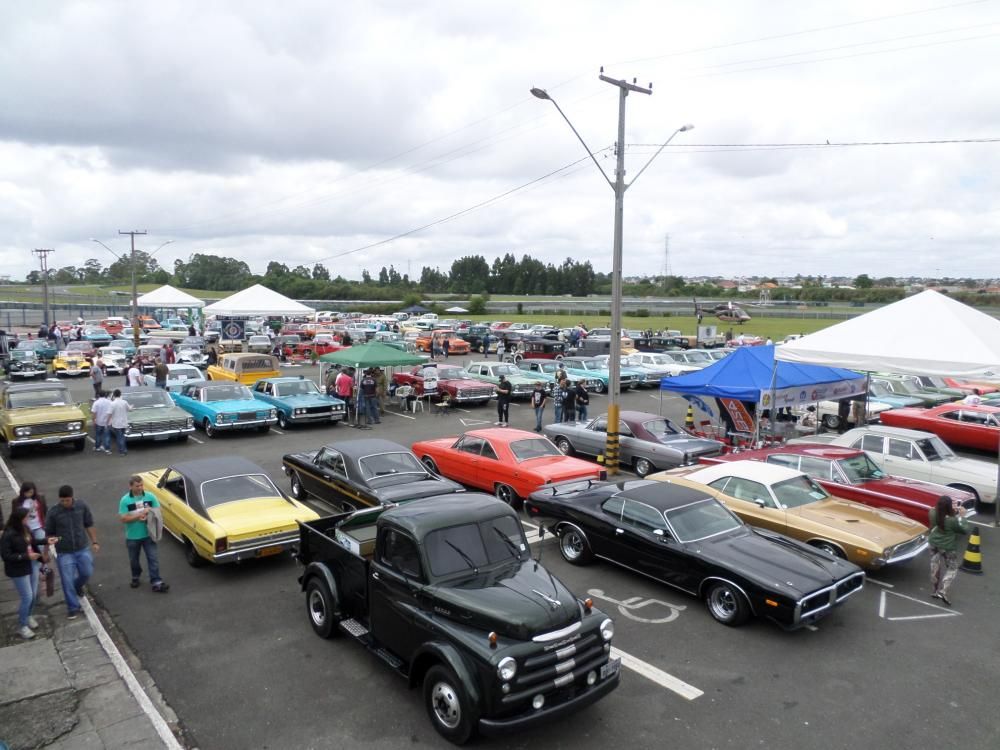
The majority of the cars there are products of the Brazilian automotive industry from the 1970s to the 1990s. They represent the most affordable segment in this hobby, but the prices are getting higher every day as they are becoming more scarce in the market.

I had a hard time choosing the pictures for the video, and perhaps it might be a bit too long, but I hope you will enjoy it.

Thanks for stopping by, and stay tuned for the next meeting.

Sergio’s Pictures – Part I : São Bento do Sul,  2019.

It has been almost ten years since my wife and I moved from Brazil to Canada; time really flies, even when you’re not having fun. Although I am far from the Brazilian classic car scene, my cousin, Sergio Devens Florentino, keeps me updated on every gathering he attends and regularly sends me pictures. After all these years, I have a good collection of images, and it would be a shame to keep them collecting dust on my hard drive; it’s high time to organize and publish them.

Sergio is a passionate car guy who owns a small collection of Brazilian classics. I consider the guy more than a cousin, for me, he is like a brother from a different mother.

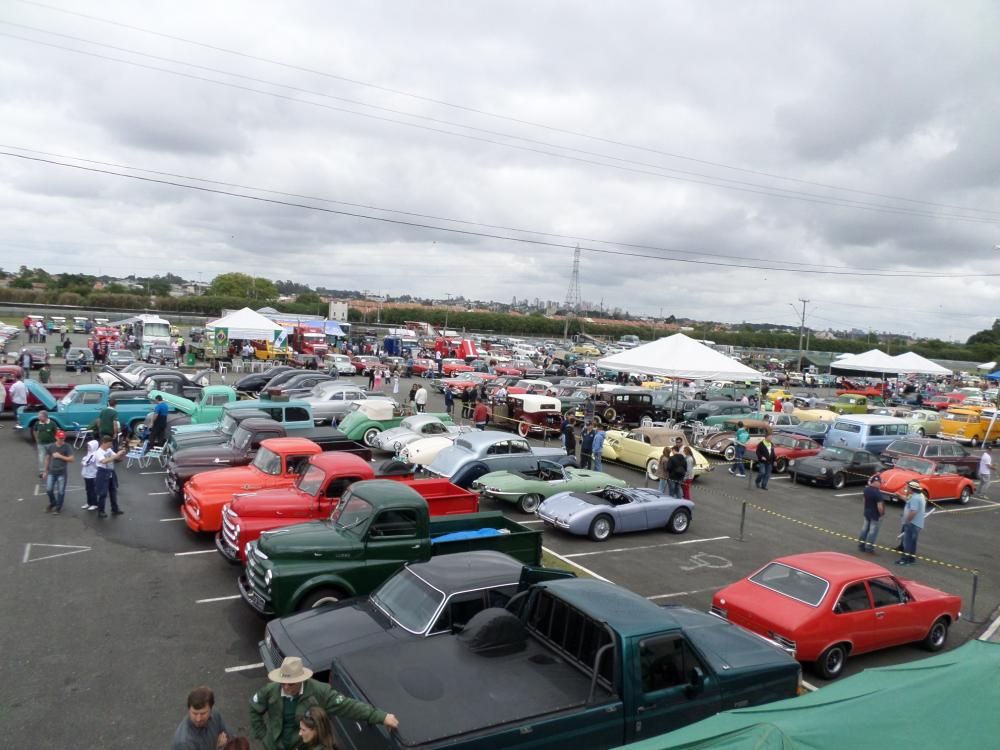
This first part is about an event that took place in 2019 in São Bento do Sul, which is located 110 km from our home city, Curitiba.

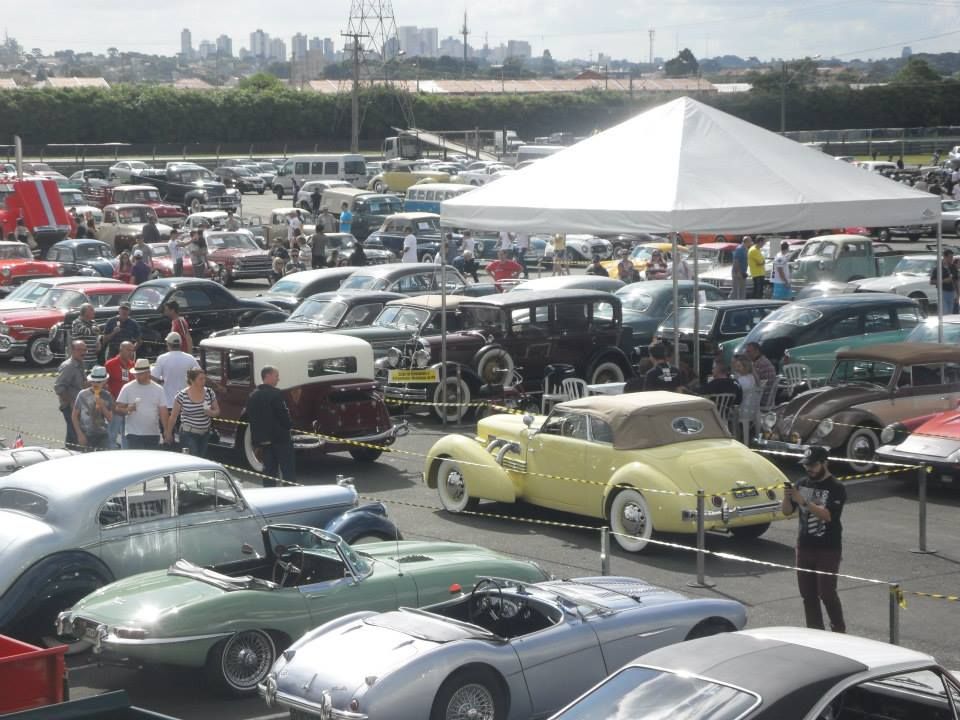
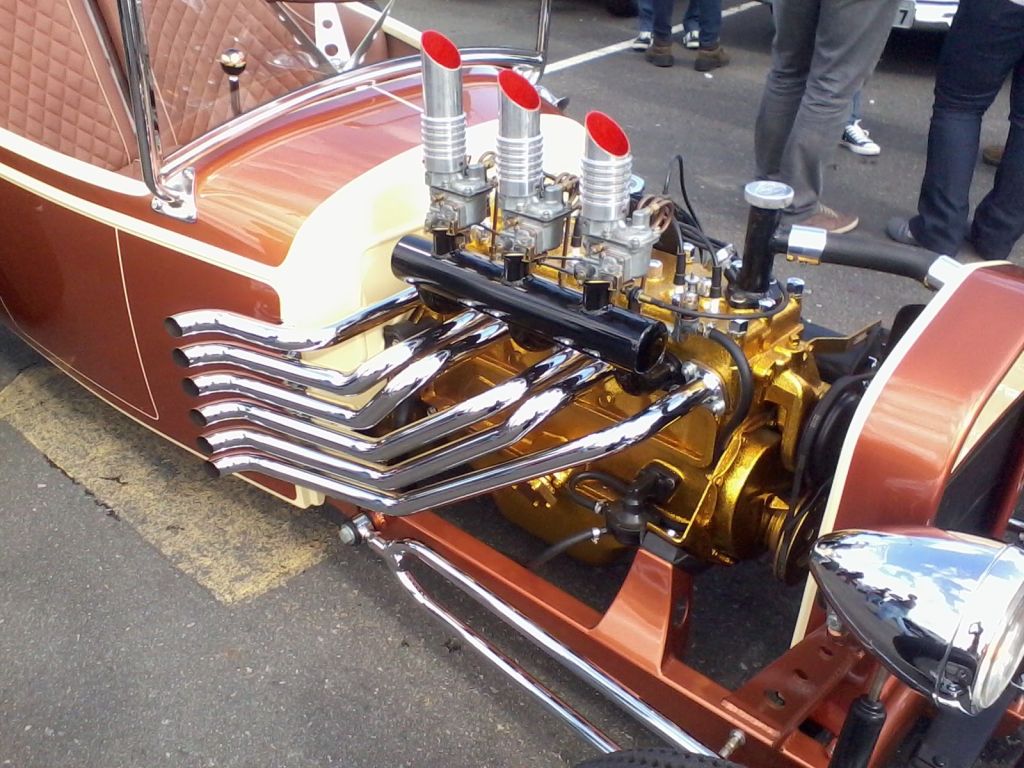
The parade of classics started even before getting to the meeting. Here are a few hot rods refuelling their thirsty V8s

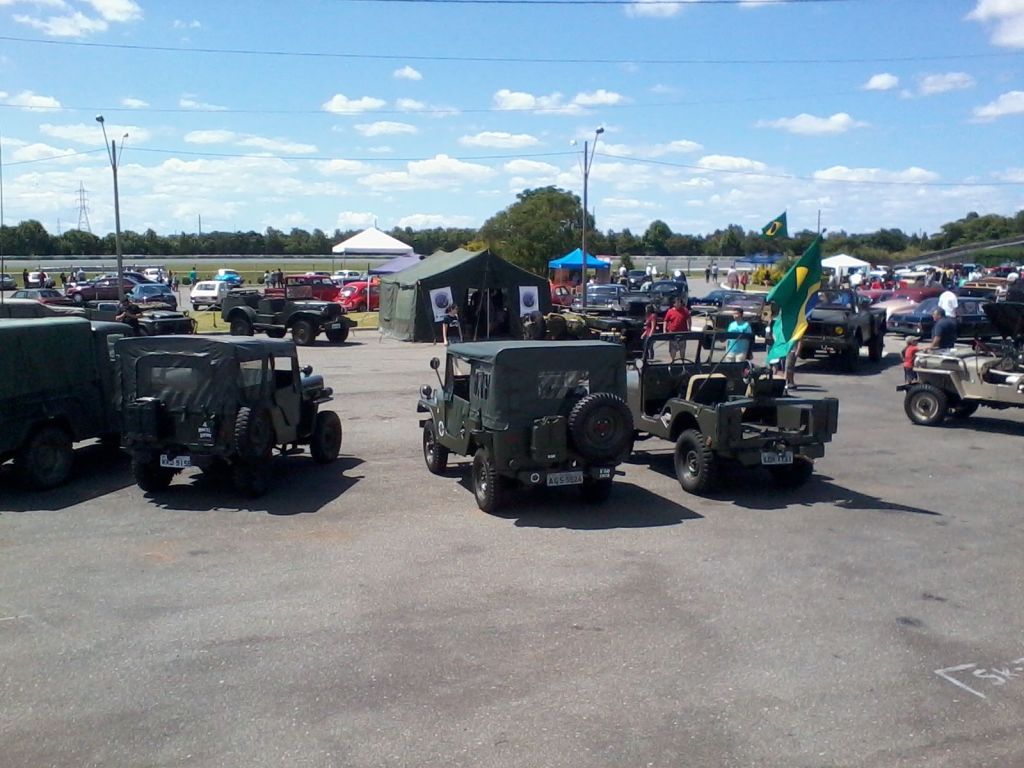
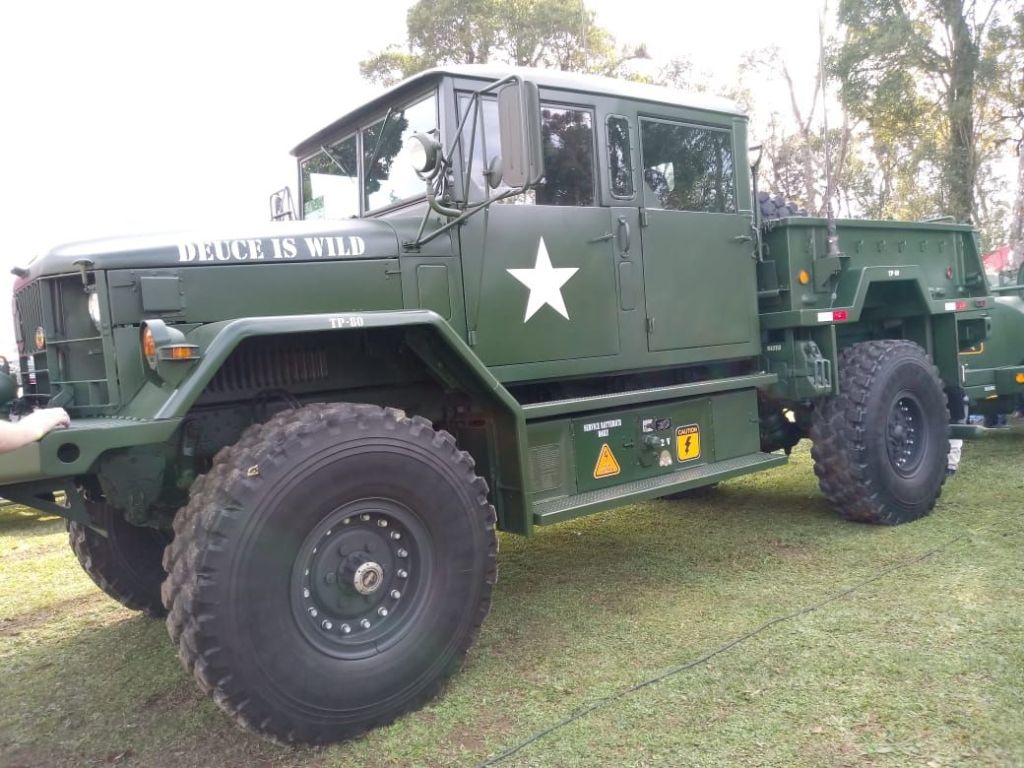
Vintage military vehicles are a big part of any classic car event in Brazil.

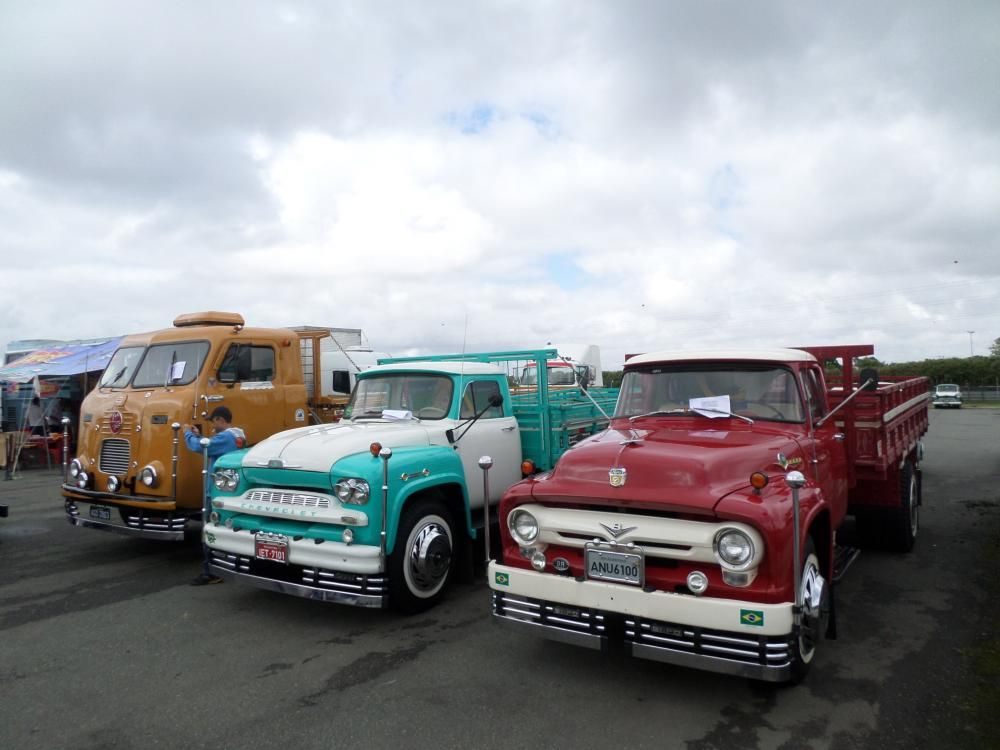
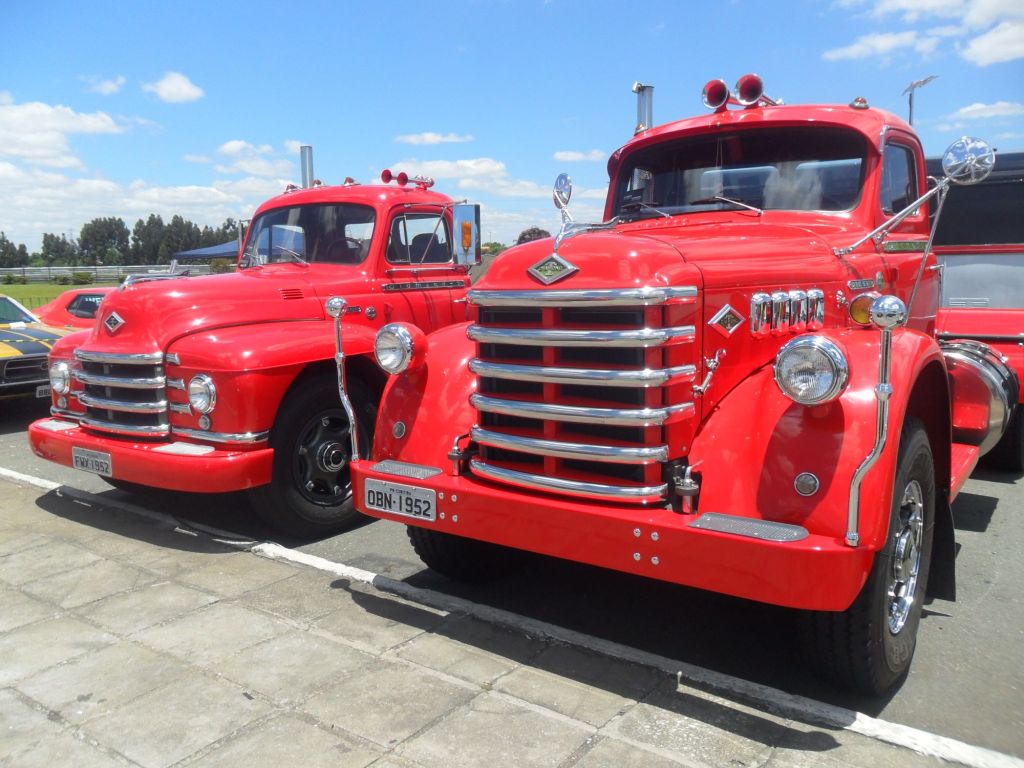
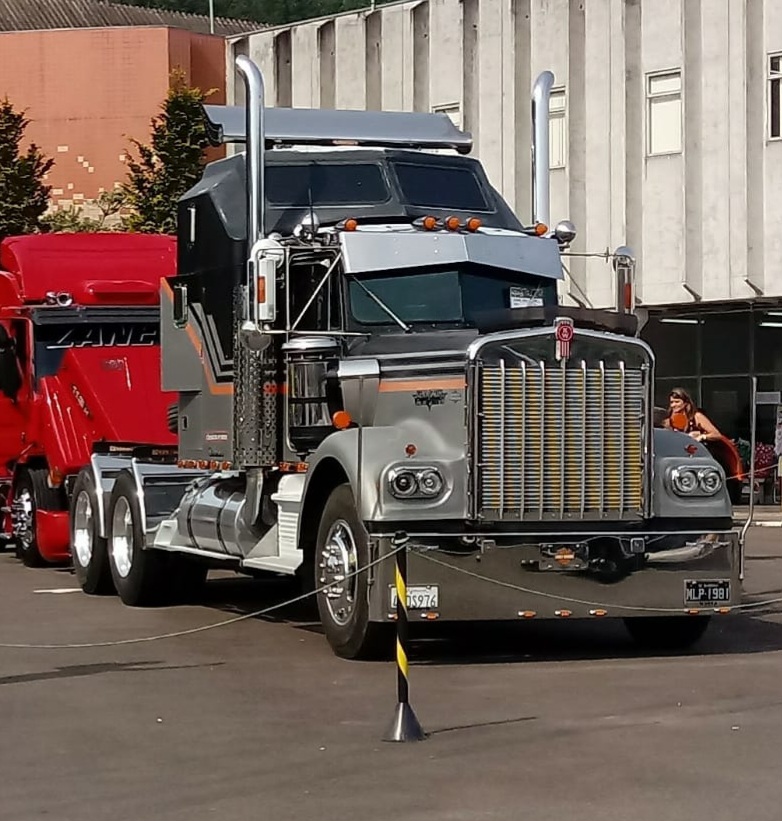
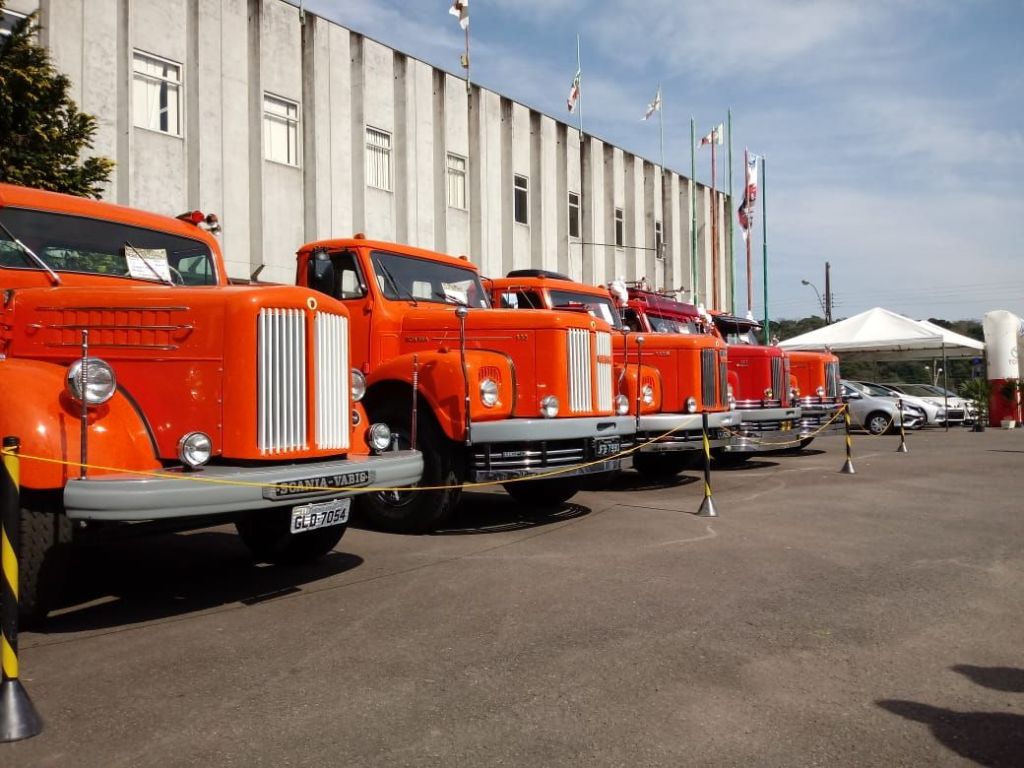
The truck culture in Brazil is strong, and naturally,  our passion for vintage trucks is also strong.  Here is a beautiful collection of Scania-Vabis L75.

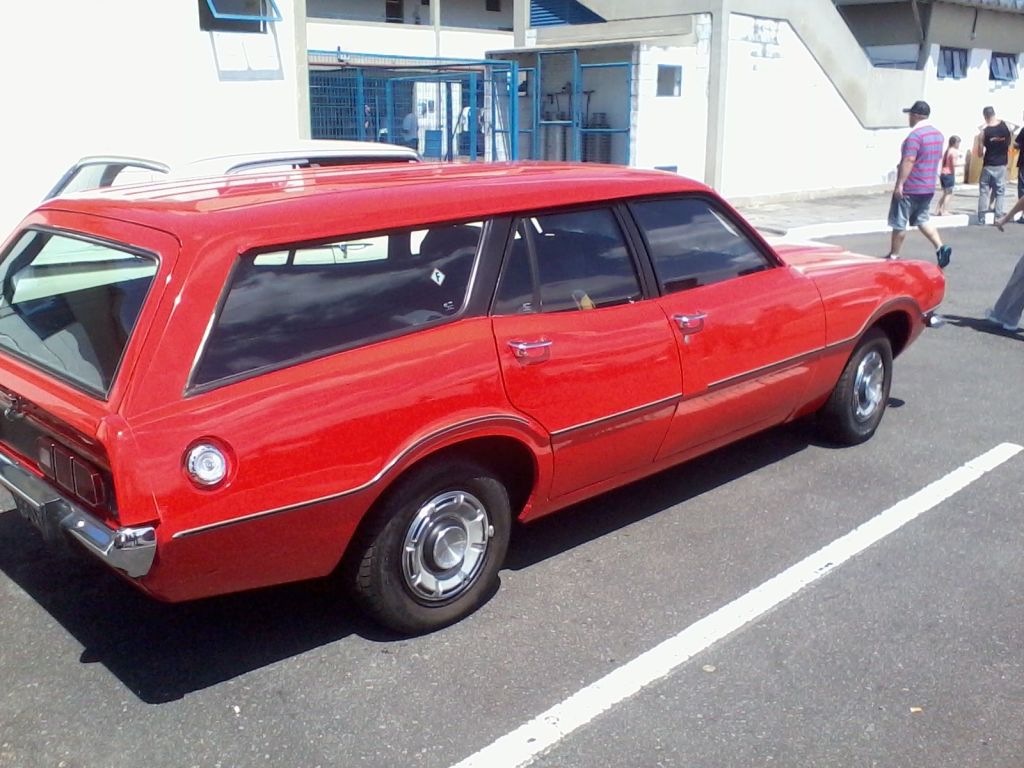
A 1971 VW Variant station wagon. The Brazilian version of the Squareback.
The event was a success.

Sergio at work, taking pictures.

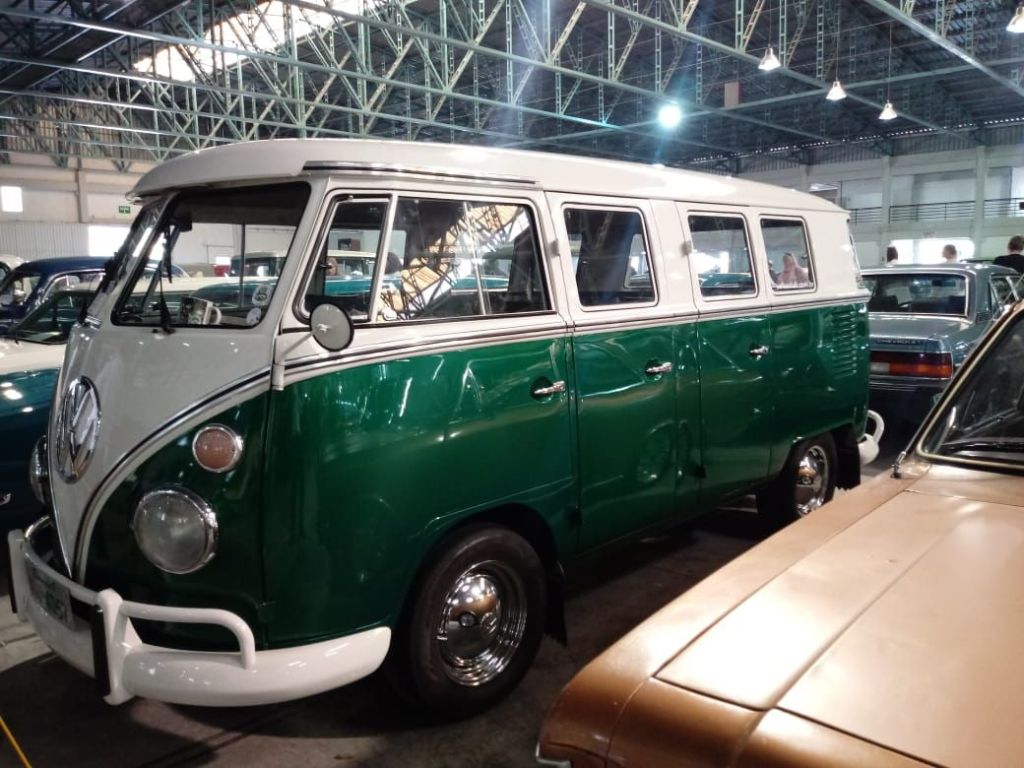
The beloved VW Kombi.

1989 VW Gol GTI, the first Brazilian car equipped with electronic fuel injection.

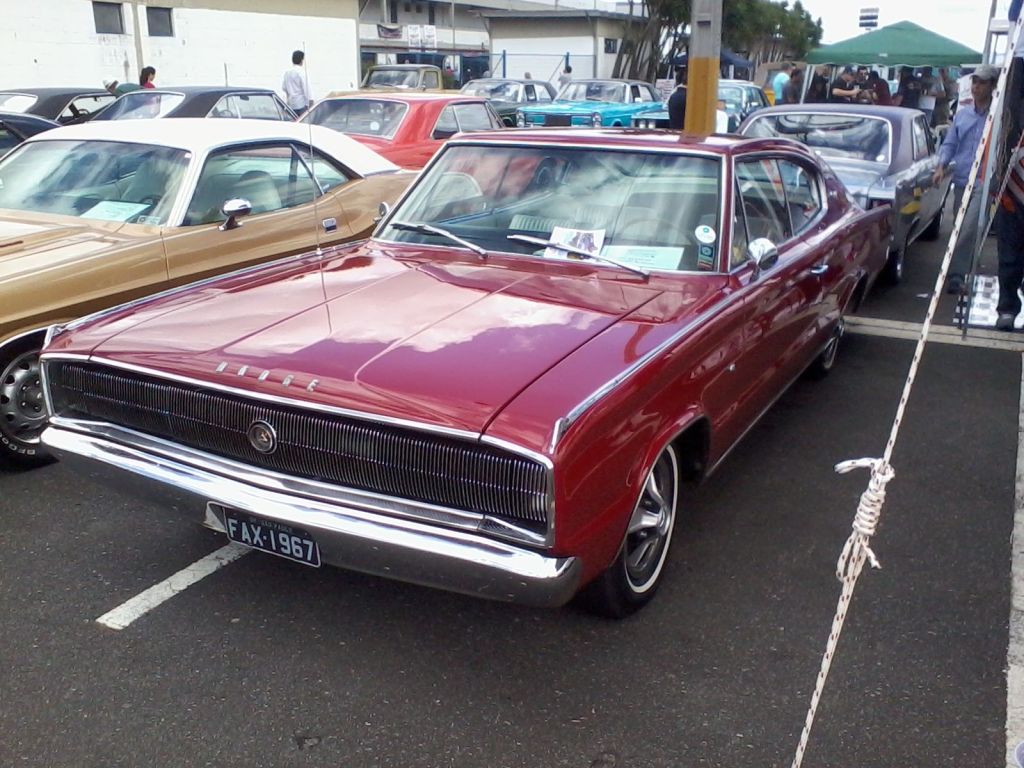
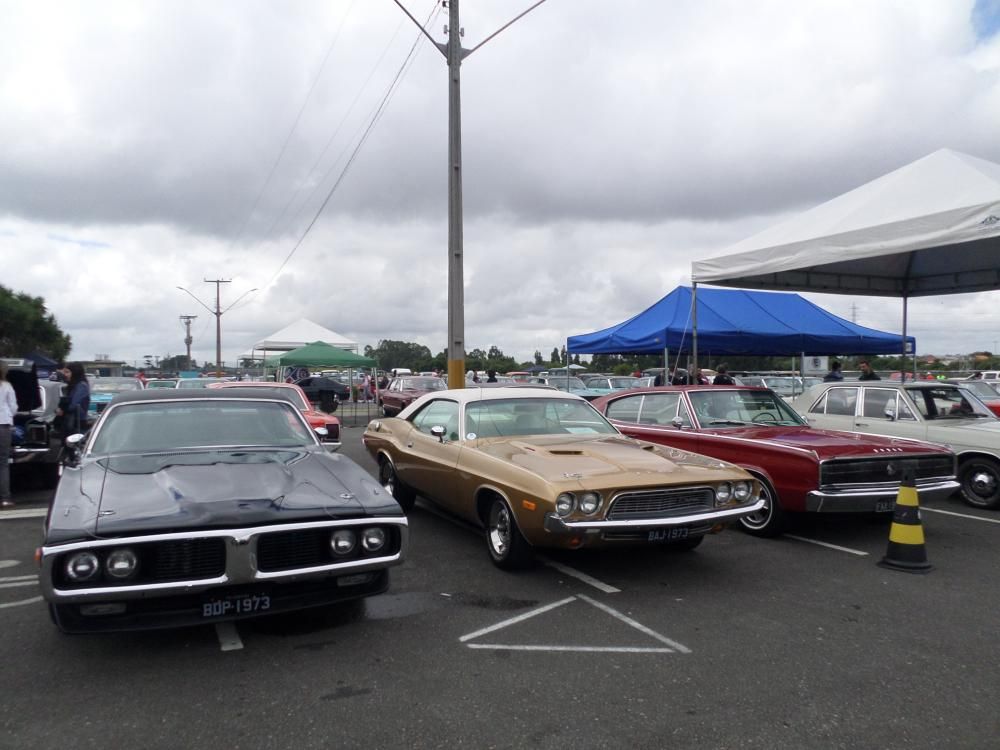
Brazilian Charger R/T, probably a 1975.

1938 Chevy Coupe Hot Rod

Jeep, the war hero.

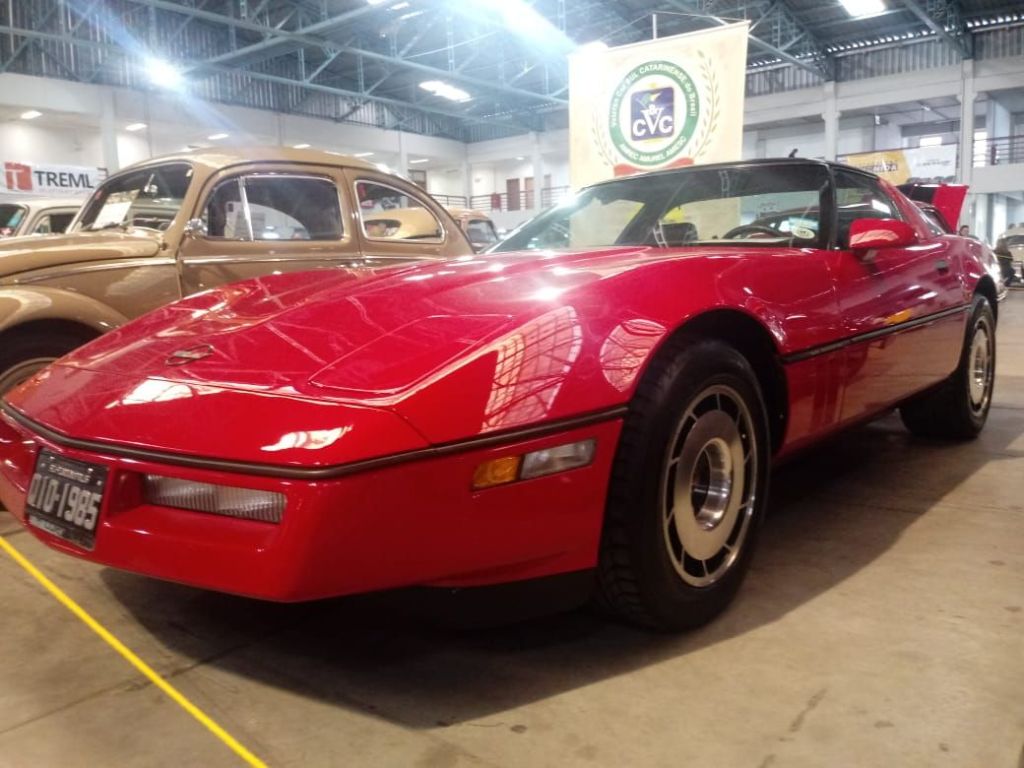
1986 Chevy Corvette

Vintage radios are so cool.

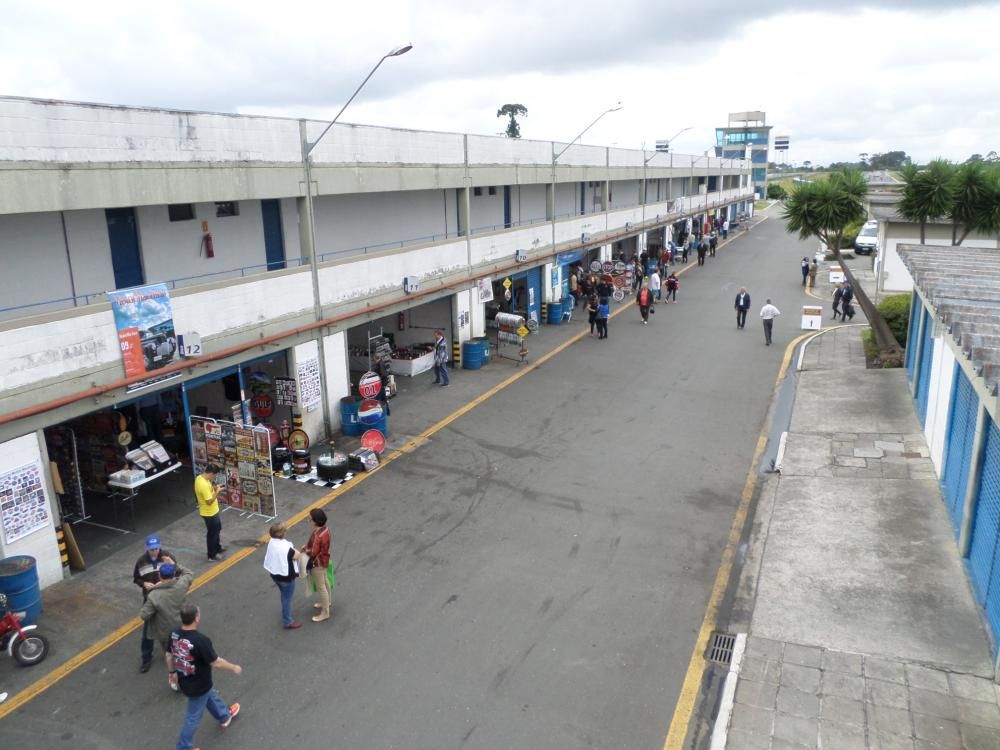
Indoor meetings are not very popular in Brazil, but this one has become well known.

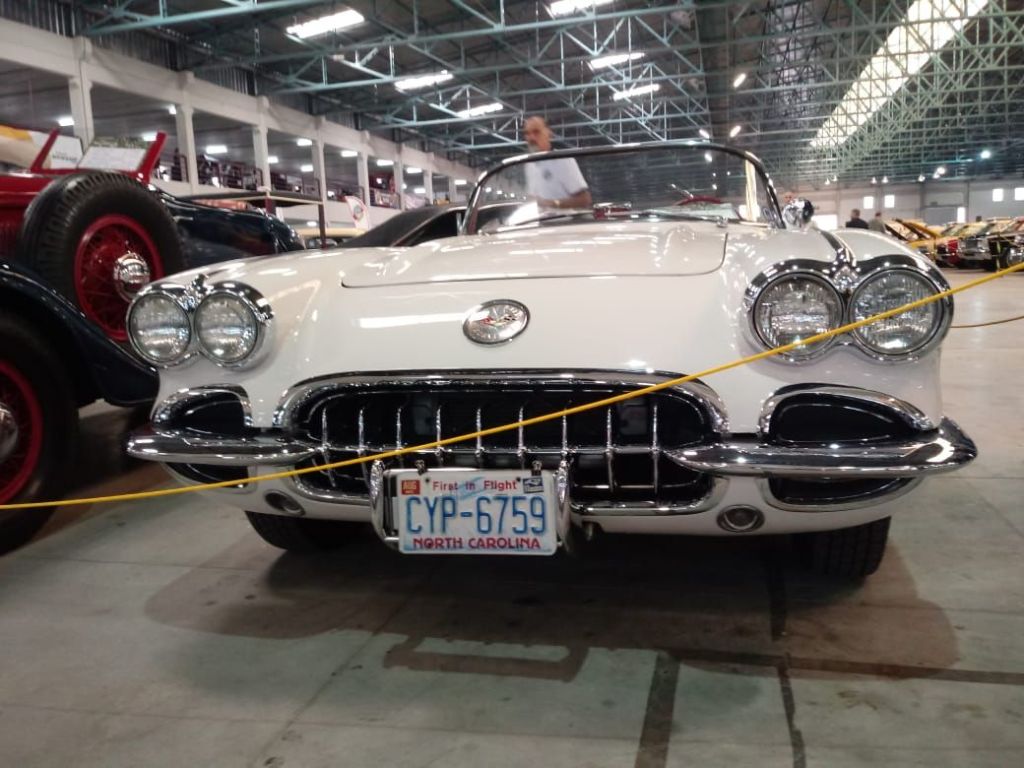
1959 Chevy Corvette

Mopar, or no car.

1948 Chevy Coupe

The Chevrolet Monza was one of the biggest hits of the Brazilian General Motors. This is a 1989 model.

Vespas.

The last generation of the VW Variant, 1978-1981

First gen Chevrolet Caravan 1975-1979

The most beloved Brazilian classic car –  Chevrolet Opala.

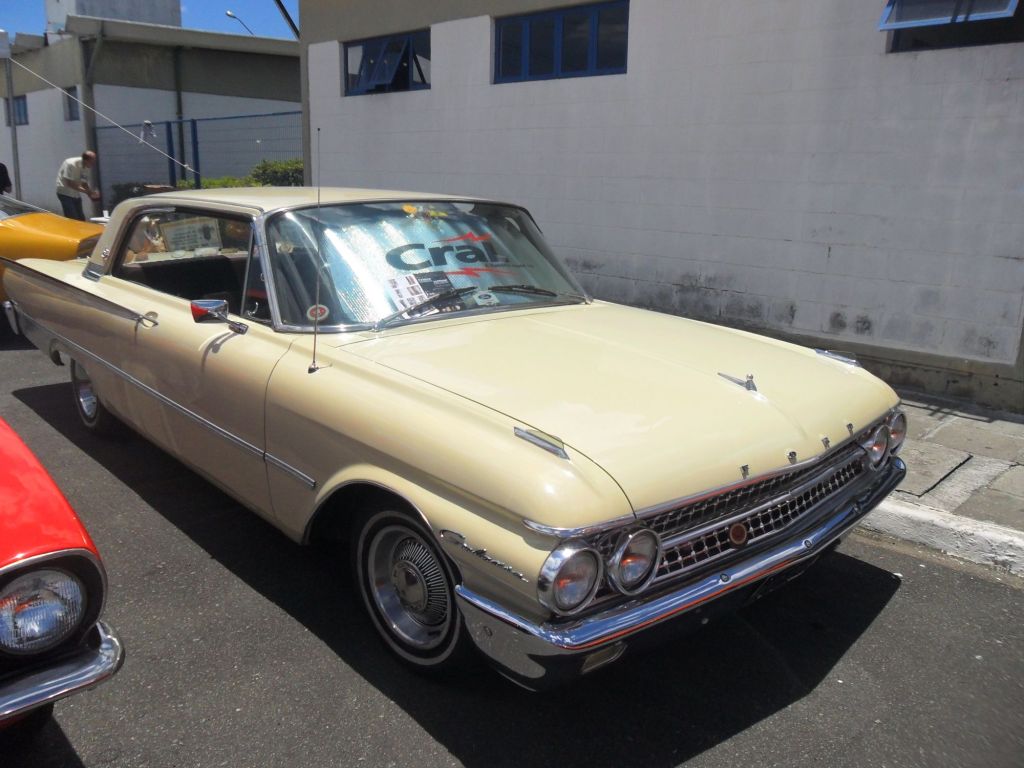
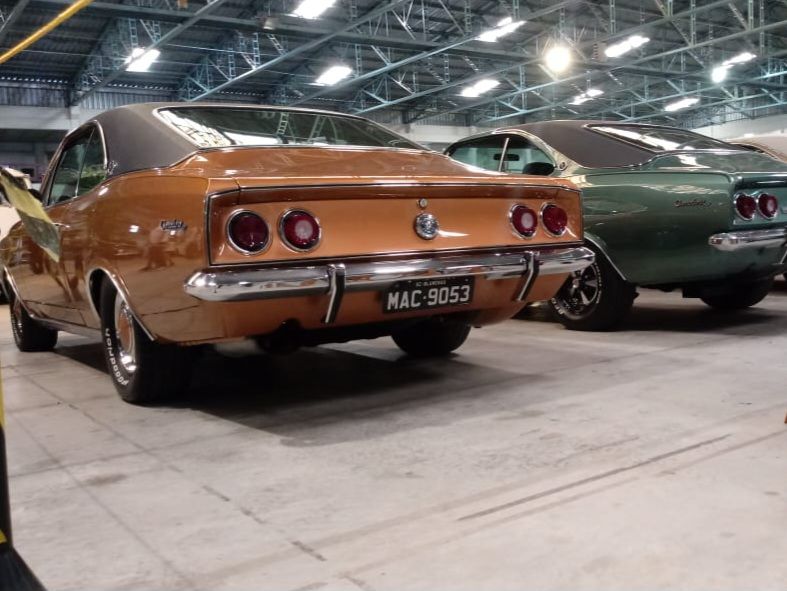
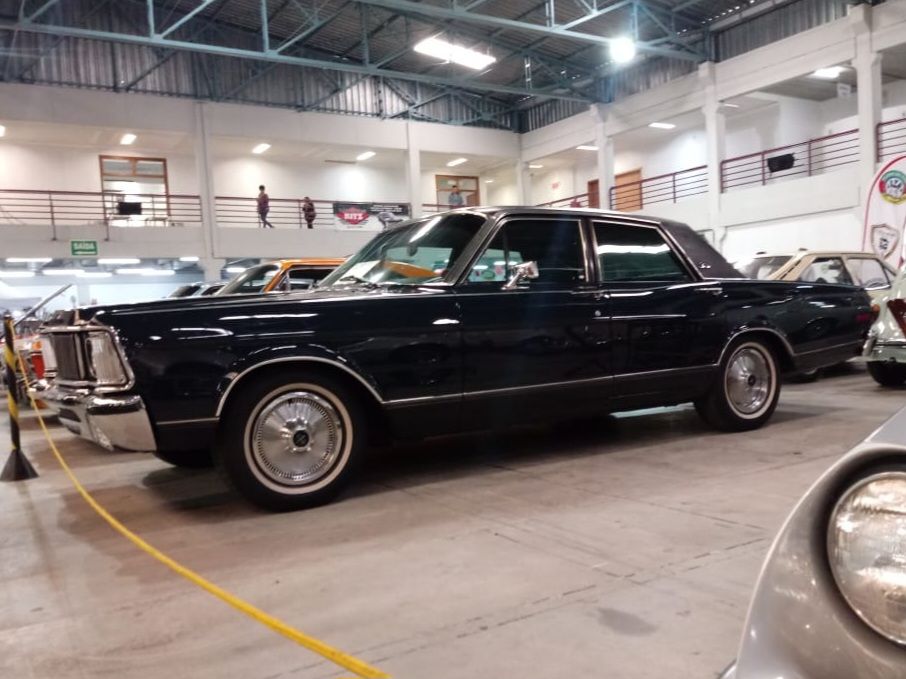
A Ford Landau, based on the American Ford Galaxie. This one looks like an early 1980s model.

I hope you enjoyed this first batch of photos and stay tuned because the next one is coming shortly.

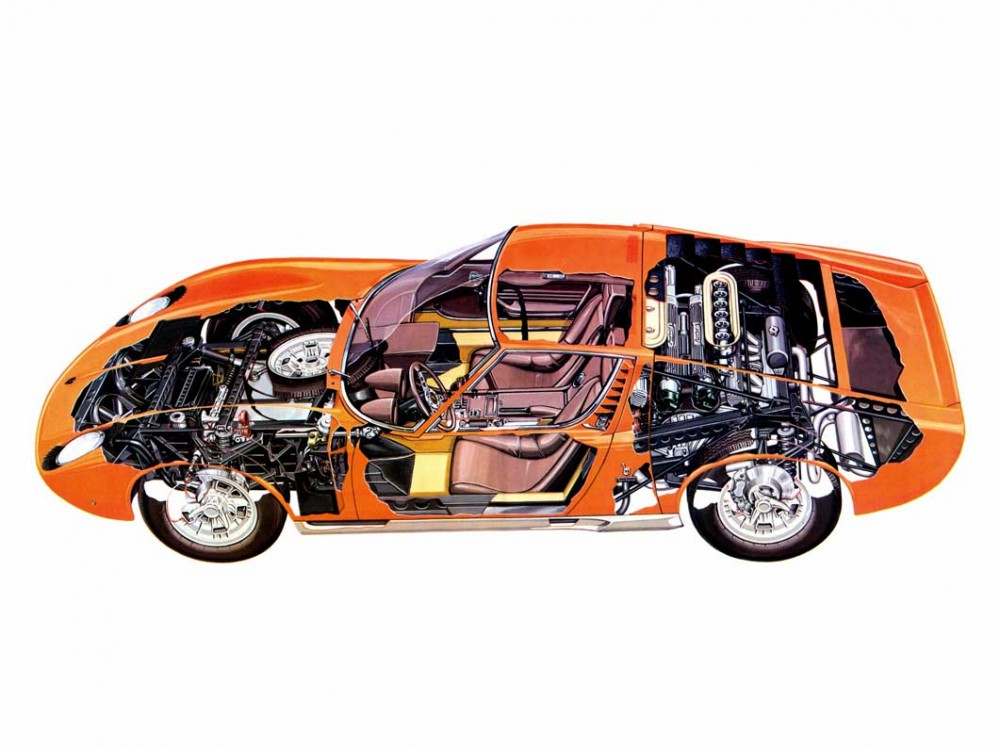
Lamborghini Miura – 1966-1973

This is a well-known story that has been told over and over again among the gearheads around the world. Just like any other story/legend, this one can vary widely depending on who is telling it, but it mostly goes like this:

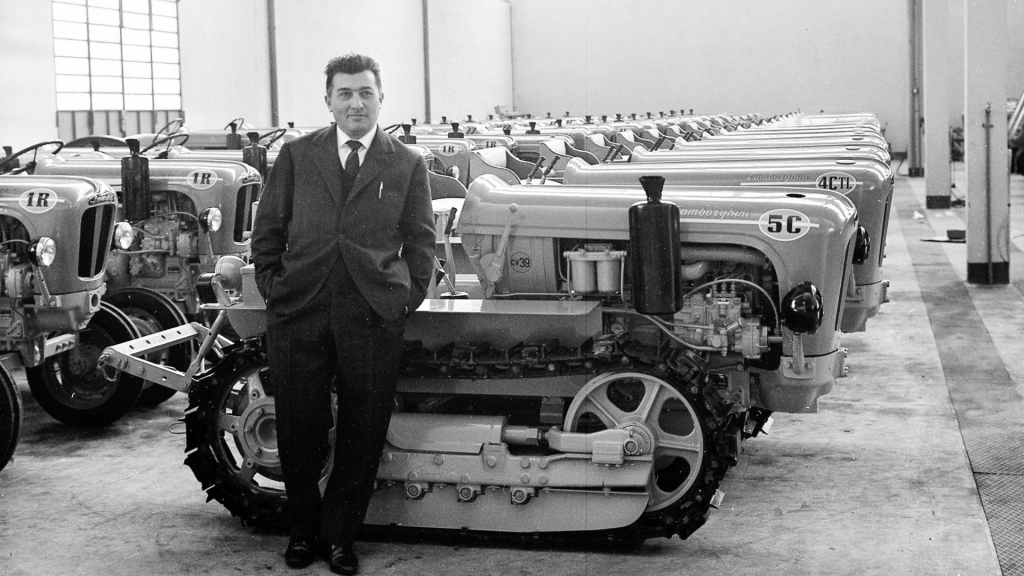
Ferruccio Lamborghini, the founder of Lamborghini Trattori and notorious bon vivant, was dealing with a very annoying problem with the clutches of his Ferraris. After repeated trips to Maranello to have them replaced, he demanded to see Enzo Ferrari. Some say Ferrari refused to talk to him, but eventually, Lamborghini got to see the Commendatori. He looked Enzo in the eyes and said:  “Ferrariyour cars are rubbish!”

The conversation went sour in the most Italian way possible when Enzo replied, “You may be able to drive a tractor, but you will never be able to handle a Ferrari properly.”

“This,” Lamborghini later said, “was the point where I finally decided to make the perfect car.”

To be fair, Ferrari was not the only flawed GT car in the early 1960s; Alfa Romeo, Mercedes, Lancia, Maserati, and Jaguar were all complicated cars, to say the least, and Ferrucio had tried them all.

In 1963, Ferruccio founded the Lamborghini Automobili with the daunting mission of building the perfect GT car, which should offer style, performance, comfort, and reliability.

Although the history of Lamborghini is much more complex and interesting, I will focus on one car specifically to show how hard it can be to make a dream leave the drawing board and become a reality.

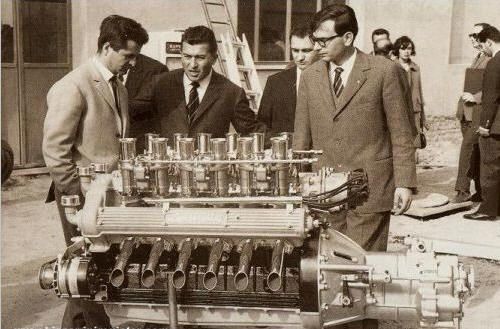
From left to right: Giotto Bizzarrini, Ferruccio Lamborghini, and Gian Paolo Dallara at Sant’Agata Bolognese in 1963, with a Lamborghini V12 engine prototype.

Ferruccio was a talented mechanic and a visionary entrepreneur. The agricultural business was booming in post-war Italy, and his tractors sold like hotcakes. He was also involved in manufacturing heating and cooling equipment for residential and commercial properties. Financially speaking, Lamborghini was much more comfortable than Ferrari, which enabled him to pull some talented young people from other companies, among them Gian Paolo Dallara, Paolo Stanzani, Bob Wallace, and Giotto Bizzarrini.

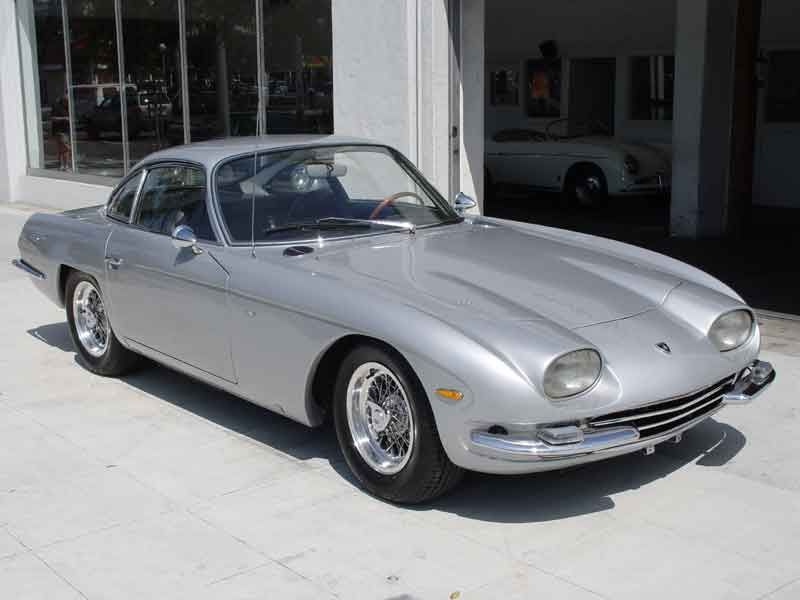
Lamborghini unveiled its first car, the 350 GTV, at the 1963 Turin Auto Show (pictured above). When the team was assembling the prototype, they discovered that the Bizzarrini-designed V-12 wouldn’t fit under the hood. With no time to redesign the car, the logical solution was to remove the engine for the show, but without its weight, the car’s nose didn’t sit at the right height. The solution was to ballast the engine bay with floor tiles from the factory and keep the hood closed at the show. Lamborghini has preserved a section of the original factory floor from which the tiles were pulled.

Seriously? No one among those talented engineers and designers bothered to check the measurements of the engine and the engine bay while the whole thing was still on the drawing board. This episode shows that Lamborghini’s team was far from a professional level and this kind of jerry-rig solution would become a norm instead of an exception. 

After this long but interesting introduction, we can dive into the main subject of this post.

The Lamborghini Miura

Enzo Ferrari wasn’t ashamed to say that the only purpose of producing street cars was to raise money to keep the Ferrari race team competing. Ferrucio’s idea for Lamborghini was different; he had no intentions to get involved in motorsports; he just wanted to build GT cars. Should those cars be fast? Yes, of course, but not extremely fast.

When Bizzarini created the first Lambo V-12, he was not fooling around. After all, he was getting a bonus for every horsepower over what Ferrari’s V12 could produce. The 3.5 liter, quad-camshaft, all-aluminum engine could produce 350 HP @ “mind-blowing” 9,800 rpm. This machine was, in fact, one step above the Ferrari V-12 and could have been a great Formula One engine, but to Ferruccio’s standards, it was too wild for his cars. After many disagreements, Bizzarini left the company and founded his own sports car brand.

What Bizzarini had in mind when he created the V-12 was to bring Lamborghini to the race tracks, and he was not alone in that idea. Ferruccio deserves to be praised for hiring a young team (most of them were in their late 20s) instead of an experienced team, but he was having a hard time curbing their desire to build a purebred race car.

The New Zealander Bob Wallace, at work.

In 1964, Ford was already battling Ferrari in the Sports Prototype arena with the gorgeous GT-40, and the guys at Lamborghini were pumped up to build something similar. In 1965, Dallara, Stanzani, and Wallace began to work on a prototype called P400 (P stands for posteriori, or rear in English and 400 means 4-litre engine) during their spare time, mostly at night. The idea was to produce a street-legal sports car that could perform superbly on the race tracks—a unique car that could change Ferruccio’s mind about creating the Lamborghini race team.

Ferruccio didn’t mind the enthusiasm of his boys and encouraged them to continue their development. However, he didn’t promise to put the car into production; he viewed this new prototype as a good advertising stunt, similar to a concept car.

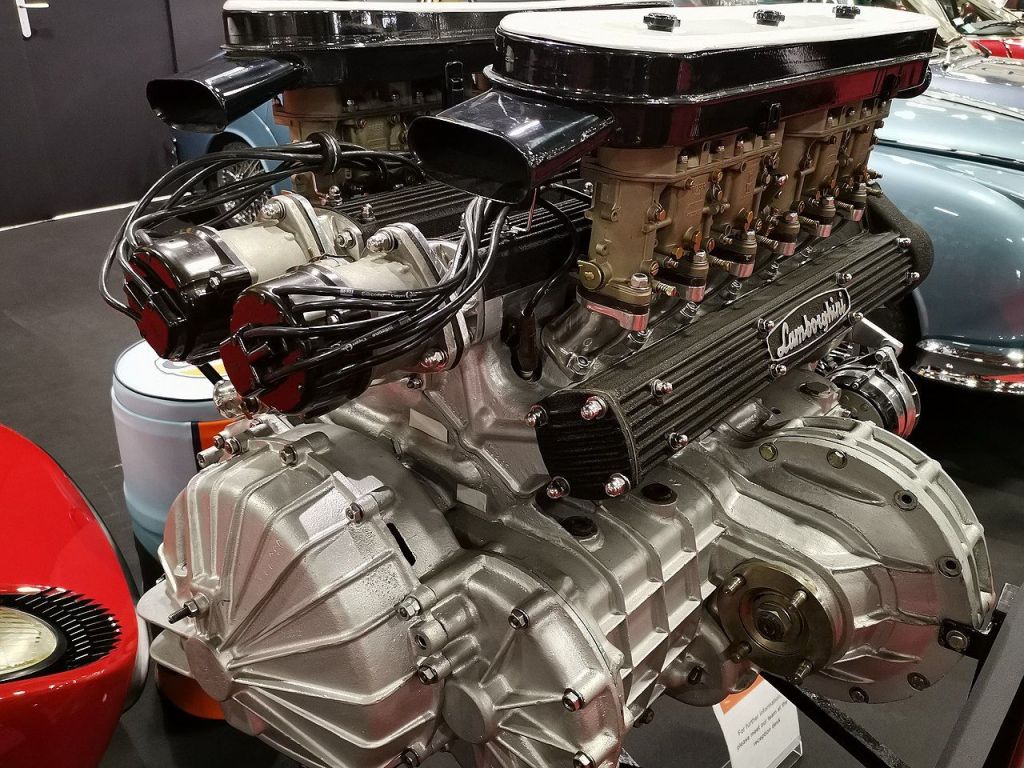
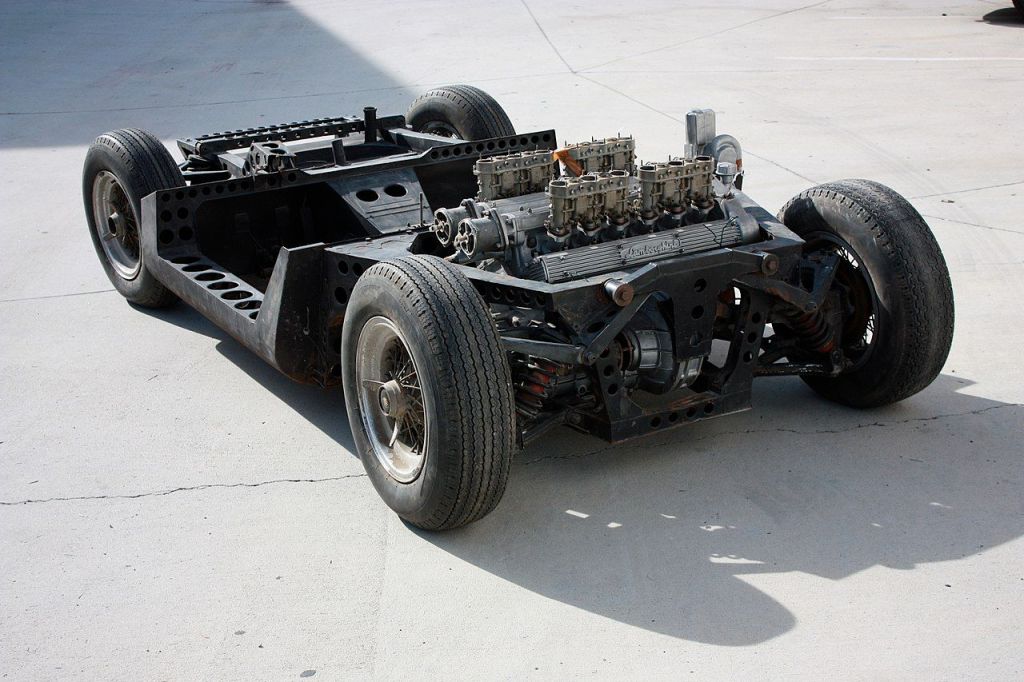
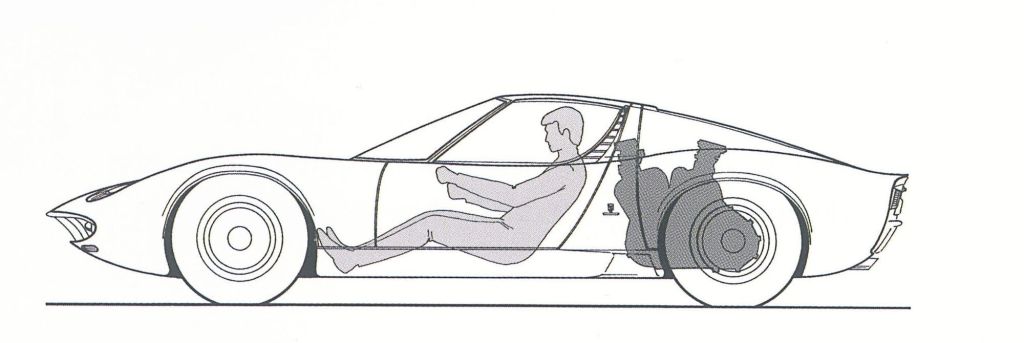
The first challenge was to fit the massive Lambo engine into such a diminutive car. With 42 inches long, it would be impossible to install the V-12 in the mid-engine position. After some consideration, the team devised an ingenious solution: they rotated the engine 90 degrees and positioned it on top of the transmission, just like the Brits did with the Mini. The casting for this engine/transmission package proved to be highly complex, mainly because the rear differential should also be part of it.

The P400 drive train is a magnificent piece of machinery (photo above); it is 1960s Italian engineering at its best.

In the middle: Carlo Anderloni of Carrozzeria Touring, Milano. Also in picture are Lamborghini engineers Paolo Stanzani (left with light jacket) and Giampaolo Dallara (right, spectacles)

Dallara used his expertise as a former aeronautical engineer to develop a beautiful steel chassis around the drive train.

The team got the rolling chassis done in time for the 1965 Turin Auto Show, and it attracted much more attention than the regular production Lamborghini GT cars displayed there.

The visitors and media were amazed at how the Lamborghini team enveloped the engine and transmission so neatly into the chassis. The transverse, mid-ship position of the drive train was quite unusual at the time, and everybody at the show was thrilled with the idea of such a small and lightweight car powered by an enormous V-12.

By the end of the show, more than ten customers had already made a down payment to secure a new P400, even without knowing what the body would look like.

Ferruccio was in a pickle; the rolling chassis that his boys created during their off-time sold better than all of his beloved GT cars together. The boss congratulated the team and gave them the green light to prepare the assembly line as fast as possible because 10-plus customers were waiting for the P400.

Dressing the beast

Design is one of the most important chapters of a car’s development, but when we are talking about an Italian sports car, then the significance of design becomes paramount.

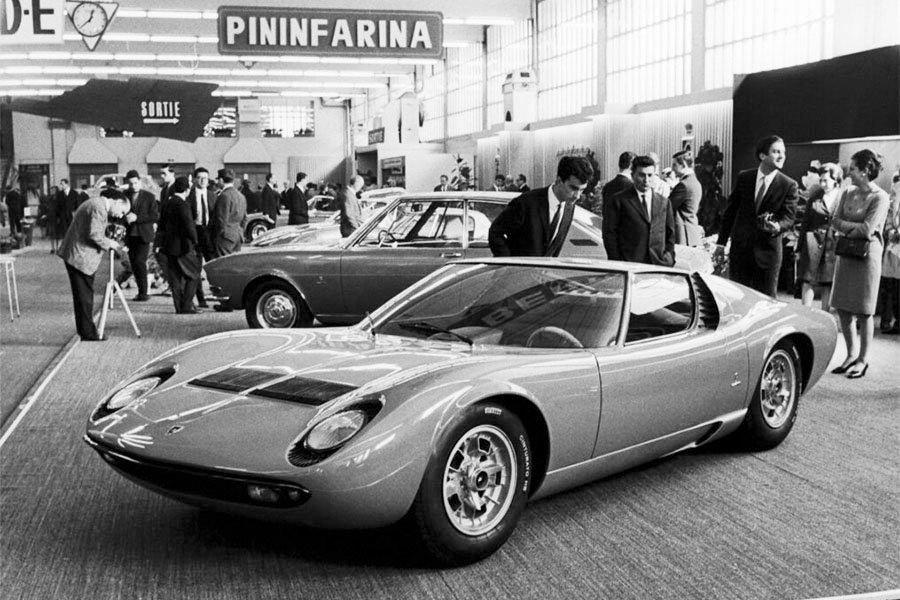
Ferruccio wanted to hire a design studio with no ties to either Ferrari or Maserati. He invited Giuseppe ‘Nuccio’ Bertone, the boss of Bertone Studio, to examine the rolling chassis. Bertone accepted the challenge to create a stunning body for the car in record time for the 1966 Geneva Auto Show. The chassis was brought to Bertone’s Stile Department, and the task was given to another young talent, the 27-year-old Marcello Gandini, who had recently replaced the famous Giorgetto Giugiaro as the head of the design department.

Gandini and his team worked day and night to fit the bodywork to the innovative platform. Under the guidance of Nuccio Bertone, they successfully completed the project in just two months. It’s truly unique that they went from the first sketches to the running prototype in such a short time! Nuccio Bertone drove the car from Caprie to Geneva the night before the show opened.

The Miura was born

Ferruccio named the car Miura, after a Spanish fighting bull breed, in honor of Lamborghini’s recently created logo.

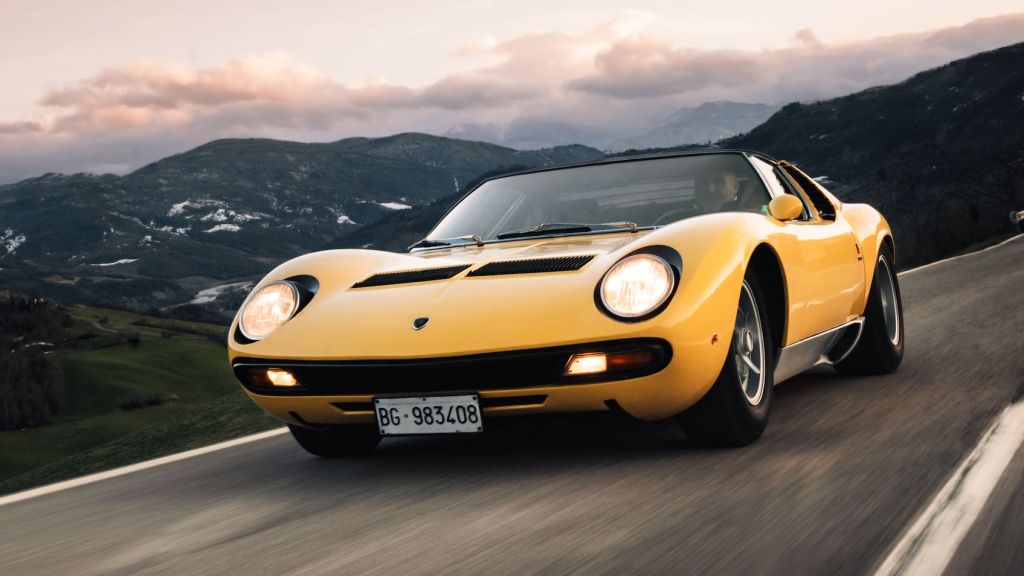
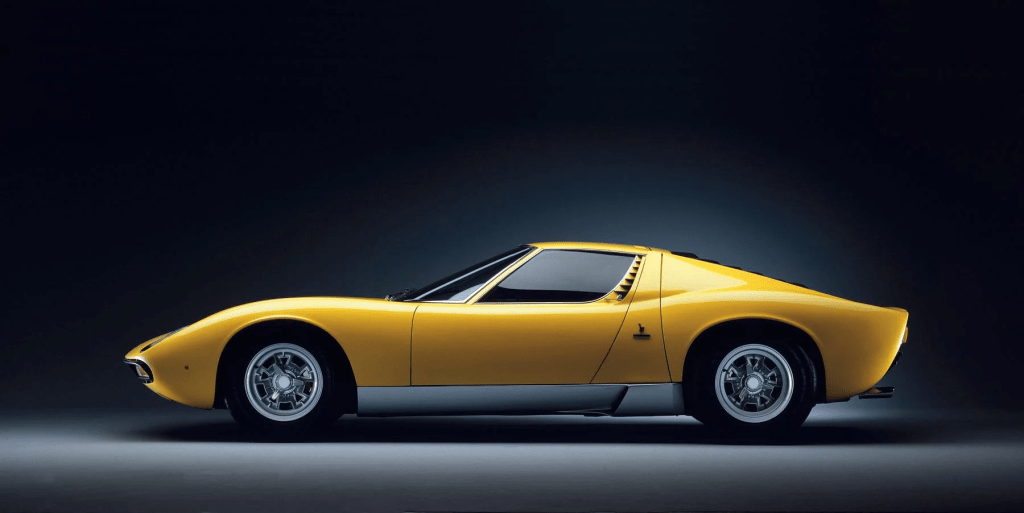
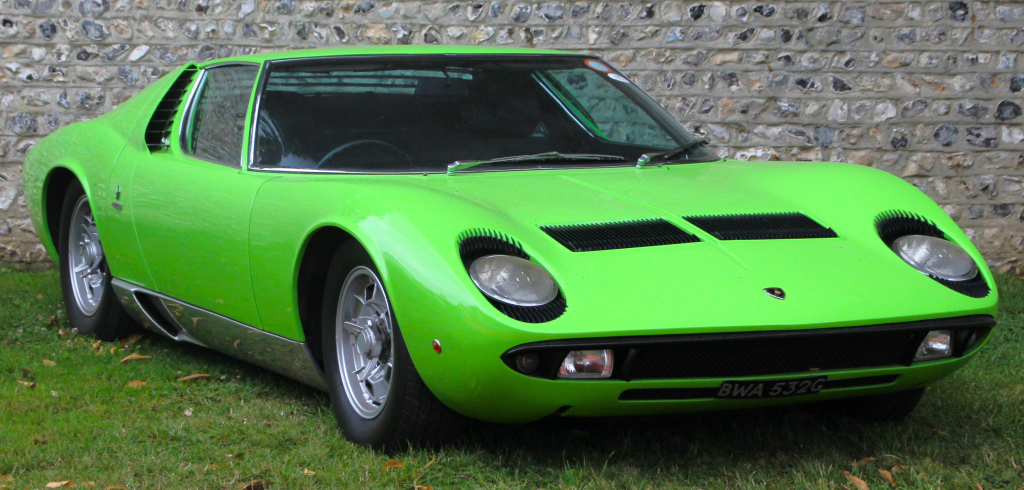
Gandini had created a masterpiece, one of the most beautiful sports cars in history. The design of the Miura is simple and clean, with a traditional appeal of the 1960s with a long nose and short rear deck.

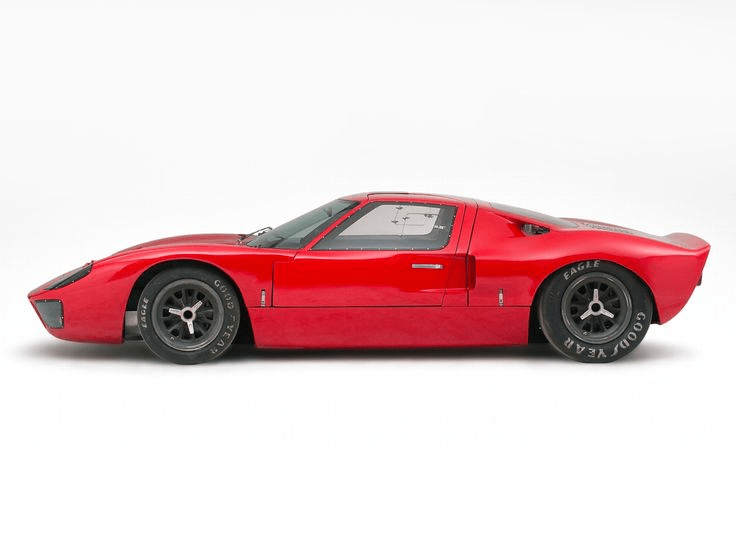
It is inevitable to compare the Miura with the car that, according to some scholars, serves as inspiration: the Ford GT-40. The GT-40 was created as a purebred competition machine but could have easily become a street-legal sports car.

Both cars have curvaceous, sensual, feminine lines, a trademark of the 1960s, known as the most romantic period in sports car history. The Miura was originally designed as a street car, but the team also wanted to see it on the race tracks.

As was expected, the Miura was the star of the 1966 Geneva Auto Show, and at the end of the event, another 30 customers had made the down payment for the car.

Miura P400 especs.

Engine: Lamborghini V-12, 4 litres, quad-cam, all-aluminum. Rated at 320HP

Transmission: 5-speed manual

Weight: 1,125 kg (2,480 lbs)

Wheelbase: 2,500mm (98 inches)

High: 1,060mm (42 inches) – only 2 inches higher than the GT-40.

With a top speed of 280 km/h and an acceleration of 0 to 100 km/h around 6 seconds, the Lamborghini Miura was the fastest “production” car in the market. For the first time in history, the automotive media used the term supercar to describe the Miura.

A nightmarish sports car.

Everything was happening too fast; the Miura jumped from the drawing board to the production line in less than a year. Ferruccio, hoping to boost Lamborghini’s sales, gladly accepted orders for a car that hadn’t even gone through extensive trials and road tests.

The Miura proved to be a very problematic car, an absolute nightmare for the owners—precisely the opposite of the hassle-free car Ferruccio wanted to build.

Here is a list of the issues:

  • The chassis created by Dallara was a work of art, but it was not very stiff. The body, made of thin steel sheets (doors and center section) and aluminum (front and rear sections), didn’t provide much support either. The first generation of the Miura was a very flimsy car. Some structural reinforcements were later added, but the problem was never entirely solved.
  • During the development, the team adapted the same front and rear suspensions used on the front-engine Lamborghini GT cars, and the result was not so good. Muira’s handling is somehow poor when compared with Ferrari and Maserati.
  • The Miura was fast but dangerous. The design of the front end allows a substantial amount of air to flow underneath the car at high speeds, creating a frightening sensation as though the car is about to take off.
  • The innovative idea of having the engine and transmission housed in the same case means they also share the same oil. While this design solved the issue of limited space for the drive train, it also gave rise to a new problem: oil starvation. During long turns at high speeds, copious amount of oil would shift to one side, leading to engine seizures.
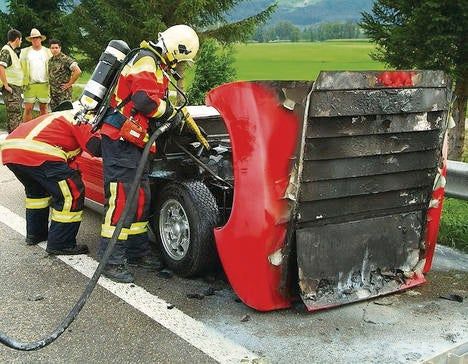
  • But the most alarming issue with the Miura was its tendency to catch on fire. The Lamborghini V-12 engine was equipped with four triple-barrel, downdraft Weber carburetors that were dangerously positioned over the spark plugs. If the carburetor floats failed or if there was contamination in the needle and seat, combined with high fuel pressure, it could result in gasoline spilling over the ignition components and causing a fire. Owners and mechanics took measures to prevent their cars from being destroyed, such as using trays at the base of the carburetors and installing fire extinguisher systems. However, despite these precautions, many Miuras were lost due to fires.
Ferruccio and the car he never wanted.

Ferruccio knew all these unsolved problems would soon torment the owners, so he concentrated the sales in Italy, making it easy to bring the cars back to Lamborghini for repairs.

There are stories of Ferrucio taking customers to long lunches and dinners to appease their ire, while their cars were being repaired. At this time, Lamborghini was far from being a well-established car company, with no more than 80 employees on the payroll. They desperately needed the Miura to succeed.

In 1967, Ferruccio reached his limit. Automobili Lamborghini was not heading in the direction he had always wanted, and although the Miura would soon receive the necessary improvements, he was frustrated with all the car’s problems. Instead of shutting down the company, he removed himself from his position and promoted Paolo Stanzani as the head of Lamborghini.

Stanzani accepted the new position but not without some conditions. This is what he demanded:

“You are the boss of the company,  I know that. However, you will not come and create dissent, override me in front of people, or put your nose in things. Understand that you can ask me anything but speak only with me.”

P400S

In 1968, with Stanzani as the company’s captain, Lamborghini released the Miura P400S with some very welcomed updates. The chassis received structural reinforcements; front and rear suspensions were revised, and larger tires were adopted, considerably improving the car’s handling.

The interior of the Miura that belonged to Frank Sinatra.

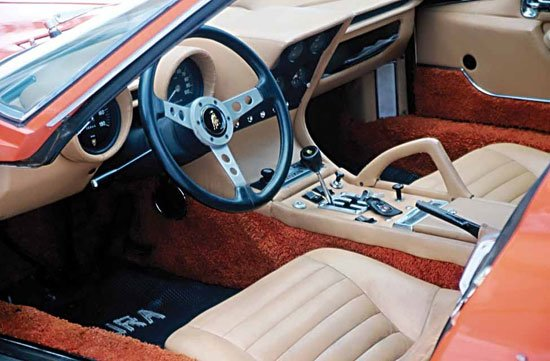
Interior comfort was traditionally neglected in Italian sports cars of the 1960s but the Miura should be different; the P400S was equipped with power windows, and air conditioning systems was optional.

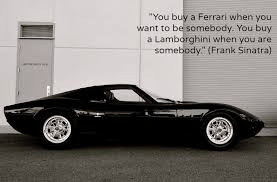
The P400S propelled the “popularity” of the Miura around the world. Frank Sinatra bought one in 1969. Former factory Sales Manager Signore Ubaldo Sgarzi recalls Sinatra’s unannounced visit to the factory, with a specific request for no publicity; Signore Sgarzi gave Sinatra a tour of the Sant ‘Agata works. The car, with chassis #4407, was painted in Arancio Metallico and trimmed with wild boar skin leather and orange shagpile carpeting – orange was Sinatra’s favorite color. The dispatch date is recorded as 12/12/69, Sinatra’s 54th birthday! The car survived these days; after changing owners a few times, the Miura was auctioned in 2003 and now belongs to a collector.

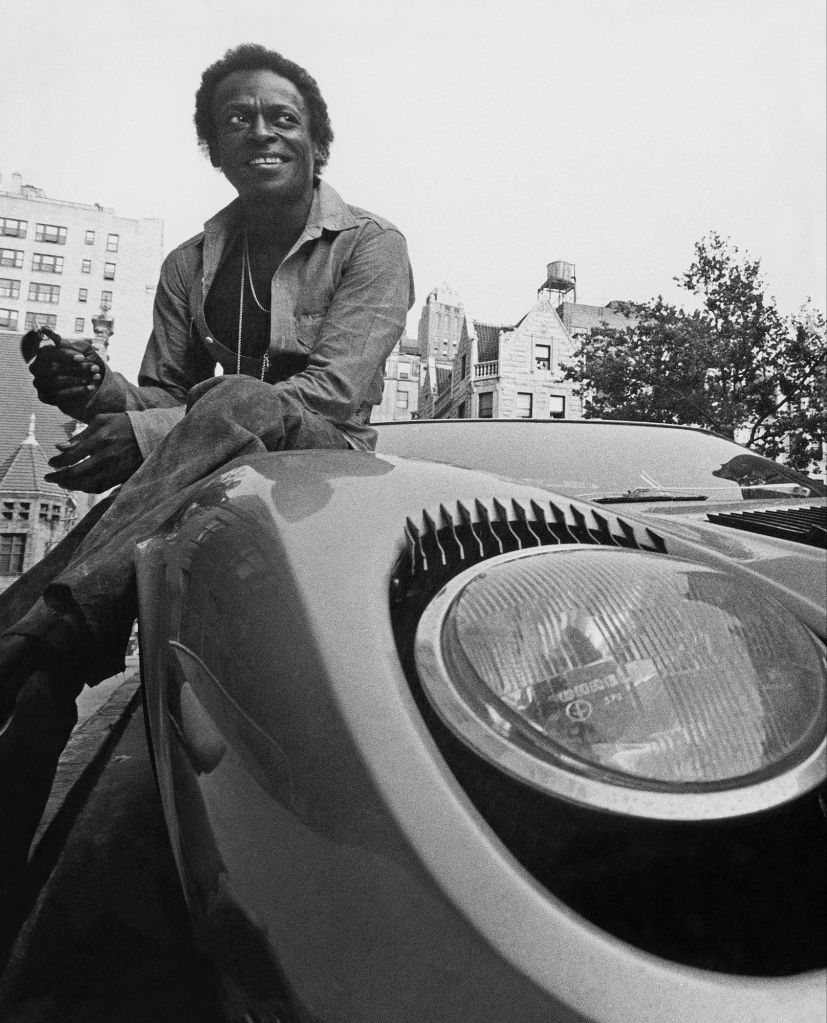
The Jazz legend Miles Davis also owned a Miura, but he crashed the car while driving under the influence of narcotics. Davis supposedly fell asleep at the wheel and totalled his car. He was taken to the hospital with both ankles broken and released the following day. As soon as he recovered from his injuries, he bought another P400S.

P400SV

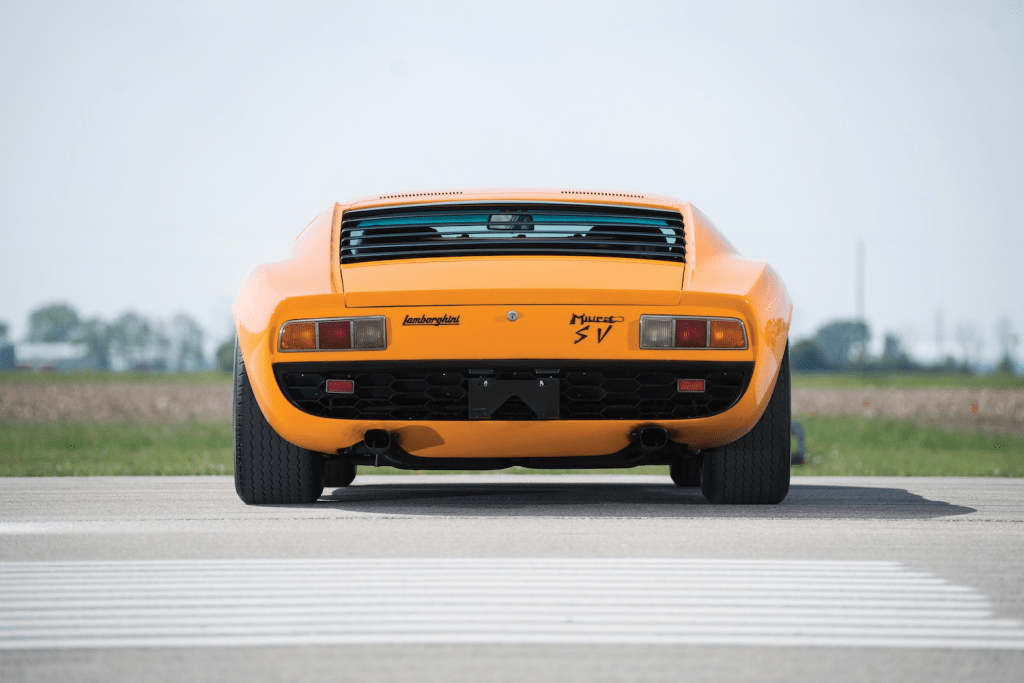
This 1972 Miura SV was found in Brazil in 2020, but the car was involved in some shady deals back then. This story alone deserves an article here at TCM.

In 1971, Lamborghini unveiled the ultimate version of the Miura, the P400SV.

The most significant changes were related to the drivetrain. The gearbox now had its lubrication system separate from the engine, which prevented annoying engine seizures. The company claimed that improvements on carbs and camshafts increased power output to 385 HP. However, Bob Wallace, the New Zealander responsible for overseeing engine production, later said that these “improvements” never happened. The Miura’s V-12 always produced between 320 and 330 HP throughout its eight years of production.

The SV has wider rear fenders to accommodate the new 9-inch rear wheels. The car came equipped with Pirelli Cinturato 215/70 R15 front and 255/60 R15 rear tires.

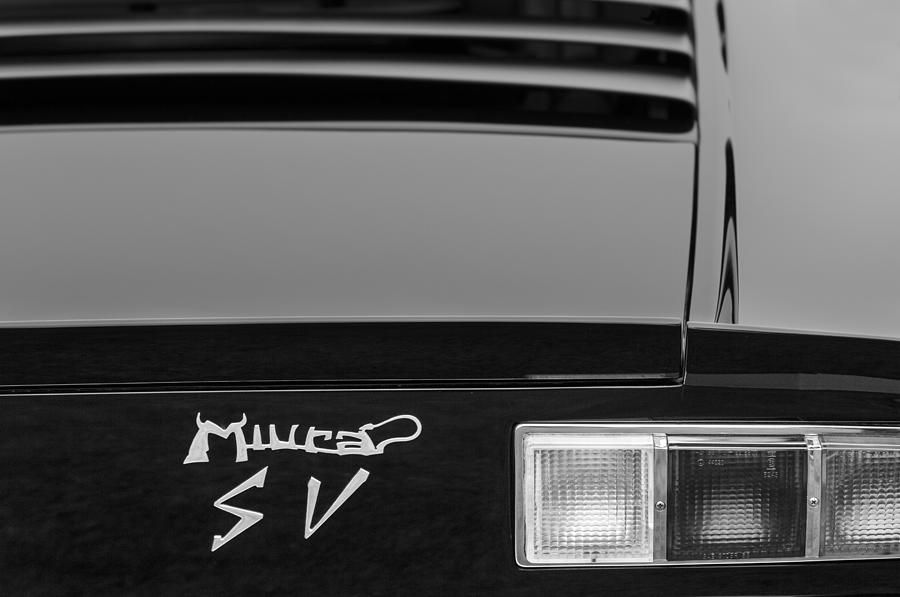
One of the distinctive features of the Miura is the famous “eyelashes” around the headlights, which were removed on the SV model, making it easier to differentiate the car.

1973 was the last year of production of the Miura. Its gorgeous body style had no place in the 1970s, a decade that became known for its weird, angular design concepts.

Just like any other Italian exotic super-car of that time, the Miura was produced in very limited numbers:

Miura P400 – 1966 to 1967 – 474 units
Miura S – 1968 to 1970 – 140 units
Miura SV – 1971 to 1973 – 150 units

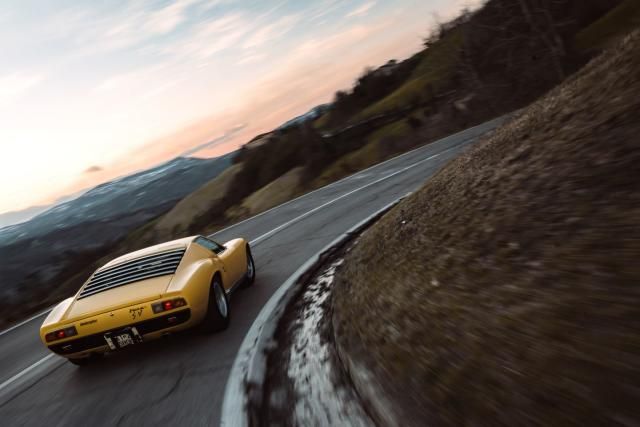
Bob Wallace just couldn’t help himself and eventually built a single racing prototype based on the P400SV called “Jota.” The car was sold to a private racer in April 1971. The new owner crashed it on the yet-unopened ring road around the city of Brescia, and… you guessed it, the Jota burned to the ground. There are a couple of recreations of the car around the world, like the one pictured above.

Life after the Miura

Controversial, groundbreaking, problematic, and legendary, the Miura was the car that Ferruccio never wanted to build. Still, at the same time, the car made Lamborghini what it is today. Without it, the company wouldn’t be more than a footnote in automotive history.

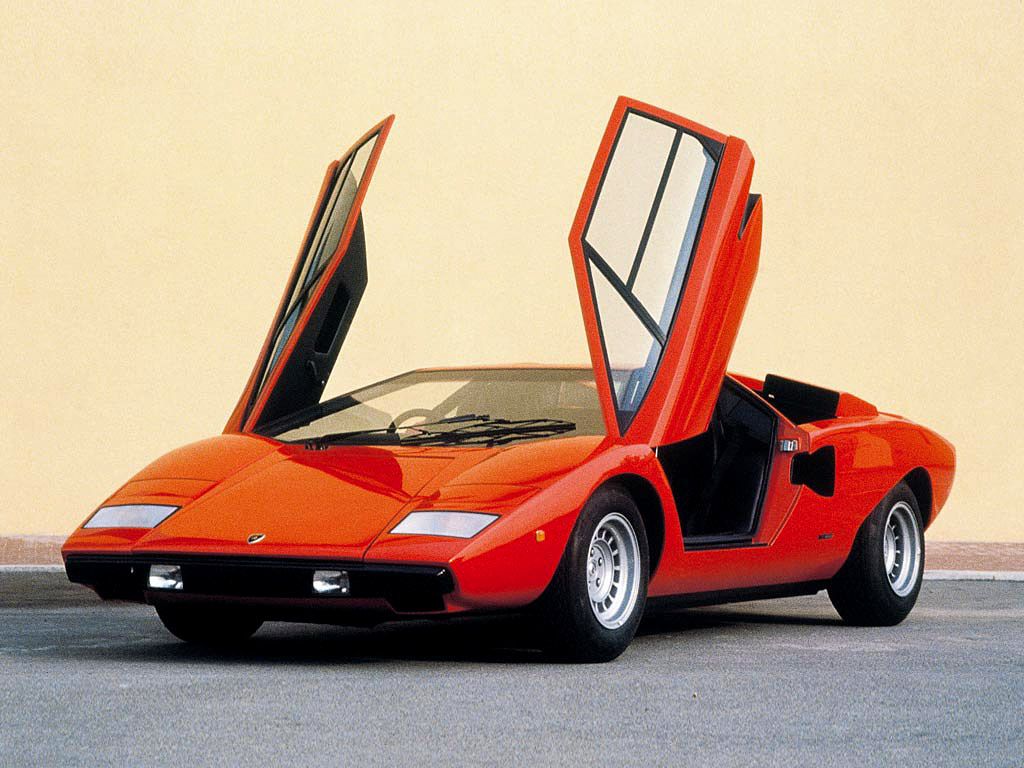
The partnership between Stanzani and Bertone continued, and together, they created a worthy successor for the Miura, the Countach. (Not my cup of tea, though).

Lamborghini was never profitable at that time. The company went through various owners – questionable deals with Ferruccio’s personal friends, shady foreign business people, a handful of bankruptcies, and even the Italian government. In 1987, Chrysler bought the company and kept it alive for many years.

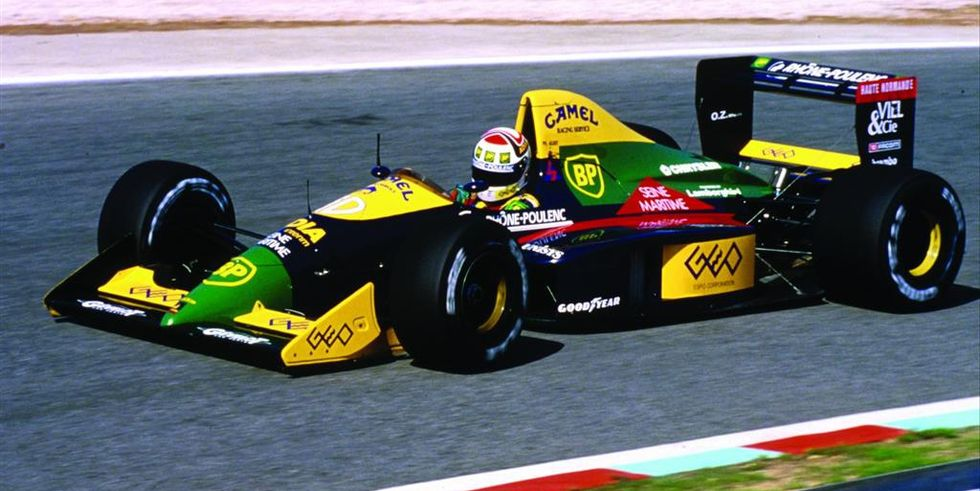
It was under Chrysler’s ownership that Lamborghini ventured into Formula One, the company supplied engines (V-12, of course) for Larrousse (1989–1990, 1992–1993), Lotus (1990), Ligier (1991), Minardi (1992). Lamborghini even had its own official team in 1991, although under a different name, Modena.

Automobili Lamborghini was acquired by Volkswagen in 1998 and became its third luxury brand alongside Bentley and Bugatti. The Germans, as expected, put some order in the house, and Lamborghini finally became profitable and successful.

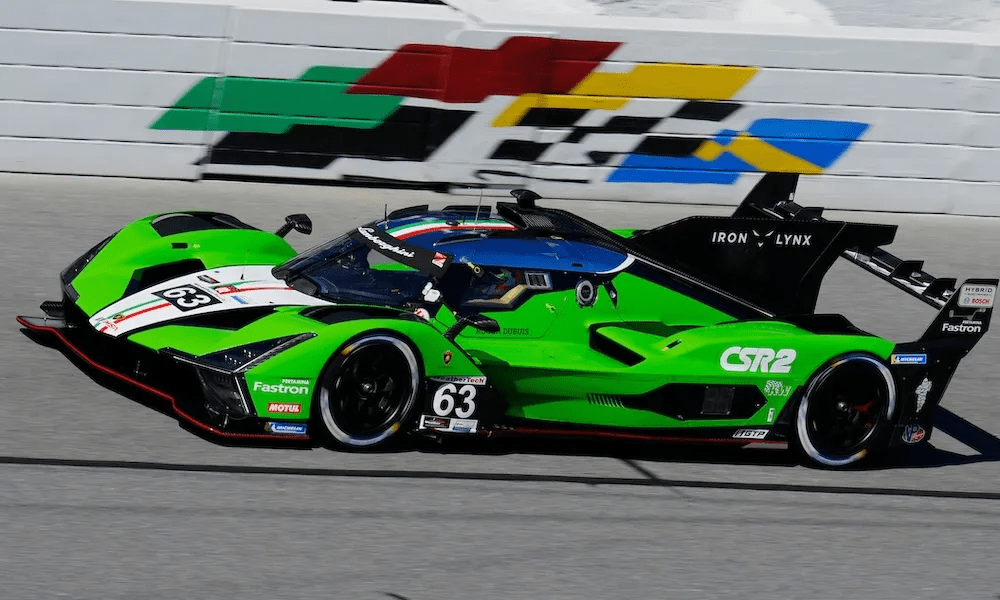
In 2024, Lamborghini introduced the SC63 Hybrid (shown above) in the Hypercar class, the highest category in the FIA World Endurance Championship. The car will compete against formidable opponents, including their longtime rival, Ferrari.

Feeling generous? Visit my “Buy me a Coffee” page.

All The Pretty Things Money Can Buy.

What are your favorite brands and why?

Many years ago, when I was a parts consultant for a restoration shop in Brazil, I had an interesting conversation with a customer about the things we wanted but we could not afford, mostly hot rod-related. This is how he wrapped up the talking: “You know what I will do? I will get on my knees and pray – God, You’ve got to give me the money I want or take away my good taste. ” I thought it was a good idea, and I have been doing it ever since, but with no use, the big guy up there won’t listen to me.

I am not implying that I have good taste; well, it is good according to my standards anyway. What I am trying to say is that life is full of things we want to have and things we can have.

Sony

When I was a kid, I asked my parents for a Sony Walkman for Christmas. Unfortunately, they bought me a cheaper brand that wasn’t even equipped with a K7 player. Sony became an iconic brand in the 1980s and 1990s and stayed in both my and my wife’s minds. When we eventually had to buy our first stereo system, laptop, and smart TV, we purchased Sony products.

Watches

Until the advent of cell phones, watches were a necessary daily tool, but now they have become nothing more than men’s jewelry. You can find a plethora of brands in the market, from the cheap and reliable Casio to the insanely expensive Rolex and Patek Philippe and everything in between.

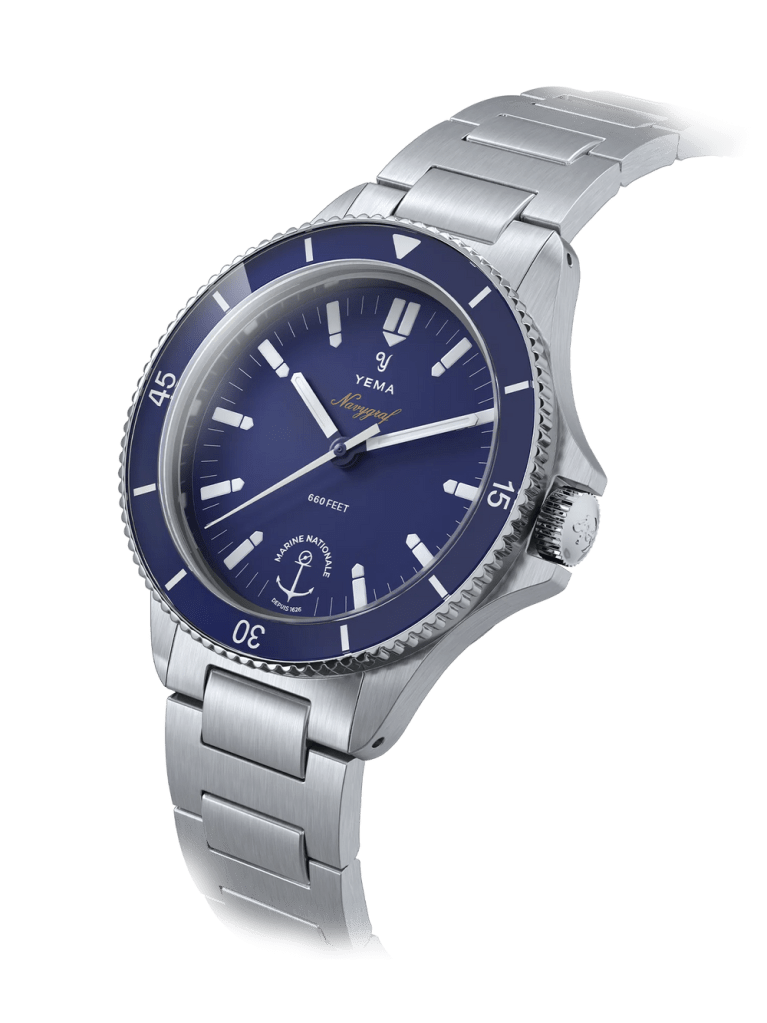
My mom gave me my very first watch when I was nine years old; it was a Yema, a not-very well-known French brand. Unfortunately, I lost it, but I am seriously considering buying another one (pictured above) in honour of my mom’s choice. After all, watches are all about brand fidelity.

Cars and bikes

The guy who started this passion for cars in my family was my grandfather. He was an apprentice at a Ford dealership in my hometown in Brazil and then graduated as a technician. He worked there until he got enough experience to open his own repair shop, specializing in the iconic Ford V8 Flathead. Grampa used to say: – The best brand is brand new – showing little fidelity to Ford.

Among the dozens of cars my dad and I bought and sold through the years, no other brand was more present than Volkswagen; if it is affordable and reliable, it must be a good choice, right? Although for the last couple of years, Asian brands like Honda, Mazda, Nissan, and Hyundai have replaced VW. The picture above shows our daily driver at the moment, a 2013 Civic.

As a car guy, I could dream to have an exotic Italian or British sports car on my driveway, but I am a man of simple pleasures; a V8 Mustang would do it nicely, and it doesn’t need to be brand new. Maybe some day I will be able to make this dream come true.

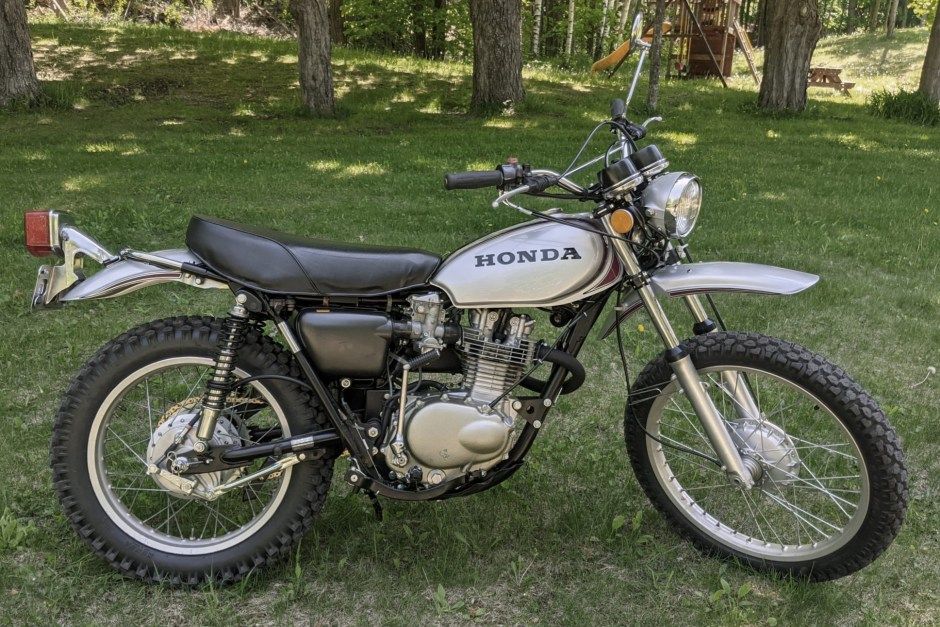
Honda is the family’s favorite bike brand; in my life, I have owned a total of 4 motorcycles and 3 of them were Hondas. The picture above shows Felicia, the last bike I owned, a 2008 Honda Twister 250.

But then again, Honda is the brand I can, not the one I want. When I owned Felicia, I was saving money to buy a Harley-Davidson Sportster 883, just like the one above, but it never happened.

The Swedish factor

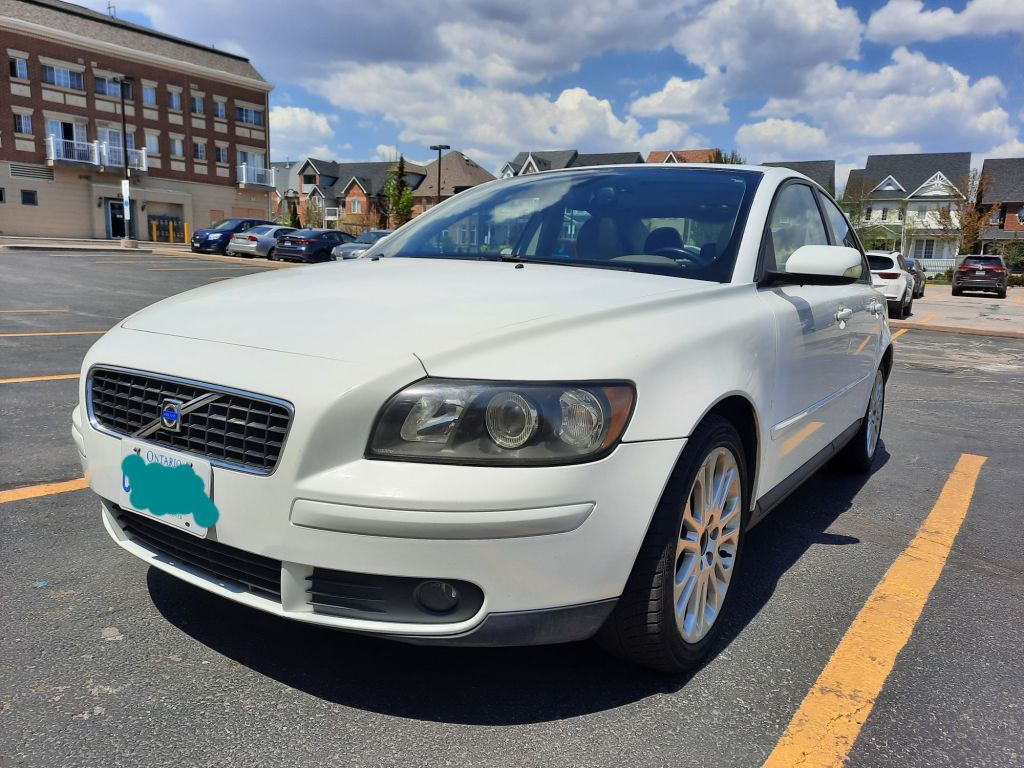
A few years ago, my wife bought a 2005 Volvo S40, and she fell in love with it. She likes to drive fast, and the 2.5 turbo engine plus the European-style tuned suspension gave her plenty of fun. Unfortunately, it was an old car when she bought it, with many miles on the clock; when the headaches of keeping it on the road overcame the joy of driving it, we had to sell the car. Estela was heartbroken because she wanted to replace it with a newer Volvo, but unfortunately, we couldn’t afford it.
Final consideration.

Life is surrounded by brands, and people can be truly passionate about them. A few examples would be: Apple, Tesla, and Nike. It makes sense, after all, the brands we love can tell a little bit about the person we are.

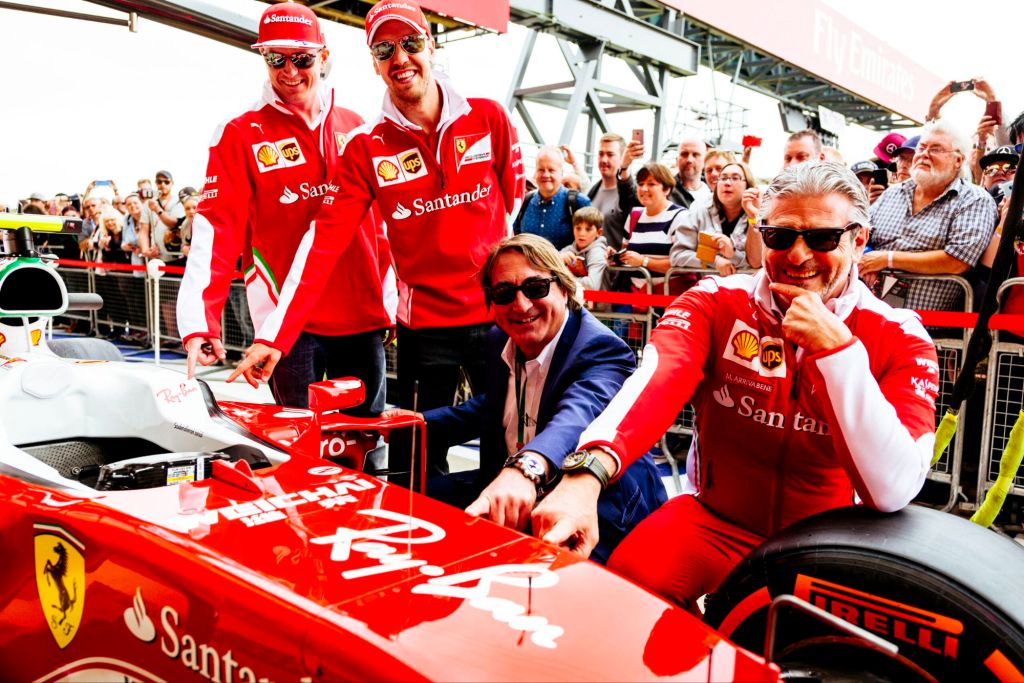
I am not wildly passionate about any of my favorite brands, but it is satisfying to see some of them involved with my favorite pastime, motorsports.

Like Tommy Hilfiger

And Ray Ban.

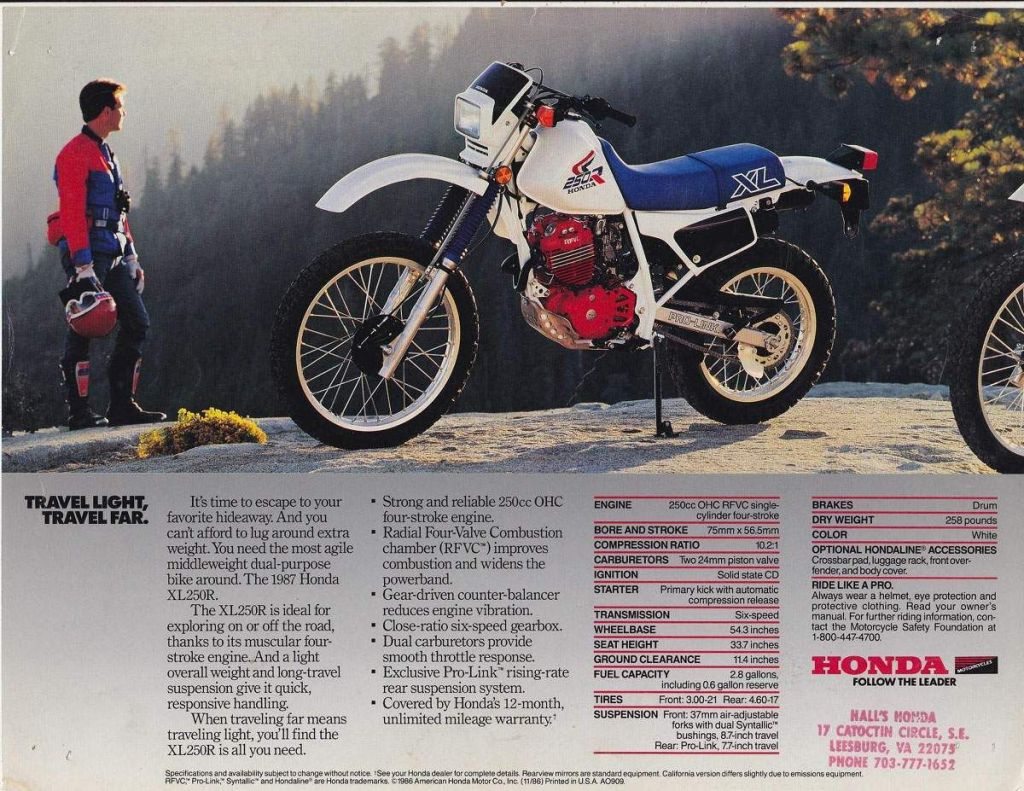
Honda XL 250R

Reliable, stylish, affordable, and groundbreaking; no wonder this little Honda became one of the most popular bikes of the 1980s.

The perception of motorcycles varies across different cultures around the world. In developed countries, it is a vehicle used mainly as a hobby, but in poorer nations, a bike is the most affordable means of transportation one can buy.

With the popularization of motocross (among other forms of off-road competition) during the 1960s, motorcycle companies created the so-called dual-sport bikes (also called dual-purpose), a type of street-legal motorcycle that is designed for both on and off-road use.

It was a clever idea, allowing the customers to own a bike that could perform the mundane duties of a street bike during the week and also be used on light off-road adventures on weekends.

In 1968, Yamaha released the gorgeous DT-1, powered by a 250cc, 2-stroke, air-cooled engine. It was, basically, a dirt bike dressed to be street-legal. The DT was a competent machine on the trails but a bit rough on the streets, but it didn’t prevent the customers from falling in love with it. This new Yamaha made the dual-purpose bikes famous and the DT moniker an icon.

It took Honda 4 years to come up with an answer to the DT. In 1972, the company unveiled the XL 250, a dual-purpose bike developed from scratch that promised to revolutionize the segment, but this first generation fell a little short of expectations.

The XL was a pretty basic machine; the only cutting-edge component was the engine; the bike was powered by the first mass-produced 4-valve per-cylinder, 4-stroke motorcycle engine, which set the standards high for the entire industry.

Overall, the new XL was a bit heavy and awkward on the off-road, but it was a capable bike nevertheless. The new engine was not a brisk, rev-happy one, as Honda wished it to be, but at least it proved bulletproof and capable of taking the raider anywhere.

In 1979, Honda installed two counterbalancers to improve the XL’s engine and provide a smoother ride. The new engine can be easily recognized by the dual exhaust head pipes.

Another innovation was adopting the engine as a stressed member, making it a part of the frame. This new version was called XL 250S, and in the same year, the XL 500S was released.

The definitive XL

In the early 1980s, the dual-purpose motorcycle segment became popular, and the competition was fierce. Honda was determined to make the XL stand out. In 1982, the company introduced the XL 250R, a bike equipped with the innovative mono-shock pro-link rear suspension inherited from the motocross/enduro XR 250. To complete the package, the 23-inch front wheel was replaced by a 21-inch and 12-volt electric system was adopted.
Honda was confident that the new XL was good enough to conquer the world, and in fact, the bike became a global success.

Here are some XL’s specs:

Engine: 249cc mono cylinder, four-stroke, air-cooled, 4-valve driven by a single camshaft. 22 HP (SAE).

6-speed gearbox

Drum brake front and rear

Weight: 131 Kilos (289 pounds)

Wheels: 21″ front – 17″ rear

Fuel capacity: 8.7 liters (2.3 gallons)

The success of the XL 250 encouraged Honda to expand the family. Some markets worldwide saw smaller versions, like 80cc and 125cc and bigger as well, like 350cc, 500cc, and 600cc.

Honda kept the recipe unchanged throughout 1987, the last production year for the American and European markets.

The XL in South America.

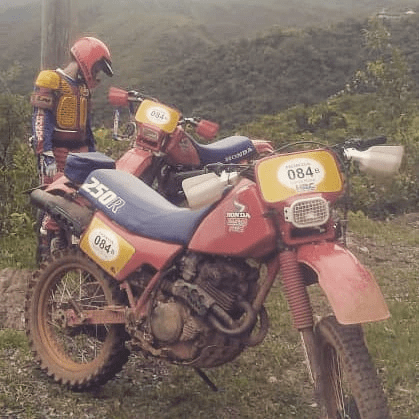
In 1982, the Brazilian division of Honda began manufacturing the XL 250R. Despite being just 13 years old at the time, I vividly remember the excitement surrounding this new bike. At that time, the import of motorcycles was still banned, and customers would eagerly awaited the release of new models from local companies.

A year before Yamaha released the DT 180 and throughout the 1980s, both bikes became the dream machines of cool kids who were either adventurous or wanted to be seen as adventurous.

Life is full of rivalries: liberals vs. conservatives, Coke vs. Pepsi, blondes vs. brunettes, Mustang vs. Camaro, but none of these subjects could incite a more passionate debate among the Brazilian teens in the 1980s than XL vs. DT. I always leaned toward the DT, mostly because of my weird sympathy for two-stroke engines, but we all knew the XL was a superior bike overall.

In 1987, Honda unveiled the XLX 350R, and with a bigger displacement engine came the front disc brake, which Honda stubbornly denied for so many years.

Honda shut down the XL production in Brazil in 1992, which was a sensible decision since around this time, the ban on imported vehicles was lifted, and customers had access to more advanced imported bikes.

As a high school kid with no steady job, I never had the means to buy a Yamaha DT or a Honda XL; they were both just a distant dream. I spent the 1980s riding whatever I could put my hands on, mostly mopeds and 125cc bikes, and inevitably looking with envious eyes every time a guy passed by riding an XL.

For my generation, this bike became a staple of that magic era; when I look back to the 80s, I see so many things that I miss dearly, like Wayfarer sunglasses, Tears for Fears, Atari video games, and the Honda XL 250.

Feeling generous? Visit my “Buy Me a Coffee” page

Flight To Arras / Pilote de Guerre

What book could you read over and over again?

The Prince of the Sky.

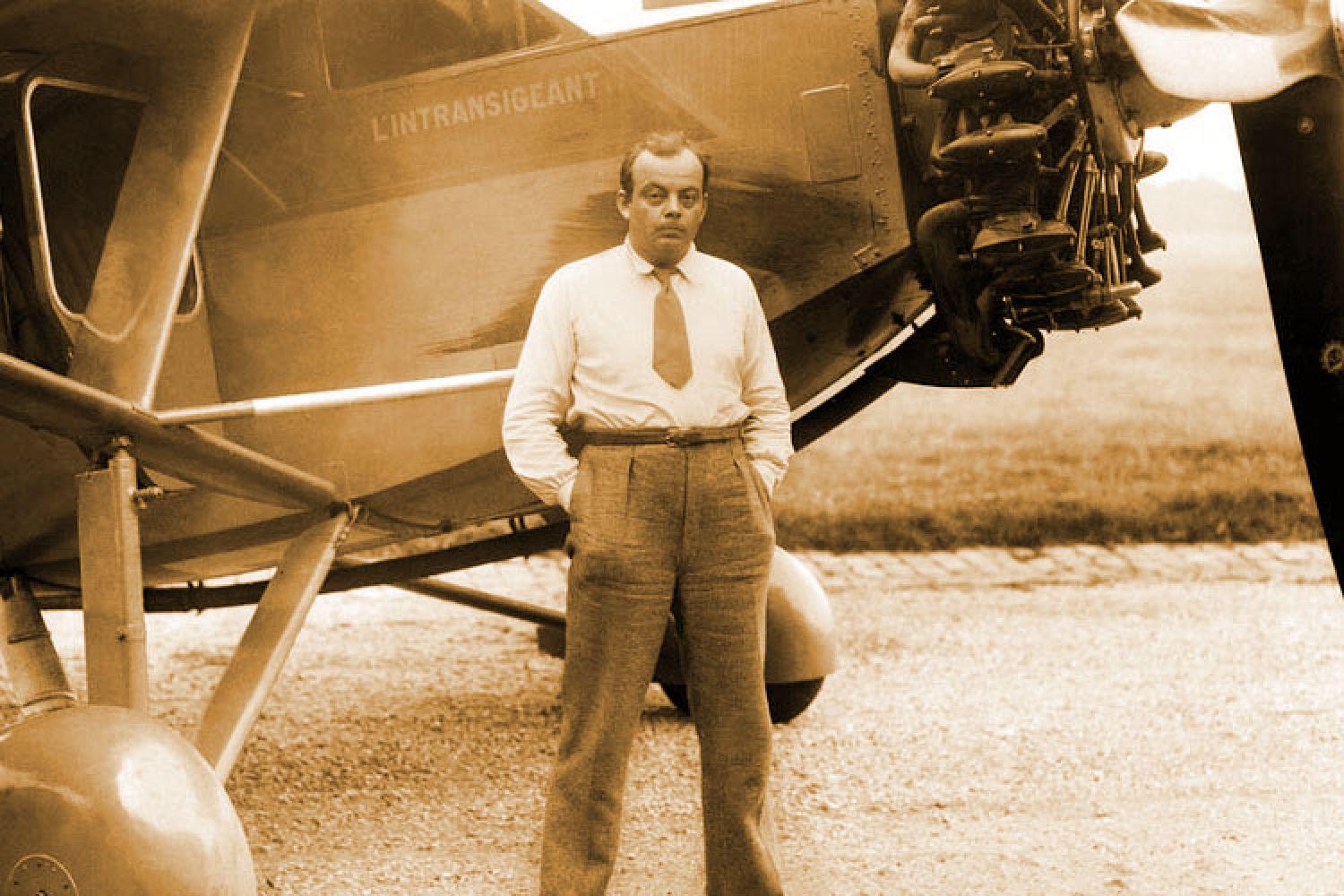
Writer, poet, illustrator, pilot, and above all, a romantic guy regarding most aspects of life. Antoine de Saint-Exupery was blessed with quite a few qualities when he came to this world.

Saint-Ex, as friends and family knew him, became famous thanks to his book The Little Prince, a deceiving work that seems intended for children, but holds inside a rather deep analysis of life and human nature.

Because of The Little Prince, which can be considered his masterpiece, the name Saint-Exupery always floated around when the conversation was about books, either at school or at the local library. The name was familiar, but I had never read any of his works until the early 1990s. One day my wife and I (my girlfriend at the time) were wandering through the aisles of the public library (similar to surfing the net in the pre-internet era) when I found a little book entitled Piloto de Guerra (War Pilot, in Portuguese), needless to say, I grabbed the book, took it home and read it in 2 days. To be fair, it is a short book, but I read it wishing it would never end.

The book is a personal account of a single reconnaissance mission he flew over the town of Arras not long after the German invasion of France. As a master storyteller, Saint-Ex condenses months of the futile fight against a more powerful and skilled enemy into one terrifying mission.

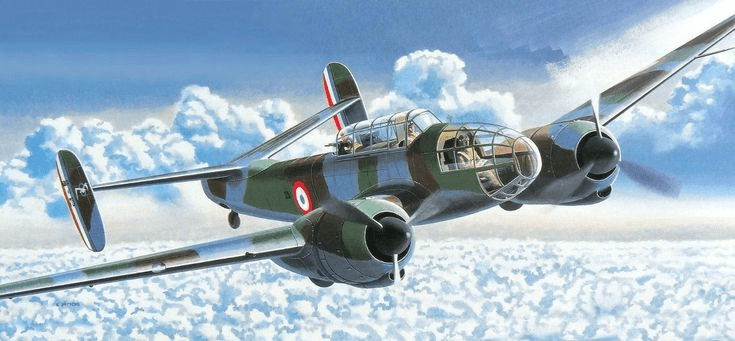
At the beginning of the war, he was assigned to Reconnaissance Group II/33 flying the twin-engine Bloch MB.170. The French Air Force had no more than fifty reconnaissance crews, twenty-three of which served in Antoine de Saint-Exupéry’s Group. After only a few days, seventeen of the crews in his unit had already perished.

 
The book is filled with human emotions, fear, frustration, friendship, and anger, but also with philosophy. With the French military in shambles, he sees the missions as a waste of human lives, “like glasses of water thrown onto a forest fire”.

Perhaps I should refrain from revealing more details and encourage you to read the book.

The book was initially published in 1942, the first time I read a copy of the 1951 edition. The English title, Flight to Arras, though relevant to the story, does not have the same impact as the original title. In my opinion, a direct translation would have been more appropriate for the work.

That is my copy of the book. I bought it online and for some reason, it traveled from the USA to Australia before arriving in Brazil; and I brought it with me when I moved to Canada. It certainly has quite a few hours of flight, perhaps it is a good homage to the author. I have read it more times than I care to count and I believe the time to read it again is near.

Classic Poetry – Huey

Such a hot afternoon.

It could have been a Wednesday, or a Friday, but not a Sunday.

Sitting on the driveway, brake parts scattered around me. And then the sound.

POM POM POM POM…

I remember this sound, I know what it is.

POM POM POM POM…

I close my eyes. I am not listening… I am feeling it.
POM POM POM POM…

And I am back to 1988…

Hardly moving through the marshes.

The glorious sun… burning my skin. Just like today, on this driveway.

With my eyes closed, I look around… Ohata, Jean Claude, Carli, and Ortega, I see them all… My company.

POM POM POM POM…

Carrying our rifles like crosses, drinking warm beer from our canteens, and shouting profanities at the pilot, like he could hear it.

And laughing like kids… because we were.

Hardly moving through the marshes.

POM POM POM POM…

It is close now.

I open my eyes, scanning the skies… here it comes.

POM POM POM POM…

Bastard! Can’t you see it? That I am still…

Hardly moving through the marshes.

Author’s note: Poetry is the art of putting in words the deepest feelings of the soul. Anger, love, fear, passion, frustration, joy, and sadness, all of them can be expressed by a stroke of a pen, and if the poem reaches the readers in a way that makes them feel something close to what the poet felt, then it can be considered a success. Some poems are written with much less noble intentions and are not meant to be profound. Those poems illustrate more frivolous situations, which is the case here. This silly attempt to make poetry tells us about a summer day in 2001, in Kennesaw, GA, when I was replacing brake pads on an old Toyota I owned, and I heard a Bell HU-1 approaching. The sound brought me some memories of an exercise day when I was in the Brazilian Air Force Infantry.

I started writing “Huey” during my English classes in 2001 but never finished it. Now, 23 years later, I think it is done.
Jimmy Stewart, The War Hero.

Old movies are the closest thing we have to a time machine. They can bring us back to a time when life was simpler, and people were more authentic. Every movie lover has a list of their favorite classics and, consequently, their favorite actors and actresses. During the glory days of Hollywood, Bogart was the intense one, Grant was the funny guy, Dean was the rebel, but there was an actor who could play the everyday guy like no other, James Stewart.

Jimmy, as he was known by friends and fans worldwide, made his trademark on the silver screen as the quintessential All-American dude, pouring his easy-going persona into most of the characters he played. He built one of the most successful and enduring careers in film history and became a symbol of Hollywood golden age.

James Maitland Stewart was born in Indiana, Pennsylvania, on May 20, 1908. Growing up as a typical small-town boy, he cultivated values he would carry throughout his life. He went to Princeton and got a degree in architecture, but thanks to the depression, he had difficulty finding a job in the field. With limited options on the horizon, Stewart accepted an invitation from a friend to help prepare shows for Broadway.

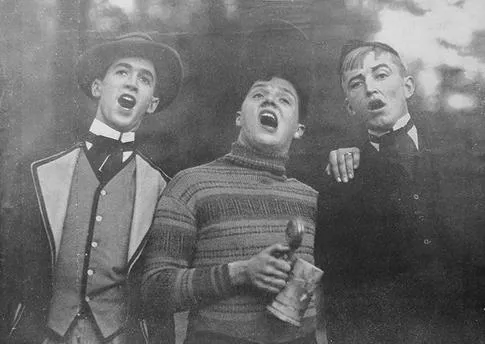
Jimmy singing his heart out in his Princeton days.

Jimmy fell in love with show business, and soon, he started on Broadway with small parts, and later on to leading roles until Hollywood found him. 

His first movie appearance was in a supporting role in The Murder Man (1935), but his breakthrough only happened in 1938, when he starred in Frank Capra’s comedy You Can’t Take It With You. From that moment, Stewart’s career skyrocketed.

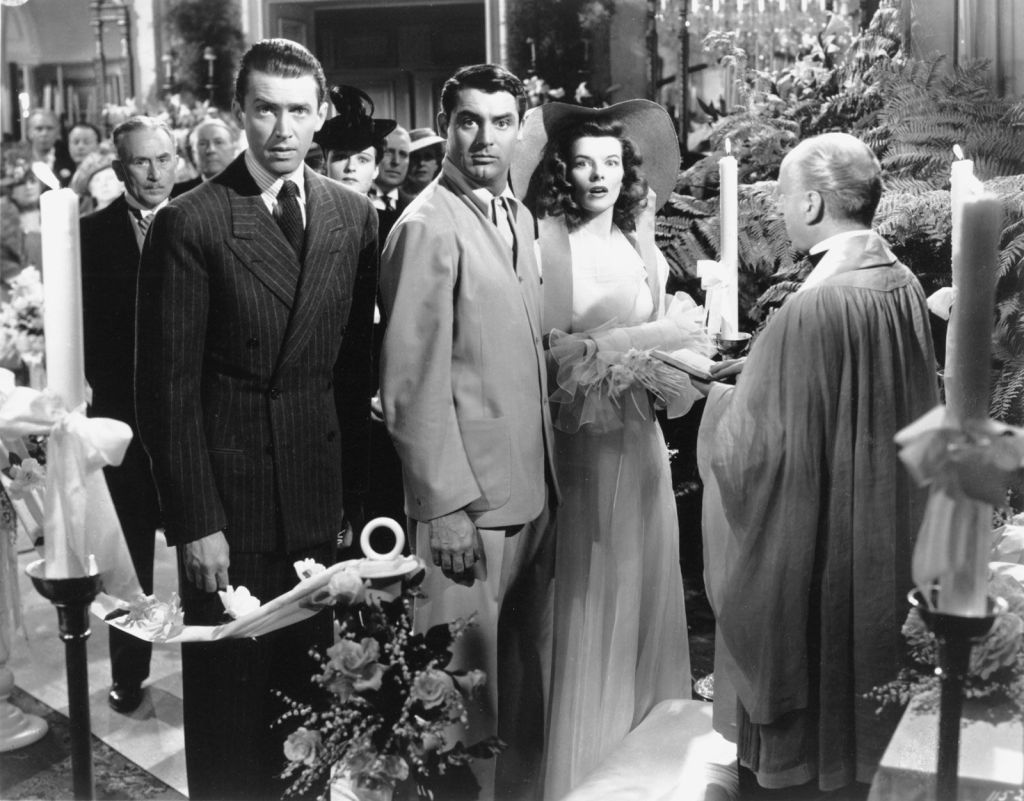
It doesn’t get any better than that: Jimmy Stewart, Cary Grant, and Katharine Hepburn in the 1940 The Philadelphia Story.

He received his first Academy nomination in 1939 for his role in Mr. Smith Goes to Washington, and the following year, he won the Oscar for Best Actor for his performance in George Cukor’s romantic comedy, The Philadelphia Story.

Reporting for duty

By the time Jimmy’s career was flying high in Hollywood, the war was raging across the Atlantic. Hitler seemed unstoppable in his quest to conquer the entire Europe, and even if Roosevelt promised that the USA would not intervene in war, many people knew that it would be just a matter of time for the Americans to join the fight.

Stewart came from a family with deep military roots: both of his grandfathers had fought in the Civil War, and his father had served during both the Spanish–American War and World War I. He saw the threat of fascism in Europe as the perfect opportunity to keep this family tradition alive and in 1940, to the dismay of his bosses at Metro Goodwin Mayer, he asked to put his career on hold, while answering a much higher call.

Jimmy enlisted in the US Army in November 1940 but was rejected for not meeting the minimum weight. Besides being a talented actor, Stewart was a licensed commercial pilot with quite a few flying hours under his belt, and he thought his resume would help him to be accepted into the military. He enlisted as a private in the Air Corps on March 22, 1941.

Jimmy’s application for aviation cadet training was rejected, this time due to his age. At almost 33 years old, he was way beyond the age limit. However, the USAAF found a way around this hurdle by applying him for an Air Corps commission as a college graduate and a licensed commercial pilot. On January 1, 1942, Stewart was commissioned as a second lieutenant, less than a month after the Japanese attack on Pearl Harbor.

MGM kept Jimmy under contract, his bosses were confident that the army would not put him in harm’s way, and at the end of the war, he would return to Hollywood safe and sound. The USAAF quickly took advantage of his celebrity status, they scheduled him to appear on a radio program called “We Hold These Truths,” which celebrated the United States Bill of Rights. Jimmy also appeared in a short movie produced by the USAAF in 1942 called “Winning Your Wings“, which was nominated for the Oscar for Best Documentary in the same year. According to some estimates, the movie helped to recruit 150,000 new soldiers.

The 703rd Bomb Squadron patch.

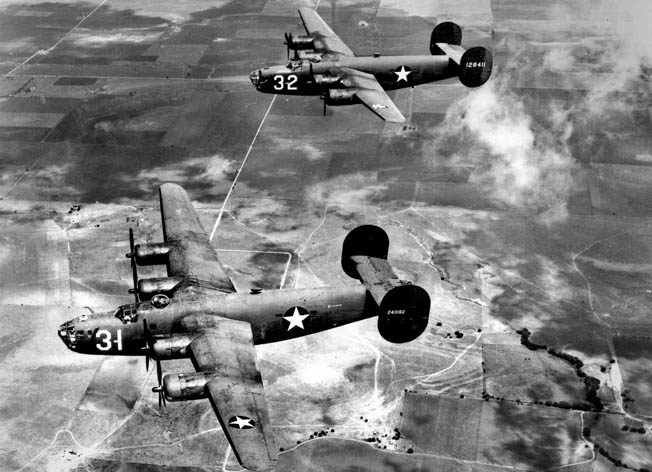
Stewart was not happy with his role in the war so far, he wanted to fight and requested to be deployed to the front lines instead of given desk jobs. He was then sent to the Kirtland Army Airfield in New Mexico to receive training as a bomber pilot. After completing the course, he was assigned to the 29th Bombardment Group to fly the B-24 Liberator on antisubmarine patrols in the Caribbean Sea. The idea was to allow him to get used to this new, state-of-the-art heavy bomber before sending him to Europe. Stewart was then sent to England as a member of the 703rd Bomb Squadron, 445th Bomb Group, initially based at RAF Tibenham and later to RAF Old Buckenham.

The bombing campaign.

No enemy aircraft will ever cross Germany’s borders” – Reichsmarschall  Hermann Göring, Commander of the Luftwaffe.

If Jimmy Stewart wanted to see action, the US Army sent him to the right place. British bombing against German cities started as early as 1940, proving that the promise made by the buffoon Göring was just empty words, but it was only when the US joined the effort in 1942 that the campaign became effective.

A B-24 from the 703rd Squadron arrives at the base after a mission.

The American bombers, specifically the Boeing B-17 Flying Fortress and the Consolidated B-24 Liberator, were equipped with heavier defensive armaments than the British Avro Lancaster. For this reason, the USAAF was responsible for carrying out the “precision” daytime bombing, deep into enemy territories. While, in theory, extensive formations of bombers flying close to each other would provide an effective defensive fire against the enemy fighters, the reality was far different. The German pilots quickly learned to exploit the vulnerable points of the American bombers, such as attacking them head-on or from below.

The German fighters were not the only challenge faced by the crew members during their missions, as most of the strategic targets were heavily defended by anti-aircraft batteries. This resulted in heavy losses at the beginning of the campaign. The odds of surviving combat were so low that if a crew member managed to pull through for three weeks, he was already considered a veteran. At some point, the USAAF contemplated halting the missions to stop the unnecessary loss of their personnel. However, the arrival of the long-range fighters, the P51 Mustang and the P47 Thunderbolt, brought some hope as they offered a decent level of protection against the enemy fighters.

Jimmy goes to war

Standing fourth from left, Jimmy Stewart is photographed with officers of the U.S. Army Air Forces 703rd Bombardment Squadron.

It is evident that Jimmy’s celebrity status played a significant role in the Army’s decision to accept him. The Air Force saw the actor as the perfect war bonds salesman. However, Jimmy had different plans and aspirations in mind. He desired to serve his country and fight on the front lines, just like any other drafted individual.

Stewart loved airplanes. As a young boy, he saved money from his paper route to ride in a biplane after spending weeks convincing his mother it was safe. After graduating from Princeton, he took flying lessons and got private and commercial licenses. As a B-24 pilot, he was doing what he loved the most and also doing his part in defeating the Nazi regime.

Crew members of the 445th bomb group are removing a .50 cal Browning machine gun from a B-24, most likely for maintenance.

Stewart’s experience as a commercial pilot usually granted him the responsibility of squadron leader. His baptism of fire happened on December 13, 1943, when the 445th flew its first combat mission, a strike on the U-boat pens at Kiel. Stewart led the group’s high squadron, taking them over the target at 27,000 feet.

His next mission was to Bremen on December 16, when he, once again, flew as lead pilot for the 445th Group.

German soldiers are seen here taking a V1 flying bomb to the launching rails. Pas de Calais, France.

On the night of Christmas Eve, Stewart led his group on a mission against German rocket-launching sites in the Pas de Calais, France. With over 2,000 bombers and fighters participating, it was the largest Eighth Air Force mission of the war up to that point.

A true leader

On January 7, 1944, Stewart took the 445th Group on a mission to Ludwigshafen. As they departed the target area, he realized that the group he was following, the 389th, was 30 degrees off course. He called the leader aircraft and informed the captain of his error, but the officer insisted they were on course. Stewart knew that the course was wrong and was taking both groups away from the protection of the main formation. At this moment, Jimmy faced the hardest decision of his career as a bomber pilot; he could have corrected his course and brought his bombers to the protection of the main formation, leaving the stubborn Captain and his group alone to face their fate. Instead, he radioed the other group leader, saying that for better or for worse, he was sticking with him.

Stewart knew that two groups flying together had a better chance of surviving the fighters than one group alone. As he had feared, the German radar operators noticed that the two groups had separated from the bomber stream and vectored several squadrons of fighters to attack them. They were approximately 30 miles south of Paris when around 60 Luftwaffe fighters came in for the attack. Following the standard procedure, the first wave of BF-109 came head-on, and the first B-24 shot down was the one whose navigator had made the mistake. An intense battle followed, and by the time when the Germans left the scene with low fuel and ammo, 17 Liberators were brought down. Amazingly, none of them belonged to Jimmy’s group.

A proud B-24 gunner in full combat gear poses before his aircraft. The marks painted on the fuselage tell the impressive resume of this machine. The bombs represent the number of missions, and the swastikas are the number of enemy fighters shot down by the crew.

Colonel Milton W. Arnold, the 389th commander, sent a letter to the 445th commander, Colonel Robert H. Terrill, commending Stewart for his actions. Shortly after the mission, Stewart was promoted to major.

The Machine

“The Dragon and its Tail” B-24. I had the privilege to see this aircraft up close when it visited the McCollum Field Airport, Kennesaw GA, in 2004.

When Jimmy Stewart arrived in England, the USAAF had just started to phase out its old workhorse, the Boeing B-17 Flying Fortress. The new Liberator could fly higher, faster, and carry a heavier payload.

B-24 Consolidated B-24 Liberator

-Engine: 4 x Pratt & Whitney R-1830 Twin Wasp, radial 14 cylinder (2 rows of 7 cylinder), air-cooled, turbo and supercharged, rated at 1200 hp each.

Max speed: 297 mph (478 km/h, 258 kn) at 25,000 ft (7,600 m)

Range: 1,540 mi (2,480 km) at 237 mph cruise speed (381 km/h) @ 25,000 ft (7,600 m) and maximum internal bomb load.

Payload: Long-range mission (800 mi [1,300 km]): 5,000 pounds (2,300 kg).

Armament: 10 × .50 caliber M2 Browning machine guns in 4 turrets and two waist positions.

Crew: 11 airmen – pilot, co-pilot, navigator, bombardier, radio operator, nose turret, top turret, two waist gunners, ball turret, and tail gunner.

Not the prettiest airplane in the Air Force arsenal, for sure.

The Liberator was an overall better aircraft than the beloved B-17; after all, numbers don’t lie, but many pilots and crew members didn’t like to see the old Fortress go, including Jimmy: “In combat, the airplane was no match for the B-17 as a formation bomb­er above 25,000 feet, but from 12,000 to 18,000, it did a fine job.” Said the major.

A highly decorated officer 

Stewart was the first high-profile Hollywood star to join the military in WWII. Perhaps the only actor who could match his popularity that followed the same path was Clark Gables, who lacked the skills of a pilot and became a B-17 gunner. From 1943 to 1944, Jimmy flew 20 combat missions, (and probably just as many as a replacement pilot) as commanding officer of the 703rd Bomber Squadron, 445th Bombardment Group.

Major Stewart, as a squadron operations officer, discusses a mission with a bomber crew, in the spring of 1944.

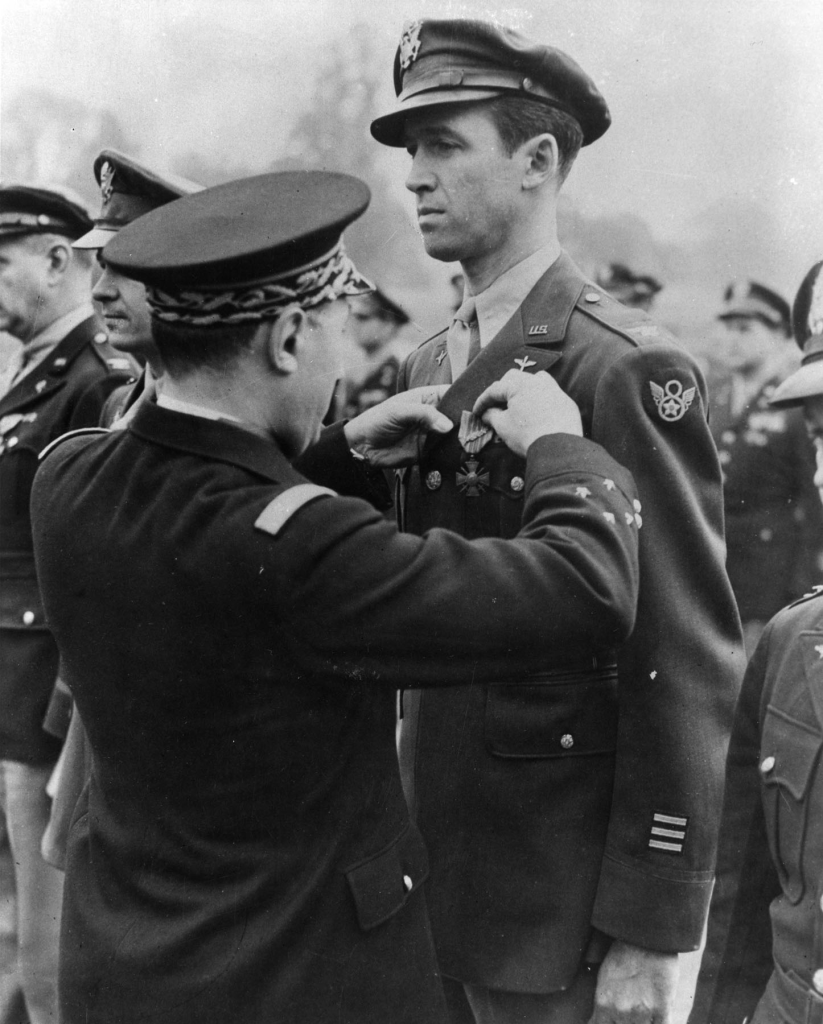
In 1945, the USAAF promoted him to operations officer and later to Chief of Staff, keeping their most notorious major on the ground as much as possible. Perhaps they realized it would be a shame to lose the guy when the Germans were so close to being defeated. He was awarded the Distinguished Flying Cross for actions as deputy commander of the 2nd Bombardment Wing, the French Croix de Guerre with palm, and the Air Medal with three oak leaf clusters.

Stewart was a man of unshakable principles. He was regarded as a skilled and trustworthy commander by the guys who served under him and he will always be remembered for keeping his coolness under fire. When Jimmy returned home in the fall of 1945, he had already been promoted to colonel. The man never used his WWII service to promote himself; he always tried to keep his distance from the reporters while he served in England.

The post-war years

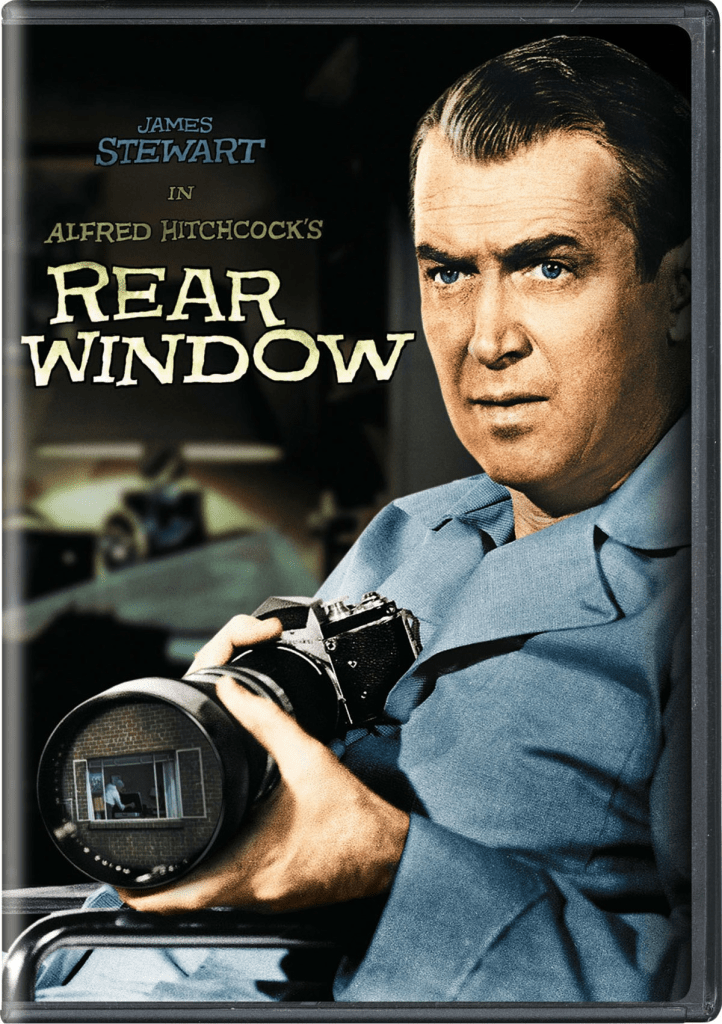
Stewart picked up his career in Hollywood where he had left. In 1950 he received his fourth Academy Award nomination as well as his first Golden Globe nomination for his role in the movie Harvey. Jimmy became one of Hitchcock’s favorite actors and played the main role in the 1954 Rear Window, and the 1958 Vertigo.

But the guy loved the Air Force so much that he never left. He went to the USAF reserve and completed his transition training to the Convair B-36 Peacemaker and the iconic Boeing B-52. In 1955 Jimmy played a reserve Air Force officer who was called back for active duty, in the movie Strategic Air Command.

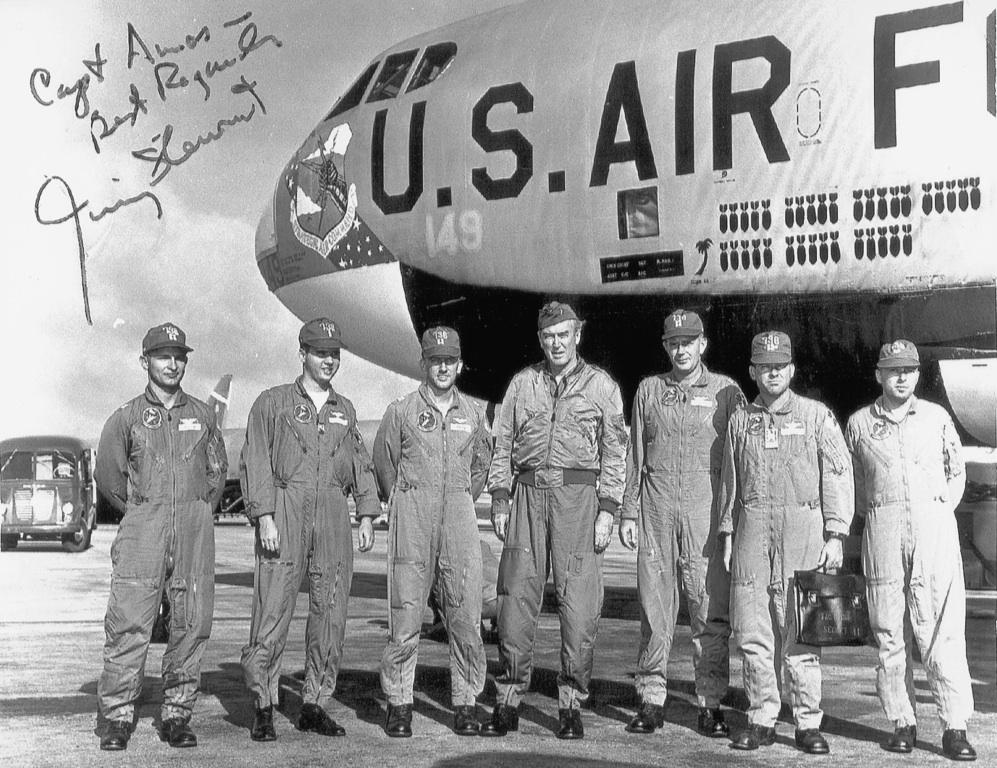
Brigadier General James M. (“Jimmy”) Stewart, USAFR (center) with the crew of B-52F Stratofortress 57-149, at Anderson Air Force Base, Guam, 20 February 1966. On this day, Jimmy flew his last mission as an Air Force officer.

Stewart was first nominated for promotion to brigadier general in February 1957; however, his promotion was initially opposed by Senator Margaret Chase Smith. At the time of the nomination, the Washington Daily News gave him a little push: “He trains actively with the Reserve every year. He’s had 18 hours as first pilot of a B-52.” On July 23, 1959, Stewart finally got promoted to brigadier general, becoming the highest-ranking actor in American military history. During the Vietnam War, he flew as a non-duty observer in a B-52 on an Arc Light bombing mission in February 1966.

He served in the Air Force for 27 years and officially retired on May 31, 1968, when he turned 60, the mandatory retirement age. He was honoured with the United States Air Force Distinguished Service Medal upon his retirement. Although Stewart rarely talked about his wartime service, he did appear in an episode of the British television documentary series The World at War (1974), where he commented on the disastrous 1943 mission against Schweinfurt, Germany.

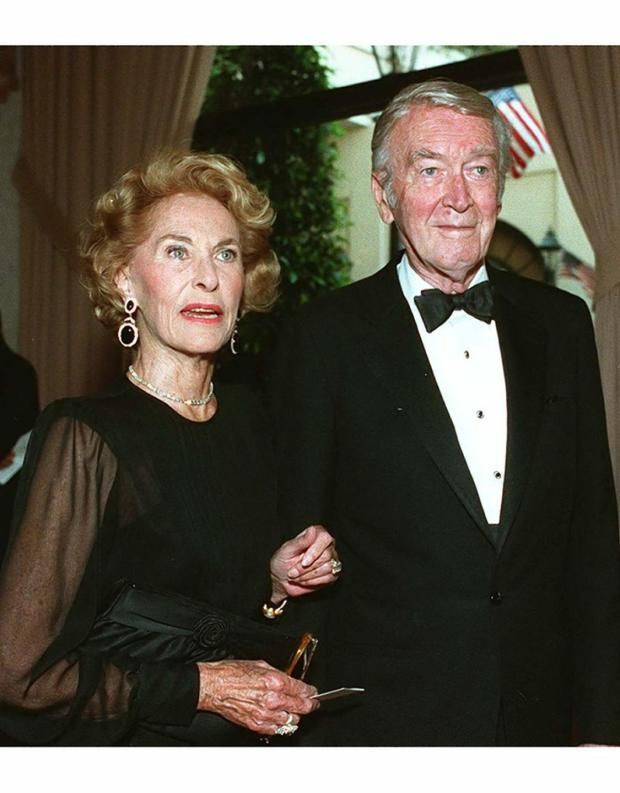
Jimmy Stewart and his wife Gloria McLean.

Stewart had a brilliant and prolific career in Hollywood, but in the 1970s, he developed a hearing impairment, which affected his ability to hear his cues and led to him repeatedly flubbing his lines; his vanity would not allow him to admit this or wear a hearing aid. His last movie was the 1980 The Green Horizon, directed by Susumu Hani.

Jimmy married Gloria Hatrick McLean in 1949 when he was already in his 40s. The couple stayed together for 44 years until Gloria succumbed to lung cancer in 1994, and after her death, Stewart became depressed and secluded. In December 1996, he was due to have the battery in his pacemaker changed but opted not to have that done, allowing things to follow a more natural path.

The guy who embodied the righteousness and courage of the Greatest Generation, not only behind the cameras but in real life as well, died of a heart attack caused by an embolism at the age of 89, surrounded by his children at his home in Beverly Hills, on July 2, 1997. Family members, friends, fans, Hollywood celebrities, and military personnel, all together, a crowd of more than 3,000 people attended his funeral. He was buried at Forest Lawn Memorial Park in Glendale, California.

Hollywood icon, war hero, entrepreneur, philanthropist… during his time among us, Jimmy lived many different lives, but perhaps the worlds of President Bill Clinton at the time of Jimmy’s death encapsulate his persona: – “America had lost a national treasure, a great actor, a gentleman and a patriot”. –

The Argentine Mission at the 84 Hours of Nürburgring

– In 1969, a team of Argentine racers, led by Juan Manuel Fangio, won one of the most gruesome endurance races ever, driving an unlikely race car. This is their story.

 No, it is not a typo. The first time I came across this amazing story, I also thought: ” You mean 24 Hours of Nürburgring… Right?!?!”. Actually, no!!! The race, in fact, extended for 84 excruciating hours. Three and a half uninterrupted days of racing, in the rain, and fog. 84 hours of praying for the drivers and the mechanics to stay awake and to keep their sanity. And of course, praying for the cars not to fall apart.

To understand the scope of this Argentine achievement, we must understand the 3 most important components of this adventure: the race in which they competed, the boss who was in charge, and the car they raced.

The race

The concept of endurance racing was born more as a test bench for the automakers than as a motorsport genre per se. During the automobile’s infancy, between the 1910s and 1920s, the most popular form of endurance racing was rally, after all, there is no better laboratory for auto brands to test their products than the roads used by daily drivers.

In 1931, the Marathon de la Route was created, as a series of road rallies crossing the European continent and beyond. The longest chapter was a 3,500 km, non-stop round trip from Liege, Belgium to Rome, Italy, and back (later it became Liege-Sophia-Liege). Obviously, the race was not completely “non-stop” since drivers needed to be replaced and cars needed to be refueled, but the pit stops should not exceed 30 min. After WWII the number of cars, trucks, and buses increased considerably around the world and some countries started to impose restrictions on auto racing on public roads. The 84 Hours of Nürburgring was created in 1965 as a safer replacement for those long-duration rallies.

The beautiful Mazda Cosmo, being refueled during the very first 84 Hours of Nurburgring, in 1965.

Although not nearly as glamorous as the other endurance races and mostly unknown to modern race fans, the 84 Hours of Nürburgring was extensively used by automakers to test their products. It was held between 1965 and 1971 and was intended for production cars only.

Now that we know a little about the race, it is time to talk about the most important element in the Argentine team, their boss.

Fangio

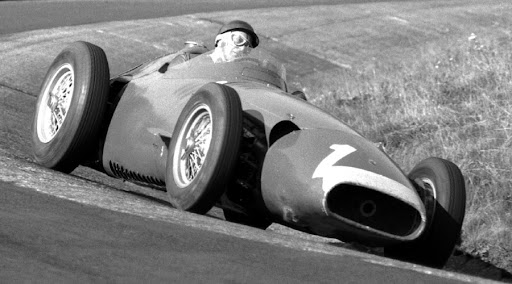
Fangio in his Ferrari – 1956

If you ever see a list of “The best Formula One drivers of all time” and you can’t find Fangio among the top 5, just throw the list in the garbage.

Juan Manuel Fangio began his racing career in Argentina in 1936, driving a 1929 Ford Model A that he had rebuilt in his own repair shop. After winning everything possible in South America in the 1940s, Fangio crossed the Atlantic, seeking more racing glory in the Old Continent. He had the honour of participating in the first Formula-One championship in 1950, racing for Alfa Romeo. At 39, he was considered way too old for a rookie in the European Grand Prix universe, but in the following years, Fangio proved that age is, in fact, just a number. He won nothing less than five world titles: 1951 (Alfa Romeo), 1954 (Maserati), 1955 (Mercedes-Benz), 1956 (Ferrari), and 1957 (Maserati).

Fangio retired from professional racing in 1958 while he was still on top. His status as a living legend allowed him to navigate freely not only around the international racing community but also through the corridors of many automakers in Europe and South America. With all his connections and influence, there wouldn’t be a better person to lead the Argentine team in this adventure.

Now we must talk about the third component of this enterprise, the car.

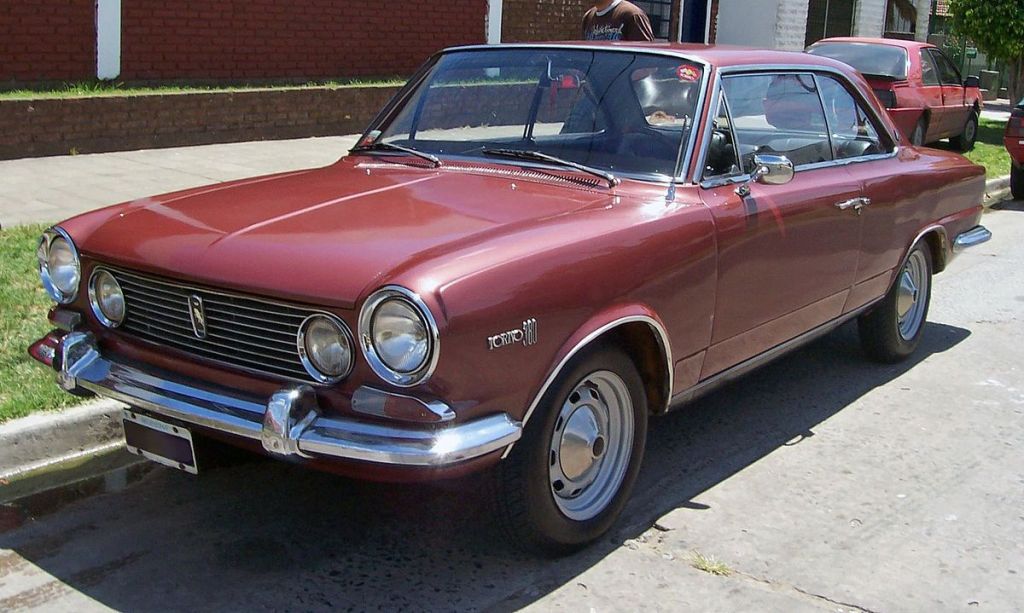
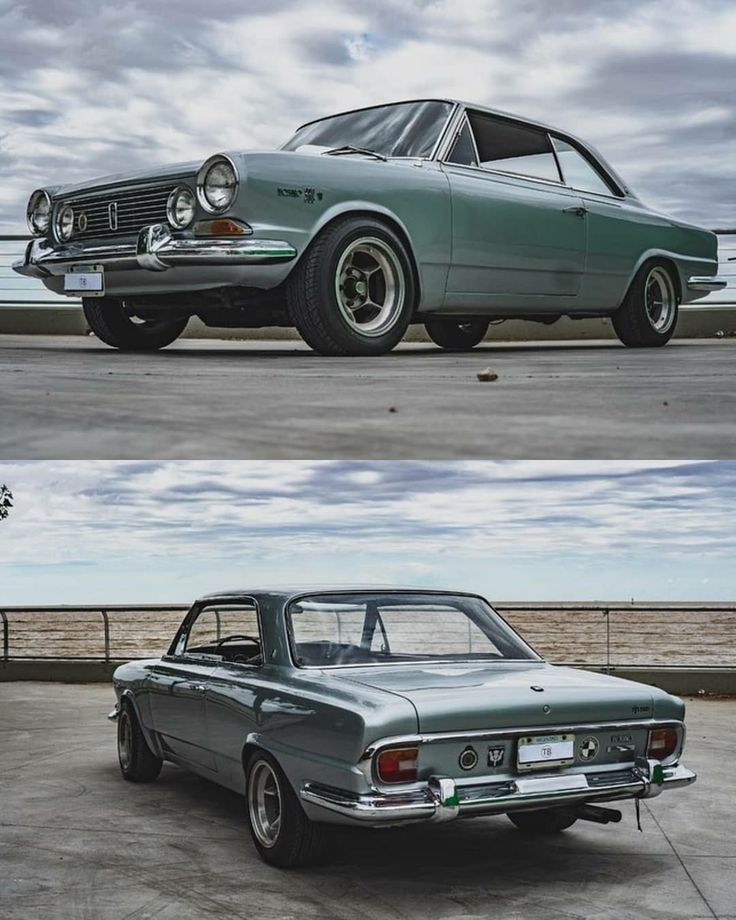
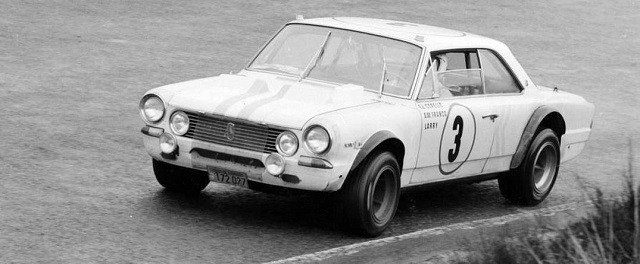
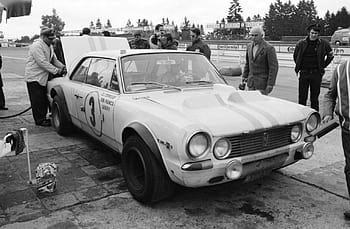
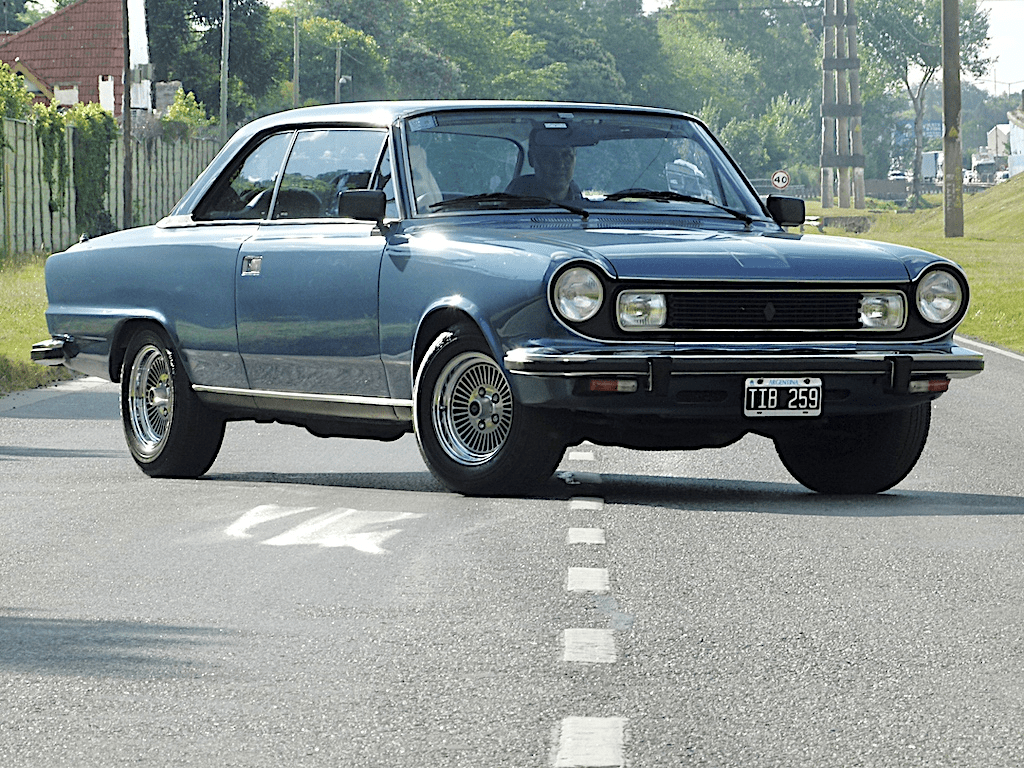
The Argentine Torino

Right after WWII, some countries in South America were willing to show the world that they could produce more than agricultural goods. Brazil, Argentina, Venezuela, and Chile were gearing up to make all sorts of machinery, ships, and trains, but no other machine could ignite the pride of a nation as much as a car. During the 1950s and 1960s, many European and American automakers answered the call and opened factories in South America, lured by the prospects of a booming economy in the region. Some small brands struggling in their home countries saw this as an opportunity to strive in a less crowded and less competitive market.

In 1956, Industrias Kaiser Argentina S.A. (mostly known as IKA) was founded, as a joint venture with the American Kaiser Motors. The company produced a variety of Kaiser/Jeep vehicles and the AMC Rambler. In 1967  Renault started a slow process of acquisition of IKA, which ended in 1970.

By the early 1960s, IKA wanted a car that could stand out from competitors, something like a sports coupe. Since the budget for this new project was short (welcome to South America), the company had to do it with an off-the-shelf product.

IKA sent two 1964 AMC Rambler to Pininfarina, one coupe and one 4 doors, and asked them to transform it into something beautiful. The changes performed by the Italians were minimal, perhaps the idea was to save as much money as possible on new tooling. The result was an elegant car with an unequivocal European charm.

Under the hood, things got a little more complicated. With no money for a brand-new engine, IKA depended on the ancient Kaiser/Jeep 226 CID flathead, in-line six engines. This is not the kind of machinery anyone would expect to see powering a car with GT aspirations, but thankfully, the team had some money left for a few upgrades.

Kaiser Chief Engineer A.C. “Sammy” Sampietro designed an aluminum SOHC, hemi head, that improved immensely the breathing capability of the engine. IKA offered a 3 litre (183 CID) – 120 HP as the entry-level mill and a 3.7 litre (230 CID) – 150 HP as the performance option. The new engine was called Tornado.

IKA also redesigned the awkward Rambler’s rear suspension, giving the car better handling. Closing the mechanical package, the engine was bolted to a trustworthy ZF four-speed manual transmission (a 3-speed auto tranny could be special ordered). The car was christened Torino and released in 1966 (2 years before Ford released their Torino).

The IKA Torino was an instant hit. The car boosted the company’s sales and gave it enough firepower to face the big dogs Ford, Dodge, and Chevy.

Later on, the team improved the engine block, increasing the number of main bearings from 4 to 7, allowing them to squeeze more power from the Tornado safely. The high-performance version of the Torino called 380 W, had a more aggressive camshaft, higher compression ratio, and three side draft Weber carbs, kicking the power output to 250 HP.

The “W” Torino proved to be a competent race car and started to collect victories on race tracks in Argentina and all over South America.

Even if the Torino was heavily based on the AMC Rambler, the Argentinians always saw it as a 100% domestic creation. The car became the pride of the country, a symbol of the nation’s industrial ingenuity. When the idea of an Argentinian race team competing in Europa started to gain momentum, they knew this team couldn’t be driving anything other than the Torino.

La Mission Argentina

The idea of “Win on Sunday, sell on Monday” was, and still is, widely used by the South American auto industry. In the 1960s, every automaker had its own official race team, and the drivers would wear the brand’s logo as proudly as a soccer player would wear his team’s jersey. When the rumours that Fangio was assembling a race team to compete in Europe, everybody jumped in. Even the head of General Motors in Argentina called Fangio to wish him good luck.

The idea of choosing the 84 Hours of Nürburgring is easy to understand. First, it was an endurance race intended for production cars only, with no sports prototypes stealing the show; the team had an excellent chance to score a good result. Second, Fangio had won there three times (1954, 1956, and 1957), which means he knew all the tricks to tame the “Green Inferno.”

The Wizard

Orestes Berta – circa 1971

What makes a street car become a race car is much more than the collection of high-performance parts installed in it; it is the talent of the people who installed them. In 1966, IKA had the privilege to hire a guy who was, perhaps, the most talented race engineer in South America, Orestes “The Wizard” Berta. By the time this idea of racing in Nürburgring came, he had already made the Torino a National Champion in 1967.

Berta, as the team’s chief engineer, prepared 3 Torinos for this adventure. Surprisingly, the cars were pretty close to the stock 380 W. The idea was not to make them super fast but super reliable. The vehicles received the numbers 1, 2, and 3, and as you can see in this picture, the front facia of each Torino was painted in a different colour, making it easy for the pit crew to identify them.

The Drivers

Fangio called only the best Argentinian drivers to be part of the team. Even his son, Oscar Fangio, was drafted.

Torino #1: Carmelo Gabalto, Oscar Fangio, and Rubén Luiz de Palma.

Torino #2: Gaston Perkins, Rodríguez Canedo, and Jorge Cupiero.

Torino #3: Rodríguez “Larry” Larrreta, Eduardo Copello, and Oscar Mauricio Franco.

Let the adventure begin

In July, Orestes Berta and his team of 6 technicians traveled to Hamburg, Germany to receive the Torinos. From there, they transferred the cars and equipment to the city of Chaudfountaine, in Belgium, for the symbolic start of the race, in July 30. The teams had 4 hours to reach the race track in Nürburg – Germany. This first stage of the race was a homage to its original format as a rally, and it was intended to be more like a parade than a competition since 4 hours is more than enough time to cover the 157 km that separates the two cities. To curb the drivers’ enthusiasm, every traffic ticket would be rewarded with a 5-lap penalty during the race.

The Argentinians had no problem reaching Nürburgring at 1 a.m. of the same day.

The course was the combined loop of the Nordschleife and the now-abandoned Südschleife. Each lap covers a total of  28 kilometres. The Torinos would face formidable opponents like Lancia Fulvias, Porsche 911s,  BMW 2002s, and Ford Capris.

Besides the lack of international experience of the Argentinians, something else caught the attention of the other teams. The Torinos, with their muscle car appearance, seemed to be an unfair adversary against the diminutive European sports cars that dominated the field. Rumour has it that Fangio influenced the directors to create the Above 3000cc class to accommodate the Argentinian vehicles that year. A total of 65 cars started the race on August 19th.

Racing under heavy fog, the 3 Torinos had little problem leading the race during the first 6 hours. Gaston Perkins, at the wheel of the #2 Torino, was dictating the pace with an average of 13 minutes per lap @ 125 km/h. Unfortunately, it started raining during the night, and at lap 41, Cupiero lost control of the #2 and crashed it. 

The #3 Torino, under heavy rain.

After 12 hours, the best Torino was the #3, with Copelo at the wheel, fighting the Fulvias for the lead. At the 16-hour mark, the Lancias were penalized and the Argentinians took a 1-2 lead.

During the night of the second day, the Torino #1 had electrical problems, and with no lights, Di Palma crashed the car. Now, the hopes of the team (and the whole South American continent) were on the surviving vehicle.

Oscar Franco, fixing the exhaust of his car.

After 53 hours, the Torino #3 led the race when Franco had to pull into the pits with a hanging exhaust. Following the rules of the rally, the driver had to perform the repair without the help of the mechanics. He fixed it as best as possible, but the track marshals suspected the car was still making too much noise, above the allowed 83 decibels. Later on, the race director applied a six-lap penalty because of the loud exhaust.

Fangio’s Tango

With “only” 20 hours left, Larry pulled the Torino again into the pits to have the brake pads replaced. The poor driver was having difficulty performing the task, and Orestes Berta panicked, shouting instructions to the driver (which was against the rules). One of the track marshals had to intervene, asking Berta to shut up. As the situation was becoming desperate, Fangio had a stroke of brilliance; he started to dance and sing in a loud voice what seemed to be a tango when, in reality, he was singing instructions to his driver. Larry finished the job and rushed back to the race—pure genius.

Within 10 hours left to the end of the race, the #3 was in fifth place overhaul, but a Ford Capri leading the race had to retire with a blown engine, giving one position to the Argentinians.

Calm down, mi hermano.

After 82 hours of blood, sweat, and tears, only 28 cars were still racing. Franco, at the wheel of the surviving Torino, decided to drop the hammer and fight for the P3. Berta and Fangio rushed to the fence and instructed him to slow down to save fuel and the whole car as well. It would be better to finish the race in P4 than not finishing at all.

At the 84-hour mark on August 22, with most of the surviving cars falling apart and the drivers and crew members on the verge of a nervous breakdown, the race finally ended. Oscar Franco had the honour of receiving the checkered flag for the team.

This is the final standing:

First place: Lancia Fulvia, driven by Kallstrom – Barbasio – Fall – 322 laps

Second place: BMW 2002, driven by Duchting – Scheider – Degen – 318 laps

Third place: Triumph TR6, driven by Barbara – Carpentier – Duvachel – 315 laps

Fourth place: IKA Torino 380 W, driven by Copello – “Larry” – Franco – 315 laps

Fifth place: Mazda Cosmo, driven by De Fierlant – Enever – Kelleners – 311 laps

According to the records, the Argentinians finished the race with 334 laps, which would have given them the overhaul victory. Still, the team was penalized for the loud exhaust and for taking a longer than 30-minute pit stop (probably during the brake pads tango episode).

Among the crew, feelings were mixed. They were happy to finish such a gruesome race among the top 5, but at the same time, they were deeply sad for watching some silly technicalities take away the overhaul victory.

Fangio, sensing the frustration in the air, called the team and asked them:

“But tell me one thing, brothers – If you had been told in Argentina that we were going to lead half of the race and that we would finish fourth – Would you have believed?” 

And let’s not forget they took home the Above 3-litre trophy, but since no one else was racing in that class, it doesn’t count much.

Upon their return, the team was received as heroes. They proved that the Argentine industry could produce a GT car not only good enough to be among Europe’s finest but also beat them on their own turf.

Final thoughts

Fangio raced during the most dangerous period in the history of Formula One and survived to tell the story of his five world championships. He spent his retirement involved with the one thing he loved the most: motorsports. If this is not a life lived to the fullest, nothing else is. Fangio was inducted into the International Motorsports Hall of Fame in 1990, and he died five years later at his home in Buenos Aires at the age of 84.

Orestes Berta left IKA a couple of years after the race in Nürburgring to dedicate himself to full-time racing. His engineering company, Orestes Berta S.A., became one of the most important centers of motorsport development in South America.

In 1970, Renault assumed control of IKA, but they kept the iconic Torino in production, (pretty much untouched) for as long as they could. The last one left the assembly line in 1982.

As for the three white warriors of 69, they went through an extensive restoration and can often be seen brightening some important automotive events in Argentina. They remind the younger generations what a bunch of inexperienced but passionate gearheads can achieve.

1983 Porsche 911 Targa – A Matter of Feeling

During the time I worked for two different restoration shops in Brazil, I had the opportunity to drive some interesting cars and bikes.

A couple of days ago I was going through hundreds of digital pictures that I have scattered all over Google Drive and found a few shots of one of those cars, a 1983 Porsche 911 Targa that came to be part of the Powertech collection back in 2012.

The previous owner didn’t care much about the originality of this car, the rims are from a modern Porsche, and when the fuel injection gave up, he replaced it with a cheaper, made-in-Brazil, EFI. Since it was an injection system designed for competition and non-sequential, the 3.0 flat-six was kinda rough at low rpm. It was only above 3,000 that little bastard would sing happily.

Besides the EFI problem, which could be easily fixed, this Targa was a very nice car. I used to say it was the perfect bachelor car.

It was not the first vintage Porsche I drove but it confirmed a feeling that I had before. I don’t quite get all the fuss about those older Porsches. To me, they behave like a VW Beetle on steroids, they sound like a Beetle, and they even smell like one. All those similarities came as no surprise since the two cars share the same DNA

Don’t get me wrong, I am not bashing the 911, the car has heritage, for sure; otherwise, it wouldn’t have thousands of devoted fans around the world. I just fail to see it on a pedestal, placed much higher than other sports cars.

By the same time this 911 was at Powertech, the team had finished a Brazilian built 1976 Dodge Dart for a customer. The car was equipped with spiced up 318 small block and a four-on the-floor transmission, it was a delight to drive. One day we were scheduled to take both cars to the Detran (equivalent to DOT) for an inspection. The manager tossed me the Porsche’s key and said:

“Rubens, I am gonna be nice to you, take the 911”.

I looked at the key, then I looked at the white Dart at the parking lot and said:

“Nah, let me drive the Dodge”. And at this moment A Matter of Feeling, by Duran Duran was playing on the radio. I pointed to the speaker and said:

– “It is just a matter of feeling”.

The World’s Fastest Ferrari

The 1980s was not a remarkable era for the auto industry, the decade will always be remembered by sluggish engines and questionable taste in design. But if we venture into the realms of Italian exotic cars we will certainly find a few exceptions. In my humble opinion, the Ferrari 288 GTO can easily sit on top of any list of the most beautiful cars of the 1980s.

This Lady in Red is not only gorgeous, she is also fast. The car is powered by a 400 hp twin-turbo engine. and the stunning design is a creation of Pininfarina. To make her even more desirable, Ferrari produced just a hand full of them.

The 288 GTO was born as a more affordable version of the 308 GTB and was produced from 1984 to 1987. At some point, Maranelo was granted permission from the top FIAT CEOs to create the Evoluzione, a specially modified 288 for road racing and Group B rally. I believe the idea of seeing the car competing in the legendary Group B helped elevate the 288 to iconic status.

The 288 GTO is a rare car, with only 272 units produced. The very last one was given to Niki Lauda by Enzo himself. A 288 in good condition (and let’s assume most of the surviving ones are in excellent condition) can fetch prices between $2.5 million and $3.5 million.

After this quick introduction, we can get to know the 288 GTO which is the subject of this article.

The fastest Ferrari on earth

The title above might be a bit misleading and the reason is simple, the 288 we see here can’t be considered a true Ferrari, in fact, it can’t even be considered a true GTO. The modifications performed in this car are so extensive that the it lost its soul and became some kind of monster, a mechanical Frankenstein.

But when I say this Ferrari became a monster, I am not saying it in a derogatory way, what I am trying to say is this beast was stripped of its original soul and received a different one. This new soul gave the car a different purpose in life.

It is a fact that money gives you the freedom to make your dreams come true and, exponentially, lots of money will give you way too much freedom. Perhaps this is how this journey started.

After watching the movie The World’s Fastest Indian, back in 2005, the American retired banker/adventurer/explorer/race driver Stephen J. Trafton became inspired to go to the dry lake and break some records himself, but he wanted to do it in style. He wanted to go fast in a car that was born to go fast. He wanted a Ferrari.

Well, before we move into this idea, let’s talk about Bonneville.

The Salt Flats

This magical place is located in Utah, USA and it is a race track like no other. The 12 miles-long and 5 miles-wide ancient dry lake bed has a perfectly flat surface, making it ideal for speed trials. Men and machines have gathered there since 1907, when the first land speed record was registered.

Five major racing events happen there every year, including the legendary Speed Week. This is a democratic place where any kind of machine is welcome, from motorcycles to jet-powered trucks. Although the salt flats are an environment where the traditional American hot rod feels more at home than anything else, it is not unusual to see European exotic cars going flat out on the track.

Now, let’s go back to the machine.

The Flying Horse

Trafton wanted something different for his adventure and in 2007 he bought a retired, Ferrari Bonneville racer for $75,000. It is a 1985 308 GTB that was re-bodied as a 288. The car had seen its fair share of abuse on the dry lake and after sitting for 8 years in storage, the poor Ferrari was in rough shape. The car was taken to P4 by Norwood, a garage that is specialized in tuning and customization of Ferraris. They even build replicas of the 1967 P4-300.

The car was halfway done when Trafton bought it. The Ferrari was already fitted with a Chevy V8 and a 4-speed tranny with CO2 shifting, just like in top fuel dragsters.

That weird device in the middle of the rear bumper is the V-drive.

The car’s powertrain has an interesting configuration, the engine is connected via shaft to a V-drive (those into boat racing/performance know what I am talking about), the transmission is bolted to the lower part of the V-drive and then connected to the rear end. Confusing? You bet, but let’s take a look at the picture below.

I got this diagram from a boat parts website but it will give a good idea of the Ferrari’s setup, #1 is the engine (duh!); #2 is the V-drive; the tranny goes exactly where #3 is, and #4 would be the rear diff. Voila!! It is called V-drive because of the angle between the shafts but the one used in the Ferrari probably has parallel shafts.

In 2008 the Ferrari was ready and… Gosh!!!! She looks amazing!!! An original 288 is a beautiful car but a race-ready 288 is way beyond that. The car was then christened “Cavallo Volante” which means Flying Horse in Italian.

Here some interesting details of the Cavallo Volante, after the restoration:


*540 CID all aluminum big block Chevy, custom built by Dart, equipped with two 96 mm turbos. Dart also supplied the aluminum heads. Depending on the tuning, the engine can crank up between 2500 and 3000 hp.
* Custom intercooler with stainless tank in front
* MOTEC engine management
* B&J four-speed transmission with CO2 shifting – Equipped with internal clutch packs.
* Custom Overdrive gears back into Ford differential, turned upside down (because of the V-drive setup)
* Dual fire systems
*High and low-speed chutes
* Micky Thompson Bonneville experimental tires (tested at 600 mph)
* Rear spoiler and ground effects, plus 500 lbs lead ballast at the nose, helping to keep the front wheels operational at high speeds.

After spending some time tuning the engine at the dyno, the car was taken to Bonneville Salt Flats for Speed Week in August 2008. The team entered the AA/BFMS class (AA – larger than 500 cubic inch displacement engine: BFMS – Blown Fuel Modified Sport). Tom Stephens, an experienced Bonneville driver was behind the wheel that weekend and after several test runs down the 5-mile course, Stephens dropped the hammer, full of hopes for a new record. Unfortunately, the big block Chevy gave up after so much abuse. The engine exploded, causing a fire that was quickly put out by the car’s safety system. And that was the end of the team’s first attempt to set a record.

The Ferrari was properly repaired in 2009, the engine was rebuilt, and received an improved intercooler system, increasing the horsepower and durability. Around this time, the team owner, Stephen Trafton, started his quest to become the official driver for this enterprise.

That device on the console, looking like trumpet buttons, is the shifter. The car starts moving with the first gear engaged, (pushed by another car or truck), then each button will shift the next gear, using pressurized CO2.

The Cavallo Volante was then sent to the Dallas Raceway, where Strafton got some “seat time” in the car, getting himself ready for Bonneville.

In October the team was back to the Salt Flats for the 2009 World Finals. During this meet Strafton qualified for the Unlimited Speed License (license to drive at speeds greater than 250 MPH). He was one of the few rookie drivers to ever pass all qualifications for this license in one racing meet. The 288 performed flawlessly, setting high expectations for the next year.

And finally… The record.

In the first part of 2010, the Ferrari received a totally new turbocharge-intercooler system, allowing the massive V8 to easily pump out solid 2000+ hp. The team was hoping the engine would hold its bolts together during the required two flat-out passes, which are then averaged to set a possible record.

In October 2010, the team was back to Bonneville for the World Finals. For the first couple of days, Strafton took the Cavallo Volante down the track five times, testing and tuning the package. On October 8th,, for the first time the car clocked a speed that confirmed the record was within reach – 276.152 mph or 444.423 km/h. That was enough to qualify for a final record run the next day. The performance even surprised the race officials. They never thought a stock bodied car, driven by a newly licensed rookie would go over 250 mph.

According to the rules, the Ferrari was then taken to a restricted area, where the team had 1 hour to perform some minor adjustments and get it ready for the next morning.

October 09, 2010 – The final Record Run day. All the teams that had their machines qualified the day before were at the starting line for the Final runs. The Black Horse Team was one of the first to go down the track.

After waiting about ten minutes, the starter gave the go-ahead and the Cavallo Volante was off, for the all-or-nothing double pass. There was a soft spot between miles 3 and 4 so Strafton picked a narrow line to the left of the track and tried to guide the car along, making hundreds of tiny steering corrections as the car drifted first left then right down the track. He also discovered that he was having vision problems in his right eye. He put his visor up after the start and shut that eye. (He underwent retinal repair surgery one month later.)

Strafton was determined to get that record. Concentrating on the left edge of the course and shifting through the gears at full throttle (from 1st to 2nd at 90mph, 2nd to 3rd at 140 mph, and 3rd to 4th at 205 mph). After completing the down-the-track and return pass, the car scored an average speed of 274.650 mph (442.006 km/h) and set a new world record of 275.401 mph (443.214 km/h) for the BFMS – Blown Fuel Modified Sport. Mission accomplished.

A final consideration

The victorious Black Horse Team. Trafton is the guy in the middle, hugging his wife.

A couple of weeks ago, I was watching an old episode of the TV show Roadkill, and I saw a statement written on a car: “Nothing is sacred – Chop’em all”, and it seems the Black Horse Team followed this motto to the letter. What was done with this 288 (or 308) can make any Ferrarist puke in disgust but a true Hot Rodder will certainly see the excellence in this creation. An original 288 GTO can reach a respectable top speed of 189 mph (304 km/h), but can you make it go faster? I mean, a lot faster? Yes, you can. If you have the ingenuity and enough money (and the balls to step on it after it is done), you can make it happen, and that is the beauty of Hot Rodding.

What the Black Horse Racing team achieved is no small feat and they deserve to be praised.

As for the machine, aside from occasional trips to the local Seattle area car shows, the Cavallo Volante sits peacefully inside a showroom, far away from the excitement of Bonneville. It is a bit sad to see such a magnificent car retired from the competition, but who knows? Mr. Strafton might feel the Need for Speed and bring this Flying Horse to the Salt Flats one more time.

Classic Motor: Assembling a 1300cc VW Engine

While I spend time putting together plastic model kits, my 75-year-old dad spends his time restoring vintage VW Beetles.

Recently he sent me a few short videos showing himself masterfully assembling a rebuilt, air-cooled 1300cc-VW engine. This little mill replaced an old, tired 1300cc that came with the car when Dad bought his 1968 Beetle a couple of years ago.

During the video, he speaks in Portuguese, which means not a lot of people outside Brazil (and Portugal) will understand what he is explaining. But his enthusiasm makes this video appreciated no matter the language of the people watching it.

I wish I was there to give him a hand and to have the pleasure of going for a ride in that Beetle.

Classic Modeling – 1:72 Spad XIII

Once again it is wintertime in the Northern Hemisphere, and here in Canada, it means one thing: spending most of your free time indoors. If you are not willing to sit in front of the TV and spend hours watching Netflix’s “craparama”, you better find a hobby.

Occasionally, I give a shot at an old hobby I used to have when I was a kid, plastic modeling. My love for machinery made me spend my meager allowance on books, magazines, slot cars, and enough plastic model kits to drive my poor mother crazy every time she tried to dust them off.

This Christmas I bought, as a gift for myself, an old Revel kit, a 1:72 French fighter Spad XIII that I found on eBay. In one of the pictures the seller sent me I found out the kit was made in 1991, which can be considered vintage. That is pretty cool.

All the kits I bought when I was a kid were Revell, which was the most popular brand at the time in Brazil. I don’t remember ever having quality problems with them so, I felt confident in buying this one.

What a disappointment. This little kit came with several plastic injection defects, which the experts call “flash”. The worst piece was the top wing.

I had to fix it with sandpaper, which took me some time and a lot of patience.

The first step was to put the fuselage and lower wing together, which was pretty easy since it is a level 2 kit. After finishing this I celebrated with a beer and a bottle of Chinese apple cider. Perhaps it was a wise idea not to continue the building that night.

The next morning I attached the undercarriage and the engine cowling. Now it is time to start painting.

I decided to go with light gray for the underneath camouflage. The other option was light green.

I tried a little trick to make the propeller look like laminated wood, but the result was not what I was expecting, I believe my masking tape is too old and didn’t do its job properly, but I decided to keep it like this anyway.

The kit has two options for the camouflage and decals, one is the famous Spad flown by the American ace Capt. Eddie Rickenbaker, who scored 26 victories during the war. The other one is the machine that belonged to another American ace, Second Lieutenant Frank Luke, also known as The Balloon Buster, who scored 18 victories.

The first part of the painting was a coat of light green, keeping some parts in the original beige.

Both options follow the traditional 5 colors French pattern. But I decided to go rogue here.

The second part is applying dark brown stripes

After a quick Google research, I noticed that 9 out of 10 Spads built worldwide are homages for those two American aces. That compelled me to do something different.

In WWI, the concept of a military air force was in its infancy, therefore, fighter pilots had a good deal of freedom in many aspects and one of them was choosing the livery of their machines (the Germans more so than the Allies). Based on this, I decided to create my own camo pattern with beige, light green, and brown.

This pattern is totally made up and not historically accurate, which might sound a bit heretic but I think it looks good.

With the top wing and the decals in place, it finally looks like a WWI fighter.

I was expecting to have a hard time dealing with 30-plus-year-old decals but fortunately, most of them behaved quite well.

At this point I can consider the model is done, even if it missing two very important details, first is the cable rigging and second is the weathering.

-Rigging

Some biplanes (and monoplanes as well) either vintage or modern, use cables to enforce structural rigidity, as you can see in the artistic depiction of the Spad in the first picture of this post. When I started this building I had the intention to reproduce the cables using sewing thread but this is not the kind of job for an old man like me. My hands are too shaky and my eyesight is not very good so, I gave up even before trying.

-Weathering

Model kits, especially military hardware, need to show some marks from the battlefield, otherwise, they will just look like toys. A model must have dents, rust, dirt, oil stains, bullet holes, and so on to make it look real. Weathering is an art and to achieve perfection a modeler must practice it for a while. I definitely don’t have what it takes but I am learning it. I tried to apply some dirt on the Spad a couple times, without success, but I am not giving up, as soon as I get it right I will update the post with new pics.

The machine

The Spad XIII was the latest version of a series of fighters built for WWI by the French Société Pour L’Aviation et ses Dérivés (SPAD). The first prototype flew on 04 April 1917 and during the time it served in the war, the XIII built a reputation for itself. Fast, maneuverable, well-armed, and capable of taking some punishment and still keeping flying, this biplane was adored by the pilots who flew it.

It was massively produced, with 8,472 units built until the time when the armistice was signed. The XIII equipped virtually every fighter squadron of the French Aéronautique Militaire, and it was also supplied to the UK, USA, and Belgium. After the war, the Spad XIII was exported to countries all over the world.

Armament: Two 7.7mm Vickers machine guns, mounted on top of the engine cowling, firing through the propeller.

Engine: Hispano-Suiza 8 – 11,76 liter, water-cooled V8, able to produce 220 hp @ 1,700 rpm.

Top speed: 216 km/h (135mp/h)

A fictional WWI tale.

It was very satisfying to put together a model kit that had been kept inside its box since 1991. I consider myself a below-average builder but even though I am happy with the final result. Since the camouflage pattern is fictional, I decided to write a fictional short (very short indeed) story about its pilot.

This is the Spad fighter that belonged to Sargeant Jean Claude Sauvage, a French flying ace with 10 confirmed and 5 probable aerial victories. He was posted at Escadrille 38, in May 1917, and quickly proved to be a talented and fearless pilot.

On 8th August 1918, Sauvage was shot in his right leg during a reconnaissance mission, probably from a light firearm by an enemy foot soldier. He managed to come back to base but the injury put an end to his successful flying career.

Sauvage at work in his repair shop.

During the time he spent in the hospital, Jean Claude fell in love with Martine Lambert, a Belgian nurse who took care of him. After the war, the couple got married and managed to open a small repair shop for bicycles on the outskirts of Paris, where they lived happily together ever after.

Update – March 2024

I believe I got the weathering right, but I don’t think the picture will do justice to the result. I used oil-based black paint mixed with lots of solvents. I was having a hard time finding the perfect mix but then my wife Estela came to save me. She found it on her first try.

It is a very subtle dark shade, just enough to look like dirt and soot. I am happy with the result. At this time I celebrated with Irish red ale.

Classic Rock – Bitter Sweet Symphony

During the 1990s, rock’n roll enjoyed what might have been its last breath of life as a mainstream musical genre. The Grunge Movement, which started in the mid-1980s, and exploded in the next decade, was a healthy departure from the (mostly) silly, glossy-looking bands from the 80s to a more hard-core, back-to-basics approach. Rock was once again focused on fighting for social rights and equality.

Of course, not all bands that reached stardom in the 90s fall into the Grunge subculture, since it was an American movement. The Brits kept themselves into what we can qualify as alternative/Indie Rock’n roll. If I have to make a list of the most influential British bands in the 1990s my top 5 would be Radiohead, Blur, Oasis, Bush, and the one I will focus on here, The Verve.

The band was born in Wigan, Greater Manchester, in 1990 by lead vocalist Richard Ashcroft, guitarist Nick McCabe, bass guitarist Simon Jones, and drummer Peter Salisbury. At the time, the band was named Verve, and their work was something like a neo-psychedelic.

When their first album, Storm in Heaven, was released in 1993, the guys were already well known in the British Indie rock’n roll scene. The record was a critical success, but was only a moderate commercial success, reaching No. 27 in the UK album chart that summer. In 1994 the band changed the name to The Verve.

The breakthrough

The band’s first and only solid commercial success came in 1997 with their third studio album, Urban Hymns. Critics around the world enthusiastically praised the record, which became one of the best-selling in UK chart history, with over ten million copies sold.

Urban Hymns has a few singles that reached high in the charts like The Drugs Don’t Work and Lucky Man, but if there is one song that will forever be remembered as the band’s most important one is Bitter Sweet Symphony.  Besides being an awesome work of art, this single was involved in a complicated lawsuit that brought so much trouble and sadness that it could be used to sum up the band’s history.

The original formation, from left to right: Peter Salisbury, Simon Jones, Richard Ashcroft, and Nick McCabe

The melody of Bitter Sweet Symphony was based on a sample of the song “The Last Time” by another British Rock band that you might have heard about, The Rolling Stones. Richard Ashcroft got inspiration when he listened to the orchestral version of the song, played by Andrew Oldman Orchestra. Andrew is a former producer and manager of The Rolling Stones, and his orchestra used to play a lot of the band’s material.

Ashcroft’s idea was to take the original song and “turn it into something outrageous”. The Verve signed an agreement with Decca Records to use a 5 notes segment of “The Last Time” in exchange for 50% of the royalties. The band then altered the piece, adding strings, guitar, percussion, and several layers of vocals from Ashcroft. The band’s leader also said he imagined “something that opened up into a prairie-music kind of sound”, similar to the work of the Italian composer Ennio Morricone. “The song started morphing into this wall of sound, a concise piece of incredible pop music“. “To take something but really twist it and fuck it up into something else. Take it and use your imagination.”

Whatever Ashcroft’s intentions were, he achieved. The song was released on 16 June 1997 and quickly became a huge hit. It is The Verve’s most ingenious creation, and the fans responded to that. The sales of the album skyrocketed and Bitter Sweet Symphony became one of the most iconic songs of the 1990s.

The innovative video also helped to push the song’s popularity to the sky. Rumor has it that in the original script, Richard Ashcroft should peacefully walk through the streets, but instead, he went rogue and bumped over the extras. The director loved it so much that he decided to change the script entirely.

The lawsuit

The ex-Beatle George Harrison was another victim of Klein. This might be a staged picture but George looks ready to break Klein’s nose.

Allan Klein made a name for himself in the 1960s British pop scene as a ruthless and greedy music manager, who would do whatever it took to make his clients, and himself, filthy rich.

At some point, Klein managed The Rolling Stones and The Beatles, simultaneously so, one must assume he knew what he was doing. In fact, he was a very sketchy manager who, in many cases, took possession of his client’s copyrights without their knowledge.

Ashcroft and his bandmates thought they were safe when they negotiated rights with Decca Records. What they didn’t know at the time was Mr. Klein should also be part of the deal, since he owned the copyrights to The Rolling Stones pre-1970 songs. This included—yes—” The Last Time.

When Klein realized that The Verge-bunch of nobodies was becoming a huge name in British pop-rock, he decided it was time to cash in some money. Initially, he assumed that the agreement signed with Decca could be upheld in court, so he led to a lawsuit in the name of ABKCO Records, which was Klein’s holding company, claiming that Ashcroft used more than five notes from the original song, establishing a breach of contract.

The Verve was faced with two options, one was to remove Bitter Sweet Symphony entirely from the market and the other was to give up their rights over the song. That suit was settled out of court and the boys relinquished all royalties to Klein and the songwriting credits were given to Jagger-Richards.

Ashcroft received $1,000 for completely resigning rights.

That was a bitter pill to swallow. Bass player, Simon Jones, said: “We were told it was going to be a 50/50 split, and then they saw how well the record was doing. They rang up and said we want 100 percent or take it out of the shops, you don’t have much choice.”

When asked about the lawsuit, Ashcroft was satirical, “This is the best song Jagger and Richards have written in 20 years.” “It was the biggest hit attributed to The Rolling Stones since their track “Brown Sugar.”

The song was nominated for Best British Single at the 1998 Brit Awards and in 1999 it was nominated for the Grammy Award for Best Rock Song. Bitter Sweet Symphony was also included in the soundtrack of the 1999 movie Cruel Intentions

Sadly, it was when the song reached its peak in popularity that The Verve broke up. Life in the band was never easy, drug abuse and internal conflicts were constant problems faced by the members. Klein’s lawsuit was the last straw.

The band got back together again in 2007 but it lasted only 2 years.

In 1999 a reporter asked Keith Richards about the whole situation, “I’m out of whack here, this is serious lawyer shit. If the Verve can write a better song, they can keep the money.”

The light at the end of the tunnel.

In 2019, Ashcroft’s new manager, John Kennedy, decided to “reopen the case”. In the same year, he gave a poignant statement about it:

“Songwriters often talk about their songs as if they are their children and to have one of your children taken away from you has been brutal for Richard,” Kennedy said. “He has endured it, not always patiently or in silence, but it has been terrible for him.”

He and Ashcroft’s other manager, Steve Kutner, started to negotiate with Allen Klein’s son, Jody, who became the controller of ABKCO after his father passed away in 2009. At the younger Klein’s suggestion, they met with Joyce Smyth, the Rolling Stones manager, who agreed to personally speak to Jagger and Richards.

The song returns to the creator.

Kennedy thought “the most likely outcome was that nothing would happen”. But in April, he and Kutner received a call from Smyth relaying Jagger and Richards’ agreement to return the rights and their share of the royalties to Ashcroft and to have their names removed from the song’s writing credits.

Joyce Smyth

“Steve and I nearly cried because we knew what this would mean: absolute affirmation that ‘Bitter Sweet Symphony’ was wholly Richard’s creative work,” said Kennedy. “Without [Smyth] this simply would not have happened.”

 In May 2019, Ashcroft was awarded for outstanding contributions to British music, at the Ivor Novello Awards (picture above). That was the perfect moment to make the good news public.

“This remarkable and life-affirming turn of events was made possible by a kind and magnanimous gesture from Mick and Keith, who have also agreed that they are happy for the writing credit to exclude their names and all their royalties derived from the song they will now pass to me,” he said in a statement.

Bitter Sweet Symphony also became some sort of anthem for the English national soccer team. Now that Ashcroft owns the song, he can enjoy international games once again. “They play it before England plays,” he observed. “So I can sit back and watch England … and finally just enjoy the moment.”

Billboard estimates the song’s total publishing revenue over the years at almost $5 million. It sounds to me like a very modest estimate.

Ironically, “Last Time“, can’t even be considered an original The Rolling Stones song. It has an identical chorus, in melody and lyrics, to “This May Be the Last Time“, a traditional gospel song recorded in 1954 by the Staple Singers. In 2003, Richards acknowledged this, saying, “We came up with ‘The Last Time’, which was basically re-adapting a traditional gospel song that had been sung by the Staple Singers, but luckily the song itself goes back into the mists of time.”

The Brazilian Champions – Part Four : Gil de Ferran

Between the years 1972 and 2004, Brazilian drivers won 14 world championship titles: 8 in Formula One, 5 in Formula Indy/CART, and one in Sports Car Prototype. Those years became our golden age in motorsport. We are deeply proud of our drivers and we will shamelessly brag about them for decades to come.

When I wrote the 3 parts The Brazilian Champions, my idea was to honor some of those drivers but I knew I was not being thorough. I focused only on the Formula One champions and left out the talented drivers who became successful outside that universe.

Unfortunately, what made me visit this subject again was the tragic and premature death of Gil de Ferran. The two times CART champion passed away on Dec. 29, 2023, victim of a heart attack. He was 56 years old.

Those who had the privilege to be around him considered the Brazilian one of the greatest, a fierce and talented driver, and a true gentleman. Here it is, a brief account of his stunning career in motorsports.

Gil de Ferran was born in Paris-France on November 11th, 1967. His family moved to Sao Paulo-Brazil when he was 4 years old.

Just like so many race drivers before and after him, his racing career started in kart. After that Gil joined the Brazilian Formula Ford in 1984 and secured the national title in 1987. (picture above)

The title opened the doors of the British Formula 3, as an official driver at Edenbridge Racing, for the 1991 season. He finished his debut year in third, behind his fellow Brazilian driver Rubens Barrichello and David Coulthard.

de Ferran celebrates another win, during the 1992 British F-3 season.

Next year Gil de Ferran moved to Paul Stewart Racing and after 7 victories, he won the 1992 championship.

The path to CART

The Paul Stewart Racing Team, in a promotional picture, for the 1993 Formula 3000 season. Gil de Ferran is the first one on the left

The 1992 F3 title would have given him a chance to go to the traditional Formula 2 but instead, de Ferran decided to join the recently created International F-3000. This new class was designed as a more affordable class for drivers with modest sponsorships.

Gil de Ferran’s brilliance didn’t go unnoticed, in 1993 he was invited by Footwork Arrows F-One Team for a day of testing, along with Dutch racer Jos Verstappen. Unfortunately, his dream to make a good impression that day went down the drain when he bumped his head while walking near the motorhome. This is how de Ferran recalled the incident: – “I was walking between two of the trucks, looking down thinking, -this is not going so well-. And I hit my head on a swing-up locker door on the side of the truck. Split my head open, blood everywhere, game over“. –

Gil was still competing at F-3000 when he was invited by CART Hall/VDS Racing for some tests. The team’s sponsor, the American oil company Pennzoil, was reluctant to offer him a position as the official driver, they thought the Brazilian wasn’t popular enough to represent the brand. As soon as the CEOs watched de Ferran’s performance during the tests, they changed their minds.

With no serious offer from Formula One, de Ferran took up the opportunity to drive the yellow “Pennzoil” Reynard-Mercedes-Benz in the 1995 season. Gil scored his first win in the last race of the year, at Laguna Seca Raceway. He finished the season in 14th but his solid performance granted him the Rookie of the Year award.

Gil de Ferran left Hall/VDS Racing when the team was dismantled at the end of the 1996 season. There were rumors at the time Gil would be the new driver for the Stewart Grand Prix F-One team, but it never materialized.

In 1997 de Ferran joined Walker Racing and at the wheel of its Valvoline Reynard/Honda, he finished the season as a runner-up to Alex Zanardi, with 12 top ten finishes but not a single victory. (picture above)

Gil started 1998 as a stronger contender for the title but instead, the season was pretty mediocre for the Brazilian. The Reynard/Honda proved to be an unreliable machine that year and the Goodyear tires used by the team had inferior performance compared to Firestone tires used by other teams. He finished the season in 12th.

Things didn’t improve much in 1999 when Gil finished the season in 7th. At the end of the year, both Valvoline and Goodyear left CART and the prospects of staying at Walker Racing were not very promising.

Towards the end of the season, Gil de Ferran signed a contract with Marlboro-Team Penske, replacing Al Unser Jr. His future teammate, Greg Moore, was tragically killed in a crash at the season finale race at California Speedway, and de Ferran’s fellow countryman, Hélio Castroneves was hired as a replacement for Moore.

These two Brazilian drivers had very few similarities in life. Castroneves is an extroverted guy and an impetuous driver while de Ferran has a much more reserved persona and a methodical approach on the track.

But as a teammate relationship goes, de Ferran and Castroneves were a match made in Haven. They bonded immediately and created a brotherhood for the time they shared the pits and also later on in life.

Two titles, back-to-back.

=2000 Season=

Everything was all set for a great season in 2000. The Reynard-Honda, proudly wearing the red and white Marlboro livery, was a fast and reliable car, and the Penske Team was a well-oiled machine, with every member committed to winning the championship.

The start of the Rio-500. Rio de Janeiro – April 30, 2000.

The 2000 CART season was one of the most wide-open in its history, the first seven races saw seven different winners. The year wasn’t a stellar one for de Ferran, but his performance was consistent. He won in Nazareth and Portland, but he managed to be on the podium in 5 other races, adding enough points to secure the championship. His teammate, Castroneves, scored 3 victories but finished the season in 7th.

The world record.

The 2000 CART season allowed de Ferran to write his name in the history of motorsport in two different ways. He not only won the title that year but also set a world record while qualifying at California Speedway in Fontana. He set both the track record and closed course record for the fastest lap at 241.428 mph (388.541 km/h). The record still stands as the fastest qualifying lap speed ever recorded at an official race event. 

=2001 Season=

The 2001 CART season was a very problematic one, to say the least. A lot of bad news was dropped like a bombardment throughout the year: The races in Texas and Rio de Janeiro were canceled; the European tour was a fiasco since it coincided with the September 11 attacks; Honda, Toyota, and Mercedes-Benz decided not to renew their contracts as engine suppliers; Michigan and Nazareth Speedways would be dropped from the calendar for the next year; the series lost a huge television contract, and Team Penske announced its defection to the rival Indy Racing League at the end of the season.

Gil de Ferran and Team Penske used the same recipe to score one more championship in 2001. The Brazilian won the Rockingham 500 in England and the race in Huston, but he was on the podium six more times. Castroneves won three races again that season but stood on the podium only one other time. That was good enough for a fourth-place finish in the championship, But in addition to Helio’s three CART wins, he won the 2001 Indianapolis 500 – which did not count toward the CART championship. Gil de Ferran finished second in the 500.

Conquering Indianapolis

If there was one thing missing in Gil de Ferran’s career was a victory at the iconic Indianapolis 500, and this glory came in 2003. On March 23, the Brazilian suffered serious injuries as a consequence of a crash with Mario Andretti at the second race of the 2003 season, in Phoenix, Arizona. He was still recovering from a broken back when the Indy 500 weekend came, on May 25. Despite the injury, he passed his teammate with 31 laps left to win the race, making it the second time Team Penske dynamic duo, de Ferran/Castroneves, scored a 1-2 finish in Indianapolis.

At the end of the 2003 season de Ferran decided that it was time to retire. There is no better time for a race driver to step down than when he/she is at the top.

de Ferran Motorsports

It is not an easy task to keep a successful race driver away from the tracks. It didn’t take long before de Ferran found himself once again at the wheel of a race car. In 2008 he announced his return to motorsport driving a factory-backed LMP2 class Acura ARX-01 prototype, under his own team de Ferran Motorsports.

The team raced at the American Le Mans Series in 2008, de Ferran and his teammate, Simon Pagenaud, took four front-row grid positions, led six races, and scored three podium finishes in just eight starts. Not bad for a rookie team.

In 2009, de Ferran Motorsports was chosen by Honda to develop the Acura ARX-02A (picture above) for the LMP1 division of the American Le Mans Series. The team scored five outright wins, and seven poles, and finished runners-up in the ALMS LMP1 class.

At the end of the 2009 season, Gil started to put things in motion for his return to the IndyCar Series, but at this time as a team owner. The team left the La Mans Series to concentrate efforts on this new enterprise. Before the start of the 2010 IZOD IndyCar season, de Ferran Motorsports merged with Luczo Dragon Racing, a team started by Jay Penske, the son of de Ferran’s former boss Roger Penske, and Steve Luczo, a successful technology leader and racing enthusiast. The new team was named de Ferran Dragon Racing.

The de Ferran Dragon car in the 2011 season.

The team scored four Top Ten finishes in its debut campaign in 2010 and finished seventeenth in the season finale at Homestead-Miami Speedway. Unfortunately, de Ferran Dragon Racing was forced to shut down its operation at the end of the 2011 season, after failing to find a new sponsorship.

Formula-One

Gil de Ferran also had a management career in Formula One. In 2005 he was hired by BAR-Honda F1 team as their sports director. He resigned from the position in July 2007, declaring that his situation in the team was becoming “increasingly uncomfortable”.

In July 2018, de Ferran was made sporting director for McLaren following Eric Boullier’s resignation. He left the team in early 2021.

In May 2023, McLaren brought him back in a consultant advisory role as part of their restructuring process.

A Champion who left us too soon.

On December 29 – 2023, de Ferran was attending a private event at The Concours Club, in Opa-loka, Florida. He was racing with his son Luke at his side when he felt unwell, pulled over, and suffered a fatal heart attack.

Gil de Ferran was always considered a through-and-through gentleman. A fierce racer when inside the car and a good friend around the pits. He loved not only the raw speed but, as a dedicated mechanical engineer, he also loved the machines. As a manager, he was always willing to teach and to learn.

I would like to finish this article with an emotional statement written by Gil’s daughter, Anna de Ferran.

“While my father left us too young, he died the way we believe he would have wanted — driving a racecar with my brother at his side,”

He left us without pain with his last act being to place his foot on the brake so my brother was able to come home safely with us that evening,” she continued. “That story in itself is a testament to the level of thought, care, selflessness, and love he put into everything he did.”