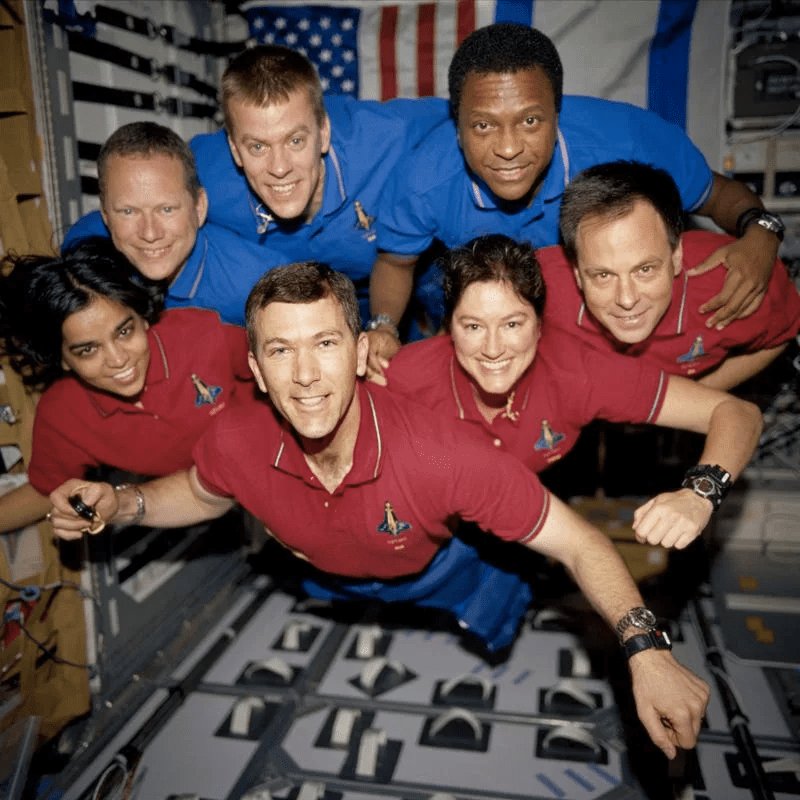
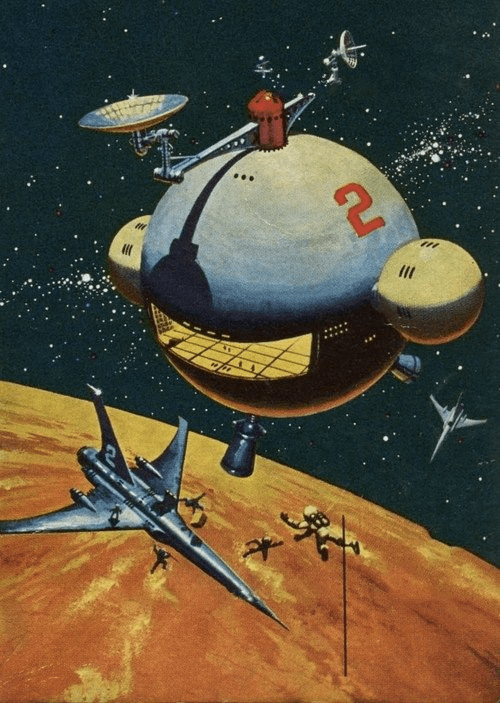
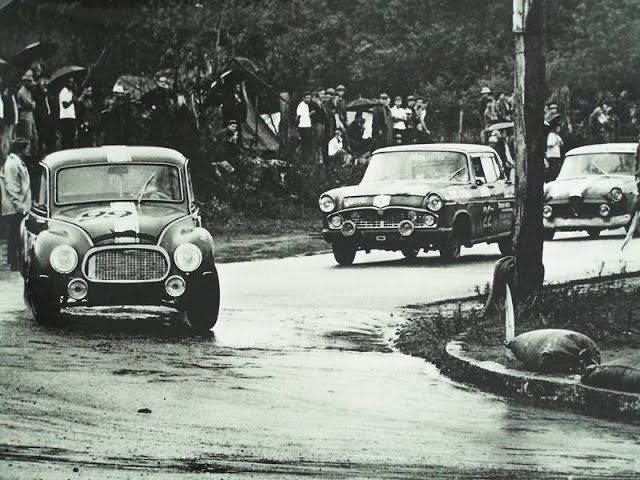
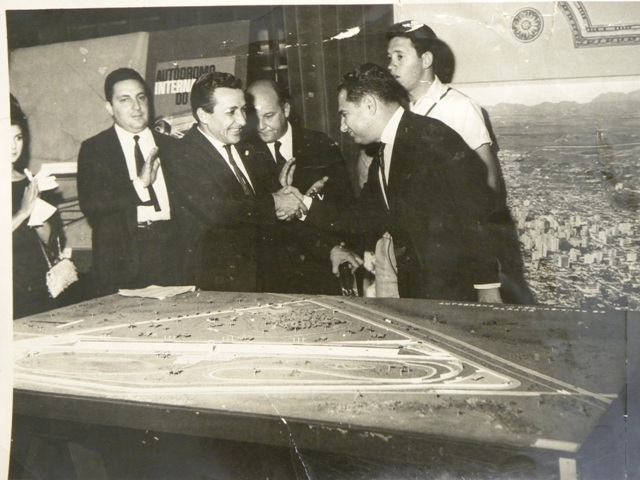
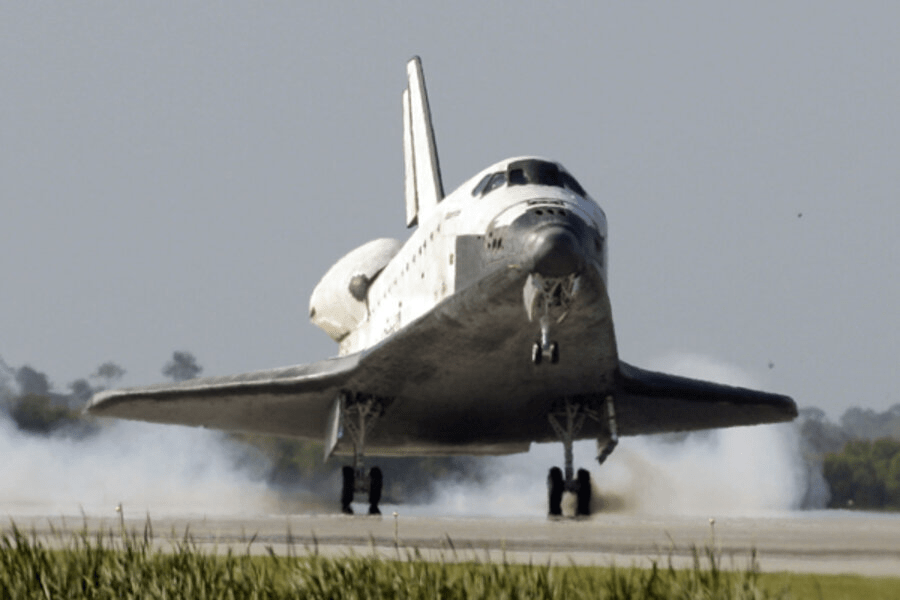
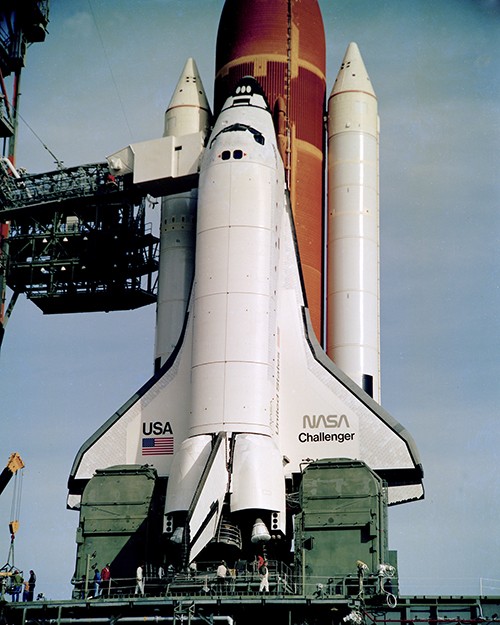
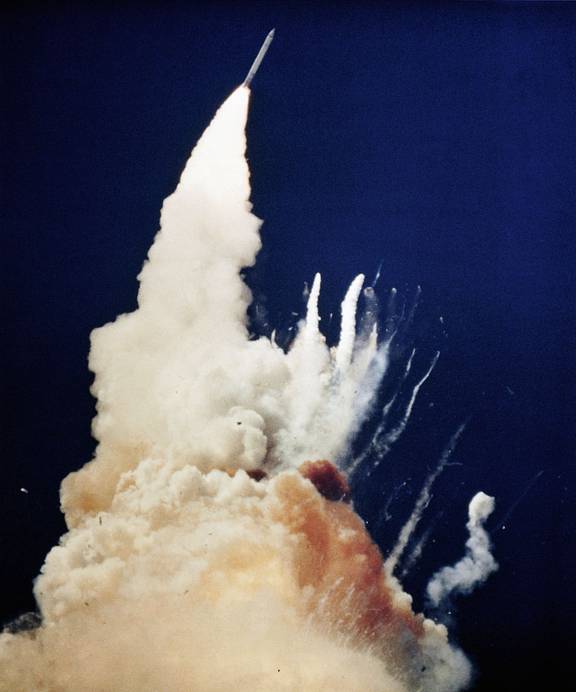
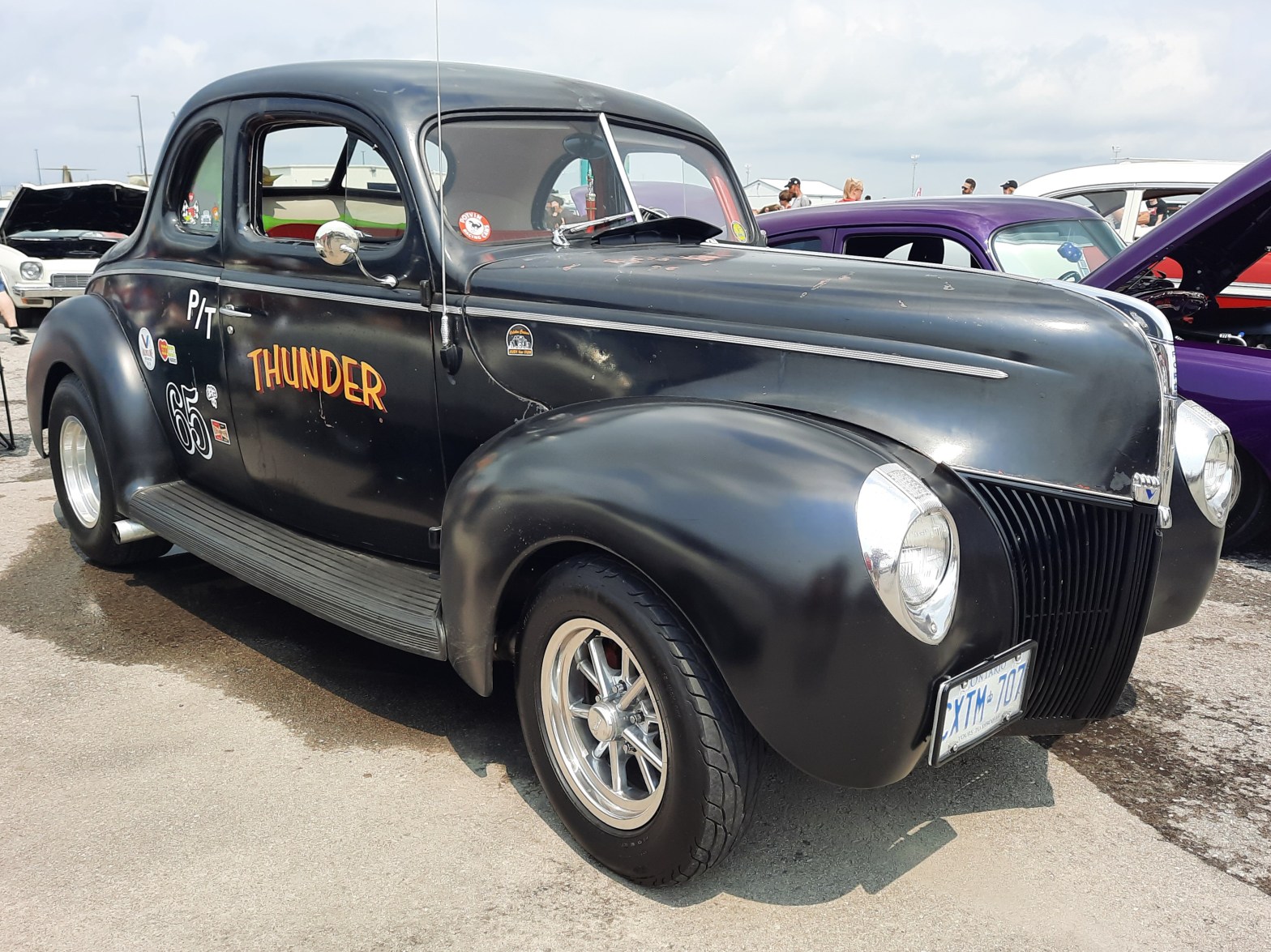
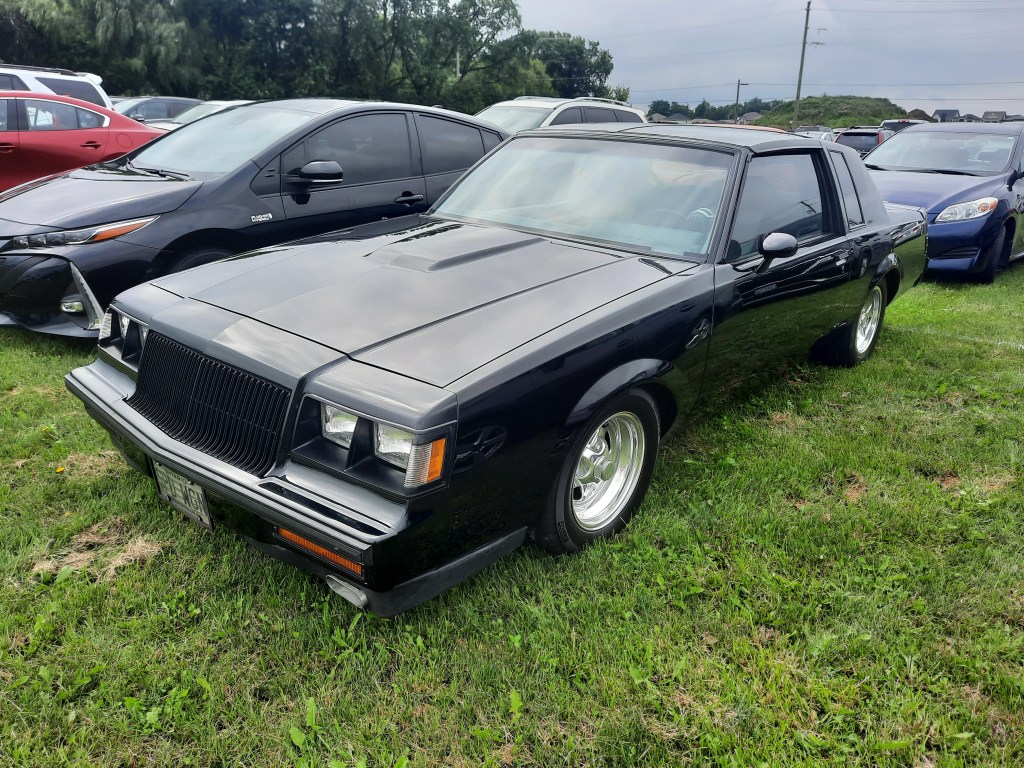
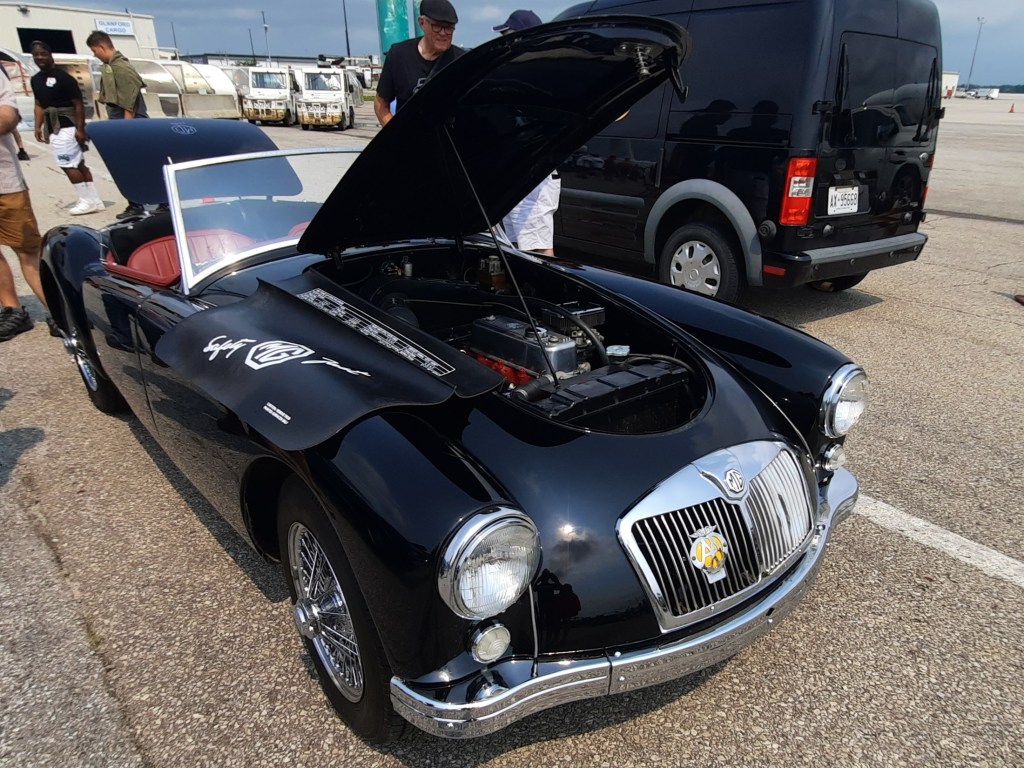
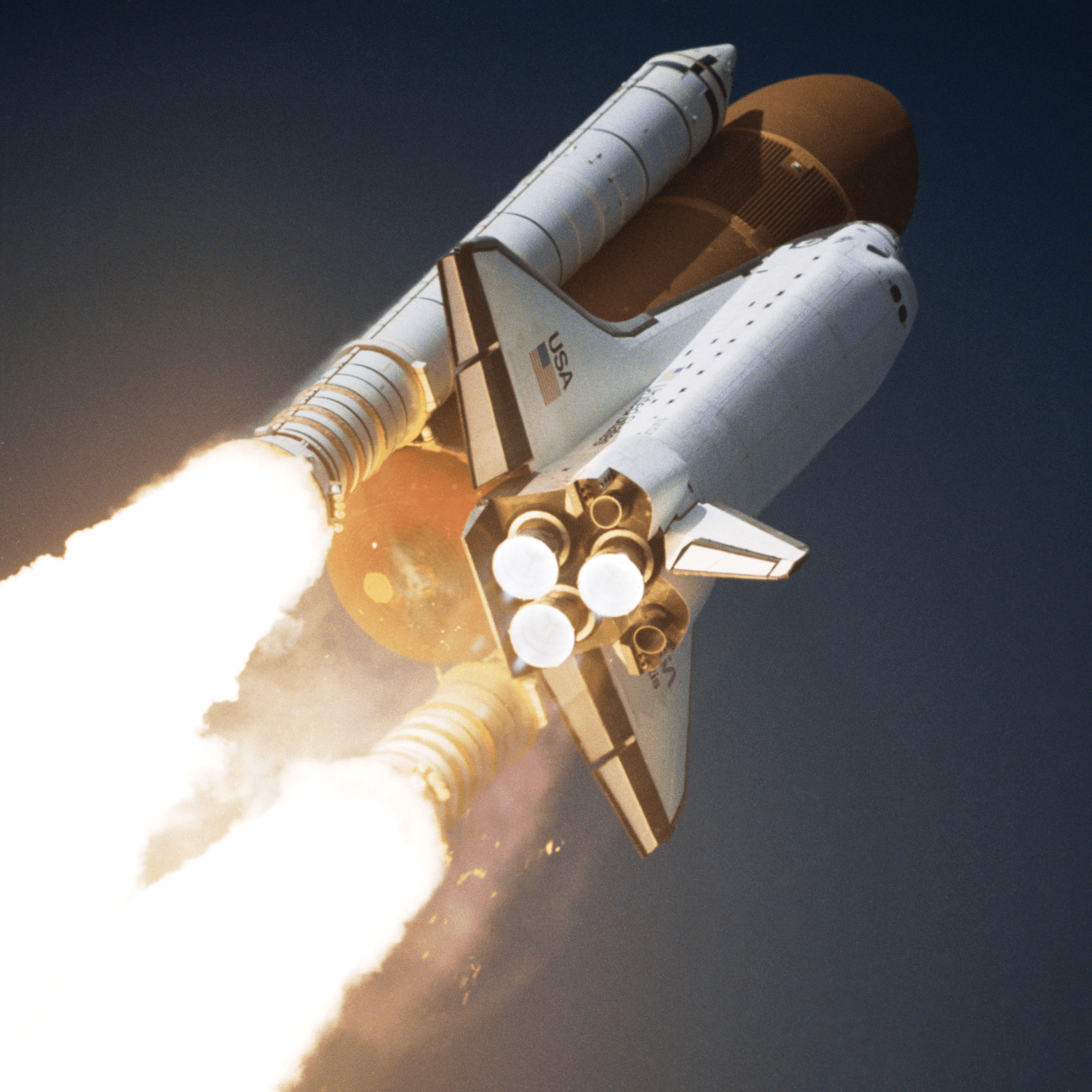
The Space Shuttle, or as it was officially named, Space Transportation System (STS), was one of the most emblematic chapters in NASA’S history and also the most catastrophic. In this series of 5 articles, we will go through the concept, execution, flaws, and tragedies that haunted the program.
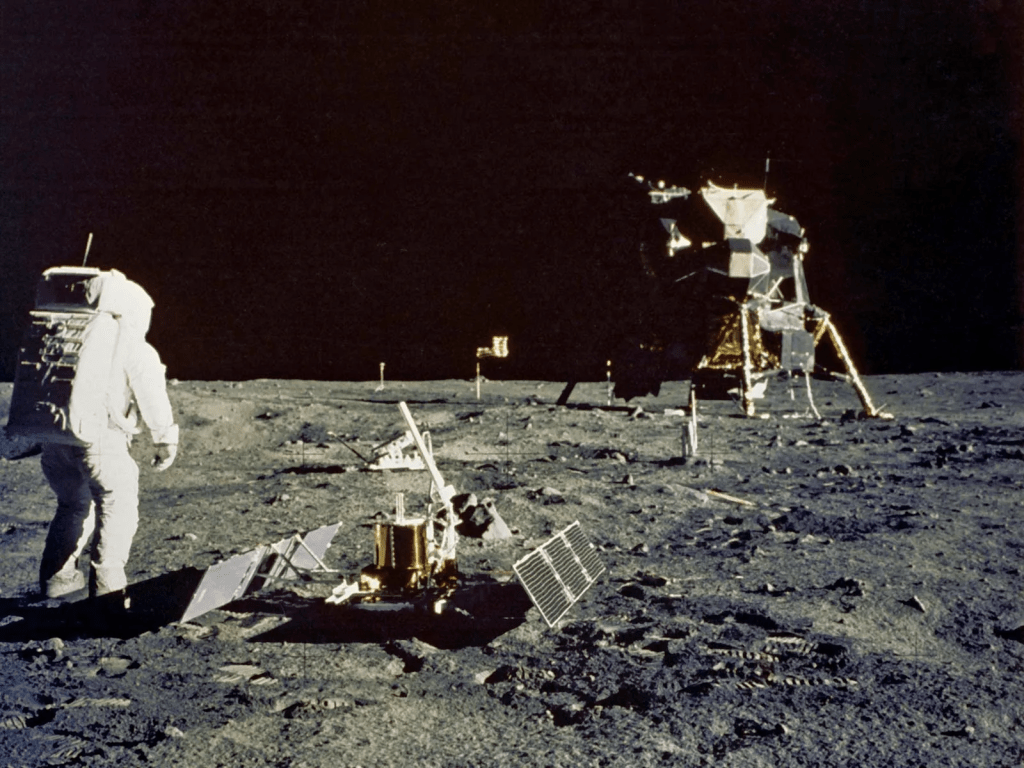
July 21, 1969, at 02:56 UTC, the world watched in awe when the Apollo 11 commander, Neil Armstrong, left the lunar module Eagle and became the first man to set foot on the Moon. The successful mission was, in fact, one giant leap for mankind, as Armstrong later said, but for NASA and the American government, it represented something else. For years, the Americans had been mercilessly beaten by the Soviets in the so-called space race but that day, the crew of the Apollo 11 redeemed their pride, proving that hard work and the good ol’ American ingenuity can be unstoppable. Well, hard work, ingenuity, and a whole lot of money too, NASA funding peaked, by the late 1960s, at a staggering 4,5% of the federal budget.
When the crew of the last Apollo Moon mission came back home, in 1971, the public interest in space exploration had already wined down and Congress decided to drastically cut the flowing of money to NASA.
The minds in charge of NASA knew that the days of meager funding would inevitably come and as early as 1969, they started the development of a cost-effective program called Space Transport System or STS. The idea couldn’t be simpler, instead of one-time-use rockets, this program consists of a series of spaceships that could be reused time and time again. It would take off like a rocket, and land like an aircraft.
Ernest Von Braun, the father of the Apollo program (and also a former Nazi engineer), didn’t like the idea, he thought NASA should keep pushing the rocket technology and send a manned mission to Mars as soon as possible. But the concept of the STS gained hearts and minds among the government and in 1972, the Nixon administration gave NASA the green light to go ahead with the program.
The Space Shuttle idea also had a very important ally, the military. The guys in uniform saw it as the perfect vehicle to transport spy satellites and, who knows, maybe a couple of nukes into space too. “What the heck, let’s scare the bejesus out of those atheist commies!!!“
The Space Shuttle was never meant for deep space travel. As the name implies, the ship was designed to transport astronauts and equipment from Earth to a space station in orbit around the Earth and from this station, a different ship would travel to the Moon and beyond.
NASA received almost 30 different designs of the space shuttle from all the American air and space companies and after careful examination, they decided to go with the one from Rockwell International.
In 1974 the prototype was ready for some initial atmospheric flight tests. At this point, the shuttle was still without engines and had to piggyback a heavily modified Boeing 747 to take off and reach operational altitude. This first orbiter was christened Enterprise.
The picture above shows the moment when the space shuttle Enterprise is detached and starts a test glide. The 747 used as a carrier was a second-hand purchase from American Airlines and it was still wearing the company’s livery at the time.
The details of the machine
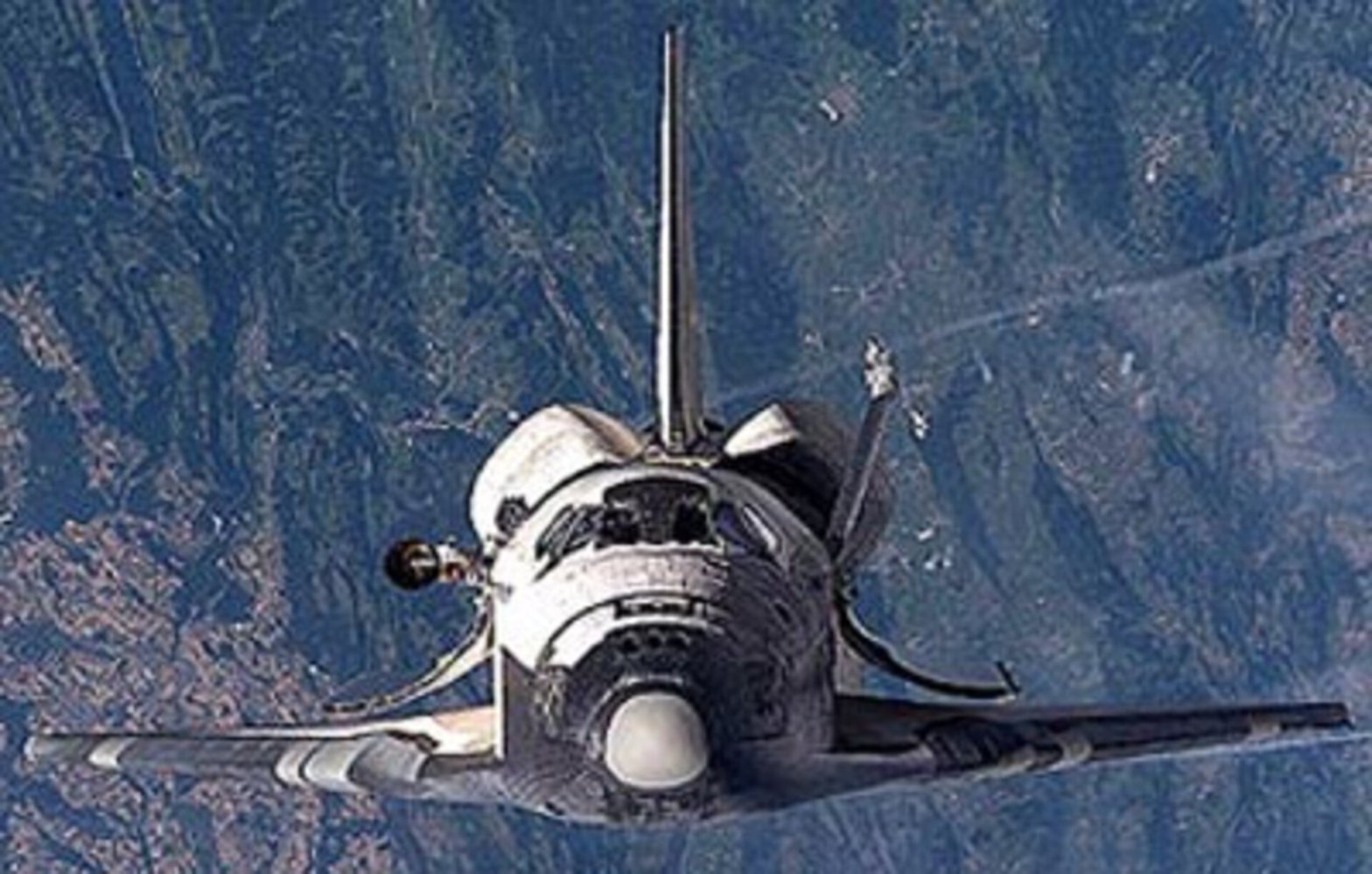
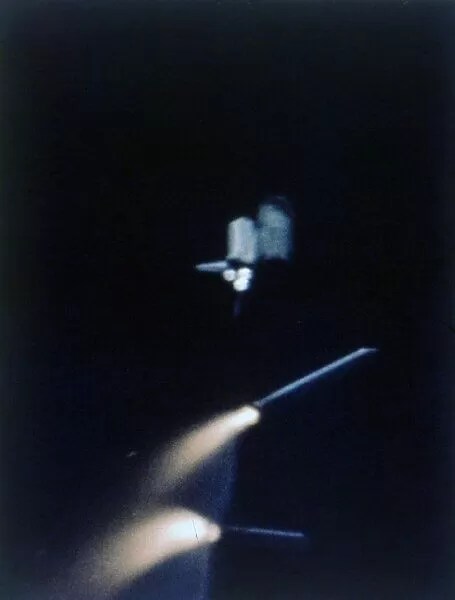
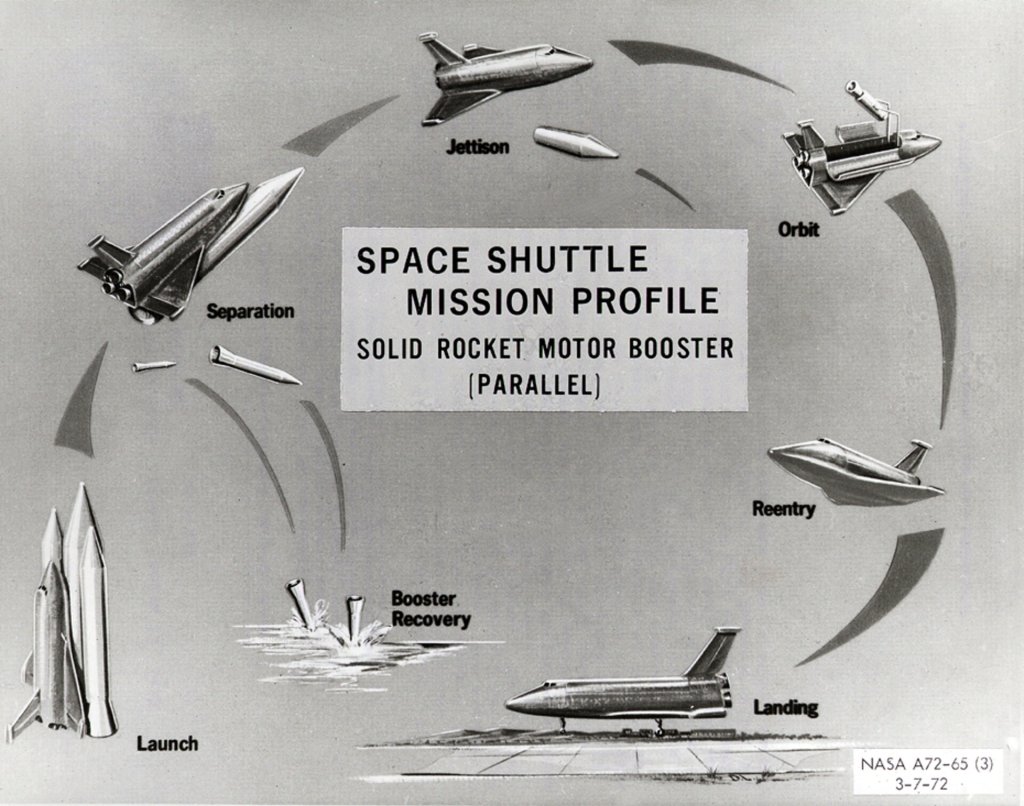
Simplicity and efficiency ruled the whole project. The shuttle or orbiter was designed to be powered by 3 main engines but to escape the Earth’s gravitational force, it needs the help of two solid rocket boosters. The ship is attached to the humongous fuel tank, in between the rockets. At a certain altitude, the boosters are released and after the ship consumed all the fuel, the tank is also jettisoned, leaving the shuttle free for a gracious space flight. The rocket boosters were also to be recovered and reused after each flight.
The journey back from space is not an easy task. The reentry into the Earth’s atmosphere is extremely dangerous since, at this point, the shuttle will be traveling at an incredible Mach 23, or 17,500 miles per hour or 7 km per second. The pilot must start the reentry at a 40° angle of attack and slowly bring the craft parallel to the ground and fly it like an airplane as soon as it starts to gain aerodynamic controls. Talking about working under pressure.
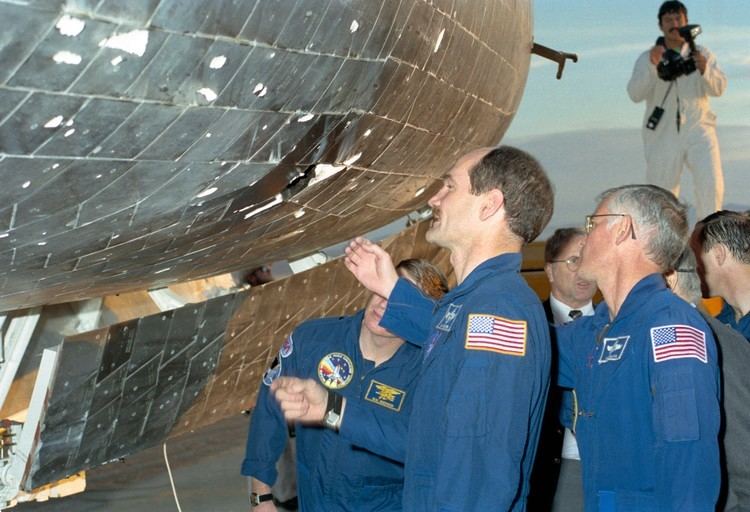
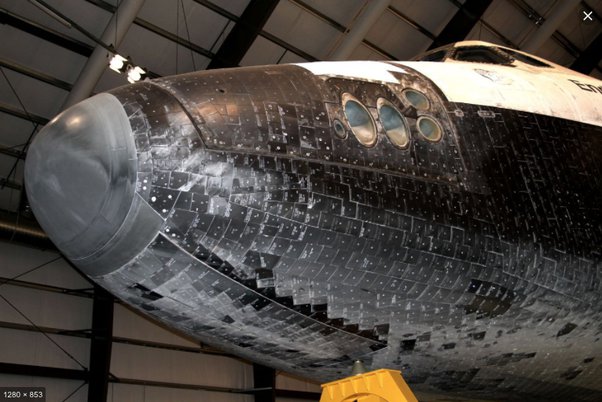
The friction of the air against the ship is so intense that without a thermal shield, the whole spacecraft would simply melt away. The bottom portion, most of the nose section, and the edges of the wings are covered with special ceramic tiles, measuring 6×6 inches and the thickness is between 1 and 5 inches. The tiles provide efficient thermal isolation to temperatures up to 1,260° Celsius, but they are extremely fragile against impact. (picture above).
A flawed spacecraft
Is hard to say if NASA was just being overly optimistic about this new program or if they were trying to guarantee the funding for it, but one thing is for sure, they certainly promised way more than they could deliver. NASA said the shuttle would make orbital space travel accessible to the masses and it would be so cost-effective that the agency could afford to send a shuttle to space twice a week.
To enhance the concept of a reusable spacecraft, the orbiter was conceived to be powered by three main engines, which considerably reduced its cargo capacity. To make the matter even worse, the cost of rebuilding those engines after each flight proved to be more expensive than the engines that equipped the rockets of the Apollo program. Some scholars argue that the shuttle could be more useful if it was originally designed as a glider, powered by detachable engines.
The first mission of the program was the STS-1, the orbiter Columbia took off on April 12, 1981, and came back 54,5 hours later, having orbited the Earth 37 times. Columbia carried a crew of two, mission commander John W. Young and pilot Robert L. Crippen. (picture above).
The launch happened on the 20th anniversary of the first human space flight, performed by the Soviet cosmonaut Yuri Gagarin. This was a coincidence rather than a celebration; a technical problem had prevented Columbia to take off 2 days earlier. That was the first of a series of flight delays and cancelations that marked the program during its existence. All sorts of technical gismos plagued the orbiters throughout the years, from falling heat shield tiles to frozen software.
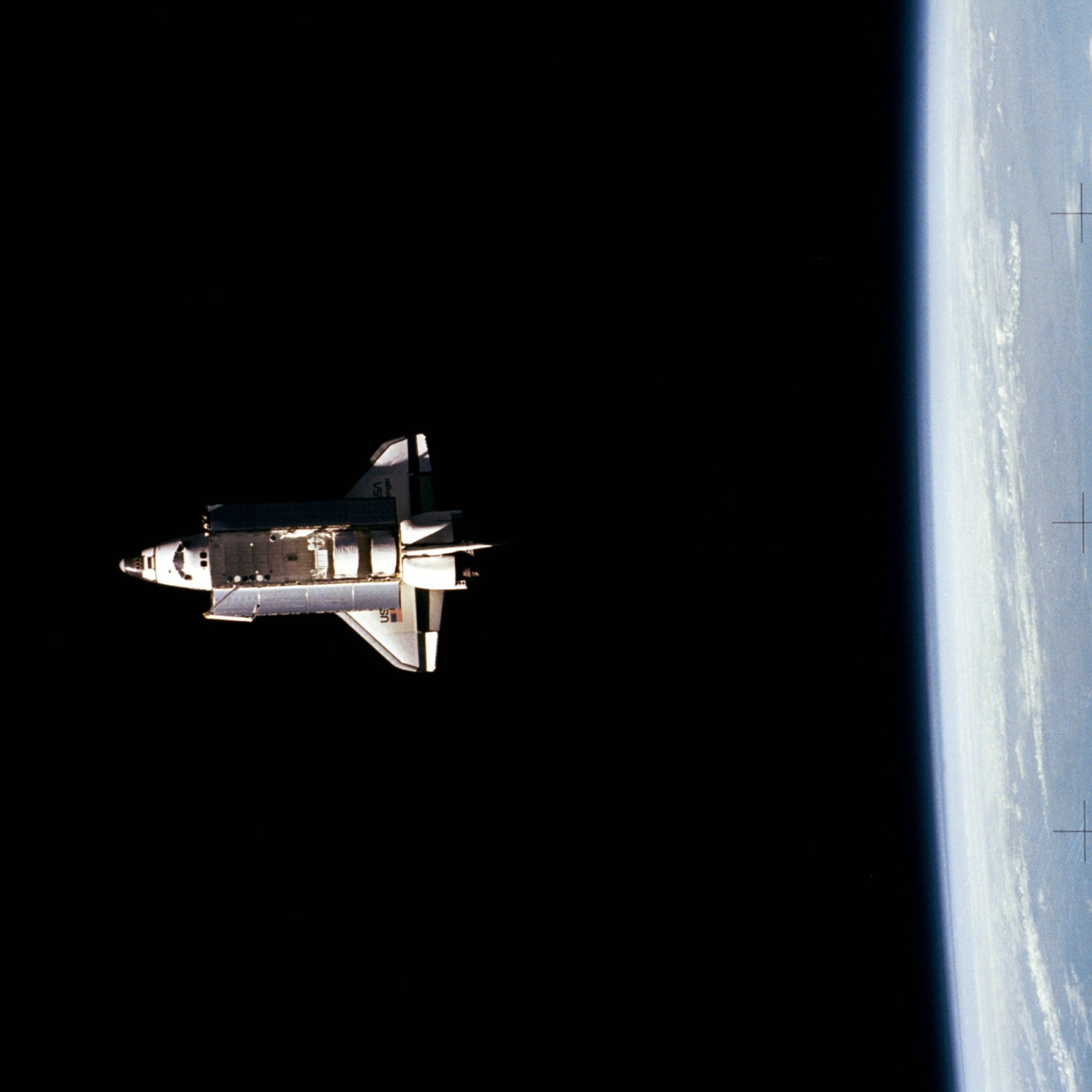
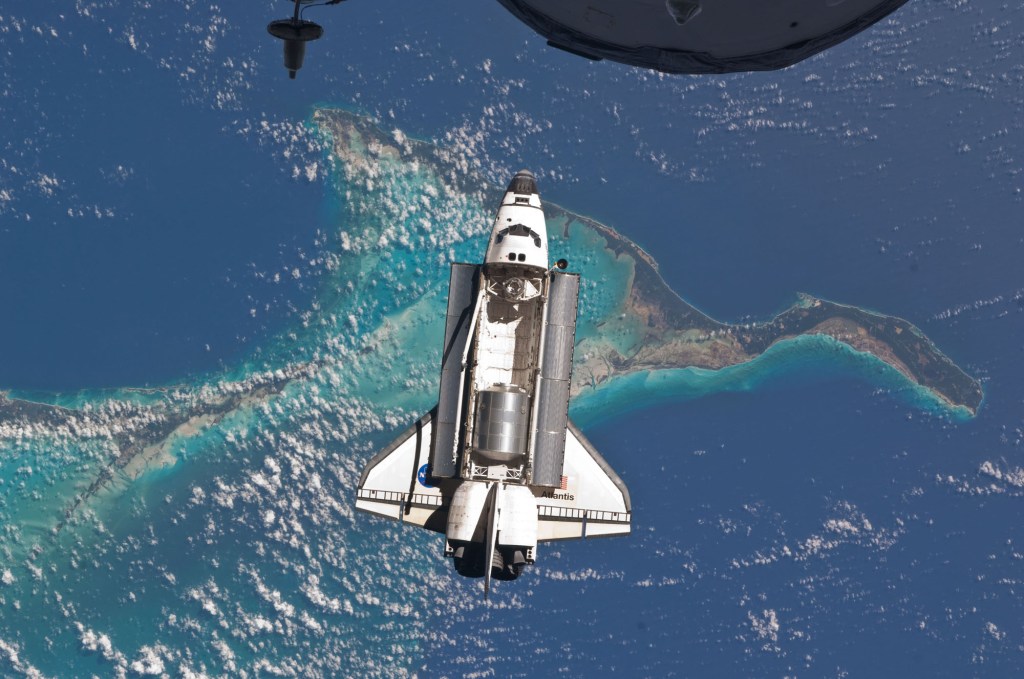
A breathtaking picture of the shuttle Atlantis, in orbit around the Earth. The first flight of this ship was on October 3, 1985.
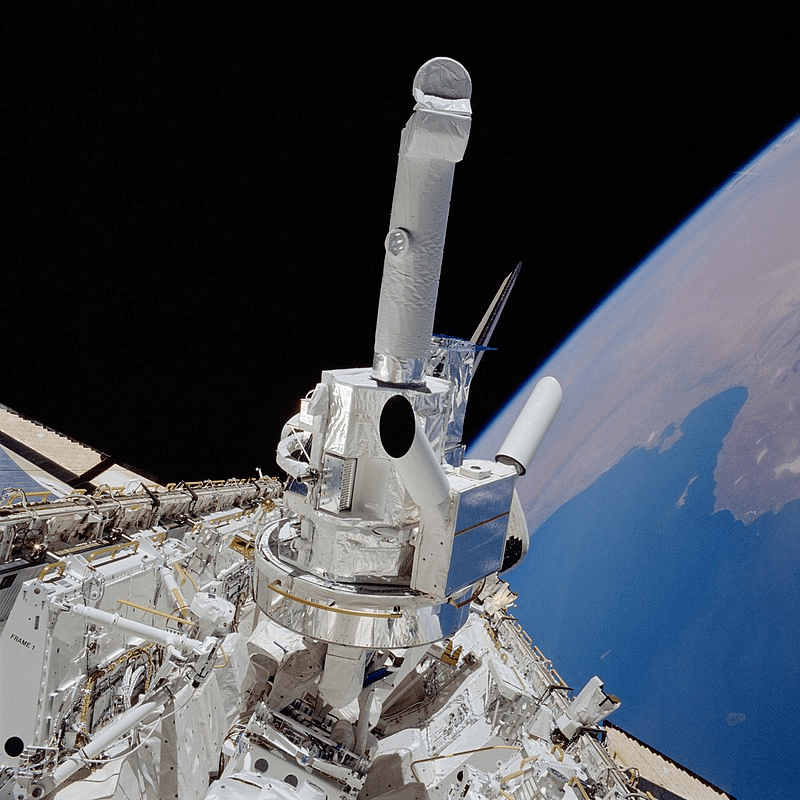
During the first half of the 1980s, the shuttles performed many different missions; launching and repairing satellites, taking astronauts to and from the space station, and so on. Those missions were more or less successful but the constant flight delays were a source of frustration among the team. NASA was still trying to show the world they were able to keep a regular flight schedule, even if it was a much lower pace than the unrealistic 2 flights per week originally promised.
The technical problems faced by the team were perfectly understandable; they were dealing with a new and complex machine that needed time to adjust and improve. It was the rush to keep a steady schedule of flights that proved to be a catastrophic mistake.
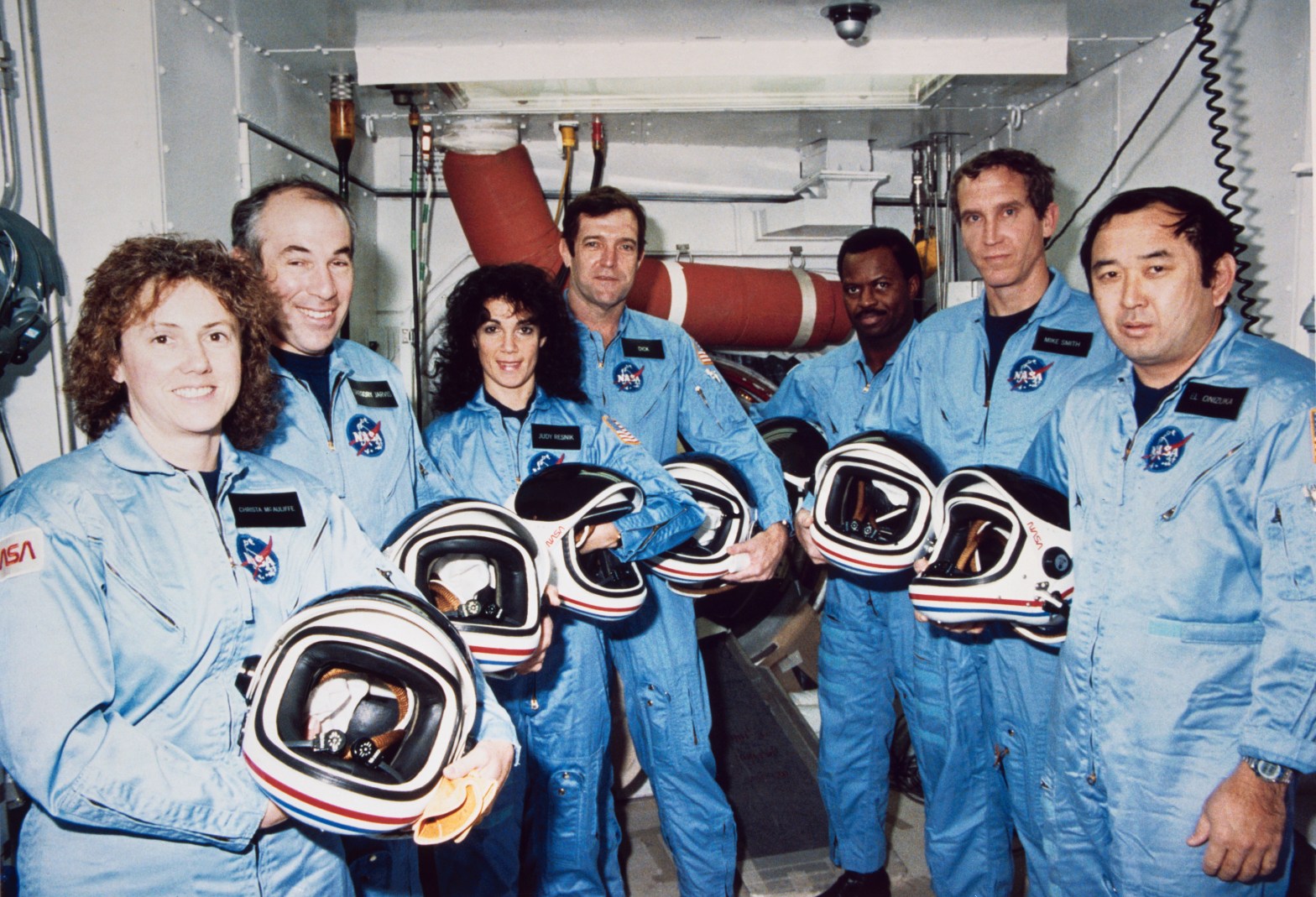
In the next chapters, we are going to revisit a couple incidents that almost ended in tragedy and also the two horrible disasters that claimed the lives of 14 astronauts.
The 2008 Formula-One season will always be remembered by the crashgate scandal when the Brazilian race driver Nelson Piquet Jr deliberately crashed his car during the Singapore Grand Prix, helping his Renault teammate Fernando Alonso.
But for me, what I remember the most is how heartbreaking it was to watch another Brazilian driver, Felipe Massa, coming so close to winning the world championship and losing it in the last lap of the last race of the season, the Brazilian GP.
I never realized how that crash had significantly harmed Massa in his battle to win the championship. It was only when I read a couple of articles published on Demaras.com that I came to know some important detail about that infamous F-One season. Here is the original post:
Brazilians! Race fans! Get mad! GET ANGRY! Something must be done about the injustice done to Felipe Massa. It doesn’t matter how many years it’s been; justice never sleeps!
This inspiring driver who wore his heart on his sleeve was robbed of the Formula 1 World Championship, We’ve all been treated unfairly in our lives, and no matter how much time has passed, we’ve all hoped for justice. Felipe Massa must be retroactively awarded the World Championship for the gross injustice that occurred at the 2008 Singapore Grand Prix.
Renault went beyond teamwork to win at Singapore in 2008. Many involved in the crime including Flavio Briatore and Pat Symonds faced severe punishment for their actions…but has justice been done?
Massa has this year started investigating legal action, saying it was the comments of those in charge of Formula 1 at the time that got his interest.
“It’s not like I woke up at the start of this year and was looking for that result in 2008. But we saw some interesting interviews from Bernie (Ecclestone) and also from (former FIA race director) Charlie Whiting, from (former FIA president) Max Mosley’s series that he did. And after that I thought what happened at the end was not correct. So I’m looking forward to understanding everything that happened.
Because to be honest I fought them to the last lap, I fought them to the last moment. I used a lot of my heart to celebrate that moment. We fought until the end. I won the race in Brazil, but maybe something that happened in that race in Singapore was not correct, for the sport and for the justice I would say.”
Felipe Massa
The powers-that-be in Formula 1 kept the scandal quiet until the end of the season, even though they knew that race fixing had occurred in Singapore. They tried to solidify the tainted championship and prevent Massa and Ferrari from appealing. Many people question whether a legal challenge to a sporting event from 15 years ago would be worth the paper it’s written on.
For Formula 1 to regain any credibility on the world stage, to maintain its tenuous grip on the title as ‘the pinnacle of motorsports’ the FIA must untangle this web of lies and do what is right.
Those who follow this blog know that every now and then I post an article that is related to militarism. I am not an expert in this subject, I just enjoy reading as much as I can about it.
This passion also led me to join the Brazilian Air Force, back in 1988. In the picture above, I am the first punk on the left. Oh boy, time really flies.
Not long ago I found an awesome blog, The Pacific Paratrooper, dedicated to exploring the history of the Pacific War. In their latest article, the author decided to lighten up a bit and he posted a series of memes and quotes about military common sense. Even if my experience in the barracks was short, it was impossible not to relate.
I was granted permission to repost the jokes here. “Sir, I hope you will enjoy it,Sir!!!”
A lot of life’s problems can be explained by the U.S. Military and its applications of common sense …
“Sometimes I think war is God’s way of teaching us geography.” (Paul Rodriguez)
“A slipping gear could let your M203 grenade launcher fire when you least expect it. That would make you quite unpopular in what’s left of your unit.” (Army’s magazine of preventive maintenance ).
“Aim towards the Enemy.” (Instruction printed on US M79 Rocket Launcher)
When the pin is pulled, Mr. Grenade is not our friend. (U.S. Marine Corps)
Cluster bombing from B-52s is very, very accurate. The bombs always hit the ground. (U.S. Air Force)
If the enemy is in range, so are you. (Infantry Journal)
It is generally inadvisable to eject directly over the area you just bombed. (US Air Force Manual)
Whoever said the pen is mightier than the sword obviously never encountered automatic weapons. (Gen. MacArthur)
Try to look unimportant; they may be low on ammo. (Infantry Journal)
You, you, and you . . . Panic. The rest of you, come with me. (Marine Gunnery Sergeant)
Tracers work both ways. (US Army Ordnance)
Five second fuses only last three seconds. (Infantry Journal)
Don’t ever be the first, don’t ever be the last, and don’t ever volunteer to do anything. (US Navy Seaman)
Bravery is being the only one who knows you’re afraid. (David Hackworth)
If your attack is going too well, you have walked into an ambush. (Infantry Journal)
No combat ready unit has ever passed inspection. (Joe Gay)
Any ship can be a minesweeper… once. (Admiral Hornblower)
Never tell the Platoon Sergeant you have nothing to do. (Unknown Marine Recruit)
Don’t draw fire; it irritates the people around you. (Your Buddies)
Mines are equal opportunity weapons. (Army Platoon Sergeant)
If you find yourself in a fair fight, you didn’t plan your mission properly. (David Hackworth)
Your job is to kill the other person before they kill you so that your national leaders can negotiate a peace that will last as long as it takes the ink to dry. (Drill Instructor)
On Jun 11, 2023, at 4 PM (local time), the Ferrari Hipercar #51 driven by Alessandro Pier Guidi receives the checkered flag, winning the 100th anniversary edition of the most iconic auto race on the planet, the 24 Hours of Le Mans. This achievement also marks the Ferrari’s first overall victory in the Circuit de la Sarthe since 1965.
The two Ferraris at the front row, at the start of the race.
A total of 325.000 fans from all over the world showed up for the party. The two Ferraris qualified P1 and P2 for the start but at the opening lap it was clear that the mighty Toyota came to what would be their 6th consecutive victory at this legendary circuit. The Toyota drivers went so eager to take the lead that it seamed more like it was the last lap instead of the first.
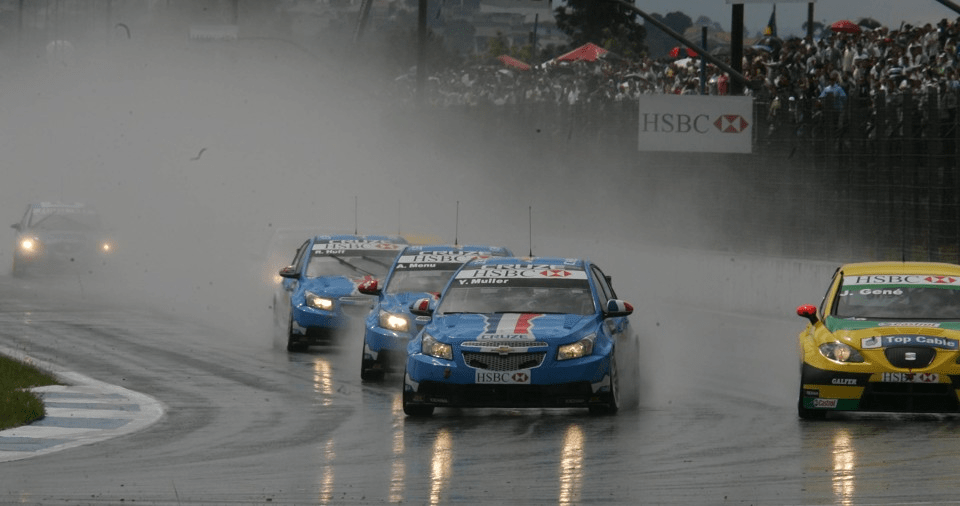
You might remember the quote from the movie Ford vs Ferrari: “It always rain in Le Mans”, and this year wasn’t different. Heavy rain in the Porsche curves caused chaos before night fall. The picture above shows the moment when a Glickenhaus Hypercar stopped a spin, just in time to avoid being smashed by a GTE-Am Ferrari.
The all female race team Iron Dames brought their pink-liveried #85 Porsche (picture above) to a brilliant 4th place in the GTE class. Despite the good result, the team was deeply frustrated for missing the podium by one position, after fighting so hard through out the 24 hours race.
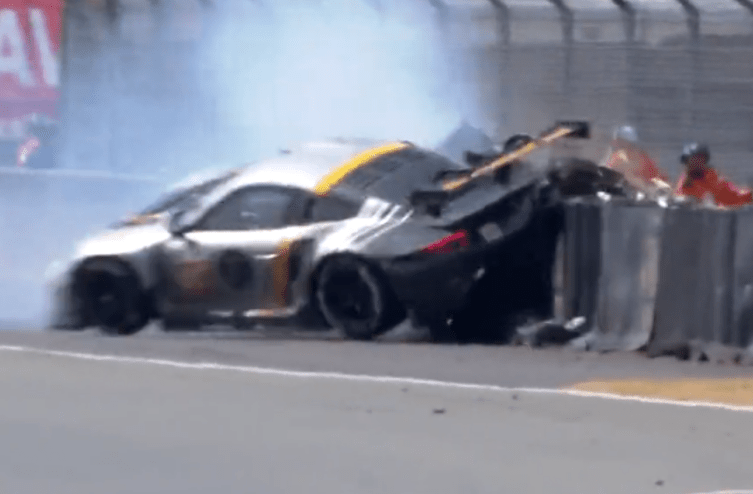
The two time Oscar nominated actor Michael Fassbender had a rather disappointing debut at Le Mans in 2022, when he crashed his car. Unfortunately, in 2023 it happened again, Michael run over some debris from earlier crashes at the infamous Porsche Courves, when he lost control of his GTE Porsche and crashed against the barrier (picture above). He was able to drive the car back to the pits but the damage was beyond repair.
The weekend was pretty awful for Porsche in general, with too many cars involved in accidents. Their best results was the Porsche Penske Motorsport #5, finishing the race in 9th overall.
Ferrrari had to share the spotlight with General Motors, which had an amazing performance this year. Cadillac scored 3th and 4th place overall and the factory sponsored Corvette Racing won the GTE class. GM will be shutting down the GTE team at the end of this season so, winning at Le Mans was the perfect farewell.
Another memorable GM car was the Garage 56 NASCAR Chevy Camaro, racing in class of it own, called Experimental. The team qualified 3 secs faster than the fastest GTE car and the drivers delivered a solid performance through out the 24 hours race.
After 20 hours of racing, the Camaro was going strong at 27th overall, leaving behind all the GTE cars. But nine minutes later, the former F1 world champion Jenson Button had to pull over at the pits with a major mechanical issue. The Hendrick Motorsport team spent one hour and 21 minutes replacing the gearbox. After that, the only goal was to finish the race, which they did superbly, receiving the checkered flag in 39th overall.
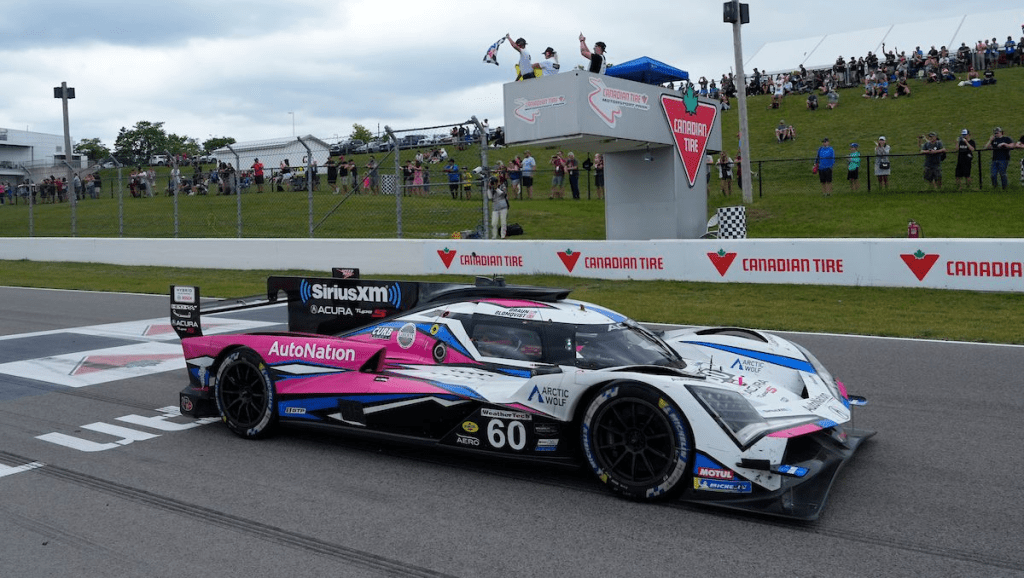
The LMP2 class also had a historical moment. The #34 Inter Europol ORECA finished the race in P1, scoring the first-ever Le Mans win for a Polish team. (picture above)
During the 24 hours of racing, the leading position was occupied by a few different cars, but the race will be remembered by the battle between Ferrari and Toyota. As usual, the fighting was loaded with drama.
At end of the eighth hour, race leader Pier Guidi spun his #51 Ferrari into the gravel at the first Mulsanne chicane, beaching his car as two cars clashed right in front of him. Guidi told reporters he thought everything was lost but the marshals did an awesome job lifting the Ferrari with a crane and putting him back on the track.
Moments later Kamui Kobayashi brought his #7 Toyota to a near complete stop, avoiding two crashed cars in front of him, just to be abruptly rear ended by Louis Prette’s GTE Ferrari. Unfortunately that was the end of race for Kamui.
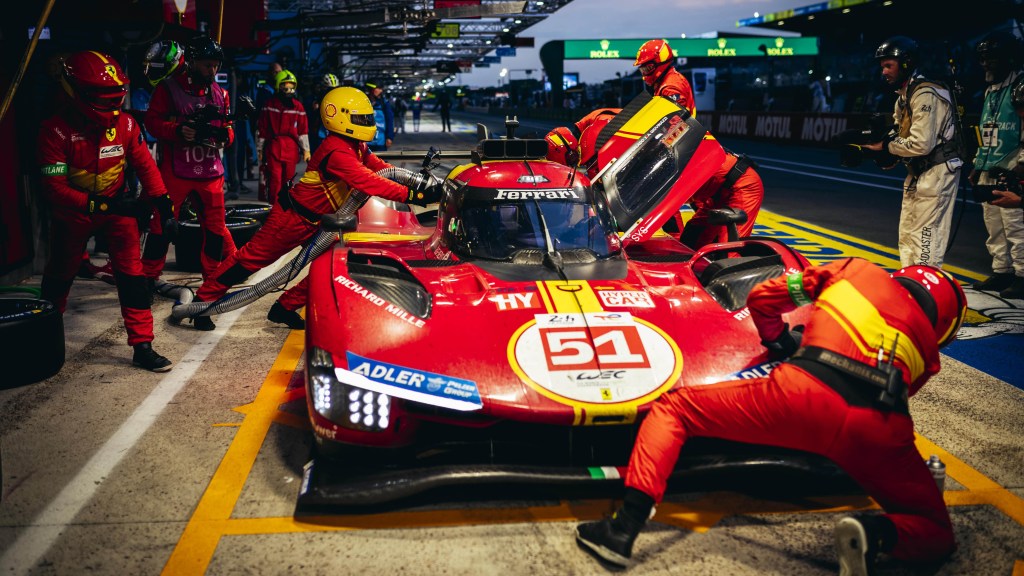
The drama followed Guidi to end, testing the limits of ability and composure of the team. In two different occasions, the #51 Ferrari failed to restart during the pit stops. Thankfully the Italian driver had a good lead over the P2 Toyota, allowing enough time for the technicians to bring the engine back to life.
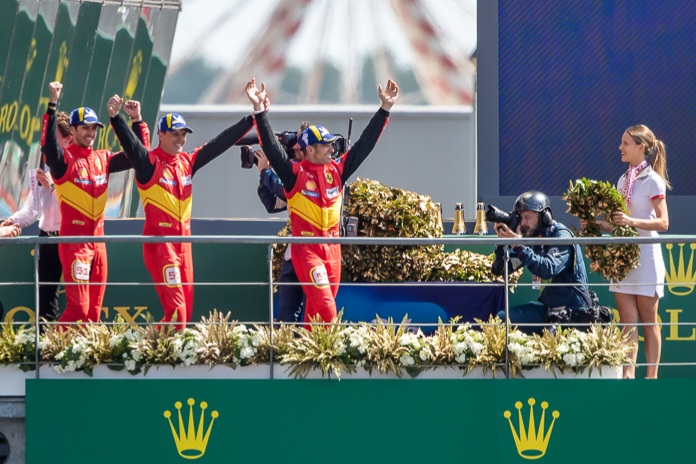
The #51 drivers, Alessandro Pier Guidi, James Calado, and Antonio Giovinazzi celebrate the historical win at Le Mans.
Not having Ferrari at the Sports Prototype competition for all those years just felt wrong, and I can not lie that I am thrilled to see them back. I was watching the onboard footage from the #51 car; Guidi was going on a parade lap, right after the checkered flag and when I saw the #50 Ferrari joining it, I just couldn’t hold the tears.
The very first time my dad took me to an auto race I was no older than 12 years, it was way back in the early 1980s. It was the beginning of the Lost Decade, in Brazil; a time when the country dived into hyperinflation and economic recession. Naturally, a very expensive hobby like motorsports was not a top priority among the population, but for a bunch of genuinely passionate aficionados, the scarcity of money should not be an obstacle.
The race my dad and I went to see that day was at a dirt track, in the city of Mafra, Santa Catarina, and all I can say is we loved every minute of it. Throughout the 1980s dirt tracks became a massive success in Southern Brazil, it was the most affordable way to get into the hobby.
A Chevy Opala, a veteran of the Speed on Dirt, was rescued after being abandoned for 15 years.
The good memories I have from that time are, the camaraderie among the teams, the smell of strong coffee in the mornings and the churrasco (Brazilian barbecue) at lunchtime, the sound engines, the cars passing by in front of us, the dust and sometimes the mud when it was a rainy weekend. It is called Velocidadena Terra, or Speed on Dirt, and it is amateur racing at its best.
A couple of years ago I found Poeira na Veia (dust in the vein) a website dedicated to preserving the history of the Velocidade na Terra. The author of the page is the journalist and race driver Francis H. Trennepohl, probably the biggest supporter Velocidade na Terra ever had.
The dashing Francis, in 1997, posing in front of his first dirt track race car, a VW Gol.
Francis started in motorsport in 1996, competing in Go Kart, and soon transitioned to dirt tracks. The picture above shows his very first race car, a VW Gol that he bought in partnership with a friend. He never told his parents about the acquisition until the day he brought the car home. He was 16 years old at the time. Unfortunately, in his debut race, Francis blew the engine of his VW. Tough luck.
Promotional flyer of the TTC.
Francis is a Jack of all trades in this field. During his career, he was more than just a driver; he was also a track marshal, mechanic, race director, and vice president of the Santa Catarina Motorsport Association. He went far and beyond to stay close to his passion.
In 2009 Francis created the TCC- Turismo Clássico Catarinense, a special class that brings back to the race track classic Brazilian cars from the past. In 2010, he couldn’t get his VW Beetle ready in time for the first race of the TCC, but his friends stepped in to help. He raced that day with a borrowed VW Voyage.
Racing on a budget can be complicated but Francis has been blessed with some truly good friends. In this brotherhood, they are always helping each other, even financially. This is the kind of camaraderie that exists in the Velocidade na Terra.
In 2022 Francis found a structural crack in the unibody of his VW Passat (pictured above ). Since the car was no longer safe for racing (or anything else for that matter), he considered calling it quits.
But then again, his friends were there and they wouldn’t let him retire. Led by another TCC driver, Rodrigo Pupo, they teamed up and put together a new race car, a VW Gol, and gave it to Francis as a gift.
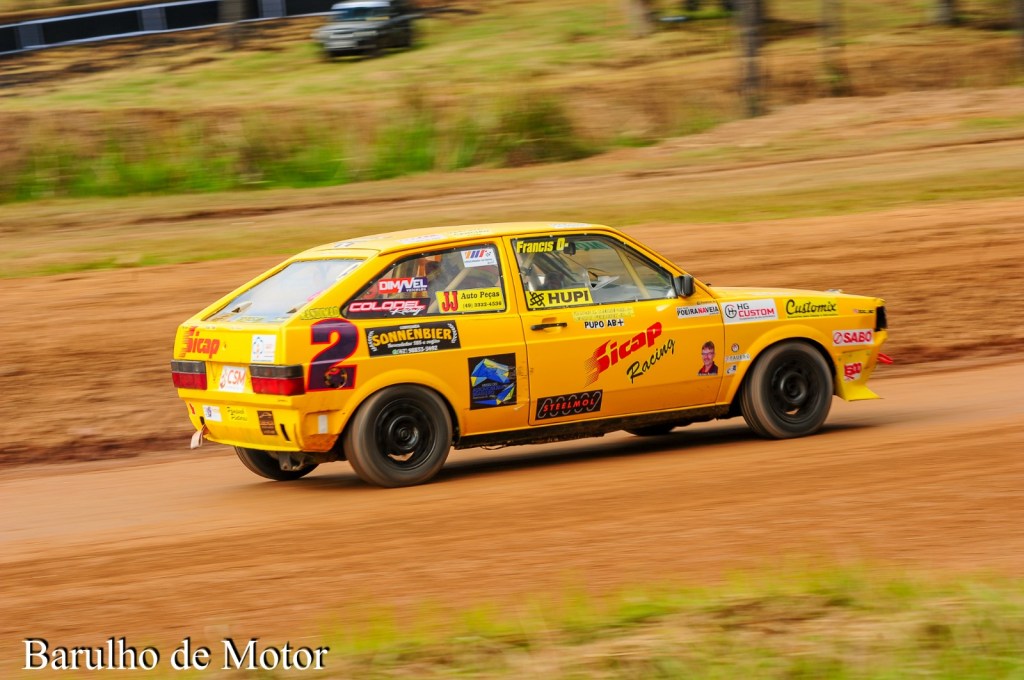
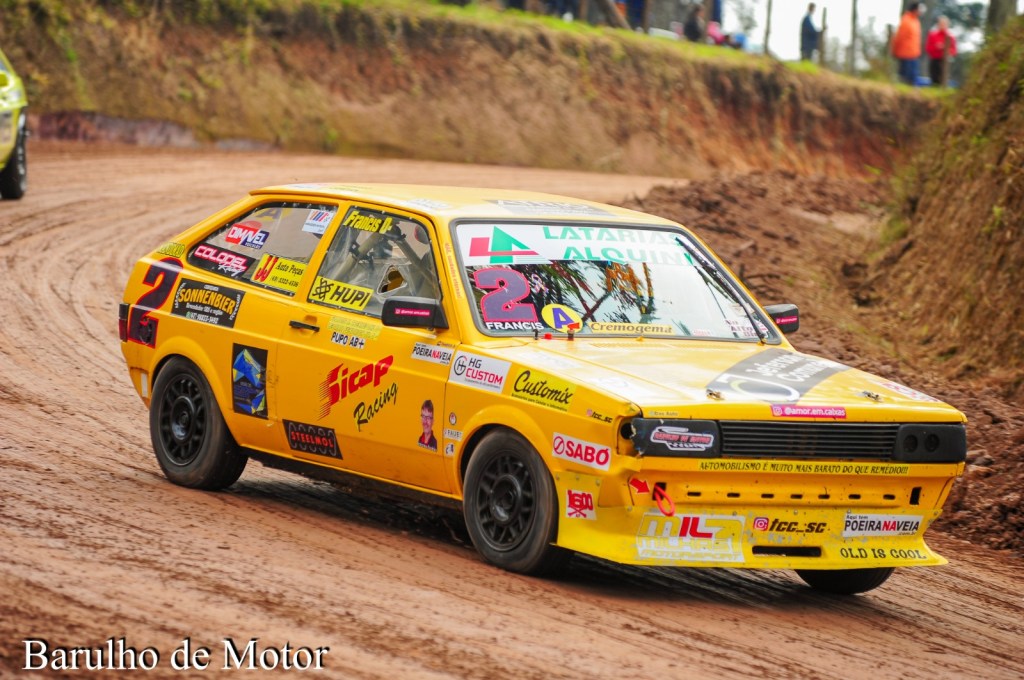
Since day one the #2 VW Gol proved to be a winning car. It is a 1993 year model but it is very structurally sound, which is extremely important for any race car.
Even if it was not the original purpose of the TCC, it became the entry-level class for many young talent drivers in South Brazil. The class also holds the largest grid in most of the events in the Velocidade na Terra.
To keep the cost low, the rules are strict. The car is very close to what left the showroom 30 years ago. The engine is a 1.6-liter, 4-cylinder, fed by a double-barrel carb. This little mill can produce 135 hp. By the regulation, the minimum weight is 830 Kg (1,830 pounds).
The technicians Cristiano and Vithor, from Colodel Racing, are responsible to keep the #2 Gol in top-notch performance, and then again, a financial boost from friends is much appreciated. With a small donation of 80,00 Reais (16.14 American Dollars), you can have an area of 15×25 cm to display your name on Francis’s car. At the end of the day, it covers a good chunk of each race’s budget.
Most of the pictures of the yellow #2 VW Gol you see here were taken during the first race of the 2023 Southern Nats season, which happened in São Bento do Sul-SC, on May 20th/21st.
Francis won both races in the “Light” class that weekend, proving that hard work, talent, and a little help from friends is a winning combination.
Velocidade na Terra is the most grassroots form of motorsport in the country, and the secret of its success is simple, passion and friendship. I can hardly wait to go back to Brazil and once again watch a race on the “dirt”.
*Note of the editor- Francis H. Thennepohl is the creator of Poeira na Veia, a website dedicated to Velocidade na Terra. With more than 35 thousand pictures published so far, his page is a photographic record of dirt track racing in Southern Brazil, from the1950s until now. Make sure to check it out.
* You can also check my “Buy Me a Coffee” page. Thanks for your support. *
For better or worse, we are witnessing a major shift in the auto industry since… well, since the creation of the automobile; whether we like it or not, the automakers are going electric. I consider myself the most liberal car guy I’ve ever met, I have no problem with the EV, I just don’t like the way it has been shoved down our throats. We don’t have the necessary infrastructure for this change yet and the mining process to get the precious battery materials has proved a social and environmental calamity. In my opinion, the government and the industry are putting the cart in front of the horse.
But enough with all this blah blah blah, the reason for this article is to talk about one of the first victims of this electrification, the muscle car. We have seen the rise, the fall, the almost extinction, and the renaissance of this beloved movement. But now, after an unimaginable amount of rubber and premium gas burned throughout more than 50 years since its creation, the most thrilling chapter in the history of the auto industry has officially come to an end.
Mopar has always prided itself on producing the most badass muscle car ever and they wouldn’t let us down in this time of need. They will leave the party in great style. Dodge is releasing a couple of special edition Challengers to mark the end of the production and it is a very important occasion to be taken lightly. I am not a writer by any stretch of the imagination and for that reason, I am republishing an article I saw in the Jesus Behind the Wheel. The author, Jesus Garcia, is a real auto journalist and I like his style very much. He captured the essence of the last Chally like no other. Enjoy it.
The seventh and final Last Call edition Dodge is the 8-second 2023 Challenger SRT Demon 170 featuring a 1,025 HP supercharged V8 Hemi.
Last Sunday, May 07 something unusual happened, while comfortably sitting on my sofa, wearing my beloved plaid shirt, and holding a beer, I watched a NASCAR race from the very beginning to the end… and I loved it. But there is a catch, the race was in Europe.
What I watched was the 2023 NASCAR Whelen Euro Series season-opening race, which happened in the Ricardo Tormo circuit, in Valencia, Spain. Vladimir Tziortzis (pictured above), a driver from the island of Cyprus, won both races over the weekend.
You don’t like NASCAR?
I always have conflicting feelings about NASCAR. Although I love the concept of it, big American sedans, powered by insanely powerful V8 engines, racing against each other, I never had the patience to watch a race for more than 5 minutes.
The extremally professional Richard Patty’s team in action.
The pictures above show my most intimate experience with NASCAR. In 2006 when the Richard Petty Driving Experience visited Georgia, I bought a 3-lap ride around the iconic Atlanta Motor Speedway. Yes, it was a blast.
I just can’t fathom the idea of following race cars going round and round on an oval circuit for more than 3 hours… I believe watching a chess match can be more exciting than that.
That is precisely what I like about Euro NASCAR, there are fewer oval circuits and the races are pretty short. Oh yeah, baby!!!
The beginning
It is surprising how much the Europeans love the American car culture. You can find thrilling Hot Rod and Kustom Culture communities in Nordic countries and American classic car aficionados all over Europe.
When I wrote about the NASCAR experience in Le Mans, I found out how much the European race fans were excited to see those thunderous, big American V8 cars racing in their legendary circuit. The French were so passionate about NASCAR that they created their own.
In 2008, French rally driver Jérôme Galpin decided to make the European NASCAR dream come true. As a veteran race driver, he had good connections in the French motorsport scene and to make things even more convenient, his family business, Team FJ, has a lot of experience in building race cars. The first season was in 2009, and it was called Racecar Euro Series. The championship was held on 7 tracks across France, with 16 cars entering the inaugural race at Circuit Paul Armagnac, in the city of Nogaro.
In 2010 the series was approved as an International competition by FIA (Fédération Internationale de Automobile) after a race held in Nürburgring. The calendar was expanded further in 2011, to include more races across Europe.
The Machine
The cars are NASCAR “style”, but the European series has its own approach in building them. The teams can choose from 3 different body styles, Ford Mustang, Chevrolet Camaro, and Toyota Camry. Still, under the skin, the cars follow the 100℅ Parity rule: same cars for every driver, same parts on every vehicle, and major components sealed.
The cars are assembled at the Team FJ facility, located in Blois, France, and sold to the teams.
They are powered by the legendary Chevy 350CID V8 small block, fed by a four-barrel carburetor and producing 450 HP, not bad for a car weighing only 1200 kilos (2650 pounds).
Photo courtesy Ioan Pexan
The transmission is a 4-speed stick or paddle shifter. The wheelbase is 2740mm.
Team FJ is proud to say the European NASCAR is a 100% pure race car, with no electronic aid whatsoever.
Becoming officially part of the NASCAR family.
In early 2012, Team FJ signed an agreement with American NASCAR to sanction the series as part of the NASCAR circuit overseas. Though it remains registered as an International FIA class, the series was allowed to use the NASCAR name and logo.
The EuroNASCAR is attracting some legends of motorsport, like the 1997 Formula-One world champion Jacques Villeneuve.
This new agreement also opened the doors for European drivers to join American NASCAR and vice versa, which can be a real challenge since the two classes might look alike but they are very different.
On July 1, 2013, the series was renamed the NASCAR Whelen Euro Series after Whelen Engineering announced an agreement to become the title sponsor of the series through the 2018 season and forward.
An American Party
Jeff Gordon was the race Grand Marshal at the 2021 EuroNASCAR final, in Zolder, Belgium.
The championship is structured in two classes, The Euro NASCAR PRO, for more seasoned professional drivers, and EuroNASCAR 2, for young talents and gentleman drivers.
The chart below shows how a typical Euro NASCAR weekend is divided.
As exciting as the races can be, the atmosphere in the pits and around the race tracks is also amazing.
The fans have almost unrestricted access to the pits and drivers, and they also might find hot dogs, hamburgers, beer tents, American classic car meetings, live music, and cheerleaders. Every race is a party celebrating all things Americana.
The EuroNASCAR is growing fast, not only for all the reasons mentioned above but mainly because it is a great option for an entry-level class. Thanks to the simplicity of the construction, and the 100℅ parity rule, the cars are pretty affordable and also a blast to drive.
To end this article I decided to post a video from the Italian race driver and YouTube sensation, Alberto Naska. He sums up all the good this about the series, the differences between the American and European cars, and you can watch how it feels to drive the beast. Enjoy.
*If you liked this article, you can help with a small token of appreciation. Please visit my “Buy Me a Coffee” page. Thank you very much.
As a kid, I had my heroes, just like any other kid in the world who grew up in front of a TV set. I have some vivid memories of Batman, Captain James Kirk, and obviously, Bugs Bunny. In my list of heroes, one is special, because he was a real guy, doing real stunts on a real motorcycle, jumping over real cars, buses, and believe it or not, rattlesnakes! His name was Evel Knievel.
Knievel started his career as a professional rider a bit late in life when he was 27 years old. He was the first daredevil biker to transform his stunts into a lucrative business and became a worldwide sensation in the 1960s/70s.
Robert Craig Knievel was born in the copper-mining town of Butte, Montana, on October 17, 1938. His parents broke up not long after he was born and the kid was raised by his grandparents.
Knievel was a very energetic teenager, a standout athlete in track and field, sky-jumping, and ice hockey. Unfortunately, he used part of this energy to become a petty criminal.
His very first bike was a Harley-Davidson he stole when he was 13 years old. Three years later his grandmother bought him a Triumph.
One night Robert was caught by the cops for riding his bike recklessly (no shi…!) and was taken to the local precinct. There, the police were holding a guy named Knofel, whom they called “Awful Knofel“. To call Robert “Evil Knievel” was a no-brainer. The name stuck, and some years later, Mr. Knievel legally took the name Evel, changing the “i” to “e” because, he said, he thought it looked better.
Evel and his beloved grandma, during his time as a motorcycle racer.
His career as a petty criminal continued, He was once again caught by the police, at this time, stealing hubcaps. Hoping the military life could straighten him up, the judge decided to give Evel a chance, it would either be going to jail or joining the army. Knievel jumped into the green uniform in the 1950s, but a regular infantry job wouldn’t do it for him; he volunteered to be a paratrooper and performed more than 30 jumps during his tenure. Afterward, he played semiprofessional and professional hockey, for a time with the Charlotte Clippers of the Eastern Hockey League. Then he took up motorcycle racing full-time until falling and breaking bones in a race in 1962.
Jumping to glory.
When he was 27, Knievel became co-owner of a motorcycle shop in Moses Lake, Wash. To attract customers, he announced he would jump his Honda 350cc, 40 feet over parked cars and a box of rattlesnakes, and continue past a mountain lion tethered at the other end. More than 1,000 people came to see him, His jump was almost perfect, but he failed to fly far enough; his bike came down on the rattlesnakes. The audience was in awe.
“Right then,” he said, “I knew I could draw a big crowd by jumping over weird stuff.”
In 1965 he formed a troupe called Evel Knievel’s Motorcycle Daredevils and began barnstorming Western states. Since he was constantly crashing, breaking bones, and staying in hospitals, it was impossible to keep a regular schedule and the group was disbanded. Evel began performing alone, traveling all over the USA, jumping over cars and buses.
Some guys in history were born to become legends and that might be the case with Evel Knievel, even if he turned out to be a controversial one. Some stories about his personal life are as extreme as his stunts. He said he had twice kidnapped his hometown sweetheart, Linda Bork, and married her after the second time. He said he had robbed a service station of $900 when the owner failed to pay off a $25 bet. He said he had worked as a card shark, a swindler, and a safecracker. How much of it is true or not remained unclear.
The Machine
Evel started his career riding Honda, Norton, and Triumph but his favorite bike was Harley-Davidson. For an American hero through and through, there was no other brand that could fit the bill.
He chose the XR 750, a bike designed primarily for dirt track competition, but it could also perform well on paved tracks.
The bike is lightweight (147 kg dry) but sturdy. Powered by a 748cc, air-cooled V-twin, producing between 70 to 100 hp, depending on the level of the modifications adopted. Evel said that the XR had so much torque that was difficult to keep it in a straight line after the takeoff. The picture above shows it clearly.
The worst crash.
To appease the audience (and his ego) Evel was constantly increasing the distance of his jumps. One day, when he was leaving a heavyweight boxing fight in Las Vegas, he came across the fountains of the Ceasars Palace and decided he could jump over it.
To get an audience with the casino’s CEO Jay Sarno, Knievel created a fictitious corporation called Evel Knievel Enterprises and three fictitious lawyers to make phone calls to Sarno. Knievel also placed phone calls to Sarno claiming to be from ABC-TV and Sports Illustrated inquiring about the jump. Sarno finally agreed to meet Knievel and the deal was set for him to jump the fountains on December 31, 1967.
The jump was perfect but then again, the landing was a disaster. “It was terrible,” he said afterward. “I lost control of the bike. Everything seemed to come apart. I kept smashing over and over and ended up against a brick wall, 165 feet away.”
“Caesars Palace was by far my worst crash. I thought it was going to be a piece of cake. It wasn’t the jump—it was the landing that was so bad.”-
Evel, falling off his Triumph Bonneville, at the Ceasar’s Palace.
Weeks before the stunt, Evel tried to sell the broadcasting rights to several TV companies but none of them accepted the deal.
Knievel knew that doesn’t matter the outcome of the jump, it would be a big event. Using his own money he hired a film crew to record the jump. Even his wife worked as a camera operator. In the end, he made millions selling his footage to the same TV channels that said no to him. The first thing he did after leaving the hospital was to buy a Rolls Royce, the picture above shows the car parked under the awning at his house on Parrot Street in Butte, Montana. I guess the car fits well Evel’s flamboyant persona.
The accident left him with a fractured skull and broken pelvis, hips, and ribs. He was unconscious for a month. The Ceasars Palace stunt made him an international celebrity and became the symbol of his career. In 1989, his son Robbie, who also became a motorcycle stuntman, tried the same jump and succeeded.
Wait a minute, Travis. Where is the Harley?
In 2018 Travis Pastrana honored his idol by replicating 3 of the most iconic Knievel jumps. Sure enough, the Ceasars Palace was among them.
The Ultimate Challenge
Evel saw his near-death crash in Las Vegas as “just another day at the office“. Soon after his recovery, he was back again jumping over a bunch of cars with his Harley-Davidson. But he knew his audience could at any moment get bored with his stunts. Fans have questionable loyalty, the moment they find something more exciting, they will turn their backs on you.
In 1974, Knievel came up with the idea that would be his most dangerous jump ever. He decided to fly over the Snake River Canyon, in Twin Falls, Idaho.
That is a 1600 ft, (almost 1/2 km) jump, no XR750 in the world (or any other bike for that matter) could propel Evel to the other side of the canyon. The only solution was going to the extreme, he hired aeronautical engineer Doug Malewick and retired US Navy engineer Robert Truax to build a rocket-powered bike.
Evel and his son Robert, checking the Skycycle 2, before the launch.
The first machine was named Skycycle X1 and it looked promising but after some testing, the X1 proved to be unfit for the task. The team decided to go full “space program” and they built the Skycycle X2, a real rocket for Evel (picture above).
The Skycycle 2 was designed to gain speed running on a 108 ft rail ramp.
Yes! That is the correct kind of helmet you should wear when flying a homemade rocket over a canyon.
On September 8, 1974, more than 10,000 people showed up to see the crazy stuntman reach the sky. Potato farmers, housewives, hippies, bikers, Boy Scouts, topless women, and a marching band, were all there and the atmosphere was something like 1969 Woodstock. People were so pumped that many had rioted a day before, burning Port-A-Potties and ripping the roofs off of beer trucks.
The crew fired up the Skycycle X2 engine and Evel ran on the ramp like a… well, like a rocket.
Just like many other stunts he performed before, this one looked like everything was going according to plan. When Knievel left the ramp he was flying at 350 miles per hour. The X2 soared 2000 ft over the canyon.
But the parachute deployed too soon, just after the launch, and instead of completing the jump, the rocket came down, floating to the canyon floor. Fans around the globe watched closed-circuit broadcasts in movie theaters, while ABC’s Wide World of Sports aired the event a few weeks later.
At least the parachute worked well. Skycycle 2 landed gently at the bottom of the canyon, leaving Knievel without serious injury. For his efforts, he made $6 million, not too bad considering he didn’t break any bones this time.
Self-made millionaire
Knievel and one of his favorite toys, a 1973 Ferrari Daytona.
Evel Knievel wasn’t only a crazy stuntman, he was a master marketer. The guy was charismatic, no doubt about it, and he knew how to use it. As a result, he became a pop culture icon and the money just followed its natural course.
He also made a ton of money with licensed toys.
“I wasn’t the richest man in the world, but for a cycle rider from Montana, I was having a damn good time”- Evel Knievel Evel was photographed here with some of his best pals before flying to New York to attend a heavyweight fight. He owned the Learjet you see in the picture and more often than he should, he used to fly the aircraft himself, even if he never got a license.
Jumping in England
As a worldwide celebrity, Evel Knievel brought his circus to Wembley Stadium, in London, England, on May 26, 1975. He was set up to jump over 13 buses. In order to allow him to reach the necessary speed, the organizers built a ramp that stretched all the way over the stands.
Surprise surprise! He crashed there, too, breaking his pelvis, vertebrae, and hand.
After the crash, despite breaking his back, Knievel addressed the audience and announced his retirement. Near shock and not yielding to Frank Gifford’s (of ABC Wide World of Sports) plea to use a stretcher, Knievel walked off the Wembley field stating, “I came in walking, I’m going out walking!”
After the Wembley crash, the famous actress Ann Margret came to visit Evel, at the London Hospital on her way to the Cannes Film Festival.
The long way into retirement.
At this point in life, Evel was a rich man and adored by fans all over the world. He was popular not only for the stunts he successfully performed but mostly for the ones that he crashed. The fans couldn’t get enough of the stuntman that just refuses to die.
He knew that he could run out of luck at any moment and retirement now should be his most reasonable option… wait a minute, reasonable and Evel Knievel are two things that do not go together in the same sentence.
Walking away from the spotlight is not an easy thing to do.
Knievel kept a busy jumping schedule. On October 25, 1975, he successfully jumped fourteen Greyhound buses at the Kings Island theme park in Ohio. The stunt was the official record for jumping the most buses on a Harley-Davidson and Knievel kept it for 24 years. The Kings Island event scored the highest viewer ratings in the history of ABC’s Wide World of Sports and would serve as Knievel’s longest successful jump at 163 feet. After the Kings Island jump, Knievel again announced his retirement
The shark jump.
In 1977, Knievel came up with another crazy idea, for a change he would not jump over cars or buses, he would jump over a gigantic tank…full of sharks!!!
This stunt was inspired by Steven Spielberg’s blockbuster Jaws, which was released in 1975 but was still a sensation at the time. The jump was scheduled for January in Chicago, IL and sure enough, the organizers built a gigantic tank and filled it with 13 (small) sharks. Unfortunately, the jump never happened. During his rehearsal, Knievel lost control of his Harley and crashed into a cameraman. Knievel broke both arms and had to cancel the stunt, but what really got him devastated was the permanent injury the accident caused to the cameraman, who lost his eye. The footage of this crash was so upsetting to Knievel, that he did not show the clip for 19 years until the documentary, Absolute Evel: The Evel Knievel Story was ready.
The disastrous shark jump was the breaking point for Evel. He retired from major performances and limited his appearances to speaking only, rather than stunt riding, saying ” A professional is supposed to know when he has jumped far enough.”
Robbie Knievel visits Jay Leno.
After Evel retired, his son, Robbie Knievel, took his place. Robbie became an accomplished stunt biker and during his career, he broke several records and successfully performed some of the jumps his father had failed before.
The last of gladiators.
As far as he remembered, Evel underwent as many as 15 major operations to relieve severe trauma and repair broken bones — skull, pelvis, ribs, collarbone, shoulders, and hips. “I created the character called Evel Knievel, and he sort of got away from me,” he said.
He had a titanium hip and aluminum plates in his arms and several pins holding other bones and joints together. He was in so many accidents that he occasionally broke some of his metal parts, too.
Living on the fast lane also took its toll, his health had been compromised by years of heavy drinking; he told reporters that at one point he was consuming half a fifth of whiskey a day, washed down with beer chasers.
Mr. Knievel had been in failing health for years with diabetes and idiopathic pulmonary fibrosis, an incurable lung condition. In 1999, he underwent a liver transplant after nearly dying of hepatitis C, which he believed he had contracted from a blood transfusion after one of his many hospital visits. He died on November 30, 2007, victim of pulmonary disease, in Clearwater, Florida.
The image of Evel Knievel, the death-defying daredevil riding his Harley-Davidson, jumping over rows of cars, trucks, and buses, became the personification of America’s love affair with motor vehicles. In 1999 he was inducted into the Motorcycle Hall of Fame.
This is not going to end up well.
Knievel also became the hero of thousands of kids worldwide, inspiring some daring cul-de-sac stunts. And indirectly responsible for a few broken bones.
“Bones heal, chicks dig scars, pain is temporary, glory is forever”-Evel Knievel
* If you enjoyed this article, you can help the blog with a little token of appreciation.Please visit my “Buy Me a Coffee” page. Thank you for your support. *
Back in the early 2000s, my wife and I were working as delivery drivers for a Pizza Hut store, in Kennesaw GA. We and our manager, Robert, shared the same passion for rock’n roll, and one day, to our surprise, he trusted us with his most beloved possession, his Pink Floyd CD collection.
Later that night, while burning copies in our apartment, we came across the “Relics” album. We just couldn’t believe that was actually Pink Floyd stuff. We were used to more mainstream songs, played on the radio, songs like Comfortably Numb and Another Brick in the Wall. We had never had contact with the band’s light and psychedelic side of the band before.
We all know how rock bands can blossom and venture into much more mature creations. The Beetles is a good example of this but the transformation of Pink Floyd is unparallel.
A creative machine
This early stage of the band is marked by the presence of the guy who started it all, the frontman and lead guitarist Syd Barret.
After going through various name changes, in 1965, the original members of the band, Nick Mason, Richard Wright, Roger Walters, and Syd Barrett, settled with Pink Floyd, which is a combination of names of two American blues musicians Barrett loved, Pink Anderson and Floyd Council.
Pink Floyd, in 1967. From left to right, Roger Walters, Nick Mason, Syd Barret, and Richard Wright.
Syd pushed Pink Floyd to the status of the leading band in the psychedelic movement, singing, playing guitar, and writing most of the songs on the band’s 1967 debut album The Piper at the Gates of Dawn as well as its first hit singles, “Arnold Layne” and “See Emily Play.” He could fit perfectly into the stereotype of the rock’n roll genius: highly intelligent, and creative but unstable. Some would say that his mind-bending songs and stage performances were the results of his heavy LSD addiction.
Barrett soon started to lose connection with the real world. The frail state of his mental health and the drug addiction made him an unreliable bandmate and an embarrassment during live presentations.
In the fall of 1967, Pink Floyd was in the USA, for a much-desired American tour. The band was invited to play live in two different TV shows, as part of the advertising campaign for the tour. In both presentations, Barrett seemed to be in some other world. He just stood on the stage, in a catatonic state of mind, without playing or singing. Foreseeing a much bigger humiliation, the band’s manager canceled the whole enterprise. It became clear that Barrett’s behavior could no longer be tolerated.
Gilmour steps in.
In hopes of bringing back some balance to the band, the members reached out to David Gilmour, inviting him to be the fifth member of Pink Floyd. The idea was to push Barrett to a “behind the scenes” songwriter role. This arrangement didn’t last long and by 1968, Syd was no longer part of Pink Floyd.
Hiring Gilmour was a fortunate decision. The fame and popularity of Pink Floyd continued to grow through the late 60s and early 70s. In 1973 the band released the iconic The Dark Side of the Moon, which became one of the best seller rock albums of all time. Even if the band was, at this point, going in the desired direction, the members felt that leaving Barrett behind was a harsh decision. Even the new guy, Gilmour, felt uneasy about it, after all, he and Barrett were long-time friends.
Wish You Were Here.
Pink Floyd became the master of concept albums, and The Dark Side of the Moon might be the best example ever. The album focus on the pressures faced by the band during their arduous lifestyle, exploring themes like conflict, greed, time, death, and also the problem of mental illness faced by Syd Barrett. The album became a monumental success, propelling the band’s popularity to a level that they never thought possible.
Writing songs about their missing friend was the way they found to cope with Barrett’s absence and the possible regret of letting him go. Syd was no longer physically among them, but his influence never left.
Pink Floyd at the Abbey Road Studio, London UK, 1975.
But it was only in their next album, 1975 I Wish You Were Here, that Barrett became the center point of their work. Roger Waters’ lyrics tell us about the hardships faced by the members during the transition from an underground band, making music for a small but devoted audience – and the present. Pink Floyd had become a worldwide phenomenon, generating millions of dollars for themselves and for the music industry. The camaraderie that once existed between them was not the same anymore. Tying the song cycle together are two compositions about Syd Barrett: the nine-part opus “Shine On You Crazy Diamond,” and the short, haunting title track.
The song opens with the sound of a car radio tuning away from the previous track (Have A Cigar), across a station playing Tchaikovsky’s Fourth Symphony (the part was recorded using the radio of Gilmour’s car). The next part jumps on to Dave playing the delicate 12-string acoustic guitar intro. “It is all meant to sound like the first track getting sucked into the radio, with one person sitting in the room playing guitar along the radio,” Gilmour explained.
Syd Barrett, by the time when he left Pink Floyd.
Roger Waters claimed that David Gilmour’s four-note guitar motif summed up a “sort of indefinable, inevitable melancholy about the disappearance of Syd”. It is in fact, one of the most beautiful guitar intros in the history of rock and roll. It’s simple and meant to be casual, to the point that Gilmour can be heard coughing, followed by some breathing right before the main guitar comes along.
I always thought the coughing/breathing was there on purpose, considering how Pink Floyd was an experimental band, but legend has it that Dave could not hold the cough due to his heavy smoking at the time. When he heard the final take, he was devasted but the band decided to keep the recording the way it was. Gilmor quit smoking cold turkey on the following day.
But Waters later said: “Shine On is not really about Syd — he’s just a symbol for all the extremes of absence some people have to indulge in because it’s the only way they can cope with how fucking sad it is, modern life, to withdraw completely.”
The last appearance
On the 5th of June, 1975, Syd Barrett made a surprise visit to Abbey Road Studio, where the album was being recorded. He showed up at the same time engineer Brian Humphries was working on the final mix of “Shine On You Crazy Diamond.” He’d put on so much weight that the others didn’t recognize him for several minutes. He’d shaved his head, too, along with his eyebrows. He even wanted to help with the recording but according to the members of the band, Barrett had no clear idea of what was going on in the studio. Waters couldn’t hold the tears when he saw his friend so lost, so detached, so disengaged from the world around him. “Wish You Were Here” deals with that mental inability – the refusal, even – to engage with reality, and it served as much as a rallying for Waters as a sad tribute to Barrett’s better days.”
That was the last time all five Pink Floyd guys were seen together.
Final thoughts
Both Roger Waters and David Gilmour agree that “Wish You Were Here” is one of the band’s best songs, if not the best. It is a worthy homage to a dear friend.
Wish You Were Here album was released on September 12, 1975, and became one of the most emblematic works of Pink Floyd. By 2004 it had sold an estimated 13 million copies.
Barrett died at home in Cambridge on 7 July 2006, aged 60, from pancreatic cancer. None of the Pink Floyd members attended the funeral.
In a statement, Wright said: “The band is very naturally upset and sad to hear of Syd Barrett’s death. Syd was the guiding light of the early band lineup and leaves a legacy which continues to inspire.” Gilmour said: “Do find time to play some of Syd’s songs and to remember him as the madcap genius who made us all smile with his wonderfully eccentric songs about bikes, gnomes, and scarecrows. His career was painfully short, yet he touched more people than he could ever know.”
* If you are feeling generous,you can visit my “Buy Me a Coffee” page. Thank you so much for your support.
The 2023 season of WEC (World Endurance Championship) is upon us. The series kicks off with the iconic 1000 Miles of Sebring, on March 17 and finishes on November 4th, in Bahrain.
This will be a very special year indeed. The cornerstone of endurance racing, the 24 Hours of Le Mans, will celebrate its 100th anniversary. The organizers are expecting 300.000 race fans for the party, which will happen on June 10th.
This is not the only important date to be remembered, Porsche will be celebrating its 75th anniversary and the CEOs already expressed that an overall victory at Le Mans will be the perfect way to mark the occasion. The Germans will be racing their new Hypercar prototype, the hybrid 963, (pictured above), but they won’t be the only one competing with a new car at the top class in WEC. Cadillac, Peugeot, and Ferrari will also bring some very interesting machines to the battlefield. All of them deserve a post here at TCM, but I will focus only on the Ferrari Hypercar.
In the 2023 season, there will be 3 classes, one for GT cars and two for prototypes. Lets take a quick look at them.
GTE
The Corvette C8.R will be the only GTE car with official factory support in 2023.
This class is reserved for track versions of production cars, and t is pretty close to the more popular GT3. This year only 4 models will be represented, Chevrolet Corvette C8-R, Aston Martin Vantage AMR, Ferrari 488 GTE-EVO, and Porsche 911-RSR-19. This class is the slowest on the field but it can be very engaging to follow. The battle for positions is always thrilling and the cars are easily identifiable, making it a blast to watch on TV.
LMP2
The Oreca 07 is their latest LPM2 prototype
The Le Mans Prototype 2 was designed as entry-level in sports prototype racing. The teams can’t have financial support from the automakers but they can choose their cars from four different providers, Oreca, Ligier, Multimac, and Dallara.
Apparently, Oreca is the best of the bunch since the company has been supplying chassis for most of the teams for a while now. The cars are powered by a specs 4.3-liter, naturally-aspirated V8, producing about 600 bhp. The engines are supplied by Gibson Technologies, based in the UK.
Hypercar
Toyota-Gazoo GR010 Hypercar.
This is the zenith of sports prototype racing. The category was conceived back in 2018 and had its debut in 2021.
The rule book of this class is very accommodating, the cars can be fully petrol-powered or hybrid, and there’s no limit on the engine displacement. All this flexibility was created with one thing in mind, to lure the big dogs to the sports car racing arena. So far, the “trap” is working, for the 2023 Hypercar season there will be no less than seven manufacturers, Cadillac, Peugeot, Toyota, Porsche, Glickenhus, Vanwall, and Ferrari.
Ferrari is back
-“What are you talking about? As far as I know, Ferrari never left the sports car competition“.
Yes, you are absolutely right. The Maranello boys have been competing since 1947 when for the first time a Ferrari was entered in a race, but the company quit sports prototypes altogether in 1973.
Every gearhead knows, at least a little bit, about the Ford vs Ferrari war (if you don’t, do yourself a favor and watch the movie). As the story goes, Ferrari was the dominant brand in the field until Ford came along in 1965 and shattered Italian supremacy. But let’s not forget Porsche was already Ferrari’s main rival way before Ford came to the playground. In other words, the competition became too stiff.
The Ferrari 312 PB, the winner of the 1972 Sports Prototype Championship. The last and arguably the greatest Ferrari of its kind.
What many fans do not remember is Ferrari didn’t die after losing the war against Ford in Le Mans. The Scuderia won the Sports Prototype championships in 1967 and again in 1972, when the Italians completely dominated the season, winning every single race but Le Mans.
The main factor that drove Ferrari out of the Sports Prototype competition was the decision to concentrate effort and money on the Formula One team, which would give the brand much more exposure. The farewell season was 1973.
The team celebrates the 1965 victory at Le Mans, 1965. This was the last time a Ferrari scored an overall win in this iconic race.
That explains all the fuss around the new Ferrari prototype. Even if the brand never stopped supplying cars for private teams in the GT class, the fans are now extremely excited to see a Ferrari racing at the highest level in the sports car universe, after a 50 years hiatus.
But what is driving the Tifosi really wild is a chance to see the team winning at Le Mans once again. After all, the last time Ferrari scored an overall victory there was in 1965.
Ferrari 499P
The Hypercar teams have the freedom to choose an off-the-shelf chassis for their cars, for example, Cadillac chose Dallara and Porsche will be racing Multimac. That can certainly save some time and money.
But the 499P was entirely developed and built in Maranello, otherwise, it wouldn’t be a real Ferrari.
The engineering team took full advantage of years of experience in hybrid power in Formula One, although the 499 will be a totally different kind of beast. In F1, the petrol engine and the electric motors are intrinsically connected, forming a single power unit, driving the rear wheels.
The 2023 Ferrari 296 GTB.
The 499 is powered by the same engine found in the 296 GTB road car (picture above). It is a 3.0-liter, twin-turbo V6, producing 670 bhp, in mid-engine position, driving the rear wheels. The 268 bhp electric motor is mounted in front of the car, driving the front wheels, and only kicks in when the car is above 75 km/h. This motor can also work as a generator, charging a 900-volt battery, when the driver is braking the car. This system is called KERS, or Kinetic Energy Recover System. All the other hybrid cars in this class have similar architecture.
The 499P side-by-side with the 296 GT3, during the presentation at Monza, 2022.
The 499 was officially presented to the public on 29 October 2022, during the gala evening held on the occasion of the Ferrari Finali Mondiali at Imola’s Autodromo Internazionale Enzo e Dino Ferrari.
Everything we saw that day has a strong meaning, the 499 name was taken from the displacement of a single cylinder (in cubic centimeters), and the P means Prototype.
The 499P arriving at Sebring, for some pre-season testing.
Ferrari will be competing with two cars in 2023, they’ll carry the numbers 50 and 51 — 50 for it being 50 years since the last Ferrari factory effort in worldwide endurance racing, and 51 has adorned many successful Ferrari racing cars.
The yellow strip livery is a homage to the legendary 312 P from the 1970s.
The Tifosi can hardly wait to see Ferrari and Porsche going at each other throats again, after so many years, but we all know that the team they must beat is Toyota.
2023 will be Toyota’s 11th season in WEC, on an unprecedented run of success, having earned five consecutive Le Mans 24 Hours victories and four straight World Championship doubles. Ferrari knows that heritage alone won’t be enough to beat Toyota. As John Elkann, Ferrari executive chairman said: -“We enter this challenge with humility, but conscious of a history that has taken us to over 20 world endurance titles and 9 overall victories at the 24 Hours of Le Mans”.
Ferrari is not only competing in the WEC, but also in the American IMSA. That means I might have a chance to see the 499 up close when they come to Toronto this year. Yes, I am counting the days.
Note of the editor: Thanks Ferrari, for bringing beauty to WEC once again.
You can also visit my “Buy Me a Coffee” page. Your support is very much appreciated.
The year was 1961, Elvis Presley, still enjoying his status as “The King of Rock’n Roll”, had just released the song Little Sister. In the same year, Jaguar launched the legendary E-type, celebrated ever since as one of the world’s most beautiful cars. Also in 1961, people around the world were thrilledwatching Gregory Peck and David Niven explode the heck out of a secret nazi base in the movie “The Guns of Navarone” (picture below).
In other words, people were trying to live their lives as best as they could, but the peace that we were expecting after WWII never came. The free world, led by the United States, was gearing up for an inevitable confrontation against the Soviet Union, in a war that would most likely wipe out civilization from the face of the earth.
The Red Army was at work, building the infamous Berlin Wall.
The year 1961 was, in many aspects, the peak of the so-called Cold War. In April, the CIA organized the disastrous invasion of Cuba, at the Bay of Pigs. In August, the Soviets began the construction of the Berlin wall. The recently elected American President John F. Kennedy, suggests the population should start building backyard shelters in case of a nuclear war.
The western nations had grossly overestimated the capabilities of the Soviet army. Based on the data available at the time, they believed the commies had millions of strong, well-trained soldiers equipped with state-of-the-art hardware, ready to invade the free Europe at a moment’s notice.
Hungarian soldiers on parade, circa early 1950s.
The allies were certain that they couldn’t stand a chance against the Soviets in a traditional “mano-a-mano” infantry warfare. To compensate this weakness they heavily relied on nuclear weapons.
The Americans built up a vast arsenal of nuclear artifacts hoping the perspective of seeing Moscow and other major Soviet cities transformed into a huge parking lot would stop the enemy from having some bullying ideas. Obviously, the Russians did the same.
An American Titan ICBM (intercontinental ballistic missile) leaves its launching pod during a test. Feb 06, 1959.
The preferred methods of delivering those nuclear bombs were ballistic missiles, (usually hidden underground), submarines, and jet bombers. Both sides spent ridiculous amounts of money building formidable machines capable of annihilating whole cities with the push of a button.
Students during the infamous “duck and cover” nuclear attack drill. Circa early 1960s.
The paranoia of nuclear armageddon became part of our everyday lives, not only when kids came home talking about the nuclear strike drills they have at school, but sometimes, in a much deeper and dangerous way.
During those crazy years when the mighty American war machine was extremely busy getting ready for total war, it wasn’t unusual for the military to make some mistakes or to get involved in accidents that inevitably would put civilian lives in danger. Among all those near-catastrophic events, there is a particularly shocking one.
Right at the beginning of the infamous year of 1961, the US Air Force accidentally dropped two Mark 39 hydrogen bombs over Goldsboro, North Carolina, on January 23. Miraculously those artifacts didn’t detonate and thousands of lives were spared that day. To understand the details that lead to this accident, we need to learn about a specific nuclear attack strategy of the US Air Force.
Operation Chrome Dome.
Now, that more than half a century has passed, we all know that neither the Soviets nor the Americans had the intention to start a nuclear war, but back then both sides lived in absolute fear of it. The name of the game was never to be the first one to push the button but in case of being attacked, the retaliation time was crucial.
In the early 1960s, USAF General Thomas A. Power, came up with an interesting idea: in order to reduce the reaction time to a minimum, the Air Force would keep B-52 Stratofortress bombers, armed with thermonuclear weapons, flying continuously 24 hours a day, 7 days a week. The airplanes would take turns flying a loop path starting from their air base all the way to Alaska, pretty close to the border with Russia, and back to the base.
The map above shows the route operated by the 49th Bombardment Wing, based on the Shepherd Air Force base, in Texas. Other wings conducted similar missions with different nameslike Head Start, Hard Head, Round Robin, and Operation Giant Lance.
Even the B-52s of the Strategic Air Command, in Europe, took part in this continuous airborne alert. Their mission was to attack the Soviet Union through the eastern border.
The Goldsboro crash.
On the 23 of January 1961, a B-52 took off from Seymore Johnson Air Force Base, in Goldsboro, North Carolina, for another “rapid first-strike” mission. Major Walter Scott Tulloch was the bomber commander and his plane was hauling two Mark 39 nuclear bombs. Each artifact was classified as “4 megatons”, in other words, the equivalent power of 4,000 tons of regular TNT, or 250 times more powerful than the bomb that destroyed Hiroshima.
Around midnight Major Tulloch flew his B-52 to a rendezvous with a tanker, to perform aerial refueling. The extra fuel was necessary to finish the flight.
It seemed to be another uneventful mission but things started to go sour when the crew of the tanker plane sent a message to the commander telling him that his bomber was leaking fuel from the right wing tank. The refueling procedure was aborted.
Tulloch immediately alerted the ground control about the problem and he was instructed to fly a holding pattern over the Atlantic ocean, close to the coast, until most of the fuel was consumed, making it safe for landing.
However, when the B-52 reached its assigned position, the pilot reported that the leak had worsened and that 37,000 pounds (17 tons) of fuel had been lost in three minutes. The aircraft was immediately directed to return and land at Seymour Johnson Air Force Base
At this point, the disaster started to unfold. The unbalanced condition created by the disproportionate fuel load made the bomber increasingly difficult to maneuver. As the B-52 descended through 10,000 feet (3,000 m) on its approach to the airfield, the pilots were no longer able to keep it in control. The right wing broke off and the massive bomber started to spin violently, falling off the sky like a hammer. Major Tulloch ordered the crew to abandon the ship, which they did at 9,000 feet (2,700 m). Five men landed safely after ejecting or bailing out through a hatch. One did not survive his parachute landing, and two failed to leave the aircraft in time.
As the B-52 was disintegrating on its way to the ground, at 2000 ft (610 meters), the two thermonuclear bombs separated from the airplane.
The first bomb followed all the standard procedures as if it was released during a real combat mission. Three of the four arming mechanisms were activated after the separation causing it to execute several of the steps needed to arm itself, such as charging the firing capacitors and deploying a 100-foot-diameter (30 m) parachute. The recovering crew found it dangling from a tree, just a few feet from the ground. (picture above).
The aircraft wreckage covered a 2 square mile (5.2 km2) area of tobacco and cotton farmland, located at Faro, about 12 miles north of Goldsboro. The parachute of the second bomb failed to deploy and it plunged into a muddy field at 700 km/h. The Air Force personnel had to dig a 6-meter-deep pit to rescue pieces of the bomb.
Air Force personnel removing the tail part of the second bomb.
Lt. Jack ReVelle, the explosive ordnance disposal officer responsible for disarming and securing the bombs from the crash site, has a chilling memory from the moment the arm switch of the second bomb was found:
Until my death, I will never forget hearing my sergeant say, “Lieutenant, we found the arm/safe switch.” And I said, “Great.” He said, “Not great. It’s on arm.”
Air Force personnel at the crash site.
The excavation of the second bomb was eventually abandoned as a result of uncontrollable ground-water flooding. Most of the thermonuclear stage was never found but the “pit”, or core, containing uranium and plutonium, which is needed to trigger a nuclear explosion was removed. The US Army purchased a 400-foot (120 m) diameter circular easement over the buried component, to prevent any future use of the land.
The Verdict.
In 1969, Parker F. Jones, the supervisor of nuclear safety at Sandia National Laboratories, wrote a rather colorful report called: “Goldsboro Revisited” or “How I learned to Mistrust the H-Bomb“, in a clear quotation from the 1964 movie “Dr. Strange love”.
In this report, (picture above) Jones said that “one simple, dynamo-technology, low voltage switch stood between the United States and a major catastrophe”, and concluded that “the MK 39 Mod 2 bomb did not possess adequate safety for the airborne alert role in the B-52”, and that it “seems credible” that a short circuit in the arm line during a mid-air breakup of the aircraft “could” have resulted in a nuclear explosion”.
If you got this far in this article, you must be wondering (just like I am), – “Nuclear bombs don’t arm themselves, right?!” Especially if we are talking about 1960s technology. At some point, a human being must have pulled some sort of switch into an “armed” position… Right?! – Well, internet sources are pretty vague about it but other sources confirm that the decision to arm the “doomsday payload” inside a B-52 comes to the airplane commander (after receiving a Presidential order, obviously) and he must do it manually.
Well, a human being must initiate the sequence all right, not exactly moving a switch, but removing a series of “safety pins” located on the bomb itself. Believe it or not, those pins on the first bomb were not pulled by hand, but instead, they slid off thanks to the incredible centrifugal force the aircraft experienced during its spinning journey toward the ground. Thankfully, the centrifugal force wasn’t strong enough to pull the very last safety switch on the bomb, and that blessed “low-voltage” device saved the lives of thousands of American citizens.
It is a bit more complicated to understand why the second bomb didn’t explode. Here is the most reasonable explanation: when it got detached from the aircraft, all the safety pins and arms were locked in the safe position, which prevented the parachute to deploy. When the bomb smashed against the muddy terrain, the violence of the impact must have caused the safety switch to move into the arm position. The impact also broke the bomb in half, making it unable to detonate. Ufff!!!!
Final thoughts
The Mark 39 was considered a “light thermonuclear weapon” It weighed 6,500–6,750 pounds (2,950–3,060 kilograms), and was about 11 feet, 8 inches long (3.556 meters) with a diameter of 2 feet, 11 inches (88.9 centimeters).
With a destructive capacity of 4 megatons, each of the Goldsboro bombs could have ignited a fireball capable to incinerate everything in a radius of 1.05 miles from ground zero, a lethal radiation zone (500 rems of radiation in an instant, when no more than 100 rems over an entire year is considered safe) extending 1.84 square miles, a pressure wave of 20 pounds per square inch that would demolish concrete buildings at a distance of 2.78 miles, a 5 PSI pressure that would collapse most ordinary buildings 6.86 miles from the blast zone, and thermal radiation hot enough to start fires and cause third-degree burns 15.2 miles from the blast site. The radiation plume would stream past Delaware almost to southern New Jersey. The death toll is estimated at 60,000.
Since we are entering the “what if” field, besides the horrific catastrophe of the nuclear explosion, the blast of one of those bombs could have sparkle a series of events leading to the total war with the Soviet Union. The recently sworn President, John F. Kennedy, (his inauguration happened just 3 days before) would have been rudely awakened in the middle of the night with the terrible news: “Sir, the United States is under attack”. Since communication between the Seymore Johnson Air Base and the rest of the world would be seriously impaired, thanks to the nuclear blast, there is no way for the government to know that explosion was, actually, friendly fire. Some officials would wonder, “Why the commies decided to drop a bomb on Goldsboro, North Carolina, instead of Washington DC, or New York? But I think this wouldn’t be enough to stop the President from authorizing a full-scale retaliation. And that would be the end of the world as we know it.
Overview of the Chrome Dome operations.
The Pentagon released a statement saying no American lives were in danger during or after the crash. The safety mechanism worked as designed, keeping the bomb from detonating. The fleet of B-52s received structural reinforcements and the bombs had their safety switches redesigned. The US Air Force carried on Chrome Dome and other similar operations until 1968 when the program was scrapped.
The Goldsboro crash wasn’t neither the first nor last time the American military “lost” or “mishandled” a nuclear device. They even have a name for it, “Broken Arrow”. But one thing is for sure, it was one of those occasions when we came pretty darn close to a nuclear armageddon. I don’t consider myself a religious guy but I firmly believe that a divine intervention that night prevented the beginning of WWIII.
* If you enjoyed this article, you can help this blog with as little as a Dollar. Please visit my “Buy Me a Coffee” page. Thank you so much for your support. *
It is not easy to summarize the importance of the VW Beetle in Brazil, my home country. The car helped us to become a motorized nation, with the Beetle we learned not only how to drive, but also how to fix it, how to take care of it, and, naturally, to love it with all our hearts.
The very first Brazilian Beetle left the assembly line on January 03, 1959. The car still had 46% of its parts imported from Germany but soon it would become 100℅ domestic. The Beetle’s off-road capabilities came in handy in a country where paved roads were a luxury. It was affordable, reliable, and easy to fix. No wonder we loved it so much.
My dad is an unconditional fan of the car and he owned more than a dozen throughout his life. For him, the little “Bug” was a daily driver, a race car, and now it became a hobby.
After his retirement a few years ago, he started buying and restoring old VW Beetles. Dad owns a small collection of 4 cars and recently he sent me some pictures of his red 1978 model which is, by far, the best one of the bunch.
He bought this Beetle from a used car dealer, in a neighboring town from where he lives. Dad is indulging himself with a hobby that is intended for people with deep pockets, but he is not a rich guy by any stretch of the imagination, he is doing this on a tight budget. Even though the car was in good condition and the asking price was fair, dad spent a couple of weeks negotiating the price until he brought it down to a number he was happy to pay. We were surprised that nobody else bought this Beetle before since it was sitting in the dealer for a few months. I guess it was meant to be.
This car is not 100% original, at some point in its life, the previous owner slightly modified it to look like a 1993/1996 model. The bumpers painted in the same color as the car, the fog lights, the bigger rear fenders, and tail lights, and the steering wheel we see here don’t belong to a 1978 Beetle. Dad is not worried about it now, since the car looks pretty cool this way.
The Beetle has no rust issues and was never involved in an accident.
The original 1300cc engine was completely rebuilt, and so were the transmission, brakes, suspension, and steering box. Mechanically speaking, no stone was left unturned.
Internally the car only received a new headliner since everything else was in good condition. The FM radio is not original but is period correct.
The 14 inches alloy rims came from another Beetle he owns, wrapped with a fresh set of Kumho 185/70 R14.
Dad does most of the job himself, and sometimes I am worried about him, he is 73 years old and he shouldn’t be removing and installing engines and transmissions alone. But I am also very happy because he is doing what he loves. His 78 Beetle looks great and drives like new, he couldn’t be more proud of it.
Good job, Pa!
To close this post, there are some interesting facts about the Brazilian Beetle I would like to share.
* In 1965 the German VW revised the majority of the Beetle’s body stampings, which allowed for significantly larger windows. The Brazilian VW never wanted to spend money on new tooling and our Beetle remained with small windows throughout its life.
* Fafa de Belem was a Brazilian singer, very popular in the late 70s and early 80s. She was well known not only for her voice but also for her large breasts. In 1980 VW released a redesigned Beetle, with more protuberant rear fenders, and bigger, rounded tail lights. It didn’t take long for some joker to call the new model “Fafa”. The nickname stuck and even after all those years it is still widely used.
* The VW Beetle was produced in Brazil from 1959 to 1986. In 1993 the government and the automakers signed an agreement to build spartan vehicles, with lower taxes and incentives, allowing the lower middle-class buyers to have access to a brand new car. President Itamar Franco suggested the Beetle should be brought back into production and VW took it seriously. The company reactivated the assembly line in the same year, 1993, and built the car until 1996. During this period, 46000 Beetles were produced and they are commonly known as “ItamarBeetle”.
* In Brazil, we call it “Fusca”. In 1983 the Brazilian VW finally adopted it as the official name of the car.
– You can help this blog to grow by visiting my “Buy Me a Coffee” page. Your support is very much appreciated. –
-“When the Americans came here in 1943, they brought things we never saw before, like Coca-Cola, bubblegum, and Ray-Ban sunglasses”. – Recollections of one of the local residents of the Parnamirim Air Base, in Brazil, used by Allies during WWII.
Necessity is the mother of invention, this is a very wise proverb that fits perfectly in our daily lives but perhaps there is no greater time of need than when countries are at war. So many conveniences we enjoy nowadays were primarily created for military purposes. GPS is a good example.
Among the things invented to facilitate the lives of military personnel that inevitably slipped into the civilian routine; one of them even became a fashion icon. I am talking about Ray-Ban sunglasses.
Boeing P-12 fighter, circa the mid-1920s.
The creation
The iconic brand was born thanks to a necessity faced by military pilots right after WWI. Aircraft technology was advancing rapidly and as the pilots began to fly faster and higher, they started to complain about the brightness of the sun and the blue sky. They reported a series of symptoms like headaches, dizziness, and temporary blindness. By the end of the 1920s, the US Army Air Corps Colonel John A. Macready was working closely with Bausch & Lomb, an American firm specializing in eye health products, to create sunglasses specifically designed for aviators.
The prototype was ready in 1936, made entirely of soft, crash-resistant plastic. The green lenses could block the glare without reducing visibility. In a burst of creativity, Bausch & Lomb called it “Anti-Glare”.
The new sunglasses fulfilled the promise to ban the sun rays, it was also light and sturdy. It became an instant hit among aviators, military, and civilians alike.
The “Anti-Glare” was so good that the pilots began to wear them daily, not only during their missions. Bausch & Lomb saw there as an interesting opportunity and in 1937 the company released the sunglasses to the public. In the next year, it received a golden metallic frame, much more stylish than the plastic one, and B&L rechristened it Ray-BanAviator. The legend was born.
The success of the Aviator encouraged B&L to create more options, aimed at the adventurer customers.
Also in 1938, the Ray-Ban Shooter was released, featured with green or pale yellow Kalichrome lenses designed to sharpen details and minimize haze by filtering out blue light, making them ideal for misty conditions. The model’s signature feature was the so-called ‘cigarette-holder’ middle circle, designed to free the hands of the shooter… Oh, human ingenuity never ceases to amaze me!
During WWII, American pilots continue to rely on the Aviator, with the introduction of a gradient mirror lens with a special coating on the upper part for enhanced protection, but an uncoated lower lens for a clear view of the plane’s instrument panel. Some of the top brass of the American military also adopted the trustworthy Ray-Ban, like General Douglas MacArthur, seeing here carefully observing the landing of American troops on a beach in the Philippines, in January 1945.
From golfers to hunters, from Sunday drivers to fighter pilots, Ray-Ban became the standard of quality and style, making sunglasses part of our daily lives.
In 1952 the company put on the market the model that became the brand’s best-seller since day one, the Wayfarer.
Perhaps I am not the right person to talk about it, since I am a big fan of the model. The design is pure and sleek, when you hold it in your hands it looks almost too simple, too unpretentious, but when you put them on the magic just happens.
If I have to choose one object that could sum up all the charm and coolness of the 1950s/60s Americana, the Ray-Ban Wayfarer would be my choice, and the model hasn’t lost its charm even after all these years.
It is no secret that some of the gangsters of the 1940s/50s enjoyed dressing elegantly and here is a good example: The picture above shows Mobster Joe Gallo, who wore a pair of Wayfarer and pleaded the Fifth to all questions when he testified before the Senate Rackets Committee in 1958.
Bob Dylan was also a big fan of the Wayfarer.
A little help from Hollywood
The silver screen has helped drive Ray-Ban sunglasses’ popularity to the stratosphere. It became the brand of choice for many celebrities, either in front of the cameras or when they are enjoying some time off.
Audrey Hepburn consolidated the sunglasses as a stylish and fashionable accessory for the ladies when she wore a rounded Ray-Ban Wayfarer in the 1961 movie Breakfast at Tiffany’s
To show the world Ray-Ban could create a modern yet fashionable design, the company released in 1965 the Olympian. It was the chosen model for Peter Fonda in the 1969 cult movie Easy Rider.
Here, John Belushi and Dan Aykroyd are having a nice little chat with the legendary bluesman John Lee Hooker, on the set of The Blues Brothers, in 1980. Is there a single scene in which they are not wearing their Wayfarers?
That guy above, wearing a Ray-Ban Caravans, is Travis Bickle, the character played by Robert De Niro in the 1976 movie Taxi Driver. A memorable performance that gave him an oscar nomination in 1977 and helped to define his career.
One of the most recognizable Ray-Ban models, the Clubmaster, was created by another optical company, called Shuron, in 1947. It was intended to be a frame for prescription lenses and was quite successful in the 1950s. Ray-Ban brought the stile back in the 1980s as sunglasses. That is the model given to Tim Roth to play Mr. Orange in the 1992 mob drama Reservoir Dogs.
Into modern times
In 1999, the Eyewear Division of Bausch & Lomb, including Ray-Ban was acquired for 640 million dollars by Luxottica, the world’s biggest company in the eyewear industry, based in Milan, Italy.
In 2016 Ray-Ban became a sponsor of the Ferrari Formula One team. As a result of this partnership, there is a whole line of sunglasses proudly displaying the “prancing horse”.
Ray-Ban is constantly offering new designs and all of them are heavily based on vintage styles. The company is adamant about keeping the traditional models in production, for the happiness of traditional fans, like Dave Grohl, the frontman of Foo Fighters.
The company’s latest innovation is the Ray-Ban Smart Glasses, equipped with dual 5MP cameras, speakers, and an internet connection.
The classic will never die.
From the airfields of WWII to the red carpet of the Oscars, Ray-Ban sunglasses have been part of pop culture for more than 80 years. The recipe for this success is quite simple: quality, affordability, and an unmistakable classic style that seems it will never lose its appeal.
How can we talk about Ray-Ban and not talk about Top Gun? So let’s close this post with the good old Maverick. The time came to replace his jet fighter, but he would never replace his Aviator.
* You can also visit my “Buy Me a Coffee” page. Thank you for your support. *
December 13th, 2022; quite a few of us have abandoned our “battle stations” at the dealership to spend a few minutes in front of the TV, watching the final moments of Croatia vs Argentina. We are a bunch of immigrants from all corners of the world, cheering, commenting, and sometimes cursing; after all, that is what the World Cup is all about, isn’t it?
My coworkers are having a hard time understanding why I am not rooting for Argentina, and I try to explain Brazil and Argentina are bitter rivals in just about everything, specially soccer.
“If Croatia sent Brazil home, they should send Argentina as well”. -I shouted. They just smiled and shook their heads; rivalry, just like any other form of passion, is not easy to explain.
But as I watch the game, I see that Argentina is a better team, and they don’t deserve to go home. And they didn’t.
Watching the following games it was clear that our rivals have what it takes to be world champions. They are better than the other teams and much better than Brazil.
This is probably the last word cup for Lionel Messi, elected the best footballer in the world. Would be nice to have the title “world champion” in his resume. He certainly deserves it.
Sunday, December 18th, 2022, my wife and I are watching the word cup final match, passionately rooting for Argentina. It is a tense but beautiful game. Everyone agrees that the match was the most thrilling final in soccer history.
Argentina won its third world cup,and it was well deserved. Messi deserved it, but more importantly, the Argentinian people deserved it. The country is going through one of the most severe financial crises in its history. Years of mismanagement and corruption had brought the country to the brink of bankruptcy.
It is the same old story all over Central and South America, corruption is like a disease that slowly kills a country. Look at Venezuela, it was supposed to be the wealthiest nation in South America, but now it is just a decaying corpse of a country.
Mismanagement and corruption bring poverty and criminality. We, Latinos, don’t have much to be proud of, but sports, sometimes, bring a little relief to our shame.
We just can’t help but be happy for Argentina and I bet, all the Latin America is shamelessly borrowing a little bit of that pride. Right now we are not rivals, we are hermanos.
In the late 1950s, Brazil started a very ambitious plan that would change the whole country forever. The idea was to shift a good portion of the economy from agriculture to manufacturing, opening the doors to foreign industry and technology.
The motor of this revolution was the automotive industry, and the logic behind it is very simple: the country was about to create a wealthier middle class, willing to purchase items they previously couldn’t afford, and certainly automobiles were at the top of the list. Of course, the pride of having a domestic auto industry also played an important role.
Many automakers answered the call and they came to Brazil, full of hope. Some of them are still there going strong, like Volkswagen and General Motors, but some of them came and left pretty quickly. Among the ones that didn’t have time to lay down deep roots we have the French automaker Simca.
The new 1963 Simca Rallye, in an advertisement picture, with the beautiful Rio de Janeiro beach in the background. The car was aimed at more sophisticated customers.
The Brazilian Simca was founded on May 5, 1958, and stayed in the country until 1969, when it was acquired by Chrysler. During this short period, Simca had a variety of cars, all of them based on the French model Chambord. It is a beautiful car, with an unmistakable 1950s American design and powered by a V8 engine. But the question here is: how did all this American DNA end up in a French car? The answer is simple, the Chambord was born as a Ford. Confusing? You bet! The history of this brand definitely deserves a post here in TCM.
The reason for this post is to present a gorgeous car, a 1964 Brazilian Simca “Rallye”, that belongs to a very good friend of mine, Marco Antonio Soeiro. Marco and I know each other since 1977, we grew up together in the city of Curitiba, in Southern Brazil. We were the kind of weird kids in the neighborhood that spent more time playing with slot cars than with a soccer ball. Marco became a successful mechanical engineer and a classic car collector, with a special interest in Simca.
The story of this Rallye starts in 1982 when the car was sold to a collector from the northeastern part of the country. It was shipped to the city of Recife, more than 3,000 km from our hometown, and once there, this classic Simca was kept in storage for many years.
Fast forward to the year 2000, Marco Antonio was attending a classic car meeting in the city of Nova Petropolis, when he casually met this collector. They started talking about cars and this guy showed him some pictures of his 1964 Rallye. Marco immediately recognized it and at that point, the idea of buying the car was born. After one year of negotiations, the Simca was back in our hometown.
The Rallye was the sports version of the Simca Chambord. The car has some exclusive details that set it apart from the other Brazilian Simca models, like the dual hood scoops, green shade glass, and brighter choices of color. Marco’s car left the assembly line painted in this superb color called “Santos Beige”.
Since the Simca Chambord was originally a Ford project, the car is powered by the 2.3 liters Flathead V8, but to live up to the name, the Rallye version needed something a little bit spicier under the hood.
Marco told me that the sports car company Talbot was helping the French Simca to get involved in racing and they created a dual carb intake manifold for the V8 engine, which was adopted for the new Rallye. The Brazilian engineers came up with a slightly bigger displacement (2351cc vs 2432cc), fed by a pair of Zenith Stromberg 32 carbs, and dual exhaust. The power jumped from 98 hp to 105 hp without compromising its reliability. That was the perfect engine for the Rallye and also for the Presidente, the luxurious top of the Chambord lineup.
In the eyes of an American hot rodder, the Rallye engine looks like the first level of preparation for any Ford “Flatty” V8. It is a simple and effective recipe; no wonder Simca decided to use it in a production car. Does the Rallye qualifies as a “factory hot rod”? I think so.
When this Rallye came to Marco, it was a pretty solid car, he only had a few minor issues to take care of. The original 3-speed manual transmission (3-on-the-tree) was a bit noisy and it was replaced with a better unit. The dual carb setup can be tricky to tune and probably that was the reason the previous owner replaced it with a single carb. Marco properly reinstalled the dual carbs with the original parts that came with the car. The Rallye also received a fresh paint job and a new set of tires.
The documents proved to be the most challenging part of the project. The previous owner never cared about them and Marco had to start from scratch. It took 6 long and painful years to make the car legal again.
In this advertisement, you can read: “The Simca Rallye is everything a dynamic man can expect from his car”. A pretty strong argument indeed.
By the end of the 1950s, Chrysler started to acquire shares of Simca, hoping it would open the doors of the European market to Mopar products. By late 1966, the acquisition was finished in Brazil, and for the next year, Chrysler gave the Chambord a facelift, and a new name, Esplanada. The Americans finalized Simca operations around the word in 1969, in countries like Brazil and Australia. On July 1st, 1970 the company title was formally changed to Chrysler France.
The Simca Chambord carries the honor of being the first V8-powered car produced in Brazil. It became the most iconic model of the first phase of our domestic auto industry and the Rallye is the most sought version by the brand’s enthusiasts.
* If you enjoyed this article, you can help the blog by visiting my “Buy Me a Coffee” page. Your support is very important. Thank you.
No doubt we are very proud to be “Gearheads”, the kind of people who are so in love with machines that most of our family members and friends don’t quite understand us. After all, we can easily forget important stuff but still have fresh in our memory the firing order of the piece of junk we drove in High School.
Most of those stories begin with our father taking us as kids to car meetings and races or asking for help to fix that old family car. My story is no different than that.
Another story is how we manage to keep the passion alive; from the not-so-expensive habit to spend hours on car-related websites to actually buying and keeping a dream car.
Some of us even found a way to make a living in a car-related business, like working in a repair shop or in a dealership, but I believe just a few lucky ones actually work with classic cars.
Well, I’m lucky enough to have found a place to work; not only around classics but around race cars also.
Between 2008 and 2015, I had the privilege to work for Powertech, one of the most traditional speed shops in the country. It is located in my hometown, Curitiba, in southern Brazil.
Powertech was born in the early 1990s as an audio/video import company but thanks to the founder’s passion for motorsports, it quickly shifted to auto racing/performance parts import. The company’s founder, João Alexandre de Abreu, had a drag race team even before Powertech was created, and getting the shop involved in the competition was a no-brainer. The white pro-mod Ford Maverick you see in the picture above, also known as “White Shark”, is part of the drag racing history in Brazil. Despite 15 years of retirement, fans still ask when the car will return to the track.
For many years, Powertech was one of the biggest drag race teams in the country, but after our racetrack was sold to a real estate developer, João Alexandre decided to quit the races.
The shop was also involved in Brazilian Stock Car racing, preparing engines and cars not only for their own team but for some of the top teams in the country. The car you see here is a Chevrolet (Opel) Astra. Of course, it’s just a fiberglass bubble over a chrome-moly frame, powered by a 350 V8 small block Chevy and a sequential 6-speed tranny. They quit Stock Car in 2007, right before I joined the company.
Powertech is not only a shop, it is also a manufacturing plant. The company produces many different automotive performance products like Nitrous Oxide systems and the bread and butter of the company, forged pistons, and connecting rods for a variety of engines.
Alongside parts and service for motorsport, Powertech also offers a huge variety of equipment for Hot Rods and classic cars.
A Ford “Flathead” V8, equipped with the legendary “Ardun” heads.
A classic 331 Chrysler HEMI, with electronic fuel injection that looks like a vintage “Inglese” stack system.
This V12 engine was removed from a crashed 1995 Ferrari 456. The idea is to install it plus the 6-speed manual transmission into a 1939 Lincoln Zephyr coupe. Will it be a nice replacement for the original V12?
A Lycoming Flathead V8 engine during a dyno test.
During my time working at Powertech, I also was involved in buying and selling classic cars. I have a huge collection of pictures of those cars and I had a hard time selecting the best ones.
1960 Impala, powered by a 400 small block Chevy.
North American readers might find it difficult to figure this one out, the car is a Brazilian-built 1961 Simca Chambord. Simca was a French brand linked with Ford and then Chrysler. If you want to know more about the Chambord, click here:
1936 Ford convertible, powered by a 302 Ford small block V8, 1931 Ford Tudor powered by a Chevy 4 cylinder “Iron Duck”, and the “White Shark”, currently with no engine.
The boss is a fanatic about Cords, at some point he owned 8. This is a 1937 model.
Ford GT 40 replica
This 1947 Harley Davidson had been sitting for ages when the boss bought it. The engine had nothing but good compression, no electrical system, no clutch, no carburetor, no brakes…
The team put the old lady running properly in less than 2 weeks for an annual Hot Rod meeting in 2014.
These two Cords were bought to be “parts donors”, but the four-door is too nice to be dismantled. On other hand the convertible is doomed; the car was converted as RWD back in the 60s with an Oldsmobile V8 powertrain.
A Porsche 911 “Slant Nose”. To be honest with you, I don’t remember the year of this car.
This is a 1934 Ford Victoria. All the fenders are brand new and the top is already chopped. A very nice project; if I had the money, I would have bought it.
This 1937 Studebaker Coupe will receive a Viper V10 engine.
1937 Willys Coupe. As you can see, it is “all metal”.
A 1974 Jaguar XJ 12. It’s a little beaten up but it is running fine.
My job title at Powertech was “parts advisor”, but in this kind of business is just natural to embrace more than one position.
When an important Classic Car Meeting or a Drag Race is coming up soon, usually the hell breaks loose. Working late hours to make the cars ready, getting hotel reservations, paying fees, loading and unloading the truck, and then traveling to the other side of the country, spending a week away from home.
It is a labor of love and a lot of labor.
There I am, 7 o’clock on a Sunday morning, drying the dew on this 1939 Lincoln Zephyr, during the Brazilian Southern Nats Meeting, 2015.
From left to right: Ben Hur; Helder Gandolfo, team leader and the owner/driver of the yellow Camaro; Paulo Kuelo, hot rod builder; myself; and Adson Queiroz, a good customer that became part of the family.
But, when everything goes right, we can be proud to be part of the team that got the trophy. Dedication, hard work, and camaraderie can produce good results. In the picture above, the Powertech team celebrates the victory at the Top Fuel Class, Brazilian Drag Racing Festival, 2014.
That job was a real pleasure not only for allowing me to be surrounded by the stuff that I love but more importantly, to be surrounded by an extraordinary bunch of people who became my friends for life.
*Feeling generous? You can help this blog by visiting my “Buy Me a Coffee” page. Thank you so much for your support. *
It has been a while since the idea of diversifying this blog crossed my mind; perhaps it would be a good idea to write about something other than machines.
Following this idea, I decided to talk about another passion of mine, Classic Rock, but instead of telling the history of the bands, I will tell the history of songs that made those bands legendary. I hope you will enjoy it.
The GreatestRock’n Roll Song Ever… (telling or asking?)
For this first “episode”, I chose Stairway to Heaven, the most popularsong of the British band, Led Zeppelin, and one of the greatest works in the history of Rock’n Roll.
Robert Plant and Jimmy Page started to work on new songs for the band’s fourth album as soon as they came back from their American tour, in December 1970. The band went to Bron-Yr-Aur, a remote cottage in Wales, for an inspirational holiday.
Page wanted an epic song for the new album, as he told in an interview, – “I don’t want to tell you about it in case it doesn’t come off, it’s an idea for a really long track on the next album … we want to try something new with the organ and acoustic guitar building up and building to the electric thing.” –
Jimmy Page, John Bonham, John Paul Jones, and Robert Plant.
“Stairway to Heaven”, just like any other artistic masterpiece in history, took a long time to be finished. According to Page, … “the song was written over a long period, the first part coming at Bron-Yr-Aur one night”.
Page used to keep a cassette recorder around to register new ideas that could burst at any moment. The rest of the song is a collection of pieces and bits from those tapes that Jimmy masterfully sewed together.
The lyrics and the dark controversy
Headley Grange, being guarded by a “black dog”.
As the work for the new album progressed, the band went to Headley Grange, an old mansion, located in Headley, Hampshire. This huge, dusty, and historic house was the perfect venue for many bands who wanted a secluded place with a good acoustic for recording and rehearsing. Jimmy Page was strumming Stairway to Heaven on his guitar, around a bonfire and Robert Plant recalls writing the lyric in a flash of inspiration.
Robert Plant in front of Headley Grange, 1971. The truck is the mobile studio, owned by The Rolling Stones.
“I was holding a pencil and paper, and for some reason, I was in a very bad mood. Then all of the sudden my hand was writing out the words, –There’s a lady who’s sure all the hitters is gold/And she’s buying a stairway to heaven. – I just sat there and looked at the words and then I almost leaped out of my seat.”
After revealing what happened that night, around the fire, Plant left the door open for speculations that “something else” wrote the lyrics. According to some conspiracy theories, members of Led Zeppelin gave their souls to the devil in exchange for what would become the greatest Rock’n Roll song of all time. Those theories even stretch to the point that if a certain part of the song is played backward, it sounds like a prayer for the devil.
The conspiracy of the so-called “Satanic backward massage” got some endorsement when connected with the fact that Jimmy Page bought a house that belonged to the English occultist Aleister Crowley, on the southern bank of Loch Ness, Scotland (picture above). In his books, Crowley advocated that his followers learned to read and speak backward.
In an interview with Musician magazine, Robert Plant expressed his frustration about the whole satanic theory: “‘Stairway To Heaven” was written with every best intention, and as far as reversing tapes and putting messages on the end, that’s not my idea of making music. It’s really sad. The first time I heard it was early in the morning when I was living at home, and I heard it on a news program. I was absolutely drained all day. I walked around, and I couldn’t actually believe it, I couldn’t take people seriously who could come up with sketches like that. There are a lot of people who are making money there, and if that’s the way they need to do it, then do it without my lyrics. I cherish them far too much.”
Stairway to Heaven is a poetic message about our greedy, materialistic, society that believes everything, including a path to heaven, can be acquired with money, which is the opposite of what the conspiracies keep telling us. If they wanted to praise the dark side, why not do it openly like so many other bands did? But I will not try to convince you of anything here, after all, there is plenty of material on the Internet about the subject; you can do your own research and come to your own conclusions.
Led Zeppelin IV
The recording sessions for the new album began in December 1970, at Island Records, on Basing Street, in London. Stairway to Heaven received Plant’s vocals in 1971 (this part being recorded at Headley Grange). Bass player John Paul Jones decided not to play bass on this because of the folkcharacter of the song. Instead, he added a string section, keyboards, and flutes. Bonham starts playing his drums at 4:18. The song was completed when Page returned to Island Studios to record his guitar solo.
Led Zeppelin’s label, Atlantic Records, wanted to release the song as a single, but the band’s manager, Peter Grant, refused it. The untitled album reached the stores on November 08, 1971. The fans quickly named it, Led Zeppelin IV.
Jimmy Page originally wanted a 15-minute epic song but the recording version of Stairway to Heaven has 8:03 min. The British critics didn’t show a whole lotta love for the song at the time of its release, some said the song was boring and even pretentious.
The first time the band played it live was in war-torn Belfast, Northern Ireland on March 5, 1971 – John Paul Jones noticed the audience wasn’t that impressed. –They wanted to hear something they knew – like “Whole Lotta Love”.
It was the American fans that first showed a better appreciation for the song. Jimmy Page said of playing it in Los Angeles, in August 1971: “I’m not saying the whole audience gave us a standing ovation – but there was this sizable standing ovation there. And I thought, ‘This is incredible because no one’s heard this number yet. This is the first time hearing it!’ It obviously touched them, so I knew there was something with that one.”
It was also in the USA that Stairway to Heaven started a very successful radio journey. According to some experts, the song has a perfect format for it and it became one of the most-played songs on the radio all over the planet.
More controversies
Scandals of plagiarism are part of Led Zeppelin’s history and it was no different with Stairway to Heaven. The band was accused of stealing the opening guitar riff from a song called Taurus by the American psych-rock band Spirit, recorded three years earlier. If the case was lost, Page and Plant would have been required to pay a sizable amount of money in compensation. Just to give an idea of the kind of money we are talking about here, the song has earned, since it was released in 1971, more than half a billion Dollars for the band. The case dragged on in court for five years and the judges finally ruled the two songs were not intrinsically similar.
During the trials, in 2016, Jimmy Page shattered one of the most beloved Led Zeppelin legends, when, under oath, he declared that he didn’t start working on Stairway to Heaven in the mystical and ancient Bron-Yr-Aur cottage in Wales.
Page said that he wrote the music on his own and first played it for his bandmates at Headley Grange mansion, where they recorded it using a mobile studio owned by The Rolling Stones. Plant corroborated the story in his testimony.
The fans elevated Bron-Yr-Aur (pictured above) to the status of holy ground for all Led Zeppelin-related stuff. The place became the destination of pilgrimage for thousands of fans that visit the cottage every year.
The Hermit; is one of the characters in Celt mythology. This picture was the inner illustration of the Led Zeppelin IV album.
The place also has a strong connection with the band’s (especially Plant’s) beliefs in the Celt culture and religion. It was a bit of a disappointment to know that Bron-Yr-Aur never had an attachment to the creation of Stairway to Heaven.
Final thoughts
Led Zeppelin, European Tour, 1980.
If Stairway to Heaven is the greatest Rock’n Roll song ever is a matter that will be passionately discussed for generations to come. But one thing is for sure, it became Led Zeppelin’s anthem.
Jimmy Page holds the song as the band’s best work. After that, he put Robert Plant to write all the lyrics for Led Zeppelin. In 1975, Page was interviewed by Rolling Stone magazine and when he was asked how important the song was to him, he answered:
– To me, I thought “Stairway” crystallized the essence of the band. It had everything there and showed the band at its best… as a band, as a unit. Not talking about solos or anything, it had everything there. We were careful never to release it as a single. It was a milestone for us. Every musician wants to do something of lasting quality, something which will hold up for a long time and I guess we did it with “Stairway”. –
The last time Stairway to Heaven was played live was in London, on Dec 10, 2007. The remaining members of the band got together for this concert, Jimmy Page, Robert Plant, and John Paul Jones. The guy at the drums is Jason Bonham, the son of the legendary drummer John Bonham, who died on September 25, 1980.
Page’s words sum up not only what the song represents for the band but also for the fans: Stairway to Heaven is the zenith of Led Zeppelin history.
Oddly enough, it is not Plant’s favorite song; for him, Kashmir is the band’s best work.