(Originally published in January, 2022)
During the 1950s, North America experienced unprecedented economic growth. Still, on the other side of the pond in Europe, things were very different: they were trying to rebuild the continent from the ashes of WWII, and the economic situation was dire.

For those fortunate enough to afford a new car, the options were hardly thrilling; the European auto industry focused on awkward, uncomfortable, underpowered small cars. In most cases, those cars could barely fit two adults inside.

The French had the Citroën 2CV, the Italians had the FIAT Cinquecento, the Brits had the Morris Minor, and the Germans had (the best of the bunch in my opinion) the VW Beetle.
The head of the British Motor Company, Sir Leonard Lord, despised all the small European economy cars, and he set for himself the noble mission to clean the streets of them.
In 1955, Sir Lord asked the chief designer of Morris (British Motors was formed when Morris and Austin merged in 1952), Alec Issigonis, to develop ideas for a modern economy car.
This new concept should comfortably fit 4 adults and be small enough to be contained in a box measuring 3.0×1.2×1.2 meters or 10x4x4 feet. The car should also have good acceleration and decent handling. Not an easy task at all, but Mr. Issigonis was the right person for the job; after all, he was the designer of the Morris Minor, an astounding success in the UK and Europe.
An engineering masterpiece.

The BMC team met every challenge in this new project with ingenuity. The BMC team wasn’t just creating a new economy car; they were creating a game-changer for the whole industry.
Body and powertrain.

The chosen design was a two-door hatchback, and even before the first line was drawn, they knew the car would be a front-wheel-drive, with a transverse engine.
The “east-west” engine configuration wasn’t anything new at the time, but the Mini was the first mass-produced, commercially successful car to use it. In the decades that followed, every car maker in the world adopted this configuration to provide more interior room and comfort. The car sitting in your driveway right now likely has a transverse engine.

Sir Lord put the team in a very tight situation (literally): with only a 1.2-meter width, there wasn’t enough space to place the engine and transmission side by side. To solve that problem, Mr. Issigonis came up with a very clever idea: to install the transmission right underneath the engine, bolted straight to the engine block, with both systems sharing the same lubricating oil.

The team picked an “off-the-shelf” BMC engine with the following specs: 4 cylinders, liquid-cooled, 950 cc, and 37 HP. The basic transmission was a 4-speed manual unit.
Suspension

To improve drivability, the axles were pushed as close as possible to the edges of the car (the longer the wheelbase, the better the car will maneuver), and the traditional leaf/coil springs were replaced by compact rubber cone dampers, designed by Dr. Alex Moulton. This space-saving design also featured rising progressive-rate springing of the cones and provided some natural damping.

This revolutionary system provided not only the space-saving dampers the team needed but, more importantly, it gave the car the famous go-kart-like handling that would be greatly appreciated on race tracks around the world.
To complete the package, the team approved 10-inch steel wheels. Since no one had used such small rims before, the BMC closed a deal with Dunlop to supply tires for the car.

The 950cc, 37 HP engine delivered unexpected performance for the little car; at only 585 kg (1,290 lbs), the Mini could easily reach a top speed of 150 km/h (94 mph). The speed and superb handling made the Mini a fun machine to drive; many stories tell of BMC test drivers embarrassing cars like Jaguar and Aston Martin at the test track.
This kind of performance wasn’t meant for an economy car, and the team had to tame the little beast: they downsized the engine to 850cc, bringing the top speed down to 120 km/h (75 mph), still pretty good for a small car.

BMC announced the car to the public on August 26, 1959, and had 2,000 units ready for sale in showrooms. BMC sold it under its two main brand names: Austin and Morris. The Austin version is called “Seven,” and Morris is “Mini-Minor”. In the USA, France, and Australia, it was named Austin 850 and Morris 850, and in Italy, it was sold under the brand Innocenti.
The car was an instant hit: with its roomy interior, modern design, impressive performance, and affordability, customers around the world fell in love with the Mini.
The Mini Cooper.
The Mini (or the Seven) was born with a reputation: usually, an automaker is forced to increase engine size to improve a product’s shameful performance, but in the Mini’s case, it was the other way around.
At the time of the car’s debut, engineers talked about bringing the 950cc engine back for a possible “GT” version of the Mini. Still, Mr. Issigonis was totally against it; he had a mission to create a new concept for the economy car market, and the mission was accomplished with flying colors, and that was it. There was no “racing” involved at the beginning of the project.
But there was no way to hide the car’s performance capabilities, as soon as the Mini hit the streets, some customers were already racing it, (either legally or illegally).

It didn’t take long for the Mini to catch the attention of a very special guy, Mr. John Cooper, one of the co-founders of Cooper Car Company. This little shop became famous right after WWII for building simple, inexpensive single-seat racers for privateers, often from surplus military hardware. Those cars were extremely successful and in high demand.

By the mid-50s, Cooper developed a rear-engine Formula car that had a much better weight distribution, balance, and handling than the typical front-engine cars of the time.

By the end of the 1950s, Cooper cars dominated European racetracks, forcing other builders to adopt the rear-engine configuration. John was even invited to show his car in the USA, and soon, the F-Indy teams started switching to the new concept.
John Cooper didn’t invent the rear/mid-engine design, but he made it a winning feature that became standard in motor racing car manufacturing.
Cooper immediately saw a future motorsports winner in the new Mini. He knew Mr. Issigonis wasn’t very sympathetic to the idea. Still, he had an advantage: the two engineers were good friends. After some conversation, Cooper got the green light to make the little grocery-getter a real race car.
The engine grew to 997cc with a stroker kit, and the Cooper team extracted every drop of power with a more aggressive camshaft, a ported cylinder head, and twin carburetors, resulting in 55HP.

The suspension was reworked, and it received front disc brakes. This new performance-oriented car, called the Mini-Cooper (either Morris or Austin), hit showrooms in September 1961.

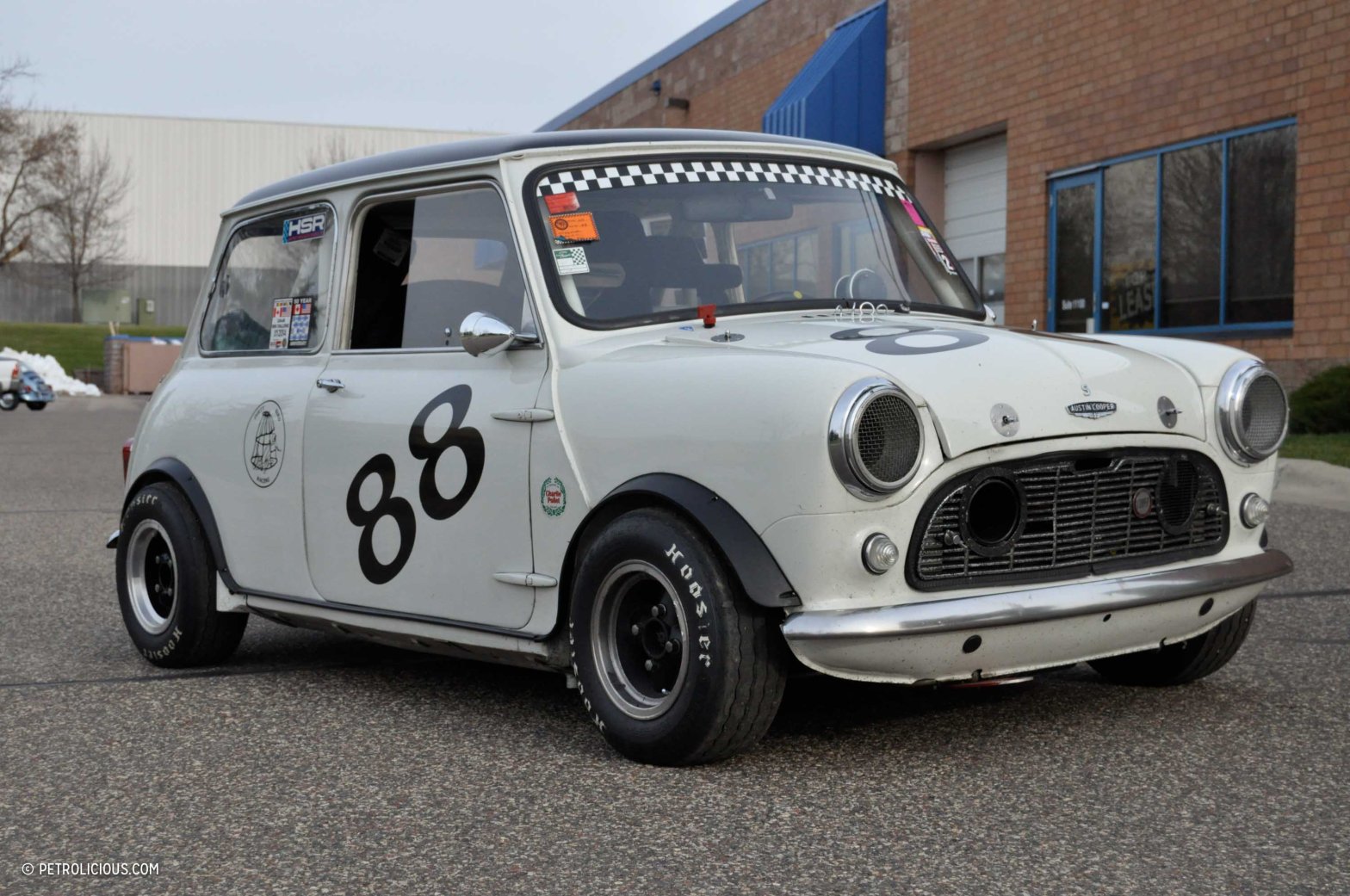
In the years that followed, Cooper created the “S” version, first for competition only and later for street use, with engines as big as 1275cc and 75 HP.

The Mini-Cooper dominated the Monte Carlo Rally in the 60s. The tiny British car won in 1964 and again in 1965, driven by the legendary Scandinavian duo Rauno Aaltonen and Timo Mäkinen.
In 1966, the Mini Coopers finished the rally in a smashing 1-2-3 finish. Still, unfortunately, the organizers imposed a draconian new rule that year: the cars had to be 100% factory-original.

The Automobile Club de Monaco was determined to end the British winning streak. After the rally ended, the technicians spent more than 18 hours dismantling the cars, measuring and checking every part. Everything seemed fine until they found something wrong: the original headlight bulbs had been replaced with a more powerful set, and that was enough to disqualify all three winning Mini Coopers. The drivers, team managers, and fans were furious; they protested the judge’s decision, and even the press joined in, putting as much pressure as possible to reverse it, but it was all in vain.
The stolen victory in 1966 was just a small setback; in the next year, Rauno Aaltonen, driving for the British Motor Company official team, brought the Mini-Cooper once again to the highest place on the podium.

During the 1960s, the Mini also won the 100 Lakes Rally in Finland three times, the Circuit of Ireland three times, and the Rally Poland twice. Rally competition undoubtedly contributed immensely to the Mini’s popularity.
A pop culture classic.

Much more than a little monster at the racetrack and rally, the Mini became the standard for what a small, economy car should be- no more cramped, underpowered, and ugly cars for the younger buyers. If they wanted something modern and exciting, they found it.
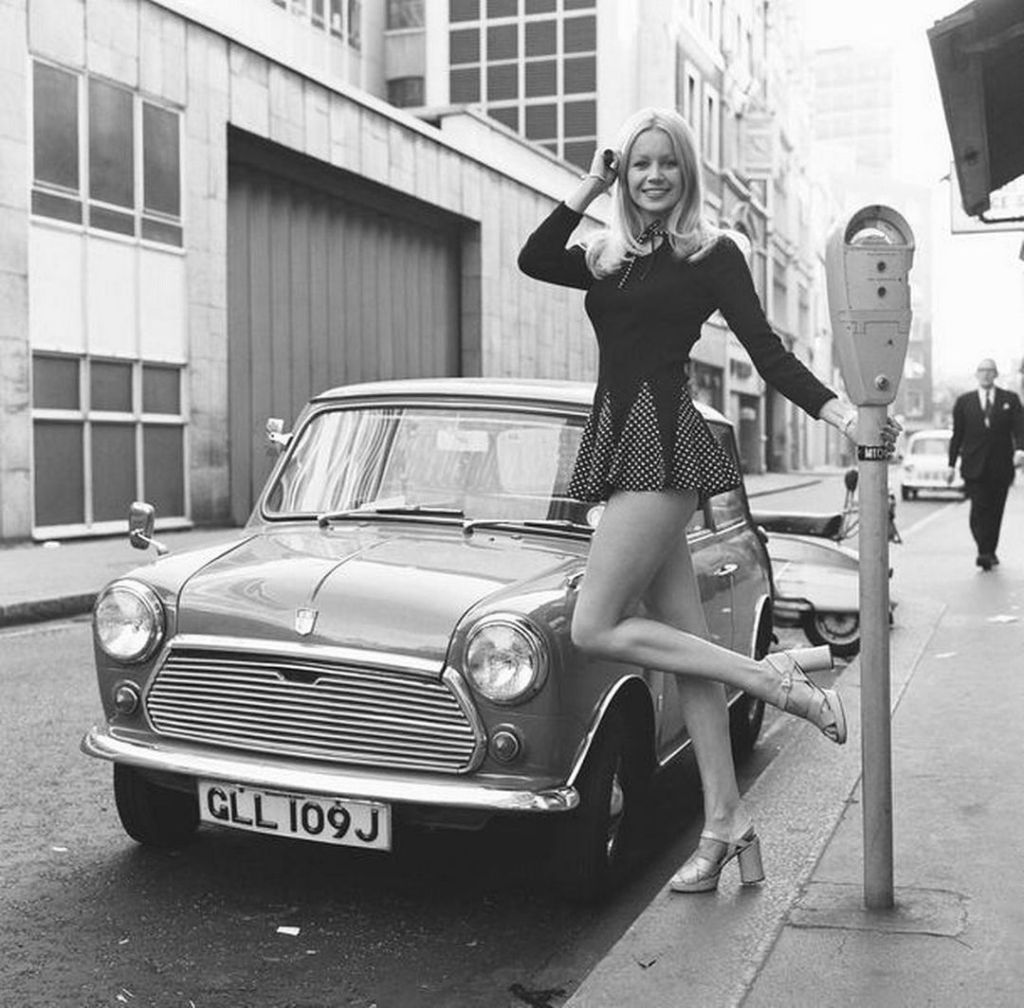
Soon the Mini became one of the symbols of the 1960s, adopted not only by the average first buyers but also by cool and hip people.
Throughout its existence, the Mini changed very little, and every update (mostly cosmetic) was marked in the most traditional British way possible, with the “Mk” letters, just like Spitfires and Jaguars.
Mk I: From 1959 to 1967.

During the first generation, BMC expanded the Mini family by adding a station wagon, a panel van, and a pick-up.
For the North American market, the Mini received an optional 4-speed automatic transmission in 1965, and this model became known as the Mini-Matic.
During this time, production was based in UK and Australia.
Mk II: From 1967 to 1970

Only cosmetic changes, but the Mini’s success led BMC to install production lines in Spain, Belgium, New Zealand, Portugal, Yugoslavia, South Africa, Malaysia, and Chile. The Chilean Mini has an interesting characteristic: its body is made of fiberglass.
Mk III: From 1969 to 1974

The history of the British auto industry is a history of never-ending mergers, sales, and acquisitions; in 1968, British Motor merged with Leyland Motors to become British-Leyland. For the Mk III, the new company adopted concealed door hinges and replaced the annoying sliding windows with regulator-operated ones.
In 1969, “Mini” became a brand in its own right, still under the British Leyland umbrella, replacing the Morris and Austin nameplates. That same year, the Mini Clubman was revealed; it was intended as a bigger, more practical version of the regular Mini.
Mk IV: From 1976 to 2000.

By the time the Mk IV was released in 1976, the Mini was already showing its age. It was revolutionary in 1959, but almost 20 years without major updates made it unable to compete with modern small cars like the Renault 5, VW Polo, and Ford Fiesta, to name a few. It was still among the 10 best-selling cars in the UK, but sales were slipping. In 1977, the Mini lost a major market when the USA stopped importing the car because of stricter emissions regulations.

Around this time, after a restructuring process (which included a government bailout), Leyland Motors became Rover Group. Customers expected the new company to finally give them a replacement for the Mini, but instead they got the Metro, released in 1980 and sold under the Austin, MG, and Rover brands. The Metro was unveiled during tough times; the UK faced one of the worst economic crises in its history, and the Rover Group, desperate for money, decided to use the Mini’s drivetrain and suspension in the new car, which customers didn’t receive well.

During the 1980s and 1990s, the Mini shifted purpose: it went from a mass-produced economy car to a fashionable, retro-cool icon, but that wasn’t enough to keep the Rover Group afloat. In 1994, BMW bought the company’s assets from British Aerospace Engineering (I know it is hard to keep track, but before BMW, an aircraft company bought the Rover Group).
BMW and Rover kept the “classic” Mini in production as long as they could, but selling “collectible items” didn’t always pay the bills. The last Mini rolled off the assembly line on October 4th, 2000. A total of 5,387,862 cars had been manufactured, nearly 1.6 million of which were sold in the UK.
BMW sold all the companies that came with the Rover Group: a new British consortium bought MG and Rover, and Ford bought Land Rover. The Germans only kept the Mini brand.

Also in 2000, BMW unveiled its retro-inspired, modern version of the Mini, called R-50, or simply “Mini”, keeping the legend alive ever since.
Much more than a cool car.

Since a worn-out 1960s Mini beat me on a highway race (I was driving a 4-liter V6 Ford Ranger) back in 2003, this tiny little car has intrigued me. I knew I had to write about it. Still, for some reason I kept postponing the task, perhaps because the Mini had beaten me in more ways than just one (irresponsible) race; let me explain: In 1999, a panel of renowned automotive journalists elected the Mini as the second most influential car in history, second only to the Ford Model T. For me, it was a blow. As a hardcore VW Beetle fan, I couldn’t believe my car lost to the Mini; after all, it was in production much longer (65 years vs 41 years). It sold far more cars (21,529,464 vs 5,387,863).

It took me a while to understand why. However, the Beetle had a more successful career; we can hardly see any trace of its engineering in modern cars (besides the flat-four Subaru engine). On the other hand, the basic concept of the Mini- hatchback style, unibody, and the transverse four-cylinder engine, front-wheel drive- became the standard for the whole auto industry. As far as I can see, this concept will only die when the carmakers stop producing internal combustion engines.


Thankyou, wonderful article and photos, great trip down memory lane!!! I was a young student sponsored by JRT (at the time the car group was called Jaguar Rover Triumph but included Land Rover). I was posted to Triumph Canley who were still making the Dolomite plus the wonderful TR7 when they were closed in 1980 throwing many thousand workers onto the dole, I spent many happy months at Jaguar at Browns Lane including several weekends working with THE MAN aka John Egan, MD at the time and lovely fellow, and then I worked at the famous Chocolate Box in Solihull where the sales and marketing divisions were based, I was there for the launch of the Metro with the famous ads of the cars driving onto the beach from a military launching vessel remember??? Then I worked 12 years for Land Rover. GREAT memories thanks, and ps my late Father bought a Mini in 1959!!!!
LikeLiked by 1 person
Wow, I am so happy my post brought back so many wonderful memories for you. You should definitely write about your experiences.
Your Dad had the happiness of walking into a dealership and buying a brand-new 1959 Mini? This is awesome.
LikeLike
I loved reading about the Mini’s prowess on the racetrack, its innovative design, and its cultural impact. Interesting timeline with great illustrations. 🙂
LikeLiked by 1 person
Thank you, Nancy. Writing about the Mini taught me a lot. I didn’t know how important the car was to the auto industry and to the 1960s cultural movement.
LikeLiked by 1 person
Neither did I! 🤣🚗
LikeLike
Great report!!
LikeLiked by 1 person
Thank you so much. I am happy you have enjoyed the article.
LikeLiked by 1 person
The wife’s first car, a 1963 Austin Mini. It got us about, sometimes. All luxury, sliding windows closed with a little flip up catch. Interior door ‘handle’ a pull down wire cord and dip switch somewhere on the floor. We later had an estate version which turned out to be two cars welded together! Happy days.
LikeLike
Ohhh, boy. Do you have pictures of those cars?
LikeLike