
(Originally published on May 15, 2021)
In the 1970s, as Japanese motorcycles began dominating the global market, Norton was merely another legendary British bike brand fighting to stay afloat.

A mix of mismanagement and lack of innovation brought the company very close to bankruptcy. Still, it was in the late 1960s that Norton had a spark of brilliance; the engineering development team concluded that the best way to defend the company against the Japanese attack would be to adopt a new and revolutionary technology, the rotary engine.
The Wankel Engine.
One can write a whole book explaining why the internal combustion, reciprocating piston engine is an absurdity in terms of fuel and thermal efficiency. Still, it was only in the 1950s that the development of alternative engines began to gain momentum.
By the late 1960s, the Wankel rotary engine seemed the most promising “revolutionary” engine. The original design was created by the German engineer Felix Wankel in 1929, but it was not fully developed until 1957. Mazda was the only automaker to mass-produce a car equipped with the rotary engine, the RX-7, and on two wheels, Suzuki was another enthusiast of the Wankel.
Norton was somehow confident the new engine would give the company the advantage needed against the Japanese bikes, but the process was long and painful. It took more than 18 years to put a rotary-powered Norton bike on the streets. The development began in 1969 at the BSA Group Research Center in Kitts Green; the Wankel engine was based on a Sachs air-cooled rotary used in the German-built DKW/Hercules model W2000. The Norton prototype was ready in 1972. At the same time, the company finally obtained a license to use the engine from Auto-Union Group (later Audi), the legal owner of the Wankel brand.
In 1973, Norton was absorbed by the BSA/Triumph group, and somehow the Wankel project survived the complications of having 3 different brands under the same umbrella. Still, the distance between the prototype and the final version can be substantial.

It was only in 1987 that Norton unveiled the Interpol 2 police model P41, equipped with a 588cc, air-cooled, twin-rotor engine. A first batch of 350 bikes was sold to various police stations across England. It didn’t take long to realize that the project had very poor development: rough idling, overheating, and blown engine seals were the most frequent complaints from the police officers.
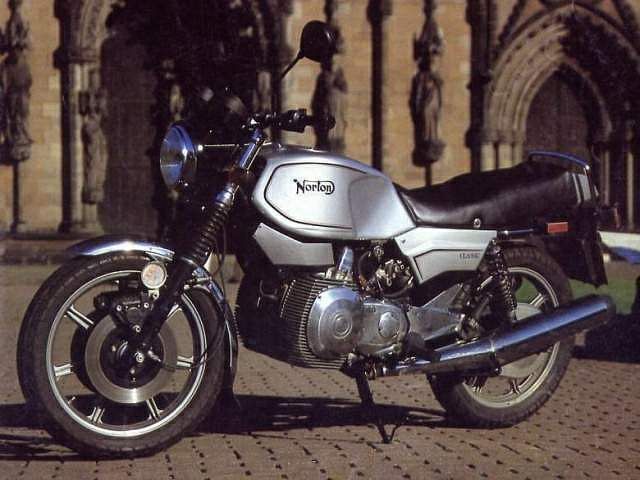
In 1988, Norton released the Commando 588 model P53 to the public, equipped with a liquid-cooled rotary engine, solving most overheating problems. The traditional customer didn’t receive the new bike well; sales were modest compared with the regular “piston” engine Norton models.
The Wankel Wizard.
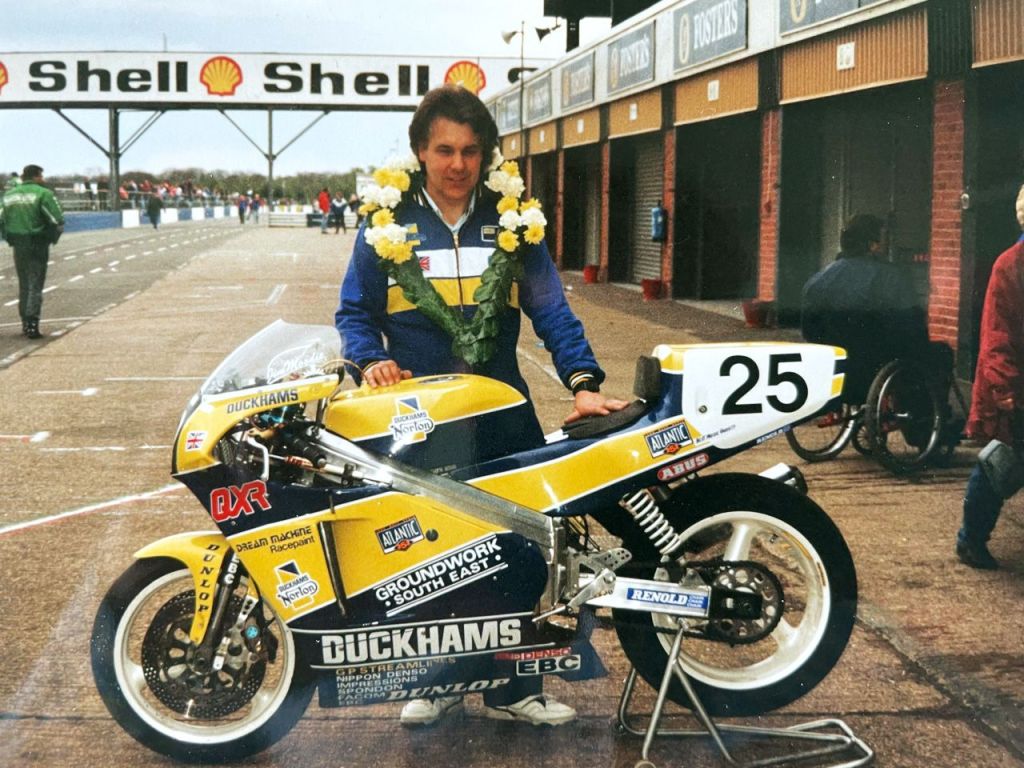
Among all the employees involved in developing the Wankel-Norton bikes, perhaps no one was more enthusiastic than Brian Crighton (pictured above). He saw the full potential of the rotary engine and spent countless hours of his free time trying to squeeze more horsepower out of it. At this point, Crighton didn’t have any official support from Norton for tinkering with those engines, but he found his “research material” in piles of discarded police bikes, and he never received pay for his after-hours work. During the first phase of this development, he increased the power output from the stock 85HP to 96HP; it might not sound like much today, but back then it was enough to convince the very skeptical CEOs that a rotary-powered race bike could be a viable idea.
Brian Crighton’s work at Norton was fueled by passion, and that is easy to understand; he had been a hardcore race biker during the 1970s, and the racetrack was his natural environment. He just wanted to be back there and do whatever it took to make Norton a winning team.
In 1987, Crighton was invited to join the Racing Development Team, and, with a very tight budget, Norton began its competition endeavor in the British motorcycle racing season. At this point, the Wankel engine had reached 125 HP while retaining the stock 9.2:1 compression.
Norton RC 588
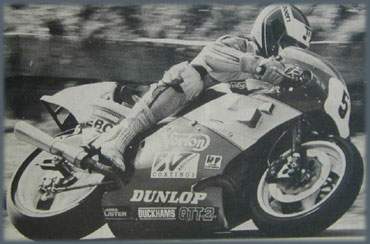
For the 1987 season, the RC 588 was still considered a prototype. Still, in many ways, it was a very good one: the air-cooled Wankel engine was producing a decent amount of power 125 HP), the awkward steel chassis (derived from the police street bike) was replaced with an all-aluminum full race frame produced by Spondon Engineering, and Suzuki supplied the front fork.
Racing started in late 1987, with employee Malcolm Heath as the official rider. He scored one victory during the season. Things got more serious in 1988 when Steve Spray, the second Norton rider, won two major races for the team: first, the TT F1 British Championship race, and then the Powerbike International open race. These two superb performances got the attention of the British tobacco brand John Player Special, and the company became the main sponsor of the Norton racing team.
Norton RCW 588

Norton started the 1989 season proudly wearing the iconic black-and-gold JPS livery. The new sponsorship certainly gave the team some room to breathe, but compared with the mighty Japanese and Italian factory teams, Norton was like a little mouse going after a bunch of tigers.
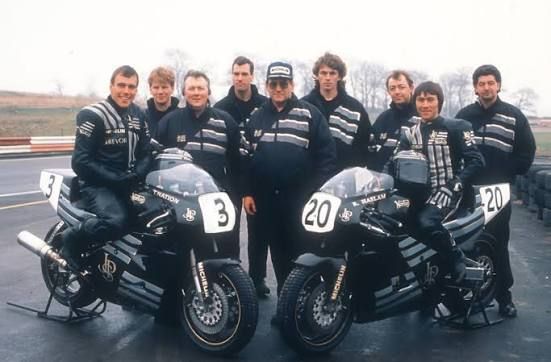
The Norton guys knew they had something special: the new bike, the RCW 588, received the improved, water-cooled version of the rotary engine, which meant 10 extra “ponies.” The bike was light (268 pounds), powerful (135 HP), and well balanced – a killer combination that caught the competition off guard.
What happened in 1989 was one of those stories that could well be the narrative of a movie: a small, underfunded team, steamrolling over way more powerful rivals and driving the fans into a frenzy.
Steve Spray won the 750 cc Supercup Championship and the British F1 title; Trevor Nation also had some awesome performances, but the 1989 season was definitely Spray’s. On top of all the victories, he also set lap records at Donington Park, Thruxton, Snetterton, Brands Hatch Indy Circuit, and Cadwell Park during the season.
In 1989, Brian Crighton was promoted to Senior Development Engineer at Norton, and the new responsibilities made it impossible for him to keep managing the racing team. At the end of the year, Barry Symmons, the ex-Honda Britain boss, was brought in to run the works team.
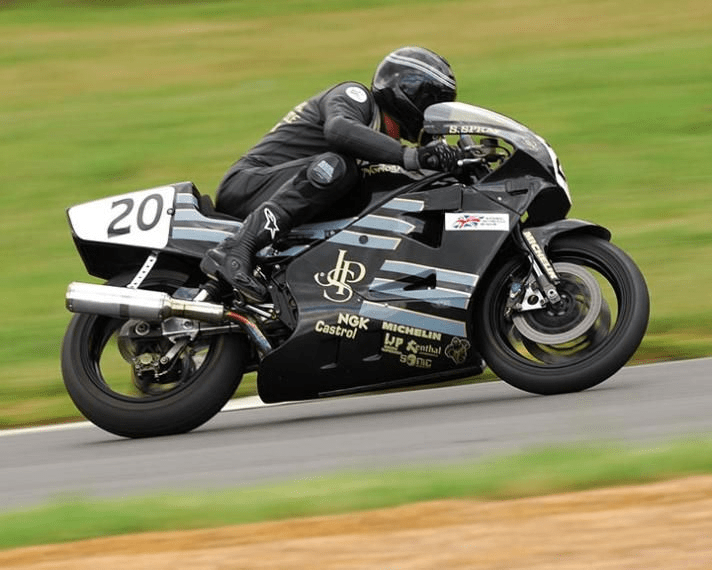
The success continued in 1990; the Norton boys were not only riding to win races but also on a mission to show the world that Norton wasn’t dead yet. Nation won the MCN TT Superbike Championship, and Robert Dunlop won both Superbike races at the Northwest League.
There was a surge in TV coverage; Norton/JPS merchandise was selling like hotcakes, and the fans were going wild. It was a British bike, sponsored by a British brand and ridden by British riders; for the UK fans, it was a matter of national pride.

It was also in 1990 that the fairy tale began to crumble; Brian Crighton, the father of the Norton racing team, resigned from the company, alleging serious disagreements with the new team manager, Barry Symmons. Later on, Crighton started his own Wankel-powered bike project, The Roton.
The 1991 season was proof that many of the changes brought by Symmons were not working as planned. Perhaps the worst of his decisions was switching the tire supplier to Michelin, throwing out the window all the development done with Dunlop.
Most of the original team members were gone, and so was the magic of the 1989/90 seasons. Norton was no longer the dominant brand in the British Superbike Championship, and the CEOs were signaling that the racing program was nearing its end.
The greatest Isle of the Man TT
In 1992, two of the brightest stars in the British bike racing universe, Steve “Hizzy” Hislop and Carl Fogarty, were the protagonists of what is considered by many the finest Isle of Man TT races in history.
The two riders were not bitter enemies; they were bitter rivals on the race track. Fogarty was rude and a blabbermouth, always bragging about his talent. He made more enemies than friends on his way to the top. Hislop, on the other hand, was calm and well-mannered, always willing to listen before saying something. Their distinctive personalities were reflected in the way they behaved on the race track.
For the 1992 Isle of Man edition, Fogarty had a comfortable position at British Yamaha, but Hislop was having a hard time finding a bike for the event. A month before the race, Barry Symmons offered him a chance to ride for Norton, and with no better option on the horizon, he accepted. But he was sure that, at this point, the rotary machine had no chance against the big guys.
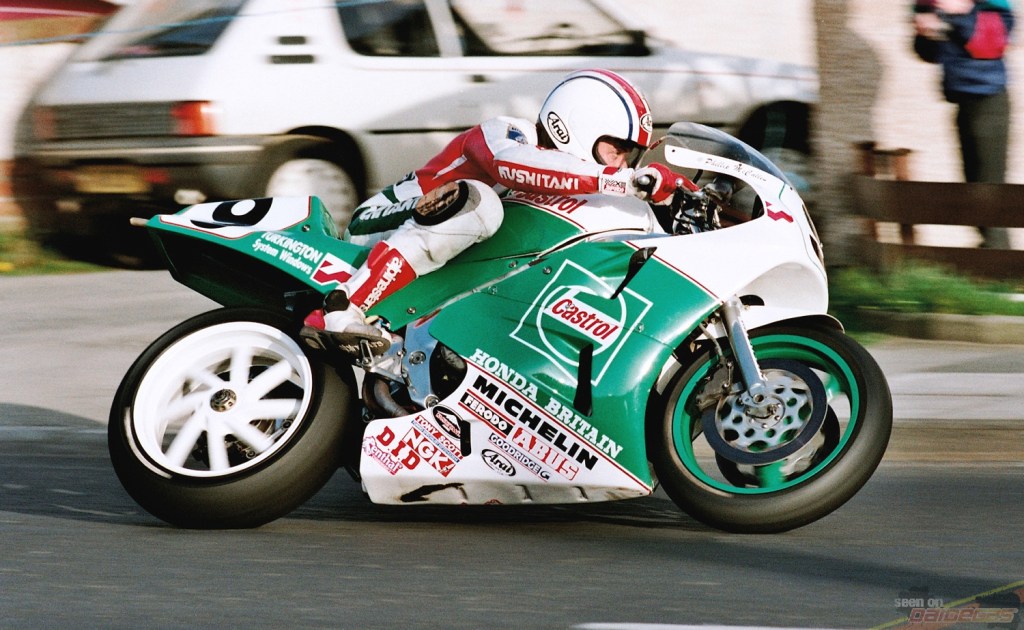
On the first of the main races of the week-long event, the F1, Hizzy, even dealing with constant overheating on his Norton, was able to keep up with the two fastest riders, Fogarty on a Yamaha and McCauley on a Honda. The three riders set an insane pace, clocking laps with no more than 5 seconds between them. Close to the end, Fogarty was forced to retire when the gearbox of his Yamaha broke down, leaving the first position to McCauley and Hislop in a close second.

Despite his amazing performance, Hislop’s bike wasn’t even completely set up for him. For the main race, the next morning- the Senior TT- the Norton team had to spend the night doing some critical changes. First, they installed a larger windscreen, making it easier for Hislop to fit inside and improving the aerodynamics; then, a wider handlebar for better control of the bike; and last, the front fender was removed, increasing airflow to cool the engine.
At the start of the race, Fogarty was comfortable in 4th position, but Hislop was 19th. It took him almost the entire race to get through the traffic, but he did it masterfully, pushing his Norton to the limit but with elegance and precision, saving the machine from a possible breakdown.

Fogarty’s brutal riding style took a toll on his bike; it was literally falling apart but still in fighting condition. When Hizzy finally closed in, one of the most intense duels in the history of the Senior TT race took place; they fought fiercely to the last lap, but it was Hislop and his howling Norton that crossed the checkered flag in first place. Norton was once again the winner of the Isle of Man; the last time was in 1961. Hislop considers the 1992 Senior TT victory as “my greatest race ever.”
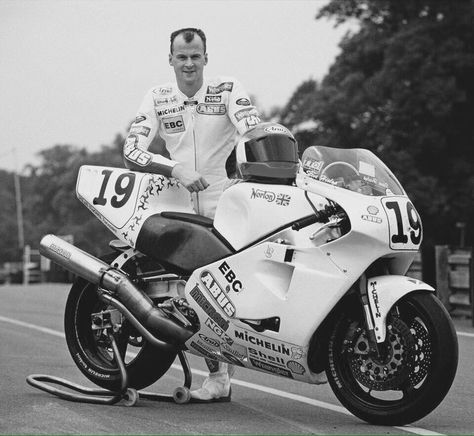
Hislop’s amazing performance at the 1992 Senior TT race was the swan song for the Norton Racing Team, which was going through a serious financial crisis, and it was time to end the program.
The official factory race team was over, but that doesn’t mean the rotary Norton was gone from the race tracks.
The Wizard strikes again.
The official Norton-Wankel racing program wouldn’t have existed at all if it weren’t for Brian Crighton. Right after he left the company in 1990, he started his own business, preparing rotary bikes for private teams and his own team.
After the Norton works team left the competition, The Crighton’s machines started to shine, it was his turn to win.

The Crighton Team was always among the top qualifiers. Still, they reached their peak in 1994, when their two riders obliterated the competition, scoring 52 podium finishes, with Ian Simpson winning the British Supercup Championship and Phil Borley taking 3rd place.
As one can imagine, the big brands were not so happy with this rotary madness, as Terry Rymer, a Honda rider at the time, once said: “I am a bit fed up with those Nortons passing by and spitting flames on my face, but I guess this is what makes the crowd happy“.
Well, the fans were happy all right, but the big teams were not, and the 1994 season was the last straw. At the end of the year, they got together to put some pressure on the organizers, and for the next season, the Wankel engine was officially banned from competing in the UK.

The Norton-Wankel era was short but intense. The fans will forever remember those years as the most exciting ones in British motorcycle racing history. After all, everybody loves to see the underdog winning.
The screaming, flame-throwing RCW 588 finished its career where it started: at the top.
But one guy wouldn’t let it go…
Brian Crighton never stopped messing around with the Wankel Norton bikes, and after so many years of development, he might have reached rotary nirvana. Here it is, his latest creation:
Crighton Racing CR700P.
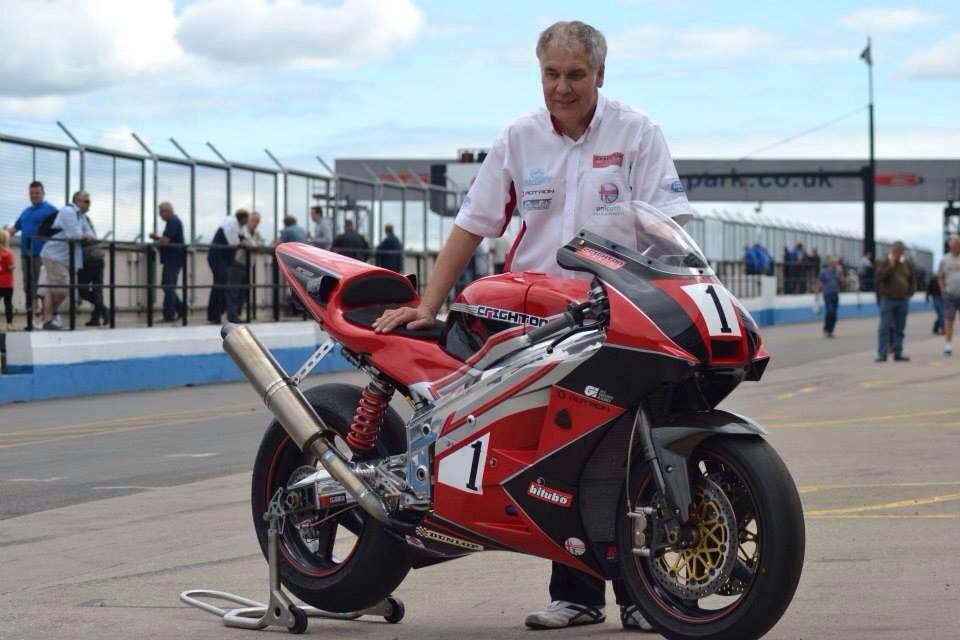
For this new beast, the Crighton Team solved what was, perhaps, the most annoying problem of the rotary Norton: overheating. They created an ingenious hybrid cooling system that works with liquid and some gas; sounds complicated? You bet, but he won’t tell us how it works; it’s a well-kept secret. The 700cc, twin-rotor Wankel engine can make 200 HP without the fear of melting internal components. The CR700P is scary fast, and, on top of that, it is gorgeous. Well done, Wizard.
Have you ever heard the howling of a rotary GP bike flat out down the straight? Me neither, until I saw this video. Enjoy.
 The Classic Machines
Wow! Those were exciting races with the Norton cycles. 🙂
LikeLiked by 1 person
It is so satisfying when the underdog actually beats the big guys. No wonder Norton still has a legion of fans.
LikeLiked by 1 person
I never knew about those engines in motorcycles. Love that story. I had a 1983 Mazda RX7…had it for 5 years and had no problem out of the rotary engine…but I had to replace 2 rear ends on the car…I never knew why…but it was the fastest car I’ve ever owned.
LikeLiked by 2 people
I’ve never had a chance to drive a rotary-powered car or bike, but I want to. Those engines are amazing. They have far fewer moving parts than a regular piston engine and, consequently, are much smaller.
Probably you drove your Mazda like a race driver 🏎 🏁, and the rear end gave out, LOL.
LikeLiked by 2 people
I loved it man…I mean loved it. The other car I had that was really fast was a 2008 Mini Cooper….the RX-7 was the one though…that engine would put your head in the back seat and I’m not exaggerating.
LOL…probably! I was at the ripe old age of 21 when I got it in 1988. My buddy said that rear end could not take the tork of that engine….she was powerful. Never once had a problem with it…so I’m a fan.
LikeLiked by 1 person